The European Commission is imposing a heavy financial penalty on Meta, Facebook‘s parent company, citing anti-competitive practices associated with its Marketplace service. Meta faces a fine of approximately 797.72 million euros (~$841 million) following an inquiry by the European Union’s executive branch, which serves as the primary antitrust authority within the 27-member bloc.
The investigation concluded that Meta had abused its market dominance by integrating its Marketplace feature with the social networking platform Facebook. According to the Commission, this practice compelled Facebook users to encounter Marketplace services involuntarily, effectively stifling competition by limiting exposure to rival services. Furthermore, the Commission raised concerns over Meta’s terms of service, which allegedly permitted the company to leverage advertising data—sourced from competitors using Facebook or Instagram—to advantage its own Marketplace platform.
Newsletter
Need to Know.
Your free, daily feed from The National Pulse.
Thank You!
You are now subscribed to our newsletter.
Meta says it will contest the Commission’s findings. The company asserts that the decision lacks evidence of any detrimental effect on competitors or consumers and disregards the competitive dynamics present in Europe’s online classified advertisements sector.
The European action against Meta mirrors a similar ruling in the United States against technology and online search giant Google. In August, a federal judge ruled that Google violated U.S. antitrust law, raising the possibility that the $2 trillion company could face a breakup.
By Popular Demand.
The National Pulse Now has an on-site comments section for members. Sign up today and be part of the conversation in our community of almost 15,000.
More From The Pulse
WE ARE 100% INDEPENDENT AND READER-FUNDED. FOR A GUARANTEED AD-FREE EXPERIENCE AND TO SUPPORT REAL NEWS, PLEASE SIGN UP HERE, TODAY.
❓WHAT HAPPENED: Several member states party to the International Energy Agency (IEA) plan on releasing significant petroleum reserves, equivalent to an estimated 400 million barrels, to boost global supply.
👤WHO WAS INVOLVED: Iran, the International Energy Agency (IEA), and multiple nations, including Germany, Austria, and Japan.
Newsletter
Need to Know.
Your free, daily feed from The National Pulse.
Thank You!
You are now subscribed to our newsletter.
📍WHEN & WHERE: The reserve releases were announced on Wednesday, March 11, 2026.
💬KEY QUOTE: “The oil market challenges we are facing are unprecedented in scale, therefore I am very glad that IEA Member countries have responded with an emergency collective action of unprecedented size.” — IEA Executive Director Fatih Birol
🎯IMPACT: The decision to release petroleum reserves comes after Iran is suspected of striking at three oil tankers traversing the Strait of Hormuz on Wednesday.
IN FULL
The International Energy Agency (IEA) announced the largest release of emergency oil stocks in its history, making 400 million barrels available to the global market after Iran is suspected of attacking at least three commercial tankers traversing the Strait of Hormuz on Wednesday. Two of the vessels sustained some damage but remained operational and afloat; however, the Thai-flagged Mayuree Naree—hit by two unknown projectiles—was forced to evacuate its crew, with at least three crew members still missing.
“The oil market challenges we are facing are unprecedented in scale, therefore I am very glad that IEA Member countries have responded with an emergency collective action of unprecedented size,” said IEA Executive Director Fatih Birol, adding, “Oil markets are global, so the response to major disruptions needs to be global too. Energy security is the founding mandate of the IEA, and I am pleased that IEA Members are showing strong solidarity in taking decisive action together.” Still, Birol emphasized that the crucial Strait of Hormuz needs to be reopened and that Iranian attacks on international shipping must cease.
Germany, Austria, and Japan have all confirmed they will be releasing a portion of their petroleum reserves. It remains unclear, though, whether the United States will release barrels of its own. U.S. Interior Secretary Doug Burgum supported the release of oil reserves during a television appearance on Wednesday, describing the situation as a “temporary transit problem” that could be resolved militarily and diplomatically. He criticized Iran for “holding the entire world hostage economically” and noted that President Trump had made clear the consequences of such actions.
Meanwhile, on Wednesday morning, Admiral Brad Cooper, head of U.S. Central Command (CENTCOM), stated that U.S. forces are “delivering devastating combat power” against Iran, targeting its ability to plant mines and disrupt shipping in the Strait of Hormuz. He reported the destruction of over 60 Iranian ships and the elimination of an entire class of Iranian warships.
❓WHAT HAPPENED: Three vessels were struck by unknown projectiles in the Strait of Hormuz, bringing the total number of ships attacked in the region to at least 14 since the Iran war began.
Newsletter
Need to Know.
Your free, daily feed from The National Pulse.
Thank You!
You are now subscribed to our newsletter.
👤WHO WAS INVOLVED: The incidents involved ships flagged by Thailand, Japan, and the Marshall Islands, with investigations underway by their respective operators and maritime risk firms.
📍WHEN & WHERE: The attacks occurred on Wednesday, March 11, in the Strait of Hormuz, a critical waterway for global oil shipments.
💬KEY QUOTE: “The company is working with the relevant authorities to rescue… missing crew members.” – Precious Shipping, operator of the Thai-flagged vessel.
🎯IMPACT: The attacks have disrupted shipping in the Strait of Hormuz, a vital chokepoint for global oil and fertilizer supplies, and raised concerns about escalating tensions in the region.
IN FULL
Three commercial vessels were struck by unidentified projectiles in the Strait of Hormuz on March 11, according to maritime security firms, bringing the number of ships targeted in the region to at least 14 since the Iran war began. The incidents have intensified concerns about the safety of one of the world’s most critical shipping lanes.
One of the vessels, the Thai-flagged Mayuree Naree, was damaged after being hit by two projectiles. Its operator, Precious Shipping, said three crew members are missing and believed to be trapped in the engine room. “The company is working with the relevant authorities to rescue these three missing crew members,” the firm said, adding that the rest of the crew had been evacuated safely to Oman.
Another ship, the Japan-flagged ONE Majesty, sustained minor damage after being struck by an unidentified projectile while anchored in the Persian Gulf. The vessel’s owner, Mitsui O.S.K. Lines, confirmed that all crew members are safe and that the ship remains operational. Authorities are continuing to investigate the cause of the incident.
A third vessel, the Marshall Islands-flagged Star Gwyneth, was also hit by a projectile northwest of Dubai. The ship’s hull was damaged, but its owner, Star Bulk Carriers, reported that no crew members were injured.
The U.S. Navy has declined requests for military escorts for commercial vessels transiting the strait, citing heightened risks. President Donald J. Trump, however, has said the United States is prepared to provide naval escorts if needed.
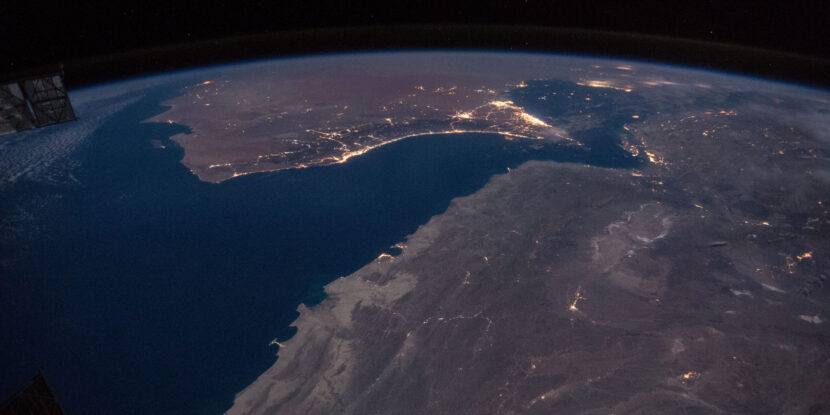
The Strait of Hormuz is one of the world’s most strategically important waterways, linking the Persian Gulf with the Gulf of Oman. A significant portion of global oil exports passes through the narrow passage, making any disruption there highly consequential for global energy markets.
The ongoing conflict has already had ripple effects beyond shipping. Rising fuel costs linked to the instability have contributed to surging fertilizer prices, placing additional pressure on farmers worldwide. Meanwhile, regional energy infrastructure has also been affected, including the shutdown of a major Saudi oil refinery following an Iranian attack.
Join Pulse+ to comment below, and receive exclusive e-mail analyses.
show less
show more
By Popular Demand.
The National Pulse Now has an on-site comments section for members. Sign up today and be part of the conversation in our community of almost 15,000.
WE ARE 100% INDEPENDENT AND READER-FUNDED. FOR A GUARANTEED AD-FREE EXPERIENCE AND TO SUPPORT REAL NEWS, PLEASE SIGN UP HERE, TODAY.
❓WHAT HAPPENED: Plans to scrap jury trials for most cases in Britain cleared a key hurdle as Members of Parliament (MPs) advanced the legislation to the next stage.
Newsletter
Need to Know.
Your free, daily feed from The National Pulse.
Thank You!
You are now subscribed to our newsletter.
👤WHO WAS INVOLVED: Prime Minister Sir Keir Starmer, Justice Secretary David Lammy, Labour MPs, and the Bar Council.
📍WHEN & WHERE: Tuesday, in the British Parliament.
💬KEY QUOTE: “There is very little evidence to support even basic rationality of the government’s decision to rush through this legislation which unnecessarily removes jury trials from thousands of people.” – Kirsty Brimelow KC, Bar Council
🎯IMPACT: The legislation could end the right to jury trials for cases with sentences of three years or less, despite significant legal and political opposition.
IN FULL
The far-left British government’s scheme to dramatically limit the right to trial by jury cleared a key hurdle in Parliament on Tuesday after Members of Parliament (MPs) voted to move the legislation to the next stage of the legislative process. The controversial reform, introduced by anti-Trump Deputy Prime Minister and Justice Secretary David Lammy, would represent a significant shift in England and Wales’ legal system, with defendants facing a potential prison sentence of three years or less no longer being entitled to a jury trial. Instead, a single judge would determine guilt or innocence.
Prime Minister Sir Keir Starmer’s Labour Party government argues the change is necessary to tackle the growing backlog in Britain’s courts. “To restore swift and fair justice, we are pulling every lever available, investment is essential, modernisation is essential, and reform,” Lammy said.
The measure passed its reading by 304 votes to 203, but exposed divisions within the governing Labour Party. Ten Labour MPs voted against the bill, while around 90 abstained.
The proposal has also drawn strong opposition from the legal community. More than 3,200 lawyers, supported by the Bar Council, signed a letter urging the government to abandon the plan. Kirsty Brimelow KC, chair of the Bar Council, warned: “There is very little evidence to support even basic rationality of the government’s decision to rush through this legislation which unnecessarily removes jury trials from thousands of people. It’s not too late for the government to listen to us as experts and as a profession and stop before bulldozing our jury system.”
Critics argue the reforms could undermine one of the most important safeguards in the British legal tradition, which has relied on juries for centuries to ensure defendants are judged by their peers rather than solely by the state.
The debate comes amid broader controversy concerning changes to the British justice system. In 2025, new Ministry of Justice guidance advised courts to consider factors such as ethnicity, gender, and identity when making certain bail and sentencing decisions, prompting critics to warn that the policy risked creating a “two-tier” system skewed against straight white men.
❓WHAT HAPPENED: U.S. Senator John Cornyn’s (R-TX) reelection campaign has rolled out a panicked advertisement against his Republican primary runoff opponent, Texas Attorney General Ken Paxton (R), accusing the latter of stealing a pen.
Newsletter
Need to Know.
Your free, daily feed from The National Pulse.
Thank You!
You are now subscribed to our newsletter.
👤WHO WAS INVOLVED: John Cornyn, Ken Paxton, and attorney Joe Joplin.
📍WHEN & WHERE: The campaign ad first aired on Tuesday, March 10; the pen incident occurred in 2013.
🎯IMPACT: The incident saw attorney Joe Joplin leaving the pen in a tray as he rushed through courthouse security. Sometime after, Paxton also passed through security and mistakenly picked up the pen along with the other items he had placed in the tray. After courthouse security realized the error and contacted Paxton, it was returned to Joplin.
IN FULL
U.S. Senator John Cornyn‘s (R-TX) reelection campaign has rolled out a panicked advertisement against his Republican primary runoff opponent, Texas Attorney General Ken Paxton (R), accusing the latter of stealing a pen. While over-the-top and often hyperbolic campaign attack ads are nothing new, attempting to drive up an opponent’s negatives by claiming they pocketed another attorney’s pen may be a first.
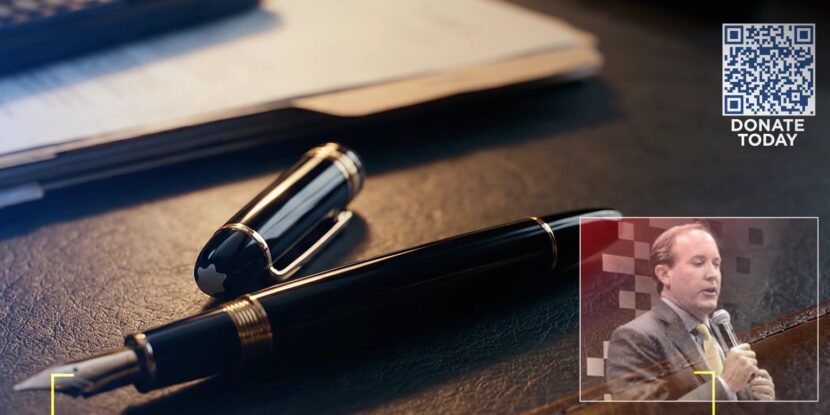
The Cornyn campaign ad heavily focuses on the biblical theme of the Ten Commandments, with a booming, God-like baritone voice bellowing “Thou Shalt Not Steal” after claiming Paxton stole a $1,000 Montblanc pen, citing a 2023 New York Times article. However, Paxton never actually stole the pen.
Instead, the incident—which occurred in 2013—saw attorney Joe Joplin leaving the Montblanc pen in a tray as he rushed through courthouse security. Sometime after, Paxton also passed through security and mistakenly picked up the pen along with the other items he had placed in the tray. After courthouse security realized the error and contacted Paxton, the Montblanc pen was returned to Joplin. Notably, and perhaps lost on the Cornyn campaign, is the Ninth Commandment, “Thou shalt not bear false witness against thy neighbor.”
The National Pulse reported on Monday that new poll numbers from the Texas Senate Republican runoff indicate Paxton has regained his lead over Cornyn, with his electoral edge holding regardless of whether President Donald J. Trump endorses either candidate.
Meanwhile, the Cornyn campaign rolled out a Faith Advisory Council to boost the incumbent Texas Senator’s standing among evangelical Christian voters. However, several members of the group are well-known boosters of refugee resettlement and mass amnesty policies, with ties to the George Soros-backed Evangelical Immigration Table (EIT).
Join Pulse+ to comment below, and receive exclusive e-mail analyses.
show less
show more
By Popular Demand.
The National Pulse Now has an on-site comments section for members. Sign up today and be part of the conversation in our community of almost 15,000.
WE ARE 100% INDEPENDENT AND READER-FUNDED. FOR A GUARANTEED AD-FREE EXPERIENCE AND TO SUPPORT REAL NEWS, PLEASE SIGN UP HERE, TODAY.
❓WHAT HAPPENED: New Department of Labor (DOL) data indicates that inflation has largely subsided, with the rate having largely stabilized at 2.4 percent for the moment.
👤WHO WAS INVOLVED: Bureau of Labor Statistics (BLS), President Donald J. Trump, analysts, and energy market experts.
Newsletter
Need to Know.
Your free, daily feed from The National Pulse.
Thank You!
You are now subscribed to our newsletter.
📍WHEN & WHERE: Data covers February 2026 and was released on Wednesday, March 11, 2026.
🎯IMPACT: While the threat of inflation has largely subsided for now, ongoing hostilities between the United States and Iran have caused significant volatility in energy markets, which could temporarily push some prices higher for a short period.
IN FULL
The Bureau of Labor Statistics (BLS) reported on Wednesday that annual inflation remained steady at 2.4 percent in February, with monthly inflation ticking up to 0.3 percent from 0.2 percent. Core inflation, which excludes volatile food and energy categories, stayed at 2.5 percent year-over-year, while the monthly rate decreased to 0.2 percent from 0.3 percent. The BLS data suggests that—for now—the threat of inflationary pressure in the economy has largely subsided.
Housing costs were a significant driver of February’s price increases, rising by 0.2 percent. The food index climbed 0.4 percent, and the energy index saw a 0.6 percent increase, with gasoline prices rising 0.8 percent over the month. These figures align with January’s data, which analysts viewed as a sign of stability in the U.S. economy under the Trump administration.
However, the BLS data does not reflect the impact of current hostilities in the Middle East. Following the launch of Operation Epic Fury—with joint U.S.-Israeli airstrikes against the Islamic Republic of Iran—on February 28, Brent crude oil prices surged, reaching nearly $120 a barrel, then plunging to $80, before settling at around $90. This volatility has been largely driven by the disruption of oil tanker traffic moving through the Strait of Hormuz, with insurers refusing to underwrite the ships in the face of sporadic Iranian drone and missile attacks.
Retail gasoline prices have already risen sharply in March, now averaging $3.60 per gallon, the highest since at least 2024. Still, any inflationary pressure stemming from current energy price volatility is largely supply-driven and is expected to quickly subside once combat operations wind down.
Join Pulse+ to comment below, and receive exclusive e-mail analyses.
show less
show more
By Popular Demand.
The National Pulse Now has an on-site comments section for members. Sign up today and be part of the conversation in our community of almost 15,000.
WE ARE 100% INDEPENDENT AND READER-FUNDED. FOR A GUARANTEED AD-FREE EXPERIENCE AND TO SUPPORT REAL NEWS, PLEASE SIGN UP HERE, TODAY.
❓WHAT HAPPENED: A vehicle crashed into a barricade near the White House early Wednesday morning, prompting an investigation by the U.S. Secret Service (USSS).
👤WHO WAS INVOLVED: The driver of the vehicle, U.S. Secret Service agents, and D.C. Metropolitan Police officers.
Newsletter
Need to Know.
Your free, daily feed from The National Pulse.
Thank You!
You are now subscribed to our newsletter.
📍WHEN & WHERE: Early Wednesday at the intersection of Connecticut Avenue and H Street, near the White House.
💬KEY QUOTE: “Various entrances and the streets are temporarily closed as teams conduct their work,” said Anthony Guglielmi, a spokesman for the Secret Service.
🎯IMPACT: Streets north of the White House were shut down, with police and security forces securing the area.
IN FULL
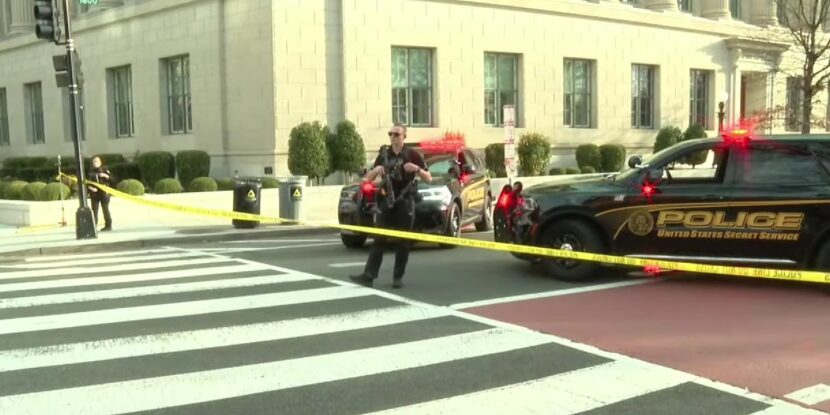
The United States Secret Service (USSS) detained an unnamed driver early Wednesday morning after they crashed their vehicle into an outer perimeter barricade near the White House. Anthony Guglielmi, a Secret Service spokesman, stated that officers from the agency’s uniformed division are “looking into a suspicious vehicle.” He added, “Various entrances and the streets are temporarily closed as teams conduct their work.”
Notably, the crash occurred at the intersection of Connecticut Avenue and H Streets, just outside Lafayette Square, according to the Washington, D.C. Metropolitan Police Department (MPD). No injuries have been reported in connection with the collision.
The incident has resulted in streets north of the White House being temporarily closed as law enforcement and National Guard troops secured the area.
While the exact cause of the crash remains under investigation, tensions in Washington, D.C., and other major U.S. cities remain high as the Trump administration continues to carry out military strikes against the Islamic Republic of Iran. Over the weekend, in New York City, Emir Balat, 18, and Ibrahim Kayumi, 19, were arrested for allegedly throwing improvised explosive devices (IEDs) at right-wing protesters near the official residence of Mayor Zohran Mamdani, who shares the same Twelver Shia faith as Iran’s ruling ayatollahs.
The Federal Bureau of Investigation (FBI) has described the attempted bombing as an “ISIS-inspired” attack.
Join Pulse+ to comment below, and receive exclusive e-mail analyses.
show less
show more
By Popular Demand.
The National Pulse Now has an on-site comments section for members. Sign up today and be part of the conversation in our community of almost 15,000.
WE ARE 100% INDEPENDENT AND READER-FUNDED. FOR A GUARANTEED AD-FREE EXPERIENCE AND TO SUPPORT REAL NEWS, PLEASE SIGN UP HERE, TODAY.
❓WHAT HAPPENED: The Bank of England plans to replace historical figures including wartime Prime Minister Sir Winston Churchill on banknotes with pictures of animals.
👤WHO WAS INVOLVED: The Bank of England, Prime Minister Sir Keir Starmer, Chancellor (Treasury Secretary) Rachel Reeves, and Robert Jenrick, of Nigel Farage’s Reform Party.
Newsletter
Need to Know.
Your free, daily feed from The National Pulse.
Thank You!
You are now subscribed to our newsletter.
📍WHEN & WHERE: Announced March 11, 2026, in the United Kingdom.
💬KEY QUOTE: “It says it all that Rachel Reeves is replacing Winston Churchill on our banknotes with a squirrel.” – Robert Jenrick
🎯IMPACT: The decision ends over 50 years of featuring British historical figures on banknotes.
IN FULL
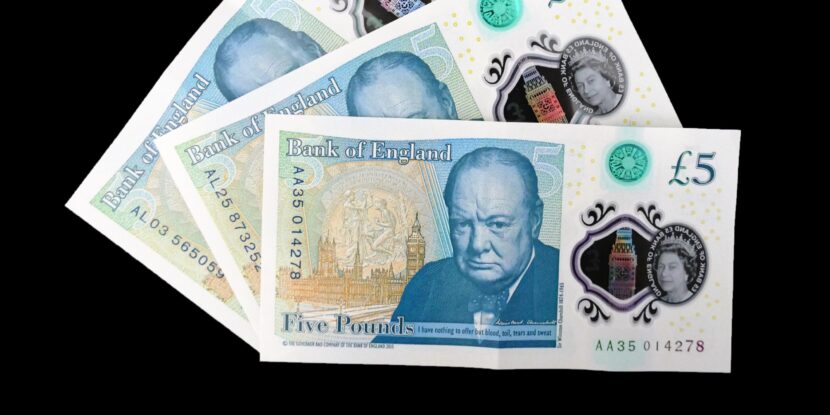
The Bank of England has announced a controversial plan to remove historic Britons, including wartime Prime Minister Sir Winston Churchill and author Jane Austen, from banknotes. Instead, the new series will feature animals native to the United Kingdom.
Victoria Cleland, the chief cashier at the Bank of England, claimed that while the main goal is to improve counterfeit resilience. “Nature is a great choice from a banknote authentication perspective,” she said, although it is unclear why a banknote featuring a picture of a badger should be harder to counterfeit than a banknote featuring a picture of Churchill.
This change marks the end of more than 50 years of showcasing historic Britons on currency. Robert Jenrick, Shadow Chancellor for Nigel Farage’s Reform Party, criticized the decision, saying, “It says it all that Rachel Reeves is replacing Winston Churchill on our banknotes with a squirrel,” in reference to Prime Minister Sir Keir Starmer’s Chancellor of the Exchequer (Treasury Secretary).
Notably, Starmer removed around five portraits of Churchill from the parliamentary estate after entering office, including a picture of the wartime leader standing next to the Cenotaph, Britain’s main national warmemorial, in 1945.
Churchill is a frequent target of far-left protesters and academics, who portray him as a “racist” and a “white supremacist.”
Join Pulse+ to comment below, and receive exclusive e-mail analyses.
show less
show more
By Popular Demand.
The National Pulse Now has an on-site comments section for members. Sign up today and be part of the conversation in our community of almost 15,000.
WE ARE 100% INDEPENDENT AND READER-FUNDED. FOR A GUARANTEED AD-FREE EXPERIENCE AND TO SUPPORT REAL NEWS, PLEASE SIGN UP HERE, TODAY.
❓WHAT HAPPENED: Knife crime in the United Kingdom’s capital city has become so commonplace that the London Assembly is backing a plan to install bleed kits at every major bus station and along bus routes experiencing sustained levels of violent crime.
Newsletter
Need to Know.
Your free, daily feed from The National Pulse.
Thank You!
You are now subscribed to our newsletter.
👤WHO WAS INVOLVED: The London Assembly, the London Ambulance Service (LAS), Transport for London (TfL), and London Mayor Sir Sadiq Khan, of Britain’s governing Labour Party.
📍WHEN & WHERE: Early March, 2026, in London, England.
💬KEY QUOTE: “The current advice from the NHS is that standard first aid kits are sufficient for the majority of bleeding wounds. The NHS also highlights that the effective use of bleed kits requires appropriate training and there is a risk of significant harm if tourniquets, which are usually included in bleed kits, are not used correctly.” — TfL spokesman
🎯IMPACT: Over the weekend, the London Assembly passed a non-binding resolution asking the London Ambulance Service (LAS) to coordinate with Transport for London (TfL) to distribute the stab wound kits across the bus system.
IN FULL
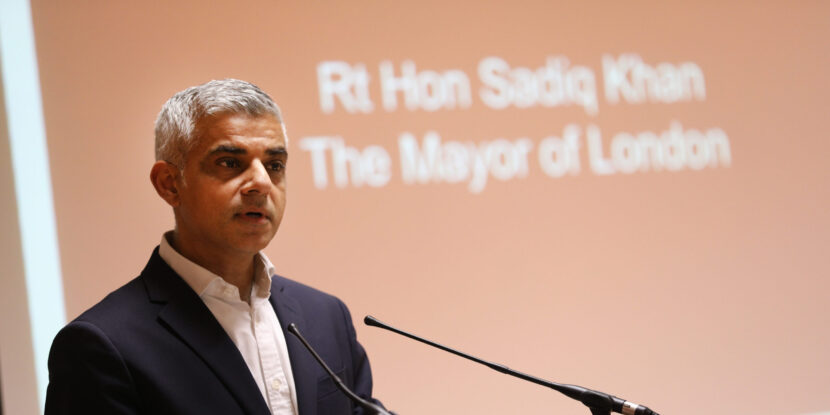
Knife crime in the United Kingdom‘s capital city has become so commonplace that the London Assembly is backing a plan to install bleed kits at every major bus station and along bus routes experiencing sustained levels of violent crime. Over the weekend, the assembly passed a non-binding resolution asking the London Ambulance Service (LAS) to coordinate with Transport for London (TfL) to distribute the stab wound kits across the bus system.
Notably, the motion is non-binding, meaning the London Mayor, Sir Sadiq Khan, is not obligated to act on it. Additionally, TfL—citing National Health Service (NHS) guidance—says it does not plan to publicly advertise the availability of the bleed kits should they be installed.
“The current advice from the NHS is that standard first aid kits are sufficient for the majority of bleeding wounds,” a TfL spokesman said. “The NHS also highlights that the effective use of bleed kits requires appropriate training and there is a risk of significant harm if tourniquets, which are usually included in bleed kits, are not used correctly.”
Khan has been a regular target of President Donald J. Trump—and vice versa—with the America First leader saying of the London mayor in December, “I think he’s done a terrible job. London’s a different place. I love London. I love London. And I hate to see it happen.”
“He’s got a totally different ideology to what he’s supposed to have… he gets elected because so many [immigrants] have come in,” Trump added.
❓WHAT HAPPENED: The Trump administration halted $120,000 in grants for “LGBTQ” and “multiethnic” research projects.
Newsletter
Need to Know.
Your free, daily feed from The National Pulse.
Thank You!
You are now subscribed to our newsletter.
👤WHO WAS INVOLVED: President Donald J. Trump, the National Endowment for the Humanities (NEH), Margaret Alice Galvan, and Maite Urcaregui.
📍WHEN & WHERE: Grants were terminated in April 2025, originally awarded at the end of 2024.
💬KEY QUOTE: “Both grants were awarded at the end of 2024, under the Biden administration, and terminated in April 2025.” – NEH
🎯IMPACT: NEH took steps to ensure future awards are merit-based and do not promote far-left ideology.
IN FULL
The Trump administration has withdrawn $120,000 in grants from the National Endowment for the Humanities (NEH) tied to projects focused on LGBTQ-themed comics and multiethnic studies. The move affects grants originally approved under the former Biden regime.
One of the canceled grants was a $60,000 award to Margaret Alice Galvan, an English professor at the University of Florida. Her research project, “Comics in Movement,” aimed to examine “LGBTQ+” cartoonists in the 1980s and 1990s.
Another $60,000 grant had been awarded to Maite Urcaregui, an assistant professor at San José State University. Her book project, “Seeing Citizenship,” was intended to explore the relationship between race, citizenship, and political belonging within multiethnic graphic literature.
Although both grants still appear on the NEH website, the agency said they were terminated in April 2025 as part of staffing reductions and funding cuts tied to broader federal cost-cutting measures. The NEH said it is also taking steps to ensure future awards are merit-based and aligned with projects that promote an understanding of America’s founding principles.
“Both grants were awarded at the end of 2024, under the Biden administration, and terminated in April 2025,” the agency said.
The funding cuts are part of a broader effort by the Trump administration to scale back federal support for wokediversity, equity, and inclusion (DEI) initiatives. Federal officials have pushed agencies and institutions to review or eliminate DEI-related programming tied to taxpayer funding.
Recent actions include threats to cut funding to the Smithsonian Institution if it refuses to comply with a federal review of DEI programs, as well as plans by the State Department to reduce university research funding connected to DEI initiatives. The Department of Justice has also redirected grants previously allocated to transgender and DEI-related programs toward strengthening law enforcement resources.
Join Pulse+ to comment below, and receive exclusive e-mail analyses.
show less
show more
By Popular Demand.
The National Pulse Now has an on-site comments section for members. Sign up today and be part of the conversation in our community of almost 15,000.
WE ARE 100% INDEPENDENT AND READER-FUNDED. FOR A GUARANTEED AD-FREE EXPERIENCE AND TO SUPPORT REAL NEWS, PLEASE SIGN UP HERE, TODAY.
❓WHAT HAPPENED: The U.S.–Israeli bombardment of Iran has disrupted global fertilizer and oil supplies, putting economic strain on American farmers.
Newsletter
Need to Know.
Your free, daily feed from The National Pulse.
Thank You!
You are now subscribed to our newsletter.
👤WHO WAS INVOLVED: American farmers, the U.S. and Israeli governments, Iran, and global fertilizer and oil markets.
📍WHEN & WHERE: The conflict began a week ago, impacting the Strait of Hormuz and U.S. farms.
💬KEY QUOTE: “You can’t even buy it right now if you wanted to,” said Chet Edinger, a South Dakota farmer, on the fertilizer situation.
🎯IMPACT: Rising costs for fertilizers and diesel, potential farm bankruptcies, and increased consumer prices for food.
IN FULL
The ongoing U.S.–Israeli military operation against Iran is beginning to disrupt global supply chains, with American farmers already feeling the impact. A major concern is the near-shutdown of the Strait of Hormuz, a crucial shipping route that carries roughly 20 percent of the world’s daily oil supply and a quarter of global nitrogen fertilizer supplies.
With maritime traffic slowing dramatically due to security threats and rising insurance costs, shipments of fuel and agricultural inputs have tightened. For farmers preparing for planting season, the timing could not be worse. Fertilizer prices have surged and supplies have become difficult to secure. About a quarter of globally traded nitrogen fertilizer typically moves through the Strait of Hormuz, meaning disruptions quickly ripple through the agriculturaleconomy.
South Dakota farmer Chet Edinger said he anticipated possible shortages and purchased a final shipment of urea fertilizer earlier in the season, though it cost him 22 percent more than the previous year. Since then, the market has effectively stalled. “You can’t even buy it right now if you wanted to,” Edinger said.
The fertilizer market is described by analysts as nearly frozen, with significant price increases already recorded at the Port of New Orleans. With production disrupted in both Iran and Qatar, major exporters of nitrogen-based fertilizers, the global urea supply faces growing pressure. Linville warned that prices are likely to continue climbing until demand drops or supply routes stabilize.
Fuel costs are also rising, further squeezing farm operations that rely heavily on diesel for equipment and transportation. Financial pressure across the agricultural sector is increasing, with farm bankruptcies on the rise and concerns growing that prolonged instability could accelerate consolidation as large corporations acquire struggling farms.
The White House has emphasized that the disruptions are temporary and says the administration remains committed to supporting farmers. President Donald J. Trump recently unveiled a $12 billion aid package to help farmers manage economic shocks and previously promised that farmers would receive a share of tariff revenues from new trade policies.
Meanwhile, Trump has stated he will only accept “unconditional surrender” from Iran in order to end the conflict.
Join Pulse+ to comment below, and receive exclusive e-mail analyses.
show less
show more
By Popular Demand.
The National Pulse Now has an on-site comments section for members. Sign up today and be part of the conversation in our community of almost 15,000.
Share Story
FacebookTwitterWhatsappTruthTelegramGettrCopy Link
Real News Fan? Show It!
Many people are shocked to learn that because of active censorship, we currently have to spend more time making sure you can even see The National Pulse, than on producing the news itself. Which sucks. Because we do this for the truth, and for you.
But the regime doesn’t want you being informed. That’s why they want us to go away. And that will happen if more people don’t sign up to support our work. It’s basic supply and demand. So demand you get to read The National Pulse, unrestricted. Sign up, today.
We don’t sell ads, and refuse corporate or political cash. It all comes down to you, the reader. I hope you can help.



















.jpg)


