



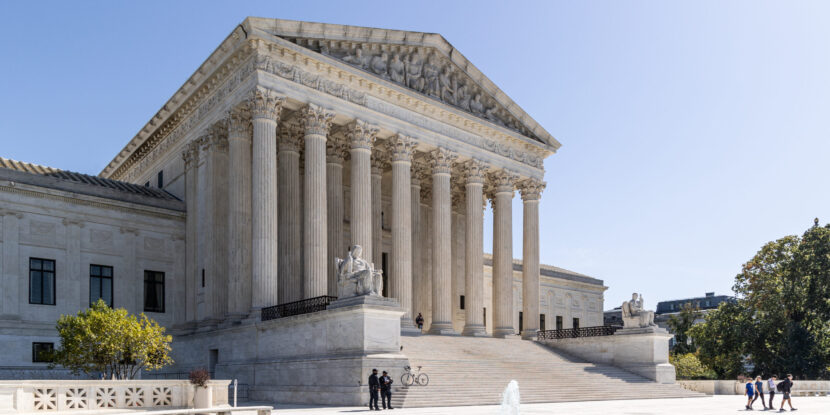
❓WHAT HAPPENED: The Supreme Court heard arguments on the legality of federal limits on coordinated political spending by parties in the case NRSC v. FEC.
👤WHO WAS INVOLVED: The National Republican Senatorial Committee (NRSC), National Republican Congressional Committee (NRCC), Vice President J.D. Vance, former Congressman Steve Chabot (R-OH), the Federal Election Commission (FEC), and court-appointed lawyer Roman Martinez.
📍WHEN & WHERE: Arguments took place on Tuesday at the Supreme Court in Washington, D.C.
💬KEY QUOTE: “The parties have been weakened overall, and this case… starts to restore the strength of parties,” said Justice Brett Kavanaugh.
🎯IMPACT: A decision could reshape campaign finance laws and is expected by mid-2026.
The Supreme Court on Tuesday examined the legality of federal caps on coordinated political spending by parties, a case that could further alter campaign finance restrictions. The dispute, NRSC v. FEC, challenges limits imposed by the Federal Election Campaign Act of 1971, which regulates financing for federal campaigns.
For the current election cycle, coordinated spending limits range from $61,800 to $123,000 for House races and up to $3.7 million for Senate races. The plaintiffs, including Vice President J.D. Vance, former Congressman Steve Chabot (R-OH), the National Republican Senatorial Committee (NRSC), and the National Republican Congressional Committee (NRCC), argue that these limits violate the First Amendment. A federal appeals court previously upheld the caps, relying on a 2001 Supreme Court ruling.
During oral arguments, Justices Clarence Thomas, Samuel Alito, and Brett Kavanaugh seemed inclined to strike down the limits. Kavanaugh expressed concerns about the weakening of political parties compared to outside groups like super PACs, stating, “The parties have been weakened overall, and this case… starts to restore the strength of parties.”
Chief Justice John Roberts and Justice Amy Coney Barrett questioned lawyers sparingly, while Justice Neil Gorsuch remained silent. Liberal justices, including Sonia Sotomayor, warned that removing the caps could lead to corruption. Sotomayor criticized the court’s past rulings on campaign finance, saying, “Every time we interfere with the congressional design, we make matters worse.”
Roman Martinez, the court-appointed lawyer defending the restrictions, argued that overturning the caps could unravel decades of campaign finance law. He cautioned, “You’re going to be deluged with petitions, the dominoes are going to fall, and you’re going to have to reconstruct campaign finance law from the ground up.” The court is expected to issue its decision by mid-2026, ahead of next year’s congressional midterm elections.
Join Pulse+ to comment below, and receive exclusive e-mail analyses.