





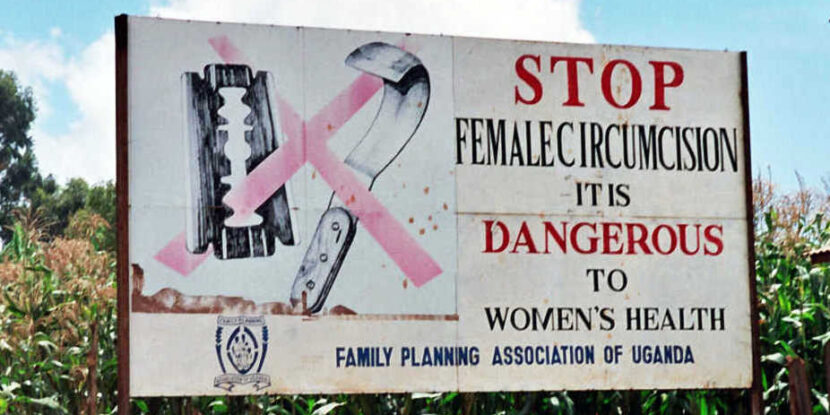

❓WHAT HAPPENED: A group of 25 academics has argued that laws banning female genital mutilation (FGM) are harmful and perpetuate stigma towards migrant communities.
👤WHO WAS INVOLVED: Scholars from the University of Cambridge, University of Bristol, Brighton and Sussex Medical School, and others contributed to the essay published in the Journal of Medical Ethics.
📍WHEN & WHERE: The essay was published in the British Medical Journal‘s Journal of Medical Ethics; FGM has been outlawed in Britain since 1985.
💬KEY QUOTE: “The British Medical Journal has published a ‘puff piece’ promoting FGC, [s]aying it’s perfectly fine for the community (not the individual) to control her body.” – Stanford Visiting Associate Professor Alice Evans
🎯IMPACT: The essay has sparked fierce criticism, with experts warning it downplays the severe physical harm caused by FGM and undermines efforts to combat the practice.
A group of 25 academics from top British universities has drawn criticism for arguing that laws prohibiting female genital mutilation (FGM) fuel stigma against migrant communities. In an article appearing in the British Medical Journal‘s Journal of Medical Ethics, they assert that resistance to FGM draws on “sensationalist” narratives and “racialised stereotypes.”
The authors, including researchers from the University of Cambridge, University of Bristol, and Brighton and Sussex Medical School, maintain that Western anti-FGM laws “can objectify girls and women as passive victims” while alienating immigrant groups and widening societal rifts. They also suggest swapping the term FGM for “female genital practices” to “account for cultural complexity and avoid the reductive and stigmatising force of the term ‘mutilation’.”
“Despite the laudable ideal for journalists to look at all sides of any story, mainstream media coverage of female genital practices in Africa has been heavily reliant on sources from within a well-organised opposition movement… In North America, Australia, and European countries like the UK and Sweden, such coverage has frequently fallen short of journalistic standards of impartiality, often using stigmatising and denigrating language that fuels suspicion and surveillance of migrant communities,” the writers complain.
FGM—the partial or total removal of external female genitalia for non-medical reasons, sometimes referred to as female circumcision—has been illegal in Britain since 1985. Bodies like the United Nations (UN) view it as a human rights abuse due to the intense pain and long-term health risks involved. Still, the article compares FGM to simple labiaplasty, a cosmetic surgery popular in the West, and questions why male circumcision doesn’t face the same level of scrutiny.
Stanford Visiting Associate Professor Alice Evans denounced the article as an example of “academia digging its own grave,” writing on X (formerly Twitter), “The article blames Western media for causing harm by wanting to tackle FGC. No where does it mention that this is intended to reduce pleasure and maintain patriarchal control”.
The BMJ Group is standing by its decision to publish the academics’ defense of FGM, arguing that the Journal of Medical Ethics features provocative opinions and does not necessarily support the views expressed. Groups fighting FGM stress that it inflicts severe, permanent damage, typically on young girls without consent. Somalia has the world’s highest rate, affecting 98 percent of women.
Image by Amnon s (Amnon Shavit).
Join Pulse+ to comment below, and receive exclusive e-mail analyses.





















.jpg)

.jpg)


.jpg)


