





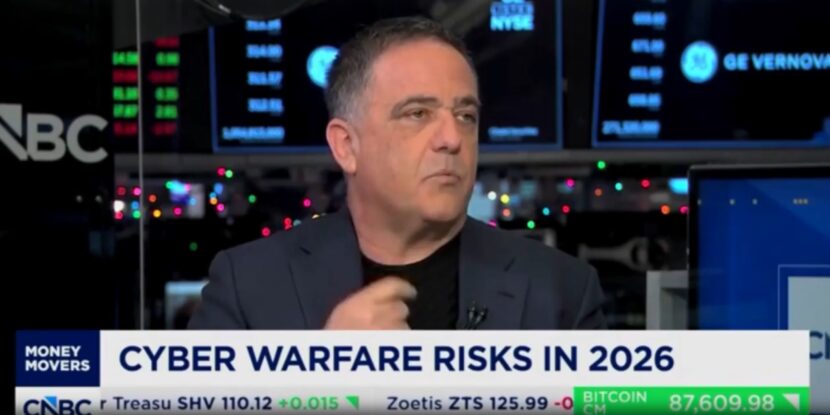
❓WHAT HAPPENED: Shlomo Kramer, co-founder of Cato Networks, called for limiting the First Amendment to address perceived threats posed by artificial intelligence and cyber warfare.
👤WHO WAS INVOLVED: Shlomo Kramer, CNBC hosts Sara Eisen and David Faber.
📍WHEN & WHERE: During an interview on CNBC’s “Money Movers.”
💬KEY QUOTE: “It’s time to limit the First Amendment in order to protect it,” said Kramer, advocating for government control over social media platforms.
🎯IMPACT: Kramer’s comments sparked widespread backlash online, with free speech advocates warning against the dangers of government censorship.
On CNBC’s “Money Movers,” Shlomo Kramer, co-founder of Cato Networks, argued that freedom of speech protections, such as the First Amendment, should be restricted to counter the challenges posed by artificial intelligence and cyber warfare. Kramer claimed that AI is revolutionizing cyber warfare and undermining democratic societies while giving authoritarian regimes an advantage.
Israeli billionaire Shlomo Kramer's New Year's resolution is to eliminate America's First Amendment.
"I know it's difficult to hear, but it's time to limit the First Amendment in order to protect it." pic.twitter.com/dOmb7DuLb1
— Chris Menahan 🇺🇸 (@infolibnews) January 2, 2026
Kramer proposed that governments should take control of social media platforms, ranking the authenticity of users and regulating their speech accordingly. “We need to control the platforms, all the social platforms,” he said. “We need to stack, rank the authenticity of every person that expresses themselves online and take control over what they are saying, based on that ranking.”
When pressed by CNBC host Sara Eisen, Kramer confirmed that he was indeed calling for government regulation of online speech. “The government should, yeah,” he said. “They should do that. And we need to educate people against lies.” He also emphasized the need for governments to develop advanced cyber defense programs to address the evolving threats posed by AI.
Kramer’s remarks quickly went viral on social media, drawing criticism from free speech advocates.
Join Pulse+ to comment below, and receive exclusive e-mail analyses.











.jpg)
