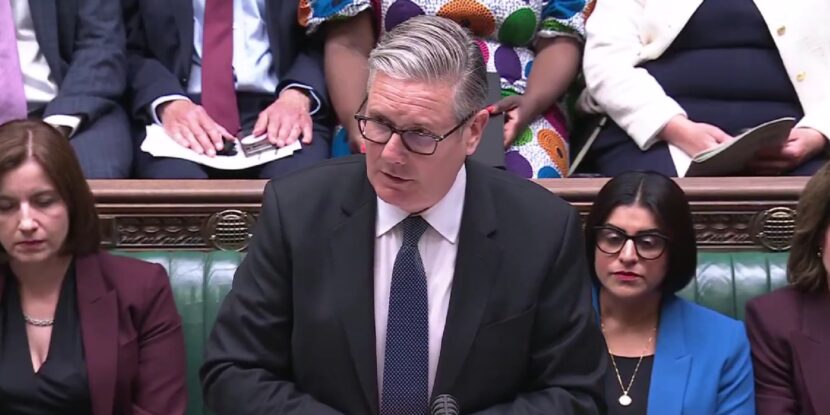



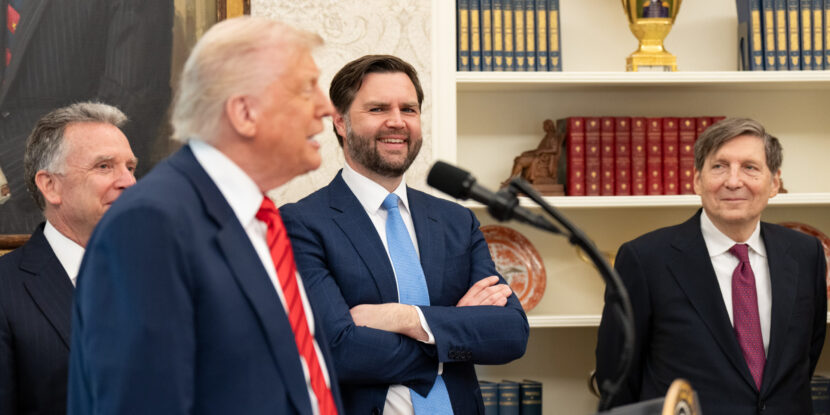
❓WHAT HAPPENED: Vice President J.D. Vance said that European leaders are more reasonable in private regarding U.S. interests in Greenland, despite public criticism.
👤WHO WAS INVOLVED: J.D. Vance, European leaders, Danish Prime Minister Mette Frederiksen, French President Emmanuel Macron, and President Donald J. Trump.
📍WHEN & WHERE: Recent remarks at the World Economic Forum (WEF) summit in Davos, Switzerland, and private discussions between U.S. and European officials.
💬KEY QUOTE: “A lot of this is posturing, right? If you’re a European leader, they have to seem like a tough guy against Donald J. Trump. So a lot of this, what we’ve seen, is more symbolic posturing for the Europeans. Behind the scenes, they’re much more reasonable.” – J.D. Vance
🎯IMPACT: The debate over Greenland has strained U.S.-Europe relations, with European leaders publicly rejecting U.S. ambitions to acquire the territory while acknowledging security concerns privately.
Vice President J.D. Vance has said that European leaders are more receptive in private to U.S. interests in Greenland than their public rhetoric suggests, revealing that recent statements are political posturing rather than genuinely immovable opposition. Vance acknowledged that European officials have been “incredibly hostile in public,” but added that “a lot of this is posturing, right? If you’re a European leader, they have to seem like a tough guy against Donald J. Trump.”
“So a lot of this, what we’ve seen, is more symbolic posturing for the Europeans. Behind the scenes, they’re much more reasonable,” he explained. “They’ve also acknowledged that, God forbid, something significant happened in Greenland, the United States would have to play the leading role in defending it,” he added, saying there is “broad recognition that much of what we said about Greenland is actually true, and it’s interesting to juxtapose the public posturing with the very reasonable private negotiations that we’ve had with the Europeans.”
Notably, when German forces overran Denmark proper in a matter of hours during World War II, it fell to the U.S. to move into Greenland to secure the Western Hemisphere against any attempt by Adolf Hitler to take control of it, even before America had entered the war.
Vance’s comments come amid rising tensions between Washington and European capitals over Greenland, the world’s largest island and a strategically critical territory in the Arctic. Greenland already hosts U.S. military infrastructure, including Thule Air Base, and is increasingly seen as vital for Arctic defense, shipping routes, and access to critical minerals.
At the World Economic Forum (WEF) summit in Davos, Switzerland, European leaders openly criticized U.S. Greenland policy, with French President Emmanuel Macron accusing Washington of “useless aggressivity” and “new imperialism” during a bizarre speech in which he wore Joe Biden-style Aviator sunglasses indoors. Danish Prime Minister Mette Frederiksen also claimed that “We can negotiate about everything politically—security, investments, the economy. But we cannot negotiate about our sovereignty.”
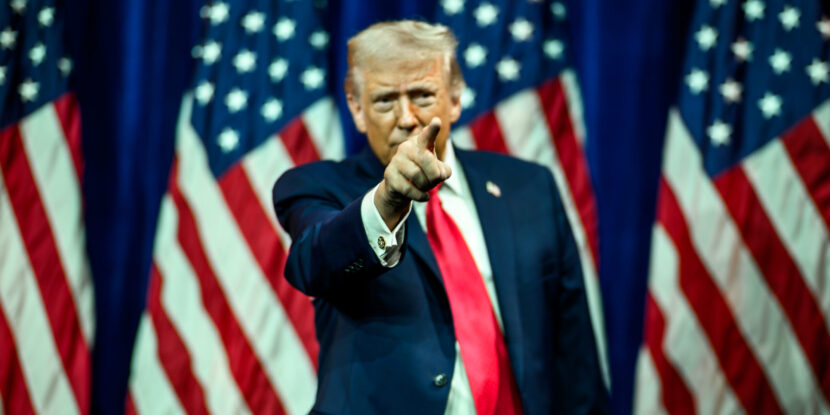
President Donald J. Trump announced following the summit that the United States and its allies had agreed to a “framework” concerning Greenland’s future, following discussions with NATO leadership. Trump has indicated the framework will address security cooperation and access to Greenland’s mineral resources.
In his own speech at Davos, he advised European leaders to focus on their failures on energy and mass migration rather than Greenland.
Join Pulse+ to comment below, and receive exclusive e-mail analyses.

 FLASHBACK: