



❓WHAT HAPPENED: The Trump administration announced plans to allow Venezuela to sell oil currently under sanctions, with revenue to fund basic government services and under U.S. oversight.
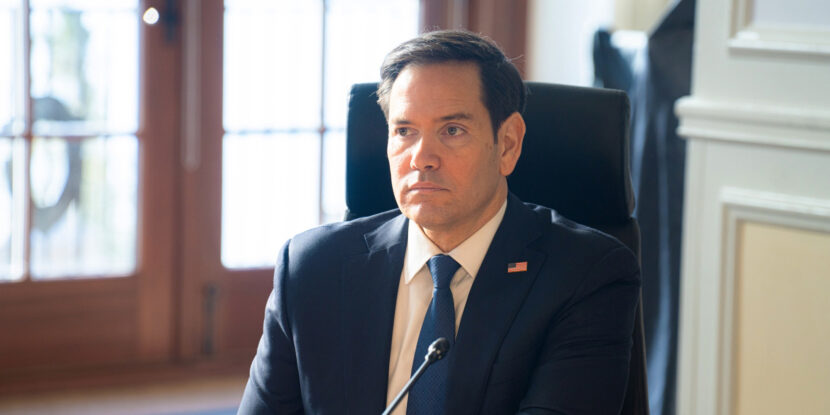
👤WHO WAS INVOLVED: U.S. Secretary of State Marco Rubio, Venezuelan interim leaders including acting Venezuelan President Delcy Rodríguez.
📍WHEN & WHERE: Rubio’s remarks were made on Wednesday at a Senate Foreign Relations Committee hearing, with developments in Venezuela ongoing.
💬KEY QUOTE: “The funds from that will be deposited into an account that we will have oversight over,” Rubio said, emphasizing U.S. control over the revenue allocation.
🎯IMPACT: The move aims to stabilize Venezuela’s economy and transition its oil industry while ensuring funds benefit citizens rather than corrupt leaders.
The Trump administration has announced plans to permit Venezuela to sell oil currently under sanctions, with the caveat that revenue will be directed to funding essential government services. U.S. Secretary of State Marco Rubio confirmed the arrangement during a Senate Foreign Relations Committee hearing, stating that the U.S. Treasury Department would oversee the process to ensure the funds are used appropriately.
“The funds from that will be deposited into an account that we will have oversight over,” Rubio said. He added that the revenue would be used for the benefit of the Venezuelan people, including funding for healthcare and public safety. The U.S. will not subsidize oil industry investments in Venezuela but will oversee the sale of petroleum as an interim measure to prevent economic collapse.
Rubio highlighted that under the South American country’s former Marxist dictator, Nicolás Maduro, Venezuela’s oil industry was exploited to benefit corrupt officials and communist states like China and Cuba. He noted that Venezuela’s interim leaders are now cooperating with the U.S. to seize illegal oil shipments. Revenue from oil sales is expected to flow into sovereign wealth funds, with one supporting healthcare services and the other improving public infrastructure.
Acting Venezuelan President Delcy Rodríguez confirmed that her government has established communication channels with U.S. officials. Rodríguez also announced efforts to revamp the country’s energy laws to attract private foreign investment. The U.S. fund for oil revenue was initially set up in Qatar to avoid legal complications and ensure American creditors do not seize the proceeds.
Rubio clarified that while the U.S. controls the dispersal of funds, the account itself belongs to Venezuela. “It’s an account that belongs to Venezuela, but it has U.S. sanctions as a blocking mechanism,” he said. Hundreds of millions of dollars have already been set aside, with as much as $3 billion more anticipated from future sales.
While Rubio’s comments suggest progress in transitioning Venezuela away from the practices of the Maduro regime continues, hurdles remain. The National Pulse reported on Monday that Rodríguez appears to be publicly breaking with U.S. President Donald J. Trump, delivering a sharp rebuke of American involvement in Venezuelan politics during a speech to oil workers in Puerto La Cruz last Sunday. “Enough already of Washington’s orders over politicians in Venezuela,” she said, calling for the country to resolve its own internal conflicts.
Join Pulse+ to comment below, and receive exclusive e-mail analyses.