





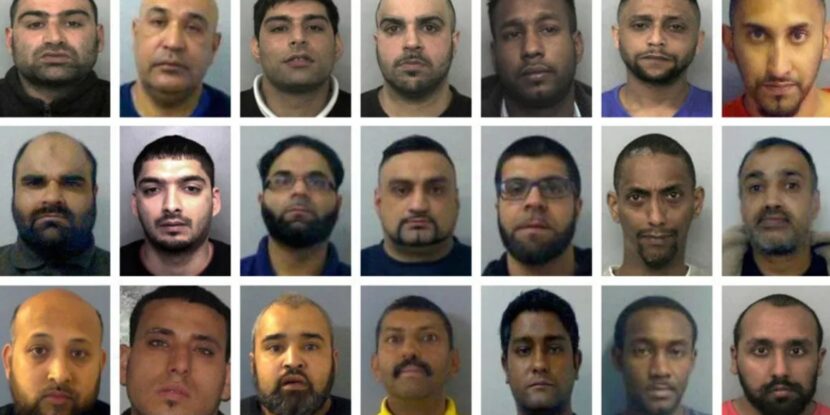
❓WHAT HAPPENED: The British government has disbanded a victims panel that was advising a national inquiry—roughly equivalent to a U.S. presidential commission—investigating the largely Muslim, Pakistani heritage rape gangs operating across the country.
👤WHO WAS INVOLVED: Baroness Longfield, of Prime Minister Sir Keir Starmer’s Labour Party, survivors like Fiona Goddard, and opposition figures such as Reform Party leader Nigel Farage.
💬KEY QUOTE: “Survivors were told they had a voice and then it was taken away from them.” – Grooming gang survivor Fiona Goddard
🎯IMPACT: Survivors feel betrayed, and concerns have been raised about the inquiry’s scope and credibility.
The British government has disbanded a victims’ advisory panel that had been supporting a national inquiry—roughly equivalent to a U.S. presidential commission—investigating endemic child sexual abuse by mostly Muslim, Pakistani heritage grooming gangs, and the failure of authorities to protect vulnerable girls from them. The removal of victims from the process has caused anger among survivors and campaigners.
The panel was set up to ensure survivors’ experiences informed the inquiry, which is examining decades of abuse linked to organised grooming networks targeting predominantly white girls, as a major component of the scandal was the police and other authorities disregardng the testimony and experiences of victims. Survivors say the panel being scrapped undermines assurances that their voices would, for once, become central in a major investigation.
Fiona Goddard, who was abused by a grooming gang in Bradford, said: “Survivors were told they had a voice and then it was taken away from them.” Another survivor accused Prime Minister Sir Keir Starmer’s government of using the panel to neutralise criticism, saying: “It should have been ongoing until the inquiry was complete.”
The government now claims the panel had always been intended as a temporary body and that survivor engagement would continue in other ways. Baroness Longfield, the Labour Party lawmaker who is chairing the inquiry, claims she plans to work directly with survivors as the investigation progresses.
The inquiry itself has been contentious from the outset. Prime Minister Starmer initially opposed launching it and previously described some campaigners pushing for a grooming gangs inquiry as part of the “far right.” He reversed his position last year under sustained political and public pressure, formally opening the inquiry in June.
Recent official findings proved that investigators have avoided examining the ethnicity of suspects and their victims, despite internal data revealing a disproportionate number of perpetrators were Muslims of Pakistani heritage and their victims were largely white working class. Reviews found that police and social workers sometimes failed to act against suspects or dismissed child victims as “promiscuous” or “troublesome,” partly out of fear of being accused of racism if they took on the groomers. Following those findings, authorities agreed to reopen hundreds, and potentially more than 1,000, historic cases.
Join Pulse+ to comment below, and receive exclusive e-mail analyses.







.jpg)


