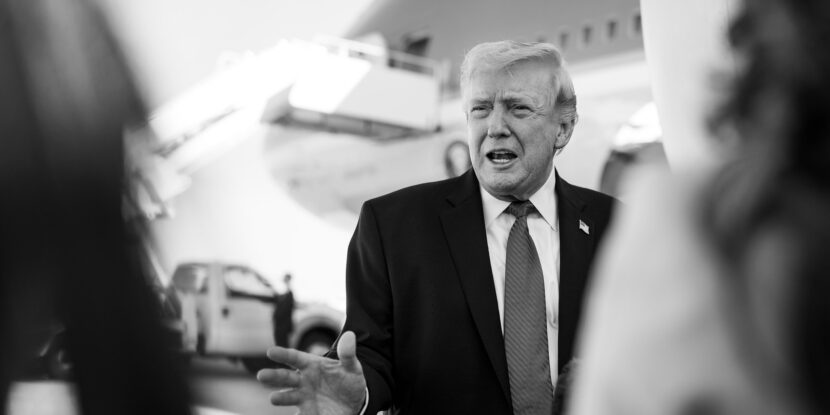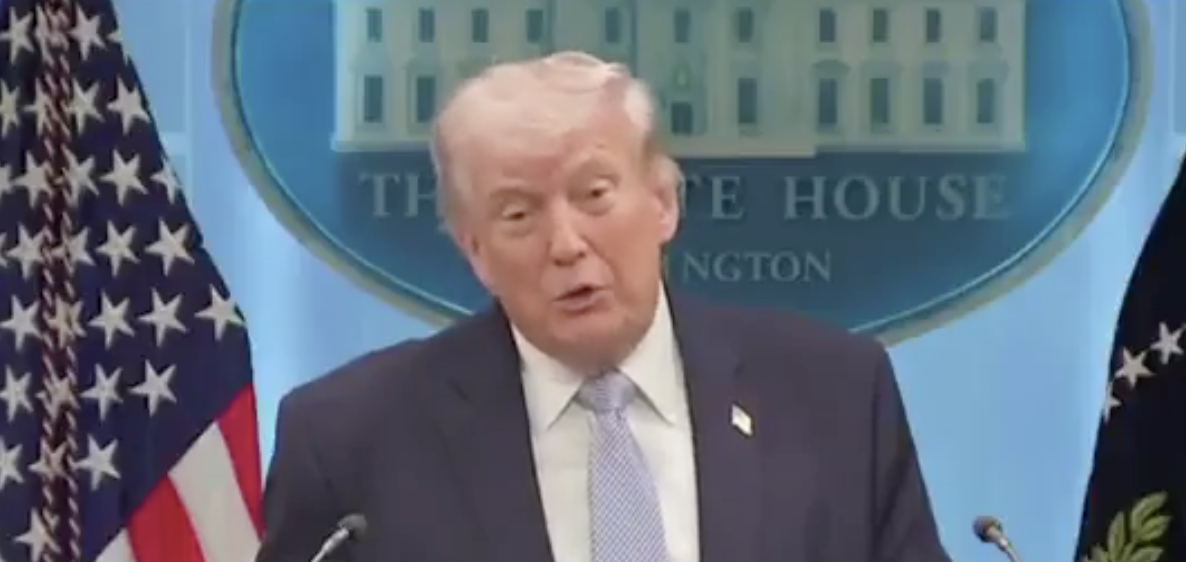



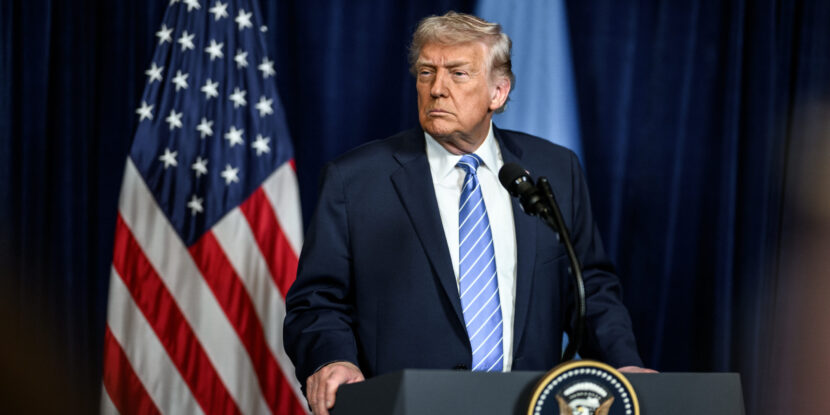

❓WHAT HAPPENED: Speaking at the White House just hours after the U.S. Supreme Court struck down most of his trade levies, President Donald J. Trump alleged the high court’s majority was “swayed by foreign interests.”
👤WHO WAS INVOLVED: President Trump, the Supreme Court, and foreign powers.
📍WHEN & WHERE: February 20, 2026, at the White House.
💬KEY QUOTE: “It is my opinion that the court has been swayed by foreign interests.” — President Trump
🎯IMPACT: Citing Section 301 of the 1974 Trade Act and Section 232 of the Trade Expansion Act of 1962, Trump said he is ordering the sectoral and national security tariffs to remain in effect—while reimposing the 10 percent universal tariff under Section 122 of the 1974 law.
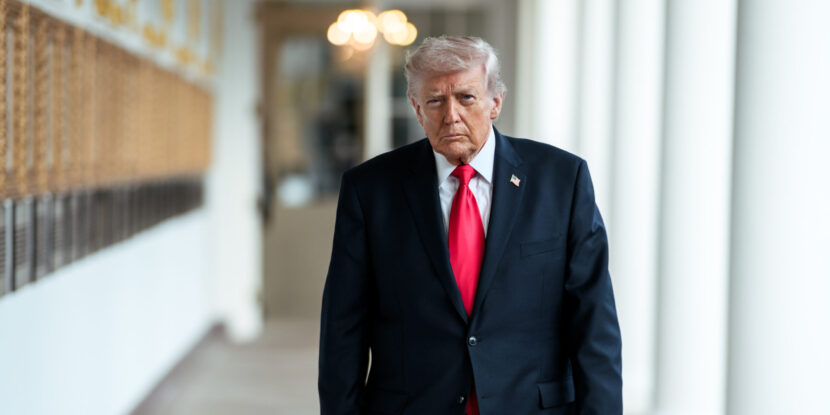
President Donald J. Trump blasted the U.S. Supreme Court’s ruling that his imposition of tariffs under the International Emergency Economic Powers Act (IEEPA) was unlawful. Speaking at the White House just hours after the high court struck down most of his trade levies, President Trump alleged the Supreme Court’s majority was “swayed by foreign interests.”
“The Supreme Court’s ruling on tariffs is deeply disappointing, and I’m ashamed of certain members of the court, absolutely ashamed, for not having the courage to do what’s right for our country,” the President said, continuing, “I’d like to thank and congratulate [dissenting] Justices [Clarence] Thomas, [Samuel] Alito and [Brett] Kavanaugh for their strength and wisdom and love of our country, which is, right now, very proud of those justices.”
Trump said that while some foreign countries—notably the United Kingdom—are celebrating, “They won’t be dancing for long.” He went on to state, “Others think being politically correct which has happened before far too often with members of this court. They are just being fools and lapdogs for the RINOS and radical left Democrats. They are very unpatriotic and disloyal to our constitution.”
“It is my opinion that the court has been swayed by foreign interests,” the America First leader declared, while noting that the majority did concede that the President has the power to embargo and cut off foreign trade entirely under IEEPA. President Trump went on to cite several other federal laws, as outlined by Justice Brett Kavanaugh, that allow him to impose tariffs.
Citing Section 301 of the 1974 Trade Act and Section 232 of the Trade Expansion Act of 1962, Trump said he is ordering the sectoral and national security tariffs—which comprise around a third of those he imposed—to remain in effect. Importantly, these tariffs were not addressed by the Supreme Court’s ruling. Further, the President reimposed the 10 percent universal tariff under Section 122 of the 1974 Trade Act and will direct a new round of Section 301 investigations, which will likely result in additional trade levies in the coming weeks and months.
Join Pulse+ to comment below, and receive exclusive e-mail analyses.