





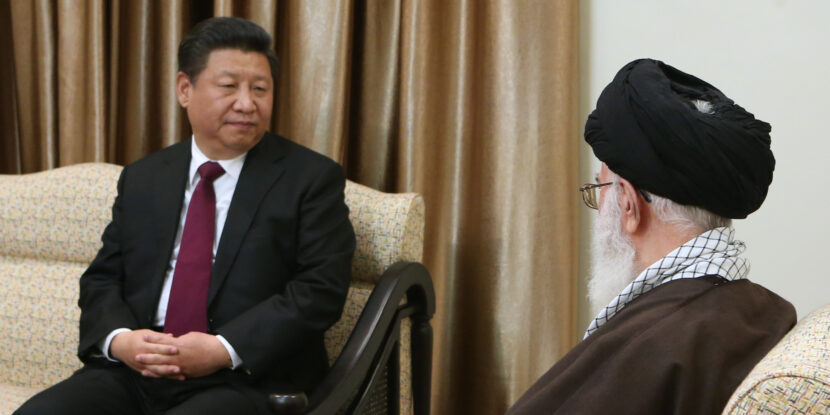
❓WHAT HAPPENED: China has expressed opposition to military strikes launched by Israel and the U.S. against Iran, calling for an immediate end to hostilities.
👤WHO WAS INVOLVED: Chinese Foreign Minister Wang Yi, Israeli Foreign Minister Gideon Saar, and other international officials, including Russian Foreign Minister Sergei Lavrov.
📍WHEN & WHERE: Wang Yi intervened during a phone call on Tuesday following U.S. and Israeli strikes on Iran over the weekend.
💬KEY QUOTE: “Force cannot truly solve problems; instead, it often creates new ones and leaves serious long-term consequences,” said Wang Yi.
🎯IMPACT: Explosions in Tehran and Beirut, Lebanon, have disrupted global energy markets, with China calling for dialogue and negotiation to address the crisis.
China is officially demanding that the United States and Israel cease their military operations against the Islamic Republic of Iran. Chinese Foreign Minister Wang Yi conveyed this stance during a phone call with Israeli Foreign Minister Gideon Saar on Tuesday, according to a statement from China‘s Foreign Ministry.
“Force cannot truly solve problems; instead, it often creates new ones and leaves serious long-term consequences. The real value of military power lies not on the battlefield but in preventing war,” Wang was quoted as saying during the call. Wang emphasized China’s commitment to resolving international and regional issues through dialogue and negotiation, pledging to play a constructive role in de-escalating the situation.
In addition to his conversation with Saar, Wang held discussions with the foreign ministers of Iran, Oman, and France on Monday, urging Gulf nations to unite against external interference. He also spoke with Russian Foreign Minister Sergei Lavrov on Sunday regarding the war. However, Wang has not yet communicated with U.S. Secretary of State Marco Rubio.
Notably, China purchases between 80 and 90 percent of Iranian oil—at a discount—because Western sanctions largely prevent the Islamic Republic from selling petroleum on the global market. Some estimates suggest that Iranian oil accounts for between 10 and 15 percent of China’s total energy imports, with Venezuela having accounted for another 10 to 15 percent until the U.S. removed dictator Nicolás Maduro from power.
The disruption of Iranian oil exports to China could have significant impacts on the Chinese economy—already reeling from U.S. President Donald J. Trump’s tariffs—though it is believed that China had built up some temporary reserves before the American and Israeli strikes against Iran began.
Join Pulse+ to comment below, and receive exclusive e-mail analyses.











.jpg)


