


Thursday, October 29, 2026

WE ARE 100% INDEPENDENT AND READER-FUNDED. FOR A GUARANTEED AD-FREE EXPERIENCE AND TO SUPPORT REAL NEWS, PLEASE SIGN UP HERE, TODAY.

WATCH: Trump Delivers Commencement Speech to ‘First Graduating Class of the Golden Age of America.’

PULSE POINTS:

❓What Happened: President Donald J. Trump delivered a commencement address at the University of Alabama.

👥 Who’s Involved: President Trump, University of Alabama graduates, university officials, family members, and Alabama political figures including Governor Kay Ivey (R) and Senator Tommy Tuberville (R).

📍 Where & When: The speech occurred at the University of Alabama in Tuscaloosa on Thursday.

💬 Key Quote: “You’re the first graduating class of the Golden Age of America,” Trump told the graduates, highlighting his view of the current period as a time of renewal.

⚠️ Impact: The speech framed America, 250 years after the Revolution, as being in the midst of another rebellion against a political establishment rejected by voters in the 2024 election.

IN FULL:

President Donald J. Trump spoke Thursday at the University of Alabama’s commencement, commending them as the inaugural graduates of “the Golden Age of America.”

“Now, exactly 250 years after the first patriots stood and fought at Lexington and Concord, we’re in the midst of another kind of revolution—a revolution of winning and a revolution of common sense,” the America First leader said, declaring that “the spirit of our age is one of boldness, vigor, ambition, and adventure.”

“And it’s exciting to be you—and young. Oh, I’d pay you a lot of money to have your age,” he joked, promising the graduates “a great future.”

WATCH:

READ THE FULL TRANSCRIPT:

Thank you, Coach. Wow, what a nice-looking group this is. What a beautiful group of people. And especially a very big hello to the University of Alabama. Congratulations to the class of 2025. Roll Tide.

There are things that happen in life that are very important, and you always remember where you were when they happened. As a student at Alabama, you’ll always remember where you were when your head coach, Nick Saban, retired. Remember that? Because he’s done such a fantastic job. The last time I was here—and that’s true with Nick—what a great coach. Let’s bring him back. No, you have a good coach right now, though. I had a good coach right down. He was great. But the last time I was here, the Crimson Tide beat the Georgia Bulldogs, 41 to 33. I was here, I got to watch it. That was some game.

Today it’s my pleasure to return to this campus as the first president ever to deliver the keynote commencement address to this truly great American university. It’s a great school. And there’s nowhere I’d rather be than right here in Tuscaloosa, Alabama, Titletown, USA. That’s what it’s become. And I love this place. Maybe it’s because I won Alabama by 45 points. Could that be the reason? You know, the way they say, like, the polls have closed in Alabama, Trump has won Alabama immediately. It was very quick. It’s very, very quick and nasty. That’s what we like.

They put all seven of your commencement ceremonies—I don’t know if you know this—but they put them all together. First time ever. So I better do well, or I’m in big trouble. But I want to thank President Bell for his 10 years of distinguished service. Highly respected gentleman. Ten years of service to this great university, overseeing the education of 100,000 proud Alabama graduates. That’s something to have on your record.

I also want to thank Alabama Governor Kay Ivey, who’s here with us. I just took a picture. I said, you’re doing a great job. Along with a very wonderful man, a friend of mine, Senator Tommy Tuberville. Where’s Tommy? When he wanted to run for the Senate, you know, I said, well, you beat Alabama six times in a row. How can you run for Senate? He said, well, I just look at them and say, well I was responsible for them getting Nick Saban. I said, that’s a good reason. And he won very easily. He won. But I’ll never forget that.

Thanks also to a wonderful person, Representative Lisa McLean—a great person, highly respected. Gary Palmer, Robert Aderholt, Dale Strong, Ronnie Jackson, Ralph Norman, along with Lieutenant Governor Will Ainsworth, Alabama Attorney General Steve Marshall, Alabama Secretary of State Wes Allen—great people. Alabama Senate President Pro Tem Garland Gudger, Chancellor Sid Trant, and members of the University of Alabama Board of Trustees.

But most importantly, and they would agree with this, let’s give a big round of applause to your incredible parents, grandparents, and family members. Because they made this wonderful day possible. Are you great without them? It doesn’t happen without them. You probably aren’t here, and you wouldn’t have that big, beautiful smile on your faces.

This year, the graduating Alabama class of 2025 has over 6,600 graduates. You’re the largest class in school history. Among your ranks are 800 first-generation college students and nearly 3,000 students from right here in the great state of Alabama. Amazing.

This class also includes many Rhodes Scholars, Goldwater Scholars, 213 Merit Scholars, and over 1,500 students graduating with red caps. You know what that signifies? 4.0 GPA. That’s a lot of students. That’s pretty good. I know who I’d pick. I’d look for a red cap. I’d say, I want you to work for the beautiful Trump administration, this lovely administration.

In addition, the class of 2025 has nearly 130 active-duty service members, veterans, and members of the University of Alabama ROTC. Thank you very much.

Everywhere you look, you can see the fierce spirit of this school—but nowhere more clearly than in your world-class athletics. There’s nothing like it. Probably there’s no school like it. That’s why I would like to recognize the 11 graduating seniors on the University of Alabama football team. Where may they be? Where are they? You just have to look, and they’re about a foot taller than everybody else. Oh, great. Thank you very much. Congratulations. Great season. Thank you. Thank you. Great season.

There is something truly special about the players, coaches, and the fans who pack the stands at Bryant-Denny Stadium and proudly sing “Dixieland Delight.” We like that. Alabama has changed college football forever and inscribed into the history books the names of Bear Bryant, Joe Namath, four Heisman Trophy winners, and, of course, the great Nick Saban. This place is truly where legends are made. It really is. It’s a special place.

When your president called, we talked about it. It took me about two seconds to say, I’ll go. I wasn’t looking to do it, and we are busy. You know, we’re winning a lot of battles right now. We love winning. Don’t we love winning? We’re winning. But I wanted to do this.

For the University of Alabama, good isn’t good enough, tough isn’t tough enough, and great isn’t great enough. The Crimson Tide does not rest, does not quit, and does not stop winning until it’s all time. You know, it’s all time—you’re always winning, and you’re going to keep winning.

That’s why the University of Alabama football team has won more games in the last decade than any college football team in America. That’s not bad. And it’s why last fall you beat Auburn for the fifth year in a row. That’s not bad.

The University of Alabama has a brand, and that brand is winning. That brand is a great school. Last year, the Crimson Chaos watched the Tide hoops make it to the Final Four for the first time ever. And this year you built on your incredible record and returned to the Elite Eight. So not only is Alabama a great football school, it’s now one of the nation’s best basketball schools. And congratulations.

And I love sports, and I think I should have come here. I think I should have come here.

Congratulations as well to the women’s track and field team for winning two SEC titles this year. That’s something. As long as we can keep going, we’re going to win.

And as long as I’m president, we will always protect women’s sports. Men will not play in women’s schools. No way! They say that’s an 80–20 issue. No, it’s a 97–3 issue, I think. No, men will not be playing in women’s sports. I said that, and I classified it with a very powerful executive order, as you know. It’s done.

The class of 2025 was the first to enter the halls of this university in the aftermath of COVID-19. Following a difficult senior year of high school, many of you came here to Tuscaloosa from around the country. And for the very first time, you experienced something called freedom. You had freedom.

So let’s give a big round of applause to the leaders of this state who chose liberty over lockdowns. They did. They did a good job.

As you know, there are few campuses in the world more beautiful than this one, and there are few memories sweeter than the ones you have formed at the Capstone. You’ll miss the beautiful sounds of Denny Chimes, the excitement of lining the Walk of Champions, the Saturday tailgates at the Quad.

As you graduate, it’s natural to reflect on four years of happy memories, and you’ve really had happy memories here. You’ve done a lot of winning. Winning is a good thing to do.

But today I’m also asking you to look forward to something very, very bright and more promising. And it’s going to be an even more promising tomorrow. I promise you that. You’re the first graduating class of the Golden Age of America. We’re in the Golden Age. You watch. There’s a goal there, man. This is the Golden Age. We’ve done things that nobody thought possible.

One hundred days—yesterday was 100 days—and we’ve done things that nobody thought even possible. Like many generations before you, you’re graduating at an exciting time for our nation, a period of both extraordinary change and incredible potential and what will be unbelievable growth. You’re going to see that very soon. You’re gonna see it starting very, very soon when the whole world is talking about it.

Our country has always been defined by its ability to reform and reinvent itself to meet the challenges of the next era. The last four years were not good for our country, but don’t let that scare you. It was an aberration. We were run by people who truly, at that time—four years—we were run by people that didn’t have a clue. They didn’t have a clue, and I’m trying to be nice when I say it that way.

They allowed our beautiful USA to be laughed at, scorned, and taken advantage of. We were ripped off on trade by nations all over the world, both friend and foe—and oftentimes a friend was far worse on trade than the foe. But those days are over.

You’re at the start of something very, very big. You’re going to see that very soon.

Now, exactly 250 years after the first patriots stood and fought at Lexington and Concord, we’re in the midst of another kind of revolution—a revolution of winning and a revolution of common sense.

Everywhere you look, broken systems, corrupt institutions, and tired dogmas are being swept away by the tide of history. Ancient wisdom is being rediscovered, and the best and strongest traits of America are coming back for all to see—bigger, better, and greater than ever. They’re coming back, and they’re coming back fast.

The spirit of our age is one of boldness, vigor, ambition, and adventure. And it’s exciting to be you—and young. Oh, I’d pay you a lot of money to have your age. You have a great future.

The people have rejected the voices of a failed establishment. You saw that in the election. We’ve turned the page on endless wars, crippling debt, open borders, ruinous inflation, and the lack of respect for our country and for its leaders. But we’re turning that all around, and we’re turning it around very fast.

We will very quickly make America great again.

This week, we’re celebrating the most successful first 100 days of any presidential administration in the history of our country. We’ve been given a lot of credit for that. But 100 days does not a full term make. We’re going to do even better as we move along.

In a matter of weeks, we’ve achieved the lowest number of illegal border crossings ever recorded. And you’ve seen it—hundreds of thousands of people pouring into our country from prisons, from mental institutions, from gangs, and from all over the world—not just in South America. You’d see hundreds of thousands of people pour across in one day.

You know what we had just recently? Three. Three. Three.

And we slashed the number of illegal aliens released into the United States by 99.999%. And if that number is wrong, the fake news—which is all over the place today—is going to be correcting me before I get to the next sentence. But 99.999%—how about that? Nobody thought that was possible. They said you needed legislation. No, you just needed a new president. That’s what you needed.

But despite the tremendous success, as you’ve been reading, the courts are trying to stop me from doing the job that I was elected to do. We won by millions of votes. We won all seven swing states—seven out of seven. We won 312 electoral college votes. They said, oh, 270 would be great. We won 312. And 2,750 counties versus 525 counties throughout the nation. And that’s why, when you look at a map, it’s all red. It’s all red. Every inch of it is red—a couple of little blue dots.

But they have to let us do the job that the voters want us to do. Judges are interfering, supposedly based on due process. But how can you give due process to people who came into our country illegally? They want to give them due process? I don’t know.

We’ve created 350,000 new jobs and brought core inflation down to its lowest level in many, many years. Energy is down—look at your cost of energy, way down. Groceries are down. Even eggs are down. Remember, I came in—I was here a week—and they started screaming at me, the fake news: “Egg prices have doubled!” I said, “I just got here. I’ve been here for four days.” I said, “Tell me about egg prices.” “They’ve doubled!” Well, they didn’t double under me. I just got there, and we did a great job.

We brought down the cost of eggs. In fact, they said, you won’t have eggs for Easter. They wanted to give—we have a big Easter egg hunt at the White House. You saw it just take place. And they thought we should order thousands of plastic eggs. Plastic! They said, no, we’ll do it. And we straightened out the egg situation very quickly. Our great Secretary of Agriculture did a fantastic job, and we had so many eggs, we didn’t know what the hell to do with them.

And prices of eggs have gone down 87% since I took office. That’s something, right?

But the price of food has gone down, and mortgage rates are down, and gasoline prices just hit $1.88 a gallon in three states. Can you believe it? It was at $3.50. It was $4. We’re drilling—oh, we’re drilling. You know: drill, baby, drill. We drill, baby, drill. We do that. We got it down. We have it going good. And you know when energy drops that much, you don’t have much inflation. It’s hard to have inflation.

It was just announced that in the first quarter, investments in the United States are up 22%—that we’re leading the whole world in investment. Everybody’s pouring into our country with big dollars. And it’s all about November 5th—the November 5th election—and tariffs and incentives that we’ve given that are gonna make this country so much richer.

We have $36 trillion in debt. That’s going to start to come off. It’s going to come off rapidly. But we’ll be over $8 trillion in investment—with Apple and others investing $500 billion each. We’ve never had a period of time—two months, because we’re here for three months, a little bit more. But give me a break for the first month, you know, had to get a little acclimated. Had to see where the enemy lies, because they’re already looking to impeach Trump. You know these crazy people—”Let’s impeach him!” For what? “We don’t know exactly, but we’ll try it!” These people are crazy.

So we had to get our bearings for the first couple of weeks. So in two months we had over $8 trillion—think of it—committed. Nobody’s ever seen anything like it. There’s never been anything like it in any country at any time. And it’s all because they want to avoid the tariffs. They want to get here fast.

And I said, you know, a number of times, “Tariff”—it’s the most beautiful word in the world. And absolutely decimated by the fake news. They said, “What about love? What about your wife? What about your parents? What about religion and God?” So I said, “All right, it’s the fifth nicest word I’ve ever seen.” And since I’ve done that, I’ve been in good shape. Nobody’s bothered me. They’ve been very nice.

So it’s the fifth most beautiful word I’d ever heard. But it’s making us very rich. And you’ll be seeing the results pretty soon—sooner than most people think. Because that’s what other countries have been doing to us, just so you understand. They were tariffing the hell out of us. We couldn’t sell cars in Europe. We couldn’t sell cars in China. We couldn’t sell cars in Japan or anywhere else. We couldn’t do anything. And all we’re doing is—we’re doing it to them. But we’re doing it much better.

And the U.S. military is suddenly seeing its best recruiting numbers ever. We’ve never had numbers like this. We now have waiting lists because there is such incredible spirit in our country. There’s a great spirit.

And just think—six months ago, and you remember—it was embarrassing. Before the election, for six months we were hearing and reading that numbers of those joining our military were at the worst levels ever. We’ve never had anything like it, right? You remember that?

And now they’re at the best levels ever. We have waiting lists to get into the military. We couldn’t fill the positions. And that included in our police forces, our fire departments. We love our fire department also. We can never forget our fire departments. But our police forces were begging for help. And now they’re brimming over with people and applicants, and they’re getting great people. It’s amazing what’s taken place. And that’s really the spirit.

Each of the graduates in this arena will soon have the chance to help lead this project of national renewal. And that’s what it is—it’s a national renewal. We suffered so badly for four years. We had one of the greatest economies—we actually had the greatest economy in the history of our country—during the first term of Trump. And then we got hit hard with inflation.

During the Biden economy, it was horrible. We were hit so hard—the worst probably ever. They say 48 years—we’ll accept that. But I would say ever.

You’ll embrace this moment, and you’ll step forward with strength and grit, faith and patriotism to put America on a new trajectory for your children. And then you’ll take your place among the greatest generations in the history of our country. I think you have a chance to be the greatest generation in the country, because we’re turning it around—and you happen to be available. You’re available. That’s a good time to be available. There are some times when it’s not so good to be available, but this is a great time.

I’m absolutely confident that the Alabama class of 2025 is up to the task. Are you up to the task? You learned a lot about winning here at Alabama. And now we need you to help win for America.

For the business majors here today, I challenge you not merely to use your talents for financial speculation, but to apply your great skills that you’ve learned and had to forging the steel and pouring the concrete of new American factories, plants, shipyards, and even cities, which are going up all over our country.

Don’t just build a strong portfolio—build a very, very strong America. And you’re going to do that.

To the engineers—brilliant you are—technicians, scientists and math majors, we need your Alabama spirit and competition to keep our country at the forefront of every single domain. America should have the world’s tallest buildings, design the fastest airplanes, build the greatest cars, do everything the absolute best—better than any other nation in the world—and you can do it.

And we will soon land American astronauts on Mars. That will happen. That will happen.

In every field you have studied, there are problems to be solved and breakthroughs to be made.

To the journalism majors—of which I’ve had a lot of problems with, I must be honest—I’m not sure I like them. No, I do. I do. But you’re really leading a very important thing, because we need a great and free press. We need a brilliant press. They’re like a watchkeeper. They are very important, and you can go and take it down a new track. Help save the country. So important. Your task is so important, and it’s to build a media that Americans can trust. And remember: the people of this country, they know the truth when they hear it. That’s why the ratings, the approval numbers of the media, are so low. We need those ratings to be 100%. We have to be able to trust our media.

They say you have to have that. You need strong, strong borders, and you need really free, fair, clean elections. You need those things. But the media is a big part of it.

In the world of health and medicine, there is an exciting new movement to get poisons out of our food supply, keep toxins out of our government, clean out our environment, and make America healthy again. And I think Bobby’s gonna do a great job, don’t you? I think so. I think he’s the guy we needed.

And in government, it is the task of your generation to replace bureaucracy, graft, and waste with a new system that defends American freedom. These are big tasks before you. But the reward for your hard work will be that the United States of America is stronger, prouder, better, and more unified than ever, ever, ever before. It’s going to be.

As you embark on this great adventure, let me share some of the biggest lessons I’ve learned from a lifetime spent building dreams and beating the odds. I beat a lot of odds. A lot of people said, “I don’t know,” but it worked out okay. Where are we? Oh gee, I’m president. How did that happen?

Now, you’re going to be in the same position. Would you like to hear some of these ideas or should I just skip over that part, huh? That’s going to be more interesting than all the other stuff, which was slightly political, right? I’m going to give it to you, though—just as I see it and as I’ve learned it, the hard way and the easy way.

First, if you’re here today and think that you’re too young to do something great, let me tell you that you are wrong. You’re not too young. You can have great success at a very young age. You’re all very young. In America, with drive and ambition, young people can do anything.

I was 28 when I took my first big gamble—to develop a hotel in Midtown Manhattan, the Grand Hyatt—and it worked out incredibly well. But I was very young at the time. I was like a very young person in sort of an old person’s business.

Steve Jobs was 21 when he founded Apple. Walt Disney was 21 when he founded Disney. James Madison, James Monroe, Alexander Hamilton, Thomas Jefferson—they were no older than 25 when they began the journeys that etched their names into the history books for all time.

So to everyone here today: Don’t waste your youth. Go out and fight right from the beginning—from the day you leave this incredible university. Go out and fight. Fight tough, fight fair—but go out and fight. You’re gonna be very successful, because now is the time to work harder than you have ever worked before. Push yourself further than you have ever pushed yourself before. Find your limits—and then smash through everything. Go and smash through.

You’ve watched that football team smash through—you’re gonna do the same thing. You’re at the age when you have the time and vitality to do really incredible things, if you give it your all. You’ll look back, and a decade from now, you’ll be astounded by what you’ve achieved.

You’ll remember this day. You’ll remember when the guy named Trump was giving the commencement address and he said, “I could do it.” And guess what? I think you’re going to remember that very fondly. I hope so.

Second of all, and very importantly, you have to love what you do, okay? You have to. I rarely see somebody that’s successful that doesn’t love what he or she does. That way, you really like work—it isn’t work. It’s fun. I find it fun. I work all the time, and I find that fun. If I didn’t find it, I wouldn’t be successful—whether it was real estate or in showbiz. I had a lot of different careers.

But I loved real estate so much. I was very successful in real estate because I loved it. I learned a lot from my father because I watched him work. He was a workaholic. He loved to work. He was a good man. He was a tough guy—tough as hell, actually. Now that I think back, I don’t know if you could even get away with that nowadays. He was tough, but he was a good man, I’ll tell you.

He worked seven days a week. He worked Saturdays, Sundays—it didn’t matter. And I learned by watching him. He loved his life. He loved what he was doing. He had a great long-term marriage—many, many, many years. He beat me on that one. Now, mine were very successful, but they haven’t lasted quite as long. It was close to 70 years. That was a long time. I said, “Pop, you beat me on that one.”

But you know what I learned from him? That he loved life. And all he did was work. I see people that don’t work hard and they’re miserable. So go out and find something you love—and do it.

You have to find something that you love, and you have to follow your own instincts. Listen to your parents—they’re very wise—but you have to follow your instincts and your heart, your soul, and you want to be the very, very best you can be. Treat every day like a home game against Auburn. Fight like hell and enjoy doing it—and your coach can tell you all about that.

Third thing is to think big. You know, if you’re going to do something, you might as well think big, because it’s just as tough. You can think small—I know a lot of people, they thought small. They’re very smart. I know others that weren’t nearly as smart, but they had a better picture of the big picture. Because it’s just as hard to solve a small problem as a big problem. It’s just as much energy and everything else, except the result is going to be a smaller one.

So love what you do—but think big, if it’s possible. Now, if it’s not possible, that’s okay too. You do something—you have to do something that you love. You will have all the same headaches and challenges, all the same delays and setbacks, so you might as well do something that’s just amazing.

America doesn’t aim small. Alabama doesn’t aim small. And neither do you. So think big when possible. Think big.

Fourth is work hard. Work hard. Never, ever stop. An example is a great athlete actually—Gary Player, golfer. Great, great golfer. He wasn’t as big as other men. He was actually on the small side—don’t tell him that, he’s a friend of mine. Don’t tell him that, because he doesn’t understand that. But he worked very, very hard. He made up for it. He never stopped. He won 168 golf tournaments—think of that. I said, “Gary, you’re winning like every weekend. Do you ever choke or anything?” He said, “I don’t know what choke means.”

And he made a statement years ago that I read, and I thought it was sort of an incredible statement. He said, “It’s funny—the harder I work, the luckier I get.” Think of that. “The harder I work, the luckier I get.”

So you really have to work hard. And you’re going to be successful, because you have the talent to get into this school. It’s not easy to get through it—it’s even more difficult. You have a lot of talent.

Fifth is don’t lose your momentum. You just want to keep it going. And you have to know if you are losing it. You have to know when you’re losing it. So maybe you stop. Maybe it’s time to stop. Listen to the feedback. Think through your plan very carefully and keep moving fast. The word momentum is very important.

Let me tell you a little story about a great real estate developer named William Levitt. He built Levittown. Some of you might live in one. He was the biggest developer in the whole country in the 1940s and so on. And he built these jobs. He started with one house, then two houses, then 20 houses, then thousands and thousands of houses.

And a company, Gulf and Western, came along and they said, “We’re going to make you an offer to buy your company.” And they offered him a lot of money. A lot of money—more money than he ever thought he could make. And he retired. Lost his momentum. He retired. And he led a beautiful life.

He had a wife—I must tell you, it was his second wife. It was a trophy wife. What can I say? I don’t like telling you everything, but we’re all friends, right? Can we talk? We’re all friends. He had his trophy wife and he lived a different life. He moved to the south of France. It was a life of tremendous luxury. He had so many millions of dollars. He was given a fortune for the company.

And ten years went by, and then fifteen years went by, and he got a call from this big conglomerate, Gulf and Western. And they said, “We’re not doing well with the purchase.” Because he used to pick up every nail, every piece of sawdust, every piece of wood, every chip—everything—and he’d sell it and make a couple of bucks, and everything was perfect. They can’t do that. You know, these big companies—they don’t do that.

You see it a lot when an entrepreneur sells to a big company, and then he ends up buying the company back for peanuts later on. Happens a lot. But he was the best at what he did. But fifteen years went by, and he was so excited—and they sold him back his company.

He started, and he was going to tear apart the world because he got bored with a life of luxury. And he started building and building and building, and the markets turned on him. And he went bad. He lost everything. And he went bankrupt. Absolutely bankrupt. And it was a sad story to read. It was such an amazing story, because he was so rich. He paid them, and he bought it for the right price—bought it low—but he went wild. But he lost his momentum. He wasn’t good at it anymore.

He was at a party on Fifth Avenue—I’ll never forget. It was a party of a very, very powerful man who was having the party in a magnificent apartment overlooking the park. I walked in and there were 50 or so people—I recognized most of them—all the biggest business people in the world, actually. Very glamorous.

I was doing well. I was young, and I was going well. And I was invited to parties like that. I looked in the corner and there was Mr. William Levitt, sitting all by himself on a chair, looking very glum. Nobody was talking to him. You’ll find that when you’re not successful, you lose a lot of friends. It’s not a good situation. But there was nobody talking to him.

But I wanted to talk to him because I was in the real estate business, and he was. And most of these people were in different businesses. And I went over and talked to him and I said, “How are you, Mr. Levitt?”

He goes, “Donald,”—he knew who I was—”not well. I’m not well.”

I said, “So, can you come back?”

He said, “No, son. I lost my momentum. I shouldn’t have done it. I lost my momentum.”

I never forgot that expression. He lost his momentum. If he would have kept going instead of selling and relaxing and going into a different life, he probably would have been three times bigger than he was. But he lost his momentum. And you have to know when it’s your time.

I mean, there’ll be a time when you do lose. You see it with fighters. You see it with a lot of people. They have a great record and they retire. Then four years later they say, “I’m going back. I can beat that.” And they get knocked to hell. And it’s not good. It’s not good.

So he lost his momentum. You have to know when your momentum time is up. I call it momentum time. But follow your momentum. Very important word. You don’t hear it from too many, but I’ve seen it. I’ve seen it a lot.

Number six: If you want to change the world, you have to have the courage to be an outsider. In other words, you have to take certain risks and do things a little bit differently. Otherwise, if that weren’t the case, everybody would be successful. It doesn’t work that way.

Progress never comes from those satisfied with the failures of a broken system. It comes from those who want to fix the broken system. And you’ll make the bigger money—you’ll make more success—by acting that way. The other way may be more secure. But if you want to go to the top…

Change is never easy. And the closer you get to success, the more ferociously those with a vested interest in the past will resist you. They want to resist. So I just say: Trust me on that, because I know. You really do. You have to break the system a little bit and follow your own instincts. But if your vision is right, nothing will hold you down. Nothing.

You have to have the right vision. If you look at some of these internet people—I know so many of them. Elon is so terrific. But I know now all of them—you know, they all hated it.

It’s amazing. It’s nicer this way.

Now, in the first, you know—they didn’t know what happened because I won an election that, you know—there was never a businessman that won a presidential election. Out of 100%, 8% were generals and 92% were politicians. Not even admirals—just generals. General Washington, General Grant, General Eisenhower.

But 8% were generals and 92% were politicians. And when I ran, everyone said, “Well, he can’t win. He’s a businessman. That’s not going to work.” But you have a natural instinct for things. I guess I had a natural one.

I said to somebody, “Was I a better businessman or a politician?” And they said, “There are a lot of guys that made a lot of money, but there’s only one guy that became president who was a businessman—so I guess you’re a better politician.” But I don’t think of myself as a politician. I think of myself as a businessman. And I’m proud of that.

And I’ve applied business instinct, and that’s why I think you’re seeing us doing so well.

So number seven is: Trust your instincts. Common sense. You can go very far in life with common sense. And I apply that to politics, because some of these things—like they had open borders. Let everybody in the whole world flow into our country. That’s not common sense.

They had transgender for everybody. We ended that, if you noticed. Okay?

But they had transgenders for everybody. I said, “This is not working. This is not gonna work.” As I said before—it’s so simple—men playing in women’s sports.

Did you ever see some of the records? Did you see some of these boxing matches? You know, we have to protect. These women are great athletes. But we have to protect.

If you looked at the Olympics, where they had transitions—people going into the boxing—where the women had boxing, and they had a great champion, a female boxer… After one punch, she walked back to the corner and said, “I can’t get hit like that. I’ve never been hit like this before.”

You look at all the volleyball players that have been hurt so badly with balls that are hit at levels that they’ve never seen before. But the greatest is weightlifting. You ever see the weightlifting? Where they have a record that wasn’t broken in 18 years?

And they have—should I imitate it? You know, my wife gets very upset when I do this. She says, “Darling, it’s not presidential.” It’s here, but people like it. Should I do it or not? Do it!

All right, I’m in trouble when I get home, but that’s okay. What the hell. I’ve been in lots of trouble before.

Now, you look at the weightlifting. Where for 18 years it stands. And they have this young woman—and her parents are right where you are, in the front row—and they’re so proud of her. And it’s like 209 pounds. And she’s going to lift that.

The record stood for 18—think of it—18 years. And they put an eighth of an ounce here, a little tiny bit. And she’s going to do it. “Mom, I love you. I’m going to do it for you, Mom.” And she goes… and she goes… and she gets it. “Mom, I’m going to do it, Mom.” Tantos—

And then a guy comes along—or a gal or whatever—a transitioned person comes along. And he was a failed weightlifter as a man. But he comes along—206 pounds. They put the little thing on. And he goes… and breaks the record by 119 pounds.

That’s not right.

The other one is the swimming—you’ve heard me talk about it. Great swimmers. And you know, they rose to the top—women swimmers. And they grew up together. And they’re Olympic-class swimmers. And they’re qualifying for some big tournament.

And now the race is getting ready to start—the big race. And one young lady, she was going to set the record. She fought all her life to set the records. She has to win it by one-ninth of a second. Think of that—one-ninth.

I don’t like those odds—one-ninth of a second, right? But she looks to the left and she sees all the friends that she grew up with—down in California, from all over the country. They’re all the best swimmers. Then she looks to the right and she sees the same thing.

But there’s a person next to her who’s a giant. And she looks and she’s like, “Who is that? I don’t recognize that person.” That was a person that transitioned. And he had the wingspan of Wilt “the Stilt” Chamberlain—if anybody knows him.

And as you know what happened—she was very, very badly injured in that meet. Because he went by her so fast that she was windburned. They had to take her out. She got serious windburn. He flew back and forth and back and forth. And she didn’t know what—but she got the hell knocked out of her.

No, I’m only kidding. She wasn’t windburned. She just was beaten by a lot.

Then the race—did you see the race where they had the best female runners? And they had a guy who was a decent runner. A long-distance race. And he won by five hours and nineteen seconds.

You know, normally you win by like twelve seconds, two seconds, a quarter of a second. He won by five hours and nineteen seconds.

It’s crazy.

And, you know, honestly, it’s demeaning for women. Very demeaning. These are great athletes—it’s very demeaning. And we’re going to protect women. We’re going to protect women. We’re going to protect everybody.

So now that I’m in trouble with my wife, I’m going to blame the University of Alabama for asking me to go through with that stuff. But it’s pretty descriptive, isn’t it? Really helps.

When you know that borders are not racist. Speech is not violence. America is good. Terrorists are bad. Men can never become women. Police are not criminals. And criminals are not victims.

Eighth: Everybody should believe. Thank you. Thank you very much. Everybody should believe in the American Dream. It’s real. It’s there. And it’s right before you. We’re coming back to the American Dream.

Ninth: Think of yourself as a winner. The power of positive thinking. Dr. Norman Vincent Peale, from many years ago, wrote a book—The Power of Positive Thinking. And there is a lot to it. The power of positive thinking.

Don’t consider yourself a victim. Consider yourself a winner.

In recent years, too many of our young people have really been taught to think of themselves as victims, and to blame people, and be angry. Don’t be angry.

But in America, we reject that idea—that anyone is born a victim. Our heroes are the ones who take charge of their own destiny, make their own luck, and determine their own fate—despite the odds. Despite all odds. That’s what happens. They take—really, they’re given a little chance in many cases, very little chance of success—and they become the most successful people in the world.

Whether you were born rich or poor, Black or White, male or female—in America, anyone can be a winner. And our whole country will be cheering you on. And I’ll be at the front of the line cheering you—especially because you come from this incredible university.

And next is to be an original. The old-time greats were people who had the confidence to be a little different—Teddy Roosevelt, Douglas MacArthur, George Patton, Amelia Earhart, Annie Oakley, Muhammad Ali, and so many others. So many others, far too many to name—lived their lives with pride, personality, and flair.

God only created one of you. Remember that. God created one of you. You’re all different. Some are close, but nobody is the same. You’re one of a kind.

So don’t try to be someone else. Just be yourself.

And finally—and most importantly—never, ever give up. Never give up! Never give up!

And if I’ve learned anything in life—and it’s so true—one of the most important things you can learn: if you just went a little bit longer, if you just held out a little longer, you would have been successful. The stories of that are legend. But I’ve learned that perseverance is everything.

So whatever happens—no matter where you are in life—stay optimistic, and just keep pushing forward. Just don’t stop. Never, ever give up. Victory is right around the corner.

I’ve watched Coach Saban win games that really were virtually over. You’ve seen it. You’ve been in the stands. He won a couple of games—I said, “Coach, you got lucky as hell.” He said, “I didn’t get lucky. I’m a talented guy.”

You know those little touchdowns that come out of nothing? He’s amazing. But he’s a guy that doesn’t quit and doesn’t know what the word ‘quit’ even means. He couldn’t define it. He took victory out of the jaws of defeat—and you can do that too.

At every stage in my career, my enemies—of which there were many, and probably are right now—I can think of a couple of people that don’t like me too much right now. But they said that they have to do everything they can to keep me from winning, to keep me from making it.

And I’m representing you, so I have to make it. I have big shoulders, but these are big shoulders. I have to win for you. I’m not winning for myself—I am winning for you.

Do you remember when they said that Donald Trump will never become President of the United States? Remember Barack Hussein Obama said that? Barack Hussein Obama: “Donald Trump will never be president.” Like 50 other politicians said that. Where are they now? Let me say—oh, there they are. Where are they now?

But here I am, standing before you as the 45th and 47th president. You heard that a lot. But against all odds—I did great in 2016. 2016—how great was it? And then I did much better in 2020. Sorry, the election was rigged—probably—but it was a rigged election.

And then in 2024, I made it too big to rig. I said, “We gotta do this again. We gotta do it again.” And we made it too big to rig. We made it—that was a great expression. I said, “You gotta go and vote.” Even though I was leading big in the polls, I said, “It doesn’t matter. You gotta make it too big to rig.” And they did. They went out and they voted and voted and we won the whole thing.

And it was so good. And it’s such a great mandate for our country. That’s the important thing.

So never let anyone tell you that something is impossible—ever, ever, ever. In America, the impossible is what we all want to do best. There is nothing you cannot do if you are willing to fight for it. You gotta fight, fight, fight.

Oh, I’ve heard that expression—funny. That’s not here. Not hearing that.

Actually, most of what I’ve said tonight is not on the teleprompter. That all right? Isn’t it nice to have a president that doesn’t need a teleprompter and can sort of have a little fun? Because I feel that this is home.

You know, it’s been such a great state for me. I feel it’s home. When they said Alabama, I said, “That has a good ring to me.” There’s something nice about somebody that doesn’t need a teleprompter, isn’t it?

But for the past four years, you’ve lived in a state known for its fighters, its champions, and its warriors. And you’ve lived in the great state of Alabama—one of the greatest of them all.

From Huntsville to Birmingham, from Montgomery to Mobile, and from right here in Tuscaloosa to the gleaming shores of the Gulf of America—everybody loves it. I wouldn’t say Mexico’s thrilled, but you can’t have them all. They’re not thrilled.

You continue the legacy of Alabama legends who blazed the trails, won the games, tilled the fields, forged the steel, built the ships, and gave us the victories that built America and changed the world. The entire world was changed by our victories.

This is the state that gave us the might of the Iron City, the power of the Saturn V rocket, and the roaring engines of Talladega. We love Talladega. We love Talladega!

This is the state that gave us nothing but victory. The state of some of the greatest heroes in history, like Willie Mays, Jesse Owens, Joe Louis, your coach Nick Saban, Hank Williams, and many others.

Some of you will leave here today and travel the world—but you will always know this state as… this is really Sweet Home Alabama, right? It’s always going to be your place. I sort of feel that way myself. Because from a political standpoint, it’s just been—we connected from day one. From the first day I set my foot on this beautiful soil, I connected with Alabama.

And here in Alabama, we believe that the men and women who built this country are heroes, and that America’s destiny is to be the single greatest nation on the face of the earth. And we’re bringing it back at a speed that nobody thought was possible.

We believe in freedom and family, God and country. We cherish our Constitution. We revere our Bible. And we salute our great American flag. We honor our police. We respect our veterans. And we always stand for our one and only national anthem. We love our national anthem.

We believe in strong parents, strong values, strong communities, and very strong borders. And we believe that the United States military is the greatest force for peace and justice the world has ever known.

We have a great military. We just had people that didn’t know how to lead it.

We believe the South is beautiful, Alabama is great, and America is our home. We believe in the SEC and the USA.

Graduates of the Alabama class of 2025—standing here before you in this magnificent arena—it is clear to see: the next chapter of the American story will not be written by the Harvard Crimson. It will be written by you—the Crimson Tide.

True. That’s true. That is true. That’s true. I thought that was rather clever.

If you look at what’s going on—you know, they get their $5 billion a year. That is not going to be so forthcoming now. Can you—wasn’t that a clever one though, huh? Who would think of that?

Because this is Alabama. And at Alabama, you fight, fight, fight—and you win, win, win. That’s what you know how to do.

Congratulations to you all. Congratulations to this great class of champions.

God bless you, and God bless America.

Thank you all very much.

By Popular Demand.
The National Pulse Now has an on-site comments section for members. Sign up today and be part of the conversation in our community of almost 15,000.
More From The Pulse

WE ARE 100% INDEPENDENT AND READER-FUNDED. FOR A GUARANTEED AD-FREE EXPERIENCE AND TO SUPPORT REAL NEWS, PLEASE SIGN UP HERE, TODAY.

Israel Elections: Bibi’s Coalition is Projected to Lose Its Majority. What Happens Next?

On Tuesday, Israelis went to the polls in the first general election since the October 7 attack, a revitalized Israel-Hamas War, and the outbreak of the Iran war.


The National Pulse covers the latest political news. If you value the work of Raheem J. Kassam and his team, please JOIN THE NATIONAL PULSE or MAKE A DONATION today. We are 100% reader-funded.


Context.

Israel held its 2026 elections for the Knesset, the country’s unicameral legislature, against the backdrop of three years of war following the Hamas attack of October 7, 2023. As such, the election was widely seen as a referendum on Prime Minister Benjamin Netanyahu’s handling of October 7 and the ensuing war.

In addition to Netanyahu’s record in government, the longstanding dispute over military service exemptions for ultra-orthodox Jews also became a particularly important dividing line, given manpower shortages and repeated reserve mobilizations. Netanyahu has defended the religious exemption system, while opposition leader and former Israel Defense Forces (IDF) chief of staff Gadi Eisenkot has promised broader conscription.

Netanyahu’s controversial judicial reforms, which involved subordinating the country’s supreme court to the Knesset, also remained a key issue, having triggered mass protests in 2023.

The election coincides with Netanyahu’s ongoing corruption trial, in which the premier denies any wrongdoing.

The Candidates.

The two main contenders for Prime Minister are the incumbent Netanyahu, leader of the Likud party, and Eisenkot, leader of the Yashar party.

The major third parties include former Israeli Prime Minister Naftali Bennett’s Together party and Joint List, a left-wing Arab interests party led by academic Yousef Jabareen.

Other parties included the center-left Democrats led by Yair Golan, a reserve IDF Major General, and Ra’am, an Arab party led by Mansour Abbas.

Itamar Ben-Gvir, who serves as national security minister in Netanyahu’s coalition government, led his right-wing Otzma Yehudit party into the election. In the 2022 election, he ran a joint ticket with Bezalel Smotrich, Israel’s finance minister and leader of the Religious Zionist Party (RZP). However, in this election, Smotrich instead ran a joint ticket with Zehut (RZP-Zehut), led by Moshe Feiglin.

Various smaller parties representing the interests of specific groups within Israeli society also contested the election, such as Avigdor Lieberman’s Yisrael Beiteinu, a right-wing party representing Russian speakers, United Torah Judaism, a party representing Haredi Jewish interests led by Ya’akov Asher, and Aryeh Deri’s Shas party, which represents Sephardic and Mizrahi background Jews.


The National Pulse relies on reader support, not government or corporate cash. Please JOIN THE NATIONAL PULSE or MAKE A DONATION today. We are 100% reader-funded.


The Results.

Netanyahu’s Likud is estimated to have secured 26 seats and 20.5 percent of the vote, making it the largest party. However, the party lost ten seats compared to the last election.

Eisenkot’s newly-created Yashar came a close second with 21 seats and 16.1 percent of the vote, gaining the most of any party during the election.

Bennett’s Together party won 12 seats and 9.2 percent, down 12 seats from the last election, while Jabareen’s Joint List also secured 12 seats on roughly nine percent of the vote, up seven seats.

Meanwhile, Golan’s Democrats secured eight seats and 6.5 percent of the vote, up four seats. Just behind, Ra’am won seven seats and six percent of the vote, as did Lieberman’s Yisrael Beiteinu, which gained two seats and one seat, respectively.

Ben-Gvir’s Otzma Yehudit secured seven seats on roughly 5.6 percent, as did Asher’s United Torah Judaism. Both parties neither gained nor lost seats. Deri’s Shas party also won seven seats. securing 5.3 percent of the vote, down four seats.

The Smotrich-led RZP-Zehut alliance won six seats with five percent of the vote, down one seat from last time.

Overall, Likud and Together were the biggest losers of the night, while Yashar, the Democrats, and Israel’s “Arab Bloc” (the Joint List and Ra’am) stand out as the biggest winners.

Consequences.

Due to the nature of the Israeli electoral system, parties must form coalitions in order to govern. As a result, parties organize into blocs based on policy and ideological overlap. The leader of the largest party serves as the bloc’s figurehead and, if the bloc wins an election, typically becomes Prime Minister.

Netanyahu’s bloc includes his Likud party, Otzma Yehudit, United Torah Judaism, Shas, and RZP-Zehut, while Eisenkot’s bloc includes his Yashar party, Together, the Democrats, and Yisrael Beiteinu. Neither major bloc supports recognizing a Palestinian state, and both support the country’s security consensus, which includes sustaining Israel’s regional military campaigns, eliminating Hamas governance in the Gaza Strip, and neutralizing Iran.

As such, Netanyahu’s bloc has 53 seats, while Eisenkot’s bloc has 48, meaning both fall short of the 61 seats required to form a majority in the Knesset.

While the Arab bloc has a combined total of 19 seats, both Netanyahu and Eisenkot, along with leaders within their respective blocs, have ruled out working with the Arab parties. However, some figures within Eisenkot’s bloc, such as Yair Golan, have voiced support for working with the Arab parties, exposing the Eisenkot bloc’s internal divisions.

Since the results, Netanyahu has accused the Arab bloc of committing electoral fraud and Qatar of interfering on behalf of the opposition. Both claims have been denied and challenged by the Arab parties, Eisenkot’s bloc, and the Qatari government.

If a governing agreement is not reached, another election will be held early next year. In the meantime, Netanyahu remains Prime Minister, albeit as leader of a caretaker government.


The National Pulse strives to bring you high-quality reporting. If you value the work of Raheem J. Kassam and his team, please JOIN THE NATIONAL PULSE or MAKE A DONATION today. 


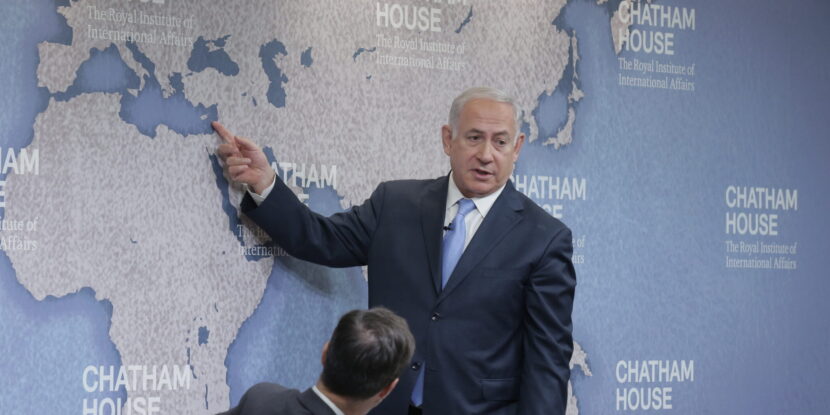
Image via Chatham House.

Join Pulse+ to comment below, and receive exclusive e-mail analyses.

show less
On Tuesday, Israelis went to the polls in the first general election since the October 7 attack, a revitalized Israel-Hamas War, and the outbreak of the Iran war. show more
By Popular Demand.
The National Pulse Now has an on-site comments section for members. Sign up today and be part of the conversation in our community of almost 15,000.

WE ARE 100% INDEPENDENT AND READER-FUNDED. FOR A GUARANTEED AD-FREE EXPERIENCE AND TO SUPPORT REAL NEWS, PLEASE SIGN UP HERE, TODAY.

Britain’s EU ‘Partners’ Want to Build Attack Submarines for Argentina.

France and Germany have offered to build attack submarines for Argentina following the Latin American country’s renewed demands to take over the Falkland Islands, despite their notional status as allies of the United Kingdom.


The National Pulse keeps you updated on British politics. If you value the work of Raheem J. Kassam and his team, please JOIN THE NATIONAL PULSE or MAKE A DONATION today. We are 100% reader-funded.


Background.

The Falkland Islands are a British Overseas Territory in the South Atlantic. Argentina has long claimed sovereignty over the territory, even though the islands voted overwhelmingly (99.8 percent) to remain British in a 2013 referendum. Britain has administered the islands since 1833.

In 1982, Argentina invaded the islands, triggering the Falklands War, a 74-day conflict which ended with Argentine forces surrendering and British control being re-established. The conflict saw the deaths of 649 Argentine military personnel, 255 British military personnel, and three Falkland Islanders.

Despite this, Argentina has continued to assert its claim, using diplomatic, economic, and legal pressure rather than military force in recent decades. For instance, earlier this year, Argentina announced its opposition to the Sea Lion Field, an oil drilling project off the coast of the Falklands. The Argentine government, led by President Javier Milei, has threatened companies involved in the project, while Britain maintains that the Falkland Islanders have the right to make use of their natural resources.

Argentina’s Renewed Threat.

In September, President Milei used a speech at the United Nations General Assembly to characterize British administration of the islands as an “illegal foreign occupation.”

“An organisation that set out to defend the territorial sovereignty of its members decided to look the other way regarding the situation of the Malvinas Islands… Argentina is not going to sit around waiting for the UN and the international community to live up to their own mandate… We’re going to take matters into our own hands,” said Milei.

The Argentine government has also described sovereignty over the Falkland Islands as a “national objective.”

In late September, Argentina launched legal action against Britain over the Sea Lion oil project, arguing Britain is illegally exploiting Argentina’s continental shelf. Earlier this month, Argentina asked the International Tribunal for the Law of the Sea to urgently halt the project.


The National Pulse relies on reader support, not government or corporate cash. Please JOIN THE NATIONAL PULSE or MAKE A DONATION today. 


France and Germany’s Offer.

According to Admiral Marcelo Dalle Nogare, head of Argentina’s armed forces’ Joint Staff, French and German manufacturers have offered to build three new attack submarines for the country.

Specifically, France’s Naval Group has offered its Scorpène submarines, designed for long-range operations, while Germany’s ThyssenKrupp Marine Systems has offered its Type 209NG submarines, primarily used for coastal defense. Admiral Nogare described the proposed vessels as potentially being “among the best submarines in the world today.”

Admiral Nogare also claimed that both the French and German governments had offered to finance the purchase in full, with Argentina repaying the money through installments.

If a deal is made between the three countries, this would constitute the first major step to rebuilding Argentina’s submarine capabilities, having essentially closed its submarine force in 2017. It also complicates claims from President Milei that the Argentine government is not seeking to take the Falkland Islands through military means.

Implications for Britain.

The proposals coincide with ongoing efforts from British Prime Minister Andy Burnham to strengthen the United Kingdom’s relationship with the European Union (EU), including potentially restoring Freedom of Movement and reversing Brexit, the country’s democratic decision to leave the bloc in 2016. The Labour Party politician claims that Brexit had done “more harm than good” and has said that he would like to see Britain rejoin the EU within his lifetime.

Earlier this month, the Institute for Public Policy Research, a British left-wing think-tank with connections to the Prime Minister’s inner circle, published a report encouraging the government to prioritize overturning Brexit and working towards seeking public consent to rejoin the bloc in the medium term.

“When the options are presented, government should name membership of the European Union as its medium-term goal,” reads the report’s recommendations section.

However, given the proposals from France and Germany, the two largest countries and economies in the EU, to arm a country seeking to take territory from Britain, it seems the British government’s desire for a closer, mutually beneficial relationship is one-sided.

Going forward, the Prime Minister will have to justify the decision to move closer to the EU while the bloc is not only prepared to demand major concessions for rejoining, but is also willing to undermine the United Kingdom’s security and sovereignty.


The National Pulse is an independent publication. If you value the work of Raheem J. Kassam and his team, please JOIN THE NATIONAL PULSE or MAKE A DONATION today. We are 100% reader-funded.


Join Pulse+ to comment below, and receive exclusive e-mail analyses.

show less
France and Germany have offered to build attack submarines for Argentina following the Latin American country's renewed demands to take over the Falkland Islands, despite their notional status as allies of the United Kingdom. show more
By Popular Demand.
The National Pulse Now has an on-site comments section for members. Sign up today and be part of the conversation in our community of almost 15,000.
ken paxton acquitted

WE ARE 100% INDEPENDENT AND READER-FUNDED. FOR A GUARANTEED AD-FREE EXPERIENCE AND TO SUPPORT REAL NEWS, PLEASE SIGN UP HERE, TODAY.

MAGA’s AG: Ken Paxton’s Wins on Border Security, Election Integrity, Big Tech, and the Trans Agenda.

For more than a decade, Ken Paxton has used the Texas Attorney General’s office as a battering ram against federal overreach, corporate data abuse, and medical interventions against minors that state law forbids. The results include multi-billion-dollar recoveries, blocked federal programs, and preserved state barriers that other offices left unchallenged.


The National Pulse brings you original news and analysis free of corporate influence every week. If you value the work of Raheem J. Kassam and his team, please JOIN THE NATIONAL PULSE or MAKE A DONATION today. We are 100% reader-funded.


Big Tech: Billion-Dollar Recoveries.

In July 2024, Paxton’s office extracted a $1.4 billion settlement from Meta for capturing biometric identifiers from Texans without the consent required by state law. Payments are spread over five years. The following year, Google signed a $1.375 billion agreement covering location tracking, Incognito mode activity, and biometric data collection—larger than any prior single-state recovery against the company for comparable claims. A later Meta settlement exceeding $1 billion added further restrictions on features used by minors. Texas pursued the cases alone or with limited coalitions rather than waiting for multistate settlements that produced far smaller per-state returns.

The Border: Holding the Line.

Paxton convinced the U.S. Supreme Court to deny emergency applications seeking to stop Senate Bill 4, which authorizes state and local officers to arrest people for illegal entry, in 2024.

In July 2024, Paxton defeated the Biden government before the en banc Fifth Circuit, which vacated a preliminary injunction that had ordered Texas to remove floating buoys it placed in the Rio Grande near Eagle Pass to deter migrant crossings, finding the district court abused its discretion under the Rivers and Harbors Appropriation Act.

A federal district court in November 2024 permanently blocked the Biden government’s “parole in place” program after a multistate suit led by Paxton, ruling that the Department of Homeland Security lacked statutory authority to grant the benefit to people already inside the country. Separate orders preserved federal border-wall materials and barred their disposal before the incoming Trump administration took office.

Election Integrity: Protecting the Rolls.

In September 2026, the Supreme Court stayed a lower court order that had restricted expanded use of the federal Systematic Alien Verification for Entitlements (SAVE) system for citizenship checks on voter rolls. Paxton’s office had intervened to defend Texas’s access to the modified database.

Earlier, a Northern District of Texas court held that the $1.7 trillion Consolidated Appropriations Act of 2023 violated the Constitution’s Quorum Clause because a majority of House members were not physically present when it passed; the court enjoined enforcement of a specific provision against Texas.

The Trans Agenda: Sports, Records, and Medical Interventions.

Paxton’s office obtained injunctive relief blocking the Biden government’s Title IX guidance and rules that treated gender identity as a basis for access to sex-segregated facilities and sports.

In 2025, Dallas ISD entered an agreed order confirming it would comply with Texas law requiring athletic competition according to biological sex after the attorney general’s office obtained records and pursued depositions.

In April 2024, Seattle Children’s Hospital settled an investigation by withdrawing its Texas business registration after Paxton sought records concerning Texas minors.

In May 2026, Texas Children’s Hospital agreed to a $10 million settlement resolving Medicaid billing claims involving unallowable gender-transition interventions for minors. The agreement requires the hospital to open a multidisciplinary clinic for patients who previously underwent transition procedures by late October 2026, revoke the privileges of five physicians, and amend its bylaws so that violations of the state ban trigger automatic loss of privileges.

A separate suit against the NCAA under the Texas Deceptive Trade Practices Act—alleging that the organization marketed mixed-sex events as women’s competitions—remains active after a 2026 state court ruling rejected mandatory sex verification testing, but left the core claims intact.

Second Act in the Senate? 

Earlier this year, Paxton defeated Republican-in-name-only incumbent Senator John Cornyn in the Republican primary runoff after receiving President Donald J. Trump’s endorsement. He is the Republican nominee against radical Democrat James Talarico in a race national forecasters have rated a toss-up.

Paxton’s cumulative record at the state level consists of large recoveries from tech giants, reinforced immigration protections, defeated federal programs, and the strengthening of Texas statutes protecting athletics and minors. Should he take that fighting spirit to the national capitol, is will prove a huge boon to the America First movement, particularly if the Democrats take control of Congress.


Political deep dives like this take time and research. To support our work, please JOIN THE NATIONAL PULSE or MAKE A DONATION today.


Join Pulse+ to comment below, and receive exclusive e-mail analyses.

show less
For more than a decade, Ken Paxton has used the Texas Attorney General’s office as a battering ram against federal overreach, corporate data abuse, and medical interventions against minors that state law forbids. The results include multi-billion-dollar recoveries, blocked federal programs, and preserved state barriers that other offices left unchallenged. show more
By Popular Demand.
The National Pulse Now has an on-site comments section for members. Sign up today and be part of the conversation in our community of almost 15,000.

WE ARE 100% INDEPENDENT AND READER-FUNDED. FOR A GUARANTEED AD-FREE EXPERIENCE AND TO SUPPORT REAL NEWS, PLEASE SIGN UP HERE, TODAY.

The EU Wants 30,000-Strong Force to Take Control of Immigration Enforcement.

The European Union is planning to expand its border agency. While framed as a solution to rising illegal immigration, there are concerns that the bloc’s leadership is attempting to supplant the authority of national border forces.


The National Pulse keeps you updated on global affairs. If you value the work of Raheem J. Kassam and his team, please JOIN THE NATIONAL PULSE or MAKE A DONATION today.


The Background.

The EU is proposing a major expansion of its border agency, Frontex, following years of illegal immigration and concerns that the bloc is failing to control its external borders.

The proposed expansion follows the crisis in Ceuta, a Spanish exclave in North Africa bordering Morocco, during which tens of thousands of migrants rushed the border. This caused Italy to suspend Free Movement with Spain and exposed the bloc’s vulnerability to surges of illegal migration, creating division between European leaders.

The Frontex proposal also comes amid a growing trend of member states temporarily imposing and extending internal border checks to address border security issues. As of late 2026, Austria, Bulgaria, Denmark, France, Germany, Italy, the Netherlands, Poland, Slovenia, and Sweden have reintroduced temporary internal border checks.

The Proposal.

The European Commission proposes to gradually increase Frontex’s personnel to 30,000 officers, including a new 17,000-person European Border and Return Reserve, which would remain available to member states. The agency would also receive more sophisticated equipment, including digital and artificial-intelligence (AI) technology.

The proposal also includes creating a Quick Reaction Force, which could be deployed to an external border emergency on very short notice, a Return Coordination Center, which would have a central role in organizing deportations, and an Online Monitoring Center, which would identify potential border threats and monitor digital media.

Frontex would also be granted powers to assist with returns outside the EU. This includes deporting migrants from one non-EU country to another non-EU country through returns agreements.


The National Pulse relies on reader support, not government or corporate cash. Please JOIN THE NATIONAL PULSE or MAKE A DONATION today. 


The Framing.

The European Commission has framed the expansion of Frontex as a means of making the bloc’s returns process faster and more coordinated.

“Today we propose that Frontex becomes the central EU actor on returns… It will be able to act faster, with a quick reaction ​force that can deploy within 24 hours and spot risks early, before an event becomes a crisis,” said Magnus Brunner, ​the EU’s Commissioner for Internal Affairs and Migration, in a press conference on Tuesday.

In addition to increasing the efficacy of the bloc’s pre-existing border policies, the EU’s leadership emphasized the ability of an expanded Frontex to assist member states individually.

 “Europe will always stand up for the protection of its borders. Europe decides who comes to our Union and under what circumstances. This is why today we propose to strengthen Frontex. So, it can support Member States whenever and wherever needed. Including on returns, with the mandate and capabilities that this new reality demands,” said Ursula Von Der Leyen, President of the European Commission.

The Reality.

While the proposal does not formally abolish national border forces, it has the potential to centralize European border policy and supplant national border forces by having Frontex assume greater responsibility. This matters for countries such as Poland, Hungary, and Greece, which have taken particularly tough approaches to border control. For instance, despite replacing Viktor Orbán, Hungarian Prime Minister Péter Magyar intends to maintain Orbán’s strict migration policy, which is still subject to a €1 million-a-day EU-imposed fine.

Consequently, by making Frontex “the central EU actor on returns,” the proposal could functionally constrain national governments from pursuing different, more hardline border policies, despite expanded personnel and resource pools.

The proposal could also facilitate the end of internal border checks, which are supposed to be temporary due to the Schengen Area, which abolishes internal border checks between member states. The Schengen Area encompasses the overwhelming majority of EU countries, with Ireland and Cyprus being the two exceptions, as well as a handful of non-EU European countries, including Iceland, Switzerland, Liechtenstein, and Norway.

This means that the expansion of Frontex could accelerate the EU’s return to completely open borders between member states.


The National Pulse brings you the facts that matter. If you value the work of Raheem J. Kassam and his team, please JOIN THE NATIONAL PULSE or MAKE A DONATION today. We are 100% reader-funded.


Join Pulse+ to comment below, and receive exclusive e-mail analyses.

show less
The European Union is planning to expand its border agency. While framed as a solution to rising illegal immigration, there are concerns that the bloc's leadership is attempting to supplant the authority of national border forces. show more
By Popular Demand.
The National Pulse Now has an on-site comments section for members. Sign up today and be part of the conversation in our community of almost 15,000.

WE ARE 100% INDEPENDENT AND READER-FUNDED. FOR A GUARANTEED AD-FREE EXPERIENCE AND TO SUPPORT REAL NEWS, PLEASE SIGN UP HERE, TODAY.

The DSA Could Quadruple Its Congressional Representation in the Midterms.

The far-left Democratic Socialists of America (DSA) have endorsed several Democrat candidates for the midterm elections. How many candidates has the DSA endorsed, where are they standing, and what does this mean for Congress?


The National Pulse provides you with the latest election coverage. If you value the work of Raheem J. Kassam and his team, please JOIN THE NATIONAL PULSE or MAKE A DONATION today.


The Numbers.

The DSA and its local chapters have endorsed 131 candidates for the midterm elections, spanning 30 states and Washington, D.C. While most DSA-endorsed candidates are seeking state or local office, the organization has also endorsed candidates for the U.S. Congress.

The DSA has endorsed 69 candidates for local offices, including city councils and ten mayoral candidates, along with 52 candidates for statewide offices, including state senates and state assemblies. Most of the DSA-backed local candidates are running in California, while New York has the largest contingent of state candidates.

Meanwhile, at the federal level, the DSA has endorsed ten candidates for the U.S. House of Representatives. This includes three candidates in New York, two candidates in California, two candidates in Michigan, one candidate in Colorado, one candidate in Louisiana, and one candidate in Pennsylvania.

The Candidates.

Out of the ten House candidates, two are incumbents, two are running for open seats, two are challenging Democrat incumbents, three defeated Democrat incumbents in their primaries, and one is challenging a Republican incumbent.

In New York, the DSA had endorsed Darializa Avila Chevalier and Claire Valdez, who are running in NY-13 and NY-7, respectively.

Simultaneously, Representative Alexandria Ocasio-Cortez is defending her NY-14 seat, having rejoined the DSA earlier this year.

The DSA-endorsed candidates in California, Angela Gonzales-Torres and Mai Vang, are running in CA-34 and CA-7, respectively.

In Michigan, Donavan McKinney aims to win MI-13, while Representative Rashida Tlaib aims to defend her MI-12 constituency.

Meanwhile, in Colorado, Melat Kiros is running in CO-1, and in Louisiana, Lauren Jewett is running in LA-1.

Chris Rabb is the DSA-endorsed candidate running in PA-3 in Pennsylvania.


The National Pulse relies on reader support, not government or corporate cash. Please JOIN THE NATIONAL PULSE or MAKE A DONATION today. 


The Odds.

Eight of the ten DSA-endorsed House candidates are running in districts where Democrats are heavily favored.

Rep. Ocasio-Cortez and Rep. Tlaib are expected to win re-election comfortably. Similarly, Avila Chevalier, Valdez, Kiros, and McKinney are strongly favored to win their respective congressional races, while Rabb is essentially guaranteed to win his race in Pennsylvania. Gonzales-Torres and Vang are both running against fellow Democrats, and while both are expected to win, polling suggests Gonzales-Torres’ district is more competitive than Vang’s.

In contrast, Jewett is highly likely to lose her race in Louisiana as her district strongly favors Republicans. She is challenging Republican incumbent Steve Scalise, the House Majority Leader.

Nevertheless, pollsters indicate that the vast majority of the DSA-backed House candidates are likely to be elected or re-elected in November.

The Consequences.

If current projections hold, the DSA is set to gain approximately eight representatives in the House. As the DSA currently has only two representatives (Ocasio-Cortez and Tlaib), this would quadruple the organization’s presence in the House.

This would prove especially important in the event that the Democrats secure a narrow majority in the House. According to polling conducted by the non-partisan Cook Political Report earlier this month, the Democrats are projected to win between 224 and 234 seats in the House. In order to secure a majority in the House, a party requires 218 seats. Therefore, if the Democrats secure a slimmer majority, close to the 220-seat mark, the DSA could have significant leverage in the subsequent election for Speaker of the House.

The DSA has already signaled its intention to use its leverage within the House to extract concessions from Rep. Hakeem Jeffries (D), the current House Minority leader, in his bid for the speakership. Specifically, the DSA aims to lower the thresholds for both discharge petitions and vacating the chair to make it easier to force votes on DSA-aligned objectives and topple the House leadership.


The National Pulse is independent. If you value the work of Raheem J. Kassam and his team, please JOIN THE NATIONAL PULSE or MAKE A DONATION today. We are 100% reader-funded.


Image by Ted Eytan.

Join Pulse+ to comment below, and receive exclusive e-mail analyses.

show less
The far-left Democratic Socialists of America (DSA) have endorsed several Democrat candidates for the midterm elections. How many candidates has the DSA endorsed, where are they standing, and what does this mean for Congress? show more
By Popular Demand.
The National Pulse Now has an on-site comments section for members. Sign up today and be part of the conversation in our community of almost 15,000.

WE ARE 100% INDEPENDENT AND READER-FUNDED. FOR A GUARANTEED AD-FREE EXPERIENCE AND TO SUPPORT REAL NEWS, PLEASE SIGN UP HERE, TODAY.

Is the AI Boom Hiding a Manufacturing Slump?

America’s artificial intelligence (AI) boom is pumping hundreds of billions of dollars into the nation’s economy, helping to sustain growth even as traditional manufacturing struggles to recover. However, many of the companies at the center of the so-called AI revolution are losing billions of dollars, raising questions about whether the technology boom represents a genuine economic transformation or an enormous investment bubble.


The National Pulse gives you original analysis of trends across the globe. To help support Raheem J. Kassam and his team continue this work, please JOIN THE NATIONAL PULSE or MAKE A DONATION today. We are 100% reader-funded.


Economists estimate the underlying U.S. growth potential at approximately two percent, while the Congressional Budget Office expects longer-term growth potential to remain around 1.8 percent.

Despite President Donald J. Trump’s efforts to stimulate economic growth through tariffs, tax reductions, and deregulation, the promised manufacturing renaissance has yet to fully materialize as he approaches the midpoint of his second term. Meanwhile, the AI industry is consuming unprecedented capital, much of it based on expectations of future profits that remain uncertain.

The Rise of the AI Economy.

The modern AI revolution accelerated in 2020 with OpenAI’s introduction of GPT-3, a large language model capable of generating human-like text. The November 2022 release of ChatGPT brought the technology to millions of ordinary consumers, triggering an investment race involving Microsoft, Google, Amazon, Meta, and other technology giants.

By 2025, the competition had evolved into an enormous infrastructure-building campaign involving specialized semiconductors, data centers, electricity generation, and advanced computing networks.

According to Stanford University’s 2026 AI Index, the computing costs associated with developing and operating advanced AI systems have increased dramatically. OpenAI’s reported annual computing expenditure reached approximately $16.3 billion in 2025, compared with $5.8 billion in 2024. Anthropic’s equivalent spending reached approximately $6.8 billion in 2025.

The economic consequences are substantial. Unlike software development, building the physical infrastructure necessary to operate advanced AI systems requires enormous upfront investment.

Hundreds of Billions Pour Into AI Infrastructure.

Microsoft, Amazon, Alphabet, Meta, and Oracle are collectively spending hundreds of billions of dollars annually on infrastructure, much of it related to artificial intelligence.

A Morningstar analysis projected approximately $453 billion in combined capital expenditure for the five companies during 2026, up from $376 billion in 2025. These figures include spending beyond AI alone. Meanwhile, OpenAI was targeting approximately $600 billion in cumulative computing expenditure through 2030.

Anthropic has also entered enormous infrastructure agreements, including commitments involving Amazon, Google, and Microsoft. Such arrangements raise questions about circular financing, as some of the same technology companies investing in AI developers also receive billions from them through cloud-computing contracts.

Government involvement includes federal AI research, procurement, and tax incentives. Trump’s tax legislation has encouraged capital investment, although government support should not be confused with direct public financing of the industry’s multitrillion-dollar infrastructure ambitions.

The AI Giants Are Burning Through Cash.

Few AI companies, however, appear to be turning any sort of profit, with many spending more and more each year. Anthropic generated $16.29 billion in revenue during the first six months of 2026, while recording an operating loss of $693 million. Its operating losses had reached approximately $8.06 billion in 2025.

OpenAI has also experienced huge revenue growth alongside enormous computing costs. The company reported $13 billion in revenue for 2025, while its plans involve hundreds of billions in future computing expenditure.

Microsoft, Google, Amazon, and Meta remain highly profitable corporations, supported by established businesses in software, advertising, cloud computing, and e-commerce. Their individual AI divisions’ profitability, however, is generally not disclosed on its own.

OpenAI, Anthropic, and Elon Musk’s xAI face a different challenge: developing sustainable business models while competing against corporations capable of financing AI expansion using profits from other operations.

Manufacturing Struggles While Technology Investment Surges.

The AI boom has also complicated President Trump’s efforts to rebuild American manufacturing. Actual evidence of manufacturing reshoring remains mixed despite the administration’s tariff policies. Imports have continued rising, partly because American data center construction requires substantial quantities of foreign-produced equipment.

While AI-related construction and computing investment boost economic output, they do not necessarily translate into renewed employment in steelmaking, automobile production, machinery, or other traditional industries. The danger is that headline economic growth becomes increasingly dependent on a relatively narrow group of technology companies rather than a broad-based industrial recovery.

AI Is Already Being Blamed for Mass Layoffs.

The AI revolution also threatens to undermine employment in sectors previously considered relatively insulated from automation.

According to figures compiled from reports by employment consultancy Challenger, Gray & Christmas, American employers cited artificial intelligence as the reason for approximately 120,136 announced job cuts between January and September 2026, representing roughly 21 percent of all announced layoffs during that period. That compares with approximately 54,836 AI-cited job cuts throughout 2025.

Software development, customer service, administrative work, and content production are among the occupations facing pressure as businesses attempt to reduce labor costs.

Another Dot-Com Bubble?

The AI boom bears some similarities to the dot-com frenzy of the late 1990s, when investors poured enormous sums into Internet companies before many collapsed. The Internet ultimately transformed the global economy, but that did not prevent investors from losing fortunes on businesses that never became profitable.

Artificial intelligence could follow a similar trajectory, delivering substantial technological progress while leaving many investors with losses.

For now, the American economy faces an uncomfortable contradiction: AI investment is supporting economic growth even as traditional manufacturing struggles, AI developers absorb enormous amounts of capital, and employers increasingly cite the technology when announcing layoffs. The question is whether the gains will ultimately prove to outweigh the potential losses.


To help Raheem J. Kassam and his team provide you with more of the original reporting and analysis you deserve, please JOIN THE NATIONAL PULSE or MAKE A DONATION today.


Image by Jernej Furman.

Join Pulse+ to comment below, and receive exclusive e-mail analyses.

show less
America's artificial intelligence (AI) boom is pumping hundreds of billions of dollars into the nation's economy, helping to sustain growth even as traditional manufacturing struggles to recover. However, many of the companies at the center of the so-called AI revolution are losing billions of dollars, raising questions about whether the technology boom represents a genuine economic transformation or an enormous investment bubble. show more
By Popular Demand.
The National Pulse Now has an on-site comments section for members. Sign up today and be part of the conversation in our community of almost 15,000.

WE ARE 100% INDEPENDENT AND READER-FUNDED. FOR A GUARANTEED AD-FREE EXPERIENCE AND TO SUPPORT REAL NEWS, PLEASE SIGN UP HERE, TODAY.

Kassam Names Anonymous ‘Cowards’ Using The Times to Push Partisan Political Smears. 

Raheem Kassam, Editor-in-Chief of The National Pulse, hit back at the anonymous leader writers at The Times after they used Britain’s de facto newspaper of record to smear him and attack Nigel Farage’s Reform UK party.

“The Times editorial today is about… me!” Kassam wrote on X, in response to a “leader” article branding him a racist for calling the Conservative Party leader a “Nigerian scammer” over her long history of misleading statements about her past and positions. His response shone a spotlight on “these ANONYMISED ‘leader’ columns and who exactly writes them, because they don’t have bylines on them. Because they are COWARDS.”


To help Raheem J. Kassam and his team call out the corporate media, please JOIN THE NATIONAL PULSE or MAKE A DONATION today. We are 100% reader-funded.


The Named Writers Behind the Anonymous Column.

Kassam publicly identified three members of The Times’s leader team as follows:

  • Daniel Finkelstein, a sitting Conservative member of the House of Lords and former Conservative Party adviser. Kassam added that he was “the reason Chelsea FC was run into the ground following the big Russia focus after the invasion of Ukraine.”
  • Sebastian Payne, a former Spectator writer who previously ran the Conservative-aligned Onward think tank. Payne has repeatedly sought Conservative parliamentary nominations without success. Kassam noted he is “told today’s ‘leader’ is his desperate last bid to get in Kemi’s good books.”
  • Oliver Kamm, a former Oxford Labour Party Club chairman and anti-Brexit Blairite who has pushed neoconservative foreign policy. Kassam noted that Kamm was a strong supporter of the Iraq War and is “still unrepentant.”

“These are the people who set the tone for the Times’s leader column, and these are the people who hide behind the anonymity afforded to them by the paper,” Kassam said. “I say enough is enough. If you’re going to wantonly attack people in the paper of record, be brave enough to put your byline on the item. It’s time we started sending cameramen to these people’s houses, doorstepping them, and making them truly have to own the things they write.”

The Substance of the Editorial.

The Times editorial framed Kassam’s comments as a “racist attack on the opposition leader, who was, in fact, born here.” It claimed Kassam’s words reflect a “Nigeria strategy” by Reform outriders seeking to regain voters lost to Restore Britain and criticized Farage for calling the remark “not intentionally racist,” also taking aim at Reform lawmakers Robert Jenrick and Danny Kruger for declining to denounce Kassam and his remarks.

Kassam dismissed the piece as “risible.” The claim that calling Badenoch a “scammer” is racist because “she was born here” ignores that she was born in Britain to Nigerian parents who flew into the country to have her in a London hospital, but returned to Nigeria to raise her. She has previously stated she loves Nigeria “just as much as” Britain, only claiming more recently that she no longer identifies as Nigerian while remaining “Nigerian through ancestry.”

Significantly for the racism allegation, “Nigerian” is not a race, and in addition to her aforementioned contradictory remarks, Badenoch has said she does not identify with Nigeria but with her “specific ethnicity” as a Yoruba, adding that she does not like being “lumped in” with her “ethnic enemies” in Nigeria’s north.

Kassam has long argued that the “scammer” characterization refers to this selective invocation of heritage, alongside dubious claims about her background, including a seemingly invented offer of a Stanford scholarship and an at best highly exaggerated childhood chess championship.

The Times‘s assertion that Kassam is “not a journalist” is likewise dismissed; The National Pulse chief is more widely accredited in Washington than The Times writers criticizing him. As for the invention of a coordinated “Nigeria strategy,” he said it does not exist: “There’s just me tweeting my views.”

The Uniparty Playbook.

Kassam drew a parallel to 2015, when media figures attributed messaging on HIV and migrants messaging to him despite his opposition to it. He argued there is “something ACTUALLY deeply racist about the way Dan Hodges, Giles Dilnot, and people like Daniel Finkelstein treat me,” explaining: “They are all very very mad I don’t say ‘yes master’ to them. And this is their way of handling it. I know the uniparty is used to having their useful idiots. I’ll never be one of them.”


Raheem J. Kassam and his team can bring you original news analysis free of government and corporate influence because of reader support. To help it that way, please JOIN THE NATIONAL PULSE or MAKE A DONATION today.


Image by inc_monocle.

Join Pulse+ to comment below, and receive exclusive e-mail analyses.

show less
Raheem Kassam, Editor-in-Chief of The National Pulse, hit back at the anonymous leader writers at The Times after they used Britain's de facto newspaper of record to smear him and attack Nigel Farage's Reform UK party. show more
By Popular Demand.
The National Pulse Now has an on-site comments section for members. Sign up today and be part of the conversation in our community of almost 15,000.

WE ARE 100% INDEPENDENT AND READER-FUNDED. FOR A GUARANTEED AD-FREE EXPERIENCE AND TO SUPPORT REAL NEWS, PLEASE SIGN UP HERE, TODAY.

Britain’s Gas Crisis is Getting Worse. Has Net Zero Made the Country More Vulnerable?

British households could be facing another massive energy price shock, with some forecasts suggesting annual bills could climb to more than $3,200 by April 2027 as the Iran war drives international gas prices higher. The crisis is again exposing Britain’s dependence on imported energy, with successive Conservative and Labour governments having refused to encourage energy production at home and pursued net zero ideology.


The National Pulse brings you detailed analysis on global energy trends and many other topics. To help Raheem J. Kassam and his team continue this work, please JOIN THE NATIONAL PULSE or MAKE A DONATION. We are 100% reader-funded.


Forecasts from energy supplier EDF suggest the typical annual household energy bill could rise by 27 percent in January, from the equivalent of approximately $2,309 to $2,937, before climbing again to $3,201 in April. Wholesale gas prices have reached a four-year high, driven by disruptions to liquefied natural gas (LNG) shipments through the Strait of Hormuz and concerns about European gas reserves.

Britain’s North Sea Retreat.

Britain was once an energy powerhouse, extracting enormous quantities of oil and natural gas from beneath the North Sea. However, domestic production has declined dramatically, leaving the country increasingly dependent on foreign suppliers.

According to the House of Commons Library, British North Sea oil and gas production peaked in 1999 and has subsequently fallen by more than 70 percent. In 2004, Britain became a net importer of natural gas, much of it from the Norwegian sector of the North Sea.

The decline has partly resulted from the natural depletion of mature offshore fields. However, government policy has repeatedly discouraged new exploration, with the leftist Labour Party going as far as committing to ending new oil and gas exploration and production licenses, while allowing limited developments around existing fields.

Ofgem’s analysis of Britain’s gas supplies indicates that approximately 47 percent of Britain’s gas comes through pipelines from Norway, compared with just 29 percent from domestic North Sea fields. Despite having domestic reserves, Britain is increasingly forced to rely on overseas suppliers to meet its energy requirements, driving up costs for consumers and businesses alike.

Britain’s Electricity Market Makes Everything Worse.

Britain’s energy problems extend far beyond the long-standing declining domestic gas production. The structure of its electricity market means international gas price increases can affect households even when their electricity is generated by renewable sources like wind and solar, or nuclear power.

Under Britain’s marginal pricing system, the wholesale electricity price is frequently determined by the most expensive generator needed to satisfy demand. That generator is often a gas-fired power station. A recent parliamentary Energy Security and Net Zero Committee report warned that Britain already had some of the highest domestic and industrial electricity costs among comparable countries before the current crisis in the Middle East. It also called for reforms to reduce the disproportionate influence of gas on electricity prices.

France, Norway, and America Invested in Energy Independence.

Other Western countries show how different energy strategies can reduce dependence on imported natural gas.

France has maintained its large nuclear power industry, with reactors generating approximately 68 percent of the country’s electricity in 2025, according to the International Atomic Energy Agency. Nuclear generation has helped limit France’s reliance on gas-fired electricity, although it still has some exposure to energy markets in Europe.

Norway pursued a different strategy, continuing to develop its North Sea oil resources while relying overwhelmingly on domestic hydropower for electricity. According to Norwegian government figures, hydropower accounted for approximately 90 percent of electricity production in 2025.

The United States, meanwhile, has benefited from the shale gas revolution, which dramatically expanded domestic production through hydraulic fracturing, or fracking. The U.S. Energy Information Administration reports that American natural gas production reached a record 118.5 billion cubic feet per day in 2025, helping sustain a huge domestic energy supply.

All three countries show that prioritizing the cost of energy for their own residents over net zero and the green agenda has consistently left them more insulated to global energy market fluctuations and grants their own people cheaper energy at home.

Net Zero Has Made Britain Less Secure.

The contradiction in Britain’s energy strategy is that governments have sought to restrict domestic fossil-fuel development while the economy continues to rely heavily on natural gas.

According to the British government’s 2025 security of supply report, natural gas accounted for 35 percent of total British energy demand in 2024. The same report projects continued declines in North Sea production, although it argues that ending new exploration licenses will have only a marginal impact on future output.

Wind and solar alone cannot guarantee a continuous energy supply, leaving gas-fired generation important during periods of low renewable output. However, Conservative and Labour governments have moved away from domestic fossil fuel production without first establishing sufficient alternatives. With household energy bills potentially approaching $3,200 annually, that issue is becoming increasingly urgent.


To help Raheem J. Kassam and his team provide you with more of the original reporting and analysis you deserve, please JOIN THE NATIONAL PULSE or MAKE A DONATION today.


Image by Alnitak3.

Join Pulse+ to comment below, and receive exclusive e-mail analyses.

show less
British households could be facing another massive energy price shock, with some forecasts suggesting annual bills could climb to more than $3,200 by April 2027 as the Iran war drives international gas prices higher. The crisis is again exposing Britain's dependence on imported energy, with successive Conservative and Labour governments having refused to encourage energy production at home and pursued net zero ideology. show more
By Popular Demand.
The National Pulse Now has an on-site comments section for members. Sign up today and be part of the conversation in our community of almost 15,000.

WE ARE 100% INDEPENDENT AND READER-FUNDED. FOR A GUARANTEED AD-FREE EXPERIENCE AND TO SUPPORT REAL NEWS, PLEASE SIGN UP HERE, TODAY.

Trump DOJ is Demanding That This State Set Aside Ballots From Hundreds of Suspected Noncitizens.

The Department of Justice (DOJ) has asked Washington state officials to set aside more than 400 ballots cast by suspected noncitizens to confirm their eligibility, roughly a week before the midterm elections.


The National Pulse provides you with the latest election news. If you value the work of Raheem J. Kassam and his team, please JOIN THE NATIONAL PULSE or MAKE A DONATION today. We are 100% reader-funded.


Context.

In the run-up to the midterm elections, which are scheduled for November 3, the Trump administration has been cracking down on noncitizen voting.

Earlier this month, the federal government asked California election officials to set aside ballots from approximately 20,000 suspected noncitizens until their citizenship is verified. Specifically, the Trump administration has argued that California’s decision to count the alleged noncitizen ballots violates the U.S. Constitution’s Supremacy Clause, as federal law states that only U.S. citizens can vote, and this takes precedence over state management of federal elections.

Simultaneously, the Trump administration sued Alaska to prevent certification of its Senate election if Republican Senator Dan Sullivan loses, citing potential confusion caused by the inclusion of another candidate named Daniel J. Sullivan.

As such, the recent request should be viewed as another front in the Trump administration’s ongoing campaign to strengthen election integrity.

The DOJ’s Request.

The DOJ has asked Washington election officials to set aside 405 ballots suspected to have been cast by noncitizens. Specifically, the DOJ has asked state officials to separate any ballots these potential noncitizens submit in the upcoming midterms until they can confirm their citizenship and eligibility.

Federal prosecutors have claimed that the DOJ’s investigation has uncovered approximately 1,500 votes cast by noncitizens in previous elections, and that several have been identified as lawful permanent residents, also known as green card holders, who can live and work in the United States but cannot legally vote.

As with federal investigations in other states, the suspected noncitizen voters were identified by comparing federal immigration information with voter records. However, federal prosecutors have emphasized that determining whether the suspected noncitizens actually voted illegally requires access to Washington’s election records. The DOJ has asked for addresses, dates of birth, driver’s license numbers, and partial Social Security numbers.

“Because of limitations the state has placed on our investigation, we’ve only been able to uncover a fraction of the total number,” said Charles Neil Floyd, the acting U.S. attorney for the Western District of Washington.


The National Pulse relies on reader support, not government or corporate cash. Please JOIN THE NATIONAL PULSE or MAKE A DONATION today. 


Washington State’s Response.

Washington state officials have not agreed to automatically set aside the ballots. In response to the DOJ request, Washington Secretary of State Steve Hobbs questioned both the timing and implications of the request.

“The timing of this request—one week before the General Election—is no doubt intended to cast unfounded suspicion on the results,” said Hobbs in response to the federal government’s request.

Washington officials have also expressed concern that federal data can produce inaccurate matches. For example, people who were once noncitizens may subsequently have become naturalized U.S. citizens.

Nevertheless, the Washington Secretary of State has confirmed that his office is reviewing the federal government’s information and will determine how to respond under state and federal law.

Looking Forward.

If Washington ultimately accepts the DOJ’s request, election officials would have to separate ballots cast by people on the federal list until their citizenship and voting eligibility could be established.

While there is no indication that there are enough noncitizen votes to swing the state-wide outcome, the decision may impact competitive races within Washington itself. For example, Washington’s 3rd Congressional District is among the country’s most competitive House contests, meaning a small number of disputed ballots could attract intense political and legal scrutiny.

The outcome of the dispute could result in federal officials playing a more direct role in managing state elections, potentially leading to similar federal challenges in other states, especially where the result is close.

This could lead to further exposures of noncitizen voting across the United States, which could subsequently strengthen the case for implementing election integrity measures, such as voter ID, a long-standing cornerstone objective of the Trump administration and an overwhelmingly popular measure with Americans.


The National Pulse strives to keep you updated. If you value the work of Raheem J. Kassam and his team, please JOIN THE NATIONAL PULSE or MAKE A DONATION today. We are 100% reader-funded.


Image by Joe Mabel.

Join Pulse+ to comment below, and receive exclusive e-mail analyses.

show less
The Department of Justice (DOJ) has asked Washington state officials to set aside more than 400 ballots cast by suspected noncitizens to confirm their eligibility, roughly a week before the midterm elections. show more
By Popular Demand.
The National Pulse Now has an on-site comments section for members. Sign up today and be part of the conversation in our community of almost 15,000.

WE ARE 100% INDEPENDENT AND READER-FUNDED. FOR A GUARANTEED AD-FREE EXPERIENCE AND TO SUPPORT REAL NEWS, PLEASE SIGN UP HERE, TODAY.

European NATO Members Break Ranks to Hold Talks With Putin on Ending the War.

Two European NATO members sharing borders with Russia have broken with the European Union, opening direct talks with Russian President Vladimir Putin as the war in Ukraine continues to devastate the country and tensions escalate across the Baltic region.


The National Pulse brings you world-class analysis and reporting. To help us continue this work, please JOIN THE NATIONAL PULSE or MAKE A DONATION today. We are 100% reader-funded.


Finnish President Alexander Stubb and Norwegian Prime Minister Jonas Gahr Støre spoke directly with Putin on Tuesday, calling on the Russian leader to negotiate an end to the conflict. Their intervention represents a major departure from the diplomatic isolation pursued by most European Union governments since Russia launched its full-scale invasion of Ukraine in February 2022.

The two leaders emphasized that their countries’ proximity to Russia gives them a particular interest in preventing further escalation. Finland shares an approximately 830-mile border with Russia, while Norway shares a roughly 120-mile frontier in the High North. “Ending the war requires direct discussions,” Stubb said following the conversation.

Danish Prime Minister Mette Frederiksen criticized the decision to engage Putin independently, questioning what the Norwegian and Finnish leaders hoped to accomplish and insisting that European governments must maintain a united position.

The disagreement comes as Russian forces continue their offensive in eastern Ukraine, Moscow targets Ukrainian infrastructure, and tensions surrounding Russia’s Baltic exclave of Kaliningrad raise fears of a wider confrontation.

Russia Pounds Ukrainian Infrastructure.

On October 27, Russia launched 16 ballistic missiles and more than 280 drones against targets across 11 Ukrainian regions, according to Ukrainian President Volodymyr Zelensky. The attacks killed civilians in Kiev and Kharkov despite a separate, localized humanitarian ceasefire in southern Ukraine.

Days earlier, Russian missiles struck Kiev, damaging subway infrastructure on the Southern Bridge over the Dnieper River and disrupting traffic. Russian drones also targeted energy infrastructure near Kremenchuk, an important industrial center in central Ukraine.

The attacks show Russia’s strategy is to cripple Ukraine’s ability to sustain the war by damaging electricity supplies, transportation infrastructure, and industrial facilities, as well as possibly provoke another refugee crisis as many flee cities in winter if no reliable power is available to heat their homes.

Ukraine has also continued striking Russian territory, including oil infrastructure, as both sides seek to increase the economic and military costs of the conflict, which has another effect of keeping international energy prices high.

Battlefield Developments.

The Russians continue to demand control over the entirety of Donbas, encompassing the Donetsk and Luhansk regions, as Ukraine still has footholds in both territories. The fighting around Dobropillia, a strategically important town northwest of Pokrovsk, has become the latest key battle for the region.

Russian forces have intensified operations in the area, attempting to penetrate Ukrainian defenses and threaten transportation routes supporting Ukrainian positions farther north.

Moscow has claimed to have taken Dobropillia,  while Ukrainian officials dispute the claims. An assessment by the Institute for the Study of War reported intensified Russian infiltration operations but claimed that these did not necessarily mean that Russian forces controlled the town. The assessment also highlighted Russian efforts to advance along routes supporting operations toward Dobropillia, with the longer-term objective of threatening Ukraine’s defensive positions around Sloviansk and Kramatorsk, the last major strongholds under Ukrainian control in the Donbas.

Putin reiterated during the Nordic leaders’ diplomatic outreach that Russia would not compromise on its objective of securing the entire Donbas.

Kaliningrad.

While fighting continues in Ukraine, another potential confrontation is developing around Kaliningrad, Russia’s heavily militarized Baltic exclave situated between Poland and Lithuania. Kaliningrad houses the headquarters of Russia’s Baltic Fleet and is an important military position, surrounded by NATO members.

The territory is also strategically sensitive because of its proximity to the Suwałki Gap, the narrow corridor connecting Poland and Lithuania that separates Kaliningrad from Belarus. Any military confrontation involving the exclave could quickly draw both NATO and Russia into direct conflict.

Earlier this month, Putin warned that Moscow could employ nuclear weapons if NATO attacked or attempted to isolate Kaliningrad. The warning followed Russian concerns over the possibility of NATO restricting access to the territory. NATO Secretary General Mark Rutte responded by emphasizing the alliance’s defensive character and rejecting the usefulness of nuclear threats.

Military encounters in the Baltic have meanwhile continued. According to Lithuania’s Ministry of National Defence, NATO aircraft conducted multiple interceptions during October 12–18, including encounters with Russian military aircraft traveling between mainland Russia and Kaliningrad.

Some Russian aircraft operated without active transponders, filed flight plans, or radio communication, increasing the risk of dangerous incidents in the air.

The Baltics Are Resisting Peace Talks.

The willingness of the Norwegian and Finnish leaders to speak directly with Putin is directly contrasted by their neighbors in the Baltics, such as former Estonian Prime Minister Kaja Kallas, who now serves as the European Commission Vice President for Foreign Affairs and Security Policy.

Kallas has emerged as one of Europe’s most outspoken advocates of maintaining economic and military pressure on Moscow. Estonia, Latvia, and Lithuania have consistently supported extensive sanctions against Russia, increased military assistance to Ukraine, and a stronger NATO presence along the alliance’s eastern frontier.

Kallas has also defended Ukrainian attacks on Russian oil infrastructure, telling Euronews earlier this month that such operations constitute legitimate self-defense because Russian energy revenues help finance the war.

Finland and Norway, meanwhile, appear increasingly convinced that direct communication with Moscow is necessary alongside sanctions, deterrence, and military assistance.

Trump Forces Europe to Reconsider Its Position.

President Donald J. Trump has repeatedly pursued negotiations aimed at ending the Ukraine conflict since the start of his second term, but has been frustrated by both sides, who refuse to agree to terms.

Recent diplomatic efforts included meetings involving U.S. envoy Steve Witkoff, Ukrainian officials, and Russian representatives, with another round of negotiations expected in Abu Dhabi in November.

Finland and Norway’s intervention follows an important October 20 meeting in Oslo, after which President Zelensky stated for the first time that he may be willing to end the war along the current line of conflict, with Russia continuing to occupy around 25 percent of pre-2022 Ukraine.

The two Nordic leaders challenging the status quo in Europe may reflect the emerging reality that it is America and Russia, rather than the EU and Ukraine itself, determining the peace.

Europe’s Choice.

The decision by Finland and Norway to engage Putin is just the latest fracture in Europe in what was once a united front against Russia and for Ukraine.

As the fifth anniversary of the conflict approaches in February, Russian attacks continue to damage Ukrainian cities and infrastructure. Fighting in Donbas remains intense, while a potential conflict over Kaliningrad could drag NATO, including Finland and Norway, into a hot war with the Russians at their doorstep.

For years, much of Europe’s strategy has rested on the assumption that sustained pressure from economic sanctions and arms to Ukraine could force the Russians to reconsider their war aims and possibly retreat altogether. That strategy has not borne fruit, and now countries are beginning to look for other avenues to avoid conflict with the Russians and broker some kind of peace.

What follows could determine the fate of Europe, as the bloc will have to decide whether to pursue a potentially unpopular peace or a catastrophic war.


To help Raheem J. Kassam and his team continue to provide you with the latest developments of international conflicts, please JOIN THE NATIONAL PULSE or MAKE A DONATION today.


Image via Kyivcity.gov.ua.

Join Pulse+ to comment below, and receive exclusive e-mail analyses.

show less
Two European NATO members sharing borders with Russia have broken with the European Union, opening direct talks with Russian President Vladimir Putin as the war in Ukraine continues to devastate the country and tensions escalate across the Baltic region. show more
By Popular Demand.
The National Pulse Now has an on-site comments section for members. Sign up today and be part of the conversation in our community of almost 15,000.