❓WHAT HAPPENED: The U.S.–Israeli bombardment of Iran has disrupted global fertilizer and oil supplies, putting economic strain on American farmers.
Newsletter
Need to Know.
Your free, daily feed from The National Pulse.
Thank You!
You are now subscribed to our newsletter.
👤WHO WAS INVOLVED: American farmers, the U.S. and Israeli governments, Iran, and global fertilizer and oil markets.
📍WHEN & WHERE: The conflict began a week ago, impacting the Strait of Hormuz and U.S. farms.
💬KEY QUOTE: “You can’t even buy it right now if you wanted to,” said Chet Edinger, a South Dakota farmer, on the fertilizer situation.
🎯IMPACT: Rising costs for fertilizers and diesel, potential farm bankruptcies, and increased consumer prices for food.
IN FULL
The ongoing U.S.–Israeli military operation against Iran is beginning to disrupt global supply chains, with American farmers already feeling the impact. A major concern is the near-shutdown of the Strait of Hormuz, a crucial shipping route that carries roughly 20 percent of the world’s daily oil supply and a quarter of global nitrogen fertilizer supplies.
With maritime traffic slowing dramatically due to security threats and rising insurance costs, shipments of fuel and agricultural inputs have tightened. For farmers preparing for planting season, the timing could not be worse. Fertilizer prices have surged and supplies have become difficult to secure. About a quarter of globally traded nitrogen fertilizer typically moves through the Strait of Hormuz, meaning disruptions quickly ripple through the agriculturaleconomy.
South Dakota farmer Chet Edinger said he anticipated possible shortages and purchased a final shipment of urea fertilizer earlier in the season, though it cost him 22 percent more than the previous year. Since then, the market has effectively stalled. “You can’t even buy it right now if you wanted to,” Edinger said.
The fertilizer market is described by analysts as nearly frozen, with significant price increases already recorded at the Port of New Orleans. With production disrupted in both Iran and Qatar, major exporters of nitrogen-based fertilizers, the global urea supply faces growing pressure. Linville warned that prices are likely to continue climbing until demand drops or supply routes stabilize.
Fuel costs are also rising, further squeezing farm operations that rely heavily on diesel for equipment and transportation. Financial pressure across the agricultural sector is increasing, with farm bankruptcies on the rise and concerns growing that prolonged instability could accelerate consolidation as large corporations acquire struggling farms.
The White House has emphasized that the disruptions are temporary and says the administration remains committed to supporting farmers. President Donald J. Trump recently unveiled a $12 billion aid package to help farmers manage economic shocks and previously promised that farmers would receive a share of tariff revenues from new trade policies.
Meanwhile, Trump has stated he will only accept “unconditional surrender” from Iran in order to end the conflict.
Join Pulse+ to comment below, and receive exclusive e-mail analyses.
By Popular Demand.
The National Pulse Now has an on-site comments section for members. Sign up today and be part of the conversation in our community of almost 15,000.
More From The Pulse
WE ARE 100% INDEPENDENT AND READER-FUNDED. FOR A GUARANTEED AD-FREE EXPERIENCE AND TO SUPPORT REAL NEWS, PLEASE SIGN UP HERE, TODAY.
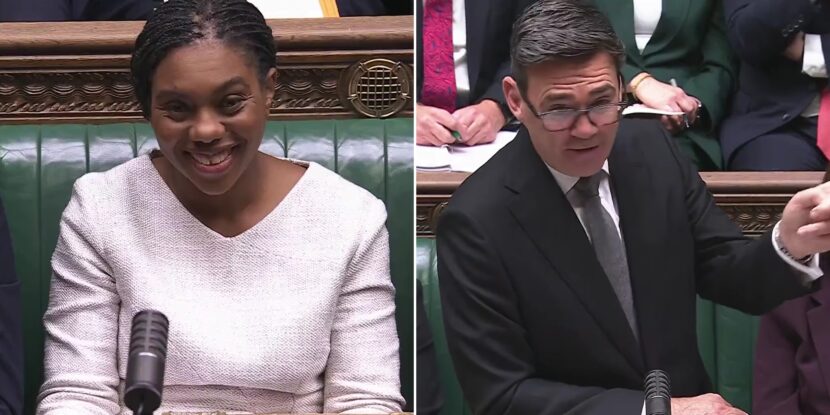
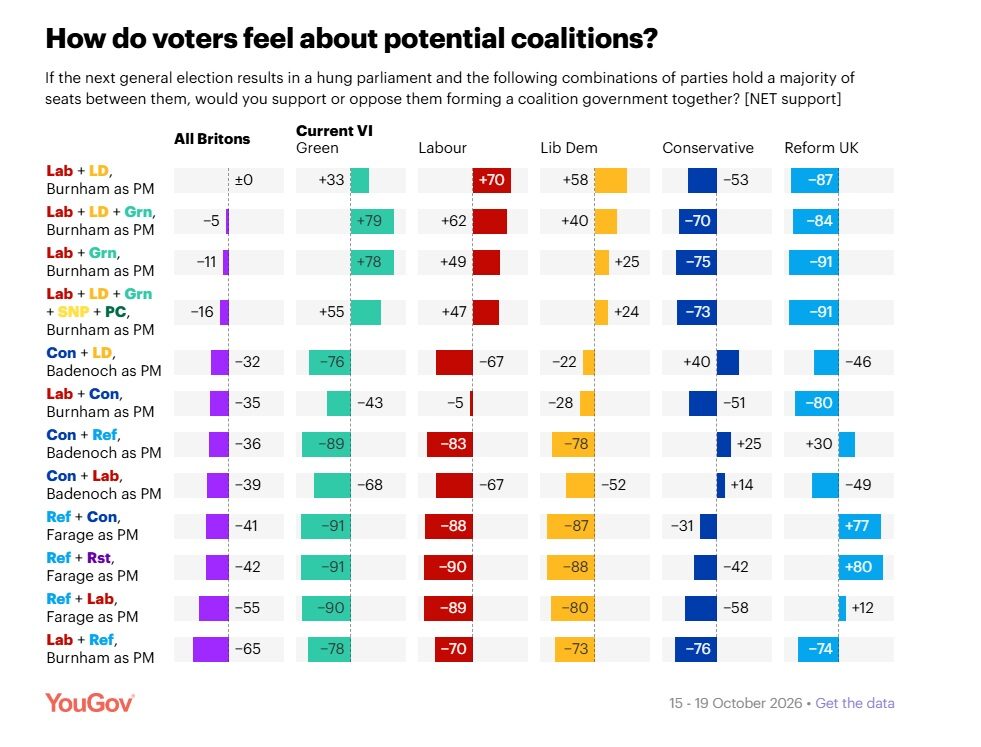
On Thursday, YouGov, the largest polling firm in Britain, published research on the voters’ attitudes regarding potential coalition governments. The data indicates that Kemi Badenoch’s Conservative Party is closer to the political left than the populist right.
The National Pulse keeps you in the loop regarding British politics. If you value the work of Raheem J. Kassam and his team, please JOIN THE NATIONAL PULSE or MAKE A DONATION today.
Newsletter
Need to Know.
Your free, daily feed from The National Pulse.
Thank You!
You are now subscribed to our newsletter.
Coalition with The Liberal Democrats.
According to YouGov’s polling, the remaining supporters of Kemi Badenoch’s Conservative Party view a hypothetical coalition with the Liberal Democrats more favorably than a coalition with Nigel Farage’s Reform UK party. Specifically, 68 percent favor the former while only 60 percent favor the latter.
The poll showed that a Badenoch-led coalition between the Conservatives and the Liberal Democrats had a net positive of +40 with Conservative supporters. In contrast, a Badenoch-led coalition between the Conservatives and Reform scored a net positive score of +25.
The same polling also revealed that current supporters of the Conservative Party would prefer a coalition with the Labour Party, provided it was led by Badenoch, over a Farage-led coalition with Reform. Specifically, the former had a net positive of +14, whereas the latter had a net negative of -31.
Notably, Labour supporters did not reciprocate, with the hypothetical Badenoch-led coalition polling at a net negative of -67. The most popular combination with Labour supporters was a coalition with the Liberal Democrats led by Burnham, with a net positive figure of +70.
Labour supporters overwhelmingly rejected working with Reform, even if Burnham was Prime Minister, with a Farage-led Reform-Labour coalition having a net negative figure of -89 and a Burnham-led Labour-Reform coalition having a net negative figure of -70. However, Labour supporters polled a very slight net negative of -5 regarding a hypothetical coalition with the Tories with Burnham as Prime Minister. This suggests that while both Labour and Conservative supporters want their respective leaders to be Prime Minister, both parties’ supporters are considerably less hostile to each other than they are to Reform.
These figures raise the question of whether the Conservatives under Badenoch can meaningfully be considered a conservative or right-wing party.
The Liberal Democrats are a progressive party that supports reversing Britain’s democratic decision to leave the European Union. The party also supports liberalizing border controls and supports remaining in the European Convention on Human Rights (ECHR), a treaty which is regularly used to block deportation flights for illegalmigrants and foreign-born criminals. The party also strongly supports Net Zero.
Under Burnham, the Labour Party has shifted noticeably to the left on a number of issues. The Labour-led government has also overseen an increase in illegal immigration. According to data released back in August, an average of 130 illegal migrants arrived per day during Burnham’s first three weeks in office, constituting an increase from the average of 103 who arrived during the first three weeks of former Prime Minister Sir Keir Starmer’s tenure.
The polling repeatedly demonstrates that Conservative supporters would only back a right-leaning coalition with Reform if Badenoch was in charge, while Reformers were shown to be more pragmatic. “Most Conservative and Reform supporters would back a Badenoch-led coalition between the two parties, but Tories are opposed if Farage was in charge,” notes the YouGov report’s summary.
This suggests that Conservative supporters are not only prepared to form coalitions with left-leaning parties, but prioritize the interests and influence of their party over implementing a right-wing policy platform.
The National Pulse gives you the data that matters. If you value the work of Raheem J. Kassam and his team, please JOIN THE NATIONAL PULSE or MAKE A DONATION today. We are 100% reader-funded.
Join Pulse+ to comment below, and receive exclusive e-mail analyses.
show less
On Thursday, YouGov, the largest polling firm in Britain, published research on the voters' attitudes regarding potential coalition governments. The data indicates that Kemi Badenoch's Conservative Party is closer to the political left than the populist right.
show more
By Popular Demand.
The National Pulse Now has an on-site comments section for members. Sign up today and be part of the conversation in our community of almost 15,000.
WE ARE 100% INDEPENDENT AND READER-FUNDED. FOR A GUARANTEED AD-FREE EXPERIENCE AND TO SUPPORT REAL NEWS, PLEASE SIGN UP HERE, TODAY.
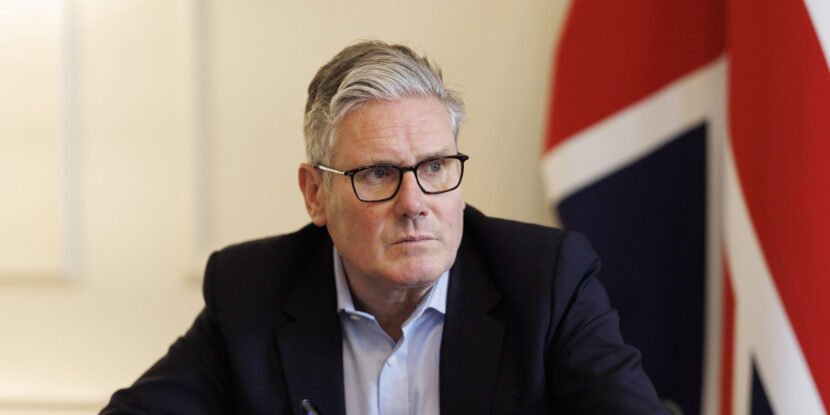
Former Prime Minister of the United Kingdom Sir Keir Starmer was summoned to give evidence as a “core participant” in the country’s ongoing national inquiry into the grooming gangs scandal last week.
The National Pulse keeps you updated on British politics. If you value the work of Raheem J. Kassam and his team, please JOIN THE NATIONAL PULSE or MAKE A DONATION today.
Newsletter
Need to Know.
Your free, daily feed from The National Pulse.
Thank You!
You are now subscribed to our newsletter.
Background.
The United Kingdom’s national grooming gangs inquiry follows years of scandals involving the sexual exploitation of mostly white children by gangs of mostly Pakistani Muslim men, while the authorities repeatedly failed to protect victims.
Specifically, the scandals revolved around Muslim men targeting white working-class girls in towns such as Rotherham, Rochdale, Bradford, and Oldham. However, due to the demographics of the victims and the perpetrators, British authorities were often reluctant to investigate due to fears of being seen as “racist” and fueling community cohesion, on occasion dismissing victims as young as 12 as “child prostitutes” making a “lifestyle choice.”
Pressure for a new national investigation intensified during former Prime Minister Sir Keir Starmer’s premiership, especially throughout 2024 and 2025. Starmer’s Labour governmentinitially resisted calls for a statutory inquiry. This followed the decision of then-Minister for Safeguarding and Violence Against Women and Girls Jess Phillips to reject a request from Oldham Council for a government-led investigation in October 2024. The government’s decision to vote against launching the inquiry triggered widespread public backlash.
In response, the Starmer government commissioned Baroness Louise Casey, a Crossbench peer in the House of Lords, the upper house of the British legislature, to conduct a national audit of group-based child sexual exploitation. Her June 2025 report recommended both a national police operation and a national statutory inquiry, and the government subsequently announced an inquiry later in the month.
Officially “The Statutory Independent Inquiry into Grooming Gangs,” the investigation is set to span three years. It has a £65 million budget.
While it will not investigate every location where grooming gangs have operated, the investigation will utilize information collected from areas including Oldham, Bradford, Keighley, London, and Birmingham.
The inquiry formally began in April 2026 under Baroness Anne Longfield, a Labour peer and the former Children’s Commissioner for England. Rather than merely examining individual cases, the inquiry aims to understand why institutions failed to respond effectively and why recommendations from earlier investigations did not consistently lead to change. Specifically, the inquiry will investigate the more than 800 recommendations that have been made by previous reviews and inquiries over approximately two decades.
Under the Inquiries Act 2005, the inquiry has significant legal powers, including the power to require witnesses to give evidence and organizations to provide documents. The inquiry also has the power to pass on evidence suggesting criminal activity to the police.
What This Means For Starmer.
As a “core participant,” Starmer is viewed by the inquiry as having sufficient connection to the matters being investigated. Starmer has served as both Prime Minister and Director of Public Prosecutions (DPP), putting him in a uniquely difficult position. Specifically, Starmer served as DPP from 2008 to 2013, when several major child sexual exploitation cases were being investigated. Due to the focus on the inquiry on institutional failures, Starmer is likely to be subject to intense scrutiny. The inquiry is also likely to question the former Prime Minister’s decision to block a national inquiry back in 2025.
This could represent Starmer’s first major appearance in national public life since stepping down as Prime Minister back in July and being replaced by Prime Minister Andy Burnham. Starmer announced his resignation in June, a month after the Labour Party suffered critical losses in local elections to Nigel Farage’s Reform UK party. Starmer also resigned his seat in Parliament in September.
The National Pulse is dedicated to high-quality reporting. If you value the work of Raheem J. Kassam and his team, please JOIN THE NATIONAL PULSE or MAKE A DONATION today. We are 100% reader-funded.
Join Pulse+ to comment below, and receive exclusive e-mail analyses.
show less
Former Prime Minister of the United Kingdom Sir Keir Starmer was summoned to give evidence as a "core participant" in the country's ongoing national inquiry into the grooming gangs scandal last week.
show more
By Popular Demand.
The National Pulse Now has an on-site comments section for members. Sign up today and be part of the conversation in our community of almost 15,000.
WE ARE 100% INDEPENDENT AND READER-FUNDED. FOR A GUARANTEED AD-FREE EXPERIENCE AND TO SUPPORT REAL NEWS, PLEASE SIGN UP HERE, TODAY.
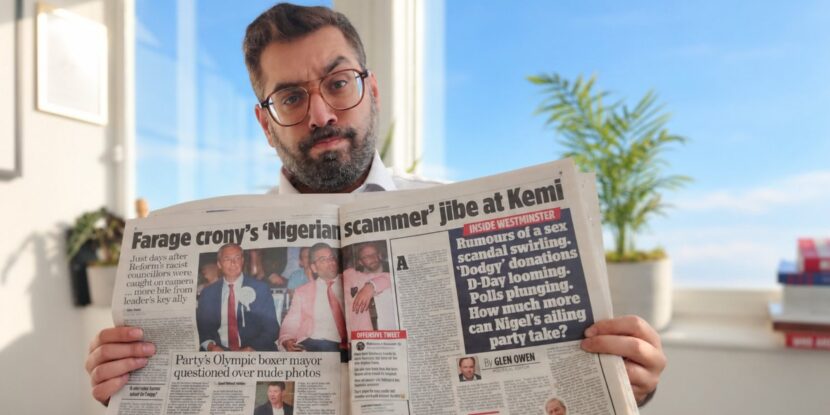
The British establishment media has spent days targeting Raheem Kassam, Editor-in-Chief of The National Pulse, for branding Conservative Party leader Kemi Badenoch a “Nigerian scammer.” Media organizations including LBC, The Huffington Post, and the notionally right-leaning Daily Mail, which employs former Labour and Hope Not Hate activist Dan Hogdges, have joined the deeply chequered Conservative Party chairman Kevin Hollinrake in attacking Reform figures, including Robert Jenrick and Danny Kruger, for declining to denounce Kassam as “racist,” with Kruger dismissing the supposed controversy as “rumbustious debate online.”
Kassam has responded to the attacks with a detailed thread providing evidence that Badnenoch is a “scammer,” and noting that “Nigerian” is not a race. Significantly, Badenoch has also indicated that she does not believe “Nigerian” is a race, previously stating that she identifies with her “specific ethnicity” as a Yoruba, and that she regards northern Nigerians as her “ethnic enemies.”
Newsletter
Need to Know.
Your free, daily feed from The National Pulse.
Thank You!
You are now subscribed to our newsletter.
I enjoyed this. Nigerian isn't a race, and calling her a scammer because she invokes it when its politically convenient isn't racism.
Kemi is a scammer.
On race, on politics, on the economy, on her own background, and more.
Reader support allows Raheem J. Kassam and his team to bring you honest, forthright news and analysis without fear of cancel culture. To keep our work RADICALLY INDEPENDENT, please JOIN THE NATIONAL PULSE or MAKE A DONATION today.
Selective Nigerian Identity.
Kassam’s core point is straightforward. Badenoch was born in Wimbledon, London, in 1980 to visiting Nigerian parents, who immediately returned to Nigeria to raise her. Early in her British political career, she directly appealed to Nigerian diaspora voters for support, and suggested she entered British politics to “[speak] for the Africans,” particularly on foreign aid.
Badenoch has at times emphasized her Nigerian roots and, in footage highlighted by Kassam from 2022, told a Nigerian audience she loves Nigeria “just as much as” England while speaking in a Nigerian accent. At other times—particularly when speaking to British audiences—she has said she no longer identifies as Nigerian, or even, as mentioned previously, that she has never identified as Nigerian, but only as a Yoruba.
Kassam argues this is convenient identity politics: using her Nigerian background for career advancement or making emotional appeals situationally, but downplaying it when dual loyalty concerns arise. He has noted he is Indian by heritage, but would never declare equal love for India and Britain.
Have you seen this before???
When Kemi Badenoch speaks to other Nigerians, she turns off her fake English accent.
She also tells them that she loves Nigeria just as much as England.
And what’s all this about saying Islamic prayers in Nigeria?
Badenoch has repeatedly said that at age 16, while attending school in the U.S., strong SAT scores earned her an offer and partial scholarship to study medicine or “pre-med” at Stanford, but her family could not afford it. Former Stanford admissions staff have called this implausible or impossible, as Stanford has no undergraduate pre-med degree.
Admissions were also not based on test scores alone, and partial scholarships of the type Badenoch described were not how the university operated at the time—if they admitted someone who needed aid, they covered the full cost so the student could enroll. Badenoch has stood by the story, but says she no longer has the paperwork to prove it.
This is one of several origin-story embellishments. Earlier reporting has also challenged a claimed national girls’ chess championship win at age seven, which, if it ever took place, appears to have involved only two competitors, and questions around Badenoch’s account of a supposedly difficult Nigerian childhood, despite the fact that her father was a doctor with a clinic and she attended elite schools.
Inconsistencies.
Kassam also referenced “Melonigate,” a conversation reported by The Times in which Italian Prime Minister Giorgia Meloni supposedly advised Badenoch against any electoral arrangement with Nigel Farage and Reform UK. Meloni’s party subsequently indicated that no such discussion took place, and The Times made extensive stealth edits to remove the claims without a proper correction note.
On the European Convention on Human Rights (ECHR), Badenoch previously said leaving it would not be a “silver bullet” for immigration control. She now claims she would abrogate the convention, despite her party upholding it over 14 years in government while overseeing record immigration and falling deportations.
As Equalities Minister, she advanced the “Inclusive Britain” agenda, including ethnicity pay gap reporting and pushing for greater racial diversity in the judiciary and policing, despite public criticism of DEI. Farage has called the shift “totally disingenuous.”
On the Chagos Islands, Badenoch attacked Farage’s comments about offering the U.S. perpetual use of the vital Diego Garcia base as “humiliating” and falsely claimed the Reform leader was advocating giving away the British territory. The U.S. government publicly rebuked her for “spreading fake news,” clarifying that Farage was referring to continued U.S. use of the Diego Garcia base, not transferring control over the islands to the U.S. Significantly, Britain’s negotiations to hand the territory to Mauritius began under the Conservatives, while Badenoch was a government minister.
British Conservative (Tory) Party leader Kemi Badenoch has been rebuked by the White House after she attacked Reform UK party leader Nigel Farage over recent comments about the Chagos Islands, with a senior official accusing her of spreading “fake news” and undermining the… pic.twitter.com/GFcMMxjmnC
Deep dives exposing the gap between politicians’ public and private positions take time and research to assemble. To support this work, please JOIN THE NATIONAL PULSE or MAKE A DONATION today.
Same Old Tories.
Kassam noted that the vast majority of Badenoch’s top team are, like her, veterans of the failed 2010–2024 Conservative governments which botched Brexit and accelerated Net Zero and mass migration, warning voters: “There is a REASON that 92% of her shadow cabinet are the same Tory ministers and spads from the failed 14 years. Don’t fall for the great Kemi scam.”
He also noted that her husband Hamish Badenoch has been described in the press as a “sopping wet Remainer,” firmly on the left of the Conservative Party.
Kassam has doubled down on the original “Nigerian scammer” line as a colorful way to draw attention to his underlying critique of Badenoch as, at best, a serial embellisher and political chameleon, whose record and actions do not match her public positions.
The Conservatives joining the left-wing media in focusing on Kassam’s reference to her Nigerian nationality and demanding ritual disavowals from Reform figures, instead of focusing on the substance of the critique, shows they remain a fundamentally center-left party in hock to leftist identity politics and political correctness.
American observers will recognize the pattern. When a politician’s résumé, past statements, and policy consistency face detailed challenge, establishment outlets and politicians pivot to policing the tone of the critique on woke, left-wing terms. Kassam’s receipts are there for anyone with the wherewithal to read past the familiar accusation of “racism.”
Kemi Badenoch is an unrelenting scammer, and she has used her Nigerian background as a means by which to advance her career when it suits her. Of that there can be no doubt. A thread… 🧵
Lets start with HER STORY of how she joined the Tories in order to promote foreign aid to… pic.twitter.com/lvLRrODAwh
To help Raheem J. Kassam and his team hold the political class to account free from corporate influence, please JOIN THE NATIONAL PULSE or MAKE A DONATION today.
Join Pulse+ to comment below, and receive exclusive e-mail analyses.
show less
The British establishment media has spent days targeting Raheem Kassam, Editor-in-Chief of The National Pulse, for branding Conservative Party leader Kemi Badenoch a “Nigerian scammer.” Media organizations including LBC, The Huffington Post, and the notionally right-leaning Daily Mail, which employs former Labour and Hope Not Hate activist Dan Hogdges, have joined the deeply chequered Conservative Party chairman Kevin Hollinrake in attacking Reform figures, including Robert Jenrick and Danny Kruger, for declining to denounce Kassam as "racist," with Kruger dismissing the supposed controversy as “rumbustious debate online.”
show more
By Popular Demand.
The National Pulse Now has an on-site comments section for members. Sign up today and be part of the conversation in our community of almost 15,000.
WE ARE 100% INDEPENDENT AND READER-FUNDED. FOR A GUARANTEED AD-FREE EXPERIENCE AND TO SUPPORT REAL NEWS, PLEASE SIGN UP HERE, TODAY.
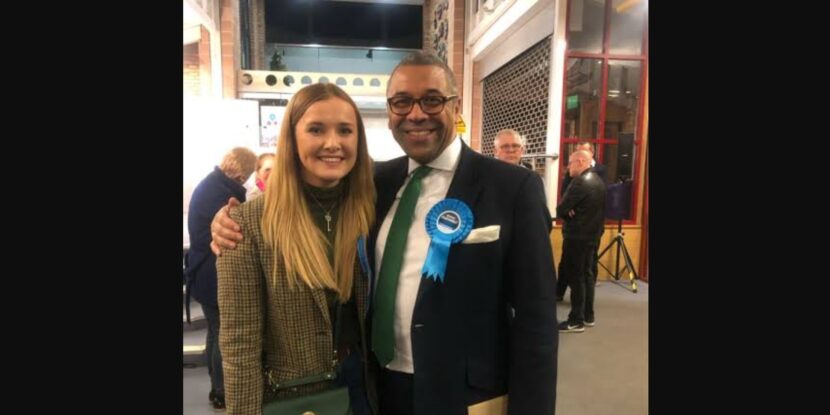
Sir James Cleverly, the Conservative Member of Parliament (MP) for Braintree and frontrunner for his party’s 2028 London mayoral nomination, stepped down from Kemi Badenoch’s Shadow Cabinet in late August 2026 to focus on the City Hall contest. A former Home Secretary and Foreign Secretary during the Conservatives’ most recent stretch in government (2010–2024), he now positions himself as an alternative to Lord Sadiq Khan, the Labour Party incumbent. However, a closer look at his views and record reveals a center-left politician more at ease with open borders and a multicultural redefinition of Britishness than with traditional conservative priorities such as immigration enforcement and maintaining national cohesion.
Open Borders in the Guise of ‘Free Market Labor Movements.’
Despite the party’s center-right branding, Cleverly has long advocated positions that treat mass migration primarily as an economic boon. He has written approvingly of a future defined by “free market labor movements”—that is, open borders for foreign workers, prioritizing employer demand over domestic wage pressures or community capacity.
He did advocate for the shift towards open borders to be evolutionary rather than revolutionary, due to the social upheaval it would cause, but still predicted that “At some point in the future we will look back at our current (fairly) protectionist policies on free market labour movements with the same disbelief that we look back on the corn laws.”
As Home Secretary, Cleverly presided over the tail-end of the Boriswave influx. While he claimed that the unprecedented post-COVID migration spike his party engineered had been a “fatal mistake,” his earlier enthusiasm for liberal international labor markets puts him firmly in the camp of Conservatives whose public, restrictive position on immigration did not match his record.
Woke on Identity: Redefining Britishness as Defined by Foreign Foods and Imports.
Cleverly has a distinctly woke-left view of national identity. In one article, he described Britishness exclusively in terms of consuming foreign goods: “Being British is about driving in a German car to an Irish pub for a Belgian beer, then travelling home, grabbing an Indian curry or a Turkish kebab on the way, to sit on Swedish furniture and watch American shows on a Japanese TV.”
Cleverly’s view elevates the enjoyment of foreign goods, cuisine, and media as the essence of Britishness. It echoes the broader progressive insistence that diversity is the defining feature of modern Britain, rather than national traditions or the national language, institutions, and history. Critics see it as the opposite of a coherent civic or cultural identity, replacing nationhood with a cosmopolitan marketplace.
I’m proud to be Chairman of the @Conservatives, I’m proud to be part of the most diverse cabinet in history, and I’m proud of how my party is championing diversity. https://t.co/baKpndOWYo
Labeling Immigration Skeptics ‘Extremist and Racist.’
The son of an immigrant from Sierra Leone, Cleverly has repeatedly insisted that Britain’s social cohesion and sense of identity “is not being watered down by immigration.” Those who argue otherwise, he has maintained, are “extremist and racist.”
He has extended this claim across centuries of arrivals: “We have managed to stay British through immigration from the Romans, Saxons, Vikings, Normans, Huguenots, Jews, Irish, West Indians, West Africans, East Africans, Indians, Pakistanis, etc., etc., etc. Britishness evolved, but it did not diminish.”
Notably, the “immigration” of the Romans, Saxons, Vikings, and Normans generally involved the violent overthrow of the existing political, social, and sometimes cultural order, suggesting that their arrival did indeed fundamentally alter the national character.
Party Context Under Badenoch.
Cleverly’s outlook sits comfortably within the current Conservative leadership. Party leader Kemi Badenoch has described herself as a “first-generation immigrant,” being born in London but raised in Nigeria. Like Cleverly, Badenoch publicly strikes a restrictionist posture on immigration, but her record in government includes lobbying to have limits on foreign students and migrant workers removed, which helped create the Boriswave.
Longstanding Hostility to Trump and America First.
Cleverly’s liberal instincts on migration and identity pair with strong disdain for President Donald J. Trump and the America First movement. In 2015, he publicly urged Republicans not to nominate Trump, writing on Twitter (now X): “Dear Republican colleagues, please, please, please don’t choose Donald Trump as the front man for American Right-of-Centre politics. Please.”
After Trump’s 2016 election and 2017 inauguration, Cleverly denounced the administration’s policies on immigration and Syrian refugees as “indefensible, unworkable and almost certainly unconstitutional.” By contrast, he later spoke warmly of meeting then-President Joe Biden in 2024, calling the Democrat “a great friend to the UK” despite his open hostility to Britain in general and the English in particular.
Join Pulse+ to comment below, and receive exclusive e-mail analyses.
show less
Sir James Cleverly, the Conservative Member of Parliament (MP) for Braintree and frontrunner for his party’s 2028 London mayoral nomination, stepped down from Kemi Badenoch's Shadow Cabinet in late August 2026 to focus on the City Hall contest. A former Home Secretary and Foreign Secretary during the Conservatives’ most recent stretch in government (2010–2024), he now positions himself as an alternative to Lord Sadiq Khan, the Labour Party incumbent. However, a closer look at his views and record reveals a center-left politician more at ease with open borders and a multicultural redefinition of Britishness than with traditional conservative priorities such as immigration enforcement and maintaining national cohesion.
show more
By Popular Demand.
The National Pulse Now has an on-site comments section for members. Sign up today and be part of the conversation in our community of almost 15,000.
WE ARE 100% INDEPENDENT AND READER-FUNDED. FOR A GUARANTEED AD-FREE EXPERIENCE AND TO SUPPORT REAL NEWS, PLEASE SIGN UP HERE, TODAY.
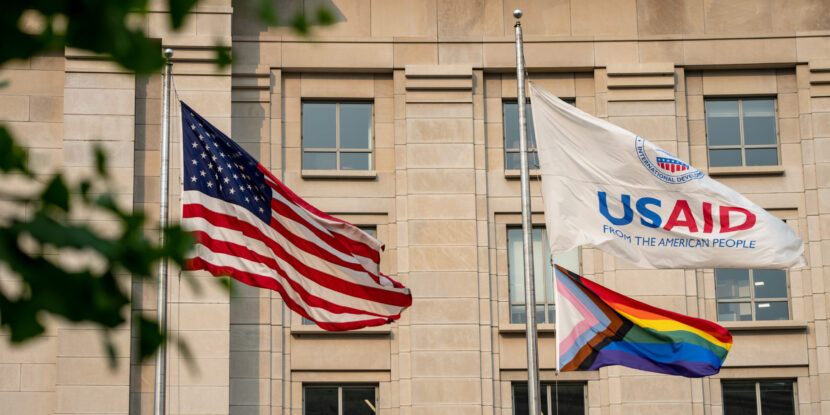
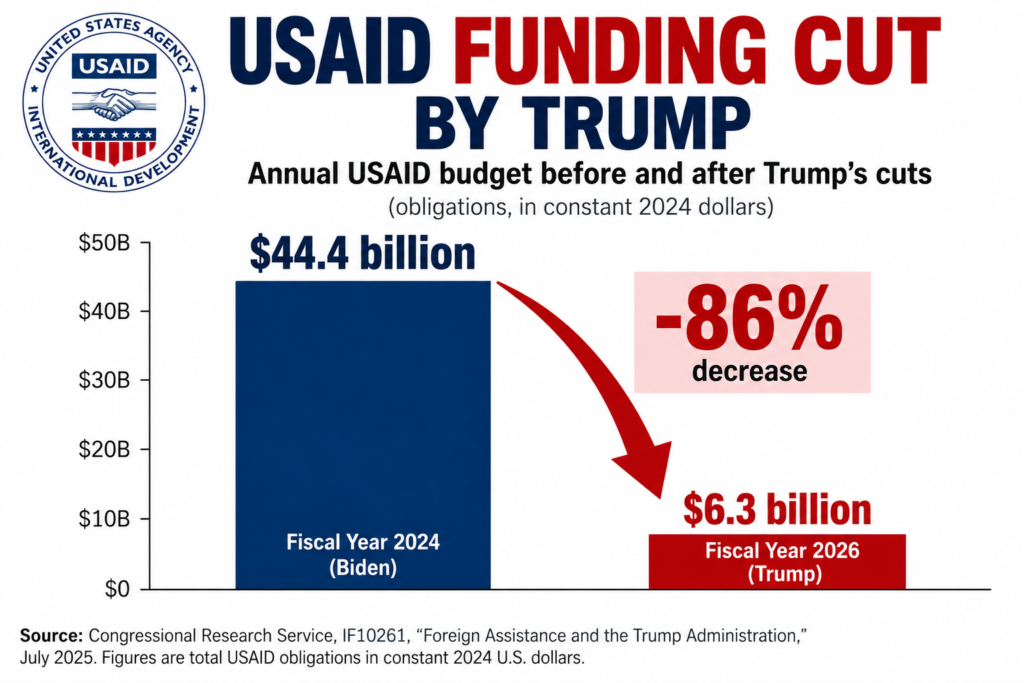
A Biden-era grant to a Serbian political organization is raising fresh questions about the legacy of the United States Agency for International Development (USAID), the foreign aid organization targeted for dismantling by President Donald J. Trump.
The National Pulse gives you deep dives into the issues that matter. To help support Raheem J. Kassam and his team continue this work, please JOIN THE NATIONAL PULSE or MAKE A DONATION today. We are 100% reader-funded.
Newsletter
Need to Know.
Your free, daily feed from The National Pulse.
Thank You!
You are now subscribed to our newsletter.
For decades, USAID presented itself as being engaged in altruistic operations like humanitarian assistance and economic development. However, its real, deeper history involved financing political opposition movements and so-called “color revolutions,” partisan media operations, voter-mobilization campaigns, and progressive ideological initiatives worldwide.
From the campaigns to topple former Serbian President Slobodan Milošević in 2000 to covert social media operations in Cuba, USAID’s political activities have frequently flown under the radar compared to more prominent humanitarian spending on things like food and medical aid.
The agency’s involvement in foreign politics is not simply a matter of speculation. Congressional documents, official USAID records, and various investigations have proven its role in promoting political transitions, cultivating activists, and advancing the preferred policies of agencies like the CIA and the Deep State overseas.
Serbia: American Money and a New Political Crisis.
The Center for Research, Transparency, and Accountability (CRTA), a Serbian NGO involved in election monitoring and public advocacy, has received $832,432.47 under a Biden-era USAID grant, with approximately $2.8 million yet to be given, meaning that despite massive cuts to USAID under the second Trump administration, money is still flowing to its political programs.
The award, established in 2023, supposedly for election integrity activities, was expanded on January 17, 2025, just three days before President Trump’s second inauguration.
The revelations come as Serbia prepares for parliamentary elections on October 25, with student-led protests presenting a serious challenge to the political establishment associated with former President Aleksandar Vučić. CRTA has publicized the protesters’ demands, while Vučić has accused foreign-backed NGOs of attempting to destabilize his government.
USAID’s Cold War Origins and CIA Connections.
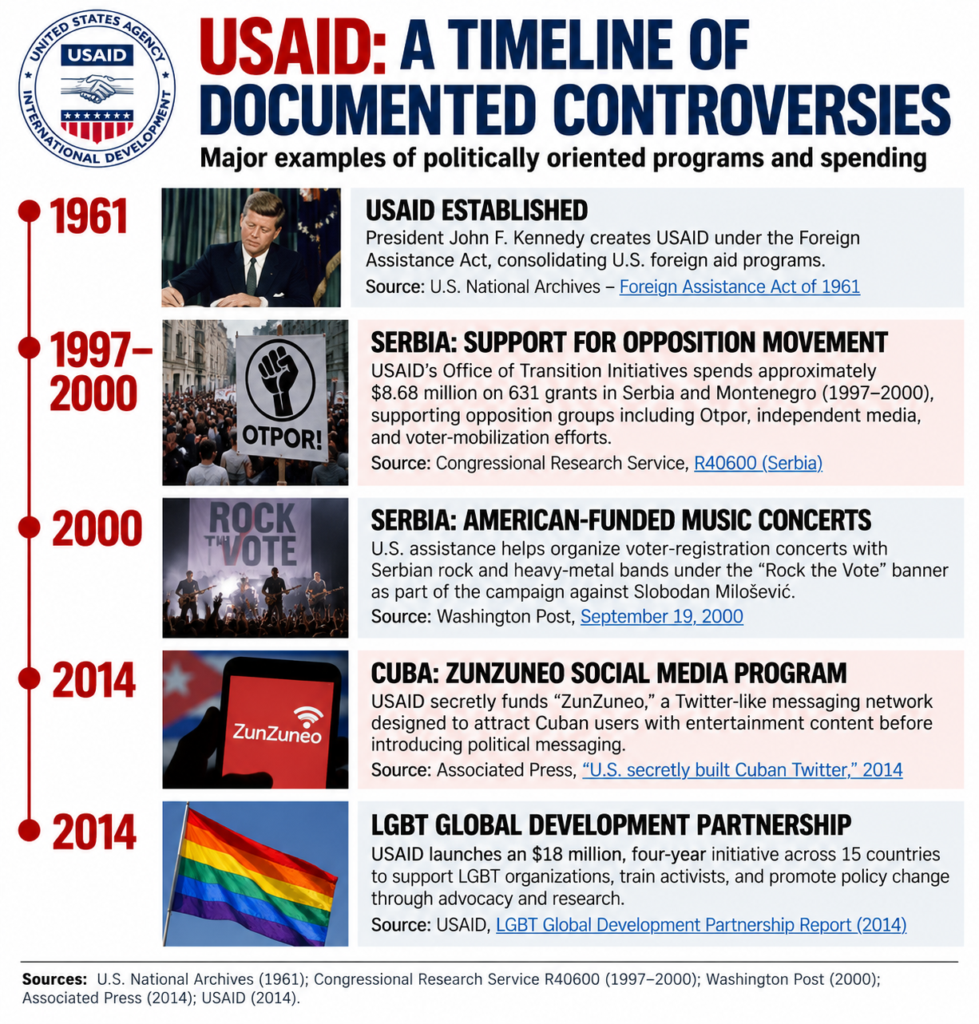
USAID was established by President John F. Kennedy in 1961, consolidating America’s foreign development programs into an agency intended to promote economic growth and stability overseas. The agency was created amid the Cold War and was largely used as a tool of “soft power” to influence regimes away from the USSR.
Its activities sometimes overlapped with American intelligence objectives. Accounts of Cold War operations in Southeast Asia describe the CIA’s use of USAID-related arrangements, including testimony concerning USAID cover in Laos. Some have even described USAID as a “cover” for CIA activity.
USAID’s political functions were also openly acknowledged. A Congressional Research Service examination of the agency’s Office of Transition Initiatives (OTI) detailed its involvement in politically sensitive transitions, including support for opposition organizations in Serbia in the 1990s.
How Washington Helped Overthrow Serbia’s Milošević.
The most striking historical parallel to the current Serbian controversy is the American-financed campaign against Yugoslav President Slobodan Milošević in 2000. A Washington Post investigation published in December 2000 documented approximately $41 million in American appropriations during 1999 and 2000, much of which supported the political infrastructure opposing Milošević.
The campaign included political consultants, opinion polling, opposition training, election monitoring, and mass-produced propaganda. American taxpayers financed 2.5 million stickers bearing the Serbian slogan “Gotov je,” meaning “He’s finished,” as well as 5,000 cans of spray paint used by activists to spread anti-Milošević messages.
The International Republican Institute also trained leaders of Otpor, the student resistance movement that became central to Milošević’s downfall. American-funded consultants helped opposition groups develop messaging and mobilization strategies.
Popular culture was another weapon. A separate Washington Post report revealed that American assistance reached Serbian heavy-metal bands participating in voter-registration concerts under the banner of “Rock the Vote.”
A subsequent USAID evaluation documented the political importance of the agency’s Serbian activities. According to a Congressional Research Service summary, OTI spent approximately $8.68 million on 631 grants in Serbia and Montenegro between 1997 and October 2000.
Cuba: USAID’s Secret Social Media Network.
During the Obama administration, USAID secretly financed a Twitter-like communications network in Cuba called ZunZuneo. The platform used intermediaries and offshore arrangements to conceal its American government financing.
The service initially distributed material about sports, music, and entertainment, attracting Cuban users who were unaware of USAID’s involvement. Internal documents described ambitions to introduce political messaging and encourage mobilization against the Castro government. The operation even exploited interest surrounding a major concert by Colombian singer Juanes to test its messaging capabilities.
A subsequent USAID Inspector General investigation confirmed that implementers had deliberately concealed the American government’s role, including through offshore corporate arrangements. USAID disputed allegations that the project constituted a covert regime-change operation, arguing that discretion was necessary to protect participants and circumvent Cuban censorship.
Despite USAID’s statements, the operation revealed yet another time the agency had meddled in the political affairs of another country under the guise of being simply dedicated to humanitarian ventures.
Millions for LGBT Activism and Progressive Causes.
Beyond attempts to influence foreign governments, USAID also became an important international financier of progressive social ideologies across the globe, much of which was revealed when President Trump’s Department of Government Efficiency (DOGE) looked into USAID’s activities in 2025.
Under former President Barack Obama, the agency expanded its involvement in LGBT advocacy through partnerships with organizations including the Astraea Lesbian Foundation for Justice, the Gay & Lesbian Victory Institute, and the Swedish Federation for LGBT Rights. According to USAID’s own partnership report, the LGBT Global Development Partnership represented an $18 million, four-year public-private initiative spanning 15 countries.
Its objectives included strengthening LGBT civil society organizations, training activists to participate in democratic processes, and conducting research intended to influence policy.
A Williams Institute analysis reported that USAID’s dedicated LGBT programming increased from approximately $6 million in 2021 to $25 million in 2024 under President Joe Biden. The agency also supported initiatives in Asia and Latin America addressing LGBT legal rights, discrimination, and political participation.
A 2015 Obama White House fact sheet disclosed approximately $3.3 million in USAID spending on stand-alone LGBT programs during fiscal year 2014, alongside $113 million in broader health and human-rights programs relevant to LGBT populations. Critics have questioned why American taxpayers were financing overseas social advocacy and political organizing, particularly in countries with different cultural and religious traditions.
Trump’s Crackdown—and the Political Networks Left Behind.
President Trump’s effort to dismantle USAID’s massive institutional structure represented a major challenge to Washington’s traditional foreign-aid establishment. For supporters of the America First agenda, the agency’s record raised a fundamental question: Why should American taxpayers finance political activism, foreign NGOs, and ideological initiatives overseas?
The historical record provides considerable evidence that USAID supported more than humanitarian assistance. In Serbia, its funding helped opposition activists defeat an incumbent government. In Cuba, it financed a communications network whose American sponsorship was deliberately concealed. Elsewhere, it supported organizations seeking changes to social policies and political participation.
The renewed controversy in Serbia suggests that dismantling an agency’s bureaucracy has not necessarily eliminated the infrastructure it created, nor stopped all of its funding.
Join Pulse+ to comment below, and receive exclusive e-mail analyses.
show less
A Biden-era grant to a Serbian political organization is raising fresh questions about the legacy of the United States Agency for International Development (USAID), the foreign aid organization targeted for dismantling by President Donald J. Trump.
show more
By Popular Demand.
The National Pulse Now has an on-site comments section for members. Sign up today and be part of the conversation in our community of almost 15,000.
WE ARE 100% INDEPENDENT AND READER-FUNDED. FOR A GUARANTEED AD-FREE EXPERIENCE AND TO SUPPORT REAL NEWS, PLEASE SIGN UP HERE, TODAY.
A left-wing Liberal Democrat politician in England has been suspended after recording minors outside a primary (elementary) school and flatly refusing official requests to delete the footage from social media.
The National Pulse covers the stories the corporate media leaves buried. To help support our work, please JOIN THE NATIONAL PULSE or MAKE A DONATION today.
Newsletter
Need to Know.
Your free, daily feed from The National Pulse.
Thank You!
You are now subscribed to our newsletter.
Adrian Chapmanlaw, an elected official serving on the Bournemouth, Christchurch, and Poole (BCP) Council in Dorset, England, was stripped of his party affiliation as an internal inquiry gets underway.
The disciplinary action follows administrators at Manorside Academy lodging a formal objection regarding a clip shared to Chapmanlaw’s “Dorset Safer Roads” social media page. While the politician insisted the recording was intended to document driving infractions on the restricted lines near the school, the published media displayed parents and children uncensored.
Leadership at Manorside Academy repeatedly urged the councillor to delete the broadcast because the faces of vulnerable youngsters and guardians were clearly visible. Chapmanlaw refused. According to school officials, leaving unedited recordings of parents and children visible to the public severely jeopardized student security and inflicted unnecessary panic on local families.
The Liberal Democrats’ local leader, Millie Earl, stated: “As a council group, we take safeguarding concerns raised by our partners very seriously. I have therefore suspended Councillor Chapmanlaw from the Liberal Democrat Group until the council’s standards procedure has been concluded. In line with our Standing Orders, we will then consider what further action should be taken.”
The National Pulse brings you local, national, and international news without corporate or government influence. If you value the work of Raheem J. Kassam and his team, please JOIN THE NATIONAL PULSE or MAKE A DONATION today.
Chapmanlaw responded on the same Facebook page where he displayed his recordings by portraying himself as a victim. “This is what happens when you take a stand and try to make a difference. Kids die outside of schools, I am merely trying to protect them using the legal systems available to me,” he insisted.
He accused his political allies of abandoning him, writing: “People try to tear you down. Even people who are supposed to be your friends will throw you under the bus rather than support.”
Dismissing the school’s concerns, he added: “The complaint is complete cow excrement. There was no ‘safeguarding issue’ anybody with eyes can see that. I find this action completely disgusting, I am currently considering my options.”
The National Pulse keeps is 100% reader-funded. To keep the work of Raheem J. Kassam and his team RADICALLY INDEPENDENT, please JOIN THE NATIONAL PULSE or MAKE A DONATION today.
Join Pulse+ to comment below, and receive exclusive e-mail analyses.
show less
A left-wing Liberal Democrat politician in England has been suspended after recording minors outside a primary (elementary) school and flatly refusing official requests to delete the footage from social media.
show more
By Popular Demand.
The National Pulse Now has an on-site comments section for members. Sign up today and be part of the conversation in our community of almost 15,000.
WE ARE 100% INDEPENDENT AND READER-FUNDED. FOR A GUARANTEED AD-FREE EXPERIENCE AND TO SUPPORT REAL NEWS, PLEASE SIGN UP HERE, TODAY.
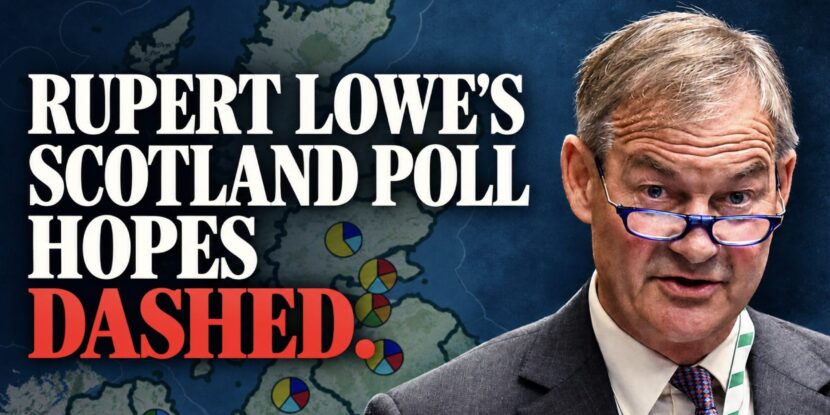
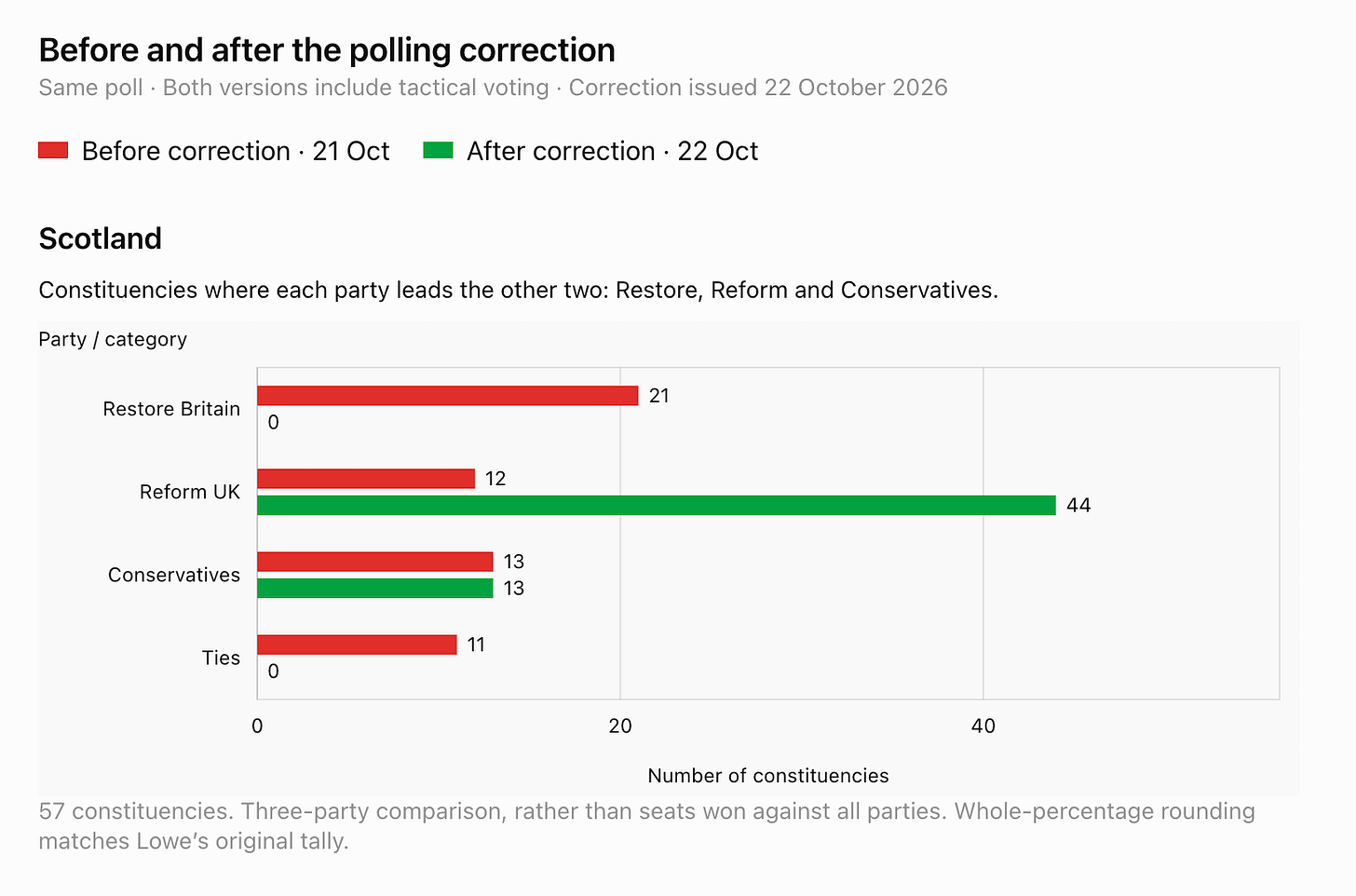
A methodological error in the latest FindOutNow/Electoral Calculus Multilevel Regression and Post-stratification (MRP) projections left Restore Britain’s constituency vote shares untouched under tactical voting scenarios, even as other parties’ shares were reallocated. The result temporarily showed the Elon Musk-backed, Conservative-allied Reform splinter party leading the “parties on the right” in 21 Scottish seats. After the error was identified by Raheem Kassam, Editor-in-Chief of The National Pulse, that figure fell to zero.
The National Pulse examines the data beyond the headlines. If you value the work of Raheem J. Kassam and his team, please JOIN THE NATIONAL PULSE or MAKE A DONATION today.
Newsletter
Need to Know.
Your free, daily feed from The National Pulse.
Thank You!
You are now subscribed to our newsletter.
Restore Britain founder Rupert Lowe boasted on Thursday morning that the poll had the party ahead of both Reform and the Conservatives in more Scottish constituencies. He cited figures of Restore Britain 21, Conservatives 13, Reform 12, and 11 ties, writing, “This is remarkable. Restore Britain is now the second largest party in Scotland, and the largest party on the right – bigger than both Reform and the Tories.”
Those numbers did not survive scrutiny.
On Thursday morning, @RestoreBritain founder @RupertLowe10 tweeted: “This is important – the latest huge MRP poll has Restore Britain ahead in more Scottish constituencies than both Reform or the Tories.”
Raheem Kassam examined the tactical-voting tables and found that Restore’s share remained fixed at its pre-tactical level in every constituency, while other parties’ shares changed according to the modeled reallocation of voters who said they would switch. As Kassam put it: “I found that although the tactical-voting calculations appeared to affect support for other parties, they actually incorrectly left Restore’s share in every constituency exactly as it was prior to tactical voting.”
In a Labour–Scottish National Party (SNP) contest, for instance, the model reduced Reform’s share by shifting some of its supporters to the two main parties. Restore voters who had also indicated a willingness to vote tactically were not treated the same way. Their share stayed constant, producing an artificial relative gain for Lowe’s party.
Kassam tested this on Midlothian. Baseline figures showed SNP 31.96 percent, Labour 29.73 percent, Reform 15.62 percent, and Restore 8.92 percent. Under the flawed tactical adjustment, Reform fell to 8.15 percent while Restore remained at 8.92 percent. Once the reallocation was applied correctly, Restore dropped to 5.28 percent—below Reform.
Kassam contacted Electoral Calculus chief executive Martin Baxter the same morning. Baxter replied that there was “a problem with the re-allocation of Restore votes.” Corrected figures were published within hours.
Corrected Scottish and National Results.
Across all 57 Scottish constituencies, the three-party comparison among Restore Britain, Reform, and the Conservatives reversed. The original tally of 21 (Restore), 13 (Conservatives), 12 (Reform), and 11 ties became zero (Restore), 13 (Conservatives), 44 (Reform), and zero ties. Reform, not Restore, now leads the right-of-center pack in the large majority of Scottish seats under the tactical scenario.
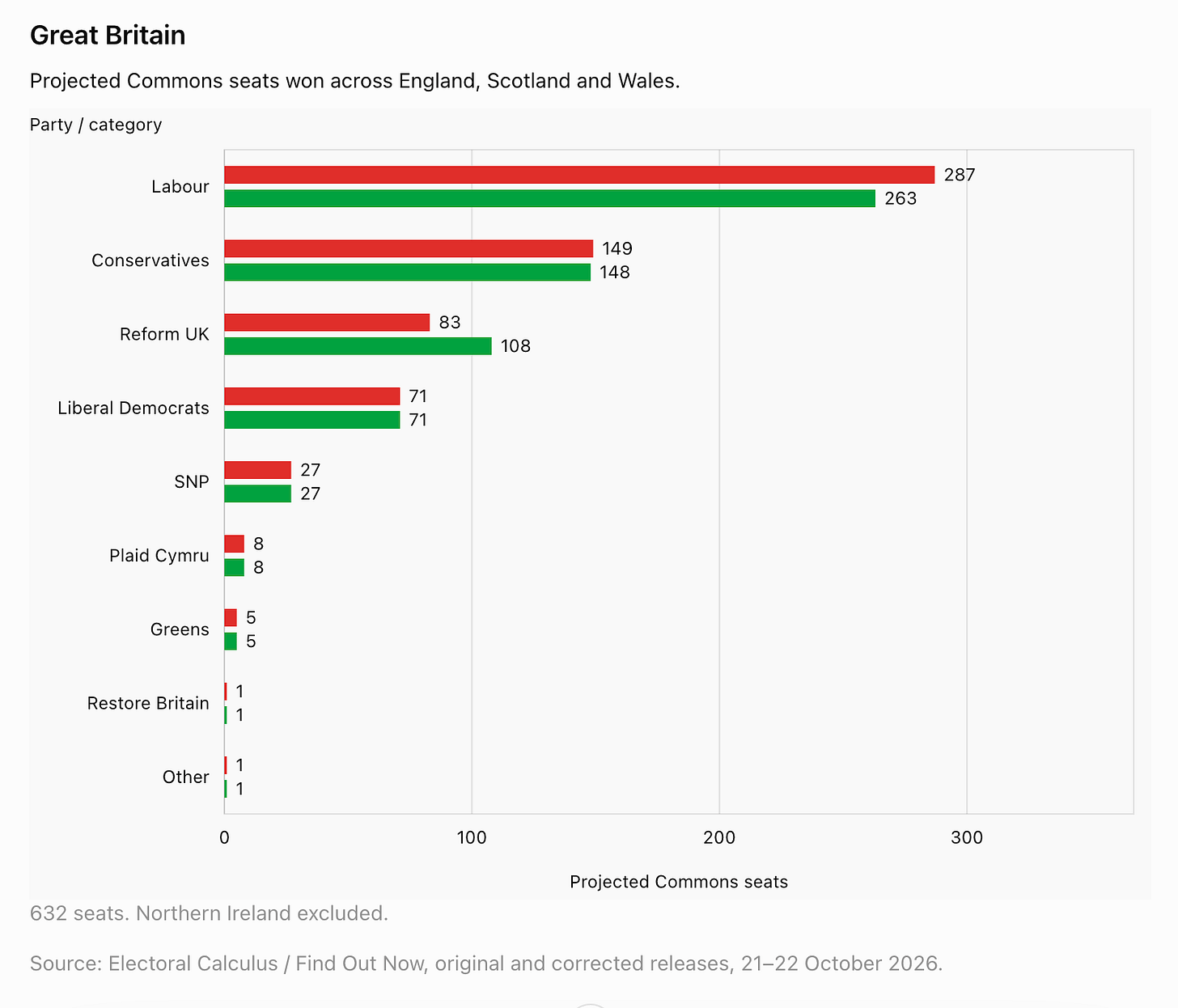
Nationally, the correction also shifted seat projections under the tactical-voting model. Reform’s projected total rose from 83 to 108 seats. Labour’s fell from 287 to 263. Restore’s national tactical-voting vote share was revised from eight percent to six percent, placing it below the far-left Greens. Electoral Calculus’s updated page, reposted with corrections on October 22, 2026, confirms the six percent figure and the 108-seat Reform projection under first-past-the-post with tactical voting.
The same error had underpinned Lowe’s separate claim that the poll showed Restore matching the Greens on a “record 8%.” That national figure no longer holds under the corrected tactical scenario.
Why the Numbers Mattered—and Why They Did Not Hold.
MRP models produce constituency-level estimates precisely so that small absolute shifts can change relative rankings. Leaving one party’s share static while others declined created the appearance that Restore was gaining ground against Reform and the Conservatives in Scotland. Once the reallocation was applied consistently, those relative gains disappeared.
The corrected pattern is consistent with broader findings in the same poll: anti-Reform tactical voting is measurable, and right-of-center support remains fragmented. Restore continues to register a non-trivial national share, but the specific claim that it had overtaken both Reform and the Conservatives as the leading right-wing option across more Scottish seats than either did not survive the methodological fix.
“The incident obviously raises questions. If this can happen in a needle-in-a-haystack example in an MRP like this, and be seized upon by a party leader, what other polling errors have occurred in the past that have never been spotted?” Kassam asked, adding: “The other question that springs to my mind is didn’t Rupert Lowe, or anyone who runs his accounts check this before they posted 5 times about it on X, and multiple times on Facebook?”
It was good, he continued, that “Electoral Calculus were so swift and honest in correcting the error,” but noted that “hundreds of thousands of voters” had already been exposed to Lowe’s false claims, potentially lending weight to Restore’s largely narrative that it is achieving genuine momentum as a right-wing force. The evidence suggests that this is largely unsupported, and that voters concerned about mass migration and related issues would be advised to consolidate behind Reform, with Restore being a vehicle mainly to help Labour and the Conservatives retain their grip on British politics, rather than a future party of government, or even opposition.
Deep dive analysis like this takes time and research. To support our work, please JOIN THE NATIONAL PULSE or MAKE A DONATION today. We are 100% reader-funded.
Join Pulse+ to comment below, and receive exclusive e-mail analyses.
show less
A methodological error in the latest FindOutNow/Electoral Calculus Multilevel Regression and Post-stratification (MRP) projections left Restore Britain’s constituency vote shares untouched under tactical voting scenarios, even as other parties’ shares were reallocated. The result temporarily showed the Elon Musk-backed, Conservative-allied Reform splinter party leading the “parties on the right” in 21 Scottish seats. After the error was identified by Raheem Kassam, Editor-in-Chief of The National Pulse, that figure fell to zero.
show more
By Popular Demand.
The National Pulse Now has an on-site comments section for members. Sign up today and be part of the conversation in our community of almost 15,000.
WE ARE 100% INDEPENDENT AND READER-FUNDED. FOR A GUARANTEED AD-FREE EXPERIENCE AND TO SUPPORT REAL NEWS, PLEASE SIGN UP HERE, TODAY.
On Wednesday, the British government approved Jackdaw, a natural gas production project in the North Sea. Kemi Badenoch, leader of the notionally center-right Conservatives (Tories), said it was the right move, contradicting 14 years of Tory government.
The National Pulse keeps you updated on the latest political news from Britain. If you value the work of Raheem J. Kassam and his team, please JOIN THE NATIONAL PULSE or MAKE A DONATION today.
Newsletter
Need to Know.
Your free, daily feed from The National Pulse.
Thank You!
You are now subscribed to our newsletter.
Badenoch vs Farage.
The Jackdaw gas project is a natural gas development in the central North Sea, approximately 150 miles off the coast of Aberdeen, a city in north-east Scotland. The project was originally approved under the Conservatives in 2022, but they allowed it to be delayed by lawfare over whether its environmental assessment properly accounted for carbon emissions from burning the gas. According to government projections, the project could generate £2.9 billion for the country’s economy, create jobs, and lower energy costs.
Following the Labour government’s decision to finally approve Jackdaw, Badenoch posted on X (formerly Twitter): “Finally. Labour spent 2 years faffing about to make a decision which Conservatives had already approved 2 years ago. If they’d done this in the summer we’d have had that gas heating British homes this Christmas. An unnecessary waste of time and money by a party that puts its own interest above the country’s.”
In response, Reform UK party leader Nigel Farage posted: “Kemi Badenoch is arguing for more North Sea oil and gas. Has she forgotten that the Tories taxed the industry to destruction?”
Finally. Labour spent 2 years faffing about to make a decision which Conservatives had already approved 2 years ago.
If they’d done this in the summer we’d have had that gas heating British homes this Christmas.
Conservative-led governments between 2010 and 2024 made several major decisions that increased the tax burden on North Sea oil and gas.
In 2011, then-Chancellor George Osborne imposed a major tax hike on North Sea oil and gas production in his March budget. Specifically, Osborne increased the North Sea supplementary charge from 20 percent to 32 percent. He also restricted tax relief for decommissioning costs. However, between 2014 and 2016, following the Conservatives’ tax hike, the price of oil collapsed. In response, the Conservative-led government was forced to incrementally reverse the 2011 increase. The charge was cut from 32 percent to 30 percent in 2014. The charge was then cut to 20 percent in 2015 and then to ten percent in 2016. This coincided with a cut to Petroleum Revenue Tax, which decreased from 50 percent to 35 percent in March 2015.
However, in May 2022, then-Prime Minister Rishi Sunak introduced the Energy Profits Levy, a 25 percent tax on profits from North Sea oil and gas production. The levy was imposed on top of an official 40 percent tax rate, taking the combined rate of tax to 65 percent. The levy was subsequently increased to 35 percent in January 2023, raising the official rate to 75 percent. The increase coincided with a cut in investment allowance from 80 percent to 29 percent. In July 2024, the Conservative government announced plans to abolish the investment allowance altogether. This heavily discouraged investment in new projects and production.
At present, North Sea oil and gas producers face a 30 percent ring-fence corporation tax rate, distinct from the standard corporate tax rate. While the ring-fence corporation tax rate was imposed in 2002, during the Labour government of former Prime Minister Tony Blair, the Conservatives’ interventions significantly compounded this tax burden. Altogether, high taxes and burdensome regulations have contributed to closures and significant job losses.
Kemi Badenoch is arguing for more North Sea oil and gas.
Has she forgotten that the Tories taxed the industry to destruction?
The Conservatives’ record of heavily taxing North Sea oil and gas production is deeply entwined with the party’s advocacy of Net Zero.
In June 2019, then-Prime Minister Theresa May’s government changed the legally binding 2050 emissions target from an 80 percent reduction to net zero emissions, making Net Zero a central long-term framework for policy formulation and placing severe restrictions on oil and gas projects. The initial 80 percent target was introduced by former Labour Prime Minister Gordon Brown in 2008.
In November 2019, then-Prime Minister Boris Johnson announced an immediate moratorium on fracking. The Conservatives’ December 2019 general election manifesto committed to maintaining the moratorium, which was temporarily lifted under then-Prime Minister Liz Truss in September 2022 but reimposed by her successor, Rishi Sunak, the month after.
Roughly a year he announced his fracking moratorium, Johnson’s government announced a ban on the sale of new petrol and diesel cars and vans from 2030. This coincided with plans to increase heat-pump installations to 600,000 a year by 2028 in a push to support low-carbon heating, reflecting the Tories’ push to incrementally eliminate natural gas businesses.
Significantly, successive British governments’ decisions to fund Net Zero through energy bills has made electricity around four times more expensive than natural gas per unit, according to a recent report from Energy UK.
The National Pulse strives to set the record straight. If you value the work of Raheem J. Kassam and his team, please JOIN THE NATIONAL PULSE or MAKE A DONATION today. We are 100% reader-funded.
Join Pulse+ to comment below, and receive exclusive e-mail analyses.
show less
On Wednesday, the British government approved Jackdaw, a natural gas production project in the North Sea. Kemi Badenoch, leader of the notionally center-right Conservatives (Tories), said it was the right move, contradicting 14 years of Tory government.
show more
By Popular Demand.
The National Pulse Now has an on-site comments section for members. Sign up today and be part of the conversation in our community of almost 15,000.
WE ARE 100% INDEPENDENT AND READER-FUNDED. FOR A GUARANTEED AD-FREE EXPERIENCE AND TO SUPPORT REAL NEWS, PLEASE SIGN UP HERE, TODAY.
Telegraph sketch writer and podcast host Tim Stanley has spent nearly two years referring to Conservative Party leader Kemi Badenoch as “mummy,” repeatedly casting himself and other male journalists as little boys who enjoy testing how far they can push her before she “gives us a smack.” The pattern began the day she won the leadership and has continued into late 2026.
On November 2, 2024, the day Badenoch was elected Conservative Party leader, Stanley published a column titled “‘Mummy won and I’m very happy’ – she’ll give this country the kick up the backside it needs.” It opened with the line “Mummy won!” and portrayed the result as the arrival of a firm, disciplinary hand.
Three days later, he followed with a piece headlined “Mummy is in charge of the Tories now,” describing how she assembled her Shadow Cabinet.
‘Little Boys Seeing How Far We Can Wind Up Mummy.’
In the November 2024 piece, he addressed claims that Badenoch was too confrontational and aggressive with the media by writing: “Kemi is too confrontational, said a few, too aggressive with the media. They don’t realise that most male journalists rather like that, that we’re still little boys seeing how far we can wind up mummy before she gives us a smack.”
He added: “Never mind ‘do the Tories need her?’, the country needs her. We are wet, self-indulgent and, in my case, wearing week-old underwear. This woman can give us all a good kick up the backside.”
Stanley—who is only around two years younger than Badenoch—has continued to lean into the same imagery throughout Badenoch’s tenure as leader, describing the Conservative Party as a collection of noisy children who need a firm maternal figure to keep them in line, and likening Badenoch’s recent party conference speech delivery to a stern warning delivered to misbehaving kids in the back of a car.
Deep dives like this take time to assemble. If you want to support our work, please JOIN PULSE+ or MAKE A DONATION today.
The ‘Joke’ That Never Ended.
On October 8, 2025, Stanley wrote that “Mummy is moving to where the voters really are.” Further examples from later columns include a December 2025 sketch in which he described Badenoch confronting the Labour frontbench over budget briefings in the House of Commons, writing: “Which frontbencher told the press the Budget was a ‘disaster’? asked Mummy. ‘Was it you? Or you? I think it was you!'”
Covering the October 2026 Conservative conference, he wrote, “Mummy will protect us. Mummy knows what’s what. But while she’s writing her conference speech, dictated to a CCHQ eunuch as she swims in a marble bath filled with milk, Kemi has to delegate to weaker men.”
Reviewing her speech the next day, he added, “Mummy was then present, and one felt an immediate duty to behave better. Blue dress, flashing eyes, she has mastered the art of appearing emotional while holding it tightly beneath the surface.”
Stanley, as one of Badenoch’s leading boosters in Britain’s establishment press, may well be doing more harm to the tainted Conservative Party brand than good, as a grown man repeatedly describing a senior female politician as his “mummy” and positioning himself among the “little boys” who enjoy her leadership style as maternal discipline.
Join Pulse+ to comment below, and receive exclusive e-mail analyses.
show less
Telegraph sketch writer and podcast host Tim Stanley has spent nearly two years referring to Conservative Party leader Kemi Badenoch as “mummy,” repeatedly casting himself and other male journalists as little boys who enjoy testing how far they can push her before she "gives us a smack." The pattern began the day she won the leadership and has continued into late 2026.
show more
By Popular Demand.
The National Pulse Now has an on-site comments section for members. Sign up today and be part of the conversation in our community of almost 15,000.
WE ARE 100% INDEPENDENT AND READER-FUNDED. FOR A GUARANTEED AD-FREE EXPERIENCE AND TO SUPPORT REAL NEWS, PLEASE SIGN UP HERE, TODAY.
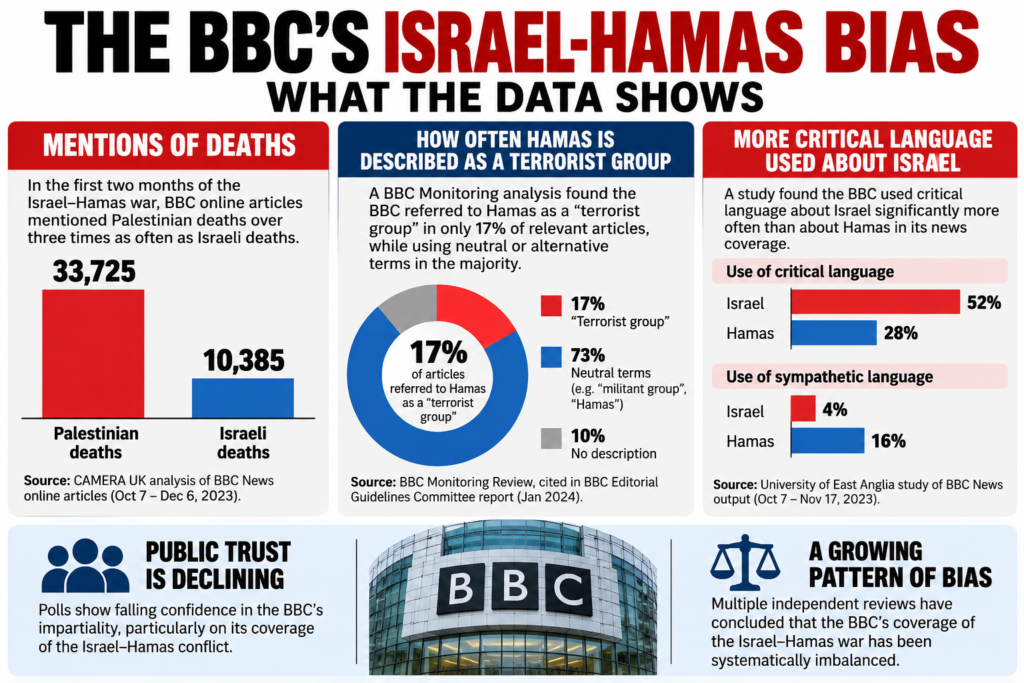
The BBC has placed an Algerian-born former illegal immigrant, who served time in prison for immigration deception and publicly defended Hamas rocket attacks as legitimate resistance, in a senior position overseeing its use of artificial intelligence (AI). The revelation comes amid growing scrutiny of the backgrounds and political sympathies of those employed by Britain’s publicly funded institutions, as pro-Palestinian activism has become increasingly influential.
The National Pulse brings the details of the latest stories from around the world. To support Raheem J. Kassam and his team, please JOIN THE NATIONAL PULSE or MAKE A DONATION today. We are 100% reader-funded.
Newsletter
Need to Know.
Your free, daily feed from The National Pulse.
Thank You!
You are now subscribed to our newsletter.
Hicham Yezza, the BBC’s Principal Data Scientist for Responsible AI, was sentenced to nine months in prison in 2009 after falsely claiming he had permission to remain in Britain. His visa had expired in 2003, but he continued living in the country as an illegal immigrant for more than five years, subsequently deceiving immigration authorities about his status.
The sentencing judge described Yezza’s actions as a deliberate and prolonged manipulation of Britain’s immigration controls.
Despite his criminal history, Yezza avoided deportation, successfully appealed against removal in 2010, and subsequently obtained British citizenship. He joined BBC Monitoring in 2021 before assuming his current AI position in July 2025. The broadcaster now employs him to help determine how AI systems should handle news and information, including the development of benchmarks for assessing AI performance in public-service media.
Immigration Offender to BBC AI Adviser.
Yezza’s immigration conviction was not his first encounter with British authorities. In 2008, police arrested him after discovering an al-Qaeda training manual on his computer at the University of Nottingham. The document had been sent to him by a postgraduate researcher studying Islamist terrorism. Both men were later released without terrorism charges. However, Yezza’s subsequent political statements have raised additional questions about his suitability for a role at a broadcaster legally obliged to maintain impartiality.
Yezza described Israel in 2018 as an apartheid state established through ethnic cleansing. In 2021, he characterized Hamas rocket attacks from Gaza into Israel as acts of Palestinian resistance. Yezza also founded the pro-Palestinian publication Ceasefire, which he edited before joining the BBC.
The broadcaster has defended his employment, claiming that his prior activities were unrelated to his work at the corporation and that he had not violated its social media policies while employed there. While this may be true, Yezza’s background is causing concern amid widespread instances of pro-Palestine bias at the BBC.
The BBC Has Fired Others For Challenging Its Ideology.
The broadcaster has previously disciplined employees over views that seem to counter its woke left ideology, including criticism of its coverage of Hamas and opposition to gender-neutral language.
In 2024, veteran BBC Radio Lancashire journalist Sean McGinty was dismissed following disputes involving his criticism of the broadcaster’s Israel-Hamas coverage and comments on transgender issues. McGinty, who had worked for the corporation for more than two decades, subsequently lost an employment tribunal case. The BBC cited misconduct and breaches of editorial policies.
Meanwhile, BBC News presenter Martine Croxall was found to have breached impartiality guidelines after visibly pulling a face while reading the phrase “pregnant people” during a 2025 broadcast. The BBC upheld complaints, ruling that her reaction suggested a personal opinion on a controversial issue, heedless of the fact that “pregnant people” is itself an ideologically loaded term.
Britain’s Public Institutions Have Faced Similar Scandals.
The BBC controversy is not the first time a British public institution has faced criticism over employing individuals with serious criminal backgrounds. In 2017, London’s Southwark Council admitted that it had employed a woman previously convicted under the Terrorism Act.
The woman, identified as Ms. Girma, worked as a customer service officer despite her prior conviction. According to the council’s official statement, she had initially disclosed a conviction without specifying its nature, and the authority did not bother to investigate it any further.
Her employment was terminated when the full details emerged. The council acknowledged failures in its recruitment procedures and commissioned further scrutiny of its vetting arrangements.
British Charities Are Also Being Infiltrated.
Britain’s charitable sector has also faced serious questions about its ability to prevent extremist activity. A Charity Commission investigation into Brighton Mosque and Muslim Community Centre uncovered major failures after a former trustee delivered a speech encouraging violent jihad at the mosque in November 2020.
The former trustee, who had previously served as the mosque’s imam, was convicted of encouraging terrorism in April 2022 and received a custodial sentence. The regulator found that trustees had failed to protect the charity from extremist abuse despite being aware of the risks associated with the individual.
The Charity Commission subsequently intervened, appointing new trustees and disqualifying former trustee Dr. Karim Aboutayab for four years and six months over separate governance failures.
The case revealed how inadequate oversight can enable extremist activity within organizations operating under Britain’s regulated charitable framework. Unlike Yezza, whose terrorism-related arrest resulted in no charges, the Brighton case involved a criminal conviction for encouraging terrorism.
Hamas-Support Is Infecting Britain’s Establishment Parties.
Controversies involving rhetoric sympathetic to Hamas and Islamist extremism have also reached Britain’s mainstream political parties.
In October 2024, Liberal Democrat councilor Leena Sarah Farhat was suspended after sharing a social media post that appeared to celebrate Hamas’s October 7, 2023, terrorist attacks against Israel. Farhat, who had also stood as a parliamentary candidate, reposted a message praising the attacks as an anti-colonial uprising. She subsequently apologized, describing her decision to share the message as a mistake.
The Labour Party faced a separate scandal during the February 2024 Rochdale by-election when its candidate, Azhar Ali, claimed Israel had deliberately allowed the October 7 attacks to provide justification for invading Gaza. Labour initially defended Ali before withdrawing its support following additional revelations about his comments concerning Jewish media figures.
This is incredible.
An Algerian Hamas supporter who became an illegal overstayer in Britain, lied to immigration officers about it, and went to prison for it, is now in a senior role at the BBC.
Because the Tories and Labour failed to deport him.
The BBC’s decision to employ Yezza reveals that the broadcaster will not only tolerate but will also defend employees with immigration fraud convictions and historic support for the actions of terrorist groups, if they are on board with the BBC’s leftist ideology.
Those who have spoken out about leftist ideologies have been disciplined or even fired in recent years, showing that the broadcaster is hardly impartial, despite its own claims to the contrary.
Join Pulse+ to comment below, and receive exclusive e-mail analyses.
show less
The BBC has placed an Algerian-born former illegal immigrant, who served time in prison for immigration deception and publicly defended Hamas rocket attacks as legitimate resistance, in a senior position overseeing its use of artificial intelligence (AI). The revelation comes amid growing scrutiny of the backgrounds and political sympathies of those employed by Britain's publicly funded institutions, as pro-Palestinian activism has become increasingly influential.
show more
By Popular Demand.
The National Pulse Now has an on-site comments section for members. Sign up today and be part of the conversation in our community of almost 15,000.
Share Story
FacebookTwitterWhatsappTruthTelegramGettrCopy Link
Real News Fan? Show It!
Many people are shocked to learn that because of active censorship, we currently have to spend more time making sure you can even see The National Pulse, than on producing the news itself. Which sucks. Because we do this for the truth, and for you.
But the regime doesn’t want you being informed. That’s why they want us to go away. And that will happen if more people don’t sign up to support our work. It’s basic supply and demand. So demand you get to read The National Pulse, unrestricted. Sign up, today.
We don’t sell ads, and refuse corporate or political cash. It all comes down to you, the reader. I hope you can help.













.jpg)


