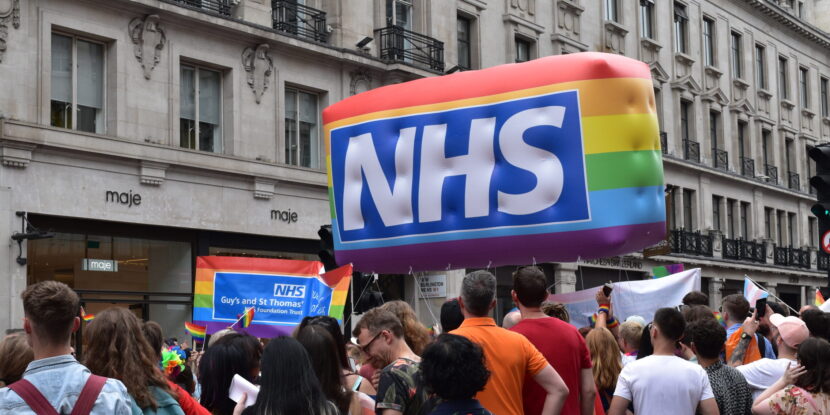
❓WHAT HAPPENED: The United Kingdom is facing potential medicine shortages due to disruptions caused by Iran’s blockade of the Strait of Hormuz amid the ongoing U.S.-Israeli war on the country.
👤WHO WAS INVOLVED: National Health Service (NHS) England Chief Executive Sir Jim Mackey, Independent Pharmacies Association Chief Executive Dr. Leyla Hannbeck, National Pharmacy Association Chief Executive Henry Gregg, and British patients.
Newsletter
Need to Know.
Your free, daily feed from The National Pulse.
Thank You!
You are now subscribed to our newsletter.
📍WHEN & WHERE: The situation has developed over the past 12 to 18 months, with current impacts being reported in the UK as of late March 2026.
💬KEY QUOTE: “We are really worried about this. We’ve already had a couple of supply shocks in the last 12 to 18 months of key supplies.” – Sir Jim Mackey
🎯IMPACT: Britain could face medicine shortages within days, with wider implications for healthcare and economic stability.
IN FULL
Britain could soon face medicine shortages because of major disruptions to global shipping routes triggered by Iran’s blockade of the Strait of Hormuz amid the ongoing U.S.-Israeli war on the country. National Health Service (NHS) England chief executive Sir Jim Mackey has warned that certain medical supplies might run out within days. “We are really worried about this. We’ve already had a couple of supply shocks in the last 12 to 18 months of key supplies,” he said.
Britain imports roughly 75 percent of its medicines and is therefore heavily dependent on international supply chains. Mackey noted that the NHS cannot simply stockpile large quantities indefinitely because many products are perishable and storage is expensive. A dedicated team has been set up to track risks across supply chains and take steps to limit any potential interruptions.
Dr. Leyla Hannbeck, chief executive of the Independent Pharmacies Association, called the situation a “perfect storm” created by rising energy costs, limited raw materials, and geopolitical instability. “The UK pharmacy sector depends heavily on imports, particularly from India and China, and ongoing pressures are already disrupting supply and risk worsening shortages without decisive action,” Hannbeck said.
Henry Gregg, chief executive of the National Pharmacy Association, said that while no medicine shortages have yet been directly linked to the conflict, price increases are already appearing and could point to bigger problems ahead. “The NHS has driven down the price of medicines over many years, which leaves the UK vulnerable in a global market,” Gregg added.
The closure of the Strait of Hormuz has also sparked concerns about potential fuel and food shortages, with the International Monetary Fund (IMF) stressing that the United Kingdom is particularly vulnerable to the wider economic fallout from the crisis. Prime Minister Sir Keir Starmer’s government has said there are currently no confirmed medicine shortages caused by the Iran war, but that it is keeping a close watch on the situation.
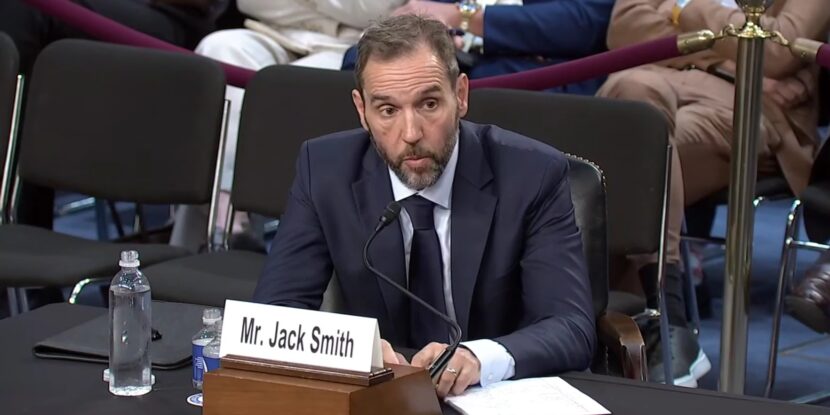
On Tuesday, former Special Counsel Jack Smith told Congress he would prosecute President Donald J. Trump again if given the chance, reaffirming his commitment to the Biden government’s failed lawfare campaign against the America First leader and the Republican Party. This followed the decision of Representative Jim Jordan (R-OH), Chairman of the House Judiciary Committee, to refer Smith to the Department of Justice back in July, potentially resulting in prosecution.
The National Pulse publishes original political profiles and analysis so you can navigate the news with confidence. If you value this work, please JOIN THE NATIONAL PULSE or MAKE A DONATION today. We are 100% reader-funded.
Newsletter
Need to Know.
Your free, daily feed from The National Pulse.
Thank You!
You are now subscribed to our newsletter.
Smith’s time as Special Counsel was marked by a stream of legal controversies, from allegations of election interference and partisan surveillance to his illegitimate appointment and obtaining congressional material.
Targeting Conservatives and Elected Republicans.
In April 2022, the Federal Bureau of Investigation (FBI) commenced Operation Arctic Frost, which fed into Smith’s lawfare campaign against President Trump. Senate Judiciary investigators revealed that Smith’s team issued 197 subpoenas covering at least 430 Republican individuals and organizations. Smith’s investigation sought communications, financial records, and other information. Some subpoenas sought information concerning conservative media, donors, and organizations, including any communications with members or employees of the legislative branch.
🚨 BREAKING: New records prove disgraced Special Counsel Jack Smith not only obtained FINANCIAL RECORDS from EVERY DAY AMERICANS donating to Republicans — but Smith spied on communications between JOURNALISTS and GOP or Trump-aligned officials, per Fox
In August 2023, just one year before the elections that ultimately saw President Trump returned to the White House, Smith moved to prosecute the then-former President. The controversy intensified after Smith’s team sought an early trial and filed a 165-page brief in September 2024, a few months before the elections were scheduled to take place in November.
Smith’s attempt to call an early trial was widely seen as an attempt to influence voter behavior to benefit the Democrats. The Office of Special Counsel opened an investigation into whether Smith had improperly used his authority to affect the election.
The National Pulse is RADICALLY INDEPENDENT. We rely on readers to fund our work, without donor or political influence. If you want to keep it that way, please JOIN THE NATIONAL PULSE or MAKE A DONATION today.
Illegitimate Appointment as Federal Prosecutor.
In July 2024, Judge Aileen Cannon ruled that Smith’s appointment by then-Attorney General Merrick Garland violated Article 2, Section 2, Clause 2 of the Constitution, known as the Appointments Clause.
Specifically, Cannon ruled that Smith lacked the authority to exercise the powers of a federal prosecutor because he had not been nominated by the President and confirmed by the Senate. The judge also took issue with the funding mechanism used for his office.
This ruling was highly significant, as it dismissed the classified documents case brought against President Trump in June 2023 and confirmed suspicions that the U.S. government was being weaponized against critics of the Biden government illegitimately.
🚨 BREAKING: Records provided to Chairman @ChuckGrassley via whistleblower disclosure reveal Jack Smith and his team collected 4,782 personal checks from Americans nationwide who donated to Trump and Trump-aligned entities between September 2019 to August 2023. pic.twitter.com/zNWs7PkpE7
In July 2026, it was revealed that Smith’s team obtained and reviewed text messages involving 44 members of Congress, bypassing the Department of Justice’s review process “filter team.” This review process is intended to identify potentially privileged material, such as official documents, records, or communications affecting the rights, safety, and integrity of Congress.
Smith’s team also issued subpoenas seeking telephone records for at least 20 current or former Republican members of Congress, creating significant constitutional concerns and reinforcing perceptions that the Office of Special Counsel was circumventing standard norms and procedures.
Join Pulse+ to comment below, and receive exclusive e-mail analyses.
show less
On Tuesday, former Special Counsel Jack Smith told Congress he would prosecute President Donald J. Trump again if given the chance, reaffirming his commitment to the Biden government's failed lawfare campaign against the America First leader and the Republican Party. This followed the decision of Representative Jim Jordan (R-OH), Chairman of the House Judiciary Committee, to refer Smith to the Department of Justice back in July, potentially resulting in prosecution.show more
By Popular Demand.
The National Pulse Now has an on-site comments section for members. Sign up today and be part of the conversation in our community of almost 15,000.
WE ARE 100% INDEPENDENT AND READER-FUNDED. FOR A GUARANTEED AD-FREE EXPERIENCE AND TO SUPPORT REAL NEWS, PLEASE SIGN UP HERE, TODAY.
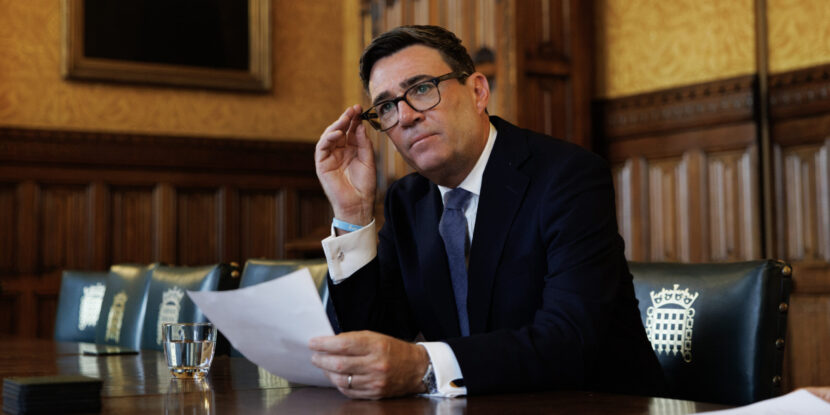
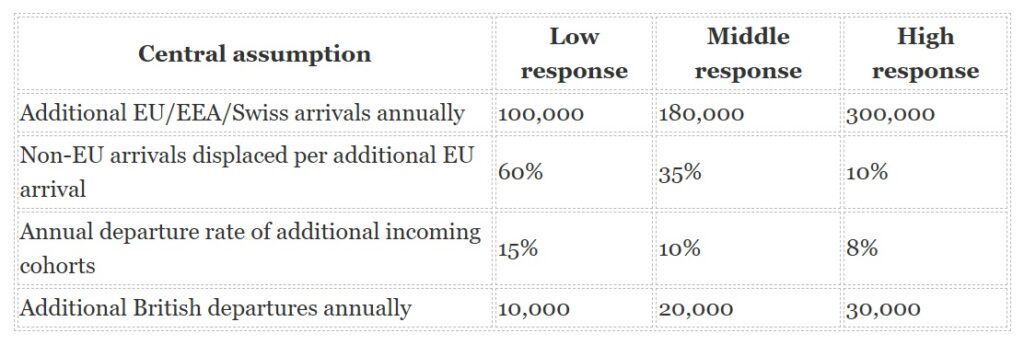
Britain’s Prime Minister Andy Burnham has told the Labour Party’s annual conference that a return to full European Union membership is back on the table. “We could go all the way,” he said, alleging that Brexit had done “more harm than good.” Full EU membership means a return to the EU’s Free Movement migration regime, in which virtually any EU citizen can move to any EU country with almost no restrictions or vetting. The National Pulse has modeled the likely impact of this on immigration, and the results are staggering across high, middle, and low EU immigration scenarios.
The National Pulse built this immigration model using published assumptions and official baselines to give you a full picture of the potential consequences of reversing Brexit. This work takes time; to support it, please JOIN THE NATIONAL PULSE or MAKE A ONE-OFF DONATION.
Newsletter
Need to Know.
Your free, daily feed from The National Pulse.
Thank You!
You are now subscribed to our newsletter.
The Starting Point.
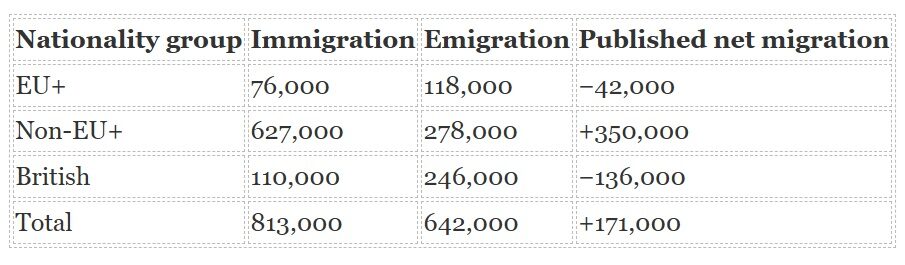
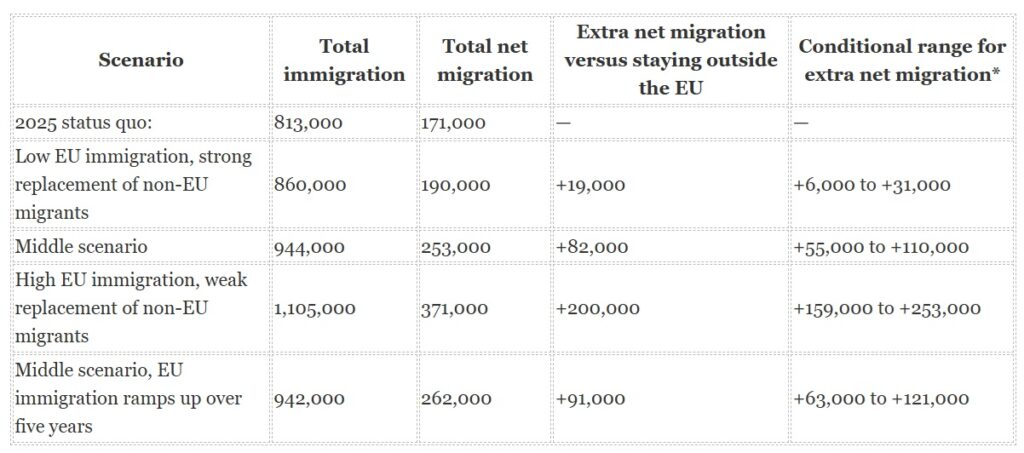
Significantly, the immigration status quo is already unmanageable, even after the unprecedented inflows of the “Boriswave” years under the former Conservative Partygovernment. For the year ending December 2025, the Office for National Statistics (ONS) provisionally recorded 813,000 long-term arrivals and net immigration of 171,000. Non-EU+ nationals account for almost all of the inflow at present, with net negative migration from the EU+ (the EU plus Norway, Iceland, Liechtenstein, and Switzerland, which are also party to the Free Movement migration regime).
Compared with staying outside the EU, modeling suggests that, in a middle EU immigration scenario, Britain would take in an extra 82,000 migrants a year by year five, net, if it rejoined the bloc. Over ten years, the additional inflow totals 714,000. The high-immigration scenario is larger still: 200,000 extra migrants a year by year five, and 1.76 million extra over a decade.
Notably, immigrants to the European Union naturalized by EU member state governments hold full EU citizenship and Free Movement rights across the bloc. Ordinary non-EU residents do not automatically gain the same mobility rights, but qualifying family members of EU citizens can.
This means moves by Germany to naturalize migrants, and the pathway to citizenship created by Spain’s amnesty for illegal immigrants, for instance, could open up Britain to significant additional immigration of EU migrants who were originally from countries outside the bloc.
The Numbers.
*Ranges span the middle 80 percent of 20,000 modeled simulations. They are not statistical confidence intervals.
The middle scenario may be the most important to consider. It shows total immigration climbing toward 944,000, with net immigration hitting 253,000. That is the “reasonable center” for Britain back in the EU, not an extreme scenario.
The high scenario—and immigration to Britain is usually significantly higher than projected—shows more than 1.1 million arrivals in a single year, with net immigration hitting 371,000, an extra 200,000 people a year against Britain’s baseline outside the EU.
Easier availability of EU migrant workers may result in the number of non-EU migrant workers falling, as accounted for in the low EU immigration, strong replacement of non-EU migrants scenario. However, if employers keep hiring from outside Europe at today’s pace and regain easy access to a large EU labor pool, the two streams will stack. That is how a country already taking in 627,000 non-EU immigrants a year ends up facing seven-figure inflows.
Importantly, there is scant evidence of increases in EU immigration causing non-EU immigration to fall in the years prior to the Brexit referendum, with an increase in EU immigration from roughly 201,000 to 284,000 from 2013 to 2016 being accompanied by a rise in non-EU immigration from 248,000 to 289,000 over the same period.
The National Pulse provides the public with original immigration and election analysis without billionaire backers or political patrons. If you want to keep this work radically independent, please JOIN THE NATIONAL PULSE or MAKE A DONATION. We are 100% reader-funded.
Join Pulse+ to comment below, and receive exclusive e-mail analyses.
show less
Britain's Prime Minister Andy Burnham has told the Labour Party's annual conference that a return to full European Union membership is back on the table. “We could go all the way,” he said, alleging that Brexit had done “more harm than good.” Full EU membership means a return to the EU's Free Movement migration regime, in which virtually any EU citizen can move to any EU country with almost no restrictions or vetting. The National Pulse has modeled the likely impact of this on immigration, and the results are staggering across high, middle, and low EU immigration scenarios.
show more
By Popular Demand.
The National Pulse Now has an on-site comments section for members. Sign up today and be part of the conversation in our community of almost 15,000.
WE ARE 100% INDEPENDENT AND READER-FUNDED. FOR A GUARANTEED AD-FREE EXPERIENCE AND TO SUPPORT REAL NEWS, PLEASE SIGN UP HERE, TODAY.
Over the course of the 2026 election cycle, the far-left Democratic Socialists of America have secured a number of high-profile primary victories. However, the DSA is anything but united, with several rival caucuses each seeking to shift its focus and strategy in distinct but overlapping ways.
The National Pulse publishes original analysis that gives you insight into movements reshaping politics. If you value this work, please JOIN THE NATIONAL PULSE or MAKE A DONATION today. We are 100% reader-funded.
Newsletter
Need to Know.
Your free, daily feed from The National Pulse.
Thank You!
You are now subscribed to our newsletter.
The National Political Committee (NPC) is the governing body of the DSA. The NPC is comprised of 27 members (25 delegates plus two youth delegates) and elects its own Steering Committee, which is responsible for interim decision-making. The following caucuses are represented on the NPC:
Groundwork.
NPC Members: Five (Ashik Siddique, Cara Tobe, Eleanor Babaev, Frances Gill, Kareem Elrefai)
The most explicitly “green” caucus of the NPC, Groundwork describes itself as “ecosocialist” and calls for the DSA to “embrace ecosocialism as a guiding principle” across all policy areas. Groundwork supports a “Green New Deal” to decarbonize the economy and combat “the existential threat to human civilization posed by the climate crisis,” which it lists as its first priority.
Groundwork endorses a “party surrogacy” strategy, which involves building a far-left political movement “separate from and hostile to the Democratic Party itself” while also infiltrating the party’s ballot line. The caucus has steadily increased its representation on the NPC since it was founded in 2023. Groundwork strongly supports Representative Alexandria Ocasio-Cortez (D-NY) and advocates issuing an endorsement poll of DSA members on “Day One” of an AOC presidential bid
Siddique is national co-chair of the DSA and a member of the Steering Committee.
Last Sunday, GW's NPC members voted for the NPC to decide on a potential presidential endorsement by March 2027— following the precedent by which DSA endorsed Bernie Sanders in 2020. Our statement on the vote is below: pic.twitter.com/6ftYLl33TH
NPC Members: Five (Cerena Ermitanio, Ella Teevan, Hayley Banyai-Becker, Mae Bracelin, James Hernandez)
Bread and Roses is the oldest caucus currently represented on the NPC and the largest faction on the National Political Committee advocating a “dirty break” from the Democratic Party, a strategy involving the eventual creation of a separate far-left party. The caucus describes itself as “Marxist” and supports what it calls “the democratic road to socialism.”
Bread and Roses emphasizes a “rank-and-file labor strategy,” which involves having DSA members infiltrate strategic industries, such as education, healthcare, transportation, and manufacturing, to radicalize their respective trade unions and build a militant working-class movement. Bread and Roses is generally more skeptical of Democrat politicians and has even criticized far-left Democrats, such as Rep. Ocasio-Cortez, for being insufficiently left-wing. The phrase “Bread and Roses” was coined in 1910 by American socialist Helen Todd.
Teevan is a member of the Steering Committee. Bracelin and Hernandez are the DSA’s youth co-chairs.
Socialist Majority Caucus.
NPC Members: Four (Christian Araos, Clayton Ryles, Jeremy Cohan, Katie Sims)
The Socialist Majority Caucus is defined by its support for “mass, democratic politics” and building “a popular front against the right,” the latter of which includes potential co-operation with more liberal and moderate tendencies.
Like Groundwork, the Socialist Majority Caucus supports a strategy of “realignment,” which means transforming the Democratic Party into a vehicle for far-left politics. The group also explicitly supports a so-called “democratic road” to socialism. It is generally viewed as more willing to cooperate with mainstream Democrats and more focused on electoral organizing and reform than on militant politics.
The Socialist Majority Caucus sits firmly in the pro-AOC wing of the DSA and has endorsed other Democrats in recent years, such as Nithya Raman in the 2026 Los Angeles mayoral election. The caucus also endorsed a resolution to run “Hundreds of Zohrans” in elections at every level of government across the United States.
Sims is a member of the Steering Committee.
AOC 2028: Build the Movement for a Democratic Socialist Presidency
We’re calling on AOC to run in 2028 and organizing to build the movement for a democratic socialist presidency
NYC-DSA 2026 City Convention 📅 Saturday, November 14, 2026
NPC Members: Four (Ahmed Husain, Andrew Thompson, Francesca Maria, Luisa Martinez)
Springs of Revolution is one of the newer groups on the NPC. The group formally rejects being described as a caucus, identifying instead as a “cross-tendency” team held together by opposition to so-called “imperialist repression” and advancing “anti-imperialist politics.”
Compared to other factions of the NPC, it is the most overtly pro-Palestinian, describing the Palestinian cause as “our compass” and supporting radical positions such as the abolition of ICE.
The Springs of Revolution identifies “the Arab Spring and Occupy Wall Street to the George Floyd uprisings and Student Intifada” as predecessors to its brand of politics. The Springs of Revolution logo features a rose growing out of a keffiyeh, the Arabic headscarf which has become a staple of the international anti-Zionist movement, and has experienced a sharp increase in representation over the past few years.
Thompson is a member of the Steering Committee.
The National Pulse is RADICALLY INDEPENDENT. That means we rely on readers to fund our work. If you want to keep corporate influence out of our reporting, please JOIN THE NATIONAL PULSE or MAKE A DONATION today.
Red Star.
NPC Members: Three (Megan Romer, Hazel Williams, John Lewis)
Red Star describes itself as “Marxist-Leninist.” In its “Points of Unity,” the group states: “Our primary goal, the goal which informs all of our organizing work, is to abolish capitalism and, ultimately, to achieve communism.”
It is one of the DSA factions openly critical of the Democrats, and has criticized the realignment strategy associated with the Socialist Majority Caucus, as well as the party surrogacy strategy associated with Groundwork, regarding them as effectively indistinguishable. However, despite this, the caucus has demonstrated reluctance to endorse a “dirty break” strategy.
Overall, Red Star is seen as less focused on electoral politics than many of its counterparts in the NPC and more preoccupied with the DSA itself and its ability to “cohere a vanguard” in preparation for the overthrow of capitalism.
Romer is national co-chair of the DSA and a member of the Steering Committee. Lewis is also a member of the Steering Committee.
Marxist Unity Group.
NPC Members: Three (Amy Wilhelm, Cliff Connolly, Sidney Carlson White)
Similar to Red Star, the Marxist Unity Group has been highly critical of Democrat politicians, including DSA-aligned figures like Rep. Ocasio-Cortez. However, unlike Red Star, the Marxist Unity Group explicitly endorses a dirty break strategy. It “strives to transform DSA into an independent socialist party” which is “completely disconnected from loyalty to the Democratic Party,” which it identifies among various “capitalist influences.”
The caucus has a pronounced focus on upending the United States’ constitutional settlement, such as calling for the abolition of the Senate, subordinating the President to an all-powerful House of Representatives, and replacing the country’s system of republicanism with a majoritarian democracy. It also supports unifying behind a “maximum program” of “a world free of the market, borders, classes, and all other oppressive structures that exist under capitalism—in a word, communism.”
Connolly is a member of the Steering Committee.
Marxist Unity Group deliberated & voted on the following statement to demonstrate our commitment to abolition as a central tenet of DSA's program.
The working class cannot rule while a large part of it remains policed & caged.
Carnation is among the newest groups represented on the NPC. The caucus supports “A Socialist Campaign for the Presidency” with AOC as the candidate. “There is currently no other known candidate who may run who a majority of DSA members’ support who supports an arms embargo [against Israel],” notes the caucus’ website.
The group calls for the DSA to “Make 2026 About Medicare for All and an Arms Embargo” and identifies State Representative Claire Valdez (D-NY) and Oliver Larkin, who lost to Jared Moskowitz in the Democrat primary for Florida’s 25th Congressional district earlier this year, as “high-profile DSA surrogates” whom AOC could promote to positions of influence if elected President.
Carnation supports narrowing the focus of the DSA to capture the U.S. presidency without “abandoning our vision for the socialist transformation of our government and society.”
Carnation does not have any representation on the Steering Committee.
We have the opportunity to lead an inspiring campaign for AOC for president, powered by DSA members, that will engage and grow the base for socialist politics. There is currently no other candidate who is running who a majority of DSA members support who supports an arms embargo. pic.twitter.com/v2Xn3EeqPw
Reform and Revolution represents the “Trotskyist” tendency within the DSA’s NPC. The caucus supports a “united front,” which is distinct from the “popular front” advanced by groups like the Socialist Majority Caucus.
Whereas a popular front seeks alliances beyond the left, a united front seeks alliances purely within the left. Reform and Revolution supports a dirty break from the Democrats, and echoes support from other caucuses for a rank-and-file labor strategy.
Reform and Revolution have historically combined more moderate policies, such as increases in the minimum wage, with more extreme proposals, such as replacing the market with a planned economy and “taking the largest 500 corporations that dominate the US economy into democratic public ownership.” The caucus is a splinter group of Socialist Alternative, a Trotskyist political party founded in the 1980s.
Reform and Revolution is not represented on the Steering Committee.
Libertarian Socialist Caucus.
NPC Members: One (David Jenkins)
The Libertarian Socialist Caucus describes itself as “a political home… for all socialists who are opposed to the state” and represents the overtly anarchistic tendency within the DSA. The caucus advocates “dismantling all structures of incarceration, including prisons, jails, and detention centers, as well as for the dissolution of all levels of law enforcement,” which it regards as the “core of modern American fascism.”
The group has issued a statement criticizing AOC for distancing herself from “Woke 1” and called for an investigation into whether her positions differ substantially from the official positions of the DSA.
In the “Community Agreements” section of its website, the Libertarian Socialist Caucus bans “exclusionary jokes or comments” and “Comments that reinforce social structures of domination (related to gender, gender identity and expression, sexual orientation, disability, physical appearance, body size, race, age, religion).”
Join Pulse+ to comment below, and receive exclusive e-mail analyses.
show less
Over the course of the 2026 election cycle, the far-left Democratic Socialists of America have secured a number of high-profile primary victories. However, the DSA is anything but united, with several rival caucuses each seeking to shift its focus and strategy in distinct but overlapping ways.show more
By Popular Demand.
The National Pulse Now has an on-site comments section for members. Sign up today and be part of the conversation in our community of almost 15,000.
WE ARE 100% INDEPENDENT AND READER-FUNDED. FOR A GUARANTEED AD-FREE EXPERIENCE AND TO SUPPORT REAL NEWS, PLEASE SIGN UP HERE, TODAY.
The 2026 midterm elections are giving rise to a new political force in America: an explicitly woke form of so-called Christianity, with over a dozen Democrat candidates directly linked to ultra-progressive churches, some of whom are pastors themselves.
The National Pulse conducts original electoral, political, and data analysis that you will not get from the legacy press. If you value exclusive work from Raheem J. Kassam and his team, please JOIN THE NATIONAL PULSE or MAKE A DONATION today. We are 100% reader-funded.
Newsletter
Need to Know.
Your free, daily feed from The National Pulse.
Thank You!
You are now subscribed to our newsletter.
The candidates range from major Senate races to various House seats across the country, and while many come from different Christian denominations, they all support a radically progressive agenda that is making some denominations, primarily mainline Protestant churches, politically louder even as their congregation numbers fall.
The Woke ‘Christian’ Candidates.
James Talarico, the Democrat nominee for the Senate in Texas against Republican Attorney General Ken Paxton, is a former Presbyterian seminarian and perhaps the most high-profile woke “Christian” candidate in the midterm elections. Talarico has made a number of bizarre and controversial statements in recent years regarding his interpretation of the faith.
Comments from Talarico include statements that Allah and other religious concepts, such as the pagan “Great Spirit,” are equal to Jesus Christ as a pathway to God. This contrasts starkly with Christian scripture, with Christ stating in John 14:6: “I am the way, and the truth, and the life. No man cometh to the Father, but by me.”
The Texas Democrat has made a number of positive statements on Islam, in particular, stating that “Islamic mystics” have shaped his Christian faith, such as the Sufi Muslim poet Rumi. The St. Andrew’s Presbyterian Church in Austin, which Talarico attends, explicitly supports progressive causes, funding pro-abortion groups and LGBT children’s camps. The pastor of the church has even declared that he does not believe in Christ’s literal resurrection, a key pillar of the Christian faith.
Talarico has previously contended that the Bible does not explicitly address abortion on the Joe Rogan Experience podcast in 2025. According to Talarico, the Annunciation, which saw the Archangel St. Gabriel visit the Blessed Virgin Mary, with the latter choosing to accept her role as the Mother of Jesus Christ, justifies abortion because Mary was allowed to choose.
Texas U.S. Senate candidate James Talarico’s pastor (PCUSA) preaches during his Easter sermon that Jesus NEVER rose bodily from the dead and that he does NOT believe in a literal resurrection. pic.twitter.com/Z6ZH7hMJXg
Adam Hamilton, a woke megachurch pastor in Kansas, is also looking to win a race in the U.S. Senate, facing incumbent Senator Roger Marshall (R). Hamilton was the senior pastor at America’s largest United Methodist church and, in prior sermons, told parishioners to repent for eating beef and driving their cars because of climate change. Significantly, the beef industry is one of Kansas’ largest employers, providing thousands of jobs and making tens of billions of dollars for the state.
Sarah Trone Garriott, who is running for Congress as a Democrat in Iowa, is an active Lutheran pastor who has been sharply criticized by her Republican opponent, Representative Zach Nunn, who told WHO NewsRadio 1040 in Iowa that while in seminary, Trone Garriott had presided over a wedding for a pair of self-professed Satanists. Nunn claimed that Trone Garriot joked about the affair, saying, “She even joked about picking Bible verses so the Satanists could feel more at home.”
The National Pulse brings you in-depth research on the political movements and beliefs behind election candidates. If you value exclusive analysis from Raheem J. Kassam and his team, please JOIN THE NATIONAL PULSE or MAKE A DONATION today.
How the Denominations Went Woke.
Mainline Protestantism consists of the United Methodist Church (UMC), Evangelical Lutheran Church in America (ELCA), the Episcopal Church (TEC), the Presbyterian Church (USA) (PCUSA), American Baptist Churches USA, the United Church of Christ (UCC), and the Christian Church (Disciples of Christ). These are the primary denominations that have championed woke ideology in recent years, but their progressive history often goes back decades.
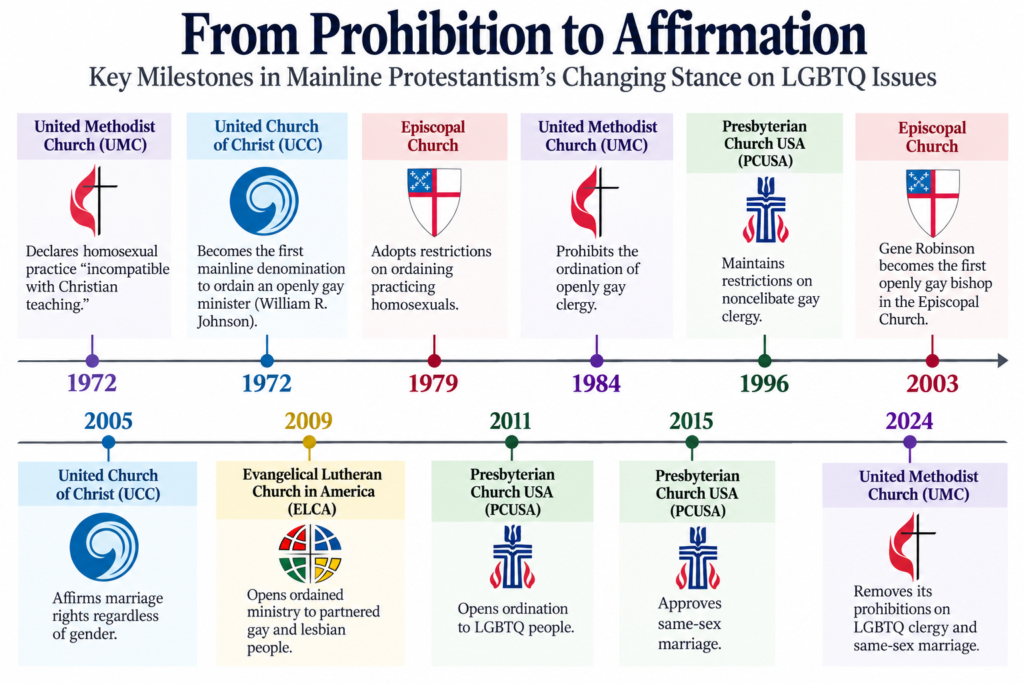
As early as 1972, the UCC ordained its first openly homosexual minister, William R. Johnson. While LGBT advocacy remained largely marginal across the other denominations, things changed rapidly at the turn of the 21st century, with the Episcopal Church ordaining its first openly homosexual bishop in 2003. In 2005, the UCC declared that marriage was between two people regardless of their gender, endorsing same-sex marriage. The ELCA opened ministry to “partnered” homosexual clergy in 2009. The Presbyterians (PCUSA) opened ordination to homosexuals in 2011, followed by approval of same-sex marriage in 2015. Finally, the United Methodists, who had declared homosexuality “incompatible with Christian teaching” in 1972, removed all prohibitions on same-sex marriage and LGBT clergy in 2024.
Roman Catholics, too, have seen woke movements within the Church, though unlike the mainline Protestants, the Vatican has not supported openly homosexual clergy or same-sex marriage or taken institutional stands on other woke issues. The American Jesuit priest Father James Martin is one of the most high-profile Catholic priests advocating for LGBT issues, though he does not have any formal institutional power in the Church. Fr. Martin has connections to many Democrats, including former Transportation Secretary Pete Buttigieg, and once stated that he believed Buttigieg and his homosexual partner were married, despite the Catholic church not recognizing same-sex marriage as legitimate.
Immigration, however, is an issue that unites many of the mainline Protestants with progressive Roman Catholics and many Roman Catholic charities, which have been given billions of dollars by past Democratic regimes like the Biden government. That money was later cut by the second Trump administration.
Mainline Protestant pastors have been even more direct in their opposition to President Donald J. Trump’s policies on immigration, with many openly opposing U.S. Immigration and Customs Enforcement (ICE) actions and operations. Reverend David Black, senior pastor of the First Presbyterian Church of Chicago, participated in protests against ICE in September of 2025, when he was shot with pepper balls by federal agents. Department of Homeland Security (DHS) Assistant Secretary Tricia McLaughlin argued at the time that Black was part of a protest that was blocking federal government vehicles and that they had been ordered off federal property repeatedly.
Woke pastor preaches ROBOCOP-themed service to protest the militarization of ICE and government efforts to identify and deport illegal immigrants. pic.twitter.com/5NJ60MKA8z
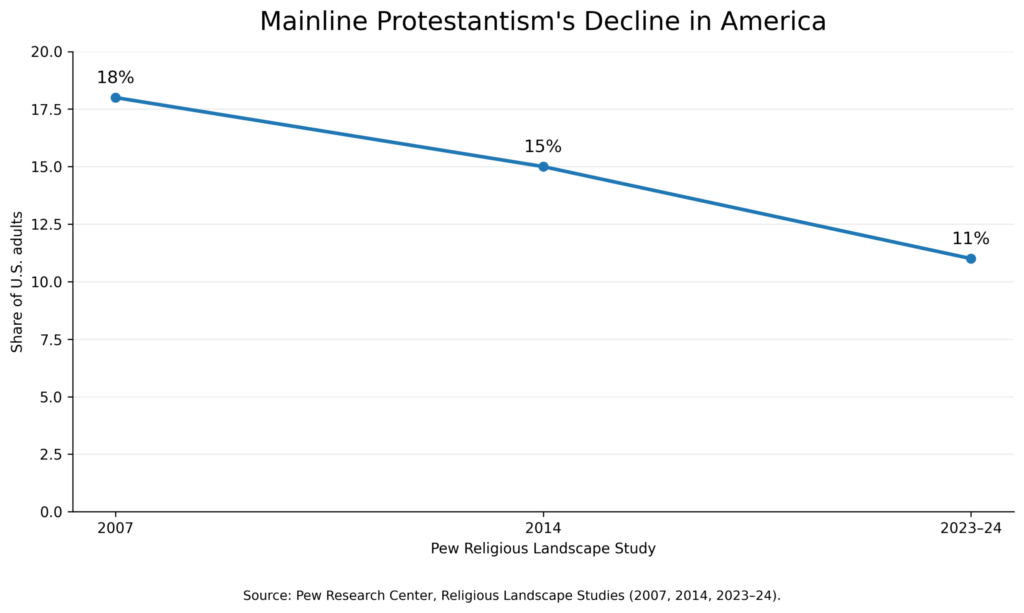
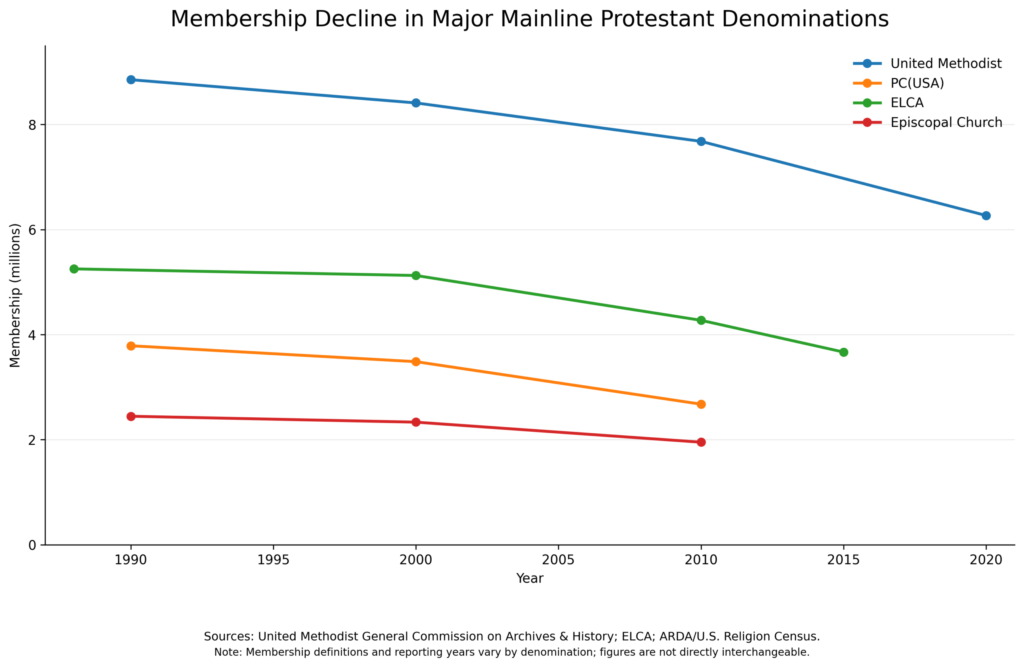
While the new breed of ultra-progressive political Christianity appears to be getting louder and louder, the number of people actually attending progressive churches is suffering a sharp decline. Mainline Protestantism in America has seen its attendance fall rapidly for years, dropping from 18 percent of America’s adult population in 2007 to just 11 percent in 2023-2024.
In the 1970s, mainline Protestants accounted for nearly a third of the population.
Among the individual denominations, some of the most progressive, like the United Methodists, have lost over two million members from 1990 to 2020, a decline of 29 percent.
Others, like the ECLA, have also lost well over a million parishioners.
Could Christian Wokeism Triumph in 2026?
Traditionally, the Evangelical movement and much of the “religious right” has been a reliably Republican voting bloc. Woke Christianity, however, is turning into the ultra-progressive Democrat antithesis to traditional Christian politics. While the number of people attending woke churches is clearly declining, their influence appears to be growing, and if representatives like James Talarico and megachurch pastor Adam Hamilton win their Senate races in November, that influence could spread further.
Instead of a Church that calls on politicians to ground their morality and policies on the Bible and Christian tradition, woke Christianity takes the opposite approach, using existing progressive political beliefs to reinterpret Christianity to suit ideological leftism.
This is causing many voters to ask, “Is woke Christianity really Christianity at all?”
Join The National Pulse or donate today to support more exclusive analysis from Raheem J. Kassam and his team. Every membership and contribution helps fund the research, reporting, and data work behind stories like this.
Join Pulse+ to comment below, and receive exclusive e-mail analyses.
show less
The 2026 midterm elections are giving rise to a new political force in America: an explicitly woke form of so-called Christianity, with over a dozen Democrat candidates directly linked to ultra-progressive churches, some of whom are pastors themselves.
show more
By Popular Demand.
The National Pulse Now has an on-site comments section for members. Sign up today and be part of the conversation in our community of almost 15,000.
WE ARE 100% INDEPENDENT AND READER-FUNDED. FOR A GUARANTEED AD-FREE EXPERIENCE AND TO SUPPORT REAL NEWS, PLEASE SIGN UP HERE, TODAY.
The National Pulse Editor-in-Chief Raheem Kassam has warned on Stephen K. Bannon’s War Room show that Britain is now struggling with a deeply embedded “fifth column,” arguing that mass migration, restrictions on speech, and a two-tier justice system have left many Britons afraid to openly challenge the transformation of their communities.
The National Pulse takes no handouts from billionaires or big business. If you want to keep radically independent reporting on the issues the corporate media refuses to cover alive, help support the work of Raheem J. Kassam and his team by JOINING PULSE+ or MAKING A DONATION.
Newsletter
Need to Know.
Your free, daily feed from The National Pulse.
Thank You!
You are now subscribed to our newsletter.
Kassam said there is “multi-tiered policing and multi-tiered justice going on in the United Kingdom,” adding that the issue extends beyond the preferential treatment of Islam and minorities to “how white people are being treated as second-class citizens in their own home nations at the moment.” Complaints against “two-tier policing” have become a growing political controversy in Britain in recent years.
Kassam argued that Britain’s speech laws also contribute to an atmosphere in which people think twice before discussing immigration, Islam, or some political leaders in a negative way. “It is one of the most stifling environments to speak that I’ve ever experienced,” he said, explaining that he is “certainly aware” that something he writes could potentially be construed in a way that results in criminal prosecution while he is in England.
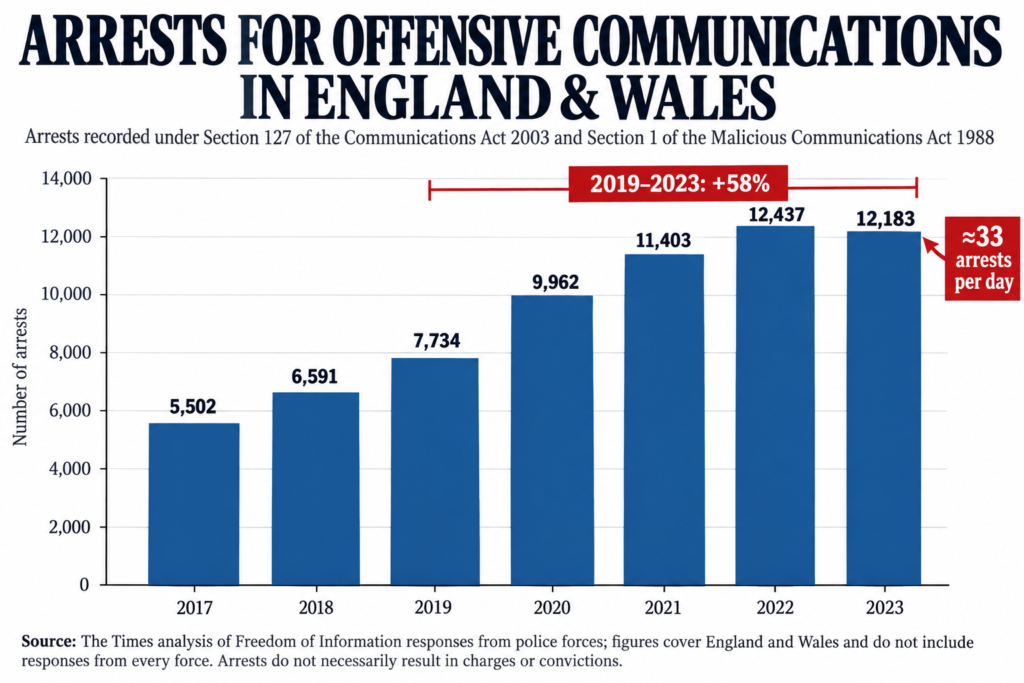
Those concerns exist against a real legal backdrop: Britain’s Malicious Communications Act and Communications Act criminalize certain communications deemed offensive. Freedom of Information data reported in 2025 indicated police were making more than 12,000 arrests annually under the two laws.
Britain has also established 150-meter “safe access zones” around abortion facilities where conduct intended or likely to influence someone accessing so-called abortion services can be criminalized. Significantly, government guidance says that, depending on the circumstances, this can include silently praying inside your head.
Kassam said the larger danger is what happens after alien communities become sufficiently entrenched that assimilation and political integration become increasingly difficult. “I think that there is a fifth column in this country, Steve, that we’re not allowed to talk about, we’re not allowed to mention,” he told Bannon.
Kassam connected that warning directly to his 2017 book No Go Zones, for which he traveled through immigrant-heavy neighborhoods in the likes of Britain, France, Belgium, Sweden, and later Dearborn and Hamtramck in Michigan. Recalling a warning he attributed to the late Christopher Hitchens, Kassam argued that “if you allow these people into your midst, this fifth column into your midst, it is incredibly difficult to cut that cancer out of your society once the roots have taken hold.”
FULL INTERVIEW:
You can support more exclusive work from Raheem J. Kassam and The National Pulse team by BECOMING A MEMBER or making a ONE-OFF DONATION.
Join Pulse+ to comment below, and receive exclusive e-mail analyses.
show less
The National Pulse Editor-in-Chief Raheem Kassam has warned on Stephen K. Bannon's War Room show that Britain is now struggling with a deeply embedded “fifth column,” arguing that mass migration, restrictions on speech, and a two-tier justice system have left many Britons afraid to openly challenge the transformation of their communities.
show more
By Popular Demand.
The National Pulse Now has an on-site comments section for members. Sign up today and be part of the conversation in our community of almost 15,000.
WE ARE 100% INDEPENDENT AND READER-FUNDED. FOR A GUARANTEED AD-FREE EXPERIENCE AND TO SUPPORT REAL NEWS, PLEASE SIGN UP HERE, TODAY.
Marine Le Pen’s populist National Rally (RN) party has significantly increased its presence in the French Senate, winning enough seats to form a group for the first time in its history.
The National Pulse publishes original international analysis so you can navigate the political landscape worldwide. If you value this work, please JOIN THE NATIONAL PULSE or MAKE A DONATION today. We are 100% reader-funded.
Newsletter
Need to Know.
Your free, daily feed from The National Pulse.
Thank You!
You are now subscribed to our newsletter.
On Sunday, elections were held for the French Senate, the upper chamber of the French legislature. The results saw National Rally secure a record 14 seats, clearing the 10-seat threshold needed to form a Senate group, a formal association of senators with broadly similar political views. Several different parties can belong to the same group, allowing allied parties and independent senators to work together.
How Does the French Senate Work?
Unlike the Deputies elected to the French National Assembly—roughly equivalent to the House of Commons in Britain and the House of Representatives in the U.S.—who are elected directly by the French people, members of the French Senate are elected indirectly. Senators are chosen by approximately 172,600 “Grand Electors.” These electors make up the Electoral College. Municipal representatives account for around 95 percent of the Electoral College, although the body also includes regional councillors, departmental councillors, Deputies, and incumbent senators.
There are 348 senators in total, each serving a six-year term. The Senate is renewed by half every three years. In 2026, 178 seats were contested across 63 constituencies, including 58 metropolitan departments and overseas territories, and six seats representing French citizens living abroad.
Sénatoriales 2026 : la majorité de droite reste stable. Le RN obtient un groupe et LFI enregistre sa première entrée au Sénat. pic.twitter.com/z2VIwi4u2C
The French Senate makes, amends, and votes on legislation alongside the National Assembly, and also votes on and debates government policy. Unlike Deputies, who directly represent the French electorate, the Senate is constitutionally intended to represent the country’s municipalities, departments, and regions; the lower, intermediate, and upper levels of territorial government, respectively. However, unlike the U.S. Senate, which has equal legislative power with the House of Representatives, the French Senate is less powerful than the National Assembly, which can override the Senate to pass legislation. The French Senate does not approve Cabinet appointments, either, although it does participate in the impeachment process.
What Were the Results?
The establishment center-right Republicans group secured 125 seats, down six from the last election, while the establishment center-left Socialists group secured 63 seats, down one. The Centrists, another establishment-aligned grouping, secured 57 seats, down two. Horizons, another establishment center-right group aligned with presidential hopeful Edouard Phillipe, secured 21 seats, up one. Phillipe served as Prime Minister of France under President Emmanuel Macron, whose liberal Renaissance group secured 17 seats, down two. The Communists, the main far-left group in the Senate, secured 19 seats, up one. The National Rally secured 14 seats, more than doubling the ten it secured in the last election, representing the biggest gains of any contesting party. The party tied with the European Democratic and Social Rally Group (RDSE), another establishment centrist group, and the left-wing Greens group, down three and up two from the last election, respectively.
The National Pulse is RADICALLY INDEPENDENT. We rely on readers, not corporations, to fund our work. If you want to keep it that way, please JOIN THE NATIONAL PULSE or MAKE A DONATION today.
Why Does It Matter?
While group membership is not necessary to serve in the Senate, it is highly advantageous. Senate groups receive representation on parliamentary committees, speaking time, increased recognition, parliamentary funding, and other resources. Groups are also guaranteed the right to request parliamentary investigations. As such, the results have given the National Rally a boost ahead of next year’s presidential election, which Le Pen is projected to win against all potential rivals. “This is a historic victory, and a major milestone with the formation for the first time of a group in the Senate… The results have exceeded our expectations,” said the National Rally leader in a post on X (formerly Twitter) on Sunday.
C’est une victoire historique et une étape majeure qui est franchie avec la constitution pour la première fois d’un groupe au Sénat. Les résultats vont au-delà de ce que nous pouvions espérer, la percée est générale, confirmant l’accélération de l’implantation du Rassemblement…
The results demonstrate that National Rally is managing to build a significant network of municipal support, giving the party a long-term foothold in the French political system. Significantly, the Senate is almost designed to shut out parties like National Rally, and its gains signal it will perform even more strongly in the more powerful National Assembly, where it is already the single largest party, despite a joint effort by the establishment centrist and far-left blocs to prevent the party from gaining seats during the last legislative election in 2024.
Nigel Farage and Jordan Bardella have just signed a Memorandum of Understanding to stop the boats.
Reform UK and the National Rally will end the invasion of Britain and France together. 🤝 pic.twitter.com/18Z2ykBWH2
These election results come just weeks after Jordan Bardella, President of the National Rally and the current favorite to become France’s next Prime Minister under a Le Pen presidency, delivered a speech at the annual party conference of Nigel Farage’s Reform Party in Birmingham, England.
Bardella and Farage signed a “memorandum of understanding” to stop the boats that have been carrying thousands of illegalmigrants across the English Channel, and return them first to France and then their countries of origin. Bardella promised to ensure France is “no longer the gateway for illegal immigrants into the United Kingdom” and noted that sovereignty does not have to mean “standing alone” and “rejecting alliances.”
National Rally’s increased representation in the Senate can only increase the opportunities for long-term co-operation between Reform and the National Rally, which remains in a close contest with Britain’s governing Labor Party in the general election polls.
If you want to help Raheem J. Kassam and his team deliver high-quality analysis from around the world, please JOIN THE NATIONAL PULSE or MAKE A DONATION today.
Join Pulse+ to comment below, and receive exclusive e-mail analyses.
show less
Marine Le Pen's populist National Rally (RN) party has significantly increased its presence in the French Senate, winning enough seats to form a group for the first time in its history.show more
By Popular Demand.
The National Pulse Now has an on-site comments section for members. Sign up today and be part of the conversation in our community of almost 15,000.
WE ARE 100% INDEPENDENT AND READER-FUNDED. FOR A GUARANTEED AD-FREE EXPERIENCE AND TO SUPPORT REAL NEWS, PLEASE SIGN UP HERE, TODAY.
The British government is intentionally crushing the public under an avalanche of “petty indignities” so they are unable to push for broad national reforms, argued Raheem Kassam, Editor-in-Chief of The National Pulse, during a recent appearance on former White House Chief Strategist Stephen K. Bannon’s War Room show.
“How am I going to pay my gas bill? How am I going to pay my car insurance? What am I going to do when my mother or my father or my grandmother gets sick? … [I]t’s death by a thousand cuts, because then you can’t worry about anything outside of that. You can’t worry about what your community looks like. You can’t worry about three streets down, or three doors down even, from your own house. The entire ability to care about and curate your community, let alone your country, is ripped away from you with that particular tactic,” Kassam explained.
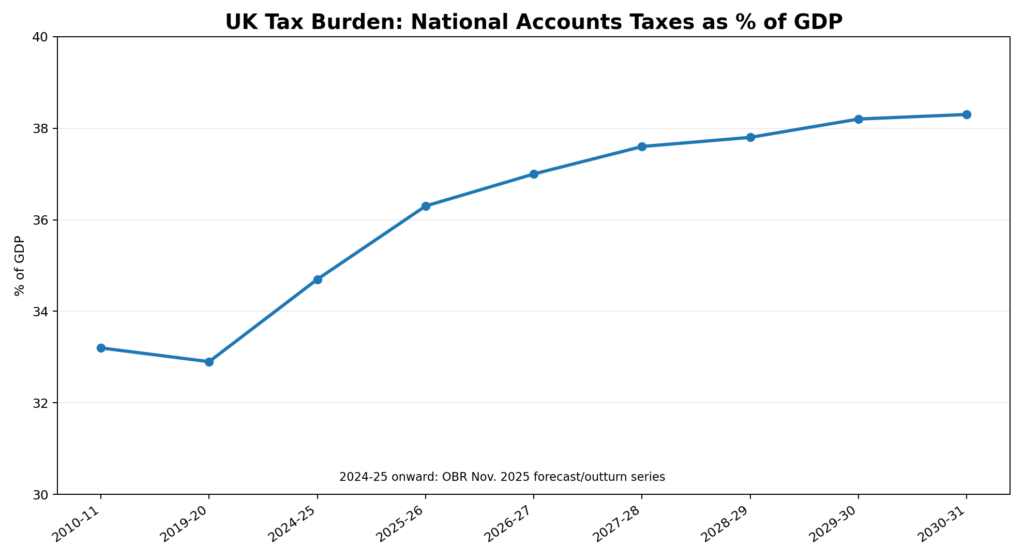
“The tax burden in this country is unbelievable. The levels of energy debt are unbelievable, through the roof, skyrocketing… Getting worse,” Kassam noted. Official statistics support the statement, with Britain’s Office for Budget Responsibility (OBR), a fiscal watchdog comparable to the U.S. Congressional Budget Office, having forecast that taxes will reach a post-war high of roughly 38 percent of economic output by 2030–31.
Frozen income tax thresholds are helping to drive that increase through a process of “fiscal drag.” This means that as wages rise, a larger share of earnings are becoming subject to higher tax rates, despite the value of those wages having falling due to inflation. For workers trying to cover ordinary expenses, this means their budgets are eroding via “stealth taxation,” without the government having to announce a controversial increase in headline income tax rates.
With respect to Kassam’s warning on energy bills, Ofgem, Britain’s energy regulator, has pushed average July–September 2026 rates on covered household tariffs to the equivalent of approximately 35 U.S. cents per kilowatt-hour of electricity and 10 cents per kilowatt-hour of natural gas. Significantly, the regulator’s typical annual household price-cap figure, equivalent to $2,463, is a benchmark based on assumed usage, not a limit on what every household can spend. The rises are being driven chiefly by higher wholesale gas prices, caused by the Ukraine war, the Iran war, and the sabotage of the domestic North Sea oil and gas industry by the incumbent Labour Party and previous Conservative Party governments.
The Labour government is currently pressing ahead with its Clean Power 2030 program. Taxpayers are already subsidizing some so-called green energy, with approximately $689 million spent through June 2026 under the Renewables Obligation to Exchequer scheme, which shifts part of the cost of green energy subsidies from energy bills to public finances. Crucially, this shift can lower the charge visible on a household bill, but still leave the public covering the cost via taxation.
Join Pulse+ to comment below, and receive exclusive e-mail analyses.
show less
The British government is intentionally crushing the public under an avalanche of "petty indignities" so they are unable to push for broad national reforms, argued Raheem Kassam, Editor-in-Chief of The National Pulse, during a recent appearance on former White House Chief Strategist Stephen K. Bannon's War Room show.
show more
By Popular Demand.
The National Pulse Now has an on-site comments section for members. Sign up today and be part of the conversation in our community of almost 15,000.
WE ARE 100% INDEPENDENT AND READER-FUNDED. FOR A GUARANTEED AD-FREE EXPERIENCE AND TO SUPPORT REAL NEWS, PLEASE SIGN UP HERE, TODAY.
Over the weekend, it was revealed that a former personal bodyguard to slain Hamas leader Ismail Haniyeh received first asylum and then full British citizenship under Britain’s former Conservative (Tory) government. He allegedly went on to plot terrorist attacks against Jews and Israeli-linked targets in Europe from the English suburbs. Much of the media coverage of the scandal has focused on the courts’ decision to protect the identity of this “Mr. X”—identified as “Mohammed A.,” the son of Hamas politburo member Basem Naim, by the German press—for 100 years.
Less attention has been paid to the politicians who were in charge in the British government when it waved through a Hamas operative’s asylum and citizenship applications, or the fact that both of them are still members of Conservative leader Olukemi “Kemi” Badenoch’s top team.
Newsletter
Need to Know.
Your free, daily feed from The National Pulse.
Thank You!
You are now subscribed to our newsletter.
The National Pulse exposes the politicians behind the policies to give you real insight into the people responsible for the state of things. If you want to help Raheem J. Kassam and his team hold these politicians to account, please JOIN THE NATIONAL PULSE or MAKE A DONATION today. We are 100% reader-funded.
The Same Old Faces.
Then-Prime Minister Theresa May’s special adviser on counter-terrorism at the time was, as noted by Reform Party leader Nigel Farage on Monday morning, Nick Timothy, now a Conservative Member of Parliament (MP) “recently promoted by Kemi Badenoch with a shadow justice brief.” Timothy was responsible for developing Conservative policy on police reform, criminal justice, and immigration up to 2015, when “Mr. X” first received asylum.
“You simply cannot make it up,” Farage said.
.@EllieHodgesxx and I discuss the story of the Hamas operative living in England since 2015.
Chris Philp, the Shadow Home Secretary tasked by Badenoch with representing the Conservatives’ position on the scandal, has blamed the European Convention on Human Rights (ECHR), which continues to bind the United Kingdom to the jurisdiction of the European Court of Human Rights despite Brexit, for the Conservatives’ supposed inability to turn away “Mr. X.”
“There’s nothing any government can do about it, and that is precisely why we need to dismantle the entire legal system, come out of the ECHR,” he told Comcast’s Sky News.
The problem is that not only did the Conservatives make no moves to leave the ECHR during their 14 years in government from 2010 to 2024, but Philp personally voted against amendments to a Conservative bill aimed at facilitating deportations to Rwanda, which in the end never went ahead, besides four people leaving voluntarily in exchange for £3,000 (~$4,000) each. Crucially, these amendments would have stopped the ECHR from being used to block removals. Yet, far from expressing concerns that the ECHR could be used to thwart the Rwanda plan, he was frequently deployed to the media to defend the watered-down policy as a junior Home Office minister, just as he claims to oppose the ECHR in the media today.
Examining the parliamentary record, The National Pulse has found Philp in 2021, as an even more junior Home Office minister, declaring that “the United Kingdom has been a beacon of human rights for many centuries now and we intend to honour our ECHR obligations”—hardly the words of a determined opponent of the Convention.
You’ve probably seen the Hamas chief story today. But what you might not know is how this kind of person ever got asylum and citizenship in Britain.
Not only was it under the Tories, but it was the 2 most senior Tories Kemi Badenoch just put in charge of the Justice and Home… pic.twitter.com/6Yb93untkD
Badenoch, who gained British citizenship as a result of her Nigerian mother traveling to London to give birth in 1980, shortly before changes to citizenship law ended automatic citizenship by right of birth on British soil, served in the Conservative governments of Boris Johnson, Liz Truss, and Rishi Sunak, until the party’s crushing defeat in the 2024 general election.
Despite efforts to present her as a no-nonsense, anti-woke politician who just happened to serve in governments that increased immigration to its highest levels in history, her personal record on immigration is clear. In 2022, she thanked then-Home Secretary Sajid Javid in the House of Commons for lifting caps on migrant workers and foreign students, boasting that she had lobbied for the changes.
She also boasted about achieving record ethnic minority recruitment into the police and the magistracy in an ‘Inclusive Britain’ report in 2023, when she served as Minister for Equalities, and celebrated the ouster of former Hungarian Prime Minister Viktor Orbán—likely Europe’s strongest leader on illegal immigration, as well as one of Britain’s few friends in Europe during Brexit.
The question facing right-leaning British voters in 2029—possibly much sooner, should Prime Minister Andy Burnham call an early election—is clear: Why should they trust a center-left Conservative Party masquerading as center-right on the ECHR and immigration, when it not only presided over the naturalization of a Hamas operative and unprecedented mass migration, but still has the same personnel who enabled or defended those catastrophes at the top of their party totem pole today?
Join Pulse+ to comment below, and receive exclusive e-mail analyses.
show less
Over the weekend, it was revealed that a former personal bodyguard to slain Hamas leader Ismail Haniyeh received first asylum and then full British citizenship under Britain's former Conservative (Tory) government. He allegedly went on to plot terrorist attacks against Jews and Israeli-linked targets in Europe from the English suburbs. Much of the media coverage of the scandal has focused on the courts' decision to protect the identity of this "Mr. X"—identified as "Mohammed A.," the son of Hamas politburo member Basem Naim, by the German press—for 100 years.
show more
By Popular Demand.
The National Pulse Now has an on-site comments section for members. Sign up today and be part of the conversation in our community of almost 15,000.
WE ARE 100% INDEPENDENT AND READER-FUNDED. FOR A GUARANTEED AD-FREE EXPERIENCE AND TO SUPPORT REAL NEWS, PLEASE SIGN UP HERE, TODAY.
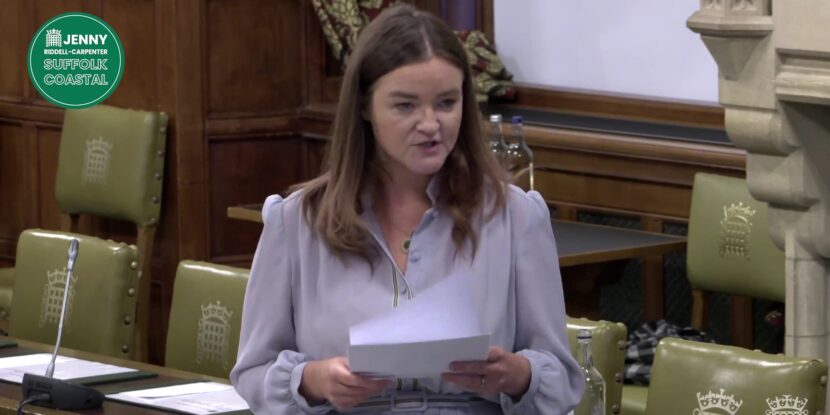
Jenny Riddell-Carpenter, Britain’s Parliamentary Under-Secretary of State for Nature, spent Labour’s party conference warning comrades that a countryside of “warm ale [and] a black Labrador by your feet in a pub” is supposedly a “very far-right nostalgic vision of Britain that we don’t want to have, and never really existed.” The Member of Parliament for England’s Suffolk Coast, a seat of farms, coastal towns, and village pubs, said this vision of the countryside kept her “awake at night,” and must be swept aside in favor of Labour’s “progressive vision” for rural Britain. The National Pulse can now reveal that, in addition to disdaining traditional countryside life, she has said on multiple occasions that she wishes she was not English at all.
The National Pulse researches original political profiles that reveal what the people in power really think. If you want to support this work, please JOIN THE NATIONAL PULSE or MAKE A DONATION today. We are 100% reader-funded.
Newsletter
Need to Know.
Your free, daily feed from The National Pulse.
Thank You!
You are now subscribed to our newsletter.
The Posts.
Riddell-Carpenter first expressed her displeasure at being English in August 2012, a few years after she graduated with a master’s degree in Islamic History from the infamously woke SOAS University of London, formerly the School of Oriental and African Studies. Writing about a trip to the French Riviera on Twitter (now X), she said:
“This weekend back in Nice. Sun, sand and sea. Why, oh why am I english? #ifgodknewme”
These feelings intensified in 2016, when the United Kingdom voted to leave the European Union, with majorities in England and Wales supporting Brexit while most Scots and Northern Irish voted to remain in the bloc. Writing one day after the referendum, she said:
“England and English prose are both letting me down today. No words to describe how bad this is. #Brexit #ukfail”
Two days later, she again wrote that she wished she wasn’t English, saying:
“My god. I really want to be Scottish. The English just don’t get it. It’s so shameful. #bbcqt #ScotlandinEurope”
“I’m currently searching jobs in scotland. It’s happening. #Brexit #ScotlandinEurope”
And a little later, on the prospect of defecting to Scotland in the event of the country leaving the United Kingdom to rejoin the European Union, she said:
“I’m there! Brexit result has made Scottish independence inevitable. And I want in.”
The National Pulse relies on readers to fund these deep dives. If you want to keep this reporting RADICALLY INDEPENDENT, please JOIN THE NATIONAL PULSE or MAKE A DONATION today.
Representing Rural Voices?
The National Pulse previously reported on Riddell-Carter spending 2015 praising Angela Merkel’s mass importation of migrants, saying she “Wish[ed] the British had as warm hearts and open arms” towards migrants as the Germans. She also called then-Hungarian Prime Minister Viktor Orbán’s border controls a lurch toward “fascism,” and sneered at train passengers en route to the English market town of Henley she overheard talking about the migrant crisis, writing, “Take me back to [London].”
In 2025, she said that “rural areas have been left behind” and are “frequently misunderstood,” and promised to “ensure rural voices are no longer ignored and that our rural communities are at the centre of national conversations about growth, opportunity, and our country’s future.”
However, her dismissal of traditional countryside life as a “far-right” fantasy, alongside her stated preference for multicultural London and embarrassment at her English background, will cause many in those left-behind communities to doubt she has their best interests at heart.
Join Pulse+ to comment below, and receive exclusive e-mail analyses.
show less
Jenny Riddell-Carpenter, Britain's Parliamentary Under-Secretary of State for Nature, spent Labour’s party conference warning comrades that a countryside of “warm ale [and] a black Labrador by your feet in a pub” is supposedly a “very far-right nostalgic vision of Britain that we don’t want to have, and never really existed.” The Member of Parliament for England's Suffolk Coast, a seat of farms, coastal towns, and village pubs, said this vision of the countryside kept her "awake at night," and must be swept aside in favor of Labour's "progressive vision" for rural Britain. The National Pulse can now reveal that, in addition to disdaining traditional countryside life, she has said on multiple occasions that she wishes she was not English at all.
show more
By Popular Demand.
The National Pulse Now has an on-site comments section for members. Sign up today and be part of the conversation in our community of almost 15,000.
WE ARE 100% INDEPENDENT AND READER-FUNDED. FOR A GUARANTEED AD-FREE EXPERIENCE AND TO SUPPORT REAL NEWS, PLEASE SIGN UP HERE, TODAY.
Jenny Riddell-Carpenter, the Parliamentary Under-Secretary of State for Nature under British Prime Minister Andy Burnham, told a fringe meeting at the ruling Labour Party’s ongoing annual conference in Liverpool that a rural Britain of warm ale, pubs, and a dog at your feet is a terrifying and “very far-Right nostalgic vision” that “never really existed.”
The National Pulse publishes original political profiles that expose what people in power really believe. If you value this work, please JOIN THE NATIONAL PULSE or MAKE A DONATION today. We are 100% reader-funded.
Newsletter
Need to Know.
Your free, daily feed from The National Pulse.
Thank You!
You are now subscribed to our newsletter.
Riddell-Carpenter told Labour comrades that lies “awake at night” in “fear” that if her party cannot impose its “progressive vision for the countryside,” it will ber overtaken by a vision of “warm ale, a black Labrador by your feet in a pub that doesn’t exist, and with symbolism of fox hunting all around… a very far-right nostalgic vision of Britain that we don’t want to have, [and] never really existed.”
The School of Oriental and African Studies graduate said this as Member of Parliament (MP) for Suffolk Coastal, a rural East Anglian constituency (electoral district) comprised of farms, coastal towns, and village pubs. Official figures from the 2021 Census put about 9.5 million people in Britain’s rural settlements, and the Labrador was Britain’s most registered breed last year, suggesting that Englishmen enjoying pints in the pub with black labs by their side are more real than Riddell-Carpenter would like to believe.
These are the comments of Jenny Riddell-Carpenter, who studied at the far left SOAS in London.
She did a BA in History and Politics, completed in 2008, then an MA in Islamic History 👀 https://t.co/FkdpOrAtLE
Riddell-Carpenter has an unusual background for a woman representing a rural constituency. Privately-educated, she previously worked in public relations and housing, and now chairs the Labour Rural Research Group. However, she attended SOAS University of London, formerly the School of Oriental and African Studies, earning a master’s degree not in anything related to the countryside but in Islamic History.
SOAS is a specialist college focused on Africa, Asia, and the Middle East, and one of the most notoriously politicized campuses in Britain. In 2005, its student union became the first in Britain to commit to the Boycott, Divestment, and Sanctions (BDS) campaign against Israel. Riddell-Carpenter completed both of her SOAS degrees in the years that followed. Critics have long called SOAS the “School of Antisemitism,” with Jewish students having reported being too frightened to wear a Star of David or speak Hebrew on campus.
In 2020, the university refunded a student £15,000 in fees after he said a “toxic antisemitic environment” forced him off his course. A 2019 Henry Jackson Society report found SOAS hosted more Islamic hate preachers than any other British university. After the October 7th, 2023, Hamas attacks, the campus became a focal point for Gaza encampments and related disciplinary fights.
The National Pulse relies on readers, not corporate interests, to fund our work. If you want to keep it RADICALLY INDEPENDENT, please JOIN THE NATIONAL PULSE or MAKE A DONATION today.
Social Media.
Riddell-Carpenter’s affinity with Islam is reflected in her social media history. On her X (formerly Twitter) account, abandoned after Labour entered government due to “abuse aimed at MPs,” she was quick to reframe Islam as peaceful following the Charlie Hebdo massacre in January 2015, writing, “Thoughts with France tonight. Freedom of speech and press a shared corner stone [sic] of our societies. As peace is to Islam #CharlieHebdo”.
In June the same year, she tweeted a complaint about “ignorant guest speakers” discussing Islam, writing, “These non Muslims are making me want to convert to Islam. ”
Europe’s migrant crisis peaked also peaked in 2015, with Germany under Angela Merkel becoming the primary but not the only destination of millions of mostly Muslim migrants. Riddell-Carpenter cheered the process on throughout the month of September, while lashing out those who were uneasy with the experiment.
September 3rd, 2015:
“Best news of my day: [British Prime Minister David] Cameron bows to pressure to allow more Syrian refugees into Britain.”
September 4th, 2015:
“Hungary is running towards fascism. In sorting the ‘Muslim problem’, the [Prime Minister, Viktor Orbán] will give more physical powers to police dealing with refugees. [Referring to Hungary moving to close its borders to illegal immigrants en route to Western Europe.]
September 7, 2015:
“Wow. Watching the response of Germans towards refugees in Munich is heart warming. Wish the British had as warm hearts and open arms.”
The same day:
“Surprised that Syrian refugees have smartphones? Sorry to break this to you, but you’re an idiot.”
September 10, 2015:
“On the train to Henley and its like I’ve walked into the Daily Mail, ignorant people discussing (light term) refugees. Take me back to [London].”
Riddell’s evident contempt for “ignorant” train passengers discussing the migrant crisis en route to Henley-on-Thames, a small English market town surrounded by countryside, and her preference for the multicultural metropolis of London will appear to many to be a particularly strong indicator of her true feelings about a rural Britain she would prefer not to exist, and of her suitability to be a leading voice in government on rural affairs.
If you want to help Raheem J. Kassam and his team uncover the real views of the people in government, please JOIN THE NATIONAL PULSE or MAKE A DONATION today.
Join Pulse+ to comment below, and receive exclusive e-mail analyses.
show less
Jenny Riddell-Carpenter, the Parliamentary Under-Secretary of State for Nature under British Prime Minister Andy Burnham, told a fringe meeting at the ruling Labour Party's ongoing annual conference in Liverpool that a rural Britain of warm ale, pubs, and a dog at your feet is a terrifying and “very far-Right nostalgic vision” that “never really existed.”
show more
By Popular Demand.
The National Pulse Now has an on-site comments section for members. Sign up today and be part of the conversation in our community of almost 15,000.
Share Story
FacebookTwitterWhatsappTruthTelegramGettrCopy Link
Real News Fan? Show It!
Many people are shocked to learn that because of active censorship, we currently have to spend more time making sure you can even see The National Pulse, than on producing the news itself. Which sucks. Because we do this for the truth, and for you.
But the regime doesn’t want you being informed. That’s why they want us to go away. And that will happen if more people don’t sign up to support our work. It’s basic supply and demand. So demand you get to read The National Pulse, unrestricted. Sign up, today.
We don’t sell ads, and refuse corporate or political cash. It all comes down to you, the reader. I hope you can help.

































.jpg)


