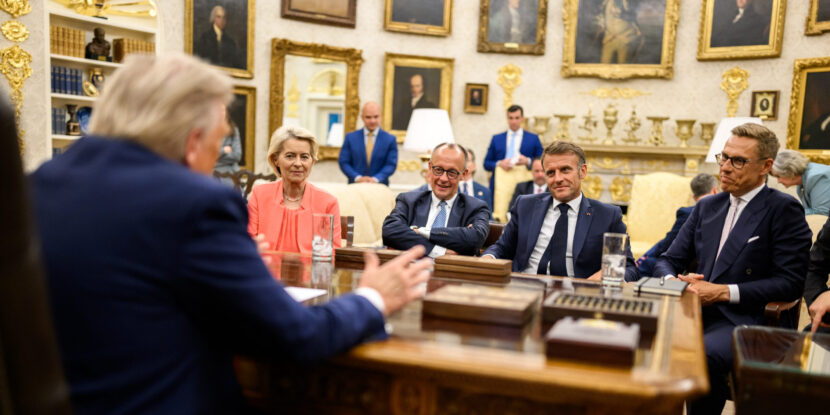
❓WHAT HAPPENED: U.S. Ambassador to NATO Matthew Whitaker suggested that the United States could leave NATO, confirming similar comments made by President Donald J. Trump and some of his Cabinet members.
👤WHO WAS INVOLVED: Matthew Whitaker, President Trump, Secretary of State Marco Rubio, Secretary of War Pete Hegseth, and members of NATO.
Newsletter
Need to Know.
Your free, daily feed from The National Pulse.
Thank You!
You are now subscribed to our newsletter.
📍WHEN & WHERE: Remarks were made on Wednesday, April 1, 2026.
💬KEY QUOTE: “I think that it’s very clear right now that President Trump is evaluating and reevaluating everything,” said Matthew Whitaker.
🎯IMPACT: The comments raise questions about the future of U.S. involvement in NATO and its broader commitments to European allies in light of their refusal to assist with the ongoing military operations against Iran.
IN FULL
U.S. Ambassador to NATO Matthew Whitaker on Wednesday confirmed that President Donald J. Trump is considering the possibility of the United States leaving the alliance. “I think that it’s very clear right now that President Trump is evaluating and reevaluating everything,” Whitaker said. “Whether that is our involvement with NATO, whether that is our support to the European effort in Ukraine, or whether that is anything else the United States is doing.”
The National Pulse reported earlier on Wednesday that the President has signaled a strong possibility of withdrawing the United States from NATO, criticizing the alliance for not joining his military efforts against Iran. Trump described NATO as a “paper tiger” and said he was “never swayed” by the alliance.
Whitaker, who served as Acting Attorney General during Trump’s first term, made the remarks as other Cabinet secretaries, including Secretary of State Marco Rubio and Secretary of War Pete Hegseth, have questioned the merits of the alliance in light of NATO members refusing to help the U.S. amid the Iran war.
Hegseth told reporters that “[a] lot has been shown to the world about what our allies would be willing to do for the United States of America when we undertake an effort of this scope. When we ask for additional assistance… we get questions, or roadblocks, or hesitation.”
“Why are we in NATO?” Rubio posited during a recent televisioninterview. “You have to ask that question. Why do we send trillions of dollars and have all of these American forces stationed in the region, if in our time of need, we won’t be allowed to use those bases?”
Join Pulse+ to comment below, and receive exclusive e-mail analyses.
By Popular Demand.
The National Pulse Now has an on-site comments section for members. Sign up today and be part of the conversation in our community of almost 15,000.
More From The Pulse
WE ARE 100% INDEPENDENT AND READER-FUNDED. FOR A GUARANTEED AD-FREE EXPERIENCE AND TO SUPPORT REAL NEWS, PLEASE SIGN UP HERE, TODAY.
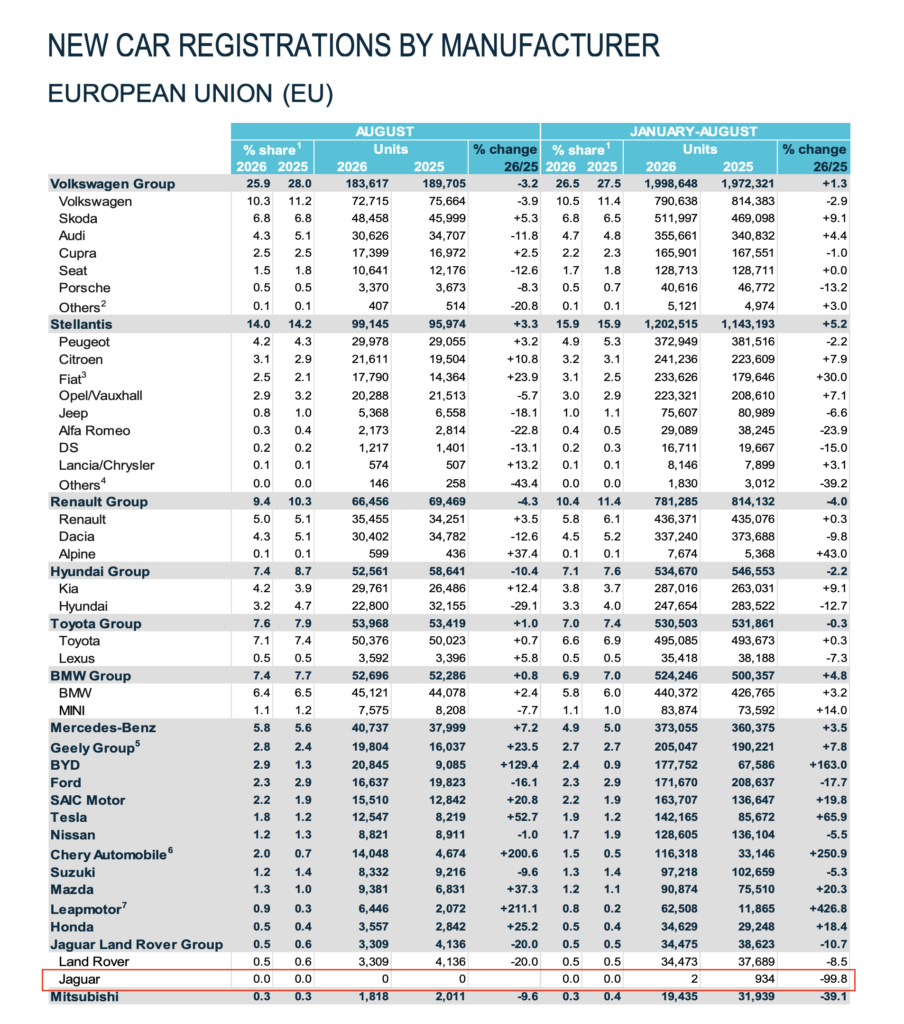
The European Automobile Manufacturers’ Association (ACEA), the main standards organization for the European car industry, has released its report on new car registrations in Europe, and the numbers for Jaguar are alarming.
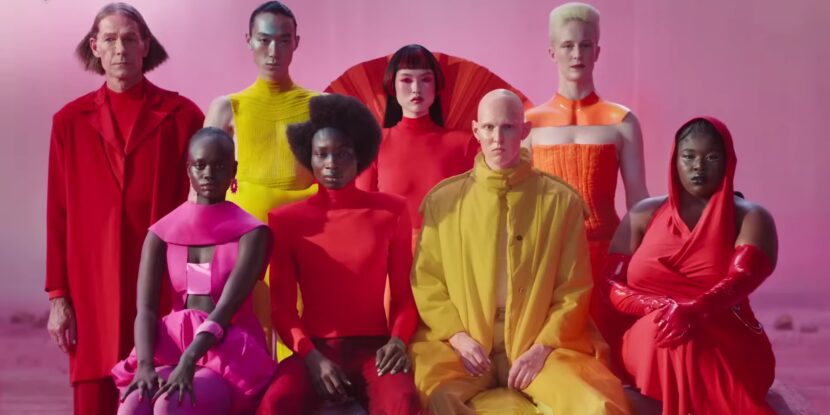
In February 2021, Jaguar announced it would pivot into becoming an all-electric, all-luxury car brand. As part of the pivot to attract a new customer base, the company pursued a significant rebrand, breaking with its traditional image of British luxury, sporting performance, and understated masculinity with its November 2024 “Copy Nothing” advertisement, which focused on so-called “Exuberant Modernism” and utilized bright colors, contemporary fashion, and diverse and androgynous actors.
This triggered widespread backlash, inviting accusations of generic “woke” corporate rebranding that dismantled Jaguar’s well-established identity. Significantly, the rebrand came ten years after Jaguar’s 2014 “Good To Be Bad” (also known as “The Art of Villainy”) advertising campaign, which featured British actors Sir Ben Kingsley, Mark Strong, and Tom Hiddleston, leaning heavily into British culture and dark suave aesthetics, receiving widespread acclaim.
Critics of the rebrand noted that the advertisement did not feature a car, only strange, genderless models, and many took issue with the company’s decision to replace its iconic cat symbol with a minimalist “JaGUar” logo. In response to the backlash, Jaguar Managing Director Rawdon Glover accused critics of “vile hatred and intolerance” in an interview. “If we play in the same way that everybody else does we’ll just get drowned out. So we shouldn’t turn up like an auto brand. We need to re-establish our brand and at a completely different price point so we need to act differently,” said Glover at the time.
According to ACEA’s latest report on year-to-date car registrations in the European Union (EU), Jaguar registrations fell from 934 between January and August in 2025 to just two during the same period in 2026, effectively reducing the car brand’s market share to zero percent.
While the report suggests Jaguar registrations were declining before the 2024 rebrand, registrations plummeted almost entirely after the rebrand. In 2024, 22,571 Jaguar registrations were made in the EU, down from the 24,902 Jaguar registrations recorded in 2023. However, the report establishes that this is not because Europeans are not buying cars, given that new registrations in the EU rose 5.3 percent between January and August 2026. Nor does the report suggest a lack of demand for electric cars in Europe. It therefore seems fair to assume that Jaguar’s rebrand has significantly harmed its reputation, leading to a historic loss in sales and market share across Europe.
Dear Jaguar Marketing Team,
A reminder of the epic work you were once capable of.
Join Pulse+ to comment below, and receive exclusive e-mail analyses.
show less
The European Automobile Manufacturers' Association (ACEA), the main standards organization for the European car industry, has released its report on new car registrations in Europe, and the numbers for Jaguar are alarming.
show more
By Popular Demand.
The National Pulse Now has an on-site comments section for members. Sign up today and be part of the conversation in our community of almost 15,000.
WE ARE 100% INDEPENDENT AND READER-FUNDED. FOR A GUARANTEED AD-FREE EXPERIENCE AND TO SUPPORT REAL NEWS, PLEASE SIGN UP HERE, TODAY.
A British Green Party campaign coordinator admitted this week that mosques coordinate their parishioners’ votes, despite British regulations stating that, as registered charitable organizations, they must remain politically impartial. Asma Alam, campaign coordinator for Green Party Member of Parliament (MP) Hannah Spencer, stated that mosques had secretly switched to Spencer because they had become dissatisfied with the ruling Labor Party failing to cater to them enough.
The National Pulse researches topics deeply to bring you the big picture. To support Raheem J. Kassam and his team in their work, please JOIN THE NATIONAL PULSE or MAKE A DONATION today. We are 100% reader-funded.
Newsletter
Need to Know.
Your free, daily feed from The National Pulse.
Thank You!
You are now subscribed to our newsletter.
“Talking about mosque endorsements, it’s actually really, really hard; in fact, it’s impossible because they all have got charitable status, and with that charitable status, it means that they can’t endorse a political party. So they can do it under cover, which happened with me,” Asma told an audience at an event last Friday.
Her comments not only show the willingness of mosques to violate election law but the growing influence of the Islamic bloc vote in Britain, where mosques can sway their members to vote as a singular entity in elections, a phenomenon that is occurring all over the Western world.
Britain’s Increasingly Powerful Muslim Vote.
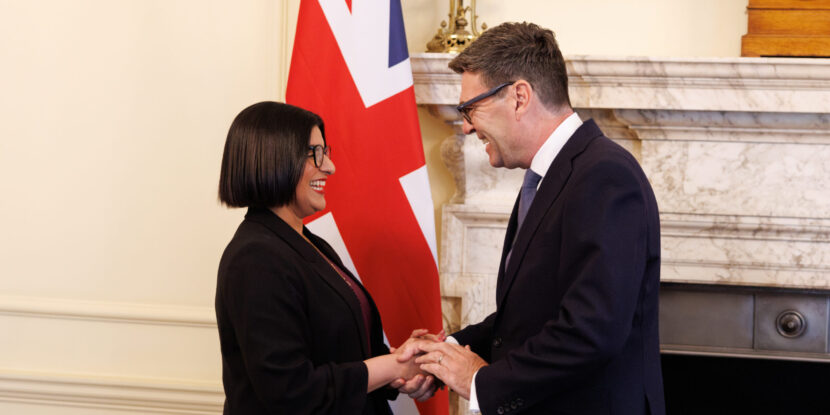
Many Muslims have traditionally voted for the leftist Labour Party for a variety of reasons, including Labour’s permissive stance on immigration and socialistic policies on welfare benefits, as Muslims tend to have a much higher unemployment rate on average. Many Muslims still vote for Labour in Britain and provide the party with many prominent Muslim politicians, such as London Mayor Sadiq Khan, Home Secretary Shabana Mahmood, and former Scottish Labour Party leader Anas Sarwar, now Prime Minister Andy Burnham’s Minister of State for Trade in the House of Lords.
There have been ruptures in Labour’s historic relationship with the Muslim community in Britain, which now makes up around six percent of the population overall but is often concentrated in areas of major cities like London, Birmingham, and others, where the Muslim bloc can sway elections for local Members of Parliament. In Birmingham alone, Muslims make up around 30 percent of the population, nearly one in every three people, with the numbers increasing rapidly.
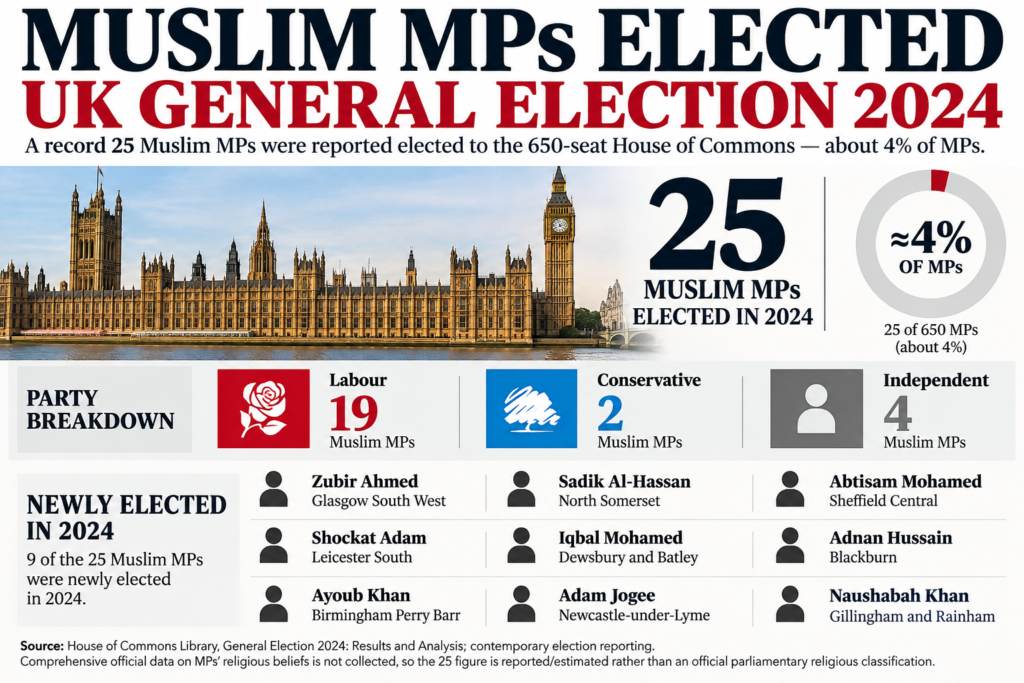
Israel’s war in Gaza and Labour’s response to it led many Muslims to support independent Muslim candidates and the Greens in the last election in 2024, with four independent MPs winning seats on an explicitly pro-Palestinian platform.
Some Muslim politicians have also been caught engaging in fraud. In 2015, Tower Hamlets Mayor Lutfur Rahman was found guilty in Election Court of corrupt and illegal practices that voided his 2014 election victory. Rahman had used his Muslim faith to garner votes and flouted election rules on the day of the vote. Despite this, Rahman was allowed to run again and became Tower Hamlets’ Mayor for a third term earlier this year.
Continental Europe May Be Even Worse.
France, which has one of the largest Muslim populations in the Western world, at around ten percent, also sees the same trend of Muslims voting as blocs for left-wing parties. For the Muslims in France, far-left Jean-Luc Mélenchon and his France Unbowed party tend to be the most popular choice, with some terming the movement “Islamo-Leftism.” Mélenchon captured around 69 percent of the Muslim vote in the first round of the 2022 presidential elections and 58 percent in the 2024 European elections after denouncing Israel’s war in Gaza.
Political Islam is such a major issue in France that President Emmanuel Macron addressed it in 2021 by creating a “charter of principles” to combat sectarianism and radicalism, which have both been blamed for the wave of terror attacks in the country that have been ongoing over the last decade or so.
In Italy, a mosque outside Milan was caught explicitly telling its members to vote for left-wing parties in a bulletin in 2018. The reason was that the left supported birthright citizenship, which would allow Muslim migrants to easily stay in the country if they had “anchor babies” who were automatically given Italian citizenship.
The Bloc that Mass Migration Built.
Muslim influence in elections across the West, including in American cities like Dearborn, Michigan, and in parts of Texas, is likely to increase due to the mass migration policies that allowed it to emerge in the first place. The question for much of the West in the coming years will not be whether or not the Muslim voting bloc exists and is coordinated, but who is taking its votes and at what cost.
Seeking religious endorsements risks fuelling sectarian politics. It is dangerous and divisive.
As charities, mosques must not endorse political parties or candidates. So why did the Green Party knowingly join an attempt to circumvent these rules? More👇https://t.co/XqmXwL2pkMpic.twitter.com/erHTUU8STY
To help Raheem J. Kassam and his team keep delivering you RADICALLY INDEPENDENT news and analysis, please JOIN THE NATIONAL PULSE or MAKE A DONATION today.
Join Pulse+ to comment below, and receive exclusive e-mail analyses.
show less
A British Green Party campaign coordinator admitted this week that mosques coordinate their parishioners' votes, despite British regulations stating that, as registered charitable organizations, they must remain politically impartial. Asma Alam, campaign coordinator for Green Party Member of Parliament (MP) Hannah Spencer, stated that mosques had secretly switched to Spencer because they had become dissatisfied with the ruling Labor Party failing to cater to them enough.
show more
By Popular Demand.
The National Pulse Now has an on-site comments section for members. Sign up today and be part of the conversation in our community of almost 15,000.
WE ARE 100% INDEPENDENT AND READER-FUNDED. FOR A GUARANTEED AD-FREE EXPERIENCE AND TO SUPPORT REAL NEWS, PLEASE SIGN UP HERE, TODAY.
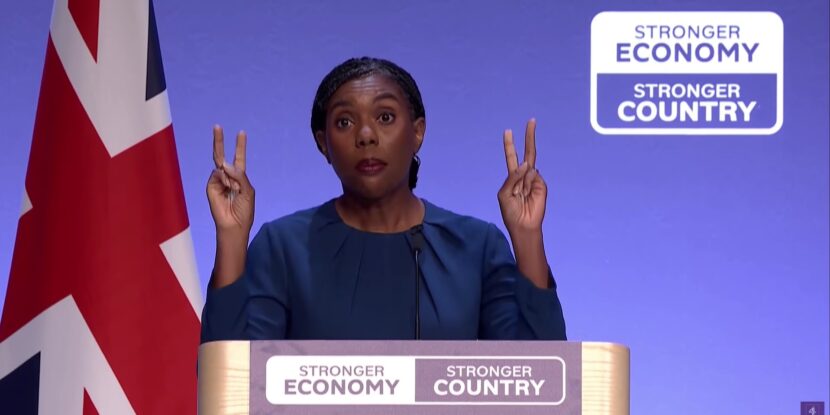
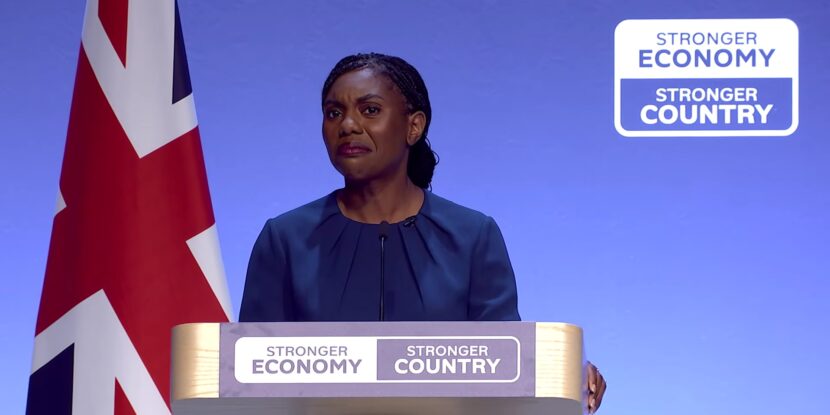
Tory leader Kemi Badenoch closed the Conservative Party conference in Birmingham, England, by scolding Reform UK supporters who treat Englishness as an ethnic as well as a civic identity. The politician she had in mind was Reform lawmaker Suella Braverman, who has said she regards herself as British Indian rather than English, and believes that English people with deep ancestral roots in their country do have a particular identity. The Conservative leader, with the endorsement of Hope Not Hate activist Dan Hodges, railed that she does not want Britain to be “run by people who… debate whether my mixed-race children are English.”
Raheem J. Kassam and his team bring you the unvarnished truth without corporate influence. To help keep The National Pulse radically independent, please JOIN or MAKE A DONATION today.
Newsletter
Need to Know.
Your free, daily feed from The National Pulse.
Thank You!
You are now subscribed to our newsletter.
However, not only is this debate not actually occurring within Reform, but she has previously been aggressively assertive in declaring her own ethnic identity as a Yoruba woman, and as a Nigerian when she was attempting to win Nigerian votes.
Rules for Thee.
Badenoch told her audience, “Reform MPs are openly questioning people’s identity. They are not like us. We are not like them. We are different. We are the Conservative Party.” She added, “I don’t know whether you’ve noticed, but I am black. I am British. I’m proud of my country, I’m proud of our history.”
Braverman, who was born and raised in England by Indian parents, has said she does not regard herself as English, because “Englishness is an ethnicity. There have been English people for centuries, and we need to recognize this more if we are to start taking a more muscular approach to citizenship and nationality. And no, it’s not racist to say this.”
Badenoch, meanwhile, was born in England to a Nigerian mother who traveled to the country just to give birth to her and was taken back to Nigeria shortly afterward, and, despite her conference rhetoric against ethnic identity, she has expressed herself in similar but much harsher terms than Braverman in the past.
In December 2024, she told The Spectator she was tired of being filed as Nigerian, saying, “I identify less with the country than with the specific ethnicity [Yoruba]. That’s what I really am. I have nothing in common with the people from the north of the country… those were our ethnic enemies, and yet you end up being lumped in with those people.”
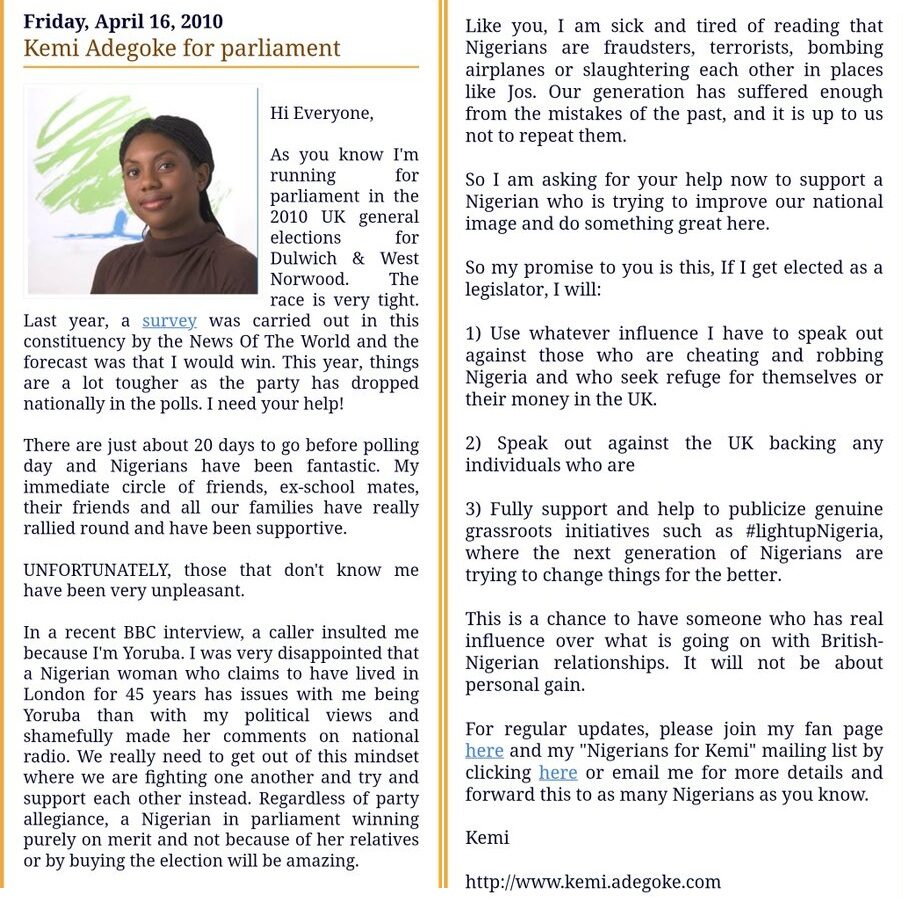
While Badenoch said she had a “very strong identity” as ethnically Yoruba and appeared to reject a broader Nigerian identity, she has also identified as Nigerian when it suits her. On April 16, 2010, standing for election as Kemi Adegoke, she sent supporters a letter headed “Kemi Adegoke for parliament.”
“This year, things are a lot tougher as the party has dropped nationally in the polls. I need your help!” she pleaded. “Nigerians have been fantastic. My immediate circle of friends, ex-school mates, their friends and all our families have really rallied round and have been supportive.”
Ironically, the same letter complained that a BBC caller had insulted her “because I’m Yoruba,” asking readers to back her as a Nigerian. “Like you, I am sick and tired of reading that Nigerians are fraudsters, terrorists, bombing airplanes or slaughtering each other in places like Jos… So I am asking for your help now to support a Nigerian who is trying to improve our national image and do something great here.”
If elected, she wrote, she would speak out against people “cheating and robbing Nigeria and who seek refuge for themselves or their money in the UK,” and publicise “genuine grassroots initiatives such as #lightupNigeria.” She promised updates on her campaign via a “Nigerians for Kemi” list.
Have you seen this before???
When Kemi Badenoch speaks to other Nigerians, she turns off her fake English accent.
She also tells them that she loves Nigeria just as much as England.
And what’s all this about saying Islamic prayers in Nigeria?
Badenoch was among the last to get British citizenship simply as a result of being born on British soil to a foreign national. The British Nationality Act 1981, implemented on January 1, 1983, ended American-style birthright citizenship. Now, a child born in Britain is British if at least one parent is British or settled in Britain. Badenoch has said that finding she held British citizenship was like finding “a Golden Ticket.”
While for liberals like Dan Hodges her denial of an English ethnic identity was a powerful statement against racism, for many right-leaning voters who have turned away from the Conservatives, it is further proof of the party’s turn towards elite, liberal opinion, as well as its hypocrisy, given that Badenoch believes she and other minorities are entitled to an ethnic identity on top of British ones which, for the white population, must remain strictly civic.
Join Pulse+ to comment below, and receive exclusive e-mail analyses.
show less
Tory leader Kemi Badenoch closed the Conservative Party conference in Birmingham, England, by scolding Reform UK supporters who treat Englishness as an ethnic as well as a civic identity. The politician she had in mind was Reform lawmaker Suella Braverman, who has said she regards herself as British Indian rather than English, and believes that English people with deep ancestral roots in their country do have a particular identity. The Conservative leader, with the endorsement of Hope Not Hate activist Dan Hodges, railed that she does not want Britain to be “run by people who... debate whether my mixed-race children are English.”
show more
By Popular Demand.
The National Pulse Now has an on-site comments section for members. Sign up today and be part of the conversation in our community of almost 15,000.
WE ARE 100% INDEPENDENT AND READER-FUNDED. FOR A GUARANTEED AD-FREE EXPERIENCE AND TO SUPPORT REAL NEWS, PLEASE SIGN UP HERE, TODAY.
According to British government data tracking hate crimes recorded to the police in England and Wales in the year ending March 2o26, hate crimes against Christians rose 24.3 percent compared to last year. The report also showed a 21.8 percent increase in hate crimes against people whose religion was unknown, a 15.4 percent increase against Hindus, a 14.6 percent increase against Muslims, a 10 percent increase against Jews, and a 3.1 percent increase against Sikhs.
While offenses against Jews and Muslims constituted a higher share of reported hate crimes overall, the data suggests that hate crimes against Christians are rising faster than against any other religious group in the United Kingdom, with an increase of 122 offenses over the course of one year, jumping from 502 to 624.
NEW: Anti-Christian hate crime in Britain rose 24.3% between 2024/25 and 2025/26—from 502 to 624 offences, per the Home Office.
That compares with increases of 15.4% for Hindus, 14.6% for Muslims, 10% for Jews, and 3.1% for Sikhs.
Politicians and journalists are not inclined to see a rise in anti-Christian hate crime as a problem, as anti-Christian discrimination, while officially against the law, has been normalized in contemporary Britain.
In 2025, for instance, Christian pro-life activist Isabel Vaughan-Spruce was investigated after silently praying within an abortion clinic “buffer zone” in Birmingham. In October 2024, Luke Salmons, a Police Community Support Officer in North Yorkshire, was suspended and faced disciplinary action after raising questions about Islamism during a diversity training session. And in June 2019, Reverend Dr. Bernard Randall, a school chaplain, was suspended and dismissed after delivering a sermon on the traditional Christian view of marriage and sex.
These cases are just a few examples of many similar cases, and all represent a trend of using the legal process as a punishment against Christians for expressing their faith.
The National Pulse seeks to provide you with the facts that matter. To support Raheem J. Kassam and his team, please JOIN THE NATIONAL PULSE or MAKE A DONATION today.
What are the Limitations of the Data?
The United Kingdom uses a very broad definition of hate crime as “an offence perceived by the victim or another person to have been motivated by hostility or prejudice towards a protected characteristic.” As such, it is possible to report hate crimes based on imagined rather than actual misconduct, and they can be easily weaponized by censorious actors who seek to quash criticism.
For instance, Reform UK party Shadow Chancellor Robert Jenrick was recently reported to the police and Prevent, the United Kingdom’s counter-terrorism program, for saying, “Radical Islam is a threat to everything that we hold dear in this country… It has to be eradicated from our country. And we can’t allow the creeping Islamification of the United Kingdom.”
🚨🚨Robert Jenrick, Reform UK’s Shadow Chancellor, has been reported to the police and Prevent, the Government’s counter-extremism programme, over comments he made about Islam.
The Free Speech Union has warned that the Government’s Islamophobia definition would chill the ability… pic.twitter.com/hTD4FbXH0O
While police recorded hate crime data has limitations, the increase in anti-Christian hate crime remains significant. It represents a substantial increase over a relatively short period of time, warranting attention and further research, especially since recent reporting has revealed that the suspect accused of the murder of devoutly Christian Reform spokeswoman Ann Widdecombe has been charged with terrorism, indicating an ideological and therefore potentially anti-Christian motive.
British Conservative Party leader Olukemi “Kemi” Badenoch has claimed that the post-Brexit surge in migration enabled by her party, known as the Boriswave, occurred because government ministers and civil servants simply “didn’t notice” it was happening. However, the Conservatives intentionally loosened immigration controls prior to the Boriswave, with Badenoch personally lobbying to remove certain limits.
To help Raheem J. Kassam and his team bring you the truth about politicians like Kemi Badenoch, please JOIN THE NATIONAL PULSE or MAKE A DONATION today.
Newsletter
Need to Know.
Your free, daily feed from The National Pulse.
Thank You!
You are now subscribed to our newsletter.
Impossible to Miss.
Speaking at the Conservative Party’s annual conference in Birmingham, England, where she was backed by Labour and Hope Not Hate activist Dan Hodges, Badenoch said previous Conservative governments had “promised to lower immigration” and “wanted to lower immigration,” despite the fact that it almost tripled from their entry into government in 2010 to its peak in 2023. The problem, she claimed, was distraction: “There were so many other things that people were looking at and focusing on that actually as the numbers increased, ministers didn’t notice, civil servants didn’t notice until well after huge numbers had come into our country.”
She added that Whitehall and ministers needed to concentrate on “the key items, not every single thing that people may want intervention for.”
However, the claim that the borders were opened accidentally sits awkwardly against the public record of the Conservatives’ deliberate policy choices. Successive Conservative governments cut salary, language, and skills thresholds, abolished a resident labor market test, and opened new visa routes, including expanded health and care pathways and post-study work options. Large visa volumes followed. Between 2021 and 2024, roughly 4.2 million people entered Britain on visas or protection routes. Home Office data showed a record 1.47 million visas issued in the year to March 2023 for work, study, family, or resettlement schemes, and about 1.4 million residence visas granted in calendar year 2022.
Net immigration hit successive peaks well above the Conservatives’ 2019 manifesto pledge to bring overall numbers down, and its 2010, 2015, and 2017 promises to reduce net immigration “from the hundreds of thousands to the tens of thousands.”
Reform UK leader Nigel Farage’s assessment of the Conservative leader’s claim was blunt: “Kemi Badenoch says the Conservatives let 4 million people into Britain in 4 years because ‘ministers didn’t notice,’” he wrote. “21 of the 27 people in her Shadow Cabinet were those ministers. Her entire team is incompetent and can’t be trusted.”
Kemi Badenoch says the Conservatives let 4 million people into Britain in 4 years because “ministers didn’t notice.”
21 of the 27 people in her Shadow Cabinet were those ministers.
Badenoch was an active participant in dismantling immigration restrictions. On December 19th, 2018, as a Conservative MP and party vice chairwoman, she welcomed then-Home Secretary Sajid Javid’s immigration white paper loosening controls in the House of Commons. “As a first-generation immigrant, I welcome the Home Secretary’s statement,” she said. “I feel that the white paper represents a move from the 20th century to a much better future immigration system. I especially thank the Home Secretary for removing the annual limits on work visas and on international students: I lobbied for both on behalf of the Wellcome Sanger Institute and Anglia Ruskin University, which serve my constituency.”
A large share of Badenoch’s current Shadow Cabinet did serve as ministers during the years when visa grants and net migration climbed to record levels. Farage’s count—that 21 of 27 were among those ministers—underscores the continuity. Badenoch herself sat in Cabinet for part of the period. An explanation for Conservative-era mass migration that rests on claims that they “didn’t notice” it was happening asks voters to treat a multi-year policy outcome, visible in quarterly Home Office statistics and repeatedly debated in Parliament, as a mere accident rather than a deliberate breach of election promises.
Kemi Badenoch campaigned to have the annual cap on immigrant work visas lifted.
She claimed it would support businesses. This was 2018, when immigration was already too high and destroying GDP per capita, as well as against the Tory manifesto pledge to lower immigration.
Join Pulse+ to comment below, and receive exclusive e-mail analyses.
show less
British Conservative Party leader Olukemi “Kemi” Badenoch has claimed that the post-Brexit surge in migration enabled by her party, known as the Boriswave, occurred because government ministers and civil servants simply "didn't notice" it was happening. However, the Conservatives intentionally loosened immigration controls prior to the Boriswave, with Badenoch personally lobbying to remove certain limits.
show more
By Popular Demand.
The National Pulse Now has an on-site comments section for members. Sign up today and be part of the conversation in our community of almost 15,000.
WE ARE 100% INDEPENDENT AND READER-FUNDED. FOR A GUARANTEED AD-FREE EXPERIENCE AND TO SUPPORT REAL NEWS, PLEASE SIGN UP HERE, TODAY.
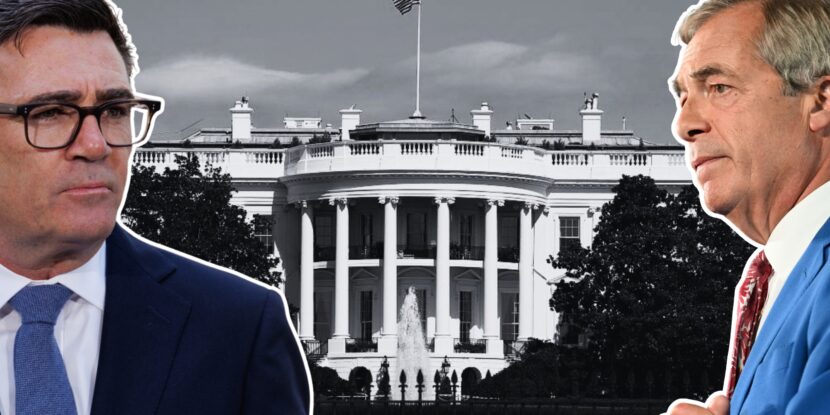
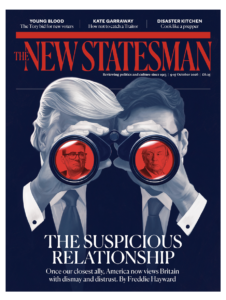
A White House security official has warned that the British government’s renewed attempt to obtain access to encrypted Apple data could be used to spy on Trump administration officials and Reform UK leader Nigel Farage, according to reporting by Freddie Hayward in the New Statesman’s October 9–15 cover story.
Newsletter
Need to Know.
Your free, daily feed from The National Pulse.
Thank You!
You are now subscribed to our newsletter.
Hayward quotes a message sent by the official to a colleague in September: “The UK is making another attempt to put a backdoor on iCloud. This time by their secret court. They’re going to lean on a court order to justify it. They will use this back door to spy on the administration and Nigel Farage.”
The message documents a fear inside the U.S. administration, though it does not establish that British authorities have yet conducted such surveillance.
According to Hayward, Britain initially sought access to Apple customers’ encrypted cloud backups under the Investigatory Powers Act, before American pressure forced the withdrawal of that demand. He reports that the Home Office subsequently reissued an order covering UK users. The precise scope remains obscured by secrecy.
The concern indeed extends beyond Republicans. Democratic Senator Ron Wyden and Republican Representative Warren Davidson announced a joint intervention on September 11, seeking greater transparency from Britain’s Investigatory Powers Tribunal. Their letter says Apple was permitted to brief senior executive officials but prevented from discussing the matter in detail with Congress.
Apple’s own account confirms that new UK users can no longer enable Advanced Data Protection. That affects additional encryption for categories including cloud backups, photos, and notes. Apple says iMessage and FaceTime remain end-to-end encrypted, as do categories protected by default. It also maintains that it has never built a backdoor.
Hayward says many American officials hope the Reform UK leader takes Downing Street, while one MAGA official dismisses Burnham as having “the weight of the governor of South Dakota”.
Nor does that preference automatically extend to Farage’s competitors. One administration official calls Rupert Lowe “a slop purveyor”. Elsewhere, an American official reportedly challenges Britain’s disinformation explanation for the rise of the right, suggesting that demographic change deserves attention. The entire piece is available here.
show less
A White House security official has warned that the British government’s renewed attempt to obtain access to encrypted Apple data could be used to spy on Trump administration officials and Reform UK leader Nigel Farage, according to reporting by Freddie Hayward in the New Statesman’s October 9–15 cover story.
show more
Editor’s Notes
Behind-the-scenes political intrigue exclusively for Pulse+ subscribers.
The fact that an administration official is willing to relay this kind of information to a left-wing magazine, The New Statesman, is indicative of how urgent this now is
The fact that an administration official is willing to relay this kind of information to a left-wing magazine, The New Statesman, is indicative of how urgent this now is show more
The National Pulse keeps you updated on the far left’s networks and maneuvers. To support more research by Raheem J. Kassam and his team, please JOIN THE NATIONAL PULSE or MAKE A DONATION today.
Newsletter
Need to Know.
Your free, daily feed from The National Pulse.
Thank You!
You are now subscribed to our newsletter.
Defunding the Police.
Since taking office in January, Mamdani, a DSA member, has increased the New York City Police Department’s headcount to 35,370, including roughly 580 additional officers, despite campaigning to keep it flat and despite the DSA officially advocating abolishing the police. The DSA’s NYC branch (NYC-DSA) has since condemned the expansion of the force. Mamdani has also softened his position on the NYPD’s gang database, opting for reform over abolition, and has yet to abolish the Strategic Response Group, a tactical patrol unit created in 2016 to conduct counter-terrorism operations and police riots and protests, despite previously promising to do so.
In response, the DSA is set to increase pressure on the mayor to continue developing his Office of Community Safety (OCS) into a full department. Mamdani campaigned to create a permanent Department of Community Safety with a $1 billion initial budget. By contrast, the OCS has a budget of approximately $260 million, far below what was initially promised. The OCS is also currently used to coordinate existing programs, rather than replace traditional policing methods, further reinforcing perceptions within the DSA that Mamdani is not radical enough.
Mamdani’s Anti-Anti-Semitism Strategy.
On September 29, Mamdani unveiled his strategy to combat anti-Semitism in New York City. The citywide program included an extra $1 million in security funding for synagogues, doubling Partners Against the Hate (PATH) grants to $6.4 million, $2 million to complete the Queens Holocaust Memorial, $2.5 million for the Center for New Jewish Culture, and strengthening ties between City Hall and Jewish cultural institutions, such as ensuring more student visits to the Museum of Jewish Heritage. This follows Mamdani’s failure to arrest Israeli Prime Minister Benjamin Netanyahu, despite promising to do so.
Mamdani’s strategy does not include a formal definition of anti-Semitism, having reversed the executive order by former NYC Mayor Eric Adams that recognized the International Holocaust Remembrance Alliance’s (IHRA) definition back in January. As such, the DSA and adjacent groups and figures have criticized Mamdani’s strategy for failing to officialize a difference between anti-Semitism and anti-Zionism. “Zohran Mamdani campaigned on promises to the Palestine movement… He has betrayed his own alleged values, failing to make those promises a reality. Instead, he has repeatedly capitulated to Zionist pressure,” announced the coalition of protestors.
If you want to help Raheem J. Kassam and his team keep you informed on the latest developments in American politics, please JOIN THE NATIONAL PULSE or MAKE A DONATION today.
Demolition of Fulton and Elliot Chelsea Houses.
Back in June 2023, several years before Mamdani took office as NYC Mayor, it was announced that Fulton-Elliot Chelsea Houses would be demolished as part of a $1.2 billion redevelopment project. Despite the change in leadership, City Hall is set to continue with the project. The project aims to rebuild the complex’s 2,056 public-housing apartments, while also creating roughly 3,000 additional mixed-income homes. Mamdani has presented the redevelopment as a necessary investment due to the public housing complex’s repair backlog.
Despite this, more than 300 DSA members, including the authors of a formal resolution, are now opposing the redevelopment project, arguing it will displace tenants. Critics have also argued that tenants were not sufficiently consulted ahead of the New York City Housing Authority (NYCHA) decision. According to the New York Post, the proposal has gained over 300 co-sponsors, making it one of the most proposed resolutions for the NYC-DSA’s upcoming convention in November. As such, the proposal has the potential to turn the disagreement into a formal confrontation between Mamdani and his fellow DSA members.
Join Pulse+ to comment below, and receive exclusive e-mail analyses.
show less
Earlier this month, the Young Democratic Socialists of America (YDSA), the youth wing of the Democratic Socialists of America (DSA), in coalition with other far-left groups, announced they would protest New York City Mayor Zohran Mamdani on October 7 for "capitulating" on policing, Israel, and housing, exposing the far left's internal tensions.
show more
By Popular Demand.
The National Pulse Now has an on-site comments section for members. Sign up today and be part of the conversation in our community of almost 15,000.
WE ARE 100% INDEPENDENT AND READER-FUNDED. FOR A GUARANTEED AD-FREE EXPERIENCE AND TO SUPPORT REAL NEWS, PLEASE SIGN UP HERE, TODAY.
British Conservative Party leader Olukemi “Kemi” Badenoch closed the Conservative conference in Birmingham, England, on Wednesday by attacking Nigel Farage’s Reform UK party over English identity. She told the hall she would not unite with people who “debate whether my mixed-race children are English,” despite no one in Reform having disputed this. Dan Hodges, a columnist for the Mail on Sunday newspaper, which opposed Brexit in 2016, issued a ringing endorsement: “Kemi Badenoch delivering the most powerful anti-racism speech I’ve seen from a mainstream British party leader.”
To help Raheem J. Kassam and his team bring you the truth about politicians and their corporate media boosters, please JOIN THE NATIONAL PULSE or MAKE A DONATION today.
Newsletter
Need to Know.
Your free, daily feed from The National Pulse.
Thank You!
You are now subscribed to our newsletter.
For anyone who has followed Hodges’s career, particularly his work for the far-left, George Soros-funded Hope Not Hate (HNH) organization, the endorsement was the kiss of death for Kemi.
Kemi Badenoch delivering the most powerful anti-racism speech I've seen from a mainstream British party leader.
Hodges has previously boasted that he worked for the Hope Not Hate organization. In December 2016, he wrote, “I used to work for Hope Not Hate. That’s how dangerously radical and left-wing the organisation is,” apparently believing that the connection would enhance HNH’s reputation rather than tarnish his. In January 2019, he reiterated, “I worked for Hope Not Hate. The campaign.”
In August 2026, defending the Conservatives standing a neo-Nazi activist claiming to be reformed as a candidate, he wrote that he knew the value of such people “because I worked with reformed neo-fascists during my time at the anti-extremism group Hope Not Hate.”
Hope Not Hate was founded in 2004 by Nick Lowles. Its record includes infiltration of right-wing groups, publishing “State of Hate” reports that have smeared populists and conservatives alongside neo-Nazi extremists, and campaigning against Reform candidates in elections. Lowles has personally spread false reports of Muslim women being targeted with acid during periods of public disorder, creating a risk of violent reprisals.
In 2015, the European arm of George Soros’s Open Society Foundations awarded Hope Not Hate Educational Ltd $166,092. The purpose, according to OSF’s own 2015 grantee list, was a two-year “Counter-Jihad Monitoring Unit.”
That is not HNH’s only progressivemoney. Public grant records also show support from the Sigrid Rausing Trust, the Joseph Rowntree Charitable Trust, the Paul Hamlyn Foundation, the Barrow Cadbury Trust, and Unbound Philanthropy. The charitable arm of HNH has, in turn, funded its campaigning company.
Nepo Baby Beginnings.
Daniel Pearce Jackson Hodges was born in Lewisham in 1969, the son of the actress and Labour Member of Parliament (MP) Glenda Jackson. He has admitted that his first job, as her parliamentary researcher, was “straight-forward nepotism.” After that came communications work for the GMB union, the London Development Agency, and Transport for London.
He was a Labour activist and supporter for long stretches, quit the party, rejoined in 2015 to oppose the far-left anti-Zionist Jeremy Corbyn, and then quit again. Since 2016, he has been a weekly Mail on Sunday columnist, presented as a Blairite voice inside a supposedly right-leaning paper as proof of viewpoint diversity. He now uses that position to boost the establishment Conservatives, particularly when they lean into liberal stances, in an effort to halt their displacement as the main party of the right by Nigel Farage’s Reform.
The Speech He Endorsed.
With Badenoch offering little to conservatives on tax cuts, industrial renewal, or immigration, where the Conservatives lack credibility following the Boriswave, the section of her speech most praised by Hodges and other liberals was a DEI-style attack on Reform figures like Suella Braverman MP—who is British Indian—for suggesting there is such a thing as an English ethnicity and ethnic identity based on ancestry. “I don’t want to explain to my son when we’re watching our brilliant English team play football that some people don’t think that black players are English,” she railed.
Hodges called it “the most powerful anti-racism speech I’ve seen from a mainstream British party leader.” He also characterized Badenoch as “absolutely destroying Reform over their Ethno-Nationalism.”
The endorsement not only undermines what standing Badenoch has as a right-wing figure, given Hodges’s past as a Labour and HNH activist, but leaves the Nigeria-raised Badenoch vulnerable to accusations of hypocrisy, as she has made no secret of her own very strong ethnic identity as a Yoruba woman, even going so far as to describe northern Nigerians as her “ethnic enemies” in 2024.
Kemi’s speech endorsed by Hope Not Hate activist Dan Hodges.
Join Pulse+ to comment below, and receive exclusive e-mail analyses.
show less
British Conservative Party leader Olukemi "Kemi" Badenoch closed the Conservative conference in Birmingham, England, on Wednesday by attacking Nigel Farage's Reform UK party over English identity. She told the hall she would not unite with people who “debate whether my mixed-race children are English,” despite no one in Reform having disputed this. Dan Hodges, a columnist for the Mail on Sunday newspaper, which opposed Brexit in 2016, issued a ringing endorsement: “Kemi Badenoch delivering the most powerful anti-racism speech I’ve seen from a mainstream British party leader.”show more
By Popular Demand.
The National Pulse Now has an on-site comments section for members. Sign up today and be part of the conversation in our community of almost 15,000.
WE ARE 100% INDEPENDENT AND READER-FUNDED. FOR A GUARANTEED AD-FREE EXPERIENCE AND TO SUPPORT REAL NEWS, PLEASE SIGN UP HERE, TODAY.
According to new data from the TaxPayers’ Alliance think tank, Labour Members of Parliament (MPs) hold nine of the ten seats with the largest welfare bills in England and Wales.
Tottenham constituency (electoral district) has the largest welfare bill in England and Wales. Former Deputy Prime Minister David Lammy represents the area. Lammy is known for his aggressively anti-Trump stance. The North London seat is approximately 50 percent Foreign Born and more than twice as Muslim as Britain as a whole (6.5 percent).
Brent East is a constituency in Northeast London represented by Dawn Butler, a prominent MP on the far left of the Labor Party. Butler, who is black, supports Britain paying reparations for the slave trade. Similar to Tottenham, over half of the area’s population was born overseas. The seat is also significantly more Islamic than wider Britain.
Birmingham Ladywood is a constituency in central Birmingham, the second-largest city in the United Kingdom. The area is represented by Shabana Mahmood, the current Home Secretary. The constituency is majority Muslim, with White British people forming less than one-fifth of the population. The city of Birmingham has the highest benefits bill of any local authority at roughly £4.1 billion, making it more expensive than Britain’s nuclear deterrent, which costs around £3 billion per year.
Birmingham is ranked 1 out of total spending for benefits as a local authority at £4.1bn
The benefits bill per resident is £3,521 which has increased by over 25% in just two years!https://t.co/4KVMc4Aouo
Hackney North and Stoke Newington is located in North London and borders the Tottenham constituency. It is represented by Diane Abbott, former Shadow Home Secretary and another prominent figure on the far left of the Labour Party. Around one third of the population was born overseas. Abbott has made a series of anti-white comments over the course of her political career. In 2012, Abbott posted, “White people love to play ‘divide & rule'” on X (then Twitter). In 2023, Abbott wrote an op-ed for The Observer, a left-wing newspaper, downplaying racism against Irish, Jewish, and Traveller people, which resulted in her being suspended from the party. She was reinstated in 2024.
Enfield North.
MP: Feryal Clark (Labour)
Demographics: 52.4 percent White (35.8 percent White British), 9.5 percent Asian, 20.3 percent Black, 6.4 percent Mixed, 11.4 percent Other, 35.1 percent Foreign Born, 16.6 percent Muslim
Total Benefits Bill: £541,255,383
Enfield North is also located in North London. The constituency is represented by Feryal Clark. Approximately one-third of the constituency was born overseas. The area is also more than twice as Muslim as the wider United Kingdom. It borders Edmonton and Winchmore Hill, another Labour-controlled seat on the list.
Demographics: 47.2 percent White (25.3 percent White British), 14.1 percent Asian, 17.3 percent Black, 7.2 percent Mixed, 14.1 percent Other, 48.6 percent Foreign Born, 24.2 percent Muslim
Total Benefits Bill: £525,990,432
Queen’s Park and Maida Vale is in Northwest London and represented by Georgia Gould, the current Minister for School Standards. Just under half of the entire constituency was born overseas, and roughly one-quarter of the population is Muslim.
Edmonton and Winchmore Hill.
MP: Kate Osamor (Labour)
Demographics: 46 percent White (25.3 percent White British), 12 percent Asian, 22.9 percent Black, 5.4 percent Mixed, 13.8 percent Other, 44.2 percent Foreign Born, 22.5 percent Muslim
Total Benefits Bill: £525,214,493
Edmonton and Winchmore Hill is located in North London and borders Enfield North. The seat is represented by Kate Osamor. In 2018, Osamor threatened a journalist from The Times newspaper with physical violence after she was questioned about her son being charged with drug possession and intent to supply.
🚨BRITAIN'S BENEFITS LEAGUE OF SHAME 🌹 9/10 seats = Labour MPs Top of the pile: David Lammy @ £624.9 million/year
🚨TOTAL FOR JUST 10 SEATS?
📈An ASTONISHING £5.44 BILLION
Ever wondered why Labour MPs don't want to cut benefits? Look no further!
Demographics: 63.1 percent White (54.8 percent White British), 15.3 percent Asian, 13.3 percent Black, 5.8 percent Mixed, 2.5 percent Other, 21.4 percent Foreign Born, 13.9 percent Muslim
Total Benefits Bill: £501,513,372
Birmingham Erdington is located in East Birmingham and borders Birmingham Ladywood. The area is represented by Paulette Hamilton, the daughter of migrants from Jamaica. Back in 2022, GB News revealed that Hamilton attended an event in 2015 titled “The Ballot or the Bullet: Does your vote count?” which was about increasing ethnic minority representation in politics.
Birmingham Perry Barr.
MP: Ayoub Khan (Gaza Independent)
Demographics: 21 percent White (16.4 percent White British), 53 percent Asian, 17.2 percent Black, 3.8 percent Mixed, 5 percent Other, 38 percent Foreign Born, 42 percent Muslim
Total Benefits Bill: £499,964,384
Birmingham Perry Bar is located in central Birmingham and borders both Birmingham Ladywood and Birmingham Erdington. It is represented by Ayoub Khan, the only non-Labour MP on this list. Khan was elected in the 2024 general election as a “Gaza Independent,” an independent candidate campaigning on support for Palestinian and Islamic sectarian issues. The constituency is majority South Asian and has large Muslim and foreign-born populations, mainly from Pakistan and Bangladesh.
Birmingham Hodge Hill and Solihull North.
MP: Liam Byrne (Labour)
Demographics: 49.7 percent White (46 percent White British), 34.1 percent Asian, 7.9 percent Black, 4.9 percent Mixed, 3.5 percent Other, 21.6 percent Foreign Born, 36 percent Muslim
Total Benefits Bill: £472,730,645
Birmingham Hodge Gill and Solihull North is located in Northeast Birmingham and borders both Birmingham Ladywood and Birmingham Erdington. The area is represented by Liam Byrne, the current Chairman of the House of Commons Business and Trade Committee.
Labour Is the Party of Welfare, Not Workers.
Prime Minister Andy Burnham has claimed that his government will bring down Britain’s ballooning benefits bill. However, when so many Labour MPs, including members of the Cabinet, are reliant on welfare recipients for support, it is hard to see how the Prime Minister can make good on such a promise. Indeed, this new data reaffirms a point made by Reform UK leader Nigel Farage back in June: “Labour is now the party of welfare, not work.”
Join Pulse+ to comment below, and receive exclusive e-mail analyses.
show less
According to new data from the TaxPayers' Alliance think tank, Labour Members of Parliament (MPs) hold nine of the ten seats with the largest welfare bills in England and Wales.
show more
By Popular Demand.
The National Pulse Now has an on-site comments section for members. Sign up today and be part of the conversation in our community of almost 15,000.
WE ARE 100% INDEPENDENT AND READER-FUNDED. FOR A GUARANTEED AD-FREE EXPERIENCE AND TO SUPPORT REAL NEWS, PLEASE SIGN UP HERE, TODAY.
A 15-year-old boy was woken up in the morning hours two months ago by British police and placed under arrest. His crime was not plotting a terror attack, committing a violent or sexual crime. Instead, the Reform UK party activist and supporter of Nigel Farage was raided by police for an increasingly common reason for such raids: he had mocked an establishment politician on social media.
The National Pulse brings you the unvarnished truth on issues in the U.S. and across the pond. If you help support Raheem J. Kassam and his team continue this work, please JOIN THE NATIONAL PULSE or MAKE A DONATION today. We are 100% reader-funded.
Newsletter
Need to Know.
Your free, daily feed from The National Pulse.
Thank You!
You are now subscribed to our newsletter.
The teen, named Fraser, told British media this week that he had been arrested during the summer holidays after helping campaign for Nigel Farage during his by-election (special election) campaign in Clacton. In a post on Facebook, he insulted a local Conservative Party councilor, Simon Bennett from Wolverhampton, calling him a “rent boy,” a British term for a young male prostitute. That was enough to have four police officers show up at his home on August 3 and arrest him.
The case, which is still ongoing, is just the latest example of what has been popularly referred to as two-tier policing and two-tier justice in Britain, where it appears that primarily white, right-leaning members of the public are not only being arrested for speech offenses but are being sentenced more harshly than some migrants are for violent crimes or sex offenses against children.
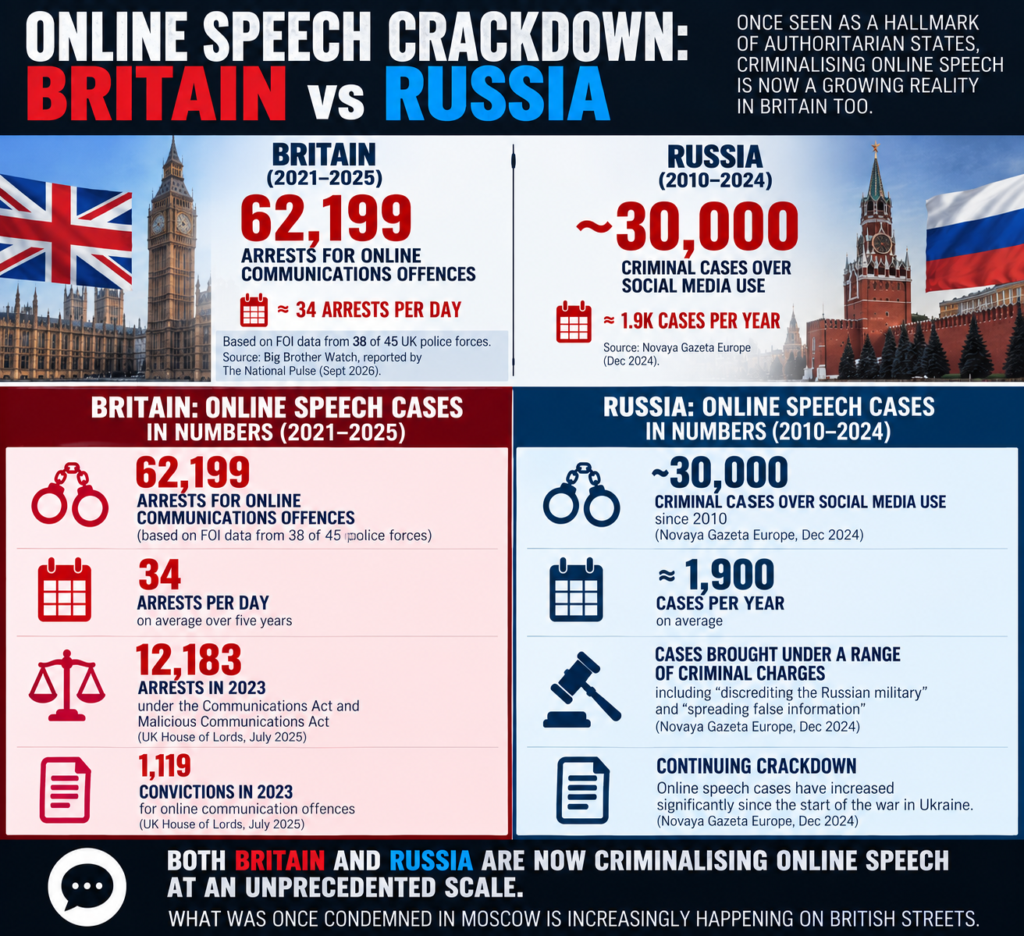
Britain is Arresting Thousands for Online Speech.
Arrests for online speech offenses in Britain are among the highest in the world, with a Big Brother Watch investigation published this year showing that between 2021 and 2025 alone, 62,199 people were arrested for “communications offenses.” The numbers would average 34 arrests per day, and because the information is only from 38 of 45 police forces, the actual number could be as high as 75,000 arrests.
Britain has a multitude of laws against criminal speech, including the Malicious Communications Act 1988, the Communications Act 2003, and the Online Safety Act 2023. The latter was passed in the name of protecting children online, but has been used repeatedly against right-wing activists and protestors. One passage even makes it illegal to publish “disinformation” online.
Contrast the numbers for Russia, an undeniably authoritarian country. A 2024 report suggests that Russia launched 30,000 cases over social media posts from 2010 to 2024, with just 1,200 considered criminal offenses. That means Russia had fewer than half of the overall cases over a period more than ten years longer than Britain.
Britain has also had police visit people’s homes over “non-crime hate incidents,” defined as speech that may have offended someone but was never considered an actual crime. In March of this year, the leftist Labour Party government scrapped the policing of non-crime hate incidents, calling them “petty squabbles” and acknowledging they were a waste of police time and resources.
Two-Tier Policing and Two-Tier Justice.
The term “two-tier policing” became popularised after the Southport mass stabbing in which Axel Rudakubana, the son of Rwandan asylum seekers, stabbed several young girls to death at a dance class, shocking the British nation. In response, many took to the streets not only to protest the incident itself but also to protest mass migration in general.
Some of the protests turned violent, but some of those prosecuted for disorder merely shouted at officers or were arrested for simply being present at protests. A total of 912 people, including children, were prosecuted in connection with the protests, with the government bringing an additional 500 prison places online just to accommodate them. One of those imprisoned, 61-year-old Pete Lynch, ended his own life after being sentenced for protesting in Rotherham, a notorious hotspot for Pakistani rape gang activity. He had been sentenced to two years and eight months.
Other protesters faced similar sentences, including a man who yelled “Who the f**k is Allah?” who was given a sentence of two years and six months. His crime involved no physical violence.
One of the most high-profile cases involved a woman who was not even physically at any protests. Lucy Connolly was prosecuted for a social media post in which she stated, “Mass deportation now, set fire to all the fucking hotels full of the bastards for all I care… if that makes me racist so be it.” After pleading guilty, she was sentenced to two years and seven months in prison.
The National Pulse strives to give you a broader view of the stories that matter. Please JOIN THE NATIONAL PULSE or MAKE A DONATION to support our work today.
Real Criminals Get Soft Sentences.
When dealing with serious crimes like sexual assault or other acts of violence, the British judicial system is notoriously lenient, especially if the perpetrator is a migrant or comes from a migrant background. In September of last year, Moffat Konofilia, 48, was given a mere 18-month community order and 60 hours of unpaid work for sexually assaulting a 17-year-old girl. Konofilia, an illegal immigrant, had been living on a barge among around 500 other asylum seekers.
In Epping, an Ethiopian illegal migrant claiming asylum named Hadush Kebatu was arrested for sexually abusing a schoolgirl and a woman. This led to protests outside the hotel that had housed him and other asylum seekers by locals and others, with some violence among the participants. Two of the protestors, Jonathan Glover and Charlie Land, were sentenced to 30 months and 32 months, respectively, in August 2026 for their roles in the disorder.
Kebatu, meanwhile, after being found guilty of two sexual assaults, one involving a 14-year-old, received just 12 months in prison. This means the migrant predator was given a sentence less than half of that imposed on the people who protested his crimes. Added to that, Ketabu was released early by mistake by incompetent officials, who had to launch a manhunt to find him again just a month after his initial imprisonment.
Henry Nowak: The Clearest Case of Two-Tier Policing.
White British teenager Henry Nowak was killed late last year while coming home from an evening with his friends at a local pub in Southampton. The 18-year-old was confronted by a Sikh named Vikrum Digwa, who stabbed Nowak repeatedly with a religious dagger he was allowed to openly carry despite British knife laws, due to exemptions for his faith.
Later released bodycam footage showed that police treated Nowak as the attacker after Digwa and his family lied to them, falsely claiming that Nowak was drunk and had racially abused them. Instead of examining Nowak, who pleaded for help and said he had been stabbed, one officer stated, “I don’t think you have mate,” and roughly handcuffed him, while he bled to death on the ground. The family had not only lied to the police, but Digwa’s mother had even hidden the knife used to kill Nowak before the police arrived.
The incident outraged the British public, who saw police arresting Nowak and letting him die because they believed Digwa’s accusation of racism unquestioningly, and treated Nowak saying he had been stabbed as less serious. Most argued that the reason for the unequal treatment was that Nowak was white. Accusations of two-tier policing for white Britons in the wake of the case were supported by Reform UK party leader Nigel Farage, who released a video addressing the case and calling for an end to two-tier policing.
WARNING: Incredibly distressing footage.
The bodycam footage has finally been released of Henry Nowak’s last moments.
He was the victim, but treated like a criminal.
“I can’t breathe” he says, over and over again.
Instead of helping him the police arrest him on false charges of racism.
Harrowing.
It’s hard to escape the conclusion he was treated differently because he was white.
While the British Parliament claims that two-tier policing does not exist, case after case from the Southport and Epping protests to Henry Nowak’s wrongful arrest as he was dying show that those who are white or regarded as right-wing by the authorities are the subject of aggressive police action and harsh prison sentences, while serious criminals are released early on the grounds that prisons are too crowded.
Join Pulse+ to comment below, and receive exclusive e-mail analyses.
show less
A 15-year-old boy was woken up in the morning hours two months ago by British police and placed under arrest. His crime was not plotting a terror attack, committing a violent or sexual crime. Instead, the Reform UK party activist and supporter of Nigel Farage was raided by police for an increasingly common reason for such raids: he had mocked an establishment politician on social media.
show more
By Popular Demand.
The National Pulse Now has an on-site comments section for members. Sign up today and be part of the conversation in our community of almost 15,000.
Share Story
FacebookTwitterWhatsappTruthTelegramGettrCopy Link
Real News Fan? Show It!
Many people are shocked to learn that because of active censorship, we currently have to spend more time making sure you can even see The National Pulse, than on producing the news itself. Which sucks. Because we do this for the truth, and for you.
But the regime doesn’t want you being informed. That’s why they want us to go away. And that will happen if more people don’t sign up to support our work. It’s basic supply and demand. So demand you get to read The National Pulse, unrestricted. Sign up, today.
We don’t sell ads, and refuse corporate or political cash. It all comes down to you, the reader. I hope you can help.