



Tuesday, April 7, 2026

WE ARE 100% INDEPENDENT AND READER-FUNDED. FOR A GUARANTEED AD-FREE EXPERIENCE AND TO SUPPORT REAL NEWS, PLEASE SIGN UP HERE, TODAY.

Russia, China Block UN Authorization of Military Force to Open Strait of Hormuz.

PULSE POINTS

WHAT HAPPENED: A United Nations (UN) Security Council resolution on opening the Strait of Hormuz failed after Russia and China vetoed it.

👤WHO WAS INVOLVED: Bahrain, Gulf Cooperation Council (GCC) nations, Russia, China, and the United States.

📍WHEN & WHERE: Tuesday, at the United Nations Security Council.

💬KEY QUOTE: “The Security Council must take measures to ensure the protection of waterways, and we demand that the Security Council issue a resolution securing freedom of navigation in the Strait of Hormuz.” – Jasem Mohamed Al-Budaiwi, Secretary General of the Gulf Cooperation Council (GCC)

🎯IMPACT: The veto by Russia and China blocks international military action to secure the Strait of Hormuz.

IN FULL

A United Nations (UN) Security Council resolution brought by Bahrain calling for the reopening of the Strait of Hormuz to ensure the free flow of shipping and energy commerce through the critical waterway was blocked by Russia and China on Tuesday. The resolution would have authorized the use of military force under an international coalition to reopen the strait, which has been effectively closed due to skyrocketing shipping insurance rates after the Islamic Republic of Iran began targeting vessels attempting to traverse the waterway.

Notably, the resolution saw significant support from Security Council members, receiving 11 votes in favor. However, two of the five permanent members of the Security Council, Russia and China, exercised their veto power, blocking the resolution’s adoption. Several Gulf nations have, for weeks, been pushing for UN action, citing the repeated Iranian attacks on oil tankers and cargo ships in the Strait of Hormuz and across the broader Persian Gulf.

Jasem Mohamed Al-Budaiwi, Secretary General of the Gulf Cooperation Council (GCC), stated earlier in the week, “Our countries are subjected to a sinful Iranian aggression, and GCC countries have a legitimate right to self-defense. The Security Council must take measures to ensure the protection of waterways, and we demand that the Security Council issue a resolution securing freedom of navigation in the Strait of Hormuz.”

Russia and China, however, expressed concerns that the resolution invoked Chapter VII of the UN Charter, which could be interpreted as legitimizing the use of force without clear limits. Russian Foreign Minister Sergei Lavrov argued that the measure would disrupt “very fragile chances for negotiations” and escalate tensions in the region. In March, Iranian officials claimed that both Russia and China were providing military “cooperation” to the Islamic Republic in response to U.S. and Israeli strikes.

The National Pulse reported earlier on Tuesday that U.S. President Donald J. Trump issued a stern warning to Iran, stating that its “whole civilization will die tonight” if it fails to accept a ceasefire deal.

Join Pulse+ to comment below, and receive exclusive e-mail analyses.

By Popular Demand.
The National Pulse Now has an on-site comments section for members. Sign up today and be part of the conversation in our community of almost 15,000.
More From The Pulse

WE ARE 100% INDEPENDENT AND READER-FUNDED. FOR A GUARANTEED AD-FREE EXPERIENCE AND TO SUPPORT REAL NEWS, PLEASE SIGN UP HERE, TODAY.

Florida Weighs Ban on ‘Stealth Jihad’ Cousin Marriages.

PULSE POINTS

WHAT HAPPENED: Florida Governor Ron DeSantis proposed banning first-cousin marriages in the state, a practice currently legal but prohibited in most states.

👤WHO WAS INVOLVED: Governor Ron DeSantis (R-FL), Florida lawmakers, and supporters of HB 733.

📍WHEN & WHERE: Announcement made during a Tampa signing ceremony on Monday.

💬KEY QUOTE: “Florida doesn’t ban cousin marriage: That’s a hanging curveball for us to do; we need to do that.” – Ron DeSantis

🎯IMPACT: The proposal could reignite debate on cultural values, public health concerns, and immigration policies in Florida.

IN FULL

Florida is considering a potential ban on marriage between first cousins. “Florida doesn’t ban cousin marriage: That’s a hanging curveball for us to do; we need to do that,” said Governor Ron DeSantis (R-FL) in Tampa on Monday.

He added, “Other states have done it. I don’t know why we wouldn’t, but obviously that feeds into some of the stealth jihad that we see, when you’re allowing things like that. It’s things that are coming in from other cultures that are not consistent with the United States culture, and certainly our culture here in Florida.”

The Sunshine State already bans marriages between many close relatives, such as siblings, parents, grandparents, nieces, and nephews, but has yet to ban marriage between first cousins, though it is already prohibited in most U.S. states.

In 2025, a proposal (HB 733) to ban marriage between first cousins was dropped by the state’s legislature. If passed, the proposal would have gone into effect on July 1 this year. Supporters of a ban on marriage between first cousins cite genetic disorders and muddled, potentially abusive, family dynamics.

President Donald J. Trump’s administration has already taken a hard line against cousin marriage. Earlier this year, the White House criticized the government of the United Kingdom for evading demands to ban cousin marriage, reflecting the administration’s “civilizational concerns” about the country, as outlined in its National Security Strategy late last year.

Image by F McGady.

Join Pulse+ to comment below, and receive exclusive e-mail analyses.

show less
show more
By Popular Demand.
The National Pulse Now has an on-site comments section for members. Sign up today and be part of the conversation in our community of almost 15,000.

WE ARE 100% INDEPENDENT AND READER-FUNDED. FOR A GUARANTEED AD-FREE EXPERIENCE AND TO SUPPORT REAL NEWS, PLEASE SIGN UP HERE, TODAY.

Teen Boy Pleads ‘I Just Don’t Wanna Die’ Before Being Murdered by Illegal Immigrant.

PULSE POINTS

WHAT HAPPENED: A Missouri teen, Miles Young, was lured into a deadly ambush and fatally shot after being deceived by suspects, including an illegal immigrant, prosecutors say.

👤WHO WAS INVOLVED: Victim Miles Young, 15; suspects Yefry Archaga, 18, and Praize King, 18; and an unidentified juvenile.

📍WHEN & WHERE: The murder occurred on March 12, 2026, in Greene County, Missouri.

💬KEY QUOTE: “I just don’t wanna die.” – Miles Young, according to witnesses.

🎯IMPACT: Prosecutors have suggested that the attack may have been motivated by a previous homicide case in which Young was a witness set to testify.

IN FULL

Prosecutors have revealed that 15-year-old Miles Young pleaded for his life with illegal immigrant Yefry Archaga, 18, and his two accomplices before being fatally shot on March 12, 2026, in Greene County, Missouri. Young was lured into an ambush by the three suspects, who had convinced their victim that he was meeting up with a girl. According to witnesses, Young attempted to flee from his attackers but was chased down. He shouted, “I just don’t wanna die,” before being murdered.

Archaga and a second suspect, Praize King, 18, have both been charged with first-degree murder. Authorities believe another suspect, possibly a juvenile, remains unidentified.

According to court documents, Archaga orchestrated the ambush, making Young believe he was meeting a girl while tracking his location with others. The group reportedly used multiple vehicles to corner Young, who fled on foot before being chased and shot by Archaga.

On March 31, Archaga was arrested after a two-week manhunt and is currently being held on a U.S. Immigration and Customs Enforcement (ICE) detainer. Prosecutors have suggested that the attack may have been motivated by a previous homicide case in which Young was a witness set to testify. Archaga is scheduled to appear in court on April 13, and the investigation remains ongoing.

Join Pulse+ to comment below, and receive exclusive e-mail analyses.

show less
show more
By Popular Demand.
The National Pulse Now has an on-site comments section for members. Sign up today and be part of the conversation in our community of almost 15,000.

WE ARE 100% INDEPENDENT AND READER-FUNDED. FOR A GUARANTEED AD-FREE EXPERIENCE AND TO SUPPORT REAL NEWS, PLEASE SIGN UP HERE, TODAY.

DATA: Iran War Costs $500 Million Daily.

PULSE POINTS

WHAT HAPPENED: The cost of U.S. military operations in Iran under President Donald J. Trump’s Operation Epic Fury has reached up to $31 billion over five weeks, according to research by the American Enterprise Institute (AEI).

👤WHO WAS INVOLVED: President Trump, the Pentagon, the American Enterprise Institute, and the Center for Strategic and International Studies (CSIS).

📍WHEN & WHERE: The operation has been ongoing since February 28, with significant costs incurred due to Iranian retaliatory strikes against Iran, Iraq, Kuwait, Saudi Arabia, Jordan, and Qatar.

💬KEY QUOTE: “Damaged equipment can sometimes be repaired in days, while some destroyed systems will take years to replace on a one-to-one basis,” said Elaine McCusker, a senior fellow at the American Enterprise Institute.

🎯IMPACT: The operation has strained U.S. military resources, damaged key assets, and raised concerns about broader strategic vulnerabilities.

IN FULL

The ongoing war with the Islamic Republic of Iran—dubbed by the Trump administration as Operation Epic Fury—has cost the United States between $22.3 billion and $31 billion in just five weeks of action, according to research from the American Enterprise Institute (AEI). Launched by President Donald J. Trump on February 28, the military operation has incurred significant expenses for damaged and destroyed military equipment, as well as personnel losses, after retaliatory missile strikes on U.S. military bases and assets across the Middle East.

AEI estimates that replacing equipment damaged in Iranian retaliatory strikes has cost between $2.1 billion and $3.6 billion. “Damaged equipment can sometimes be repaired in days, while some destroyed systems will take years to replace on a one-to-one basis,” noted Elaine McCusker, a senior fellow at AEI.

Key U.S. military assets damaged or destroyed include a Boeing E-3 Sentry airborne warning system, multiple radar systems in Qatar and Jordan, and naval base facilities in Bahrain. Additionally, the USS Gerald R. Ford aircraft carrier experienced several issues with its waste facilities and will need repairs following its extended tour of duty in both the Caribbean and the eastern Mediterranean.

Additional analysis by the Center for Strategic and International Studies (CSIS) estimates the war‘s daily cost at approximately $500 million, with $1.4 billion in losses recorded during the first six days of fighting alone. CISIS emphasized the urgency of replacing compromised radar systems, which are critical for detecting missile threats.

The operation has also seen the loss of several high-value assets, including more than a dozen MQ-9 Reaper drones, multiple F-15E fighter jets, and a KC-135 tanker. In addition to the financial toll, 13 U.S. soldiers have lost their lives, with 373 others injured.

Image by Hossein Zohrevand/Tasnim News Agency.

Join Pulse+ to comment below, and receive exclusive e-mail analyses.

show less
show more
By Popular Demand.
The National Pulse Now has an on-site comments section for members. Sign up today and be part of the conversation in our community of almost 15,000.

WE ARE 100% INDEPENDENT AND READER-FUNDED. FOR A GUARANTEED AD-FREE EXPERIENCE AND TO SUPPORT REAL NEWS, PLEASE SIGN UP HERE, TODAY.

Price of Oil Hits All-Time High as Trump’s Iran War Deadline Nears.

PULSE POINTS

WHAT HAPPENED: Dated Brent crude—a short-term price benchmark for North Sea crude oil—hit an all-time high of $144.42, just hours before a ceasefire deadline with the Islamic Republic of Iran set by U.S. President Donald J. Trump is due to expire.

👤WHO WAS INVOLVED: President Donald J. Trump, oil traders, the Islamic Republic of Iran, European and Asian refiners, and the U.S. military.

📍WHEN & WHERE: Tuesday, April 7, 2026.

💬KEY QUOTE: “When there is a real, physical shortage, people ‌are not ⁠thinking about July delivery—June loading and hence June futures prices—but oil now.” – Oil trader Adi Imsirovic

🎯IMPACT: The price spike, nearing $150 per barrel, suggests the global energy crisis sparked by the Iran war has worsened, with European and ‌Asian refiners now paying well above the value of oil futures.

IN FULL

Dated Brent crude—a short-term price benchmark for North Sea crude oil—hit an all-time high of $144.42, just hours before a ceasefire deadline with the Islamic Republic of Iran set by U.S. President Donald J. Trump is due to expire. The price spike, nearing $150 per barrel, suggests the global energy crisis sparked by the Iran war has worsened, with European and ‌Asian refiners now paying well above the value of oil futures.

Notably, the war has resulted in the loss of an estimated two ​million barrels per day—roughly 12 percent of the global oil supply—due to the effective closure of the Strait of Hormuz after Iran began targeting vessels attempting to traverse the critical waterway. According to oil trader Adi Imsirovic, the primary cause of the oil price spike is “panic.” Regarding the sudden jump in short-term prices, Imsirovic explains, “When there is a real, physical shortage, people ‌are not ⁠thinking about July delivery—June loading and hence June futures prices—but oil now.”

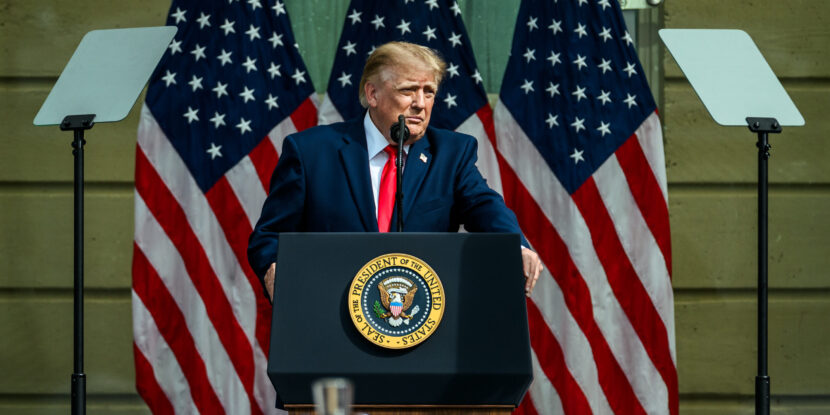
The surge in oil demand comes on the heels of President Trump’s early Tuesday warning that “A whole civilization will die tonight, never to be brought back again.” Importantly, Trump’s statement alludes to looming military strikes against Iran’s power plants, desalination facilities, and other critical infrastructure if the Islamic Republic doesn’t agree to a ceasefire plan before 8:00 PM EST.

The National Pulse reported earlier on Tuesday that the U.S. military struck around 50 military targets on Iran’s Kharg Island, a critical oil export hub for the Islamist regime located in the northern Persian Gulf. While the strikes avoided hitting oil infrastructure, President Trump has warned in the past that he may order the entire island to be destroyed.

Join Pulse+ to comment below, and receive exclusive e-mail analyses.
show less
show more
By Popular Demand.
The National Pulse Now has an on-site comments section for members. Sign up today and be part of the conversation in our community of almost 15,000.

WE ARE 100% INDEPENDENT AND READER-FUNDED. FOR A GUARANTEED AD-FREE EXPERIENCE AND TO SUPPORT REAL NEWS, PLEASE SIGN UP HERE, TODAY.

REPORT: Israel’s Original Iran Plan Blasted as ‘Farcical’ by CIA, ‘Bullshit’ by Rubio.

PULSE POINTS

WHAT HAPPENED: U.S. officials assessed Israeli Prime Minister Benjamin Netanyahu’s proposals regarding Iran, deeming parts of them unrealistic, according to exclusive new reporting from the co-authors of the forthcoming book Regime Change: Inside the Imperial Presidency of Donald Trump.

👤WHO WAS INVOLVED: President Donald J. Trump, Israeli Prime Minister Netanyahu, U.S. intelligence officials, Secretary of State Marco Rubio, and General Dan Caine.

📍WHEN & WHERE: February 12, Situation Room meeting with American officials.

💬KEY QUOTE: “Sir, this is, in my experience, standard operating procedure for the Israelis. They oversell, and their plans are not always well-developed.” – General Caine

🎯IMPACT: The assessment influenced President Trump’s consideration of military action against Iran.

IN FULL

During a high-stakes meeting in the Situation Room, U.S. officials evaluated Israeli Prime Minister Benjamin Netanyahu’s proposals regarding Iran. These proposals included decapitation of the Iranian leadership, crippling Iran’s power projection capabilities, instigating a popular uprising, and full scale regime change.

The U.S. intelligence community found the first two objectives achievable but deemed the latter two, including a Kurdish ground invasion, unrealistic. CIA Director described the regime change scenarios as “farcical,” and Senator Rubio bluntly called them “bullshit.”

The news comes from an exclusive report by The New York Times‘s Maggie Haberman and Jonathan Swan. On March 16, Haberman and Swan were spotted in the West Wing, with President Donald J. Trump reportedly answering their questions in the Oval Office for an hour. The pair are believed to have been working on the book for almost two years, conducting nearly 1000 interviews along the way. Haberman’s previous attempt at a Trump book fell extremely flat.

General Dan Caine, a top military adviser to President Trump, reportedly noted that Israeli plans often lacked development and required U.S. support. He cautioned against the unpredictability of conflict outcomes and the difficulty of achieving regime change.

President Trump was interested in the first two objectives but recognized that regime change would be “their problem,” indicating it would not influence his decision on military action against Iran.

General Caine also highlighted the challenges of a major campaign against Iran, including depleted U.S. weapon stockpiles and securing the Strait of Hormuz. Despite these concerns, President Trump believed a war would be swift, influenced by the limited reaction to previous U.S. actions. The full Times piece can be read here.

Join Pulse+ to comment below, and receive exclusive e-mail analyses.

show less
show more
By Popular Demand.
The National Pulse Now has an on-site comments section for members. Sign up today and be part of the conversation in our community of almost 15,000.

WE ARE 100% INDEPENDENT AND READER-FUNDED. FOR A GUARANTEED AD-FREE EXPERIENCE AND TO SUPPORT REAL NEWS, PLEASE SIGN UP HERE, TODAY.

Trump Admin Threatens to Shut Down International Airports in Sanctuary Cities.

PULSE POINTS

WHAT HAPPENED: The Department of Homeland Security (DHS) has threatened a shutdown of international flights in cities that shield illegal immigrants under sanctuary policies.

👤WHO WAS INVOLVED: DHS Secretary Markwayne Mullin, U.S. Customs officers, and leadership in cities such as Los Angeles, Chicago, and New York.

📍WHEN & WHERE: Mullin revealed the proposal late Monday, April 6, 2026.

💬KEY QUOTE: “So, we’re going to take a hard look at this. One area we may take a hard look at is some of these cities that have international airports. If they’re a sanctuary city, should they really be processing customs into their city?” – Markwayne Mullin

🎯IMPACT: If enacted, the plan could force cities to choose between retaining international flights or maintaining their sanctuary policies.

IN FULL

The Trump administration is considering shutting down international flights in cities where local Democrats shield illegal immigrants from federal immigration enforcement actions through open-border sanctuary policies. Newly confirmed Department of Homeland Security (DHS) Secretary Markwayne Mullin revealed late Monday that the administration is considering the move in response to the ongoing partial government shutdown of DHS, which is impacting funding for the Transportation Security Administration (TSA) and customs agents, among other agencies.

“I believe sanctuary cities are not lawful,” Mullin said during a television interview. “So, we’re going to take a hard look at this. One area we may take a hard look at is some of these cities that have international airports. If they’re a sanctuary city, should they really be processing customs into their city?”

Mullin continued, “If they’re a ‘sanctuary city’ and they’re receiving international flights—and we’re asking them to partner with us at the airport, but once they walk out of the airport, they’re not going to enforce immigration policy—maybe we need to have a really hard look at that.”

The new Homeland Security Secretary stressed that his department needs to prioritize jurisdictions willing to work with federal immigration enforcement officials. “I’m not going outside the policies that Congress passed for me, but we’re saying that you’ve got to partner with us,” Mullin said.

Withholding customs officers from Democrat-controlled sanctuary cities with international airports could pose a serious economic threat to those jurisdictions—especially those heavily reliant on tourism to sustain local businesses. Among the major cities that could be impacted are Los Angeles, Minneapolis, San Francisco, Boston, Chicago, and New York.

Join Pulse+ to comment below, and receive exclusive e-mail analyses.

show less
show more
By Popular Demand.
The National Pulse Now has an on-site comments section for members. Sign up today and be part of the conversation in our community of almost 15,000.

WE ARE 100% INDEPENDENT AND READER-FUNDED. FOR A GUARANTEED AD-FREE EXPERIENCE AND TO SUPPORT REAL NEWS, PLEASE SIGN UP HERE, TODAY.

ICE Captures Illegal Immigrant Accused of Kidnapping Child from Laundromat.

PULSE POINTS

WHAT HAPPENED: The Department of Homeland Security (DHS) rearrested an illegal immigrant accused of kidnapping a four-year-old girl from a Long Island laundromat after a local judge released him back into the community.

👤WHO WAS INVOLVED: Carlos Corte-Corte, a 38-year-old illegal immigrant from Ecuador; U.S. Immigration and Customs Enforcement (ICE); Suffolk County Police; Suffolk County District Judge James F. Leonick; and Suffolk County District Attorney Ray Tierney.

📍WHEN & WHERE: The kidnapping occurred on March 28 at the Laundry Kingdom in Patchogue, Long Island. Corte-Corte was rearrested by ICE on March 31.

💬KEY QUOTE: “Sanctuary politicians must stop putting politics above public safety. This type of insanity leads to more crimes and more innocent victims.” – Acting DHS Assistant Secretary Lauren Bis

🎯IMPACT: The incident highlights the consequences of sanctuary policies as well as the challenges of enforcing immigration laws against repeat offenders.

IN FULL

Carlos Corte-Corte, an illegal immigrant from Ecuador, was rearrested by U.S. Immigration and Customs Enforcement (ICE) agents on March 31 after being released from jail by a local judge despite facing serious criminal charges. The Ecuadoran national had been charged on March 28 with second-degree kidnapping and endangering the welfare of a child after luring a four-year-old girl from a laundromat in Patchogue, Long Island, to a nearby park where she was found by police.

Despite the charges, Suffolk County District Judge James F. Leonick released Corte-Corte on supervised release without bond. Notably, the Department of Homeland Security (DHS) revealed that Corte-Corte had entered the U.S. illegally on at least three occasions in 2020 and had been removed three times, only to return for a fourth time.

Acting DHS Assistant Secretary Lauren Bis criticized the decision to release Corte-Corte, stating, “Sanctuary politicians must stop putting politics above public safety. This type of insanity leads to more crimes and more innocent victims.” She added that thanks to ICE law enforcement, Corte-Corte is now off the streets.

Suffolk County District Attorney Ray Tierney expressed disagreement with the judge’s decision to release the alleged kidnapper. “I think if you look at the facts of the case, clearly they’re concerning,” Tierney said.

Join Pulse+ to comment below, and receive exclusive e-mail analyses.

show less
show more
By Popular Demand.
The National Pulse Now has an on-site comments section for members. Sign up today and be part of the conversation in our community of almost 15,000.

WE ARE 100% INDEPENDENT AND READER-FUNDED. FOR A GUARANTEED AD-FREE EXPERIENCE AND TO SUPPORT REAL NEWS, PLEASE SIGN UP HERE, TODAY.

Police Kill Three Gunmen Outside Israeli Consulate.

PULSE POINTS

WHAT HAPPENED: Police killed three gunmen during a firefight outside the Israeli consulate in Istanbul, Turkey, which left two security officers severely wounded.

👤WHO WAS INVOLVED: Turkish police, three gunmen, and two security officers were involved, with the Israeli foreign ministry monitoring the situation.

📍WHEN & WHERE: The incident occurred on Tuesday morning outside the Israeli consulate in Istanbul’s Besiktas District.

💬KEY QUOTE: Turkey’s interior minister stated that one suspect had “ties to an organization that exploits religion.”

🎯IMPACT: The attack comes amid the ongoing U.S.-Israeli war with Iran, which has seen several retaliatory terrorist attacks primarily against Jewish targets primarily in Europe and the United States.

IN FULL

Three gunmen engaged in a firefight with Turkish police and security officers outside the Israeli consulate in Istanbul early Tuesday, with all three attackers being killed in the exchange. Two security officers were wounded as well. The attack occurred in the Besiktas District of Istanbul, where the consulate has been closed for at least two years and was reportedly unstaffed at the time.

Footage shared online shows a police officer drawing his weapon and taking cover as gunfire erupted. One individual was seen covered in blood during the chaotic scene.


Following the attack, the Turkish interior ministry revealed that the attackers had been identified and at least one had “ties to an organization that exploits religion.” Meanwhile, the Israeli foreign ministry confirmed it is examining reports of the incident and that the consulate was not staffed.

The attack comes amid the ongoing Iran war, which has seen the United States and Israel conduct extensive military strikes against the Islamist regime since late February. Since the start of the conflict, there have been several attacks against Jewish targets by Islamist terrorists in retaliation for the military strikes against the Iranian regime.

Join Pulse+ to comment below, and receive exclusive e-mail analyses.

show less
show more
By Popular Demand.
The National Pulse Now has an on-site comments section for members. Sign up today and be part of the conversation in our community of almost 15,000.

WE ARE 100% INDEPENDENT AND READER-FUNDED. FOR A GUARANTEED AD-FREE EXPERIENCE AND TO SUPPORT REAL NEWS, PLEASE SIGN UP HERE, TODAY.

Runoff to Fill Marjorie Taylor Greene’s House Seat is Underway.

PULSE POINTS

WHAT HAPPENED: Voters in northwest Georgia’s 14th Congressional District will decide a special runoff election to replace Marjorie Taylor Greene, who resigned from Congress.

👤WHO WAS INVOLVED: Democrat Shawn Harris, a retired Army brigadier general, and Republican Clay Fuller, a district attorney with President Donald J. Trump’s endorsement.

📍WHEN & WHERE: The special runoff election is taking place on Tuesday in Georgia’s 14th Congressional District.

🎯IMPACT: The outcome will affect the closely divided U.S. House, where Republicans hold a slim majority.

IN FULL

Voters in Georgia‘s 14th Congressional District will head to the polls today to decide the winner of a special runoff election, following a March 10 contest in which none of the 17 candidates captured a majority of the ballots cast. Tuesday’s runoff election features Republican candidate Clay Fuller—a district attorney backed by President Donald J. Trump—squaring off against Democrat candidate Shawn Harris, a retired U.S. Army brigadier general. In the March race, Harris finished in first place with 37 percent of the vote, while Fuller came in second with nearly 35 percent.

The winner of Tuesday’s election will serve out the remaining few months of former Representative Marjorie Taylor Greene‘s term, who resigned from Congress this past January. Both Harris and Fuller are also seeking their respective party’s nomination in the May 19 primary to run for the seat in November’s congressional midterm election.

Georgia’s 14th Congressional District is considered a safe Republican seat, with a partisan rating of R+19—meaning GOP candidates typically win by nearly 20 points in most elections. President Trump captured 68 percent of the district’s vote in the 2024 presidential election. Still, a surprise upset could cause significant problems for House Republicans, who narrowly hold the lower chamber with a 217-214 majority.

Harris has raised significantly more funds than Fuller, with $6.4 million compared to Fuller’s $1.3 million. However, Trump’s endorsement is expected to bolster Fuller’s campaign, given the President’s strong support in the district. Turnout in special elections and runoffs is typically low, which could play a crucial role in determining the final outcome.

Image by Gage Skidmore.

Join Pulse+ to comment below, and receive exclusive e-mail analyses.
show less
show more
By Popular Demand.
The National Pulse Now has an on-site comments section for members. Sign up today and be part of the conversation in our community of almost 15,000.

WE ARE 100% INDEPENDENT AND READER-FUNDED. FOR A GUARANTEED AD-FREE EXPERIENCE AND TO SUPPORT REAL NEWS, PLEASE SIGN UP HERE, TODAY.

U.S. Hits Dozens of Targets on Iran’s Kharg Island.

PULSE POINTS

WHAT HAPPENED: The U.S. military on Tuesday struck around 50 military targets on the Islamic Republic of Iran’s Kharg Island, a critical oil export hub for the Islamist regime located in the northern Persian Gulf.

👤WHO WAS INVOLVED: The U.S. military, President Donald J. Trump, Vice President J.D. Vance, and the Islamic Republic of Iran.

📍WHEN & WHERE: The strikes targeted military sites on Kharg Island on Tuesday, April 7, 2026.

💬KEY QUOTE: “My understanding, having talked to Pete [Hegseth] and General [Dan] Caine about this, is that we were going to strike some military targets on Kharg Island. I believe we have done so.” — Vice President Vance

🎯IMPACT: The strikes, which avoided hitting oil facilities on the island, came just hours before an 8:00 PM deadline set by President Trump for the Iranian regime to reopen the Strait of Hormuz or face a devastating bombing campaign against its energy and transportation infrastructure.

IN FULL

The U.S. military on Tuesday struck around 50 military targets on the Islamic Republic of Iran’s Kharg Island, a critical oil export hub for the Islamist regime located in the northern Persian Gulf. Notably, the strikes, which avoided hitting oil facilities on the island, came just hours before an 8:00 PM deadline set by President Donald J. Trump for the Iranian regime to reopen the Strait of Hormuz or face a devastating bombing campaign against its energy and transportation infrastructure.

“My understanding, having talked to Pete [Hegseth] and General [Dan] Caine about this, is that we were going to strike some military targets on Kharg Island,” Vice President J.D. Vance said during a press conference in Budapest, Hungary, on Tuesday, confirming the strikes. He continued, “I believe we have done so. The President’s deadline has been followed by us and everybody else, and he said very clearly, we’re not going to strike energy and infrastructure targets until the Iranians either make a proposal that we can get behind or don’t make a proposal. He’s given them until Tuesday at eight o’clock, so I don’t think the news on Kharg Island represents a change in strategy.”

President Trump has repeatedly floated the possibility of either seizing control of Kharg Island and its oil storage and export facilities or destroying its energy infrastructure entirely. Early on in the conflict with Iran, a handful of military sites on the island were targeted, though those strikes appeared to be limited in scope.

The National Pulse reported earlier Tuesday morning that President Trump had warned the Iranian regime’s political and military leaders that if they do not agree to a deal on reopening the critical Strait of Hormuz shipping lanes, “A whole civilization will die tonight, never to be brought back again.”  He speculated on the possibility of a “revolutionarily wonderful” outcome through what he called “Complete and Total Regime Change,” suggesting that new leadership in Iran could lead to positive developments.

Image by Tasnim News Agency.

Join Pulse+ to comment below, and receive exclusive e-mail analyses.

show less
show more
By Popular Demand.
The National Pulse Now has an on-site comments section for members. Sign up today and be part of the conversation in our community of almost 15,000.