




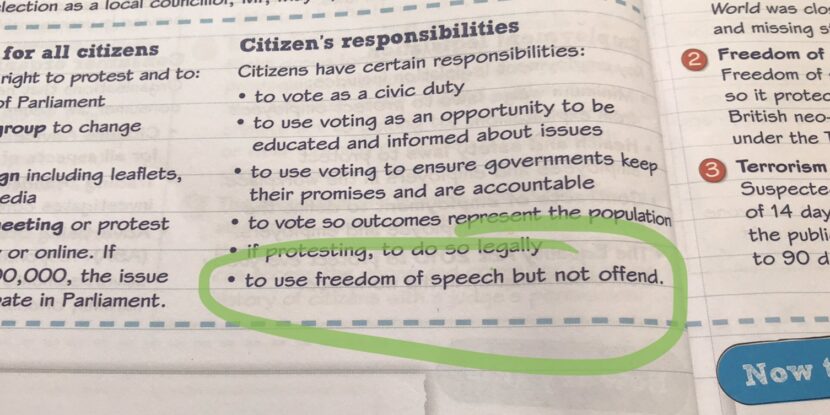
British students are being taught they have an obligation to “use freedom of speech but not offend” in their high school textbooks.
| PULSE POINTS |
❓ WHAT HAPPENED: A British General Certificate of Secondary Education (GCSE) Citizenship Studies revision book published by Pearson has been criticized for instructing students to “use freedom of speech but not offend,” sparking concerns over its implications for free speech. The phrasing, found under a section on “Citizen’s responsibilities,” was flagged by trade unionist Paul Embery while helping his child with exam preparation. 📺 DETAIL: Embery described the content as “quite chilling” and “incredibly authoritarian,” arguing that it misrepresents the principle of free speech by conditioning it on not offending anyone. He warned that such teachings could lead children to self-censor, even in critical situations, and could potentially encourage the “heckler’s veto,” in which dissenting voices are silenced by those claiming offense. The case is just another showing the deterioration of free speech in Britain, where people have been routinely harassed by police or even arrested for online social media posts. 💬 KEY QUOTE: “That particular bullet point hit me—it was quite chilling, actually. Essentially, you are entitled to use freedom of speech, so long as it doesn’t upset anyone. I find this incredibly authoritarian—students should not be taught that.” – Paul Embery 🎯 IMPACT: Critics argue that teaching students to prioritize avoiding offense over exercising free speech could erode the foundational principles of open dialogue and democracy. The controversy shows that Britain’s institutions are opposed to true free speech and only support speech that falls within the narrow limits of what does not cause offense. |
Helping no.2 child with GCSE ‘Citizenship’ revision. Get a load of this. pic.twitter.com/ykH4JZdi8X
— Paul Embery (@PaulEmbery) May 4, 2026
Join Pulse+ to comment below, and receive exclusive e-mail analyses.













.jpg)


