




President Trump has never been subtle about power. He’s seen its abuses weaponized against the American people and himself. He knows who pays the price when it’s left unchecked. When it comes to Big Tech, Big Media, and the increasingly incestuous relationship between Silicon Valley ideology and corporate monopolies, Trump has been consistent: concentrated power is dangerous to free markets, free speech, and ultimately to the American people.
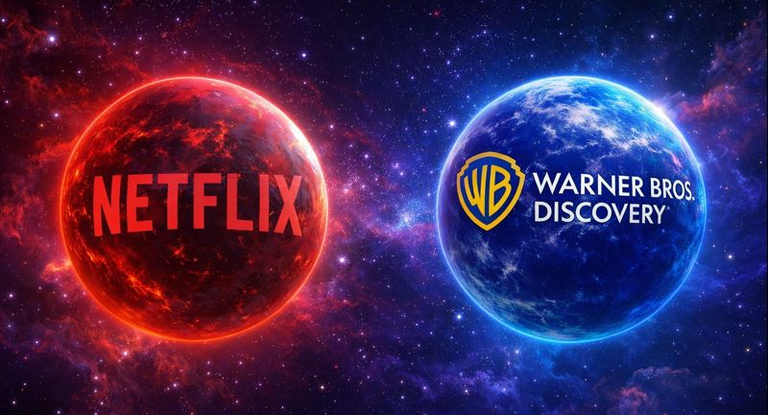
That’s why the proposed merger between Netflix and WBD deserves outright opposition. The Associated Press quoted President Trump last month saying this proposed merger “could be a problem” because of size and market share. And he’s right. It’s a big problem.
Now it’s time for his administration to extinguish this merger like it’s Kristi Noem’s dog. This deal isn’t about efficiency. It isn’t about innovation. It isn’t even about competition. It’s about control—over content, over distribution, over culture, and over what Americans are allowed to see, hear, and believe.
This isn’t a merger to foster competition. The objective is outright control. Netflix already dominates streaming content. WBD already dominates content with a massive library and content creation ability at scale. Put them together and you don’t get “synergies.” You get a vertically integrated behemoth that controls what gets made, what gets promoted, what loads fastest on your screen, and what quietly disappears.
This is classic monopoly behavior dressed up in a hoodie and a DEI PowerPoint. A combined Netflix–WBD would have unprecedented leverage over:
- Content creation (what stories get funded);
- Content distribution (what loads, buffers, or gets buried);
- Advertising markets (who pays and who gets frozen out);
- Independent creators and studios (submit or die);
- Consumers (fewer choices, higher prices, more ideological filtering).
Antitrust law was written for exactly this kind of moment. Not to protect corporations from competition—but to protect competition from corporations. As law professor John Yun has noted, “a combined Netflix and HBO Max would represent approximately 35% of all streaming hours, which would make it the largest single player in the market and, crucially, place it above the [antitrust] threshold.”
Trump has said repeatedly that when a handful of companies control speech platforms, the result is censorship by proxy. He was right when he said it about social media. He’s right now.
Netflix has not been subtle about its ideological project. It has become a case study in how cultural lecturing replaces storytelling, how identity quotas replace merit, and how dissenting viewpoints are quietly excluded from the room.
The company didn’t just “go woke.” It made wokeism part of its corporate operating system—content mandates, internal speech codes, activist HR regimes, and an executive culture that treats half the country as a moral defect.
Now imagine that worldview fused with WBD’s mechanized content creation power.
That’s not just a media company. That’s an ideological toll booth on American culture.
You don’t like the message? Too bad—it’s what loads fastest.
You don’t like the programming? It’s what gets promoted.
This isn’t theory. This is how power behaves when it stops being challenged.
Fortunately, the Trump-Vance Administration has reinvigorated antitrust enforcement.
One of the biggest lies in Washington is that antitrust enforcement is a “progressive” idea. It’s not. It’s an American idea. Teddy Roosevelt understood it. Ronald Reagan used it when necessary. President Trump is reviving it with clarity and purpose.
Trump’s position has always been simple: markets work best when they are competitive, not captured. Consumers win when companies fear losing them. Speech survives when no single gatekeeper can silence it.
This is why Trump opposed media consolidation when it threatened viewpoint diversity. This is why he warned about tech platforms acting as unaccountable arbiters of truth. And this is why a Netflix–WBD merger crosses a line. I’m glad President Trump has such an excellent team in place to stop it.
At the Federal Communications Commission, Chairman Brendan Carr has been reliably pushing back against ideological capture. He took an active role in pushing back against DEI policies in Big Media. Now, he’s in a key position to administer maximum scrutiny to the Netflix/Comcast DEI extravaganza.
Chairman Carr understands that communications policy is not abstract. It shapes who gets heard. He has been unafraid to call out corporate double standards, to question sweetheart deals, and to resist the idea that size plus “good intentions” equals public benefit.
A Netflix–WBD merger would test the FCC’s spine. Carr has shown he has one. The FCC has authority over licenses, spectrum, and transactions that affect the public interest. “Public interest” does not mean what makes executives happy in Aspen. It means competition, access, and viewpoint diversity for ordinary Americans.
If there was ever a deal that fails that test, this is it.
At the Department of Justice, Gail Slater leads the Antitrust Division. She is a hero within the monopoly-busting movement. She represents a return to something Washington forgot existed: antitrust enforcement that actually serves consumers rather than donors.
Her work has emphasized real-world effects—prices, choice, innovation—not academic theories that conveniently excuse consolidation as long as consultants can model a short-term efficiency.
A Netflix–Comcast merger would crush independent streaming competitors, marginalize smaller studios, and tilt the advertising and broadband markets even further toward incumbents. DOJ’s Antitrust Division exists to stop that before it happens, not to clean up afterward. Blocking this deal wouldn’t be radical. It would be textbook.
The merger’s defenders will say this is just about TV shows and movies. That argument belongs in 1998.
Streaming platforms now shape political narratives, cultural norms, historical memory, and social legitimacy. They decide which stories are “problematic,” which voices are “harmful,” and which viewpoints are allowed to exist without a warning label.
When control over that ecosystem consolidates, pluralism dies quietly.
Trump has always understood that culture matters. He’s never pretended that politics stops at tax policy. The left certainly doesn’t believe that—and Netflix has proven it.
This is the moment.
Trump has assembled a team that understands power and is willing to use lawful authority to defend the public interest.
- A President who sees through corporate narratives;
- An FCC Chairman who resists woke capture;
- A DOJ antitrust leader focused on consumers, not consolidation;
- A base that understands this fight is about more than stock prices.
The message should be unmistakable: this merger ends here.
Every lawful tool should be used. Every regulatory lever should be pulled. Every claim of “inevitability” should be laughed out of the room.
Corporate America doesn’t get to fuse content control and infrastructure dominance just because it hired the right consultants and said the right buzzwords.
Trump drew the line, standing up for the regular folks in our nation. His administration should hold it.
Not for Netflix’s critics. Not for WBD’s rivals. But for competition, culture, and the country.