





The first four days of Christmas are rooted in events directly from the New Testament: the birth of Jesus Christ, the martyrdom of St. Stephen, the life of St. John the Evangelist, and the tragic slaughter of the Holy Innocents by Herod—although, this year, the fourth day marked the Feast of the Holy Family instead.
The Fifth Day of Christmas takes us many centuries forward to the martyrdom of St. Thomas Becket, a 12th-century English saint whose story perfectly embodies St. Peter’s famous command in the Book of Acts: “We must obey God rather than men.”
St. Thomas was once a close friend and trusted advisor to King Henry II, living in considerable comfort and rising to the position of Archbishop of Canterbury, largely through the monarch’s favor. Yet while power often corrupts, in St. Thomas’s it seems to have awakened a deeper calling. Once consecrated, he embraced a life of prayer, study, and ascetic discipline—and he steadfastly resisted Henry’s efforts to make the Church into a tool for secular power.
Their conflict intensified when Henry arranged for his son to be crowned by another bishop, bypassing the traditional rights of the Archbishop of Canterbury—which served as a powerful reminder that even the King was subject to God. In response, St. Thomas excommunicated those involved. Enraged, Henry is said to have cried out in the hearing of his courtiers, “Will no one rid me of this turbulent priest?”
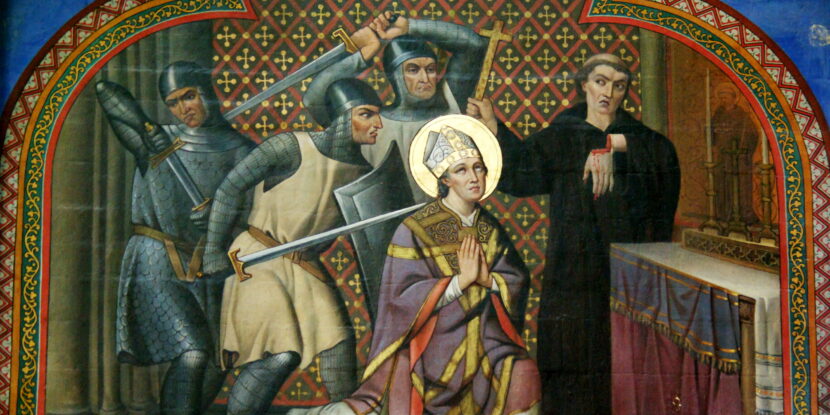
Four knights took these words as a command. They rode to Canterbury and barged into the cathedral during evening prayer, demanding that the archbishop show himself. Hidden behind a pillar at first, St. Thomas could have remained silent, and lived. Yet he chose to step forward into the open, declaring that he was “not a traitor to the king, but a priest,” and that his loyalty to Christ and the Church outweighed any earthly allegiance.
The knights struck him down at the altar. As the blows fell, St. Thomas is said to have accepted his death with quiet courage, saying, “For the name of Jesus and the protection of the Church, I am ready to embrace death.”
Almost at once, the people of Canterbury recognized St. Thomas as a martyr for Christ, and obscure though his quarrel with King Henry may seem today, he became one of the most venerated saints in Christendom, behind only the likes of the Virgin Mary and St. Joseph. Even Henry, faced with the enormity of what had been done, journeyed barefoot to St. Thomas’s tomb to do public penance, accepting responsibility for his murder.
The sacrifice of St. Thomas Becket remains a powerful witness to the power of standing firm in faith, whatever the cost may be, to this day.
Join Pulse+ to comment below, and receive exclusive e-mail analyses.