


Wednesday, January 21, 2026

You Still Can’t Trust Anything Coming Out of Ukraine.

Ukraine’s long-standing reputation as one of the most corrupt countries in Europe has only gotten worse under President Volodymyr Zelensky, especially during the war with Russia. Very recently, a top ally of Zelensky fled to Israel after being accused of taking part in a $100 million corruption scheme. Despite previously being close to Zelensky and his right-hand man, Andriy Yermak, Timur Mindich is now claiming he never was.

It’s the same situation over and again in the embattled nation.

Political corruption is now so common that the country was forced to create a National Anti-Corruption Bureau (NABU) in 2015. While NABU was intended to be independent and non-partisan, Zelensky and his allies attempted to bring it under their direct control just last year, sparking protests across the country. Once again, they backpedaled when caught out.

This smash-and-grab culture is as responsible for the nation’s fortunes as its misplaced trust in Brussels.

The military fares no better, with countless stories of bribes from men who wish to avoid being sent to the front lines against the Russian armed forces. In 2023, Zelensky and his regime fired conscription officials and promised criminal cases against at least 30 people, some of whom were accused of accepting cryptocurrency bribes to help men avoid military service. The problem has not disappeared, however, as another corruption case involving a lieutenant colonel was reported just this month.

The corruption in Ukrainian media, however, is rarely discussed, but appears to be just as prevalent as in other sectors of society, from pay-to-play articles to outright coercion from the Zelensky government.

It’s not a new phenomenon, but it does appear to be worsening.

JEANSA.

In 2013, the European Journalism Observatory (EJO) decried a phenomenon known in Ukraine as “jeansa,” a term for media bribery in which politicians, companies, and others pay journalists or outlets for favourable coverage disguised as traditional “unbiased” news.

“Unlike direct advertising, “jeansa” disguises itself as traditional news, with money or other benefits received by journalists for publication going into their jeans pockets – hence the name “jeansa” bribery, as the urban legend suggests,” the non-profit stated. The EJO claimed that as much as $2.5 billion was spent on “jeansa” bribes in 2012, and that some journalists could be bought off for as little as $1000.

The Institute of Mass Information (IMI), a media watchdog created by Ukrainian and Western journalists in the 1990s, states that this form of bribery is still relatively common in 2025. That politically motivated bribes account for around 26 percent of paid influence in online media, most of which comes from corporations.

Regarding specific political figures, the head of Zelensky‘s Servant of the People Party, Olena Shulyak, appeared to be most fawned over by material showing signs of jeansa bribes, according to the IMI. Paid attacks on activists and other politicians were also reported. Kiev Mayor Vitali Klitschko has also reportedly been a major beneficiary of jeansa.

It is not only Ukrainian businesses, organizations, and individuals paying off journalists for favourable coverage. On a much larger scale, Ukrainian journalism, almost entirely, was beholden to funding from the United States Agency for International Development (USAID) under the Biden government.

IMI stated that up to 90 percent of Ukrainian media relied on USAID funding, claiming that actual regular advertising accounted for as little as 3 percent of revenues. President Donald J. Trump overhauled and reformed USAID earlier this year, canceling billions of dollars in taxpayer funds spent on various woke projects globally.

While some journalists are bribed to give favourable coverage to politicians and government figures, others face active coercion from the government and other authority figures, particularly when reporting on government corruption.

Sevgil Musayeva is the editor of Ukrainska Pravda, one of Ukraine’s largest online news websites, and claimed in July of last year that Zelensky and his regime were actively threatening the website’s advertisers, telling them not to pay the site.

“I don’t like what is happening with people that criticise the government. In this terrible time, with all these Shahed [drones hitting Kiev], Zelensky still has time to pressure journalists,” Musayeva stated. She claimed the presidential office pressured large businesses to drop their ads, resulting in a loss of over $240,000 to the website from just six major companies. According to Musayeva, the pressure was related to investigative work done by the outlets’ journalists regarding corruption.

Ukrainian authorities have also put pressure on individual journalists for exposing corruption. In one case, investigative journalist Yevhenii Shulhat claimed that soldiers handed him a draft notice in a shopping mall after he had published a story about corruption within the country’s secret intelligence service, the SBU.

“I regard this as intimidation and obstruction of my journalistic activity,” Shulhat said.

Ukraine’s corruption problem is not confined to politics and procurement. It extends into the information space itself—where paid narratives, foreign dependence, and alleged government pressure risk turning “independent media” into just another managed institution.

After decades, you still can’t trust much coming out of Ukraine, and President Trump and his State Department would do well to ensure that any funding that has landed in the pockets of corrupt individuals–politicians, reporters, or otherwise–is not just highlighted, but also clawed back.

Chris Tomlinson and Raheem Kassam contributed to this editorial.

show less
Ukraine's long-standing reputation as one of the most corrupt countries in Europe has only gotten worse under President Volodymyr Zelensky, especially during the war with Russia. Very recently, a top ally of Zelensky fled to Israel after being accused of taking part in a $100 million corruption scheme. Despite previously being close to Zelensky and his right-hand man, Andriy Yermak, Timur Mindich is now claiming he never was. show more

SUHR: Setting the Reagan Record Straight on Broadcasting.

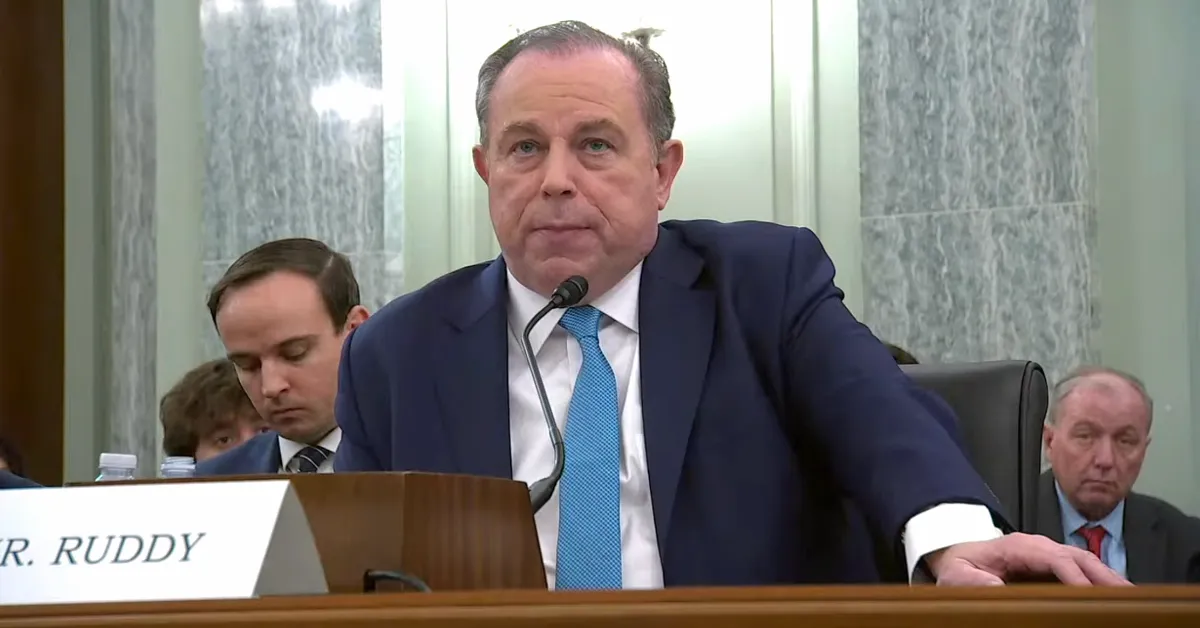
President Ronald Reagan’s name has been taken in vain a lot lately by conservatives eager to use his sainted persona to bash President Trump’s Federal Communications Commission (FCC). The worst offender has been Newsmax and its CEO, Chris Ruddy, a well-known figure who tries to mask his opposition to free-market principles by invoking Reagan as his inspiration and imprimatur.

Over and over again, Newsmax and Ruddy have cited Reagan in opposing proposed FCC reforms that would lift regulatory restrictions on television station ownership. In an alert to Newsmax readers this week, the channel wrote, “The Cap is a policy originally started by President Ronald Reagan to prevent massive TV media consolidation. . . . Reagan understood immediately the danger of big media. Now, Chairman Carr and the FCC want to abolish Reagan’s cap entirely.”

Newsmax has also reported this not just as its corporate view but as a news fact, saying in a recent report: “The cap was first instituted by then-President Ronald Reagan to limit major networks and station groups from owning a majority of stations across the nation.”

Newsmax has said this not only to its viewers, but to the FCC itself, asserting in a recent filing that “the national cap [is] good policy rooted in conservative values and decisions by the Reagan Administration.”

That’s not really true.

Though it is correct that the first percentage cap was instituted in 1985 by Reagan appointees on the FCC, this was actually a deregulatory move that provided relief from the previous hard cap of seven television stations, set for the first time in 1954 and upheld by the Supreme Court in 1956.

In 1984, President Reagan’s FCC appointees moved to totally repeal that national ownership cap. The Commission adopted a “phase out” such that “at the end of six years, multiple ownership would be unrestricted.”

After the Democrat-controlled Congress pushed back, the FCC compromised by creating a new rule limiting any single television company from reaching more than 25 percent of the nation’s viewers via their local station licenses (of course, the national networks themselves—ABC, NBC, CBS, PBS—could reach 100 percent of viewers, but this never seemed a problem for liberals—only local station owners are subject to caps). Though the 25 percent national audience limit was still a cap, it marked significant freedom for corporate growth compared to the prior hard cap at just seven stations.

Reagan’s FCC chairman Mark Fowler, who started as an aide on the 1980 Reagan campaign, explained at the time that the initial effort to entirely lift the cap was a deregulatory move to open up a free market for station ownership: “Broadcasting will then be able to rejoin the family of American businesses under the general laws that regulate competition, no longer arbitrarily singled out for straight-jacket treatment.”

He predicted that if television companies owned stations in multiple markets, that would actually result in “more program competition, on a local and national basis. While there is no magic in group ownership that ensures better service, the sharing of costs that can go on among more stations is likely to permit larger-scale program undertakings.”

Fowler’s point—that larger station groups can actually increase competition by conferring the scale necessary to independently produce widespread programming—is what conservatives should want instead of total dependence on networks like ABC and NBC. The growth of shows like Sinclair’s The National Desk as an alternative to network news is a great example of Fowler’s vision in action.

Newsmax says “Reagan understood immediately the danger of big media,” but in fact his FCC specifically called out the Left’s scare tactics against “big media.”

Fowler wrote in his opinion on lifting the ownership cap: “Bigness is not necessarily badness, sometimes it is goodness, sometimes it is just bigness and nothing more. But without a good reason to forbid growth, this Commission should not just utter the magic word ‘Television’ and treat the industry differently.”

Just so, there is nothing inherently wrong with corporations that provide services customers want, leading to their market growth, as long as they don’t employ unlawful anticompetitive tactics.

Reagan was a champion for free markets and economic growth. His eight years marked a renewal of the national economy, achieved largely through tax cuts and regulatory relief. His FCC pursued the same goals by providing greater freedom for broadcasting companies to grow and thrive. President Trump’s FCC should pursue the same policy and brush aside the mistaken invocation of the Gipper.

Daniel Suhr is president of the Center for American Rights, a conservative public interest law firm.

show less

President Ronald Reagan’s name has been taken in vain a lot lately by conservatives eager to use his sainted persona to bash President Trump’s Federal Communications Commission (FCC). The worst offender has been Newsmax and its CEO, Chris Ruddy, a well-known figure who tries to mask his opposition to free-market principles by invoking Reagan as his inspiration and imprimatur.

show more

KASSAM: Farage Must Proceed With Caution. The Likes of Robert Jenrick Can’t be Trusted.

Nigel Farage’s Reform Party has landed its most significant defection to date: former Conservative Party MP and Shadow Cabinet Minister Robert Jenrick. If you’re a Farage fan, you might think this sounds like a good thing. But as someone who considers Farage a personal friend and mentor, as well as a future Prime Minister, I urge him to exercise extreme caution with so many Conservative Party (Tory) members now flooding Reform.

In 2014, when Robert Jenrick was first elected at the Newark by-election (special election), I commissioned a piece by one of our Breitbart London columnists, Alex Wickham, now the Political Editor of Bloomberg UK. Wickham, then a libertarian-right-leaning gossip blogger, identified some critical flaws in the man he labelled “Robert Generic.”

Jenrick, he argued well, represented a special kind of carpetbagging, establishment politics. He paraded around with the likes of former Chancellor Ken Clarke, who to this day speaks only vituperatively of Nigel Farage and the Brexit movement. He lived in multi-million-pound dwellings in London, rather than the constituency in which he was running. And perhaps worst of all, he wholeheartedly endorsed David Cameron and George Osborne’s Conservative Party platform – the spark that lit the fuse of how and why Britain is in such dire straits today.

Naturally, Jenrick won. Beating off stiff competition from Farage’s then potential Member of Parliament, Roger Helmer, who himself had left the Conservative Party three years prior, in 2011.

Robert Jenrick, to my knowledge, is no Roger Helmer. He opposed Brexit in the 2016 referendum and has been widely ridiculed for championing the Conservative Party’s weak immigration policies.

Jenrick’s motivations for drastically altering his public platform over the past few years are more likely borne of frustration at bleeding votes to Farage’s Reform and at losing the 2024 Conservative Party leadership election than a more Helmer-esque philosophical consistency.

Indeed, old Generic has recently been badmouthing Farage, with the Reform leader appearing all too happy to throw it right back at him.

Just eight months ago, Jenrick told TalkTV’s Julia Hartley-Brewer: “I want to put Reform out of business. I want to send Nigel back to retirement.”

I believe this part of Jenrick will never change. Unable to oust Tory Leader Badenoch, he will undoubtedly make a run at Farage when he feels the time is right. Farage has been through this a dozen times in his career. I personally helped him put down several internal coups within UKIP, and I’d be more than happy to swing the axe again in case Jenrick (or anyone else) gets lairy.

One month prior, Farage had told Sky News: “Don’t forget… this is Robert Generic. This is Robert the Remainer. This is the Robert the ‘I don’t stand particularly for anything at all’ who suddenly appears to be … on this Damascene conversion.”

That was the astute reading of the man. Today’s embrace of him into the Reform Party is the astute realism of a Nigel Farage whose entire political strategy often hinges on just one word: momentum.

Farage’s embrace of Jenrick isn’t an endorsement of the man, or of his sudden Damascene conversion. It’s a daring — and dangerous — tactic in his three-decade war against the Conservative Party machine.

He should exercise maximum caution with politicians like Jenrick, Zahawi, and Dorries. These aren’t just converts. They’re also potential infiltrators. And they’re exactly the sort of people you never turn your back on. Not for a second.

show less
Nigel Farage's Reform Party has landed its most significant defection to date: former Conservative Party MP and Shadow Cabinet Minister Robert Jenrick. If you're a Farage fan, you might think this sounds like a good thing. But as someone who considers Farage a personal friend and mentor, as well as a future Prime Minister, I urge him to exercise extreme caution with so many Conservative Party (Tory) members now flooding Reform. show more

Leaked Emails Reveal How Industry Insiders Bent Federal Regulators.

For years, the kratom industry in America has presented itself as a loose coalition of small businesses, consumer advocates, and scientists working toward responsible regulation and harm reduction. The plant, chewed or smoked or turned into a tea, is said to have “opioid-like properties” and “stimulant-like effects.” Moreover, it has been used to get people off opioids themselves, with a recent competitor compound, 7-OH, becoming increasingly popular due to it being “significantly more potent than morphine at pain relief.” 

Searching for 7-OH online provides pages and pages of alarmist headlines, with federal regulators pushing for its classification as a controlled substance in the summer of 2025.

Internal emails, public records, and leaked documents reviewed by this publication tell a fascinating story, however, of an internecine industry fight that appears more concerned with profit motives than with consumer choice or patient care.

IN BRIEF.

Over the past eighteen months, a coordinated campaign has emerged. But the effort did not originate with new safety data or a sudden public health emergency. It originated with market pressure.

As 7-OH products gained popularity among consumers for their consistency and predictable effects, legacy kratom manufacturers began losing ground. Retailers shifted shelf space. Customers followed. Industry insiders describe severe revenue losses in specific product categories, in some cases enough to threaten entire business lines.

Rather than compete directly, industry leaders pursued a different approach. They turned to regulators.

THE FDA MEETING.

In January 2025, a group of scientists and consultants was invited to participate in an informational meeting with the Food and Drug Administration (FDA). Emails show the meeting was not initiated by FDA scientists, but requested and organized by Sheldon Bradshaw, a former FDA Chief Counsel now serving as regulatory counsel to kratom-aligned interests.

Bradshaw’s stated purpose was explicit. In emails circulated ahead of the meeting, he wrote that the goal was to educate FDA regulatory enforcement officials, rather than scientists, about the dangers of 7-OH and to push the agency to remove 7-OH products from the U.S. market.

The agenda reflected that objective. It was not limited to chemistry or pharmacology. It included a segment devoted to highlighting alleged criminal histories of individuals associated with 7-OH products. The meeting was scheduled with FDA enforcement lawyers and criminal investigators, not with scientific review staff. Indeed, several invited scientists declined to attend.

Johns Hopkins pharmacologist Kirsten Smith cited a lack of transparency about who was organizing the meeting and said she was uncomfortable being asked to discuss criminality as a scientist. Ohio State and Harvard professor Edward Boyer declined as well, writing that removing 7-OH would conveniently preserve market share for kratom vendors and warning that participation could damage his credibility. University of Florida professor Oliver Grundmann withdrew, citing conflicts related to ongoing litigation.

Others did attend, including University of Florida medicinal chemist Dr. Christopher McCurdy and consultant Paula Brown. Brown acknowledged in emails that she had asked Bradshaw to organize the meeting specifically to reach FDA enforcement officials.

By the time the meeting took place, its purpose was clear. This was not a neutral scientific consultation. It was an enforcement strategy.

UNIVERSITY OF FLORIDA’S ROLE.

As internal industry disputes unfolded, public records requests began to reveal the importance of a single academic institution.

Emails and documents obtained from the University of Florida show that UF, and McCurdy’s lab in particular, had become a central reference point for kratom policy discussions. McCurdy communicated directly with both FDA and DEA officials. His research was repeatedly cited in regulatory materials. His views appeared to shape how federal agencies discussed risk, synthesis, and scheduling.

In August 2025, McCurdy emailed a DEA official, noting that he had been invited to attend an announcement recommending that 7-OH be placed into Schedule I. He requested guidance on obtaining a Schedule I research license in advance, even though the substance had not been scheduled heretofore.

The concentration of influence is notable. One laboratory, and specifically one researcher, advised industry groups, corresponded with regulators, and produced the scientific literature used to justify enforcement decisions.

This created a dependency, with Federal agencies coming to rely on a single authority whose work intersected directly with industry objectives.

HOW THE DATA WAS PRODUCED.

The most consequential evidence is revealed in a brief email chain from February 2025.

Malaysia restricts the export of kratom plant material to recognized research institutions. Private companies and trade groups are not legally entitled to receive it. Emails indicate that the Global Kratom Coalition required Malaysian kratom material to achieve specific regulatory objectives, including arguments related to the status of Old Dietary Ingredients and contributions to an American Herbal Pharmacopoeia monograph.

Because the industry could not legally receive the material, the University of Florida agreed to act as the recipient.

Emails show UF would accept the shipment, perform herbarium documentation, DNA barcoding, and alkaloid analysis, and that McCurdy expected the industry group to reimburse the university for the work.

The arrangement allowed industry-directed research to enter the regulatory system under the banner of academic independence. Regulators later treated data generated at UF as neutral, university-produced science.

Industry defined the objective. The university executed the work. Regulators relied on the output.

THE NARRATIVE SHIFT.

With enforcement channels established, public messaging followed. That’s why, if you Google any of this, there’s just a cavalcade of negative, industry-sponsored information with little evidence to back it up.

Media stories began framing 7-OH as a “dangerous” synthetic drug. Isolated incidents were amplified into broader warnings. Claims circulated about contaminated products and criminal supply chains, despite the absence of validated toxicology tying those events to 7-OH.

The timing coincided with state enforcement actions and proposed legislative changes. The goal was urgency. Pressure regulators to act quickly, before deeper scrutiny could take place.

WHAT THE RECORD REALLY SHOWS.

The research does not indicate an organic public health response. It shows a structured campaign.

Industry leaders faced market disruption. Political operatives translated commercial concerns into regulatory language. Academic institutions provided credibility. Regulators acted on data shaped upstream by private interests.

Whether 7-OH ultimately warrants regulation is a legitimate question, and that isn’t up for debate. Like anything in this space, the safety of the consumer should take precedence over any business interest or profit motive. But the process documented here did not answer questions through open scientific inquiry.

The outcome was decided first. The machinery followed.

show less

For years, the kratom industry in America has presented itself as a loose coalition of small businesses, consumer advocates, and scientists working toward responsible regulation and harm reduction. The plant, chewed or smoked or turned into a tea, is said to have "opioid-like properties" and "stimulant-like effects." Moreover, it has been used to get people off opioids themselves, with a recent competitor compound, 7-OH, becoming increasingly popular due to it being "significantly more potent than morphine at pain relief." 

show more

DATA: Vehicle Attacks Against ICE Skyrocketed 1300% in One Year.

PULSE POINTS

WHAT HAPPENED: Vehicle attacks against DHS law enforcement have more than doubled this year, with nearly 100 incidents reported so far.

👤WHO WAS INVOLVED: Immigration and Customs Enforcement (ICE), Customs and Border Protection (CBP), and criminal suspects, including illegal aliens and U.S. citizens.

📍WHEN & WHERE: Since January 20, 2025, across various locations in the United States, including Maryland, Illinois, and Florida.

💬KEY QUOTE: “We are seeing the results of the Left’s constant demonization of the men and women of law enforcement. Dangerous criminals – whether they be illegal aliens or U.S. citizens – are turning their vehicles into weapons to attack ICE and CBP.” – Assistant Secretary Tricia McLaughlin

🎯IMPACT: A significant increase in risk to law enforcement officers and the public, with federal authorities vowing to prosecute offenders to the fullest extent of the law.

IN FULL

The men and women of Immigration and Customs Enforcement (ICE) and Customs and Border Protection (CBP) are facing a surge in vehicle attacks, a trend attributed to inflammatory rhetoric from sanctuary politicians, leftist activists, and the mainstream media. The latest attack in Minneapolis this morning is just the latest in a long line of vehicle attacks against law enforcement in America.

Since January 20, there have been over 100 reported vehicular attacks against federal law enforcement, more than double the 47 incidents during the same period last year.

Attacks against CBP have risen 58 percent, with 71 incidents reported this year compared to 45 last year. ICE has seen an even more dramatic rise, with 28 vehicular assaults compared to only two during the same period in 2024 – a 1,300 percent increase.

Assistant Secretary Tricia McLaughlin remarked, “We are seeing the results of the Left’s constant demonization of the men and women of law enforcement. Dangerous criminals – whether they be illegal aliens or U.S. citizens – are turning their vehicles into weapons to attack ICE and CBP. Still, the brave men and women of DHS will not be deterred and will continue arresting the worst of the worst criminal illegal aliens. Anyone who attacks law enforcement, especially using their vehicles, will be prosecuted to the fullest extent of the law.”

Some of the most recent examples of vehicular assaults against law enforcement include:

  • November 13: Ever Gabriel Alvarez-Campos, a criminal illegal alien from El Salvador with pending criminal charges for second-degree assault, intentionally rammed his car into an ICE vehicle and fled the scene, endangering officers and members of the Adelphi, Maryland community. Alvarez then hit another vehicle and fled the scene on foot before being apprehended by ICE officers.
Car involved in ramming of an ICE vehicle where the suspect fled the scene and was later captured
  • November 8: While conducting immigration enforcement operations in Chicago, Border Patrol faced four different vehicular ramming attacks in just one day. Four suspects were arrested, while one was thwarted by a Controlled Tire Deflation Device, and another remains at large.
Wagoneer Car Damage from Targeted Violence Against Law Enforcement
  • October 22: On a day in which Border Patrol agents faced numerous attacks throughout Chicago, there were three different vehicular attacks against law enforcement. Several of the arrested suspects had criminal histories, including a Latin Kings gang member with convictions for unlawful possession of a firearm, destroying evidence, and DUI.
  • October 14: During an immigration enforcement operation in Chicago, an illegal alien rammed CBP vehicles with his own and attempted to flee. Border Patrol pursued the suspect and managed to bring him to a stop using an authorized precision immobilization technique maneuver. The driver and his passenger, both illegal aliens from Venezuela, were arrested for assault on a federal agent and accessory to assault, respectively.
  • October 2: ICE officers were targets of two different vehicular assaults in Illinois on the same day, with one in Bensenville and the other in Norridge. The suspects in both cases were criminal illegal aliens who were arrested.
SUV used by criminal illegal alien was weaponized in a deliberate attempt to ram and injure officers carrying out their sworn duty to upload the nation's immigration laws.
Car used by criminal illegal alien was weaponized in a deliberate attempt to ram and injure officers carrying out their sworn duty to upload the nation's immigration laws.
  • September 14: An ICE officer was injured in a vehicular assault in Homestead, Florida. The driver, an illegal alien from Guatemala, reversed his car into the officer during a traffic stop in an attempt to flee, hitting the officer in the leg and nearly crushing him. The suspect rammed into multiple ICE vehicles and then sped away into incoming traffic, colliding with a utility van. The driver and three other illegal aliens were arrested.
On September 14, an illegal alien resisted arrest and drove his car into an ICE officer nearly crushing him, hitting two government vehicles, and sped into oncoming traffic hitting another innocent bystander’s vehicle.
Utility van damaged in accident with vehicle involved in a vehicular assault on an ICE officer in Florida, on September 14,

Join Pulse+ to comment below and receive exclusive email analyses.

show less
show more

GAETZ: Trump Drew the Line. Now His Team Must Hold It: Why the Netflix–Warner Brothers Discovery Merger Must Be Stopped.

President Trump has never been subtle about power. He’s seen its abuses weaponized against the American people and himself.  He knows who pays the price when it’s left unchecked. When it comes to Big Tech, Big Media, and the increasingly incestuous relationship between Silicon Valley ideology and corporate monopolies, Trump has been consistent: concentrated power is dangerous to free markets, free speech, and ultimately to the American people.

That’s why the proposed merger between Netflix and WBD deserves outright opposition. The Associated Press quoted President Trump last month saying this proposed merger “could be a problem” because of size and market share. And he’s right. It’s a big problem.

Now it’s time for his administration to extinguish this merger like it’s Kristi Noem’s dog. This deal isn’t about efficiency. It isn’t about innovation. It isn’t even about competition. It’s about control—over content, over distribution, over culture, and over what Americans are allowed to see, hear, and believe.

This isn’t a merger to foster competition. The objective is outright control. Netflix already dominates streaming content. WBD already dominates content with a massive library and content creation ability at scale. Put them together and you don’t get “synergies.” You get a vertically integrated behemoth that controls what gets made, what gets promoted, what loads fastest on your screen, and what quietly disappears.

This is classic monopoly behavior dressed up in a hoodie and a DEI PowerPoint. A combined Netflix–WBD would have unprecedented leverage over:

  • Content creation (what stories get funded);
  • Content distribution (what loads, buffers, or gets buried);
  • Advertising markets (who pays and who gets frozen out);
  • Independent creators and studios (submit or die);
  • Consumers (fewer choices, higher prices, more ideological filtering).

Antitrust law was written for exactly this kind of moment. Not to protect corporations from competition—but to protect competition from corporations. As law professor John Yun has noted, “a combined Netflix and HBO Max would represent approximately 35% of all streaming hours, which would make it the largest single player in the market and, crucially, place it above the [antitrust] threshold.”

Trump has said repeatedly that when a handful of companies control speech platforms, the result is censorship by proxy. He was right when he said it about social media. He’s right now.

Netflix has not been subtle about its ideological project. It has become a case study in how cultural lecturing replaces storytelling, how identity quotas replace merit, and how dissenting viewpoints are quietly excluded from the room.

The company didn’t just “go woke.” It made wokeism part of its corporate operating system—content mandates, internal speech codes, activist HR regimes, and an executive culture that treats half the country as a moral defect.

Now imagine that worldview fused with WBD’s mechanized content creation power.

That’s not just a media company. That’s an ideological toll booth on American culture.

You don’t like the message? Too bad—it’s what loads fastest.
You don’t like the programming? It’s what gets promoted.

This isn’t theory. This is how power behaves when it stops being challenged.

Fortunately, the Trump-Vance Administration has reinvigorated antitrust enforcement.

One of the biggest lies in Washington is that antitrust enforcement is a “progressive” idea. It’s not. It’s an American idea. Teddy Roosevelt understood it. Ronald Reagan used it when necessary. President Trump is reviving it with clarity and purpose.

Trump’s position has always been simple: markets work best when they are competitive, not captured. Consumers win when companies fear losing them. Speech survives when no single gatekeeper can silence it.

This is why Trump opposed media consolidation when it threatened viewpoint diversity. This is why he warned about tech platforms acting as unaccountable arbiters of truth. And this is why a Netflix–WBD merger crosses a line. I’m glad President Trump has such an excellent team in place to stop it.

At the Federal Communications Commission, Chairman Brendan Carr has been reliably pushing back against ideological capture. He took an active role in pushing back against DEI policies in Big Media. Now, he’s in a key position to administer maximum scrutiny to the Netflix/Comcast DEI extravaganza.

Chairman Carr understands that communications policy is not abstract. It shapes who gets heard. He has been unafraid to call out corporate double standards, to question sweetheart deals, and to resist the idea that size plus “good intentions” equals public benefit.

A Netflix–WBD merger would test the FCC’s spine. Carr has shown he has one.  The FCC has authority over licenses, spectrum, and transactions that affect the public interest. “Public interest” does not mean what makes executives happy in Aspen. It means competition, access, and viewpoint diversity for ordinary Americans.

If there was ever a deal that fails that test, this is it.

At the Department of Justice, Gail Slater leads the Antitrust Division. She is a hero within the monopoly-busting movement. She represents a return to something Washington forgot existed: antitrust enforcement that actually serves consumers rather than donors.

Her work has emphasized real-world effects—prices, choice, innovation—not academic theories that conveniently excuse consolidation as long as consultants can model a short-term efficiency.

A Netflix–Comcast merger would crush independent streaming competitors, marginalize smaller studios, and tilt the advertising and broadband markets even further toward incumbents. DOJ’s Antitrust Division exists to stop that before it happens, not to clean up afterward. Blocking this deal wouldn’t be radical. It would be textbook.

The merger’s defenders will say this is just about TV shows and movies. That argument belongs in 1998.

Streaming platforms now shape political narratives, cultural norms, historical memory, and social legitimacy. They decide which stories are “problematic,” which voices are “harmful,” and which viewpoints are allowed to exist without a warning label.

When control over that ecosystem consolidates, pluralism dies quietly.

Trump has always understood that culture matters. He’s never pretended that politics stops at tax policy. The left certainly doesn’t believe that—and Netflix has proven it.

This is the moment.

Trump has assembled a team that understands power and is willing to use lawful authority to defend the public interest.

  • A President who sees through corporate narratives;
  • An FCC Chairman who resists woke capture;
  • A DOJ antitrust leader focused on consumers, not consolidation;
  • A base that understands this fight is about more than stock prices.

The message should be unmistakable: this merger ends here.

Every lawful tool should be used. Every regulatory lever should be pulled. Every claim of “inevitability” should be laughed out of the room.

Corporate America doesn’t get to fuse content control and infrastructure dominance just because it hired the right consultants and said the right buzzwords.

Trump drew the line, standing up for the regular folks in our nation. His administration should hold it.

Not for Netflix’s critics. Not for WBD’s rivals. But for competition, culture, and the country.

show less
President Trump has never been subtle about power. He’s seen its abuses weaponized against the American people and himself.  He knows who pays the price when it’s left unchecked. When it comes to Big Tech, Big Media, and the increasingly incestuous relationship between Silicon Valley ideology and corporate monopolies, Trump has been consistent: concentrated power is dangerous to free markets, free speech, and ultimately to the American people. show more

Why Does Chris Ruddy Want Fewer Conservatives on TV?

As you know, I’ve had it up to here *gestures quite high indeed* with ‘Conservative, Inc.’ Twas ever thus, perhaps. But at the same time, never more so than with Newsmax’s Chris Ruddy. I declare a pre-existing disdain for their treatment staff during COVID-19, including some of my friends at the time. No coincidence that I haven’t been invited back on the network since critiquing their Cuomo-style mandates.

But today’s beef is slightly more well-rounded and with more depth than the simple smash burger they cooked up during COVID. As surprisingly well argued by the Wall Street Journal‘s Editorial Board last month, the Newsmax chief’s latest scheme of self-interest would stifle upcoming conservative networks (think Real America’s Voice, Sinclair, etc.), especially in the unforgiving battle against big corporate internet giants like Google (i.e., YouTubeTV).

Ruddy keeps telling President Trump that easing television ownership caps, as I discussed with Daniel Suhr on my War Room Boxing Day special, is a bad idea. It is. But only if you want to maintain the status quo of broadcast in America. Dominance by a handful of networks in the face of what should be a reasonably competitive marketplace. Some barriers to entry have never been lower – think about how much it now costs to put together a passable TV studio, for example.

Which is why it makes little sense in a digital streaming age to have an antiquated, government-imposed limit on broadcast “reach” when anyone can pick up their phones and get whatever they want online. In the long term, this would leave the one remaining corporate cartel in place, perhaps as the final broadcasters in American history, doomed to go down with the ship.

But broadcast news is essential. Millions of people still tune into it every night, especially at a local level, to find local news that major cable networks don’t cover, and that don’t ‘trend’ online. Think about, say, Sinclair – a company imperative to challenging both liberal and RINO orthodoxies.

This makes it foolish not to lift the existing 39 percent cap and open up the marketplace, as long as there are safeguards in place to prevent existing corporates from dominating the entire market.

The rule currently limits broadcast organizations from owning stations that reach more than 39 percent of American households. It dates back to the 1940s, when broadcast television operated in a closed world with almost no competition.

Ruddy argues that easing ownership limits would empower left-wing networks and damage Republican electoral prospects. But what have we had under the EXISTING system, until now? Precisely that. What he’s actually upset about is that a more consistently conservative broadcaster than Newsmax (one that won’t fire staff for breaching COVID rules, perhaps?) might come along and eat his lunch. And boy does he love a Smith & Wollensky lunch.

To make his case, Ruddy invokes Ronald Reagan. The historical record, however, does not cooperate. Reagan’s Federal Communications Commission (FCC) aggressively deregulated broadcast ownership because he believed in competition, not petty protectionism for Newsmax and its portfolio of paywalled content.

Even Ruddy’s case against left-wing broadcast dominance is losing weight, with CBS having just been bought out, and Bari Weiss being named Editor-in-Chief. It was remarkable to watch, for instance, the Trump-Kennedy Center Honors being broadcast on CBS in all its glory (trust me, I attended in person), and even the correct new name for the institution being used. None of this would’ve been possible in Ruddy’s pessimistic little world.

Maybe under the new proposals, you won’t see more conservatives on television. However, you certainly won’t see fewer, which is what might happen if the anti-market forces prevail. See, if we leave the current system in place, we have to wait for another Skydance-Paramount style merger, or indeed a blue moon. In the other scenario, both current and new networks will race to create new stations and content to serve emerging markets.

Ruddy recently also opposed the proposed Tegna and Nexstar merger because it would give NewsNation, which just brought on Katie Pavlich, greater scale. His concern is not philosophical, and he should stop taking Reagan’s name in vain. At the end of the day, he’s worried about his business flanks. Which is fair, but he should just come out and say as much.

A movement that claims to oppose monopolies and elite capture should not defend media protectionism when it suits a friendly executive. President Trump should reject his entreaties.

His FCC chairman is trying to unwind rules that belong to another century. Conservatives should support that effort on principle, not abandon it because one network prefers a protected marketplace.

show less

As you know, I've had it up to here *gestures quite high indeed* with 'Conservative, Inc.' Twas ever thus, perhaps. But at the same time, never more so than with Newsmax's Chris Ruddy. I declare a pre-existing disdain for their treatment staff during COVID-19, including some of my friends at the time. No coincidence that I haven't been invited back on the network since critiquing their Cuomo-style mandates.

show more

The Tenth and Eleventh Days of Christmas: The Holy Name and the Coming of the Three Kings.

The Tenth Day of Christmas (January 3) honored the Holy Name of Jesus. Notably, the name was not chosen by the Virgin Mary or St. Joseph but revealed by the Archangel Gabriel, who told the Virgin Mary, “Fear not… thou shalt conceive in thy womb, and bring forth a son, and shalt call his name Jesus.”

The name means “God saves” or “God is salvation,” perfectly expressing both Christ’s purpose. St. Paul captured the exalted place of  the Holy Name in Christian faith when he wrote that it is “above every name,” and that “at the name of Jesus every knee should bow” and “every tongue should confess that Jesus Christ is Lord, to the glory of God the Father.”

For centuries, Christians showed respect by slightly bowing their heads whenever the name of Jesus was spoken or heard. In an era when the Holy Name is too often reduced to a casual exclamation—even among those who otherwise value tradition—the Feast of the Hoyl Name can offer a gentle reminder to treat it with some reverence.

Today, the Eleventh Day of Christmas, marks Epiphany in the United States—although many other countries will still observe this on its traditional date of January 6. Epiphany commemorates the arrival of the Magi, also known as the Three Kings of Wise Men, to adore the newborn King in Bethlehem.

The Three Kings represent the Gentile nations, showing that Jesus is not only the promised Messiah of Israel but the Savior of all men As the Lord would later teach, “many shall come from the east and west, and shall sit down with Abraham, and Isaac, and Jacob, in the kingdom of heaven.”

Children in many cultures receive a second round of gifts on Epiphany, popularly known as Three Kings Day, symbolizing the presents the Magi brought to the Christ Child. For this reason, it is sometimes called “Little Christmas”—the perfect occasion to surprise a child with something they had hoped for but did not find under the tree on December 25.

In Ireland, Epiphany was once known as Women’s Christmas. Men traditionally took over household duties and prepared a special dinner—often roast goose—so their could enjoy a well-earned rest after all their cooking and hosting over the festive period. Families inclined toward traditional roles might find the gesture a charming way to mark the day.

One culinary tradition is the baking of a king cake, which varies by region but frequently contains a hidden figure of the baby Jesus. Whoever finds it in their slice is declared king or queen for the day and often enjoys a small prize or special privilege.

In Catholic countries, many families will invite a priest to bless their house. Alternatively, the father of the household can perform a similar rite, sprinkling each room with holy water while praying for peace in the home and all who live in it. One traditional prayer recalls the journey of the Magi: “From the east came the Magi to Bethlehem to adore the Lord; and opening their treasures they offered precious gifts: gold for the great King, incense for the true God, and myrrh in symbol of His burial.”

Another custom is chalking the door. Above the main entrance of the home, the head of the household inscribes the year with the initials C ☩ M ☩ B and the numbers of the current year. The letters stand for the traditional names of the three kings—Caspar, Melchior, and Balthasar—and also for the Latin blessing Christus Mansionem Benedicat: “May Christ bless this house.”

Such small acts root the Christmas season in the home, carrying its grace into the new year—and reminding all who enter of the central place of Christ, the King revealed to the nations on Epiphany.

Image credit: Ввласенко.

Join Pulse+ to comment below, and receive exclusive e-mail analyses.

show less
The Tenth Day of Christmas (January 3) honored the Holy Name of Jesus. Notably, the name was not chosen by the Virgin Mary or St. Joseph but revealed by the Archangel Gabriel, who told the Virgin Mary, “Fear not… thou shalt conceive in thy womb, and bring forth a son, and shalt call his name Jesus.” show more