





Thursday, April 2, 2026

4Chan, Kiwi Farms Take Legal Action Against Britain for Infringing First Amendment.

PULSE POINTS

WHAT HAPPENED: Online forums 4Chan and Kiwi Farms filed a lawsuit against British communications regulator Ofcom over alleged violations of free speech rights under the U.S. Constitution.

👤WHO WAS INVOLVED: 4Chan, Kiwi Farms, Ofcom, and the federal court in Washington, D.C.

📍WHEN & WHERE: The lawsuit was filed recently in Washington, D.C., following the British government’s implementation of the censorious Online Safety Act last month.

💬KEY QUOTE: “Ofcom’s conception of keeping users safe is keeping them safe from encountering points of view of which Ofcom disapproves.” – Legal filing by 4Chan and Kiwi Farms.

🎯IMPACT: The lawsuit challenges the application of the Online Safety Act to U.S.-based platforms, raising questions about jurisdiction and free speech rights.

IN FULL

Controversial online forums 4Chan and Kiwi Farms have filed a lawsuit in federal court against British communications regulator Ofcom, arguing that the British government’s recently enacted Online Safety Act violates the free speech rights of American citizens. The lawsuit seeks to block Ofcom from enforcing the law against the two U.S.-based websites.

The Online Safety Act, which came into effect last month, grants Ofcom broad authority to censor digital platforms with significant British user bases or target audiences, regardless of where the platforms are based. According to the legal filing, Ofcom has already issued notices to both 4Chan and Kiwi Farms, threatening criminal penalties and investigations if they fail to comply with their censorship regime.

In their complaint, the platforms argue that the law is being misused to infringe upon the constitutional rights of Americans. “Ofcom’s ambitions are to regulate internet communications for the entire world, regardless of where these websites are based or whether they have any connection to the UK,” the filing states. They further claim that the law is designed to “target the free speech rights of American citizens,” even though the platforms operate in accordance with U.S. law.

A spokesman for Ofcom defended the regulator’s actions, saying, “Under the Online Safety Act, any service that has links with the UK now has duties to protect UK users, no matter where in the world it is based. The Act does not, however, require them to protect users based anywhere else in the world.”

The legislation has sparked widespread backlash in the United States and the United Kingdom alike. Critics argue that the law imposes broad censorship measures under the guise of online safety. The Act allows Ofcom to mandate content removal and impose age restrictions, with penalties for non-compliance reaching up to £18 million (~$24.3 million) or 10 percent of a company’s global revenue. Users in Britain have already reported being blocked from accessing political content, including videos of anti-immigration protests. X owner and tech billionaire Elon Musk publicly criticized the law, saying its “purpose is suppression of the people.”

Earlier this month, a British court upheld the law after the Wikimedia Foundation challenged its implications for user privacy and freedom of expression. Meanwhile, U.S. officials, including Vice President J.D. Vance, have raised alarms about the global impact of British censorship. “We… know that there have been infringements of free speech that actually affect not just the British… but also affect American technology companies and by extension American citizens,” Vance said in February, warning that Britain is on a “dangerous path” with respect to regulating speech online.

Image by Ivan Radic.

Join Pulse+ to comment below, and receive exclusive e-mail analyses.

show less
show more

Woman Imprisoned for Anti-Immigration Social Media Post Released.

PULSE POINTS

WHAT HAPPENED: A woman convicted of “inciting racial hatred” via a social media post following the mass murder of young girls in Southport, England, by a teen of migrant background has been released from prison after serving 40 percent of her sentence.

👤WHO WAS INVOLVED: Lucy Connolly, 42, a mother and wife of a Northampton town councillor, and various legal and political figures, including Judge Melbourne Inman and Prime Minister Sir Keir Starmer.

📍WHEN & WHERE: Connolly posted to X (formerly Twitter) on July 29, 2024, and she was arrested on August 6, 2024. She was released from His Majesty’s Prison (HMP) Peterborough in August 2025.

🎯IMPACT: The case has reignited debates over free speech and two-tier justice in the United Kingdom.

IN FULL

A British woman who was imprisoned for a social media post calling for mass deportations has been released early, with her case having ignited fierce debate over what critics are calling the UK’s two-tier justice system.

Lucy Connolly, 42, was freed from HMP Peterborough after serving roughly 13 months of a 31-month sentence for “inciting racial hatred.” Connolly was convicted over a tweet posted after the Southport stabbing attack in 2024, where three young girls were brutally killed by the son of two Rwandan asylum seekers.

The post read: “Mass deportation now, set fire to all the f**king hotels full of the bastards for all I care, while you’re at it take the treacherous government and politicians with them. I feel physically sick knowing what these families will now have to endure. If that makes me racist so be it.”

The post was deleted a few hours later, but it triggered swift police action. Connolly was arrested just days later, on August 6, 2024. Connolly, who is married to a local councillor for the Conservative Party in Northampton, pleaded guilty, in large part because she was refused bail—despite being a nonviolent first-time offender—and faced a lengthy spell in jail ahead of her trial, possibly as long as a reduced sentence for pleading guilty.

Many have noted that the draconian length of her sentence—31 months—was far longer than many sentences handed to pedophiles and violent criminals. Notably, Salman Iftikhar, a Pakistani businessman with the British equivalent of a green card, in recent weeks received only 15 months for physically accosting an air stewardess, calling her a “white sheep-shagging bitch,” and threatening that she would be “gang raped and set on fire” after the hotel she was staying at was “blown up.”

Prime Minister Sir Keir Starmer, of the far-left Labour Party, defended the conviction during Prime Minister’s Questions, stating, “I am strongly in favor of free speech… but I am equally against incitement to violence against other people. I will always support the action taken by our police and courts to keep our streets and people safe.”

The Trump administration in the United States takes the view that you cannot claim to be in favor of free speech while imprisoning people for social media commentary, with a recent State Department human rights report warning of “serious restrictions on freedom of expression” in Britain that have “worsened” under Starmer.

Connolly will complete the remainder of her sentence out on license in the community, with the possibility of being returned to prison if she breaches her license conditions.

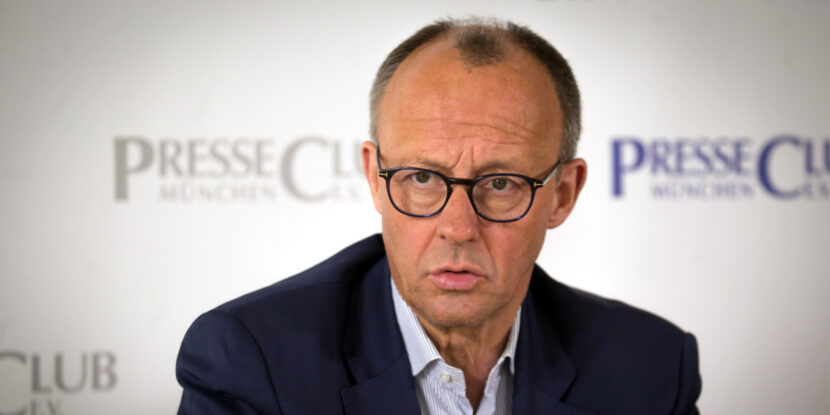
Image by Simon Dawson / No 10 Downing Street. 

Join Pulse+ to comment below, and receive exclusive e-mail analyses.
show less
show more

Germany Dismisses U.S. Free Speech Concerns Despite Rising Social Media Arrests.

PULSE POINTS

WHAT HAPPENED: German officials have pushed back at a U.S. State Department human rights report that claims the country is suppressing free speech online.

👤WHO WAS INVOLVED: State Department, German government officials, German federal spokesman Steffen Meyer.

📍WHEN & WHERE: August 2025, Germany and the United States.

💬KEY QUOTE: “A very high degree of freedom of expression prevails, and we will continue to defend this in every possible way,” claimed German federal spokesman Steffen Meyer.

🎯IMPACT: The pushback comes as German citizens continue to be arrested for social media posts branded hate speech or public insults by German government officials.

IN FULL

German authorities have dismissed accusations in a recent U.S. State Department human rights report that alleges the country is suppressing free expression, particularly on social media. The U.S. report expressed concern that German authorities are restricting public discourse in the name of combating hate speech.

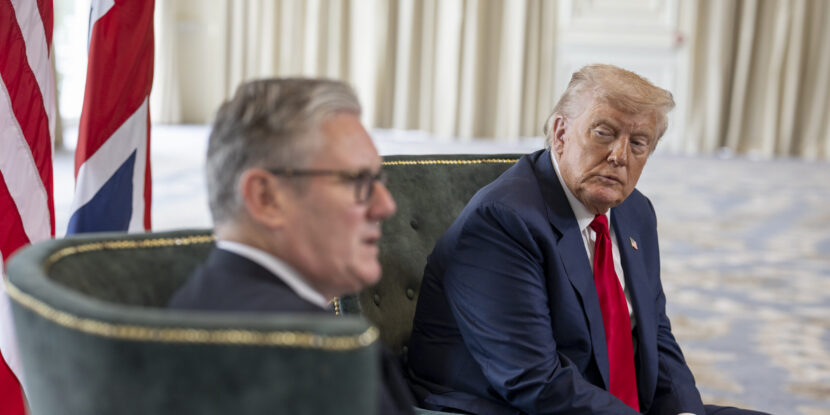
“There is no censorship here in Germany,” said government spokesman Steffen Meyer, representing Chancellor Friedrich Merz’s cabinet. “A very high degree of freedom of expression prevails, and we will continue to defend this in every possible way,” Meyer claimed.

However, so-called hate speech against immigrants and other groups is indeed an arrestable offense in Germany, as are public insults, particularly against politicians and other officials. In one instance, a 64-year-old man was fined €825 (around $962) and police raided his home after he shared a meme that labeled former Economy Minister Robert Habeck a “professional idiot.”

In one particularly egregious case, a German woman was imprisoned for defamation after she called an immigrant gang rapist a “disgraceful rapist pig” and “disgusting freak”—getting a harsher punishment than the rapist himself, who received only a suspended sentence.

Vice President J.D. Vance has sharply criticized Europe’s handling of free speech, including in Germany. During a speech at the Munich Security Conference in February, he asserted, “Across Europe, free speech, I fear, is in retreat.” He blamed European governments for using “ugly, Soviet‑era words like misinformation and disinformation” to suppress dissenting viewpoints, arguing that such practices protect entrenched interests, not democracy.

“The threat that I worry the most about vis‑à‑vis Europe is not Russia… It’s the threat from within. The retreat of Europe from some of its most fundamental values,” he said. He emphasized that “democracy rests on the sacred principle that the voice of the people matters.”

Vance later questioned whether the U.S. taxpayer should continue defending Germany if “you get thrown in jail in Germany for posting a mean tweet.”

Image by Michael Lucan.

Join Pulse+ to comment below, and receive exclusive e-mail analyses.
show less
show more

Trump Admin Slams British Censorship Regime in Human Rights Report.

PULSE POINTS

WHAT HAPPENED: The U.S. State Department released its annual Human Rights Report, highlighting serious and growing restrictions on freedom of expression in the United Kingdom.

👤WHO WAS INVOLVED: The State Department, Prime Minister Sir Keir Starmer’s government in the United Kingdom, and individuals targeted by the British government for their speech.

📍WHEN & WHERE: The report was released on August 12, 2025, with the relevant sections focusing on events in the United Kingdom.

💬KEY QUOTE: “Societies are strengthened by free expression of opinion, and government censorship is intolerable in a free society.” – State Department Press Secretary Tammy Bruce

🎯IMPACT: The report underscores growing concerns about free speech collapsing in Britain.

IN FULL

The Trump administration has raised concerns about the collapse of free speech protections in the United Kingdom, warning that government censorship is becoming more widespread. In its annual Human Rights Report, the U.S. State Department cited “credible reports of serious restrictions on freedom of expression” in Britain, adding that the situation had “worsened” in 2024 following Prime Minister Sir Keir Starmer’s election win last July, returning the leftist Labour Party to power for the first time in 14 years.

The report criticized the United Kingdom’s controversial Online Safety Act, which allegedly aims to tackle harmful online content, such as child pornography, but has drawn criticism for stifling political speech on issues such as immigration. It also examines the British government’s response to the mass murder of young children by the son of two asylum seekers in Southport, England, accusing officials of using the incident to suppress speech.

While not named in the report, Lucy Connolly, a former childminder and wife of a Conservative Party councillor, was reportedly of interest to the White House. Connolly was sentenced to two-and-a-half years in prison for a post on X after the Southport killings, in which she wrote: “Mass deportation now, set fire to all the f***ing hotels full of the bastards for all I care, while you’re at it, take the treacherous government and politicians with them. I feel physically sick knowing what these families will now have to endure. If that makes me racist, so be it.”

Critics claim her sentence is part of a “two-tier justice” system, with some voices facing harsher consequences than others for speech. For instance, Salman Iftikhar, a Pakistani businessman with the British equivalent of a green card, received only 15 months for physically accosting a white air stewardess and telling her she would be “dragged by [her] hair” from the specific hotel where cabin crew were staying and “gang raped and set on fire”. He added that “the white sheep-shagging bitch will be dead. The floor of [her] hotel will be blown up and it will disappear.”

The U.S. report also referenced Adam Smith-Connor, a 51-year-old veteran convicted in 2023 for silently praying outside an abortion clinic in memory of his aborted son. His case was cited by Vice President J.D. Vance at the Munich Security Conference in Germany, where he warned that Britain was facing a “crisis of censorship.”

State Department Press Secretary Tammy Bruce said: “We consider freedom of expression to be a foundational component of a functioning democracy,” adding: “Societies are strengthened by free expression of opinion, and government censorship is intolerable in a free society.”

Join Pulse+ to comment below, and receive exclusive e-mail analyses.
show less
show more

Supreme Court Petitioned to Revisit Gay Marriage Decision.

PULSE POINTS

WHAT HAPPENED: Kim Davis, a former Kentucky clerk, has filed a petition to the Supreme Court arguing that her First Amendment rights protect her from liability for denying marriage licenses to same-sex couples.

👤WHO WAS INVOLVED: Kim Davis, her attorney Mathew Staver, and the Supreme Court of the United States.

📍WHEN & WHERE: Davis’s petition was filed last month, with the case potentially being heard by the Supreme Court in Washington, D.C.

💬KEY QUOTE: “If there ever was a case of exceptional importance… this should be it.” – Mathew Staver

🎯IMPACT: If accepted, this case could challenge the 2015 Obergefell v. Hodges ruling that legalized same-sex marriage nationwide.

IN FULL

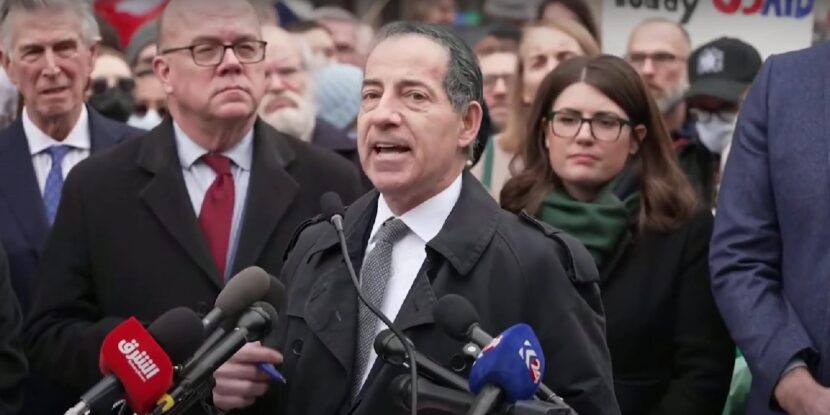
Kim Davis, the former Kentucky clerk who became widely known in 2015 for refusing to issue same-sex marriage licenses due to her religious beliefs, has taken her case to the Supreme Court. Filed last month, her petition argues that the First Amendment’s protection of religious freedom should shield her from personal liability in denying the licenses.

Davis’s legal team, led by attorney Mathew Staver, founder and chairman of Liberty Counsel, is also challenging the Supreme Court’s 2015 Obergefell v. Hodges decision, which legalized same-sex marriage across the United States. In the petition, Staver described the ruling as “egregiously wrong” and referred to former Justice Anthony Kennedy‘s majority opinion as “legal fiction.”

“The mistake must be corrected,” Staver wrote, emphasizing the broad implications of the case. He continued, “If there ever was a case of exceptional importance, the first individual in the Republic’s history who was jailed for following her religious convictions regarding the historic definition of marriage, this should be it.”

“I’m hoping that we’ll obviously get justice in this case for Kim Davis, but that the religious accommodation that she obtained for all clerks in Kentucky is extended to everyone across the country, whether they’re a clerk or not,” Staver added.

Davis’s case not only seeks to clear her name but also aims to revisit and potentially overturn the landmark pro same-sex marriage ruling issued during the Obama-Biden administration. If the Supreme Court agrees to hear the case, it would mark the first significant challenge to the Obergefell decision.

The outcome could have far-reaching consequences for both religious liberty and the legal definition of marriage in the United States. Observers are now waiting to see if the Supreme Court will take up the case.

Image by Photo Phiend.

Join Pulse+ to comment below, and receive exclusive e-mail analyses.
show less
show more

Democrat Jamie Raskin Backs UK Govt’s Censorship Law.

PULSE POINTS

WHAT HAPPENED: Congressman Jamie Raskin (D-MD) is backing the British government’s Online Safety Act—a censorship law which critics argue stifles free speech and is aimed at harming U.S.-based social media and technology companies—after a blow-up with Reform Party leader Nigel Farage.

👤WHO WAS INVOLVED: Reps. Jamie Raskin, Eric Swalwell, Jasmine Crockett, and Jim Jordan; Nigel Farage, British Prime Minister Sir Keir Starmer, and British Technology Secretary Peter Kyle.

📍WHEN & WHERE: Raskin’s embrace of the Online Safety Act came during a congressional delegation trip to the UK this week.

💬KEY QUOTE: “We thought there were some very good things in the Online Safety Act…” — Rep. Jamie Raskin

🎯IMPACT: The Democratic Party’s embrace of UK-style censorship is well outside the American legal mainstream regarding free speech rights and appears to be driven almost entirely by Raskin and others’ desire to undermine President Donald J. Trump.

IN FULL

Congressman Jamie Raskin (D-MD) is backing Britain’s far-left Labour Party government on the Online Safety Act—a censorship law that stifles free speech and harms U.S.-based social media and technology companies. The Maryland Democrat’s embrace of British censorship came this week as American lawmakers traveled to Great Britain on a congressional delegation led by House Judiciary Chairman Jim Jordan (R-OH).

“We thought there were some very good things in the Online Safety Act, and there might be some problematic things,” Raskin said during an interview with the press in London. The staunchly anti-Trump Democrat added: “I think the intervention of Democrats who don’t have a dog in that fight was maybe too much for [Nigel Farage] to handle, but we did want to make some general points about the freedom of speech.”

Raskin’s reference to Reform Party leader Nigel Farage stemmed from an argument that broke out between Congressional Democrats and the Brexit leader during a meeting with British lawmakers. Farage was responding to off-topic remarks Raskin made, accusing U.S. President Donald J. Trump of being a threat to free speech. Raskin states that Farage injected during his remarks, stating, “We’re not here to talk about Donald Trump.” The Marland Democrat continued: “[Farage] said that I am a guest here, and I should act like a guest. And I told him that he was a host, and he should act like a host.”

House Democrats claim Farage accused Raskin of being “the most pig-headed person he’d ever met,” while Representative Eric Swalwell (D-CA) alleges, “Farage just looked unhinged and like a giant manbaby.”

For his part, Raskin defended his own outburst by dismissing Farage’s valid concerns regarding his own experience being the target of politically motivated censorship, such as debanking, by stating the incident was an “explosive reaction of one British politician who obviously didn’t want any challenge to his view that he’s a free speech victim.”

Notably, Farage has been the target of political smears because of his pro-British stances. The National Pulse reported earlier this year that Farage successfully resolved his long-standing debanking dispute with NatWest Group, nearly two years after the closure of his accounts at the bank’s Coutts subsidiary. The settlement, which includes an apology from NatWest, brings closure to a saga that led to the resignation of the bank’s former chief executive, Dame Alison Rose, in 2023.

Additionally, Farage was smeared as being “on the side” of pedophiles and extreme pornographers in comments made by British Technology Secretary Peter Kyle over the Reform leader’s pledge to repeal the Online Safety Act. The National Pulse reported Wednesday that the office of the Prime Minister, Sir Keir Starmer, approved the remarks by Kyle.

Texas Democratic Congresswoman Jasmine Crockett, often accused of taking her duties as a lawmaker less than seriously, quipped, “There was a little bit of drama, and somehow it did not involve me or Swalwell.”

Join Pulse+ to comment below, and receive exclusive e-mail analyses.
show less
show more

New York Pays Out $225K After Trying to Force Christian Photographer to Shoot Gay Weddings.

PULSE POINTS

WHAT HAPPENED: New York agreed to pay $225,000 in legal fees to Christian wedding photographer Emilee Carpenter and promised not to enforce laws that infringed on her First Amendment rights by trying to coerce her into shooting homosexual weddings.

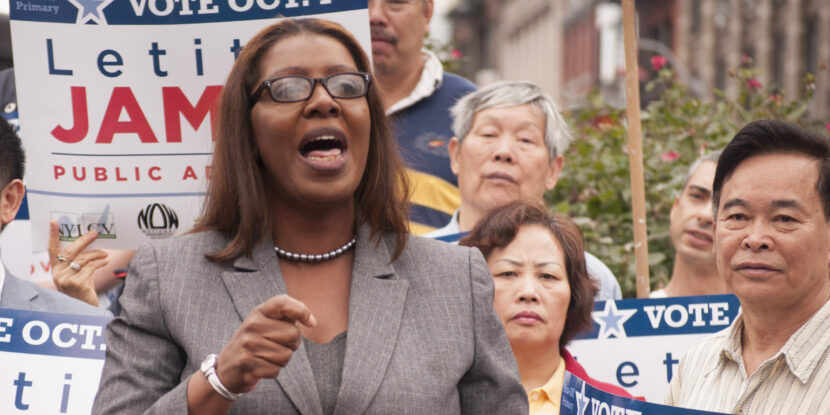
👤WHO WAS INVOLVED: Emilee Carpenter, New York Attorney General Letitia James, U.S. District Judge Frank Geraci, and the Alliance Defending Freedom.

📍WHEN & WHERE: The legal battle concluded with a consent decree following a May ruling in a New York federal court.

💬KEY QUOTE: “New Yorkers can now enjoy the freedom to create and express themselves, a freedom that protects all Americans regardless of their views,” said Bryan Neihart of the Alliance Defending Freedom.

🎯IMPACT: The decision upholds First Amendment protections for creative professionals, potentially setting a significant precedent for similar cases.

IN FULL

After a four-year legal battle, the State of New York has agreed to pay Christian wedding photographer Emilee Carpenter $225,000 in legal fees and to stop enforcing laws that violate her First Amendment rights. The settlement allows Carpenter to decline photographing homosexual weddings without fear of state penalties.

The agreement, detailed in a consent decree between New York Attorney General Letitia James and Carpenter’s legal team at the Alliance Defending Freedom (ADF), follows a ruling in May by U.S. District Judge Frank Geraci, a Barack Obama appointee, who stated it was “beyond debate” that New York cannot use public accommodations laws to “compel speech.”

“New Yorkers can now enjoy the freedom to create and express themselves, a freedom that protects all Americans regardless of their views,” ADF senior counsel Bryan Neihart stated.

The case was returned to the lower court by the 2nd U.S. Circuit Court of Appeals after the U.S. Supreme Court ruled against Colorado’s public accommodations law in the high-profile 303 Creative case, where graphic designer Lorie Smith won the right to refuse homosexual wedding clients. Colorado eventually agreed to pay Smith $1.5 million in legal expenses.

Judge Geraci issued a “narrow” preliminary injunction preventing New York from “peculiarly” targeting Carpenter. Under the consent decree, James’ office committed to refraining from applying New York’s public accommodations, discrimination, and publication laws in ways that would force Carpenter and her company to provide the same wedding and engagement photography services to homosexual couples as they do to heterosexual couples.

The agreement also affirms Carpenter’s right to “adopt their desired Beliefs and Practices policy,” to post and promote that policy publicly, and to ask potential clients “questions sufficient to determine” if they are requesting services for a homosexual wedding.

Image by Matt Cohen.

Join Pulse+ to comment below, and receive exclusive e-mail analyses.
show less
show more

Federal Court Upholds Ban on Critical Race Theory in Schools.

PULSE POINTS

WHAT HAPPENED: A ban on critical race theory (CRT) in Arkansas schools has been successfully defended before the 8th U.S. Circuit Court of Appeals.

👤WHO WAS INVOLVED: Arkansas Attorney General Tim Griffin, a three-judge panel from the 8th Circuit, and students challenging the law.

📍WHEN & WHERE: The ruling was issued on Wednesday by the 8th U.S. Circuit Court of Appeals.

💬KEY QUOTE: “With its ruling today, the 8th Circuit continues to ensure that the responsibility of setting the curriculum is in the hands of democratically elected officials who, by nature, are responsive to voters.” – Tim Griffin

🎯IMPACT: The ruling vacates a prior injunction and reinforces the state’s authority to determine school curricula.

IN FULL

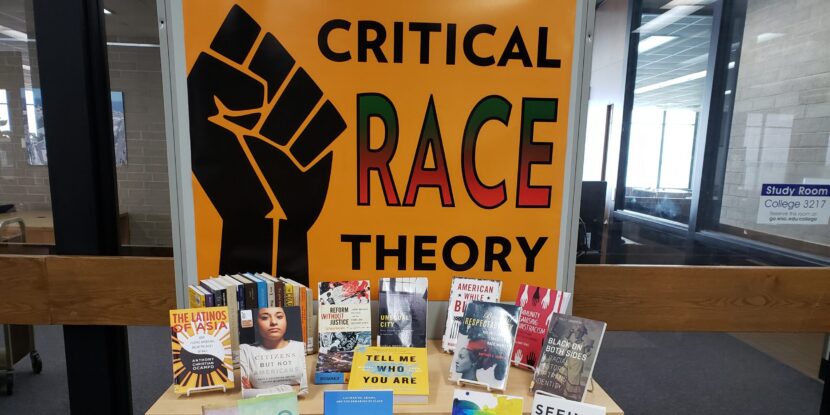
The State of Arkansas successfully defended its ban on critical race theory in its schools before the 8th U.S. Circuit Court of Appeals. On Wednesday, a three-judge panel issued a ruling against a legal challenge brought by a group of students who contend the state ban violates their First Amendment rights.

“Since the Free Speech Clause does not give the students the right to compel the government to say something it does not wish to, they cannot show a likelihood of success,” the 8th Circuit ruling reads. Notably, there are long-standing legal precedents for schools and both the state and federal governments to limit the free speech rights of students.

The ruling was met with praise by Arkansas Attorney General Tim Griffin (R), who stated on Wednesday: “With its ruling today, the 8th Circuit continues to ensure that the responsibility of setting the curriculum is in the hands of democratically elected officials who, by nature, are responsive to voters.”

Image by college.library.

Join Pulse+ to comment below, and receive exclusive e-mail analyses.
show less
show more

Could This SCOTUS Case Limit the Need for SuperPACs and Dark Campaign Cash?

PULSE POINTS

WHAT HAPPENED: The Supreme Court has agreed to review federal limits on coordinated spending by political parties in support of their candidates, questioning whether these restrictions violate the First Amendment.

👤WHO WAS INVOLVED: Republican Party political committees, Vice President J.D. Vance, former Rep. Steve Chabot (R-OH), the Democratic National Committee (DNC), and the Justice Department (DOJ).

📍WHEN & WHERE: The Supreme Court will hear the case during its next term, with a decision expected before the 2026 midterm elections.

💬KEY QUOTE: “Congress has built a wall of separation between party and candidate, forcing party committees to figure out how to get their candidates elected without hearing from them.” – GOP appeal filing

🎯IMPACT: The case could reshape campaign finance rules and affect the role of political parties in U.S. elections.

IN FULL

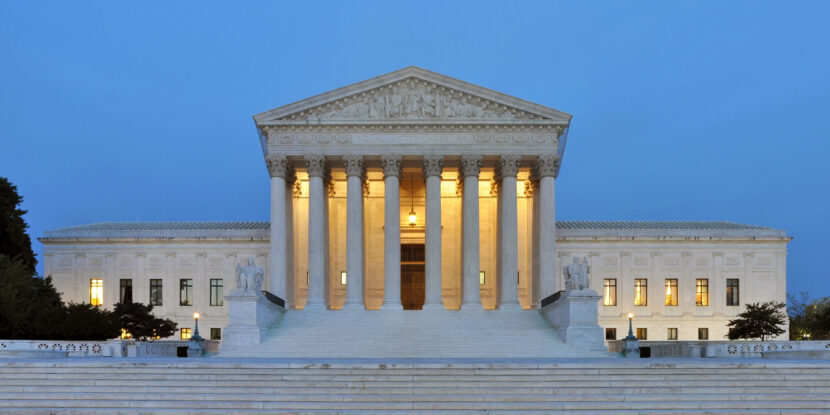
The Supreme Court announced it will review federal limits on coordinated spending by political parties in support of their candidates, raising questions about whether such restrictions violate the First Amendment. The case will be heard in the court’s next term, with a decision anticipated just months before the 2026 midterm elections.

The case was brought by Republican political committees, including the National Republican Senatorial Committee (NRSC) and the National Republican Congressional Committee (NRCC), along with Vice President J.D. Vance and former Rep. Steve Chabot (R-OH). The Department of Justice (DOJ) has joined the GOP in arguing that the limits are unconstitutional. Democratic Party committees have been allowed to intervene to defend the law, as the government has declined to do so in this instance.

Notably, if the Supreme Court rules in favor of the Republican challenge, the legal changes would likely empower campaign committees directly under the control of political parties and actually reduce the influence of SuperPACs and dark money groups like the far-left Sixteen Thirty Fund. Since the high court’s 2010 decision in Citizens United v. FEC, outside political spending in elections has been taken over by well-financed consulting operations like the politically progressive Arabella Advisors, which controls a network of nonprofits—like the Sixteen Thirty Fund and New Venture Fund—and political PACs.

The limits in question stem from a 50-year-old provision of the Federal Election Campaign Act. For the 2024 election cycle, coordinated spending limits range from $123,600 to $3.7 million for Senate candidates and $61,800 to $123,600 for House candidates. A U.S. Court of Appeals for the 6th Circuit decision upheld these limits, citing a 2001 Supreme Court ruling that supported an earlier version of the restrictions.

In their appeal, Republicans argued that the spending limits violate the First Amendment by restricting political parties’ ability to coordinate with candidates. They asked the Supreme Court to either clarify or overturn its 2001 decision, describing it as “plainly wrong the day it was decided.”

“Congress has built a wall of separation between party and candidate, forcing party committees to figure out how to get their candidates elected without hearing from them,” the GOP filing contends, adding: “The result is a more polarized process in which political parties—an institutional force almost as old as ‘the formation of the Republic itself’—have been supplanted by less-restricted speakers.”

The DOJ, represented by Solicitor General D. John Sauer, stated that the expenditure limits burden the rights of political parties and candidates, calling the restrictions a significant impediment to political speech. Democratic Party committees stepped in to defend the law after the government sided with the Republicans. Noel Francisco and Don McGahn are representing the Republican campaign committees.

Join Pulse+ to comment below, and receive exclusive e-mail analyses.
show less
show more

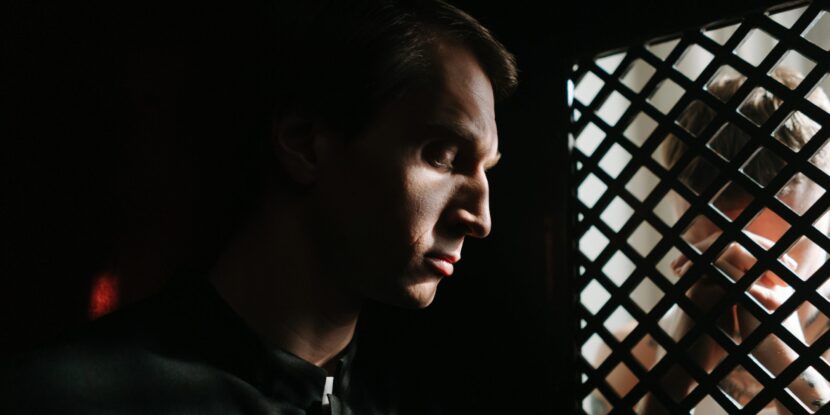
Trump DOJ Takes Democrat State to Court for Trying to Force Priests to Break Seal of Confession.

PULSE POINTS

WHAT HAPPENED: The Department of Justice (DOJ) is launching legal action against Washington State for trying to force Catholic priests to violate the Seal of the Sacrament of Confession.

👤WHO WAS INVOLVED: Washington State, Governor Bob Ferguson (D), the Roman Catholic Church, Assistant Attorney General Harmeet K. Dhillon.

📍WHEN & WHERE: The DOJ announced the lawsuit on June 25.

💬KEY QUOTE: “Laws that explicitly target religious practices such as the Sacrament of Confession in the Catholic Church have no place in our society.” – Harmeet K. Dhillon.

🎯IMPACT: The legal challenge could stop more states from attempting to force priests to violate the sacrament in the future by setting a legal precedent.

IN FULL

The Department of Justice (DOJ) has launched legal action against the State of Washington for trying to force Roman Catholic priests to break the Seal of Confession, arguing that the law violates the First Amendment and religious freedom. Assistant Attorney General Harmeet K. Dhillon of the DOJ’s Civil Rights Division explained that the bill forces Catholic priests to face criminal consequences for upholding their faith.

“Laws that explicitly target religious practices such as the Sacrament of Confession in the Catholic Church have no place in our society,” Dhillon said.

Washington’s Senate Bill 5375 demands that Catholic priests violate the Seal of Confession if a confession pertains to child abuse or neglect. Importantly, Catholic priests are bound to the Seal of Confession and face excommunication and possible removal from the priesthood for breaking the seal. Nevertheless, those who refuse to violate the seal in Washington State could face prison time.

Democrat Governor Bob Ferguson, supposedly a Catholic himself, claimed he was “very familiar” with the sacrament when he signed the law last month. However, local Spokane Bishop Thomas Daly was defiant, saying no priest will break the Seal of Confession regardless of the law.

Assistant Attorney General Dhillon argued, “Where does it stop? Can we force everyone to report everything? That becomes compelled speech, which is unconstitutional. This country was built on protecting religious expression, not dismantling it.”

Image by Cottonbro Studio.

Join Pulse+ to comment below, and receive exclusive e-mail analyses.
show less
show more