




Thursday, April 2, 2026

TikTok Struggles to Make Its Case Against Anti-CCP Law at SCOTUS.

TikTok, the video social media platform owned by Chinese-controlled ByteDance, argued against its impending ban in the United States before the Supreme Court on Friday. However, the social media company appears to have found little enthusiasm in their defense among the high court’s justices.

The oral arguments—stemming from an emergency appeal of a law requiring the Chinese-owned ByteDance to divest from TikTok or face a ban of the platform in the U.S.—mostly circled around the constitutional question of viewpoint and content restrictions enacted by Congress. Despite TikTok insisting the case was a simple matter of First Amendment speech rights, the justices pushed the case into the realm of the constitutional question of association—specifically with the Chinese Communist Party (CCP)-controlled ByteDance—as well.

TikTok’s counsel Noel Francisco insisted that the video social media platform is not ‘ultimately’ controlled by ByteDance and that Congress’s divestiture law clearly violates the company’s—and its users’— free speech rights. Currently, TikTok’s Chinese parent company, ByteDance, must divest from the company by January 19. If this divestiture does not occur, the social media platform will be barred from being downloaded to U.S. social media app stores. Thus far, ByteDance has insisted it will not divest from its American social media company.

ASSOCIATION NOT CONTENT.

The U.S. government, defending the law, emphasized it does not discriminate against specific content or viewpoints but merely seeks to cut the CCP and ByteDance out of being able to influence the TikTok platform. Solicitor General Elizabeth Prelogar noted to the justices that the ban—which serves as the crux of TikTok’s argument against the law—is a secondary effect and that the content shown on TikTok would not need to change if the platform was divested from ByteDance. The latter is key to the government’s defense of the law as it illustrates the law does not seek to regulate speech but rather association.

Ultimately, the justices appear wary of preventing Congress from asserting its ability to regulate the foreign ownership of American companies. Justice Ketanji Brown Jackson went so far as to question whether TikTok was essentially arguing that Congress could not prevent companies from associating with terrorist organizations.

Importantly, the government repeatedly stressed that the law is meant to not just address U.S. data security interests but also the country’s national security interests.

With arguments concluded, the Supreme Court could decide the fate of TikTok in a matter of days by issuing a preliminary or administrative injunction which would delay the divestment law from taking effect.

Image by Domenico Convertini.

show less
TikTok, the video social media platform owned by Chinese-controlled ByteDance, argued against its impending ban in the United States before the Supreme Court on Friday. However, the social media company appears to have found little enthusiasm in their defense among the high court's justices. show more

WATCH: Zuck Bends The Knee, Axes Facebook’s ‘Fact Check’ Regime.

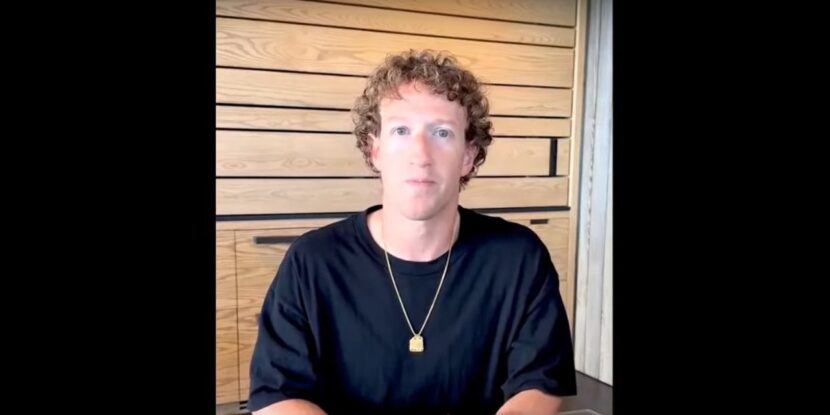
Meta Platforms—the parent company of Facebook, Instagram, and Threads—announced a significant shift in its content moderation strategy on Tuesday. On Tuesday morning, Mark Zuckerberg—CEO of Meta and founder of Facebook—revealed plans to discontinue the existing third-party fact-checking system, accused of rampant left-wing bias, in favor of a user-driven model akin to Community Notes on X (formerly Twitter).

In a video posted to Instagram, Zuckerberg outlined the company’s new direction, emphasizing a return to prioritizing free expression and minimizing content moderation errors. The initial roll-out of this community-driven approach will begin in the United States. He emphasized the company’s intent to simplify policies and reduce censorship.

Joel Kaplan, Meta’s Chief Global Affairs Officer, stated in a press release that the platforms aim to create an environment where individuals can express themselves freely, acknowledging the challenges this poses. Kaplan is new to the role, having replaced former Deputy Prime Minister Sir Nick Clegg of Britain’s Liberal Democrats party.

Kaplan alleges that Meta’s previous content management systems, developed under social and political pressures, became overly complex. This complexity often led to mistakes, frustrating users and hindering free expression. The new strategy will remove specific restrictions on contentious topics like immigration and gender identity while focusing automated systems on illegal content. Additionally, Meta will relocate its trust and safety team from California to Texas.

The move is likely part of Zuckerberg’s broader campaign to repair his political ties with President-elect Donald J. Trump and the Republican Party. The elevation of Kaplan and the hiring of establishment GOP mover-and-shaker Brian Baker are also part of this effort to repair the tech mogul’s image.

WATCH: 


View this post on Instagram


A post shared by Mark Zuckerberg (@zuck)

show less
Meta Platforms—the parent company of Facebook, Instagram, and Threads—announced a significant shift in its content moderation strategy on Tuesday. On Tuesday morning, Mark Zuckerberg—CEO of Meta and founder of Facebook—revealed plans to discontinue the existing third-party fact-checking system, accused of rampant left-wing bias, in favor of a user-driven model akin to Community Notes on X (formerly Twitter). show more

Editor’s Notes

Behind-the-scenes political intrigue exclusively for Pulse+ subscribers.

RAHEEM J. KASSAM Editor-in-Chief
It’s funny, isn’t it? Just a few years ago, we exposed Facebook’s fact-checking regime, fuelled by Chinese Communist Party-fluffer Alan Duke from ‘Lead Stories
It’s funny, isn’t it? Just a few years ago, we exposed Facebook’s fact-checking regime, fuelled by Chinese Communist Party-fluffer Alan Duke from ‘Lead Stories show more
for exclusive members-only insights

Meta Admits to Overzealous Content Moderation and Censorship.

Meta’s content moderation policies have come under scrutiny, with a senior executive admitting to excessive removal of user content across its platforms. Nick Clegg, former British deputy prime minister and Meta‘s president of global affairs, recently acknowledged the company’s high error rates in content moderation. He emphasized the need for enhanced precision and accuracy when applying their rules, stating that the current system often hampers free expression.

During a recent press briefing, Clegg expressed regret over the company’s rigorous removal of COVID-19 pandemic-related posts. “We know that when enforcing our policies, our error rates are still too high, which gets in the way of the free expression that we set out to enable,” the former leader of Britain’s Liberal Democrats said. “Too often, harmless content gets taken down or restricted, and too many people get penalized unfairly.”

He explained that decisions during the pandemic were driven by uncertainty and, in hindsight, were overly strict. Clegg pointed out that users have voiced concerns about over-enforcement, leading to the removal or restriction of innocuous content.

In recent months, Threads—another Meta-owned social media platform—has been notably affected by erroneous takedowns. For instance, Meta’s systems mistakenly suppressed a photo of President-elect Donald Trump, prompting a public apology. The company’s Oversight Board has also raised alarms about the risk of excessive removal of political speech, especially ahead of the U.S. presidential election.

Despite these issues, Meta—owned by billionaire Mark Zuckerberg and the parent company of Facebook—has not implemented significant changes to its content rules since the election.

Clegg indicated that updates might be forthcoming, referring to the rules as a “living, breathing document.” When questioned about Zuckerberg’s recent meeting with Trump and Meta’s stance on government pressure to moderate content, Clegg refrained from providing specific details.

Image by Anthony Quintano.

show less
Meta's content moderation policies have come under scrutiny, with a senior executive admitting to excessive removal of user content across its platforms. Nick Clegg, former British deputy prime minister and Meta's president of global affairs, recently acknowledged the company's high error rates in content moderation. He emphasized the need for enhanced precision and accuracy when applying their rules, stating that the current system often hampers free expression. show more

This Town Just Banned American Flags and the U.S. Constitution at City Council Meetings.

The town of Edison, New Jersey, has moved to prohibit so-called ‘props’—including American flags and the U.S. Constitution—at city council meetings, claiming their display is disruptive. The ban was enacted through a new local ordinance that also limits how long a resident can address the council.

Established after a nearly five-hour-long council meeting, many Edison residents contend the city government is attempting to stifle complaints about how their tax dollars are being spent and from voicing concerns regarding public safety. “To consider the American flag and the Constitution a prop when someone raises it is an insult to what the flag is, what the flag stands for, and what this country is,” Edison resident Maryann Hennessey said at the recent meeting where the council approved the ordinance. She continued: “For you to consider the use of the American flag a prop is disgusting.”

Another resident,  Joel Bassoff, was removed from the meeting after pulling out a small American flag and waving it while speaking before the city council members. “He is in violation; he can be removed,” ordered Council President Nish Patel, the sponsor of the ordinance banning the display of the American flag and U.S. Constitution.

In addition, the enacted measure bars residents from wearing costumes or masks without a medical reason. Speakers can also be removed if they’re deemed disruptive or too loud.

Other residents say they fail to understand why the council is punishing those living in the town at large when only a handful of individuals tend to disrupt their meetings. “It’s juvenile to fight this war; you’re losing. It’s just making people more agitated and more determined to do something to provoke getting thrown out. Let it go,” Edison resident Sue Malone-Barber said.

WATCH:

show less
The town of Edison, New Jersey, has moved to prohibit so-called 'props'—including American flags and the U.S. Constitution—at city council meetings, claiming their display is disruptive. The ban was enacted through a new local ordinance that also limits how long a resident can address the council. show more

Muslim Legislator Demands Blasphemy Law…

Labour Member of Parliament (MP) Tahir Ali has urged the British government to ban the “desecration” of religious texts and prophets. During a parliamentary session, Ali addressed Prime Minister Sir Keir Starmer, calling for the reinstatement of laws to restrict such acts, which the British officially discarded in 2008 and 2021, long after they had fallen into disuse.

Representing the Birmingham Hall Green and Moseley constituency (electoral district), Ali complained that such desecration fuels societal “hatred.” He referred to a United Nations Human Rights Council resolution that condemned the desecration of religious texts like the Islamic Quran.

Ali’s proposal comes during Islamophobia Awareness Month amidst increasing calls across Europe for more special protections for Muslims.

Prime Minister Starmer expressed agreement with Ali’s concerns, stating that desecration is concerning and should be uniformly deplored and declining to rule out a blasphemy law altogether. Labour, experienced electoral challenges in constituencies with significant Muslim populations in the July snap election that returned them to power for the first time since 2010, with competition from pro-Palestine candidates biting into their vote.

Denmark, after removing its longstanding blasphemy law in 2017, already reinstated legislation in 2023 outlawing the desecration of holy texts following several controversial Quran-burning protests. Danish officials argued the move was necessary for national security, citing increased terrorism threats.

Practically speaking, anti-Islam blasphemy is already de facto criminalized in the United Kingdom, with broad public order laws and laws allowing for “grossly offensive” posts over communications networks, including social media, allowing for arrests.

WATCH:

Image by Tobias Hellsten.

show less
Labour Member of Parliament (MP) Tahir Ali has urged the British government to ban the "desecration" of religious texts and prophets. During a parliamentary session, Ali addressed Prime Minister Sir Keir Starmer, calling for the reinstatement of laws to restrict such acts, which the British officially discarded in 2008 and 2021, long after they had fallen into disuse. show more

Editor’s Notes

Behind-the-scenes political intrigue exclusively for Pulse+ subscribers.

RAHEEM J. KASSAM Editor-in-Chief
Yeah, I told you all in No Go Zones (2017) that this would happen, and for my pleasure, I was called a far-right extremist, fearmonger, and fascist
Yeah, I told you all in No Go Zones (2017) that this would happen, and for my pleasure, I was called a far-right extremist, fearmonger, and fascist show more
for exclusive members-only insights
musk

Musk Confirms X Is Restricting Access to Links Like This One.

Tech billionaire Elon Musk has confirmed that posts containing links in their primary text are deprioritized on X, limiting the reach of news sites. With nearly two million followers on the X platform, British-American technology investor Paul Graham made a public complaint over the weekend about the platform’s “deprioritization of tweets with links.”

Musk told users to provide a description in the main post and include the link in a reply. He remarked that this approach prevents what he termed “lazy linking.” The underlying intention seems to be to boost user engagement within X’s ecosystem, discouraging users from navigating away. For this very reason, The National Pulse has a free news alerts app you can download here. Be sure to turn on notifications.

An analysis in August 2023 showed X had implemented delays on outbound links to competitor platforms such as Facebook, Bluesky, and Substack, along with media outlets like The New York Times. These delays reportedly decreased traffic, potentially reducing advertising revenue for the targeted sites. Substack’s founders condemned the practice, insisting it hampers creators’ efforts to maintain independent platforms.

Musk initially censored links and searches to Substack last year but stopped the practice after heavy criticism. The conflict came after Substack announced the creation of its “Notes” feature, which is similar to X.

Since purchasing X, formerly Twitter, in 2022, Musk has touted the platform as a beacon for free speech online. However, despite public conflicts with officials in Europe and Brazil over censorship, Musk and X have often bowed to government pressures. For instance, Brazil’s Supreme Court lifted its ban on X just over a month after Musk agreed to censor what the government deemed “misinformation” regarding Brazil’s 2022 election.

show less
Tech billionaire Elon Musk has confirmed that posts containing links in their primary text are deprioritized on X, limiting the reach of news sites. With nearly two million followers on the X platform, British-American technology investor Paul Graham made a public complaint over the weekend about the platform’s “deprioritization of tweets with links.” show more

Editor’s Notes

Behind-the-scenes political intrigue exclusively for Pulse+ subscribers.

RAHEEM J. KASSAM Editor-in-Chief
While he’s well within his rights, and is hurting legacy media more than anyone else, this system still sucks for smaller publishers such as The National Pulse, which rely on external links and clicks in order to survive
While he’s well within his rights, and is hurting legacy media more than anyone else, this system still sucks for smaller publishers such as The National Pulse, which rely on external links and clicks in order to survive show more
for exclusive members-only insights

British Police Arrest Jew for Calling Another Jew a ‘Kapo’ on Social Media.

Police arrested a Jewish man in the United Kingdom for labeling a Rabbi a “kapo” on social media, in just the latest arrest in the country over free speech online. Rupert Nathan, a 63-year-old living in England, was arrested by police and kept in custody for 12 hours over the comments he made on Facebook that were directed at Rabbi Gabriel Kanter-Webber.

Nathan called the Rabbi a “fake” and used the term “kapo,” which refers to Jews who helped the Nazis during the Holocaust and is seen as a by-word for betrayer or traitor among the Jewish community. The Crown Prosecution Service (CPS) has yet to formally charge Nathan for his remarks, which could potentially see him charged with “malicious communications.”

“I admit that calling someone a ‘kapo’ is not a nice thing to do, but it is not a crime,” Nathan told British media.

He also highlighted another recent case involving journalist Allison Pearson, who was visited by police earlier this month after an allegedly offensive tweet made last year.

Pearson, who writes for the Telegraph, said Essex police came to her home regarding a “non-crime hate incident” and highlighted it as an example of two-tier policing in the United Kingdom.

“We are living through an epidemic of stabbings, burglaries, and violent crime… which is not being adequately investigated by the police, yet they had somehow found time to come to my house and intimidate me,” she said.

Following the riots sparked by the Southport murders of three young girls, allegedly by a migration-background teen found in possession of al-Qaeda terror manuals, several Britons have been arrested for speech crimes.

Among them was a woman who posted “misinformation” about the identity of the alleged killer.

Image by Joshua Hayes.

show less
Police arrested a Jewish man in the United Kingdom for labeling a Rabbi a "kapo" on social media, in just the latest arrest in the country over free speech online. Rupert Nathan, a 63-year-old living in England, was arrested by police and kept in custody for 12 hours over the comments he made on Facebook that were directed at Rabbi Gabriel Kanter-Webber. show more

Center for Countering Digital Hate Deletes X Account After Musk Declares ‘War’ & Trump’s Victory.

The Center for Countering Digital Hate (CCDH), a United Kingdom-based nonprofit group that purports to combat online hate and misinformation, has joined the growing ranks of far-left media figures and organizations that have deleted their X (formerly Twitter) accounts. Following President-elect Donald J. Trump’s landslide victory in the 2024 U.S. presidential election—in part aided by a Super PAC funded by X owner Elon Musk—several high-profile Democrat-aligned media personalities, including Joy Reid and Don Lemon, have left the platform.

CCDH has long been at the center of a network of radical progressive activists and organizations pushing to censor the voices of populists and conservatives online under the guise of countering political misinformation and hate speech. In 2020, the group was partially responsible for Google’s decision to ban The Federalist and ZeroHedge from generating revenue through Google Ads. “We found that lots of those companies are inadvertently funding through their advertising content that is outright racist in defense of white supremacism and contains conspiracy theories about George Floyd and the Black Lives Matter movement,” the CEO of CCDH, Imram Ahmed, said at the time. Ahmed has also deleted his personal X account.

More recently, CCDH was responsible for the AI image generator Midjourney’s decision to block users from creating images featuring either Joe Biden or Donald Trump. Using language often employed by CCDH, the company claimed the decision was to prevent the spread of “misinformation.”

The National Pulse reported in October that Musk declared “war” on the Britain-based censorship group after internal documents surfaced showing CCDH intended to launch an effort to destroy his social media platform. According to the files, CCDH has set “Kill Musk’s Twitter” as a top priority heading into 2025.

show less
The Center for Countering Digital Hate (CCDH), a United Kingdom-based nonprofit group that purports to combat online hate and misinformation, has joined the growing ranks of far-left media figures and organizations that have deleted their X (formerly Twitter) accounts. Following President-elect Donald J. Trump's landslide victory in the 2024 U.S. presidential election—in part aided by a Super PAC funded by X owner Elon Musk—several high-profile Democrat-aligned media personalities, including Joy Reid and Don Lemon, have left the platform. show more

Police Visit Telegraph Journalist Over Year-Old Tweet in ‘Hate Incident’ Inquiry.

A journalist from The Telegraph, Allison Pearson, reports that British police officers visited her home on Remembrance Sunday in connection with a “non-crime hate incident.” The Essex Police force visit related to a tweet she posted a year ago.

Police informed her that the investigation is under section 17 of the Public Order Act 1986, which addresses material allegedly likely or intended to incite racial hatred. She reports she asked, “What did this post I wrote that offended someone say?” but the officers told her they could not tell her. They also refused to answer when she asked who her accuser was—and informed her, “It’s not ‘the accuser.’ They’re called ‘the victim.’”

Pearson described the situation as “Kafkaesque” and proof of two-tier policing in Britain. “We are living through an epidemic of stabbings, burglaries and violent crime… which is not being adequately investigated by the police, yet they had somehow found time to come to my house and intimidate me,” she complained.

Figures reveal a growing number of non-crime hate incidents (NCHIs), with reports rising from 119,934 incidents between 2014 and 2019 to an estimated 250,000 since then, according to the Free Speech Union, which is defending Pearson.

X (formerly Twitter) owner Elon Musk slammed the investigation into Pearson, saying, “This needs to stop.”

Image by Joshua Hayes.

show less
A journalist from The Telegraph, Allison Pearson, reports that British police officers visited her home on Remembrance Sunday in connection with a "non-crime hate incident." The Essex Police force visit related to a tweet she posted a year ago. show more

Foreign Misinformation Bill Could Impact U.S. Platforms.

New misinformation laws could impact free speech online worldwide, pressuring social media platforms to censor supposedly “harmful” content under threat of punishing fines. Brian Marlow, Executive Director of the Australian Taxpayers’ Alliance, warns an Australian draft Misinformation Bill extends beyond Australia’s borders, “allowing unelected bureaucrats to regulate social media companies outside Australia if they provide services to Australians.”

This would include U.S. platforms, such as Facebook, YouTube, and X (formerly Twitter), which has adopted a more pro-free speech approach to online discourse under Elon Musk‘s ownership.

“[C]ontent doesn’t even need to be false to be removed—it just has to be deemed ‘harmful’ by authorities,” Marlow says of the Misinformation Bill, noting: “If platforms don’t comply, they risk massive fines, pressuring them to enforce Australian censorship globally to avoid penalties.”

“This will set a dangerous precedent, creating a global standard that pressures platforms to censor content across borders, ultimately killing free speech worldwide,” he adds.

RECOURSE.

Recently, Vice President-elect J.D. Vance hinted that supposed U.S. allies in the European Union (EU) may see the protections extended to them by the U.S. military curtailed if they try to undermine the First Amendment with pro-censorship regulations.

“I forget exactly which official it was within the European Union, but [they] sent Elon [Musk] this threatening letter that basically said, ‘We’re going to arrest you if you platform Donald Trump,’” Vance said in September. “So what America should be saying is, if NATO wants us to continue supporting them and NATO wants us to continue to be a good participant in this military alliance, why don’t you respect American values and respect free speech?”

While Australia is not a NATO member, the U.S. is still a major trade and security partner. Similar threats could discourage legislation like the Misinformation Bill.

show less
New misinformation laws could impact free speech online worldwide, pressuring social media platforms to censor supposedly "harmful" content under threat of punishing fines. Brian Marlow, Executive Director of the Australian Taxpayers' Alliance, warns an Australian draft Misinformation Bill extends beyond Australia's borders, "allowing unelected bureaucrats to regulate social media companies outside Australia if they provide services to Australians." show more