Monday, June 22, 2026

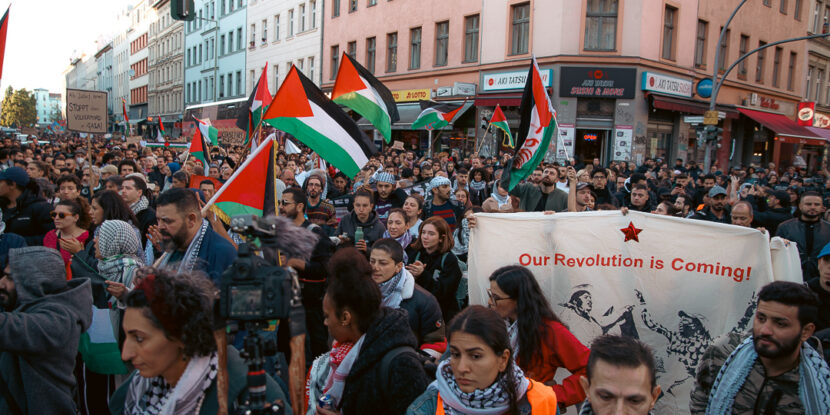
This European Country Faces Over a Million Radicalized Muslims.

PULSE POINTS:

What Happened: A study by the University of Münster reveals that nearly 20 percent of Muslim migrants in Germany may be susceptible to radicalisation.

👥 Who’s Involved: Researchers from the University of Münster, German Chancellor Friedrich Merz, and Interior Minister Alexander Dobrindt.

📍 Where & When: Germany, study results released last week; border policy changes implemented in May 2025.

💬 Key Quote: Sarah Demmrich stated, “With the emotional state of resentment, we were able to uncover a new and even strong factor in radicalisation.”

⚠️ Impact: The findings suggest up to one million individuals could be vulnerable to radicalisation, amidst tightened border controls and migration policy reforms in Germany.

IN FULL:

A new study conducted by the University of Münster’s Research Centre for Islamic Theology has found that nearly 20 percent of Muslim migrants in Germany could be vulnerable to radicalisation. The survey, which included almost 1,900 participants with a migration background, highlighted strong anti-Western and anti-Semitic sentiments, as well as resentment toward German politics and societal norms.

The term “migration background” in Germany refers to both first-generation migrants and their descendants. With over 5.5 million Muslims in this category nationwide, the findings suggest that up to one million individuals could be at risk of radicalisation. Researchers also noted that a third of those identified as vulnerable expressed support for violence in response to perceived injustices against Muslims. Additionally, many respondents viewed Islamic Sharia law as superior to German law and expressed a desire for Islam to be the dominant political authority in Germany.

Sarah Demmrich, a religious psychologist involved in the study, explained to German outlet NOZ that “resentment” was identified as a significant factor in the radicalisation process. The researchers found that the clash between Germany’s more liberal Western cultural norms and the strict religious beliefs of Muslim migrants is a primary driver of the sort of resentment that fuels radicalization. “The capacity for criticism within Islam must be strengthened in order to promote reflective debates on religious and social issues,” Demmrich contends.

This research comes as Germany implements somewhat stricter migration controls under newly elected Chancellor Friedrich Merz. Merz has rescinded the open-border policies introduced by former Chancellor Angela Merkel, a fellow member of the Christian Democratic Union (CDU) party, in 2015. Under the new rules, illegal migrants, except for children and pregnant women, are being turned away at Germany’s borders. Merz has also initiated measures to deport Syrian migrants following the collapse of Bashar al-Assad’s regime last year.

Interior Minister Alexander Dobrindt has announced a significant expansion of border enforcement, increasing personnel by 3,000 to a total of 14,000 officers. Speaking on the new measures, Dobrindt stated, “We want to take stronger steps against illegal immigration… The numbers remain significantly too high.”

Merz has defended the policy shift, asserting that the European Union (EU) must send a clear message to deter illegal immigration and disrupt smuggling networks. Recent attacks in Germany, including a fatal stabbing in Bavaria last December, have intensified public focus on migration and security issues.

Image by Montecruz Foto.

show less

PULSE POINTS:

show more

FBI Catches British Businessman Trying to Acquire U.S. Weapons for China.

PULSE POINTS:

What Happened: A British businessman has been arrested after a Federal Bureau of Investigation (operation) caught him trying to purchase U.S. military hardware for Communist China.

👥 Who’s Involved: British businessman John Miller, Chinese national Cui Guangha, the Federal Bureau of Investigation (FBI), the Chinese People’s Liberation Army (PLA).

📍 Where & When: Miller was arrested in Serbia and was indicted on May 29.

💬 Key Quote: “The defendants allegedly plotted to harass and interfere with an individual who criticised the actions of the People’s Republic of China while exercising their constitutionally protected free speech rights within the United States of America. The same individuals are also charged with trying to obtain and export sensitive U.S. military technology to China.” — Deputy FBI Director Dan Bongino.

⚠️ Impact:  Miller and Cui face up to 40 years in prison.

IN FULL:

A Federal Bureau of Investigation (FBI) sting has led to the arrest of a 63-year-old British businessman, accused of trying to acquire military equipment for Communist China. John Miller was arrested in Serbia and faces being extradited to the United States after conversing with undercover FBI agents and trying to purchase sensitive military equipment from them.

According to court documents filed at the Eastern District Court of Wisconsin, Miller, a recruiter from Kent, England, reportedly tried to purchase military hardware in the United States on behalf of China’s People’s Liberation Army (PLA).

Among the hardware Miller tried to purchase for the PLA were missile launchers, small Black Hornet micro drones, and air defence radar systems. He also attempted to secure National Security Agency (NSA) approved devices for secure communications.

According to the FBI, Miller was in contact with a Chinese national named Cui Guangha, who lives in the U.S. Both men face up to 40 years in prison. The FBI also states that Miller told undercover agents that the Chinese intended to reverse engineer the hardware and, at one point, called President Xi Jinping the “boss.”

Miller and Cui are also accused of staging a protest during a visit to the U.S. by Taiwan’s president and of harassing a Chinese-American anti-CCP artist, which included putting tracking devices on the artist’s vehicle and trying to stop them from protesting a visit from President Xi in San Francisco in 2023.

“The defendants allegedly plotted to harass and interfere with an individual who criticised the actions of the People’s Republic of China while exercising their constitutionally protected free speech rights within the United States of America. The same individuals are also charged with trying to obtain and export sensitive U.S. military technology to China,” Deputy FBI Director Dan Bongino said.

Image by Tony Webster.

show less

PULSE POINTS:

show more

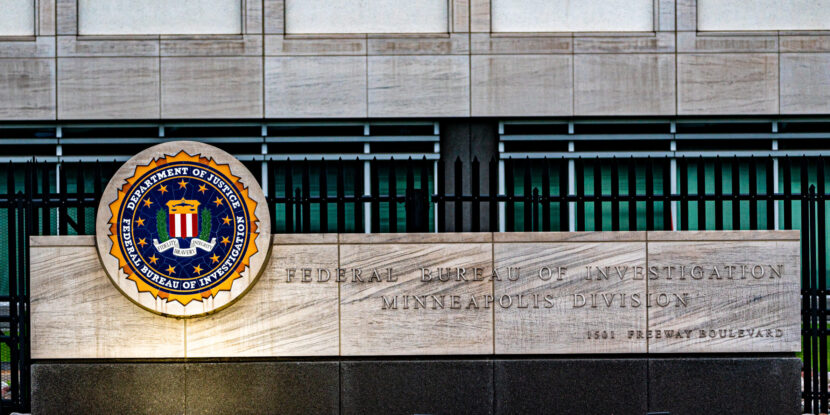
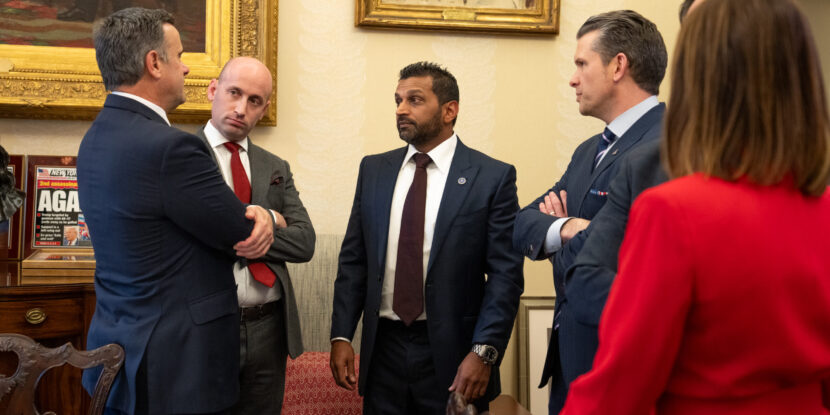
Kash Is Kicking Ass at the FBI.

PULSE POINTS:

What Happened: Federal Bureau of Investigation (FBI) Director Kash Patel is remaking the bureau from the inside out, purging entrenched bureaucrats, reviving stalled investigations, and imposing long-overdue discipline on an agency many Americans see as corrupted beyond recognition.

👤Who’s Involved: FBI Director Kash Patel, Deputy Director Dan Bongino, legacy FBI leadership, former agents tied to anti-Trump investigations.

🧾Key Quote: “The Director and I will have most of our incoming reform teams in place by next week,” Bongino announced.

⚠️Fallout: Critics complain of lost institutional memory, but supporters say the deep state is finally being dismantled.

📌Significance: Patel’s efforts reflect the America First movement’s demand to defang the FBI’s politicized machinery, restore public trust, and refocus the bureau on real threats to national security.

IN FULL:

The Federal Bureau of Investigation (FBI) is undergoing its most radical transformation in decades under Director Kash Patel. Nominated by President Donald J. Trump, Patel has been rapidly expelling entrenched operatives and retooling the bureau’s mission around law enforcement, not political activism.

In his book Government Gangsters, Patel declared that the FBI’s leadership had become so compromised that it posed a threat to the American people, calling for “drastic measures.” Now, those measures are being implemented: Polygraph tests are being administered across the bureau to plug leaks to the anti-Trump media. Top agents tied to politically charged investigations—many of whom stonewalled oversight or clashed with Trump-era initiatives—have been demoted, reassigned, or retired altogether. Deputy Director Dan Bongino states new leadership teams are nearly fully installed, with more changes imminent.

While Patel’s critics claim the changes are robbing the law enforcement agency of institutional memory, his supporters say achieving a fundamental shift is the reform’s primary purpose. Years of scandal—targeting Catholic parishes, surveilling parents at school board meetings, burying the Hunter Biden laptop story, and promoting Russiagate disinformation—left the bureau unmoored from its core mission.

The Washington field office’s public corruption squad—once the engine behind investigations targeting Trump and his allies—has been disbanded. Field offices nationwide are seeing leadership turnover, with new blood brought in to re-center the FBI on law enforcement. To fill key posts, Patel is bypassing the usual ladder-climbing bureaucracy, promoting from outside the agency and the broader D.C. bubble, even bringing back retired agents to run critical divisions.

Notably, the FBI is also revisiting unresolved investigations that have lingered without explanation under previous leadership. For instance, Bongino confirmed the bureau is re-examining a 2022 Supreme Court leak, the unsolved pipe bombs from January 6, and the infamous bag of cocaine found in the Biden White House.

Behind the scenes, some agents and analysts are retiring rather than adapt to the new accountability standards. One of Patel’s most controversial but effective tools has been the expanded use of polygraphs to identify leakers and root out political operatives embedded in the agency. Critics, including former FBI staff, say this breaks from precedent. Supporters call it long-overdue discipline for an agency that spent years leaking to CNN and ignoring real crimes to pursue partisan politics.

show less

PULSE POINTS:

show more

Lindsey Graham & Others Are Spending Over $1M of YOUR MONEY on Ukraine Junkets.

PULSE POINTS:

What Happened: Federal spending records show U.S. taxpayers will fund nearly $1 million in June alone for congressional travel to Ukraine, with millions more allocated for State Department staff and logistics.

👤Who’s Involved: The U.S. Department of State, International-Business Center Tov, Senators Lindsey Graham and Richard Blumenthal, and Ukrainian President Volodymyr Zelensky.

⚠️Fallout: The spending raises concerns that Americans are footing the bill for congressional junkets that promote prolonged involvement in Ukraine’s war—while the conflict escalates dangerously, including a Ukrainian strike on Russian nuclear bombers.

📌Significance: The revelation fuels growing criticism that Congress is using taxpayer money to stage foreign trips supporting forever wars abroad, even as experts warn of rising nuclear risk.

IN FULL:

U.S federal government spending data reveals that the contracts to provide accommodations, transportation, and security for Congressional delegations traveling to Ukraine will cost American taxpayers nearly $1 million, at least, in the month of June. According to USASpending.gov—the federal government’s official website for tracking expenditure—the U.S Department of State entered into two contracts with an entity called International-Business Center Tov, a for-profit company that provides logistical and accommodation services for American lawmakers and other government officials.

In addition to the two contracts to source accommodations, transportation, and security for U.S. congressional delegations, the State Department will pay out at least another $4 million to International-Business Center Tov to source housing and provide other logistical services for its employees and other federal agency staff stationed in Ukraine. In 2024, the U.S. federal government paid out $7.3 million to the company, with $3.6 million paid in 2023. Meanwhile, a total of $5.2 million will be paid to International-Business Center Tov in 2025.

While it is routine for the State Department to contract with companies to source housing, hotel accommodations, transportation, and security for its overseas staff and official U.S. government delegations, the spending does raise concerns that taxpayer dollars are essentially subsidizing efforts by some members of Congress who wish to prolong Ukraine’s war with Russia. Congressional delegations (CODELs) are often sent to countries to conduct oversight of treaty obligations and U.S. government facilities; however, travel to Ukraine has been used by lawmakers like Senators Lindsey Graham (R-SC) and Richard Blumenthal (D-CT) to actively push for continued war and additional American military aid.

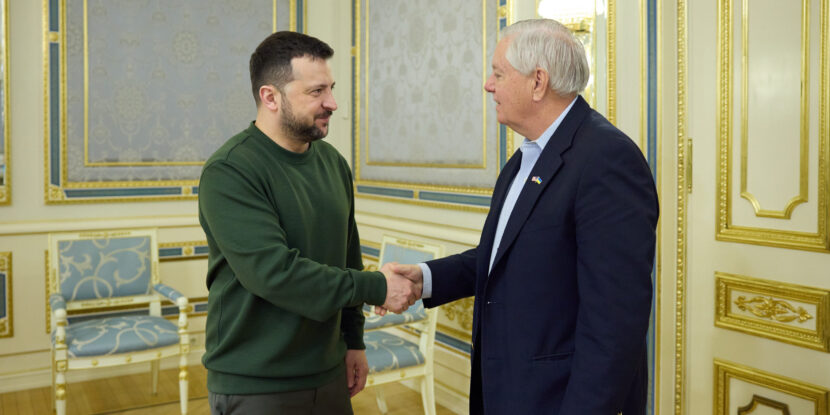
Notably, both Graham and Blumenthal traveled to Ukraine on May 31 to meet with the country’s president, Volodymyr Zelensky, and other government and military officials. The next day, Ukraine launched an unprecedented drone strike operation targeting four military airbases deep inside Russia, reportedly damaging nuclear-capable strategic bombers and nuclear early warning aircraft. While Ukraine’s daring military operation appears to have been a success, experts warn it could significantly escalate Russia’s willingness to deploy nuclear weapons.

Image via Ukrainian presidency.

show less

PULSE POINTS:

show more

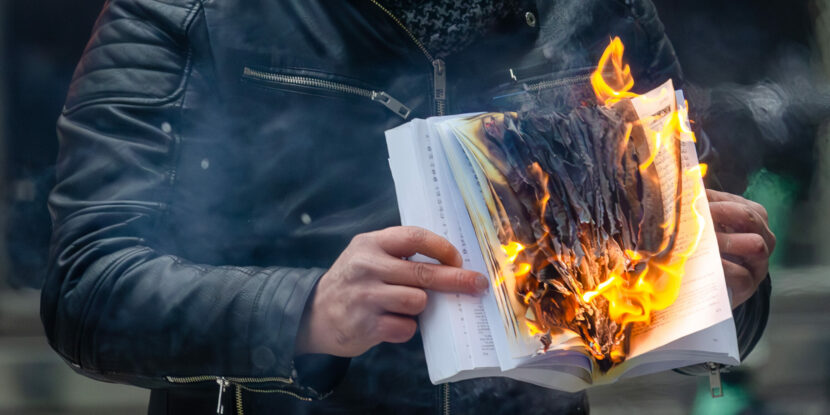
Islamic Blasphemy Laws Enforced As Man Convicted for Burning Quran.

PULSE POINTS:

What Happened: A court in Britain has convicted a man for burning the Islamic Quran during a protest outside the Turkish consulate, igniting backlash from free speech advocates who say the ruling revives the country’s defunct blasphemy laws.

👤Who’s Involved: Hamit Coskun, Westminster Magistrates’ Court, Judge John McGarva, the Crown Prosecution Service, the Free Speech Union.

🧾Key Quote: “This decision is wrong. It revives a blasphemy law that Parliament repealed,” said Robert Jenrick, Shadow Justice Secretary.

⚠️Fallout: Coskun’s conviction under the Public Order Act for “religiously aggravated disorderly conduct” drew sharp criticism from civil liberties groups and sparked plans for a legal appeal, potentially reaching the European Court of Human Rights.

📌Significance: The case underscores growing concerns over free speech in the United Kingdom, where critics argue religious sensitivities are being prioritized over basic protest rights—particularly when it comes to Islam.

IN FULL:

A British court has found 50-year-old atheist Hamit Coskun guilty of a “religiously aggravated public order offence” after he publicly burned a copy of the Quran during a political protest in central London. Coskun, an Armenian-Kurdish asylum seeker who fled Turkey citing persecution, was convicted on Monday at Westminster Magistrates’ Court after a one-day trial.

The February 13 demonstration took place outside the Turkish consulate in Knightsbridge, where Coskun shouted “Islam is religion of terrorism” and “F**k Islam” while holding the burning Islamic text over his head. Moments later, he was violently attacked by a passerby who appeared to slash at him with a blade and kicked him to the ground. That man is due to stand trial in 2027.

Despite claims from the Crown Prosecution Service (CPS) that Coskun was not prosecuted for destroying the book in itself, but for the “disorderly” nature of burning the book, the case has reignited a fierce debate over whether the United Kingdom is reintroducing blasphemy laws by stealth. Initially, Coskun was charged with harassing the “religious institution of Islam,” with the charges being revised after public outcry.

Judge John McGarva acknowledged flaws in the original CPS charge, which referred to Islam “as if it was a person,” but upheld the revised charge. He rejected arguments from Coskun’s defense team that his protest was aimed at criticizing a religion, not its followers, and therefore protected speech.

“You don’t distinguish between the two,” McGarva insisted during sentencing. “I find you have a deep-seated hatred of Islam and its followers.”

Coskun was fined £240 (~$325) and is currently in hiding.

The Free Speech Union (FSU) and the National Secular Society (NSS), both of which funded Coskun’s defense, condemned the ruling and announced plans to appeal. “This is deeply disappointing,” the FSU said in a statement. “Religious tolerance doesn’t require non-believers to respect the blasphemy codes of believers.”

Robert Jenrick, Shadow Justice Secretary and former immigration minister, said the court’s decision “revives a blasphemy law that Parliament repealed,” adding: “Free speech is under threat. I have no confidence in Two-Tier Keir [Starmer] to defend the rights of the public to criticise all religions.”

The United Kingdom repealed its last formal blasphemy statutes in 2008, but recent prosecutions under the Public Order Act—particularly those involving Islam—have alarmed critics who argue religious protections are being selectively enforced.

Coskun, who had fled Turkey under President Recep Tayyip Erdoğan’s Islamist regime, testified that his protest was a direct response to government oppression in his home country. His lawyer, Katy Thorne KC, said the ruling effectively criminalizes any public burning of a religious book, regardless of motive or message, warning that it “chills the right of citizens to criticise religion.”

The FSU has pledged to appeal the ruling all the way to the European Court of Human Rights if necessary.

Image by Frankie Fouganthin.

show less

PULSE POINTS:

show more

Ukraine Launched a Daring Mission in Russia… And It Looks Like It Paid Off.

PULSE POINTS:

What Happened: Ukraine has claimed its largest long-range drone strike of the war, targeting four Russian military airbases and damaging strategic nuclear-capable aircraft.

👥 Who’s Involved: Security Service of Ukraine (SBU), President Volodymyr Zelensky, the Russian military.

📍 Where & When: Strikes occurred Sunday at airbases in the Irkutsk, Murmansk, Ryazan, and Ivanovo regions of Russia, with drones allegedly smuggled into the country over 18 months.

💬 Key Quote: “The ‘office’ of our operation on Russian territory was located right next to the FSB of Russia in one of their regions,” boasted Zelensky.

⚠️ Impact: Ukraine estimates $7 billion in damage to Russian aviation assets, while Russia reports multiple aircraft fires but claims all attacks were repelled.

IN FULL:

Ukraine has claimed responsibility for its largest long-range drone strike against Russia since their conflict began, targeting four military airbases deep inside Russia and reportedly damaging nuclear-capable strategic bombers and nuclear early warning aircraft. The operation, dubbed “Spider’s Web,” was carried out by Ukraine’s SBU security service and involved 117 drones, according to President Volodymyr Zelensky.

The strikes, which Ukraine says took a year and a half to prepare, used drones smuggled into Russia and concealed in wooden cabins mounted on civilian trucks. These mobile launch platforms were positioned near Russian airbases, and the drones were deployed remotely. Among the targeted sites were airbases in the Irkutsk, Murmansk, Ryazan, and Ivanovo regions, with some locations thousands of miles from Ukraine.

Zelensky described the operation as “absolutely brilliant,” boasting that “the ‘office’ of our operation on Russian territory was located right next to the [Federal Security Service] of Russia in one of their regions.”  He said that all Ukrainian personnel involved in the operation were safely evacuated before the strikes. The SBU estimates the damage to Russian aviation at approximately $7 billion, though these claims remain unverified.

Russia’s defense ministry acknowledged attacks on airbases in five regions, labeling them “terrorist acts.” While it claimed all attacks on military sites in Ivanovo, Ryazan, and Amur regions were repelled, it admitted that several aircraft caught fire in Murmansk and Irkutsk. Russian authorities claim that some suspects connected to the attacks have been detained.

Irkutsk Governor Igor Kobzev confirmed that drones were launched from a truck in the region, adding that the launch site had been secured. Russian media similarly reported that drones emerged from vehicles, with footage showing them flying out of a Kamaz truck near a petrol station.

Meanwhile, Ukraine reported a massive Russian drone and missile assault on its own territory, claiming to have neutralized 385 aerial targets out of 472 launched. This marks one of the largest single Russian drone offensives to date.

Experts warn that the “Pearl Harbor” moment could significantly escalate Russia’s willingness to deploy nuclear weapons. Dr. Stephen Hall, a lecturer at Bath University, noted that Russia’s 2024 nuclear doctrine notes that attacks on military infrastructure within Russia, which disrupt nuclear response actions, could be met with a nuclear response.

show less

PULSE POINTS:

show more
Migrant Crime

Operation Patriot Sees 1500 Illegals Rounded Up.

PULSE POINTS:

What Happened: U.S. Immigration and Customs Enforcement (ICE) concluded “Operation Patriot,” its largest enforcement action to date, arresting 1,461 illegal aliens across Massachusetts and Greater Boston—including hundreds of criminals shielded by sanctuary city policies.

👤Who’s Involved: ICE, Massachusetts sanctuary jurisdictions, Boston city officials, and criminal aliens including rapists, traffickers, and a known murderer.

🧾Key Quote: ICE sources say the operation was launched in direct response to Massachusetts and Boston’s sanctuary policies, which have obstructed ICE enforcement and led to increased collateral arrests.

⚠️Fallout: Of those arrested, 790 had criminal convictions or pending charges, while 277 had final deportation orders; local jurisdictions refused cooperation, and activists reportedly interfere with arrests on a near-daily basis.

📌Significance: The operation exposes the dangerous consequences of sanctuary policies, as ICE is forced to apprehend violent criminals on the streets rather than in jails—putting public safety and agents at greater risk.

IN FULL:

U.S. Immigration and Customs Enforcement (ICE) has executed its most expansive enforcement operation to date, arresting 1,461 illegal aliens across Massachusetts during a month-long sweep dubbed “Operation Patriot.” Agency sources confirmed that the operation, which concluded on Saturday, specifically targeted the state due to its aggressive sanctuary city policies—particularly those in Boston, where ICE detainers have been systematically ignored.

Of those arrested, 790 individuals had criminal convictions or open charges, while 277 had final deportation orders that had not been carried out due to a lack of local cooperation. Hundreds had previously been released from custody by sanctuary jurisdictions despite active ICE detainers.

The scale and complexity of the mission surpassed Operation Tidal Wave, which took place in Florida and previously held the record for the largest ICE enforcement action with 1,120 arrests.

“ICE has repeatedly warned that sanctuary policies will lead to collateral arrests,” a source said, referencing the fact that agents are often forced to arrest not just the primary target but others illegally present at the scene. The agency has stressed that such policies force enforcement into public neighborhoods rather than allowing for controlled transfers at local jails.

FOX News embedded with one of the 19 ICE teams operating across the state last Thursday. In just a few hours, agents arrested an international murderer, two child rapists—one of whom was living adjacent to a playground—a fentanyl trafficker, an adult rapist, and a child sexual assaulter. All of them had been residing freely within Massachusetts communities.

show less

PULSE POINTS:

show more

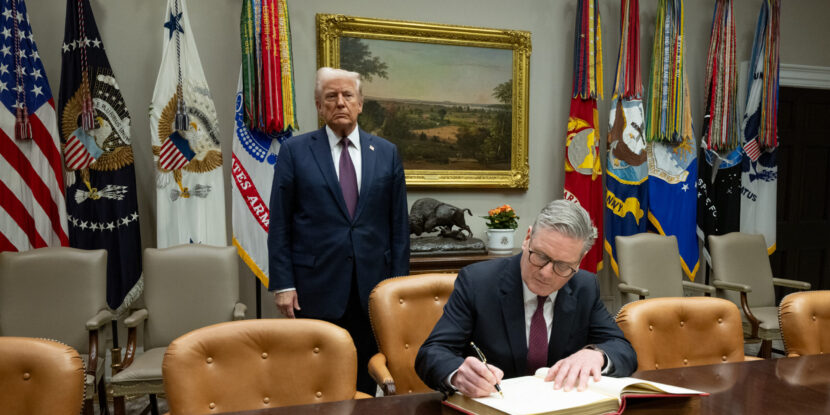
UK to Allocate 3% of GDP to Defense as Trump Pressures NATO Allies.

PULSE POINTS:

What Happened: The British government has committed to increasing defense spending to three percent of GDP by 2034, with an interim target of 2.5 percent by April 2027.

👥 Who’s Involved: Defence Secretary John Healey, Prime Minister Sir Keir Starmer, former international development minister Anneliese Dodds, President Donald J. Trump, and NATO Secretary-General Mark Rutte.

📍 Where & When: NATO meeting scheduled for next month in The Hague, Netherlands.

💬 Key Quote: John Healey stated, “It allows us to plan for the long term. It allows us to deal with the pressures.”

⚠️ Impact: The increase in defense spending will be offset by cuts to foreign aid, and follows a pressure campaign from President Trump to have European NATO members pay more towards their continent’s defense.

IN FULL:

The British government has committed to raising defense spending to three percent of GDP by 2034, with an interim target of 2.5 percent by April 2027, according to Defence Secretary John Healey. Healey, of Prime Minister Sir Keir Starmer’s Labour Party, described the move as part of a “certain decade of rising defence spending” and expressed confidence in meeting the targets, stating, “It allows us to plan for the long term. It allows us to deal with the pressures.”

The announcement follows Prime Minister Starmer’s earlier pledge to strengthen Britain’s resilience in a “more dangerous world.” The British government is conducting a strategic defense review (SDR) to assess the roles, capabilities, and reforms needed for the armed forces. The review aims to ensure that the spending increases remain “deliverable and affordable” within the planned 2.5 percent trajectory.

Funding for the defense budget boost will come from a reduction in foreign aid, which will be cut from 0.5 percent to 0.3 percent of gross national income (GNI). The decision, which has angered many in Starmer’s leftist party, follows pressure from U.S. President Donald J. Trump to make European NATO members pay more towards their continent’s defense.

NATO leaders are preparing to meet in The Hague next month, where defense spending is expected to dominate discussions. NATO Secretary-General Mark Rutte, speaking earlier this month in Dayton, Ohio, suggested that the alliance could agree on a collective target of five percent of GDP for defense spending.

show less

PULSE POINTS:

show more

Musk Says Departure ‘Not the End of DOGE, But Really the Beginning.’

PULSE POINTS:

What Happened: Elon Musk expressed optimism about the Department of Government Efficiency (DOGE) and its mission as his time as a special government employee came to an end.

👥 Who’s Involved: Elon Musk, the DOGE team, President Donald J. Trump, and the federal government.

📍 Where & When: Musk’s comments were made alongside Trump in the Oval Office on May 30.

💬 Key Quote: “This is not the end of DOGE, but really the beginning… The DOGE team will only grow stronger over time… It is permeating throughout the government, and I am confident that, over time, we will see a trillion dollars of waste and fraud reduction,” Musk said.

⚠️ Impact: President Trump and Musk say most DOGE staffers will remain in post after Musk’s departure, so they can continue to search for efficiency savings.

IN FULL:

Tech billionaire Elon Musk expressed optimism that the Department of Government Efficiency (DOGE) can continue to find savings as his time as a special government employee came to an end. “This is not the end of DOGE, but really the beginning,” he said in the Oval Office alongside President Donald J. Trump, at a press event marking the end of his tenure.

Musk suggested the DOGE ethos “is permeating throughout the government,” although its performance under his de facto leadership has been mixed. The Tesla and SpaceX mogul initially insisted he could rapidly achieve trillions of dollars in savings, but later revised his figures downward by over 90 percent. However, he said in the Oval Office that he expects DOGE to achieve a trillion dollars in savings “over time” following his departure.

Despite suspicions of a rift with President Trump, especially after Musk publicly attacked the “one big, beautiful bill” the administration has championed, the America First leader praised the South Africa-born entrepreneur at the press event, suggesting he would remain an advisor and friend at least on an informal basis.

Members of the press grilled Musk on reports that he regularly uses ketamine, ecstasy, and psychedelic mushrooms during questions in the Oval Office. He dismissed allegations on the basis that they originated in The New York Times, “the same publication that got a Pulitzer Prize for false reporting on… Russiagate.”

WATCH:

show less

PULSE POINTS:

show more

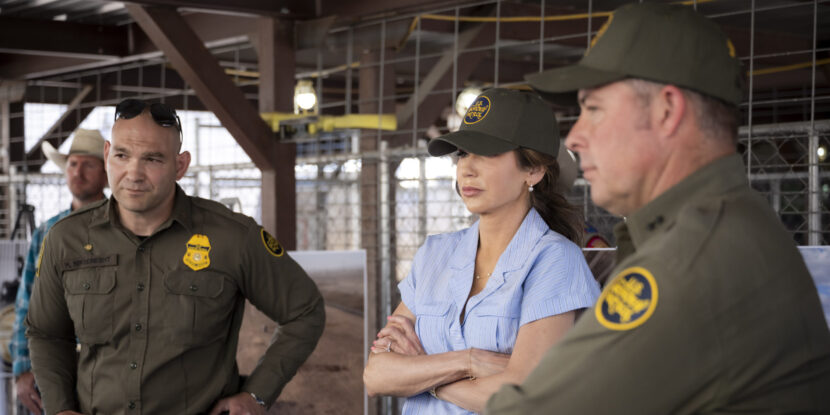
DHS Cracks Down on 500 Sanctuary Cities for Impeding Deportation Efforts.

PULSE POINTS:

What Happened: The Department of Homeland Security (DHS) published a list of 500 sanctuary jurisdictions it says are obstructing federal immigration enforcement.

👥 Who’s Involved: DHS, Homeland Security Secretary Kristi Noem, the Trump administration, sanctuary cities, counties, and states.

📍 Where & When: Across the U.S.; list released Thursday, May 29, 2025.

💬 Key Quote: “These sanctuary city politicians are endangering Americans and our law enforcement in order to protect violent criminal illegal aliens,” said DHS Secretary Kristi Noem.

⚠️ Impact: DHS claims sanctuary policies endanger communities and law enforcement while protecting illegal immigrants accused of criminal activity.

IN FULL:

The Department of Homeland Security (DHS) has released a list of 500 sanctuary jurisdictions it accuses of obstructing federal immigration enforcement efforts under the Trump administration. The list, published Thursday on the department’s website, includes cities, counties, and states across the United States.

Homeland Security Secretary Kristi Noem criticized sanctuary city policies, stating, “These sanctuary city politicians are endangering Americans and our law enforcement in order to protect violent criminal illegal aliens.” The DHS alleges that such jurisdictions shield individuals in the country illegally from federal immigration authorities, creating risks for both communities and law enforcement.

The department explained that the list was compiled based on several factors, including whether jurisdictions identify themselves as sanctuary areas, their compliance level with federal immigration enforcement, restrictions on sharing information with immigration authorities, and legal protections for illegal immigrants.

“Sanctuary jurisdictions including cities, counties, and states that are deliberately and shamefully obstructing the enforcement of federal immigration laws endanger American communities,” the DHS statement read.

This move by the DHS comes amid increased pressure from the Trump administration on local governments to align with federal immigration law enforcement. While law enforcement in Republican governed states are increasingly complying with President Donald J. Trump’s mass deportation efforts, Democrat-controlled states continue to by-and-large resist immigration enforcement efforts.

The DHS claims that sanctuary policies allow individuals accused of criminal activity to avoid facing legal consequences, putting public safety at risk. Critics of sanctuary policies argue that they undermine the rule of law and prioritize the protection of illegal immigrants over the safety of citizens.

show less

PULSE POINTS:

show more