



A new poll shows troubling attitudes towards political violence among Democrat voters, with significant support for President Trump’s assassination.
| PULSE POINTS |
❓ WHAT HAPPENED: A new poll found that significant numbers of Democrat voters expressed positive reactions to various scenarios that would remove President Donald J. Trump from office, including some involving his death or a military takeover of the government. According to the Center for Strategic Politics survey, 59 percent of Democratic respondents said they would feel “very positive” or “somewhat positive” if a military junta overthrew Trump and seized control of the government, while 55 percent said they would react positively to news that Trump had died peacefully. The poll also found that 32 percent of Democratic respondents would feel positive if Trump was assassinated at a rally, compared with 43 percent who said they would react negatively and 25 percent who would be neutral. 📺 DETAIL: Support was higher for constitutional or political means of removing Trump, with 87 percent saying they would react positively to impeachment and removal, and 84 percent saying the same about removal under the 25th Amendment. House Minority Leader Hakeem Jeffries has left open the possibility of another impeachment effort, saying earlier this month that Democrats had “not ruled anything in and… not ruled anything out” and would “follow the facts.” The survey further found that large majorities of Democrats support prosecuting Trump administration officials over immigration enforcement, the war in Iran, and strikes against suspected drug traffickers. Other proposals receiving majority support included prosecuting Trump and Biden government officials over the Israel-Hamas war, ending the Senate filibuster, and expanding the Supreme Court. Among potential 2028 Democratic presidential contenders, Kamala Harris led with 25 percent, followed by Gavin Newsom at 15 percent, Pete Buttigieg at 13 percent, Jon Ossoff at 10 percent, Mark Kelly at nine percent, and Alexandria Ocasio-Cortez at eight percent. The poll surveyed 683 Democratic voters on September 3 and from September 8-10, with a margin of error of plus or minus 3.75 percentage points. 🎯 IMPACT: The poll highlights the intensity of Democratic opposition to President Donald J. Trump, with substantial portions of respondents expressing support for extraordinary measures, including death or a military coup, to remove him from office. The findings could fuel debate over political polarization and left-wing extremism ahead of the midterm elections. 📺 FLASHBACK: The poll follows multiple assassination attempts on Trump during his 2024 candidacy and presidency, including a shooting in Butler where a gunman hit his ear and killed one of his supporters, Corey Comperatore. |
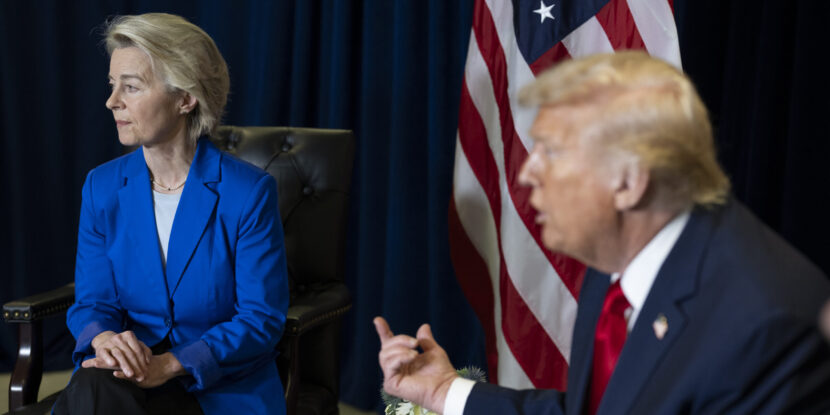
Photo by Anna Moneymaker/Getty Images.
Join Pulse+ to comment below, and receive exclusive e-mail analyses.
show less