


Thursday, September 24, 2026

Stefanik Surges Ahead in New York GOP Governor Primary.

PULSE POINTS:

❓What Happened: A poll indicates Representative Elise Stefanik (R-NY) holds a significant lead in the Republican primary for New York governor and is narrowing the gap against incumbent Governor Kathy Hochul (D-NY).

👥 Who’s Involved: Rep. Elise Stefanik, Gov. Kathy Hochul, Rep. Mike Lawler (R-NY), Nassau County Executive Bruce Blakeman (R).

📍 Where & When: New York, based on a survey conducted from April 22-24, 2025, by GrayHouse.

💬 Key Quote: “I’ll make my decision solely based on whether or not I believe there’s a pathway to win,” said Rep. Lawler.

⚠️ Impact: Stefanik’s strong favorability among Republicans and Independents could challenge Hochul’s position in the 2026 gubernatorial election.

IN FULL:

Representative Elise Stefanik (R-NY) could emerge as a formidable contender in the race for New York governor, according to a GrayHouse poll conducted in late April 2025. The poll surveyed 826 registered voters and found Stefanik with a commanding lead in the Republican primary, at 44 percent support, leaving Rep. Mike Lawler (R-NY) and Nassau County Executive Bruce Blakeman (R) trailing far behind. Lawler received seven percent and Blakeman garnered five percent, with 44 percent of respondents undecided.

Stefanik, who has a net favorability of +47 among Republicans, also enjoys positive sentiments from Independents. This stands in contrast to Gov. Kathy Hochul, who is facing a net job approval rating of -18, with 55 percent of voters expressing disapproval. Hochul’s favorability has slightly improved recently, marking a shift from a previous Siena College poll.

The poll suggests that if the gubernatorial election were held today, Hochul would attract 46 percent of the vote against Stefanik’s 40 percent, while 14 percent remain undecided. Against Lawler, Hochul would lead with 45 percent to his 38 percent, and against Blakeman, she would maintain a lead of 44 percent to 36 percent.

Lawler plans to decide by June whether he will enter the race, focusing on his perceived ability to pose a viable challenge to Hochul. “I’ll make my decision solely based on whether or not I believe there’s a pathway to win,” Lawler commented during a recent media interview. He added: “Ultimately, we will make a decision on who can make the best case to New Yorkers and defeat Kathy Hochul. Because at the end of the day, that’s what it’s about.”

Support for change appears significant, with 61 percent of New Yorkers indicating it is time for a new leader. Meanwhile, only 18 percent expressed a willingness to re-elect Hochul, and just nine percent were firm in their choice to do so.

The National Pulse previously reported that Stefanik’s nomination for U.S. Ambassador to the United Nations was withdrawn after it became apparent that her congressional seat is critical to maintaining the Republican majority in the House.

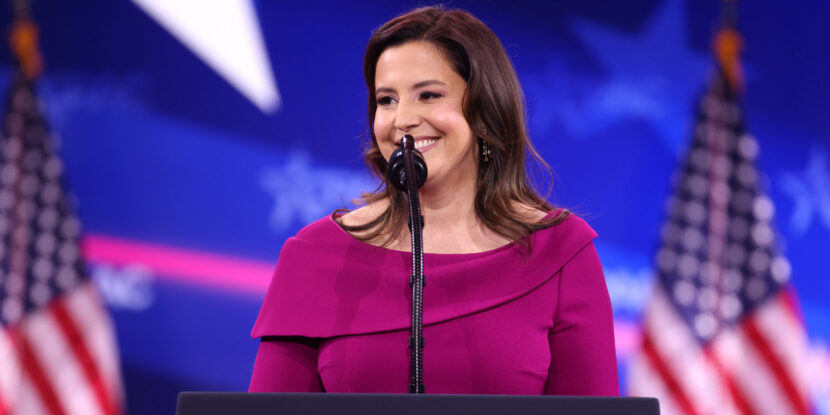
Image by Gage Skidmore.

show less

PULSE POINTS:

show more

Trump Reiterates Seriousness About Greenland Purchase, Canada as Potential 51st State.

PULSE POINTS:

❓What Happened: President Donald J. Trump reiterated his interest in acquiring Greenland and Canada becoming the 51st state in an interview with TIME magazine, insisting these ideas are serious and not something he has floated in jest.

👥 Who’s Involved: President Trump, Eric Cortellessa (TIME magazine interviewer), and Canadian Prime Minister Mark Carney.

📍 Where & When: United States, Canada, and Greenland, with the comments being made in an interview with TIME magazine published on Friday.

💬 Key Quote: Trump stated, “Actually, no, I’m not,” when asked if he was trolling about the suggestion that Canada should become part of the United States.

⚠️ Impact: Potential geopolitical tensions concerning U.S. territorial ambitions, and implications for international security related to Arctic regions.

IN FULL:

In an interview published Friday, President Donald J. Trump emphasized his continued interest in acquiring Greenland and integrating Canada as a state in the U.S. Trump addressed these ambitions during a conversation with Eric Cortellessa of TIME magazine, emphasizing that his intentions are genuine rather than mere political jest. When Cortellessa pressed President Trump about whether his numerous comments about extending American influence over Canada and Greenland were just joking, the America First leader responded, “Actually, no, I’m not.”

“I think Greenland would be very well off… I think it’s important for us for national security and even international security,” Trump said. “I think Canada… you said that, ‘Well, that one, I might be trolling.’ But I’m really not trolling.”

“Canada is an interesting case. We lose $200 to $250 billion a year supporting Canada,” Trump noted, stating that he had spoken in the past with then-Canadian Prime Minister Justin Trudeau about the cost placed on American taxpayers for the U.S. military’s defense umbrella to extend over Canada. The President argued: “We’re taking care of their military. We’re taking care of every aspect of their lives, and we don’t need them to make cars for us. In fact, we don’t want them to make cars for us. We want to make our own cars. We don’t need their lumber. We don’t need their energy. We don’t need anything from Canada.”

He added: “And I say the only way this thing really works is for Canada to become a state.”

Canadian Prime Minister Mark Carney has dismissed the notion of statehood for Canada, though he acknowledges that Trump often mentions it. Meanwhile, regarding Greenland, Trump’s motivation revolves around security concerns both in the North Atlantic and the Arctic Ocean. He noted the strategic significance of Greenland amid the presence of Russian and Chinese vessels in nearby waters. Trump conveyed his belief in the importance of controlling these critical Arctic waterways to ensure both national and international security.

Despite Denmark’s jurisdiction over Greenland and the island’s pursuit of increased autonomy, Trump remains optimistic about the prospects of an eventual acquisition, underscoring its value for U.S. security interests.

show less

PULSE POINTS:

show more

DeSantis Blasts FL House GOP Leaders for Being ‘At War’ With Their Voters.

PULSE POINTS:

❓What Happened: Tensions have escalated among Florida Republicans, with Governor Ron DeSantis criticizing state House leadership for defying voter expectations and Speaker Daniel Perez countering with claims of mismanagement.

👥 Who’s Involved: Key figures include Governor Ron DeSantis and Florida House Speaker Daniel Perez.

📍 Where & When: The dispute is ongoing in Florida and has recently been highlighted in statements and social media posts, with the crisis escalating in late April.

💬 Key Quote: DeSantis stated, “…the FL House leadership is at war with the voters who provided the supermajority…” Perez countered that DeSantis “has become the swamp.”

⚠️ Impact: This internal conflict may impact Florida’s political dynamics as Republicans hold significant legislative power in the state.

IN FULL:

Tensions between Republicans in the Florida state legislature and Governor Ron DeSantis (R-FL) continue to rise, with the latter now publicly chastising the Republican House leadership. In a post on X (formerly Twitter), Gov. DeSantis asserted that Republican legislative leaders in the state are moving in opposition to the wishes of voters that granted them a supermajority in the Florida House and Senate.

Earlier this week, DeSantis wrote, “…the FL House leadership is at war with the voters who provided the supermajority in the first place.” Additionally, the Republican governor blasted legislative leaders for adopting a “swamp-centric agenda.” However, House Speaker Daniel Perez (R) contends it is DeSantis who has “become the swamp.”

The National Pulse reported in early April that Gov. DeSantis had blasted Florida Republican legislators for pushing a radical green agenda through the state’s legislature instead of taking up his plan to eliminate Florida’s sales tax. Lawmakers in the Republican legislative supermajority joined with Democrats to push forward a plan creating a far-left state task force charged with developing a framework to implement a carbon sequestration program in the state.

Florida’s term-limit laws have left DeSantis a lame-duck governor, which has emboldened ‘Republican In Name Only’ (RINO) legislators. However, the House Speaker contends that legislative moderates are not the problem, instead pointing the finger at DeSantis himself.

“Unfortunately, what we’ve seen in Florida is a Governor who’s turned into exactly what he promised to fight—he’s become the swamp,” Perez said, adding: “His latest attacks are nothing more than a distraction from the gross financial mismanagement happening under his watch. We’re talking about thousands of missing state vehicles, $160 million unaccounted for at AHCA, and a growing list of problems across agencies and boards—all controlled by the Governor.”

The Florida Republican quasi-civil war could jeopardize DeSantis’s tax reform efforts and stoke voter anger, placing the Republican legislative supermajority at risk.

show less

PULSE POINTS:

show more

Bannon: DOGE Must Open the Books, Guarantee Data Remains With Trump Admin After Musk Exit.

PULSE POINTS:

❓What Happened: WarRoom host and former White House chief strategist Stephen K. Bannon contends Elon Musk and the Department of Government Efficiency (DOGE) need to open the agency’s books for public scrutiny after the billionaire tech mogul drastically reduced its spending cut targets. Bannon reiterated his continued support for President Donald J. Trump’s Treasury Secretary Scott Bessent.

👥 Who’s Involved: Stephen K. Bannon, Elon Musk, Treasury Secretary Scott Bessent, Commerce Secretary Howard Lutnick, and President Donald J. Trump.

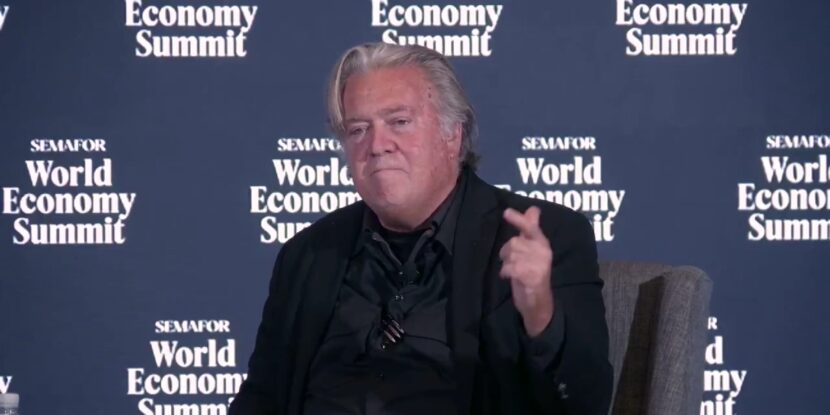
📍 Where & When: Remarks were made at the World Economy Summit in Washington, D.C. on Wednesday, April 23.

💬 Key Quote: Bannon stated that DOGE is a “blunt force instrument” meant to “deconstruct this choking administrative state,” but emphasized the need for accountability and transparency.

⚠️ Impact: Bannon’s comments may increase scrutiny of Musk, reflecting ongoing disputes over governmental roles and policies since Trump’s return to office.

IN FULL:

Former Trump White House chief strategist Stephen K. Bannon is arguing that the American people need to be given a closer look at the Department of Government Efficiency’s (DOGE) books, and guarantees that all of the data it has accessed and created will remain with the Trump administration. Bannon’s remarks were made Wednesday at the World Economy Summit in Washington, D.C., and come as DOGE’s chief advisor, billionaire technology mogul Elon Musk, says he will reduce his role with the agency significantly in May.

Notably, Musk has dramatically reduced the spending cuts targeted by DOGE, from $2 trillion in late 2024 to $1 trillion earlier this year, with his latest claim being that the agency is on track to achieve a comparatively modest $150 billion in reductions.

“He’s questioning the integrity of the system. We need to have a very specific accounting of what he found, as far as fraud goes, and waste… None of this makes sense. The cuts you’ve seen that have been announced are programmatic,” Bannon said on Wednesday, arguing that DOGE is a “blunt force instrument” but necessary to “deconstruct this choking administrative state.”

“Also, I think we have to have a letter of certification that not one data set or piece of data of the United States government or citizens of this country are held by anybody except for the Trump administration,” Bannon continued, before shifting to address the increasing role and importance of President Donald J. Trump’s Treasury Secretary Scott Bessent.

“President Trump’s a very sophisticated businessman, but Scott is a safe pair of hands that understands capital markets deeply,” the WarRoom host said, adding: “He’s done this for 30 years. He has a very strong sense of what markets need to hear as far as information goes.”

Bannon has been a staunch advocate for Bessent, who is seen as a leading economic mind and someone deeply knowledgeable on monetary policy and macroeconomic analysis. In contrast, Musk was part of a camp that pushed for current Commerce Secretary Howard Lutnick to serve as Treasury Secretary.

“I’ll be blunt: if Howard Lutnick had been Secretary of the Treasury, it would have been an unmitigated disaster,” the former White House chief strategist said. Bannon added: “This is about people putting their own interests first, like Elon, versus putting the nation’s interest first.”

WATCH:

show less

PULSE POINTS:

show more

Greg Abbott Unveils ‘Texas DOGE’ Initiative.

PULSE POINTS:

❓What Happened: Texas Governor Greg Abbott (R) signed a bill to establish the Texas Regulatory Efficiency Office (TREO), likening it to the national Department of Government Efficiency (DOGE).

👥 Who’s Involved: Governor Greg Abbott, Texas legislature, Lieutenant Governor Dan Patrick, Senator Phil King, President Donald J. Trump, and Elon Musk.

📍 Where & When: Texas, United States; bill signed on Wednesday.

💬 Key Quote: Abbott on social media: “Texas will now have our own DOGE… This will make government more efficient and less costly.”

⚠️ Impact: The TREO aims to streamline state regulations by identifying and eliminating unnecessary rules to increase efficiency and promote economic growth.

IN FULL:

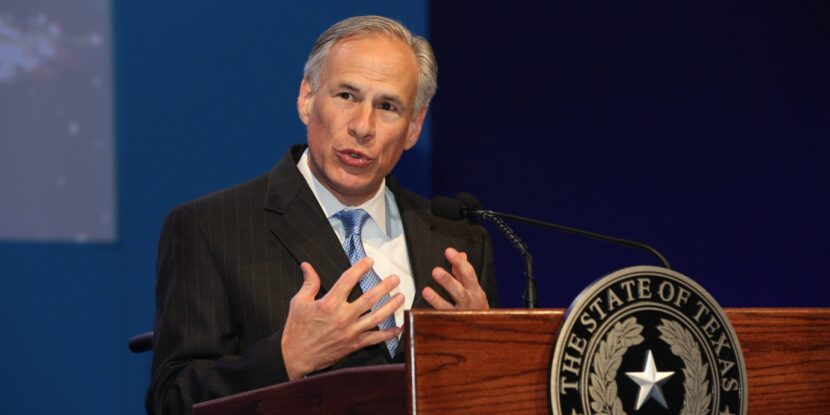
Texas Governor Greg Abbott (R) has officially enacted a law establishing the Texas Regulatory Efficiency Office (TREO), drawing inspiration from President Donald J. Trump‘s Department of Government Efficiency (DOGE), which technology and space exploration mogul Elon Musk advises. Signed into law late Wednesday, the TREO is designed to reduce state bureaucracy by identifying superfluous and ineffective regulations, thereby mirroring the objectives of the federal DOGE.

The Texas Legislature had previously approved the bill, which was introduced by Republican Senator Phil King. The bill also calls for the creation of an advisory council to recommend the elimination of excessive regulations found to be redundant or that hamper economic growth. Additionally, it mandates the launch of an online portal where Texans can access state agency regulations, coupled with a requirement for agencies to simplify language in regulatory documents.

“Signed SB 14 into law today at the Texas Capitol. Texas will now have our own DOGE, known as the Texas Regulatory Efficiency Office,” Gov. Abbott wrote in a post on X (formerly Twitter) late Wednesday. “This will make government more efficient and less costly. Texas continues to move at the speed of business.”

Lieutenant Governor Dan Patrick has expressed support for the initiative, noting that it is expected to foster continued economic prosperity in Texas by reducing regulatory red tape. The Republican Lieutenant Governor described the initiative as “DOGE, Texas-style” and emphasized that the agency will be tasked with identifying and ending “unnecessary and ineffective rules.”

However, not all Texas Republicans support the new agency. Texas State Representative Brian Harrison (R), who opposed the bill creating TREO, argued during the legislative debate: “The point of DOGE is to cut government, reduce spending, and shrink the bureaucracy. Unfortunately, this bill does the exact opposite.”

Harrison and other opponents contend that TREO’s regulatory prerogatives already overlap with existing bodies like the Texas Sunset Advisory Commission. Critics argue this will create more government waste rather than less.

TREO is set to begin operating in September.

Image by World Travel & Tourism Council.

show less

PULSE POINTS:

show more

DNC Issues Ultimatum to David Hogg Over Primary Challenge Advocacy.

PULSE POINTS:

❓What Happened: The Democratic National Committee (DNC) is set to introduce new rules that require members to stay neutral in primaries, potentially impacting co-vice chair David Hogg’s role.

👥 Who’s Involved: David Hogg, DNC co-vice chair; Ken Martin, DNC Chair; James Carville, Democratic strategist.

📍 Where & When: Announcement expected from DNC on Thursday; rules implementation scheduled for August.

💬 Key Quote: David Hogg highlighted, “Currently, if we had the same number of 25- to 30-year-olds in Congress as we do proportionally to the population, we would have over 40 people under the age of 30 in Congress, and I don’t know if you’ve looked at Congress recently, we have one that is under the age of 30. That is not good for the future of the Democratic Party.”

⚠️ Impact: Potential curtailment of Hogg’s political activities within the DNC and impact on his group’s financial endeavors aimed at primary campaigns targeting incumbent Democrats.

IN FULL:

The Democratic National Committee (DNC) is set to enact rules that would require members, including current co-vice chair David Hogg, to remain neutral during primary elections. DNC Chair Ken Martin is expected to announce the changes during a call with party leaders scheduled for Thursday. If approved, these rules would be implemented in August.

This policy change emerges after David Hogg, an ardent anti-gun rights activist, declared plans to allocate $20 million towards Democratic primary campaigns nationwide via his organization, Leaders We Deserve. The group’s objective is to promote younger, more diverse candidates to align with shifting demographics and push the Democratic Party in a more leftward and “progressive” direction.

Hogg’s dual role as a DNC co-vice chair and his active participation in primary challenges have drawn scrutiny from some within the Democratic Party. The National Pulse previously reported that Clinton White House strategist James Carville blasted Hogg over his plan to primary incumbent Democrats, calling the activist a “contemptible little twerp” and suggesting the DNC sue over a breach of duty.

In response, Hogg defended his actions, asserting the need for a strategy that addresses generational representation in Congress. “Currently, if we had the same number of 25- to 30-year-olds in Congress as we do proportionally to the population, we would have over 40 people under the age of 30 in Congress, and I don’t know if you’ve looked at Congress recently, we have one that is under the age of 30,” Hogg said, adding: “That is not good for the future of the Democratic Party.”

The proposed DNC rules could compel Hogg to choose between his leadership role within the party and his primary-focused initiatives. Additionally, the move risks alienation of younger Democrats who may see Hogg’s primary operation as a political positive for the party.

Image by Lorie Shaull.

show less

PULSE POINTS:

show more

Elon Musk Didn’t Contribute to Trump’s Inauguration.

PULSE POINTS:

❓What Happened: Tesla and SpaceX CEO Elon Musk did not contribute financially to Donald Trump’s inauguration events, despite being a vocal supporter during his campaign.

👥 Who’s Involved: Elon Musk, President Donald J. Trump, Trump’s inaugural committee, and companies such as Meta, Amazon, and Nvidia.

📍 Where & When: Washington, D.C., during Trump’s inauguration on January 20, 2025; FEC filing released on Sunday, April 20, 2025.

💬 Key Quote: “Donations to an inaugural committee are not subject to any contribution amount limitations. In addition, an inaugural committee may accept donations from corporations and labor organizations,” state FEC rules.

⚠️ Impact: Trump’s inauguration raised $239 million from donors, exceeding previous records, highlighting potential Silicon Valley support for Trump’s presidency.

IN FULL:

Elon Musk, the CEO of Tesla and SpaceX, notably abstained from making financial contributions toward the inauguration of President Donald J. Trump, as shown in recent documentation by the Federal Election Commission (FEC). This reveals a departure from Musk‘s previous backing of Trump’s campaign, during which he reportedly expended over $250 million in support of the America First leader. According to the FEC filing, which was released by the Trump-Vance Inaugural Committee, donations exceeded $239 million, setting a new record for inaugural fundraising in January.

Several major technology companies, including Meta (the parent company of Facebook and Instagram), Nvidia, and Amazon, contributed substantially, each offering at least $1 million toward the inaugural events. However, the reason for Musk’s absence from the list of inaugural donors is not yet known.

While Musk did attend the inauguration ceremony on January 20, 2025, and delivered an address at a major rally later that evening, his financial absence is noteworthy given his prior involvement in the presidential campaign. Notably, a number of major Silicon Valley firms contributed to the second Trump inauguration despite the tech industry’s hostility—and in some cases outright opposition—to Trump’s agenda in the past.

The inaugural committee is not obligated to disclose expenditure specifics or remaining funds until it submits its tax return in 2026. Also of note, the FEC rules state: “Donations to an inaugural committee are not subject to any contribution amount limitations. In addition, an inaugural committee may accept donations from corporations and labor organizations.”

Image by Wcamp9. 

show less

PULSE POINTS:

show more

Gov. Hochul Ignores Federal Deadline to Scrap Manhattan Congestion Tolls.

PULSE POINTS:

❓What Happened: The U.S. Department of Transportation (USDOT) is enforcing an April 20 deadline for New York to stop charging a $9 congestion toll in Manhattan.

👥 Who’s Involved: New York Governor Kathy Hochul, the U.S. Department of Transportation, the New York City and State Departments of Transportation, the Metropolitan Transportation Authority (MTA), Representative Nicole Malliotakis, and the White House.

📍 Where & When: Manhattan, New York; deadline for compliance was April 20.

💬 Key Quote: “The deadline is April 20th, and we expect New York to comply and terminate this program,” said a spokesman for the USDOT.

⚠️ Impact: Legal disputes and potential political tensions as the state risks losing federal support for transportation funding over compliance issues.

IN FULL:

New York Governor Kathy Hochul (D) appears prepared to disregard a federal mandate to end her state’s controversial $9 congestion fee on vehicles entering parts of Manhattan. Initially implemented in January for vehicles traveling below 60th Street, the toll has led to a series of lawsuits between federal and state officials, including York City’s transportation authorities.

The Metropolitan Transportation Authority, under Governor Hochul’s direction, commenced legal action after a federal warning was issued to cease the toll. However, the U.S. Department of Transportation (USDOT) confirmed it would stick to the April 20 deadline for New York to discontinue the program. “Despite the Administration’s ‘royal’ decree, its effort to summarily and unilaterally overturn the solution to the City’s congestion enacted by New Yorkers’ elected representatives is unlawful and invalid,” an amended state lawsuit reads.

USDOT’s insistence on the April 20 deadline comes despite an agreement reached earlier this month between the Trump Administration and the MTA allowing toll cameras to be used until the fall. “The deadline is April 20th, and we expect New York to comply and terminate this program,” a USDOT spokesman said, adding: “USDOT will continue to fight for working class Americans whose tax dollars have already funded and paid for these roads.”

At the heart of litigation against the Hochul government in New York are allegations that the Democratic administration failed to abide by federal regulatory statutes when it enacted the toll scheme. Representative Nicole Malliotakis (R-NY), a plaintiff in one of the several lawsuits filed against Hochul, states that the New York state government circumvented a required federal environmental impact study. At a press conference on Saturday, the New York Republican said: “Whether it’s the sanctuary [city policies], state policy, whether it’s ignoring federal directives, this is just another example of how it’s rules for me, not for thee. They don’t want to comply with our federal law.”

New York City Mayor Eric Adams has not publicly addressed the ongoing legal battle. Nonetheless, his office released a statement signaling an openness to dialogue with the federal government on transit funding, maintaining a stance that the state should independently assess financial solutions for its transportation systems.

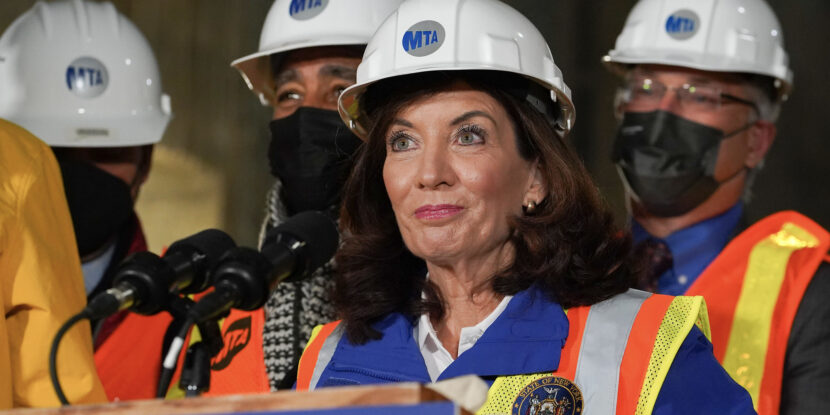
Image by MTAPhotos. 

show less

PULSE POINTS:

show more

Trump Backs Hegseth Despite New Signal Chat Leak Allegations.

PULSE POINTS:

❓What Happened: Defense Secretary Pete Hegseth allegedly shared details about a military strike in Yemen through Signal chat groups with family and friends.

👥 Who’s Involved: Pete Hegseth, Karoline Leavitt, Jeffrey Goldberg, Mike Waltz, and President Donald J. Trump.

📍 Where & When: The incident surrounding the March strike was reported by various outlets in Washington, D.C., over Easter weekend 2025.

💬 Key Quote: “The president stands strongly behind Secretary Hegseth, who is doing a phenomenal job leading the Pentagon,” Karoline Leavitt stated.

⚠️ Impact: Questions have arisen about information security policies within the Pentagon. However, President Trump and his White House communications team stress that the media allegations are part of a broad effort by career Pentagon bureaucrats to undermine the America First Agenda.

IN FULL:

President Donald J. Trump continues to “strongly” stand behind Secretary of Defense Pete Hegseth despite a series of corporate media stories alleging that the Pentagon chief communicated details regarding military operations in Yemen through private messaging groups. Late Sunday, the New York Times reported that Hegseeth had sent details about a March strike against the Houthis via Signal chat to a group that included his family and personal attorney.

“The President stands strongly behind Secretary Hegseth, who is doing a phenomenal job leading the Pentagon,” White House press secretary Karoline Leavitt said early Monday. She added: “This is what happens when the entire Pentagon is working against you and against the monumental change that you are trying to implement.”

Later in the day, during the White House Easter Egg Roll, President Trump also addressed the corporate media allegations, calling them a “waste of time” and—addressing Hesgesth specifically—stating, “He’s doing a great job.” The America First leader added: “Ask the Houthis how he’s doing.”

The controversy over the use of encrypted Signal messaging chats involving groups of administration officials began in March after The Atlantic’s editor, Jeffrey Goldberg, was inadvertently added to a group. That specific instance involved a Signal group dedicated to situational awareness and messaging cohesion regarding strikes against the Houthi rebel group in Yemen.

A forensic investigation shows Godlberg’s contact information was saved under the wrong contact on National Security Advisor Mike Waltz‘s phone. However, the White House has stressed that no war plans or classified materials were shared in the chat to which Goldbeg was inadvertently made privy.

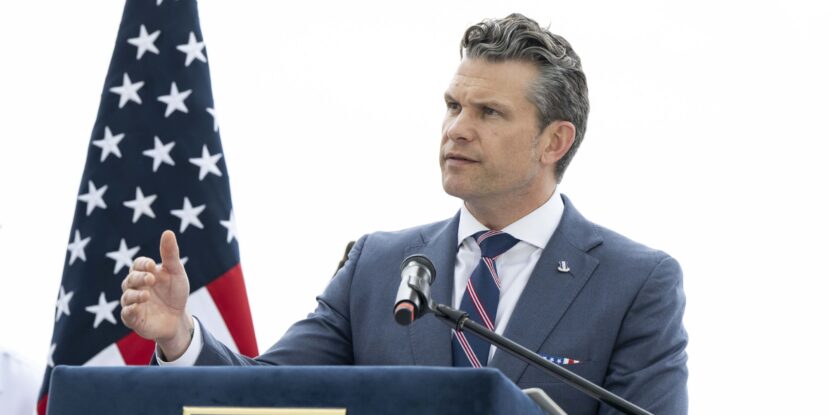
DOD photo by U.S. Air Force Senior Airman Madelyn Keech.

show less

PULSE POINTS:

show more

A Federal Labor Arbitrator Says IRS Employees Can Continue Working from Home Four Days a Week.

PULSE POINTS:

❓What Happened: The government union representing  IRS employees successfully defended a telework policy allowing employees to work remotely up to eight days per biweekly pay period. A federal labor arbitrator dismissed the Trump White House and IRS officials’ concerns regarding performance and service to taxpayers under this arrangement.

👥 Who’s Involved: The IRS, the National Treasury Employees Union (NTEU), an arbitrator, Sen. Joni Ernst (R-IA), and President Donald Trump.

📍 Where & When: The agreement was finalized last October, with ongoing arbitration over several policies.

💬 Key Quote: Sen. Ernst critiqued, “While the American people are working hard, the tax collectors are trying to hardly work.”

⚠️ Impact: The ruling allows for substantial remote work at the IRS, leading to criticism regarding taxpayer-funded unions and concerns over IRS employee performance. There is ongoing tension over telework policies in federal agencies.

IN FULL:

Prior to President Donald J. Trump’s second term in office, employees at the Internal Revenue Service (IRS) secured a lucrative policy allowing them to work remotely all but one day a week through an agreement between the agency and the National Treasury Employees Union. The policy received significant pushback from IRS senior leadership, who contend that excessive teleworking could hinder the agency’s ability to serve taxpayers effectively.

Consequently, the Trump White House and the IRS have attempted to roll back the telework agreement and cap telework to just six days per pay period—a modest change that would essentially require workers to be in the office twice a week. However, a federal labor arbitrator has intervened and rejected the telework changes. “To hold telework solely responsible for such issues is inappropriate. Given the need for supervisors to assess the portability of an individual employee’s work, I am not convinced there should be an arbitrary six-day cap,” the arbitrator said regarding their decision to reject the six-day telework policy.

Notably, the National Treasury Employees Union, representing career IRS and Treasury Department employees, uses taxpayer dollars to fund labor negotiations and arbitration cases with the federal government. The most recent available public data shows that around $160 million in taxpayer dollars were spent on government union activities in 2019.

While efforts to rein in the tax collection agency’s absurdly lax telework policy have thus far proven unsuccessful, the arbitrator did agree with the Trump White House that the IRS’s employee bonus structure was too generous. Instead, the arbitrator determines that employee bonuses will be more limited in size and scope, with individual units under the agency determining the qualifying standards.

In a recent media interview, Senator Joni Ernst (R-IA)—who chairs the Senate DOGE Caucus—blasted the telework policy and taxpayer funding of government union collective bargaining negotiations. “While the American people are working hard, the tax collectors are trying to hardly work,” the Iowa Senator said, adding: “It is infuriating that our tax dollars are footing the bill for union bosses to negotiate for IRS bureaucrats to get cushy telework agreements and bloated bonus structures.”

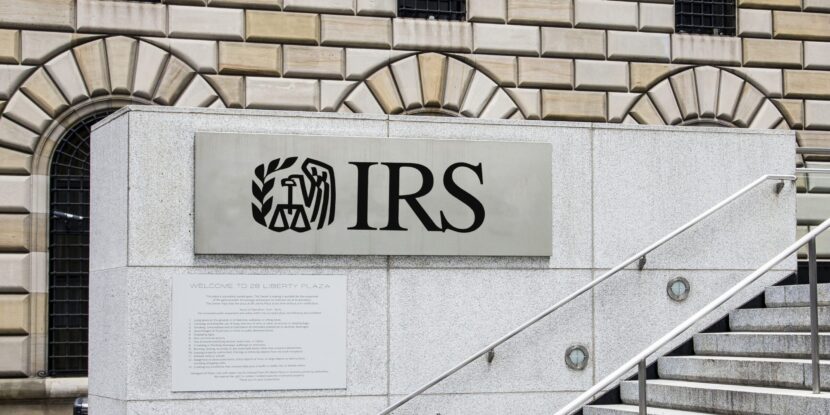
Image by Alpha Photo.

show less

PULSE POINTS:

show more