Monday, January 19, 2026

European Union Sparks Unease With Plan to Absorb Ukraine Through ‘Membership-Lite.’

PULSE POINTS

WHAT HAPPENED: The European Union (EU) is considering a new two-tier EU accession system that could expedite Ukraine’s membership.

👤WHO WAS INVOLVED: The European Commission, Ukraine, and EU member states.

📍WHEN & WHERE: Proposals are currently under discussion in Brussels, Belgium, which serves as the EU institutions’ main power center.

💬KEY QUOTE: “Extraordinary times call for extraordinary measures… We’re enlarging the concept of enlargement.” – Senior EU diplomat.

🎯IMPACT: The plan could alter EU accession rules and affect the bloc’s stability.

IN FULL

The European Commission—the European Union’s unelected executive—is working on draft proposals that could significantly reshape the EU accession process, including the possibility of accelerating Ukraine’s entry as part of a negotiated settlement to end the war between Ukraine and Russia. Although the initiative remains at an early stage, it has already unsettled several EU capitals that fear the emergence of an “enlargement-lite” approach that could weaken long-standing standards.

Ukraine, which was granted official EU candidate status after Russia launched its full-scale invasion in February 2022, regards EU membership as a cornerstone of its postwar recovery and its long-term strategic alignment with the West. Ukrainian leaders argue that joining the bloc is essential for economic reconstruction, political reform, and security guarantees beyond the battlefield. Nevertheless, even sympathetic EU officials privately acknowledge that Ukraine may need around a decade to fully satisfy accession requirements, despite a U.S.-backed peace framework that envisions membership by 2027.

Under the Commission’s preliminary thinking, Ukraine could enter the EU under a staged model that limits its initial influence. While the country would be formally admitted, it would not enjoy “normal voting rights at leaders’ summits” during the early phase. Instead, Kiev would gradually gain access to the Single Market, which includes the Free Movement migration regime, and EU funding as it meets a series of post-accession reform targets.

Such an approach would represent a significant departure from the 1993 accession rules, which require candidate states to fully align with EU laws and standards before joining. Supporters inside the bloc argue that exceptional circumstances demand flexibility, particularly given Ukraine’s wartime situation. Critics, however, warn that relaxing the rules risks damaging the already tenuous cohesion of the bloc and diminishing the perceived value of full membership.

“Extraordinary times call for extraordinary measures… We’re not undermining enlargement. We’re enlarging the concept of enlargement,” one EU official said.

The proposal has triggered debate among member states, with some governments concerned it could disadvantage other candidate countries such as Montenegro and Albania, which have spent years progressing through the traditional accession process. Others worry about the broader implications for the EU’s relationships with non-member partners like the United Kingdom and Norway, questioning whether a differentiated model for Ukraine could create new political and economic tensions.

Beyond institutional concerns, political resistance remains strong in parts of the EU. Hungarian Prime Minister Viktor Orbán has repeatedly expressed skepticism about Ukraine joining the bloc, arguing that such a move should not proceed without public consent. He has suggested that European voters should decide whether Ukraine can join and has cautioned that fast-tracking accession could have serious consequences for the union’s economy and stability.

Notably, Ukraine is regularly accused of mistreating its Hungarian minority and of hurting farmers in countries like Poland by dumping their agricultural produce on the EU and driving down prices.

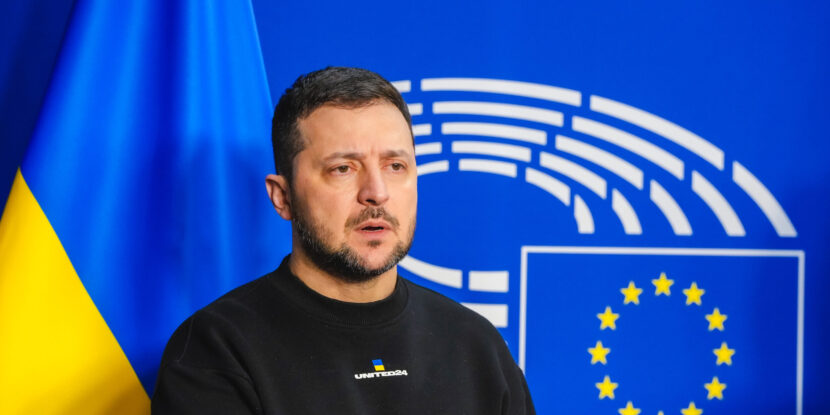
Image via European Union 2023– Source: EP.

Join Pulse+ to comment below, and receive exclusive
show less
show more

SUHR: Setting the Reagan Record Straight on Broadcasting.

President Ronald Reagan’s name has been taken in vain a lot lately by conservatives eager to use his sainted persona to bash President Trump’s Federal Communications Commission (FCC). The worst offender has been Newsmax and its CEO, Chris Ruddy, a well-known figure who tries to mask his opposition to free-market principles by invoking Reagan as his inspiration and imprimatur.

Over and over again, Newsmax and Ruddy have cited Reagan in opposing proposed FCC reforms that would lift regulatory restrictions on television station ownership. In an alert to Newsmax readers this week, the channel wrote, “The Cap is a policy originally started by President Ronald Reagan to prevent massive TV media consolidation. . . . Reagan understood immediately the danger of big media. Now, Chairman Carr and the FCC want to abolish Reagan’s cap entirely.”

Newsmax has also reported this not just as its corporate view but as a news fact, saying in a recent report: “The cap was first instituted by then-President Ronald Reagan to limit major networks and station groups from owning a majority of stations across the nation.”

Newsmax has said this not only to its viewers, but to the FCC itself, asserting in a recent filing that “the national cap [is] good policy rooted in conservative values and decisions by the Reagan Administration.”

That’s not really true.

Though it is correct that the first percentage cap was instituted in 1985 by Reagan appointees on the FCC, this was actually a deregulatory move that provided relief from the previous hard cap of seven television stations, set for the first time in 1954 and upheld by the Supreme Court in 1956.

In 1984, President Reagan’s FCC appointees moved to totally repeal that national ownership cap. The Commission adopted a “phase out” such that “at the end of six years, multiple ownership would be unrestricted.”

After the Democrat-controlled Congress pushed back, the FCC compromised by creating a new rule limiting any single television company from reaching more than 25 percent of the nation’s viewers via their local station licenses (of course, the national networks themselves—ABC, NBC, CBS, PBS—could reach 100 percent of viewers, but this never seemed a problem for liberals—only local station owners are subject to caps). Though the 25 percent national audience limit was still a cap, it marked significant freedom for corporate growth compared to the prior hard cap at just seven stations.

Reagan’s FCC chairman Mark Fowler, who started as an aide on the 1980 Reagan campaign, explained at the time that the initial effort to entirely lift the cap was a deregulatory move to open up a free market for station ownership: “Broadcasting will then be able to rejoin the family of American businesses under the general laws that regulate competition, no longer arbitrarily singled out for straight-jacket treatment.”

He predicted that if television companies owned stations in multiple markets, that would actually result in “more program competition, on a local and national basis. While there is no magic in group ownership that ensures better service, the sharing of costs that can go on among more stations is likely to permit larger-scale program undertakings.”

Fowler’s point—that larger station groups can actually increase competition by conferring the scale necessary to independently produce widespread programming—is what conservatives should want instead of total dependence on networks like ABC and NBC. The growth of shows like Sinclair’s The National Desk as an alternative to network news is a great example of Fowler’s vision in action.

Newsmax says “Reagan understood immediately the danger of big media,” but in fact his FCC specifically called out the Left’s scare tactics against “big media.”

Fowler wrote in his opinion on lifting the ownership cap: “Bigness is not necessarily badness, sometimes it is goodness, sometimes it is just bigness and nothing more. But without a good reason to forbid growth, this Commission should not just utter the magic word ‘Television’ and treat the industry differently.”

Just so, there is nothing inherently wrong with corporations that provide services customers want, leading to their market growth, as long as they don’t employ unlawful anticompetitive tactics.

Reagan was a champion for free markets and economic growth. His eight years marked a renewal of the national economy, achieved largely through tax cuts and regulatory relief. His FCC pursued the same goals by providing greater freedom for broadcasting companies to grow and thrive. President Trump’s FCC should pursue the same policy and brush aside the mistaken invocation of the Gipper.

Daniel Suhr is president of the Center for American Rights, a conservative public interest law firm.

show less

President Ronald Reagan’s name has been taken in vain a lot lately by conservatives eager to use his sainted persona to bash President Trump’s Federal Communications Commission (FCC). The worst offender has been Newsmax and its CEO, Chris Ruddy, a well-known figure who tries to mask his opposition to free-market principles by invoking Reagan as his inspiration and imprimatur.

show more

RFK Jr. Instructs HHS to Probe Cellphone Radiation Risks.

PULSE POINTS

WHAT HAPPENED: The U.S. Department of Health and Human Services (HHS) is launching a new study into the potential health effects of cellphone radiation.

👤WHO WAS INVOLVED: HHS, President Donald J. Trump’s “Make America Healthy Again” Commission, Health Secretary Robert F. Kennedy Jr., and various federal agencies.

📍WHEN & WHERE: The study was recently announced, with older federal webpages on the topic being quietly removed.

🎯IMPACT: The study aims to address gaps in scientific knowledge, though it contrasts with positions held by many major scientific and regulatory bodies.

IN FULL

The U.S. Department of Health and Human Services (HHS) has launched a study to examine possible health effects linked to cellphone radiation, signaling a shift from earlier federal messaging that emphasized the supposed safety of wireless devices. HHS said the research will focus on electromagnetic radiation and human health, with the goal of identifying gaps in scientific knowledge, particularly as it relates to “newer technologies.” Agency spokesman Andrew Nixon said older federal webpages asserting that cellphones are safe were removed because those conclusions are now considered “outdated.”

The effort was ordered by President Donald J. Trump’s “Make America Healthy Again” (MAHA) Commission and reflects a broader policy direction under Health and Human Services Secretary Robert F. Kennedy Jr. As part of that approach, HHS has pointed to actions taken at the state level, noting that 22 states have enacted restrictions on cellphone use in schools to support children’s health.

The move marks a departure from long-standing positions held by many federal agencies. While the Food and Drug Administration, which operates under HHS, has taken down webpages previously dismissing potential risks from cellphone use, other agencies, including the Centers for Disease Control and Prevention (CDC) and the Federal Communications Commission (FCC), continue to state that existing evidence does not demonstrate a causal link between cellphone radiation and cancer. However, those agencies do acknowledge that continued research is warranted.

Kennedy has long argued that wireless radiation poses serious health risks. Before joining the Trump administration, he represented plaintiffs who claimed cellphone use caused brain tumors and served as chairman of the advocacy group Children’s Health Defense. He has also been involved in legal challenges to FCC radiation exposure standards.

Since becoming HHS secretary, Kennedy has advanced a range of health policy changes aligned with the MAHA agenda. These include a sweeping reorganization of federal health agencies to create a new Administration for a Healthy America, efforts to ban synthetic food dyes from the U.S. food supply, and changes to federal vaccine policy. In late 2025, a reconstituted CDC advisory panel backed by Kennedy voted to end the long-standing recommendation that newborns receive the hepatitis B vaccine on the day of birth, shifting the decision to parents and physicians.

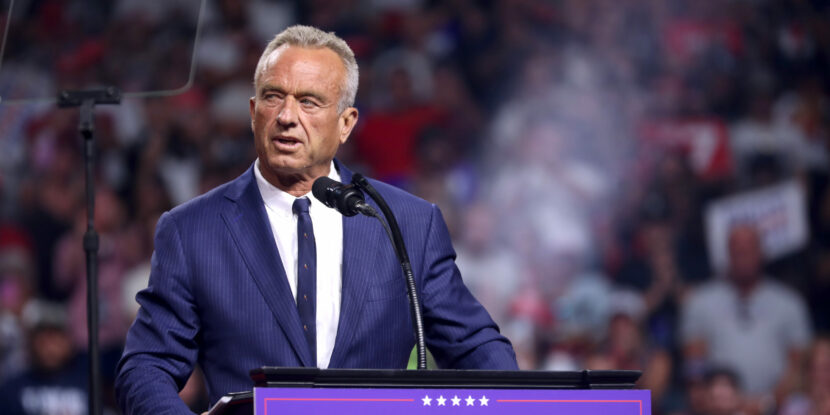
Image by Gage Skidmore.

Join Pulse+ to comment below, and receive exclusive e-mail analyses.
show less
show more

ICE Agent Confronts Protesters Disrupting Raid on Pedophile.

PULSE POINTS

WHAT HAPPENED: A video has surfaced showing a U.S. Immigration and Customs Enforcement (ICE) agent confronting agitators interfering with an operation to detain a suspected child sex offender in St. Paul, Minnesota.

👤WHO WAS INVOLVED: ICE agents, anti-ICE protesters, individuals filming the scene, and federal officials.

📍WHEN & WHERE: The weekend of January 17, 2026, in St. Paul, Minnesota, during a federal enforcement operation.

💬KEY QUOTE: “We’re here to arrest a child sex offender, and you guys are out here honking… That vehicle right there is honking and impeding our investigations while we’re trying to arrest a child sex offender. That’s who you guys are protecting. Insane.” – ICE agent

🎯IMPACT: Protests against ICE enforcement actions have intensified in Minnesota, with some demonstrators violently clashing with federal and local law enforcement.

IN FULL

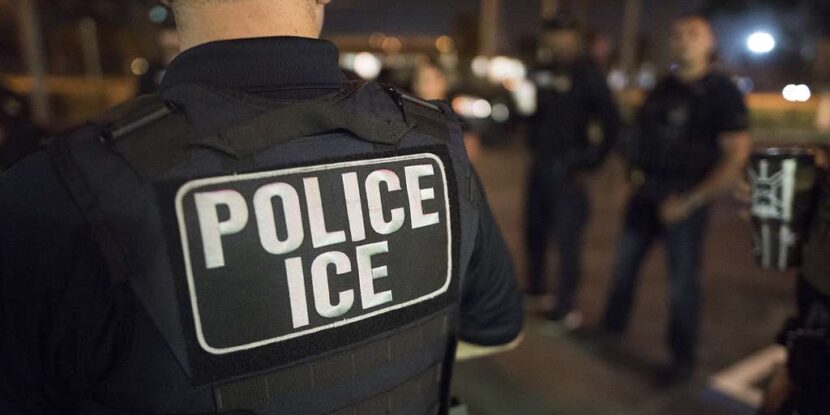
A video posted to social media shows leftists attempting to interfere in a U.S. Immigration and Customs Enforcement (ICE) operation over the weekend in St. Paul, Minnesota, being warned that their actions could result in the escape of a child sex offender. Anti-ICE activists, according the federal immigration officer in the video, were honking car horns in effort to warn the enforcement action target.

“We’re here to arrest a child sex offender, and you guys are out here honking… That vehicle right there is honking and impeding our investigations while we’re trying to arrest a child sex offender. That’s who you guys are protecting. Insane,” the ICE agent states into the camera, while pointing to a vehicle he said was disrupting the operation. Another part of the footage captured continuous honking from a car.

The confrontation follows heightened tensions between federal agents and anti-ICE agitators in Minnesota, sparked by two recent high-profile shootings. Earlier this month, an ICE agent fatally shot Renee Nicole Good, an anti-ICE activist, when she hit a federal officer with her car. Seperately, a Venezuelan illegal was shot in the leg by an ICE agent in Minneapolis after he and several others attacked the agent with a shovel.

Demonstrators have organized marches, vigils, and “ICE Watch” patrols to monitor federal enforcement actions. Meanwhile, the Department of Justice (DOJ) is investigating protesters who disrupted services at a St. Paul church where a local ICE official, David Easterwood, also serves as a pastor.

Join Pulse+ to comment below, and receive exclusive e-mail analyses.

show less
show more

Hotels Cancel ICE Bookings and Close Doors, Alleging Safety Concerns.

PULSE POINTS

WHAT HAPPENED: Two Minnesota hotels canceled U.S. Immigration and Customs Enforcement (ICE) agents’ reservations and temporarily closed due to “heightened public safety concerns.”

👤WHO WAS INVOLVED: ICE agents, Doubletree St. Paul Downtown, Intercontinental St. Paul Riverfront, and protesters opposing ICE operations.

📍WHEN & WHERE: St. Paul, Minnesota; closures began Sunday, with impacts continuing into the week.

🎯IMPACT: ICE agents faced challenges in securing accommodations amid ongoing protests and safety concerns.

IN FULL

Two hotels in St. Paul, Minnesota, have temporarily closed their doors in what is suspected to be a move to shield them from litigation for cancelling reservations made by U.S. Immigration and Customs Enforcement (ICE) agents. The Doubletree St. Paul Downtown informed agents that their rooms were being canceled and the hotel would close for several days, while the Intercontinental St. Paul Riverfront said it was temporarily closing due to “elevated safety and security concerns.”

While both hotels claim they are assisting agents in finding new or alternate accommodations, the closure decisions are drawing scrutiny, as the move appears to be designed to avoid the backlash the now-former Hampton Inn Lakeville Minneapolis received. The National Pulse reported in early January that Hilton announced it had cut ties with the hotel’s independent ownership after it refused to honor room reservations made by federal agents and was subsequently caught lying about the matter. Notably, the InterContinental St. Paul Riverfront stated that it may begin accepting reservations again on Wednesday.

The hotel closures do come amid an increase in civil unrest and violence by leftist agitators in the greater Minneapolis-St. Paul area in response to the fatal shooting of anti-ICE activist Renee Nicole Good earlier this month, when she attempted to run over a federal law enforcement officer. On Sunday, left-wing protestors and ex-CNN anchor Don Lemon stormed a Christian worship service at Cities Church in St. Paul. The demonstration was led by activist Nekima Levy-Armstrong and organized by the Racial Justice Network and Black Lives Matter Minnesota under the name “Operation Pullup.”  Lemon accompanied the group, embedded with the protesters, and conducted interviews during the disruption. Congregants were forced to flee as the unrest unfolded inside the church.

In response to the unrest and violence, the U.S. Department of Homeland Security (DHS) has surged federal law enforcement officers to Minnesota to protect both the public and ICE agents.

Join Pulse+ to comment below, and receive exclusive e-mail analyses.

show less
show more

Top Ukrainian Lawmaker and Ex-PM Caught in Corruption Probe.

PULSE POINTS

WHAT HAPPENED: Anti-corruption investigators have accused Ukrainian lawmaker and former Prime Minister Yulia Tymoshenko of organizing a scheme to bribe MPs, including figures from President Volodymyr Zelensky’s party, to undermine his government.

👤WHO WAS INVOLVED: Yulia Tymoshenko, her Fatherland party, members of the Ukrainian legislature, and Ukraine’s National Anti-Corruption Bureau (NABU) and Specialised Anti-Corruption Prosecutor’s Office (SAPO).

📍WHEN & WHERE: Investigations and raids occurred on Tuesday night, with announcements made on Wednesday in Ukraine.

💬KEY QUOTE: “It seems the elections are much closer than they appeared and someone has decided to start clearing out the competition.” – Yulia Tymoshenko

🎯IMPACT: The allegations heighten political tensions in Ukraine, as expectations of elections increase amidst ongoing corruption probes and the war with Russia.

IN FULL

Ukrainian opposition lawmaker and former Prime Minister Yulia Tymoshenko is facing bribery charges from anti-corruption authorities, who allege she organized a scheme to pay lawmakers—including some from President Volodymyr Zelensky’s party—in exchange for their votes in parliament.

The accusations emerged following raids late Tuesday on the offices of her Batkivshchyna (Fatherland) party by the National Anti-Corruption Bureau (NABU) and the Specialized Anti-Corruption Prosecutor’s Office (SAPO). Investigators claim the operation involved a systematic, long-term arrangement with advance payments to secure loyal voting behavior, including instructions sent via the Signal messaging app. NABU has released audio recordings and video footage showing U.S. dollar cash seized during the searches, describing it as part of a broader effort to influence parliamentary decisions and potentially undermine Zelensky’s majority.

Tymoshenko, whose party holds about 25 seats in the 450-member Verkhovna Rada, as the Ukrainian legislature is known, denied the claims in a Facebook statement. She rejected any link to the published audio recordings and called the probe politically driven, stating: “It seems the elections are much closer than they appeared and someone has decided to start clearing out the competition.” She pledged to demonstrate in court that the accusations against her are false.

The case follows NABU’s exposure in December 2025 of several lawmakers accepting improper benefits for votes, and coincides with other high-profile corruption investigations, including those involving figures close to Zelensky and issues at the state nuclear energy company Energoatom.

Notably, Tymoshenko had earlier backed legislation that would have weakened or dismantled NABU and SAPO—the very bodies now pursuing her.

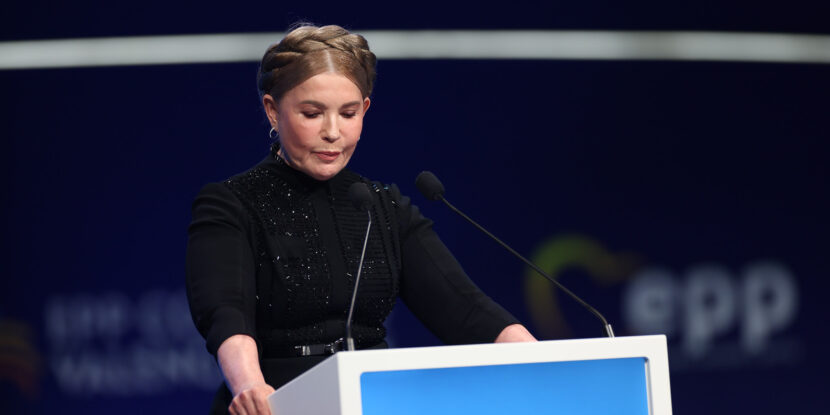
Image via the European People’s Party.

Join Pulse+ to comment below, and receive exclusive e-mail analyses.
show less
show more

Newsom’s Newest Move Against GOP House Majority Poses Serious Threat to Trump’s Agenda.

PULSE POINTS

WHAT HAPPENED: California Governor Gavin Newsom (D) scheduled a special election to fill the vacant seat of the late Representative Doug LaMalfa (R-CA) on the latest possible date under state law.

👤WHO WAS INVOLVED: Gov. Gavin Newsom, late GOP Rep. Doug LaMalfa, and voters in Northern California.

📍WHEN & WHERE: The special election is set for August 4 in Northern California.

🎯IMPACT: The vacancy adds to the challenges faced by Republicans’ narrow House majority in passing President Donald J. Trump’s legislative agenda.

IN FULL

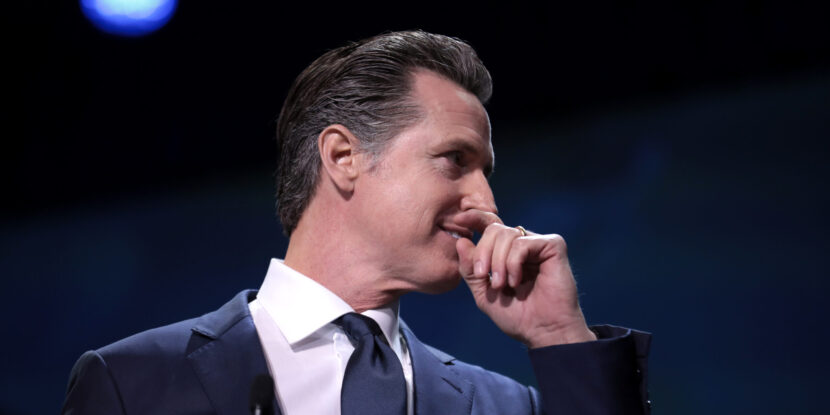
Governor Gavin Newsom (D-CA)—a leading contender for the 2028 Democrat presidential nomination—has scheduled a special election to fill the open seat of the late Representative Doug LaMalfa (R-CA) on August 4, 2026. This is the last possible date permissible under state law for the vacancy to be filled.

Notably, the move by Newsom appears aimed at further complicating the legislative process for House Republicans on Capitol Hill, as the prolonged vacancy will deprive GOP leaders of a critical vote in their already slim majority. Republicans have faced an increasingly difficult time passing major legislation in the House, holding just 218 seats to the Democrats’ 213, with two Republican and two Democrat vacancies.

Further, Rep. Thomas Massie‘s penchant for defecting to the Democrats on critical votes means the House GOP effectively operates with an effective one- or two-vote majority on most floor action. The winner of the California special election will only serve the remaining months of the term, which expires in early January 2027. LaMalfa passed away on January 6 at the age of 65.

The delayed special election is just the latest maneuver by Newsom to position himself for a 2028 presidential primary run, by embracing hyperpartisan tactics to tilt the midterm election in the Democrats’ favor in an effort to appeal to the more radical elements of the party’s base. Last November, California voters backed Newsom’s Proposition 50, a ballot measure that temporarily suspends the state’s independent redistricting commission and allows the legislature to redraw congressional districts, potentially creating five additional Democratic seats ahead of the 2026 congressional midterm elections.

Image by Gage Skidmore.

Join Pulse+ to comment below, and receive exclusive e-mail analyses.

show less
show more

House Democrats Move to Block Funding for Greenland Purchase.

PULSE POINTS

WHAT HAPPENED: House Democrats introduced a bill to block President Donald J. Trump from using federal funds to purchase Greenland.

👤WHO WAS INVOLVED: Representative Gabe Amo (D-RI), over 20 House Democrat co-sponsors, President Donald, and Danish officials.

📍WHEN & WHERE: The bill was introduced on Sunday, with discussions involving Greenland, Denmark, and U.S. officials occurring recently.

💬KEY QUOTE: “Greenland is not for sale, no matter what Trump says. That’s why I led 21 [House Democrats] in introducing the NO NATO for Purchase Act to make sure your taxpayer dollars aren’t spent on Trump’s next property boondoggle.” – Rep. Gabe Amo

🎯IMPACT: The bill is unlikely to pass in the Republican controlled House, though its introduction suggests Democrats are beginning to organize a more concerted effort against a possible acquisition of Greenland.

IN FULL

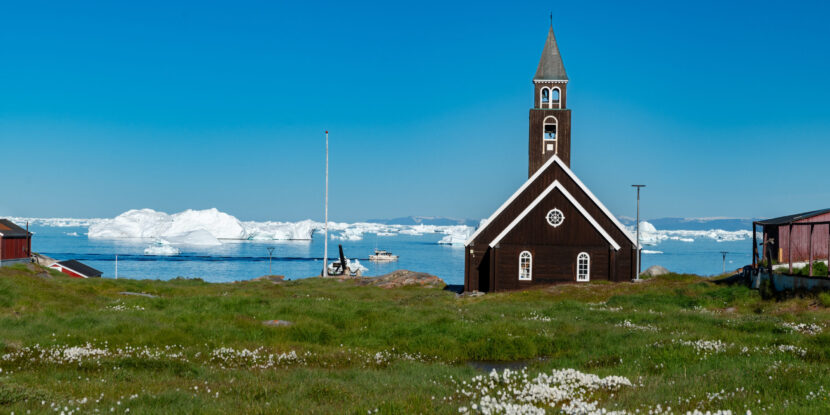
House Democrats are attempting to deprive President Donald J. Trump of critical leverage in his efforts to purchase the Arctic island of Greenland. Legislation introduced on Sunday by Representative Gabe Amo (D-RI) would bar the President from using federal funds to buy the island.

Already, Amo’s legislation has over 20 Democrat co-sponsors in the House. Entitled the “NO NATO for Purchase Act, Rep. Amo stated on X (formerly Twitter) that the bill makes clear, “Greenland is not for sale, no matter what Trump says. That’s why I led 21 [House Democrats] in introducing the NO NATO for Purchase Act to make sure your taxpayer dollars aren’t spent on Trump’s next property boondoggle.”

The legislative summary accompanying the bill contends its aim is “to prohibit actions or expenditure of funds to purchase a North Atlantic Treaty Organization member country or NATO-protected territory.” This comes as Trump continues to argue that acquiring Greenland is essential for U.S. national security.

On Sunday, President Trump reiterated his strong desire for the United States to gain “complete and total control” of Greenland, arguing that global security depends on it in a message to the Prime Minister of Norway, Jonas Gahr Støre. “Denmark cannot protect that land from Russia or China, and why do they have a ‘right of ownership’ anyway?” he demanded, adding: “There are no written documents, it’s only that a boat landed there hundreds of years ago, but we had boats landing there, also.”

Meanwhile, on Saturday, Trump announced new tariffs on several European countries, including Denmark, Norway, Sweden, France, Germany, the United Kingdom, the Netherlands, and Finland, starting in February. The President stated that the trade levies are in response to their opposition to the U.S. acquisition of Greenland.

Image by Christoph Strässler.

Join Pulse+ to comment below, and receive exclusive e-mail analyses.
show less
show more

Kamala Campaign Demanded to Know If Josh Shapiro Was an Israeli Agent.

PULSE POINTS

WHAT HAPPENED: Kamala Harris’s team reportedly asked Pennsylvania Governor Josh Shapiro (D) if he was an Israeli double agent during the 2024 vice presidential selection process, as detailed in Shapiro’s new memoir.

👤WHO WAS INVOLVED: Former Vice President Kamala Harris, Governor Shapiro, Dana Remus (former White House counsel), and Harris’s vetting team.

📍WHEN & WHERE: During the 2024 U.S. presidential campaign, as Harris considered her vice presidential running mate options.

💬KEY QUOTE: “Had I been a double agent for Israel?” Shapiro wrote, expressing his surprise at the question from Harris’s team.

🎯IMPACT: The revelations in Shapiro’s book highlight tensions during Harris’s campaign, and likely mark the beginning of jockeying by potential 2028 Democrat presidential primary candidates.

IN FULL

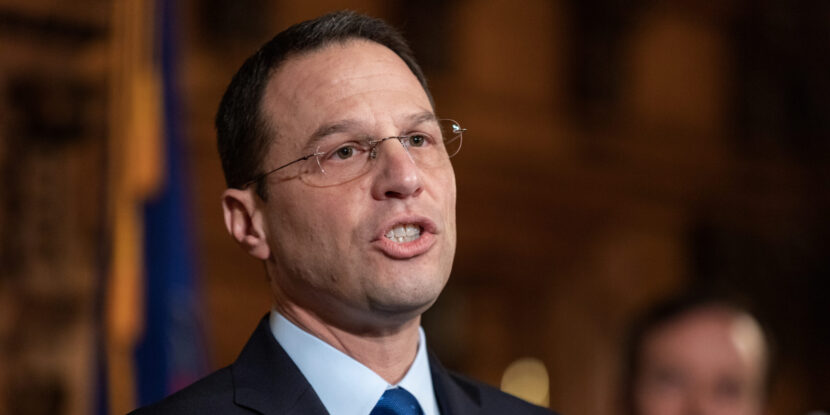
In his new memoir, Where We Keep the Light, Pennsylvania Governor Josh Shapiro (D) revealed that Kamala Harris’s team asked if he was an Israeli double agent during the 2024 vice presidential selection process. The question, posed by Dana Remus, a former White House counsel, left Shapiro, who served as an Israel Defense Forces (IDF) volunteer in his twenties, stunned. “Had I been a double agent for Israel?” he wrote, describing his reaction to the inquiry.

Shapiro stated that the vetting team justified the question by saying, “Well, we have to ask.” He also alleged that Harris’s team wanted to know if he had communicated with undercover Israeli agents. Shapiro responded, “If they were undercover, I responded, how the hell would I know?” He later reflected that the question “said a lot about some of the people around the VP.”

Harris ultimately chose Minnesota Governor Tim Walz (D) as her running mate, a decision criticized by some at the time, given Shapiro’s status as governor of Pennsylvania, a critical swing state. Shapiro’s memoir also recounts his frustration with other questions from Harris’s team, including whether he would soften his criticisms of student protests against Israeli actions in Gaza. Shapiro maintained his position, stating, “It nagged at me that their questions weren’t really about substance. Rather, they were questioning my ideology, my approach, my worldview.”

Shapiro also suggested that Harris disliked her own role as vice president, citing her complaints about the lack of authority and amenities associated with the position. “I was surprised by how much she seemed to dislike the role,” he wrote. Harris, in her own memoir 107 Days, offered a different perspective, accusing Shapiro of having an ambition for power that exceeded the typical responsibilities of a vice president and expressing concerns about his “lack of discretion.”

The vetting meetings appear to have left the Pennsylvania governor notably disinclined to serve as Harris’s running mate, to the point that the Harris campaign and Remus took a few parting shots in a follow-up conversation. In their final conversation, Remus is alleged to have emphasized the financial burden of the vice presidency and noted Shapiro’s lack of personal wealth. Harris’s team also insisted that Shapiro’s wife, Lori, would need to purchase an entirely new wardrobe, and that the couple would have to pay for “Second Lady-level hair and makeup,” as well as food and entertainment at the Naval Observatory. “Are you trying to convince me not to do this?” Gov. Shapiro claims to have responded.

Image by Tom Wolf.

Join Pulse+ to comment below, and receive exclusive e-mail analyses.
show less
show more

DOJ Investigating Invasion of Church by Don Lemon and Anti-ICE Agitators.

PULSE POINTS

WHAT HAPPENED: A group of far-left extremist activists, accompanied by ex-CNN host Don Lemon, disrupted a church service in St. Paul, Minnesota, as part of a protest called “Operation Pullup.”

👤WHO WAS INVOLVED: Activists led by Nekima Levy-Armstrong, Don Lemon, Cities Church congregants, and Assistant Attorney General Harmeet Dhillon.

📍WHEN & WHERE: Sunday, January 18, at Cities Church in St. Paul, Minnesota.

💬KEY QUOTE: “The [Civil Rights Division] is investigating the potential violations of the federal FACE Act by these people desecrating a house of worship and interfering with Christian worshippers” – Harmeet Dhillon

🎯IMPACT: The Department of Justice has launched an investigation into potential violations of the FACE Act, with Don Lemon possibly being a target.

IN FULL

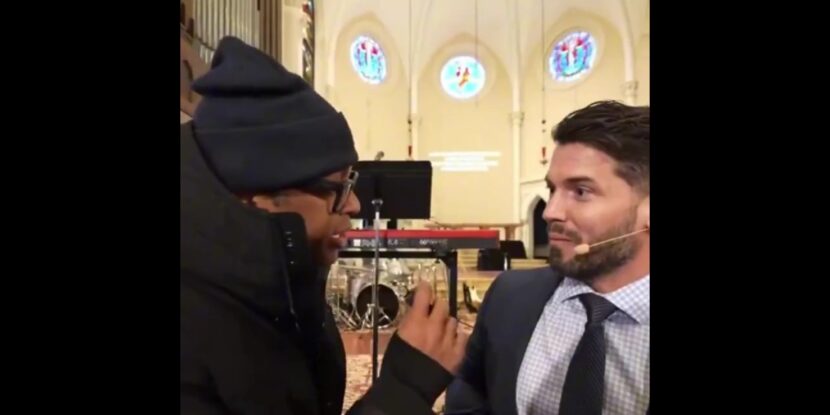
The Department of Justice (DOJ) has opened an investigation into a protest that disrupted a Sunday worship service at Cities Church in St. Paul, Minnesota, after leftist extremist activists entered the sanctuary and halted the service for roughly 30 minutes. The demonstration was led by activist Nekima Levy-Armstrong and organized by the Racial Justice Network and Black Lives Matter Minnesota under the name “Operation Pullup.” Disgraced former CNN host Don Lemon accompanied the group, embedded with the protesters, and conducted interviews during the disruption. Congregants were forced to flee as the unrest unfolded inside the church.

Lemon defended the extremists by comparing their tactics to those used during the civil rights movement and argued that the First Amendment protects such actions. “There is nothing in the Constitution that tells you what time you can protest. You can protest at any time,” he said.

Assistant Attorney General Harmeet Dhillon, who heads the Justice Department’s Civil Rights Division, said the incident is being reviewed for potential violations of the federal Freedom of Access to Clinic Entrances (FACE) Act, which also protects access to religious worship. Dhillon said, “The [Civil Rights Division] is investigating the potential violations of the federal FACE Act by these people desecrating a house of worship and interfering with Christian worshippers.”

The protest targeted Cities Church because activists allege that one of its pastors works for Immigration and Customs Enforcement (ICE). Levy-Armstrong said, “They cannot pretend to be a house of God while harboring someone who is directing ICE agents to wreak havoc upon our community.” The church’s lead pastor, Jonathan Parnell, who is not the pastor accused of working for ICE, confronted Lemon during the protest and condemned the disruption, saying, “It’s shameful to interrupt a public gathering of Christians in worship.”

The incident has drawn national attention. White House Press Secretary Karoline Leavitt condemned the protest and said President Donald J. Trump will not tolerate harassment of Christians in their places of worship.

The disruption comes amid a broader rise in hostility toward churches across the United States. Recent data has shown a sharp increase in attacks on American churches, including vandalism, arson, and intimidation, raising concerns among religious liberty advocates about the safety of worshippers.

Minnesota has also been the site of heightened unrest tied to immigration enforcement and law enforcement activity. Following a recent ICE-related shooting in Minneapolis, President Trump blamed the “radical left” for subsequent attacks on law enforcement and warned that continued instability could prompt extraordinary federal measures. Earlier this month, Trump said he was considering invoking the Insurrection Act in response to ongoing unrest in the state.

Join Pulse+ to comment below, and receive exclusive e-mail analyses.
show less
show more