



Wednesday, March 11, 2026

Britain to Remove Churchill from Banknotes.

PULSE POINTS

WHAT HAPPENED: The Bank of England plans to replace historical figures including wartime Prime Minister Sir Winston Churchill on banknotes with pictures of animals.

👤WHO WAS INVOLVED: The Bank of England, Prime Minister Sir Keir Starmer, Chancellor (Treasury Secretary) Rachel Reeves, and Robert Jenrick, of Nigel Farage’s Reform Party.

📍WHEN & WHERE: Announced March 11, 2026, in the United Kingdom.

💬KEY QUOTE: “It says it all that Rachel Reeves is replacing Winston Churchill on our banknotes with a squirrel.” – Robert Jenrick

🎯IMPACT: The decision ends over 50 years of featuring British historical figures on banknotes.

IN FULL

The Bank of England has announced a controversial plan to remove historic Britons, including wartime Prime Minister Sir Winston Churchill and author Jane Austen, from banknotes. Instead, the new series will feature animals native to the United Kingdom.

Victoria Cleland, the chief cashier at the Bank of England, claimed that while the main goal is to improve counterfeit resilience. “Nature is a great choice from a banknote authentication perspective,” she said, although it is unclear why a banknote featuring a picture of a badger should be harder to counterfeit than a banknote featuring a picture of Churchill.

This change marks the end of more than 50 years of showcasing historic Britons on currency. Robert Jenrick, Shadow Chancellor for Nigel Farage’s Reform Party, criticized the decision, saying, “It says it all that Rachel Reeves is replacing Winston Churchill on our banknotes with a squirrel,” in reference to Prime Minister Sir Keir Starmer’s Chancellor of the Exchequer (Treasury Secretary).

Notably, Starmer removed around five portraits of Churchill from the parliamentary estate after entering office, including a picture of the wartime leader standing next to the Cenotaph, Britain’s main national war memorial, in 1945.

Churchill is a frequent target of far-left protesters and academics, who portray him as a “racist” and a “white supremacist.”

Join Pulse+ to comment below, and receive exclusive e-mail analyses.
show less
show more

London Knife Crime is So Bad They Now Need ‘Bleed Kits’ on Every Bus.

PULSE POINTS

WHAT HAPPENED: Knife crime in the United Kingdom’s capital city has become so commonplace that the London Assembly is backing a plan to install bleed kits at every major bus station and along bus routes experiencing sustained levels of violent crime.

👤WHO WAS INVOLVED: The London Assembly, the London Ambulance Service (LAS), Transport for London (TfL), and London Mayor Sir Sadiq Khan, of Britain’s governing Labour Party.

📍WHEN & WHERE: Early March, 2026, in London, England.

💬KEY QUOTE: “The current advice from the NHS is that standard first aid kits are sufficient for the majority of bleeding wounds. The NHS also highlights that the effective use of bleed kits requires appropriate training and there is a risk of significant harm if tourniquets, which are usually included in bleed kits, are not used correctly.” — TfL spokesman

🎯IMPACT: Over the weekend, the London Assembly passed a non-binding resolution asking the London Ambulance Service (LAS) to coordinate with Transport for London (TfL) to distribute the stab wound kits across the bus system.

IN FULL

Knife crime in the United Kingdom‘s capital city has become so commonplace that the London Assembly is backing a plan to install bleed kits at every major bus station and along bus routes experiencing sustained levels of violent crime. Over the weekend, the assembly passed a non-binding resolution asking the London Ambulance Service (LAS) to coordinate with Transport for London (TfL) to distribute the stab wound kits across the bus system.

Notably, the motion is non-binding, meaning the London Mayor, Sir Sadiq Khan, is not obligated to act on it. Additionally, TfL—citing National Health Service (NHS) guidance—says it does not plan to publicly advertise the availability of the bleed kits should they be installed.

“The current advice from the NHS is that standard first aid kits are sufficient for the majority of bleeding wounds,” a TfL spokesman said. “The NHS also highlights that the effective use of bleed kits requires appropriate training and there is a risk of significant harm if tourniquets, which are usually included in bleed kits, are not used correctly.”

Khan has been a regular target of President Donald J. Trump—and vice versa—with the America First leader saying of the London mayor in December, “I think he’s done a terrible job. London’s a different place. I love London. I love London. And I hate to see it happen.”

“He’s got a totally different ideology to what he’s supposed to have… he gets elected because so many [immigrants] have come in,” Trump added.

Image via East London Mosque.

Join Pulse+ to comment below, and receive exclusive e-mail analyses.

show less
show more

Trump Pulls Biden-Era Grants for LGBT Comics Research and ‘Multiethnic’ Studies.

PULSE POINTS

WHAT HAPPENED: The Trump administration halted $120,000 in grants for “LGBTQ” and “multiethnic” research projects.

👤WHO WAS INVOLVED: President Donald J. Trump, the National Endowment for the Humanities (NEH), Margaret Alice Galvan, and Maite Urcaregui.

📍WHEN & WHERE: Grants were terminated in April 2025, originally awarded at the end of 2024.

💬KEY QUOTE: “Both grants were awarded at the end of 2024, under the Biden administration, and terminated in April 2025.” – NEH

🎯IMPACT: NEH took steps to ensure future awards are merit-based and do not promote far-left ideology.

IN FULL

The Trump administration has withdrawn $120,000 in grants from the National Endowment for the Humanities (NEH) tied to projects focused on LGBTQ-themed comics and multiethnic studies. The move affects grants originally approved under the former Biden regime.

One of the canceled grants was a $60,000 award to Margaret Alice Galvan, an English professor at the University of Florida. Her research project, “Comics in Movement,” aimed to examine “LGBTQ+” cartoonists in the 1980s and 1990s.

Another $60,000 grant had been awarded to Maite Urcaregui, an assistant professor at San José State University. Her book project, “Seeing Citizenship,” was intended to explore the relationship between race, citizenship, and political belonging within multiethnic graphic literature.

Although both grants still appear on the NEH website, the agency said they were terminated in April 2025 as part of staffing reductions and funding cuts tied to broader federal cost-cutting measures. The NEH said it is also taking steps to ensure future awards are merit-based and aligned with projects that promote an understanding of America’s founding principles.

“Both grants were awarded at the end of 2024, under the Biden administration, and terminated in April 2025,” the agency said.

The funding cuts are part of a broader effort by the Trump administration to scale back federal support for woke diversity, equity, and inclusion (DEI) initiatives. Federal officials have pushed agencies and institutions to review or eliminate DEI-related programming tied to taxpayer funding.

Recent actions include threats to cut funding to the Smithsonian Institution if it refuses to comply with a federal review of DEI programs, as well as plans by the State Department to reduce university research funding connected to DEI initiatives. The Department of Justice has also redirected grants previously allocated to transgender and DEI-related programs toward strengthening law enforcement resources.

Join Pulse+ to comment below, and receive exclusive e-mail analyses.

show less
show more

American Farmers Struggle as Iran War Sparks Fertilizer Crisis, Surge in Fuel Costs.

PULSE POINTS

WHAT HAPPENED: The U.S.–Israeli bombardment of Iran has disrupted global fertilizer and oil supplies, putting economic strain on American farmers.

👤WHO WAS INVOLVED: American farmers, the U.S. and Israeli governments, Iran, and global fertilizer and oil markets.

📍WHEN & WHERE: The conflict began a week ago, impacting the Strait of Hormuz and U.S. farms.

💬KEY QUOTE: “You can’t even buy it right now if you wanted to,” said Chet Edinger, a South Dakota farmer, on the fertilizer situation.

🎯IMPACT: Rising costs for fertilizers and diesel, potential farm bankruptcies, and increased consumer prices for food.

IN FULL

The ongoing U.S.–Israeli military operation against Iran is beginning to disrupt global supply chains, with American farmers already feeling the impact. A major concern is the near-shutdown of the Strait of Hormuz, a crucial shipping route that carries roughly 20 percent of the world’s daily oil supply and a quarter of global nitrogen fertilizer supplies.

With maritime traffic slowing dramatically due to security threats and rising insurance costs, shipments of fuel and agricultural inputs have tightened. For farmers preparing for planting season, the timing could not be worse. Fertilizer prices have surged and supplies have become difficult to secure. About a quarter of globally traded nitrogen fertilizer typically moves through the Strait of Hormuz, meaning disruptions quickly ripple through the agricultural economy.

South Dakota farmer Chet Edinger said he anticipated possible shortages and purchased a final shipment of urea fertilizer earlier in the season, though it cost him 22 percent more than the previous year. Since then, the market has effectively stalled. “You can’t even buy it right now if you wanted to,” Edinger said.

The fertilizer market is described by analysts as nearly frozen, with significant price increases already recorded at the Port of New Orleans. With production disrupted in both Iran and Qatar, major exporters of nitrogen-based fertilizers, the global urea supply faces growing pressure. Linville warned that prices are likely to continue climbing until demand drops or supply routes stabilize.

Fuel costs are also rising, further squeezing farm operations that rely heavily on diesel for equipment and transportation. Financial pressure across the agricultural sector is increasing, with farm bankruptcies on the rise and concerns growing that prolonged instability could accelerate consolidation as large corporations acquire struggling farms.

The White House has emphasized that the disruptions are temporary and says the administration remains committed to supporting farmers. President Donald J. Trump recently unveiled a $12 billion aid package to help farmers manage economic shocks and previously promised that farmers would receive a share of tariff revenues from new trade policies.

Meanwhile, Trump has stated he will only accept “unconditional surrender” from Iran in order to end the conflict.

Join Pulse+ to comment below, and receive exclusive e-mail analyses.
show less
show more

Musk’s X Censors GOP Congressman for Anti-Islam Tweet.

PULSE POINTS

WHAT HAPPENED: Elon Musk’s platform X (formerly Twitter) censored a post by Congressman Andy Ogles (R-TN).

👤WHO WAS INVOLVED: U.S. Congressman Andy Ogles, Elon Musk, and the European Union (EU).

📍WHEN & WHERE: March 10, 2026, on X.

💬KEY QUOTE: “The EU has SILENCED my X post that called pluralism a lie and kindly stated that Muslims don’t belong in America.” – Andy Ogles

🎯IMPACT: The incident highlights ongoing issues with free speech on social media platforms, and the influence of foreign censorship laws on American citizens, including elected officials.

IN FULL

Elon Musk’s social media platform X (formerly Twitter) has censored a post by U.S. Congressman Andy Ogles (R-TN) in Europe on behalf of the European Union (EU), on grounds that it constitutes “Illegal or Harmful Speech.” Ogles had written, “Muslims don’t belong in America. Pluralism is a lie.”

“The EU has SILENCED my X post that called pluralism a lie and kindly stated that Muslims don’t belong in America,” Ogles posted on Tuesday. “Muslims run their government, and they are silencing free speech. We must not cower to these barbarians. Free speech must win. Share this everywhere,” he added, attaching a message from X.

“We have received a complaint regarding your account, @RepOgles, for the following content,” the message from X to Ogles read, linking to his offending tweet. “In accordance with applicable law, X is now permanently withholding the reported content in the EU, specifically for the following legal grounds: Illegal or Harmful Speech,” the message added.

Despite Musk claiming he would uphold free speech after purchasing X, users are still regularly and often arbitrarily sanctioned for their posts on the platform, and it does not hesitate to enforce foreign censorship regimes overseas, going so far as to ban Turkish opposition figures during protests last year.

Join Pulse+ to comment below, and receive exclusive e-mail analyses.

show less
show more

White House Abandons ‘Mass Deportations’ Campaign Pledge, Demands GOP Congress Does Same.

PULSE POINTS

WHAT HAPPENED: White House Deputy Chief of Staff James Blair advised House Republicans to shift focus from “mass deportations” to targeting violent criminals.

👤WHO WAS INVOLVED: James Blair, House Republicans, and President Donald J. Trump.

📍WHEN & WHERE: March 10, 2026, at the House Republicans’ annual retreat in Doral, Florida.

💬KEY QUOTE: “I voted for no new wars & mass deportations. Why are we stopping the mass deportations and starting a new war?” – Caroline Sunshine, Deputy Communications Director of the Trump 2024 campaign

🎯IMPACT: The potential sea-change in White House and GOP strategy on immigration could alienate much of the MAGA movement.

IN FULL

In a private meeting, James Blair, the White House Deputy Chief of Staff, encouraged House Republicans to adjust how they discuss immigration. He suggested shifting away from talk of “mass deportations” and narrowing the administration’s efforts to deport only confirmed dangerous criminals.

This guidance arises from worries that Democrats are effectively painting Trump’s immigration approach as excessively sweeping, despite President Donald J. Trump campaigning on an ambiguous promise to deport all illegal aliens. Blair reportedly shared these thoughts in a policy discussion at the yearly House Republican retreat held in Doral, Florida.

Blair appeared to implicitly confirm these reports in a social media post on Tuesday, emphasizing that “Republicans want to keep deporting the violent/criminal illegals” and “Republicans will get the violent criminals out”—with references to removing illegals who have not yet been convicted of a violent crime conspicuously absent.

The change follows the abandonment of a major immigration enforcement operation in Minnesota, following revelations of large-scale Somali fraud in the state. This operation was wound down in the face of aggressive pro-illegal immigrant rhetoric and agitation from state Democrats and leftist activists. The administration appeared to get “the yips” after two anti-ICE activists were killed by federal immigration enforcement, one after hitting an officer with her car and the other, who had a known violent history, after starting a confrontation with officers while in possession of a firearm.

The shift is drawing sharp criticism from many in the President’s MAGA base, some of whom were already unhappy with the administration’s embrace of neoconservative foreign policy by launching the ongoing war in Iran. “I voted for no new wars & mass deportations. Why are we stopping the mass deportations and starting a new war?” asked Caroline Sunshine, who acted as deputy communications director for the Trump 2024 campaign.

Join Pulse+ to comment below, and receive exclusive e-mail analyses.

show less
show more

Pentagon Confirms 140 U.S. Military Casualties in Iran War.

PULSE POINTS

WHAT HAPPENED: Approximately 140 U.S. service members have been wounded since the U.S. war with Iran began last month.

👤WHO WAS INVOLVED: U.S. service members, Pentagon, Chief Pentagon spokesman Sean Parnell, White House Press Secretary Karoline Leavitt, War Secretary Pete Hegseth, and President Donald J. Trump.

📍WHEN & WHERE: The injuries have occurred over ten days of sustained attacks since late last month, during the U.S.-Israeli war with Iran.

💬KEY QUOTE: “Since the start of Operation Epic Fury, approximately 140 U.S. service members have been wounded over ten days of sustained attacks.” – Sean Parnell

🎯IMPACT: The U.S. military has experienced casualties and incurred significant costs.

IN FULL

The Pentagon has confirmed that roughly 140 American troops have sustained injuries since the U.S.-Israeli “Operation Epic Fury” mission against the Islamic Republic of Iran at the end of February. Sean Parnell, the chief spokesman for the Pentagon, disclosed that, “Since the start of Operation Epic Fury, approximately 140 U.S. service members have been wounded over ten days of sustained attacks.”

Parnell stressed that most of these wounds are not serious, and 108 troops have already resumed their roles. That said, eight individuals are still dealing with critical injuries and are receiving top-tier medical treatment. These injury statistics emerge alongside accounts of seven American troops losing their lives in battle, which includes fatalities from an assault on a temporary U.S. military hub in Kuwait.

Pete Hegseth, the Secretary of War, revealed plans to ramp up American offensives against Iran, declaring on Tuesday, “Today will be, yet again, our most intense day of strikes inside Iran. The most fighters, the most bombers, the most strikes. Intelligence is more refined and better than ever.”

The ongoing hostilities have incurred substantial expenses, with the Pentagon having allocated approximately $5.6 billion for ammunition in the conflict’s initial 48 hours alone.

Join Pulse+ to comment below, and receive exclusive e-mail analyses.
show less
show more

Court Halts Biden-Era Student Loan Repayment Plan.

PULSE POINTS

WHAT HAPPENED: A federal appeals court has ordered the end of the Saving on a Valuable Education (SAVE) plan, a student loan repayment program implemented by the former Biden government.

👤WHO WAS INVOLVED: The U.S. Court of Appeals for the 8th Circuit, the former Biden government, and millions of student loan borrowers.

📍WHEN & WHERE: The decision was issued late Monday, March 9, 2026, by the 8th Circuit Court.

💬KEY QUOTE: “In the coming weeks, the Department will issue clear guidance on next steps for borrowers enrolled in the illegal SAVE Plan.” – Education Undersecretary Nicholas Kent

🎯IMPACT: More than seven million borrowers will need to transition to new repayment plans.

IN FULL

The U.S. Court of Appeals for the 8th Circuit ordered an end to the Biden government era student loan program that drastically lowered monthly payments to five percent to ten percent of discretionary income and subsidized unpaid interest. Known as the Saving on a Valuable Education (SAVE) plan, the program faced several court challenges, with a lower court previously dismissing a Republican-led lawsuit seeking to end the policy.

That dismissal was reversed by the 8th Circuit late Monday, with the appellate court instead directing the district court to issue a final judgment ending the SAVE plan. Importantly, the Department of Education will issue updated instructions for borrowers in the near future. “In the coming weeks, the Department will issue clear guidance on next steps for borrowers enrolled in the illegal SAVE Plan,” Education Undersecretary Nicholas Kent stated. Meanwhile, higher education experts suggest that borrowers consider the Income-Based Repayment (IBR) plan.

Introduced in 2023, the SAVE plan was promoted by the former Biden government as “the most affordable repayment plan ever created.” However, it quickly faced legal challenges, and now, more than seven million borrowers enrolled in the program are affected by the recent court ruling.

In response to the court’s decision, four borrowers filed a lawsuit against the Department of Education, arguing that the agency is required to implement the SAVE plan immediately. The lawsuit claims the department’s inaction violates federal administrative law.

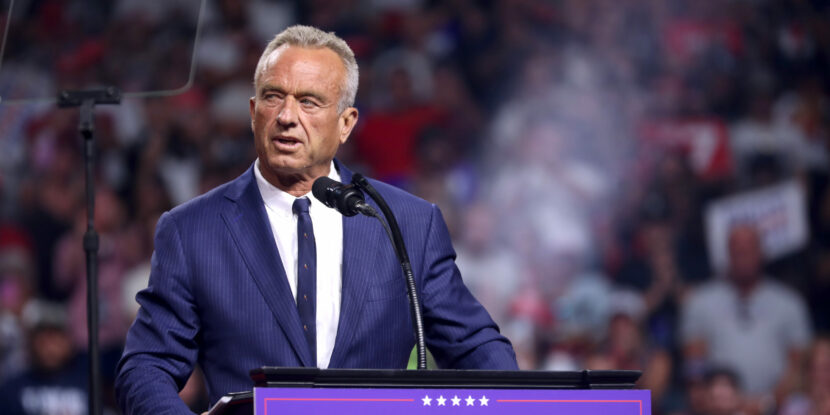
Image by Gage Skidmore.

Join Pulse+ to comment below, and receive exclusive e-mail analyses.
show less
show more

Paxton Rival John Cornyn Launches ‘Faith Advisory Council’ Helmed by Soros-Linked Pro-Amnesty Pastors.

PULSE POINTS

WHAT HAPPENED: U.S. Senator John Cornyn (R-TX) has rolled out a Faith Advisory Council in an effort to boost his campaign among evangelical Christian voters. However, several members of the group are well-known boosters of refugee resettlement and mass amnesty policies.

👤WHO WAS INVOLVED: Sen. John Cornyn, Texas Attorney General Ken Paxton (R), Dr. Jack Graham, Max Lucado, Dr. Gus Reyes, the Evangelical Immigration Table (EIT), the National Immigration Forum (NIF), Ali Noorani, George Soros, and Soros’s Open Society Foundations.

📍WHEN & WHERE: The Cornyn campaign announced the advisory council on Tuesday, March 10, 2026.

💬KEY QUOTE: “As our state and nation are in turbulent times, we need leaders who serve with principle, wisdom, and integrity,” the Cornyn campaign said in a statement announcing the group.

🎯IMPACT: The Evangelical Immigration Table has received millions in funding from Soros’s Open Society Foundations via the National Immigration Forum to advance open borders and pro-mass immigration policies among evangelical leaders.

IN FULL

Anti-Trump U.S. Senator John Cornyn (R-TX), facing a runoff election in May against Texas Attorney General Ken Paxton (R) to determine the Republican primary winner, has rolled out a Faith Advisory Council in an effort to boost his campaign among evangelical Christian voters. However, several members of the group are well-known boosters of refugee resettlement and mass amnesty policies, having ties to the George Soros-backed Evangelical Immigration Table (EIT).

Dr. Jack Graham, pastor Max Lucado, and Dr. Gus Reyes—all members of the Cornyn campaign’s Faith Advisory Council—are affiliated with EIT. Both Graham and Lucado are also signatories to the group’s Evangelical Statement of Principles for Immigration Reform, which calls for the adoption of family unification (chain migration) policies and the establishment of a pathway to citizenship for illegal immigrants.

“As our state and nation are in turbulent times, we need leaders who serve with principle, wisdom, and integrity,” the Cornyn campaign said in a statement announcing the group, adding, “A key element to principled leadership is who a leader consults when confronting complex problems.”

Notably, EIT is a project of the National Immigration Forum (NIF), a Soros-funded open borders advocacy group helmed by progressive foundation guru Ali Noorani from 2008 until 2022. The EIT, with NIF acting as a pass-through, received millions in funding from Soros’s Open Society Foundations to advance open borders and pro-mass immigration policies among evangelical leaders. In 2021, Noorani praised Cornyn’s sponsorship of amnesty legislation, calling it “a positive step that bodes well for the chances of immigration reforms.”

Senator Cornyn’s relationship with a progressive front group like EIT and its pro-open borders advocacy should come as no surprise. The National Pulse reported last July that a video had surfaced of the Texas lawmaker praising the far-left League of United Latin American Citizens (LULAC) political group, which also advocates for open borders and mass immigration. LULAC sued Texas in 2017 over legislation signed by Governor Greg Abbott (R-TX) that ended sanctuary cities in the state.

While LULAC presents itself as a Hispanic and Latin-American civil rights organization, the group has consistently pushed a far-left political agenda, including educating illegal immigrants on legal maneuvers to frustrate federal immigration enforcement actions. Additionally, LULAC has joined campaigns in defense of abortion, far-left DEI programs, and affirmative action.

Image: World Economic Forum/swiss-image.ch/Photo by Sebastian Derungs.

Join Pulse+ to comment below, and receive exclusive e-mail analyses.

show less
show more

Georgia’s Kratom Crackdown Runs Against RFK’s Health Vision, Creates Govt Database of Buyers.

Most people aren’t spending their afternoons thinking about the availability of things like kratom, or about 7OH, the kratom compound now sitting squarely in lawmakers’ sights, which is precisely why they think they can get away with using this market as a test case.

Kratom, for those who have never encountered it outside a smoke shop, supplement store, or conversation about alternatives to conventional medicine, is a plant from Southeast Asia that has built a sizeable American following. We’ve written about it previously, here. People buy it in powders, capsules, drinks, and extracts for all sorts of reasons, and whatever one thinks of the product itself (I personally have never tried it), it has existed largely outside the usual pharmacy pipeline.

But 7OH, short for 7-hydroxymitragynine, is now one of the key targets of Georgia’s legislation, and lawmakers are using it as the wedge to drag the wider kratom market into a pharmacist-gated, state-tracked system.

House Bill 968, moving through the legislature in Atlanta, is presented in the oh-so-familiar language of public safety, consumer protection, and responsible oversight. Read past the pieties, and the direction of travel becomes unmistakable. This is an effort to push kratom out of an independent retail market and into a tightly managed, pharmacist-gated, state-tracked system that looks and feels far more like the conventional pharmaceutical model than the marketplace that exists today.

Critics of this approach will recognize the playbook because a version of it surfaced years ago in Nevada and went nowhere. Now the same basic scheme has turned up again in Georgia.

It’s important because it runs counter to what HHS Secretary Robert F. Kennedy Jr has outlined over the last year. He told Joe Rogan, on the subject of peptides, “My hope is that they’re going to get moved to a place where people have access from ethical suppliers.” He was specifically talking about wanting to reverse an FDA decision that prohibited almost 20 peptides from being produced by compounding pharmacies.

At the center of the bill is 7OH. Once Georgia pushes 7OH and related compounds toward Schedule I, the rest of the kratom market can be shoved behind the counter and placed under pharmacist supervision.

“If this can happen to Kratom, which is a botanical that over 24 million Americans are using, nationwide, this can happen to any botanical that they might think is psychoactive or potentially dangerous, even though the science doesn’t support that,” neuroscientist Dr. Michele Ross told The National Pulse.

“Instead of being free and empowered as a consumer to take your health into your own hands, now the state is deciding, hey, ‘we need to track how much you’re using, when you use it, put hours on when it’s available. And you think about a traditional vitamin, or a supplement, right? People take ashwaganda, for example, to relieve stress. That’s psychoactive. Is that going to be put behind the counter, pharmacy style?”

There may be no formal prescription requirement written on the tin, but once a licensed pharmacist has to be present or available for the sale, the practical effect is obvious enough. Out-of-hours access will disappear, casual retail access will narrow sharply, and the online market will cease to be a real market, except for operators who can meet the new licensing and oversight requirements.

This is a full-throated transfer of power from consumers and small retailers to regulators, licensed intermediaries, and the sort of larger corporate interests that do very well whenever a market gets squeezed through a narrower gate.

“I think this is a lot less about safety than it is actually about control here,” Dr. Ross concluded.

CONSUMER TRACKING.

The tracking system is perhaps the most revealing part of the whole thing, because it shows how the state wants this market treated.

Georgia would require retailers to enter purchaser information into a real-time electronic logging system, complete with names, addresses, identification details, product information, and timestamps, and law enforcement would have direct access to the data.

Some of you will remember how pseudoephedrine was pushed behind the counter in the name of stopping methamphetamine production. It is the Sudafed framework, dusted off and applied to kratom. That comparison alone should give people pause, because it means lawful consumers are being folded into a surveillance architecture normally associated with products the state views through a quasi-criminal lens. Critics also worry, not unreasonably, that once such a database exists, it will not stay confined to simple record-keeping and could eventually be used to flag or restrict consumers in the broader world of opioid or Suboxone prescribing and monitoring.

Let us be honest about what all of this adds up to. The endgame looks very much like a market for so-called pharmaceutical-grade kratom, narrow, standardized, bottlenecked, and far easier for large corporate players to monetize. That is how alternative products are usually absorbed into the mainstream system. First, they are demonized, then fenced in, then handed over to approved channels, and by the time the process is complete, the independent sellers are gone, the prices are higher, and everyone is expected to pretend this was simply the natural march of progress. Big Pharma does not need to own every square inch of a market at the start to benefit from this sort of restructuring; it only needs the market remade in a form that suits pharmaceutical logic, distribution, and margins.

MARKET ENDING.

Georgia’s bill would allow only American-grown kratom, which sounds neat in a press release until one remembers that very few kratom trees are grown in the United States compared with the broader supply that exists today. That alone would constrict supply. Then comes the pharmacist requirement, which many consumers will regard as a feature of a system they were trying to avoid in the first place.

Plenty of people have no desire to walk into a pharmacy and explain themselves to a white coat for a product they previously bought lawfully and without fuss, and it is far from clear that the major chains will have any appetite to take this business on anyway. CVS and Walgreens are not exactly known for their enthusiasm for niche products. The likely result is not some seamless transition to a mature and efficient market, but reduced availability, higher prices, and a serious blow to the small shops and specialty retailers for whom kratom is not some decorative side shelf but a meaningful share of revenue. Many of those businesses would struggle to survive the squeeze.

Even the enforcement case is shakier than the bill’s architects would like people to believe. Kratom is a plant, not a laboratory blueprint, and the chemical profile of plant products changes over time. Some of the compounds lawmakers are so eager to police can increase as the material ages and oxidizes, which leaves regulators with a problem they cannot simply legislate away. They may want a clean distinction between natural chemistry and intentional enrichment, but the real world is untidy, and trying to impose a rigid enforcement regime on a changing botanical product is a fine way to create confusion, selective enforcement, and plenty of opportunities for the bureaucracy to get things badly wrong.

All of this matters politically because it cuts directly against the broader rhetoric now coming from Robert F. Kennedy Jr. and the populist health-policy wing that claims to oppose a pharma-dominated system. Kennedy’s appeal in this area has rested on a simple observation that too much of American health care is controlled by pharmaceutical interests, regulatory gatekeepers, and the retail pharmacy model that keeps ordinary people dependent on approved channels.

If you believe the country needs fewer bottlenecks, fewer corporate choke points, fewer licensed gatekeepers, and more room for independent suppliers outside the usual pharmaceutical pipeline, then Georgia is heading in exactly the wrong direction. This bill does not loosen the grip of that system. It expands it, taking a product that has existed outside the pharmacy state and pushing it back inside, complete with pharmacist oversight, surveillance-style tracking, and the quiet promise that everything will be safer once the approved people are in charge.

Today, the excuse is 7OH. Tomorrow, it will be whatever botanical or supplement grows too large outside the pharmacy state.

HB 968 is about far more than kratom. What Georgia is really debating here is whether every product that grows too large outside the conventional medical and pharmaceutical structure must eventually be dragged back into it, catalogued, monitored, bottlenecked, and priced accordingly. Call it safety if you like. Call it modernization if that makes the lobbyists happy. The plain English version is simpler. A market that grew outside the usual corporate channels is being lined up for a familiar sort of capture, and anybody who has spent the past few years railing against the pharmacy state should at least have the decency to admit what this is when it arrives wearing legislative robes.

show less

Most people aren't spending their afternoons thinking about the availability of things like kratom, or about 7OH, the kratom compound now sitting squarely in lawmakers' sights, which is precisely why they think they can get away with using this market as a test case.

show more