



Monday, February 23, 2026

Trump Admin Wins Major Legal Battle Against California’s Anti-ICE Mask Law.

PULSE POINTS

WHAT HAPPENED: A California law banning federal agents from wearing masks has been blocked by the U.S. 9th Circuit Court of Appeals.

👤WHO WAS INVOLVED: U.S. Attorney General Pam Bondi, California Governor Gavin Newsom (D), U.S. Immigration and Customs Enforcement (ICE) agents, and the Department of Homeland Security (DHS).

📍WHEN & WHERE: The ruling was issued on Thursday by the 9th Circuit Court, following a lawsuit filed by the Trump administration against California’s ‘No Secret Police Act.’

💬KEY QUOTE: “Law enforcement officers risk their lives for us, only to be doxxed by radical anti-police activists. Unacceptable.” – Pam Bondi

🎯IMPACT: The ruling protects federal agents from the mask ban, ensuring their safety while the court continues to deliberate on the law.

IN FULL

The U.S. 9th Circuit Court of Appeals handed the Trump administration a significant win against California‘s anti-mask law targeting U.S. Immigration and Customs Enforcement (ICE) agents. Late Thursday, the appellate court handed down a ruling staying the anti-ICE law, championed by Governor Gavin Newsom (D-CA), from taking effect as litigation moves forward.

“This crucial ruling protects our brave men and women in the field. We will not stop fighting bad laws like these in California and across the country,” U.S. Attorney General Pam Bondi stated following the ruling, noting the federal appeals court issued “a full stay blocking California’s ban on masks for federal law enforcement agents.”

Notably, the stay order upholds a lower court’s earlier ruling. It effectively imposes a temporary administrative injunction that prevents California’s anti-ICE law from being enforced until “the court rules on the government’s motion for an injunction pending appeal.”

The ‘No Secret Police Act,’ signed into law by Gov. Newsom on September 20, 2025, sought to ban federal agents, including ICE officers, from wearing masks except in limited circumstances. Newsom claimed the measure was necessary to push back against “Trump and Stephen Miller’s ‘secret police’ tactics,” adding that it would make California the first state to prohibit such practices.

The Trump administration filed a lawsuit arguing that the mask ban threatened officer safety and unconstitutionally allowed states to regulate federal operations. Earlier this month, U.S. District Court Judge Christina Snyder ruled the mask ban was discriminatory as it exempted state law enforcement while targeting federal agents. She issued an injunction against the law, which the 9th Circuit Court has now upheld.

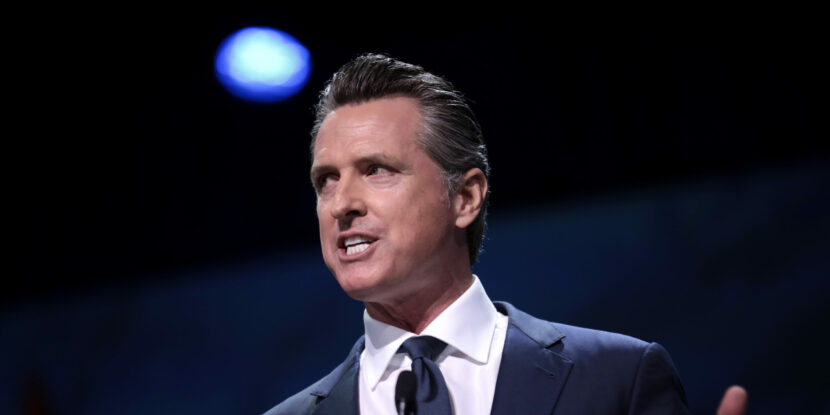
Image by Gage Skidmore.

Join Pulse+ to comment below, and receive exclusive e-mail analyses.
show less
show more

Democrats Win Redistricting Battle at Ninth Circuit.

PULSE POINTS

WHAT HAPPENED: Federal judges dismissed Republican claims that California’s Proposition 50 gerrymandered map is discriminatory, allowing the state to proceed with redrawn congressional districts.

👤WHO WAS INVOLVED: California Governor Gavin Newsom (D), Attorney General Rob Bonta (D), Secretary of State Shirley Weber (D), and Republican challengers led by State Assemblymember David Tangipa (R).

📍WHEN & WHERE: The ruling was issued on Wednesday by the Ninth Circuit Court of Appeals after a December hearing.

💬KEY QUOTE: “The decision upholds the will of the people. It also means that, to date, every single challenge against Proposition 50 has failed.” – Attorney General Rob Bonta.

🎯IMPACT: The ruling could allow Democrats to secure up to five additional seats in the U.S. House, bolstering their efforts in the 2026 midterms.

IN FULL

California Democrats secured a legal victory Wednesday as a panel of federal judges rejected Republican claims that Proposition 50, a measure allowing the state to redraw congressional districts, is discriminatory. The measure, approved by voters last November, is expected to help Democrats gain up to five additional U.S. House seats, potentially aiding their efforts to reclaim Congress in the 2026 midterms.

Governor Gavin Newsom (D), who spearheaded the Prop 50 initiative, celebrated the decision on social media. Newsom’s office posted, “Can’t spell Republican without an L,” on X (formerly Twitter), while Newsom himself posted the phrase “FAFO,” an acronym for “F—k around and find out.”

Republicans argued that the redrawn districts unfairly favor Latino voters at the expense of other racial groups. However, Attorney General Rob Bonta (D) praised the court’s decision, stating, “The decision upholds the will of the people. It also means that, to date, every single challenge against Proposition 50 has failed.” He added, “I couldn’t be prouder of my team for successfully defending this ballot initiative in court on behalf of Governor Newsom and Secretary of State Weber.”

The Ninth Circuit Court of Appeals issued its ruling after a three-day hearing in December. California voters had approved the new district map in November, and this decision further solidifies its implementation. State Assemblymember David Tangipa (R), part of the Republican group challenging the measure, previously indicated plans to escalate the matter to the Supreme Court should the Ninth Circuit rule against the plaintiffs.

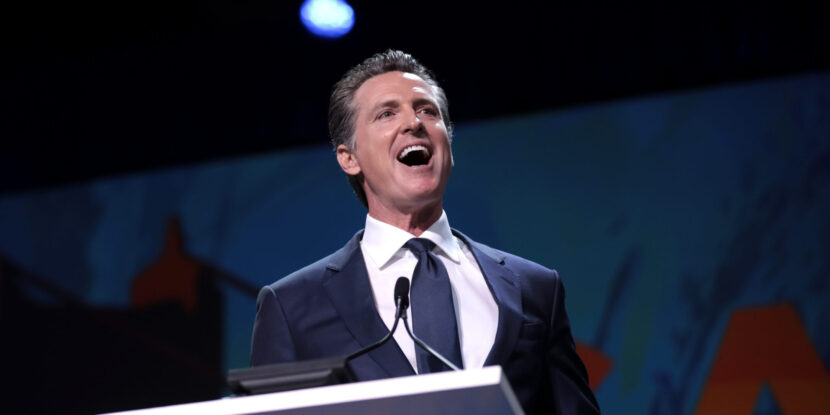
Image by Gage Skidmore.

Join Pulse+ to comment below, and receive exclusive e-mail analyses.
show less
show more

Appeals Court Rules Trump CAN Send National Guard Into Portland.

PULSE POINTS

WHAT HAPPENED: The 9th U.S. Circuit Court of Appeals ruled two to one to allow President Donald J. Trump to deploy Oregon National Guard troops into Portland, overturning a lower court’s ruling blocking the action.

👤WHO WAS INVOLVED: The Trump administration, Oregon Democrat officials, protesters, and a three-judge appellate panel including Judges Ryan Nelson, Bridget Bade, and Susan Graber.

📍WHEN & WHERE: The ruling was issued on Monday by the 9th U.S. Circuit Court of Appeals, covering Portland, Oregon.

💬KEY QUOTE: “After considering the record at this preliminary stage, we conclude that it is likely that the President lawfully exercised his statutory authority under 10 U.S.C. § 12406(3), which authorizes the federalization of the National Guard when ‘the President is unable with the regular forces to execute the laws of the United States.” — 9th U.S. Circuit Court of Appeals

🎯IMPACT: The decision allows the Trump administration to move forward with National Guard deployment while legal challenges continue.

IN FULL

A federal appeals court cleared the way on Monday for President Donald J. Trump to move forward with deploying Oregon National Guard troops into Portland, Oregon, to protect federal facilities and immigration agents, overturning a lower court’s decision that temporarily blocked the action. The three-judge 9th U.S. Circuit Court of Appeals panel ruled two to one to lift an October 5 restraining order issued by District Court Judge Karin Immergut blocking the deployment.

“After considering the record at this preliminary stage, we conclude that it is likely that the President lawfully exercised his statutory authority under 10 U.S.C. § 12406(3), which authorizes the federalization of the National Guard when ‘the President is unable with the regular forces to execute the laws of the United States,” the majority, comprised of Judges Ryan Nelson and Bridget Bade, both Trump appointees, wrote in the ruling. Judge Susan Graber, appointed to the bench by former President Bill Clinton, dissented.

The decision comes amid ongoing clashes between far-left rioters and U.S. Immigration and Customs Enforcement (ICE) agents in Portland. Notably, Democrat governrment officials Oregon claim the deployment is unnecessary, arguing the publicly documented violent riots are exaggerated.

President Trump’s efforts to send federal forces into Democratic-led cities that have refused to police the violent anti-ICE demonstrations have been frustrated by several far-left judges, though the administration has seen a degree of success overturning the restraining orders at the appellate level. A separate District Court order barring President Trump’s deployment of National Guard to Chicago, Illinois was partially lifted by the 7th Circuit on Saturday—allowing the troops to remain stationed at a nearby Army Reserve base.

Join Pulse+ to comment below, and receive exclusive e-mail analyses.
show less
show more

Federal Court Strikes Down Trump Order Ending Birthright Citizenship.

PULSE POINTS

WHAT HAPPENED: The 9th U.S. Circuit Court of Appeals has found President Donald J. Trump’s Executive Order ending birthright citizenship unconstitutional and issued a nationwide injunction blocking the measure.

👤WHO WAS INVOLVED: President Trump, the 9th U.S. Circuit Court of Appeals, the Department of Justice (DOJ), the U.S. Supreme Court, and illegal immigrants and their children.

📍WHEN & WHERE: The decision was handed down late Wednesday, July 24, 2025.

💬KEY QUOTE: “The district court correctly concluded that the Executive Order’s proposed interpretation, denying citizenship to many persons born in the United States, is unconstitutional. We fully agree.” — 9th Circuit’s majority

🎯IMPACT: The ruling marks a significant legal setback for the Trump White House; however, it does clear the path for the administration to bring the matter before the U.S. Supreme Court.

IN FULL

Late Wednesday evening, the 9th U.S. Circuit Court of Appeals handed down a ruling declaring President Donald J. Trump‘s Executive Order ending birthright citizenship unconstitutional. The ruling marks a significant legal setback for the Trump White House; however, it does clear the path for the administration to bring the matter before the U.S. Supreme Court.

“The district court correctly concluded that the Executive Order’s proposed interpretation, denying citizenship to many persons born in the United States, is unconstitutional. We fully agree,” the 9th Circuit’s majority wrote. In addition, the judges agreed with the plaintiffs, a coalition of Democrat governed states, that the matter fell under the exceptions laid out by the Supreme Court justices regarding their restrictions on nationwide injunctions: “We conclude that the district court did not abuse its discretion in issuing a universal injunction in order to give the States complete relief.”

“We should approach any request for universal relief with good faith skepticism, mindful that the invocation of ‘complete relief’ isn’t a backdoor to universal injunctions,” Judge Patrick Bumatay wrote in dissent. The judge argued that it is unlikely the states have the proper legal standing to sue, but did not directly address the constitutionality of President Trump’s Executive Order.

The Constitution’s 14th Amendment states, “All persons born or naturalized in the United States, and subject to the jurisdiction thereof, are citizens of the United States and of the State wherein they reside.” However, the Department of Justice (DOJ) maintains that the clause in the amendment stating “subject to United States jurisdiction” means it does not necessarily grant citizenship to a child simply for being born in the United States.

The coalition of Democratic states points to the precedent established by the 1898 Supreme Court decision in United States v. Wong Kim Ark. In that decision, the high court held, “a child born in the United States, of parents of Chinese descent, who, at the time of his birth, are subjects of the Emperor of China, but have a permanent domicile and residence in the United States, and are there carrying on business, and are not employed in any diplomatic or official capacity under the Emperor of China,” was granted U.S. citizenship at birth.

However, the DOJ and critics of the United States’ birthright citizenship policies contend that the decision does not apply to the children of immigrants in the country illegally. The Supreme Court has not clarified whether this is the case.

Join Pulse+ to comment below, and receive exclusive e-mail analyses.

show less
show more

Trump Can Maintain National Guard Presence in L.A., Appeals Court Rules.

PULSE POINTS:

What Happened: The 9th U.S. Circuit Court of Appeals temporarily halted a federal judge’s order requiring President Donald J. Trump to return control of National Guard troops to California Governor Gavin Newsom (D).

👥 Who’s Involved: President Trump, Governor Newsom, U.S. District Court Judge Charles Breyer, and the 9th U.S. Circuit Court of Appeals.

📍 Where & When: San Francisco, California; ruling issued Thursday, with a hearing set for June 17.

💬 Key Quote: “The district court has no authority to usurp the President’s authority as Commander in Chief,” White House spokeswoman Anna Kelly stated.

⚠️ Impact: The decision delays the return of National Guard control to Newsom, leaving federalized troops in place amid ongoing pro-illegal immigrant riots.

IN FULL:

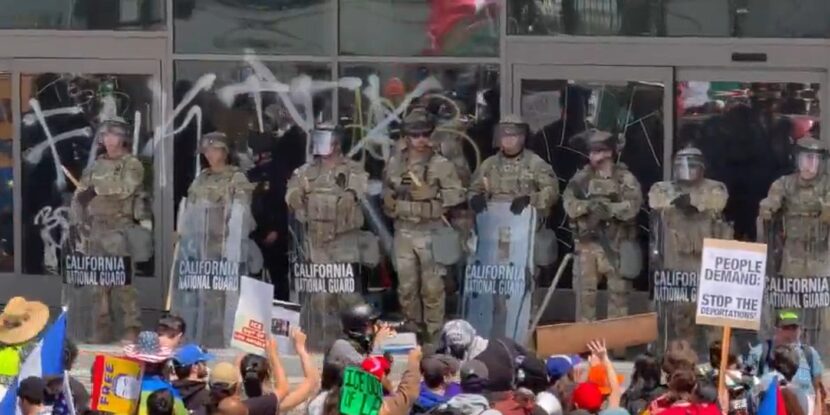
The 9th U.S. Circuit Court of Appeals on Thursday temporarily blocked a federal judge’s order requiring President Donald J. Trump to relinquish control of California National Guard troops that are deployed to Los Angeles to protect federal property and personnel amid ongoing pro-illegal immigrant riots. The appellate court announced it would hold a hearing on the matter on June 17, just hours before the lower court’s order was set to take effect on Friday at noon.

U.S. District Court Judge Charles Breyer had earlier ruled that the deployment of the National Guard to Los Angeles violated the Tenth Amendment and exceeded the president’s statutory authority under Title 10 of the U.S. Code. His decision applied only to the National Guard, not the Marines, who were also stationed nearby but had not yet been deployed to the streets.

California Governor Gavin Newsom (D), who had sought an emergency halt to the Guard’s involvement in protecting ICE, praised Breyer’s initial ruling as a victory for state authority. “Today was really about a test of democracy, and today we passed the test,” Newsom said, shortly before the appellate court intervened.

The White House criticized the district court’s decision, calling it “unprecedented” and a threat to federal personnel. “The district court has no authority to usurp the President’s authority as Commander in Chief,” White House spokeswoman Anna Kelly stated. The administration pledged to appeal the decision and expressed confidence in ultimately prevailing.

The deployment of federalized National Guard troops was authorized by President Trump under Title 10, which allows such action in limited circumstances, including rebellion or threats to federal law enforcement. However, Judge Breyer claimed that the Los Angeles riots did not meet the legal definition of a rebellion.

Meanwhile, approximately 700 Marines have been undergoing civil disturbance training at a base in Orange County, with 140 expected to replace National Guard troops in Los Angeles within 24 hours.

California’s lawsuit against the federal government argues that the president improperly bypassed the state in issuing orders to the National Guard. The Justice Department (DOJ) maintains that Trump’s actions are not subject to judicial review, citing historical precedents where courts refrained from intervening in military deployments.

Riots over federal immigration raids have intensified in Los Angeles and spread to other cities, including Seattle and New York.

show less

PULSE POINTS:

show more