




Monday, February 23, 2026

FDA Issues Recall for ADHD Medication.

PULSE POINTS

❓WHAT HAPPENED: Sun Pharmaceutical Industries issued a voluntary recall of several lots of lisdexamfetamine dimesylate capsules due to a quality control defect.

👤WHO WAS INVOLVED: Sun Pharmaceutical Industries, the Food and Drug Administration (FDA), and millions of Americans on attention-deficit hyperactivity disorder (ADHD) medication.

📍WHEN & WHERE: The recall affects capsules with expiration dates ranging from February 2026 to May 2026, manufactured by Ohm Laboratories in New Brunswick, New Jersey.

đź’¬KEY QUOTE: The FDA stated the recall was classified as Class II, meaning the defect “may cause temporary or medically reversible adverse health consequences.”

🎯IMPACT: Millions of ADHD patients may experience reduced therapeutic effects, potentially worsening symptoms like fatigue or concentration issues.

IN FULL

A major drug recall is underway, potentially impacting millions of Americans who are prescribed isdexamfetamine dimesylate capsules—a generic attention-deficit hyperactivity disorder (ADHD) treatment. Sun Pharmaceutical Industries initiated the voluntary recall.

Notably, the Food and Drug Administration (FDA) classified the recall as Class II, indicating the defect “may cause temporary or medically reversible adverse health consequences,” though the risk of serious harm is remote. Patients are advised not to stop taking the medication without consulting their healthcare provider and to seek guidance for a safe replacement.

The recall includes 100-count bottles of 10 mg to 70 mg capsules with expiration dates ranging from February 2026 to May 2026. Affected batch numbers include AD42468, AD48705, AD42469, AD48707, AD42470, AD48708, AD48709, AD50894, AD48710, AD50895, AD48711, AD50896, AD48712, and AD50898.

Lisdexamfetamine dimesylate, commonly marketed under brand names like Vyvanse and Arynta, is prescribed to manage ADHD symptoms such as impulsiveness, disorganization, and difficulty focusing. Prescriptions for this medication have risen significantly, accounting for 19 percent of all stimulant prescriptions in 2023, with over nine million prescriptions dispensed that year.

The medication, manufactured by Ohm Laboratories in New Jersey, is a prodrug that becomes active only after being metabolized into dextroamphetamine, offering a smoother, longer-lasting effect.

Join Pulse+ to comment below, and receive exclusive e-mail analyses.
show less
show more

The FDA Withheld Reports on Tylenol Risks, Internal Documents Reveal.

PULSE POINTS

âť“WHAT HAPPENED: Internal U.S. Food and Drug Administration (FDA) documents reveal the agency ignored its own safety experts’ advice to warn pregnant women about Tylenol for nearly a decade.

👤WHO WAS INVOLVED: FDA officials, scientists, Tylenol manufacturers, President Donald J. Trump, and Department of Health and Human Services (HHS) Secretary Robert F. Kennedy Jr.

📍WHEN & WHERE: Recommendations were made between 2014 and 2025.

🎯IMPACT: The FDA’s delay in issuing warnings has led to lawsuits, public confusion, and ongoing debates about Tylenol’s safety during pregnancy.

IN FULL

The U.S. Food and Drug Administration (FDA) withheld reports and memos containing repeated recommendations from its own drug safety experts to warn pregnant women about the potential risks of Tylenol, internal agency documents reveal. These recommendations were made across multiple reviews and memos between 2014 and 2022, yet the agency declined to update its guidance until September 2025, following public pressure from President Donald J. Trump and Department of Health and Human Services (HHS) Secretary Robert F. Kennedy Jr.

FDA scientists had reviewed numerous studies showing a potential association between Tylenol use during pregnancy and risks such as ADHD, neurological damage, and other developmental issues. Despite this, FDA leadership repeatedly delayed action, citing insufficient evidence and calling for further studies. A 2016 report by FDA Senior Medical Officer Andrew Mosholder recommended a nuanced warning to pregnant women, but the agency’s leadership postponed decisions, leaving its outdated 2015 statement unchanged for nearly a decade.

The documents obtained by Keller Postman LLC, a law firm pursuing a class-action lawsuit against Tylenol manufacturer Kenvue, show that internal FDA divisions supported issuing warnings as early as 2016. However, FDA officials, including longtime Center for Drug Evaluation and Research (CDER) Director Janet Woodcock, opted against taking immediate action. Woodcock has faced scrutiny for controversial decisions during her tenure, including delays in issuing warnings about other drugs and vaccines.

In November, the Court of Appeals for the Second Circuit will hear an appeal in a class-action lawsuit against Kenvue. The lawsuit alleges that Tylenol manufacturers failed to adequately inform consumers about potential risks, while FDA officials argue that existing evidence does not meet the threshold for causality. The agency’s 2023 review omitted recommendations entirely, further fueling controversy.

The National Pulse reported in September that social media posts by a now-defunct X (formerly Twitter) account belonging to Tylenol recommended multiple times against using acetaminophen, the active ingredient in Tylenol (paracetamol), during pregnancy, due to a potential link to autism.

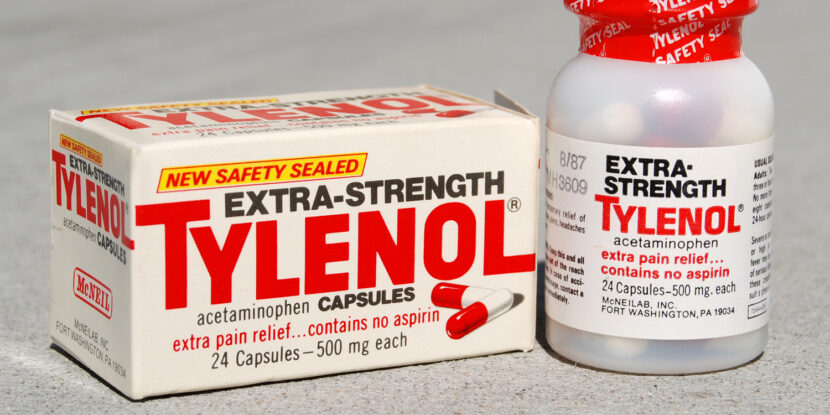
Photo by Roadsidepictures.

Join Pulse+ to comment below, and receive exclusive e-mail analyses.

show less
show more

This Harvard Study Linked Tylenol Use to Increased Autism and ADHD Risk.

PULSE POINTS

❓WHAT HAPPENED: A study published in August suggested that acetaminophen (paracetamol) use during pregnancy may increase the risk of autism and ADHD in children. Acetaminophen is commonly sold under the brand name Tylenol in the U.S.

👤WHO WAS INVOLVED: Harvard T.H. Chan School of Public Health and Icahn School of Medicine at Mount Sinai led the research.

📍WHEN & WHERE: Published on August 14, 2025, in BMC Environmental Health.

đź’¬KEY QUOTE: “That association is strongest when acetaminophen is taken for four weeks or longer.” – Andrea Baccarelli

🎯IMPACT: The U.S. Food and Drug Administration (FDA) plans to advise clinicians on cautious use of acetaminophen during pregnancy.

IN FULL

An August study brought attention to the potential risks associated with the use of acetaminophen (paracetamol) during pregnancy. The research, published in BMC Environmental Health, indicates that exposure to this common medication, usually sold under the brand name Tylenol in the U.S., might increase the likelihood of autism and ADHD in children.

The study was spearheaded by the Icahn School of Medicine at Mount Sinai, with contributions from Harvard T.H. Chan School of Public Health. Researchers reviewed 46 studies from around the world, employing the Navigation Guide Systematic Review methodology to find evidence of a connection between acetaminophen use during pregnancy and an increased incidence of neurodevelopmental disorders (NDDs).

The U.S. Food and Drug Administration (FDA) is preparing to issue guidance to clinicians, following discussions between Andrea Baccarelli, a senior author on the study and professor at Harvard, and Health and Human Services Secretary Robert F. Kennedy Jr.

Baccarelli, who has served as an expert witness in related legal cases, stated, “Further research is needed to confirm the association and determine causality, but based on existing evidence, I believe that caution about acetaminophen use during pregnancy—especially heavy or prolonged use—is warranted.”

Image by Allen.

Join Pulse+ to comment below, and receive exclusive e-mail analyses.

show less
show more