



Monday, February 23, 2026

‘Trump Accounts’ Set for Big Super Bowl Boost.

PULSE POINTS

❓WHAT HAPPENED: Treasury Secretary Scott Bessent announced that a commercial for the new Trump Accounts program will air during the Super Bowl.

👤WHO WAS INVOLVED: Treasury Secretary Scott Bessent, President Donald J. Trump, and U.S. families expecting children between 2025 and 2028.

📍WHEN & WHERE: The Super Bowl commercial will air on February 8, 2026, at Levi’s Stadium in Santa Clara, California.

đź’¬KEY QUOTE: “Look for the commercial after the national anthem at the Super Bowl this weekend.” – Scott Bessent

🎯IMPACT: Millions of Americans could learn about the initiative, designed to give U.S.-born babies a financial head start.

IN FULL

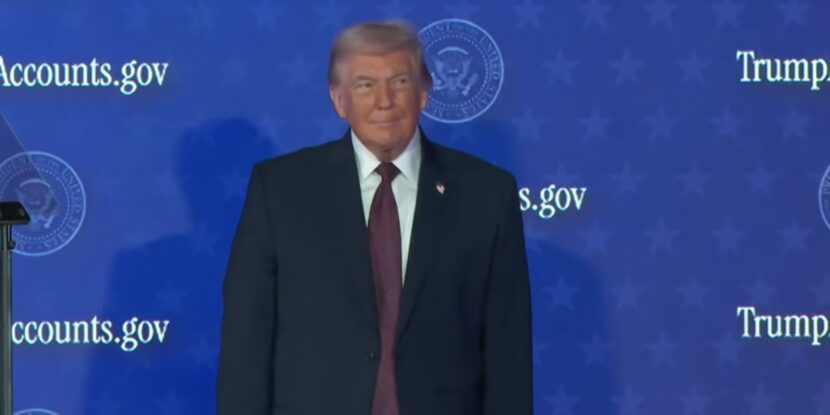
The Trump administration will roll out a Super Bowl commercial during the big on Sunday educating the American public about the new Trump Accounts program, which will give enrolled U.S. babies—born between January 1, 2025, and December 31, 2028—$1,000 at birth to invest through a specialized 530A hybrid retirement account. A provision of the One Big Beautiful Bill Act, signed into law by President Donald J. Trump earlier this year, the Trump Accounts program is set to launch on July 4, 2026.

“Look for the commercial after the national anthem at the Super Bowl this weekend,” Treasury Secretary Scott Bessent told lawmakers while testifying before the House Financial Services Committee earlier this week. The National Pulse reported in late January that Bessent, during a White House summit discussing the initiative, explained, “Trump Accounts are not a government program. They are a radically new platform that returns us to a social contract anchored in individual ownership where everyone starts life on an investing journey.”

According to the White House, a Trump Account opened with only the $1,000 federal seed money in 2026 will reach $5,800 by age 18 and $18,100 by age 28. However, families who contribute the maximum $5,000 annually will see the accounts reach an estimated $303,800 by age 18 and $1,091,900 by age 28—assuming contributions continue through age 18 and the account is converted to an IRA. Each account is established in the child’s name—though a parent or guardian will act as a custodian until the child reaches 18.

Already a number of major U.S. corporations have pledged to contribute seed money to Trump Accounts for the children of their employees. Bank of America, JPMorgan Chase, and Steak n Shake have each pledged a $1,000 match for accounts belonging to the children of their employees born between 2025 and 2028.

A record 127 million people worldwide tuned in to watch the Super Bowl last year, according Nielsen, with similar numbers expected again for this year’s match-up of the New England Patriots and Seattle Seahawks.

Join Pulse+ to comment below, and receive exclusive e-mail analyses.
show less
show more

Data PROVES Newsmax’s Chris Ruddy is Trying to Tie Trump to Unpopular Policy.

PULSE POINTS

âť“WHAT HAPPENED: Data from Trump pollster Fabrizio Ward reveals voters oppose Newsmax CEO Chris Ruddy’s pitch to President Trump to leave broadcasting regulations in place, rather than freeing up the market.

👤WHO WAS INVOLVED: The Trump administration, the Federal Communications Commission (FCC), local television station owners, national broadcasters, advertisers, Newsmax CEO Chris Ruddy, and American voters.

📍WHEN & WHERE: The poll of 1,000 registered voters nationally was conducted between January 20 and 22 by Fabrizio Ward.

đź’¬KEY QUOTE: “By an eight-to-one margin, voters who get their local news from TV would be less likely rather than more likely to vote for a Member of Congress who opposed local TV station owners being allowed to compete nationally.” — Fabrizio Ward

🎯IMPACT: The data suggests voters—regardless of partisan affiliation—overwhelmingly support ending ownership restrictions on television station owners.

IN FULL

New data shows that local television stations continue to be a key source of news and entertainment for a large swath of American voters, and they’re beginning to notice the slow death of local broadcasters at the hands of the national networks empowered by favorable federal government regulations.

The news is pertinent as President Trump and his FCC Chairman, Brendan Carr, consider changes to the 39 percent broadcasting cap set decades ago, as previously covered here at The National Pulse.

A poll of 1,000 registered American voters, conducted between January 20 and 22 by Fabrizio Ward, found that nearly half of respondents still get a large share of their news from local TV stations, even as social media and streaming services continue to grow in market share.

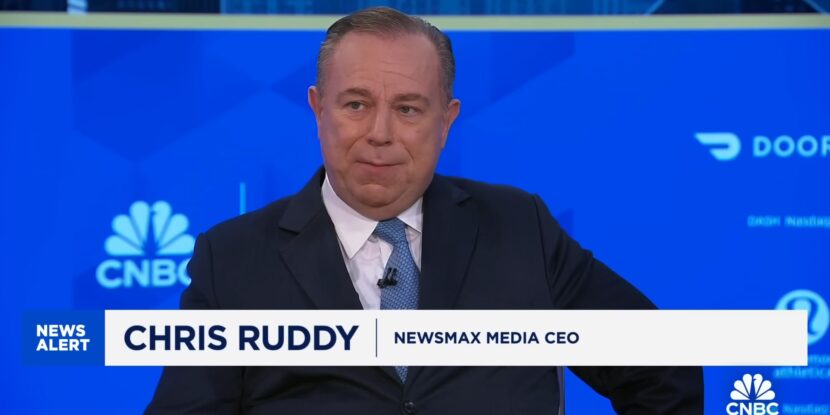
The findings undermine the lobbying efforts of Newsmax CEO Chris Ruddy, who is currently attempting to convince President Trump and Chairman Carr to keep the antiquated broadcast cap in place, because it protects his cable news business and stymies competition against him.

Ruddy’s Newsmax attempted to impose Joe Biden and Antony Fauci’s vaccine mandate on its staff, and settled with Dominion Voting Systems under its previous management over the topic of stolen elections, costing the company over $65 million.

HOW IT WORKS… OR DOESN’T.

By limiting growth and competition from local broadcast companies, the federal government has unintentionally granted the national networks significant leverage. Without new revenue, local broadcasters are left at the whim of the national networks, which have systematically slashed spending on local news as they undergo consolidation, in favor of cheaper, easier-to-produce national news packages. This has forced local networks to cut costs further, leading to plummeting viewership. Unable to grow and compete beyond regional markets, the local broadcasters are caught in a death spiral imposed by the national networks and enabled by federal regulation.

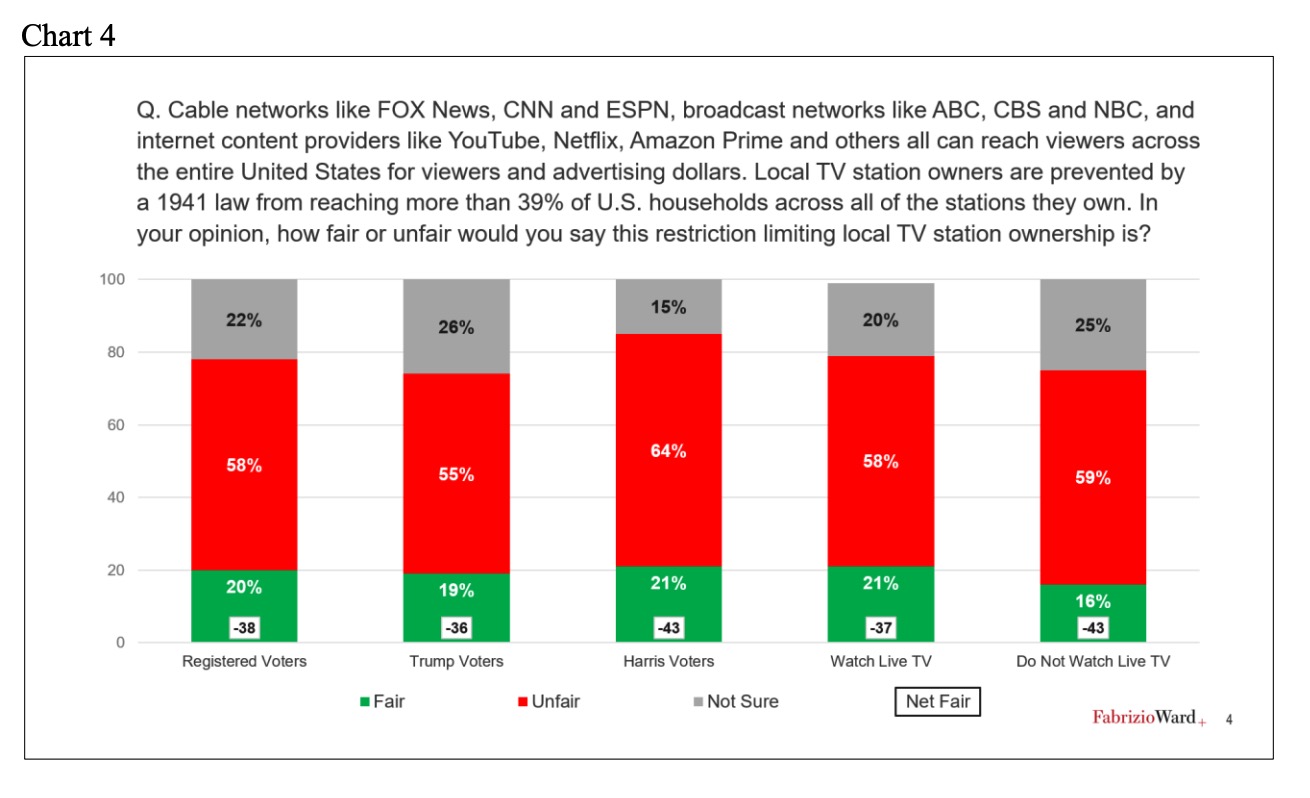
However, this situation does not appear to have gone unnoticed by the electorate. According to the Fabrizio Ward poll, 57 percent of respondents believe local television station owners should be allowed to compete with national networks without government interference. Only 15 percent of respondents said the government should keep restrictions on local broadcasters in place.

Notably, both Republicans and Democrats support lifting regulatory restrictions by similar margins, putting Ruddy and his pitch to the President on the opposite side of Americans across the board.

Just 20 percent of Americans said the status quo is fair. Most Trump voters say it is unfair, as do most Kamala Harris voters.

“By an eight-to-one margin, voters who get their local news from TV would be less likely rather than more likely to vote for a Member of Congress who opposed local TV station owners being allowed to compete nationally,” Fabrizio Ward stated, adding, “Among the same group of voters, the Member of Congress who supports local TV station owners being allowed to compete nationally for advertising against cable networks and internet streamers would enjoy a wide margin of support.”

Join Pulse+ to comment below and receive exclusive email analyses.

show less
show more

National Ban on Junk Food Ads Comes Into Force.

PULSE POINTS

❓WHAT HAPPENED: A ban on junk food adverts targeting food and drinks high in fat, salt, and sugar (HFSS) has come into effect in the United Kingdom, prohibiting their promotion on TV before 21:00 and at any time online.

👤WHO WAS INVOLVED: The British government, the Food and Drink Federation (FDF), marketing agencies, and food manufacturers are key stakeholders in this initiative.

📍WHEN & WHERE: The ban begins Monday across the United Kingdom.

đź’¬KEY QUOTE: “Children are highly susceptible to aggressive marketing of unhealthy foods and exposure to them puts them at greater risk of developing obesity and associated chronic diseases,” claims Katherine Brown, of the University of Hertfordshire.

🎯IMPACT: The government claims the policy will prevent 20,000 cases of childhood obesity, with food manufacturers being encouraged to develop healthier products.

IN FULL

New restrictions on junk food advertising, part of a British government campaign to reduce childhood obesity, are coming into force on Monday. The measures ban television advertisements for foods and drinks high in fat, salt, and sugar (HFSS) before 9 PM and prohibit such advertising entirely online. The restrictions apply to products considered major contributors to poor childhood diets, including soft drinks, chocolates, sweets, pizzas, and ice creams.

Some breakfast cereals, porridges, and sweetened bread products are also affected, depending on their nutritional content. Plain oats, along with most muesli and granola, are not covered unless they include added sugar, chocolate, or syrup.

Josh Tilley, brand strategy director at Initials CX, said the rules could disadvantage smaller businesses compared with large multinational brands. “Smaller companies can’t necessarily afford those bigger brand campaigns,” he said. “Their adverts are based on educating people about specific products, and they’re no longer going to be able to do that.”

National Health Service (NHS) figures show that almost one in ten children starting school in England is obese, while around one in five children have tooth decay by the age of five. Government officials claim the advertising restrictions could help prevent approximately 20,000 cases of childhood obesity each year. Katherine Brown, a professor at the University of Hertfordshire, described the move as “long overdue and a step in the right direction.”

“Children are highly susceptible to aggressive marketing of unhealthy foods and exposure to them puts them at greater risk of developing obesity and associated chronic diseases,” Brown argued.

The advertising ban is part of a broader effort to curb junk food consumption. Other measures introduced in recent years include limits on buy one, get one free promotions for unhealthy foods and a ban on free refills of sugary soft drinks in many food outlets, aimed at reducing excessive sugar intake. Public health officials argue that such policies are necessary to tackle long-term health problems linked to diets high in ultra-processed foods.

The Food and Drink Federation said its members had been voluntarily complying with the advertising restrictions since October and pledged continued cooperation with the government. “Investing in developing healthier products has been a key priority for food and drink manufacturers for many years,” the organization said, adding that manufacturers have significantly reduced salt, sugar, and calorie levels in many products over the past decade.

Internationally, food companies are also facing increasing pressure over the health impact of junk food. Several major manufacturers in the U.S. have recently announced plans to phase out artificial food dyes and reformulate products, reflecting growing scrutiny from regulators and consumers over the role of highly processed foods in diet-related illness.

Image by m01229.

Join Pulse+ to comment below, and receive exclusive e-mail analyses.
show less
show more

Sydney Sweeney ‘Great Jeans’ Campaign Sparks ‘Nazi Propaganda’ Meltdown.

PULSE POINTS

❓WHAT HAPPENED: Sydney Sweeney’s new American Eagle ad campaign has received backlash from left-wing media outlets and social media users over its tagline, which they irrationally believe promotes white supremacy and eugenics.

👤WHO WAS INVOLVED: Sydney Sweeney, American Eagle, and far-left social media users critical of the campaign.

📍WHEN & WHERE: The campaign launched ahead of the back-to-school shopping season, with ads appearing in New York City, Las Vegas, and online.

đź’¬KEY QUOTE: “Maybe I’m too f***ing woke. But getting a blue-eyed, blonde, white woman and focusing your campaign around her having perfect genetics feels weird,” one user wrote on X (formerly Twitter).

🎯IMPACT: The campaign has drawn criticism for its messaging while also raising funds for domestic violence awareness through sales of “The Sydney Jean.”

IN FULL

Sydney Sweeney’s collaboration with American Eagle has sparked outrage among radical leftists on social media due to the campaign’s tagline, “Sydney Sweeney Has Great Genes,” which was later altered to say “Jeans.” Progressive and left-wing activists and newspapers, such as The Guardian, argue that the phrase “great genes” has historically been associated with eugenics.

The campaign features Sweeney, a blonde, blue-eyed white actress widely known for her attractiveness, in various promotional materials for the limited-run “Sydney Jean.” MSNBC denounced the ads as symbolic of “an unbridled cultural shift toward whiteness,” with producer Hannah Holland claiming that “The internet has been quick to condemn the advertisement as noninclusive at best and as overtly promoting ‘white supremacy’ and ‘Nazi propaganda’ at worst.”

Some far-left social media users, amplified by the media, claimed the campaign’s messaging was “tone deaf,” with one commenting on X (formerly Twitter), “This is what happens when you have no people of color in a room.”

“Maybe I’m too f***ing woke. But getting a blue-eyed, blonde, white woman and focusing your campaign around her having perfect genetics feels weird,” another X user wrote. Others have tried to bizarrely claim the American Eagle name itself is a reference to Nazi and fascist iconography.

Despite the backlash, the campaign has a charitable component. American Eagle announced that 100 percent of the proceeds from the sale of “The Sydney Jean” will be donated to Crisis Text Line, a non-profit providing confidential mental health support. The jeans also feature a butterfly motif representing domestic violence awareness.

American Eagle’s Chief Marketing Officer Craig Brommers described the media buy for this campaign as “significantly more” than previous efforts, emphasizing its importance ahead of the back-to-school shopping season. The retailer has faced financial challenges, including a $68 million adjusted operating loss in the first quarter, adding pressure for the campaign to perform well.

The controversy follows other headline-grabbing ventures by Sweeney, including the launch of a soap product containing her bathwater, which sold out quickly and later appeared on reseller platforms for inflated prices. Notably, after the American Eagle ad campaign launched, the company saw its stock value spike, with investors speculating the association with Sweeney would boost sales.

Join Pulse+ to comment below, and receive exclusive e-mail analyses.
show less
show more

Trump Strikes Major FTC Deal. Here’s What It Means…

PULSE POINTS

❓WHAT HAPPENED: The Federal Trade Commission (FTC) approved a $13.5 billion merger between Omnicom and IPG, two major advertising firms, with conditions to prevent viewpoint discrimination and political bias.

👤WHO WAS INVOLVED: The Federal Trade Commission, FTC Chairman Andrew Ferguson, Omnicom, IPG, and the now-disbanded Global Alliance for Responsible Media (GARM).

📍WHEN & WHERE: The decision was announced on Monday, during the Cannes Lions Festival of Creativity, where industry leaders were gathered.

💬KEY QUOTE: “This consent agreement will help mitigate the dangers inherent in a consolidated national advertising market.” – FTC Chairman Andrew Ferguson

🎯IMPACT: The merger, along with the imposed conditions, aims to curb political bias and collusion in the advertising industry, potentially setting a precedent for other firms.

IN FULL

The Federal Trade Commission (FTC) has approved a $13.5 billion merger between Omnicom and IPG, two of the world’s largest advertising firms. The decision comes with strict conditions aimed at curbing political bias and preventing future coordination against publishers based on political viewpoints.

FTC Chairman Andrew Ferguson announced that the firms have agreed to cease all coordination that steers ad dollars away from publishers based on political views. They will also cooperate with the FTC’s investigation into past collusion and submit to compliance reviews. “This consent agreement will help mitigate the dangers inherent in a consolidated national advertising market,” Ferguson said.

“Today, Omnicom and IPG have committed themselves to help stop that sort of coordination in their industry,” Ferguson continues, stating: “This consent agreement will help mitigate the dangers inherent in a consolidated national advertising market.”

The FTC had considered blocking the merger due to evidence of past coordination against conservative news outlets. Ferguson highlighted the role of the now-disbanded Global Alliance for Responsible Media (GARM), which was accused of directing ad dollars away from right-of-center publishers. “GARM was neither the beginning nor the end of harmful and potentially unlawful collusion in this industry,” Ferguson stated, adding: “Numerous other industry groups and private organizations have publicly sought to use the chokepoint of the advertising industry to effect political or ideological goals.”

GARM faced scrutiny after a congressional investigation revealed it had blacklisted conservative outlets, labeling them as “High Risk” or “Conspiracy Theories.” Internal emails showed disdain for freedom of speech advocates and the Constitution.

Under the FTC’s consent decree, Omnicom and IPG will submit annual compliance reports for five years and cooperate fully with investigations into past collusion. The agreement is seen as a significant shift in the advertising industry, which has long relied on coordinated exclusion lists to target disfavored publishers. Whether other major firms like Publicis and WPP will follow suit remains to be seen. The public has 30 days to submit comments on the merger decision to the FTC.

Join Pulse+ to comment below, and receive exclusive e-mail analyses.

show less
show more

Judge Greenlights Class Action Lawsuit Against Burger King Over Whopper Ads.

PULSE POINTS:

❓What Happened: A federal judge ruled that a class action lawsuit against Burger King for allegedly misleading advertising can proceed. The plaintiffs allege that the fast food chain misrepresents the size of its burgers in its advertisements.

👥 Who’s Involved: U.S. District Court Judge Roy K. Altman, Burger King, and 19 customers from 13 states.

📍 Where & When: Florida, with the ruling handed down on Monday, May 5, 2025.

đź’¬ Key Quote: Judge Altman noted the plaintiff’s claims “go beyond mere exaggeration or puffery.”

⚠️ Impact: The federal court ruling will allow the lawsuit to proceed, potentially affecting Burger King’s advertising practices. Similar legal actions against McDonald’s and Wendy’s were dismissed late last year.

IN FULL:

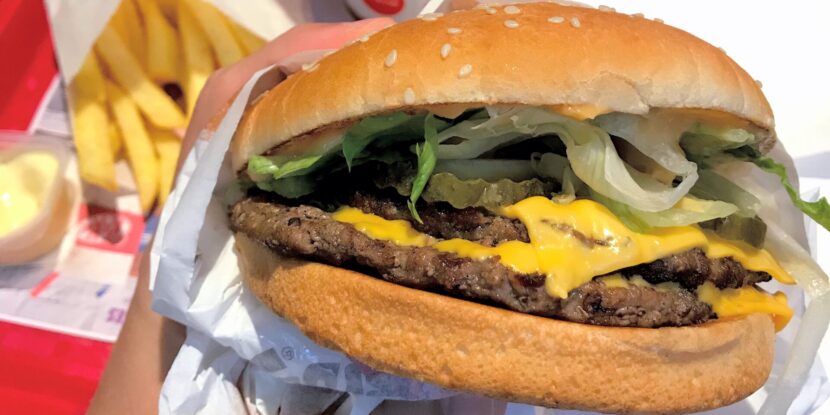
A federal judge will allow a class action lawsuit against Burger King to move forward, with plaintiffs claiming the fast food giant misrepresents the size of its Whopper cheeseburger in advertisements. U.S. District Court Judge Roy K. Altman, presiding over the case in Florida, determined that there is “some” merit to the argument that Burger King’s ads made their burgers appear larger than they are in reality.

The lawsuit, initiated in 2022, involves 19 customers from 13 states. These plaintiffs allege that the advertised burgers appeared approximately 35 percent larger and were shown to contain more than twice the meat of the actual product received. The plaintiffs provided side-by-side images comparing the vibrant, appealing advertisements to the less impressive burgers they received.

Judge Altman rejected Burger King’s attempt to dismiss the case, stating that the allegations “go beyond mere exaggeration or puffery.”

“The plaintiffs’ claims are false,” a Burger King spokesman commented, maintaining that the flame-grilled beef patties shown in advertisements are identical to those served to customers across the United States. Notably, similar lawsuits filed against McDonald’s and Wendy’s were dismissed last September.

Image by Amin.

show less

PULSE POINTS:

show more

Dems Face Backlash Over Pro-Porn Ad.

Two Democratic-aligned groups have released a controversial advertisement depicting a fictional Republican legislator interrupting a man masturbating to pornography. The ad, titled “Republicans Rubbing You the Wrong Way,” is a joint effort by Progress Action Fund and Defend the Vote.

The ad portrays the fictitious Republican lawmaker taking a young man’s cellphone, which he was using to watch pornography in bed, and declaring a nationwide pornography ban. It is part of a $2.5 million campaign targeting swing states, including Pennsylvania, Michigan, and Wisconsin. Mirroring a similar television campaign regarding abortion and other cultural issues in 2022, the ad has sparked mixed reactions on social media platforms.

The 30-second commercial is scheduled to run on television, online, and streaming services across seven key states: North Carolina, Georgia, Arizona, Nevada, Pennsylvania, Michigan, and Wisconsin. Many social media users have reacted negatively. A critic on YouTube pondered the intended audience, while a user on X (formerly Twitter) described it as a desperate move by Democrats.

Some have also questioned the ad’s factual accuracy, as there is no current federal effort to ban pornography. However, some states have passed legal measures to ensure that only those of legal age can view pornographic websites—and that the performers in the videos are consenting adults over the age of 18 years old.

During the 2022 mid-term election, a similar ad was run by Progress Action Fund—though the issue of focus was birth control. In that ad, a fictitious Republican lawmaker stops a couple from having sexual intercourse with the use of a condom. While abortion and contraception access appear to have played a significant role in the midterms, both appear to have been overshadowed by concerns over the economy and illegal immigration among voters in 2024.


show less
Two Democratic-aligned groups have released a controversial advertisement depicting a fictional Republican legislator interrupting a man masturbating to pornography. The ad, titled "Republicans Rubbing You the Wrong Way," is a joint effort by Progress Action Fund and Defend the Vote. show more

WATCH: New Kamala Ad Leans on Wildly Unpopular Pence, Bolton, & Milley.

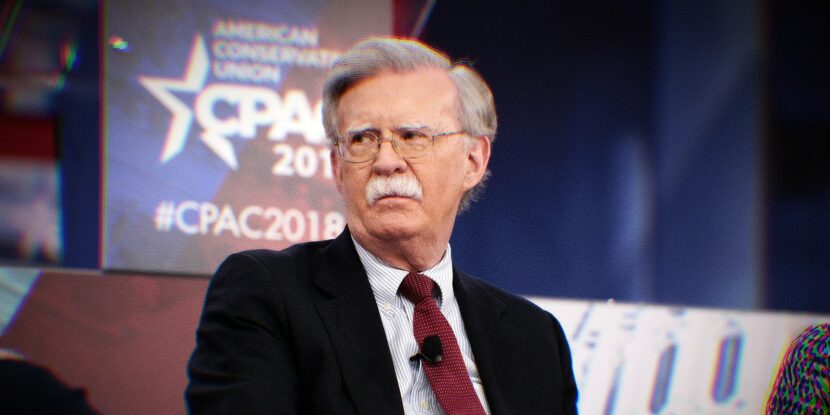
Kamala Harris’s presidential campaign is embracing the anti-Trump narrative of the ‘uniparty’ political class in a new television spot. It features comments made by former Vice President Mike Pence, former National Security Advisor John Bolton, and retired General Mark Milley. What voter demographic the message is meant to appeal to is unclear, as Pence, Bolton, Milley, and others cited in the one-minute-long ad spot are all deeply unpopular among average American voters.

The political class’s backing of Harris ahead of November’s election could become a political liability for the Democratic Party’s presidential nominee. With the likes of Iraq War architect and former Vice President Dick Cheney and his daughter, former Representative Liz Cheney (R-WY), endorsing Harris, the Democrats risk becoming the embodiment of an unpopular political and economic status quo.

Pence, an afterthought candidate during the 2020 presidential primary, denounced the populist political message that saw Republicans win the White House in 2016 late last year. Meanwhile, Bolton admitted in April this year that he wrote in Dick Cheney on his 2020 presidential ballot. The former Vice President to George W. Bush, Cheney was the champion of the disastrous U.S. invasion of Iraq that cost thousands of American lives and directly resulted in Iranian influence and terror proxies expanding throughout the Middle East.

As for Milley, the retired general has spent his time out of the military cashing in lucrative speaking fees and consulting contracts through his uniparty contacts. The National Pulse reported in March that global banking giant JPMorgan Chase has retained Milley as a senior adviser — most likely to advocate for the company’s interests on Pentagon-related matters.

WATCH: 

show less
Kamala Harris's presidential campaign is embracing the anti-Trump narrative of the 'uniparty' political class in a new television spot. It features comments made by former Vice President Mike Pence, former National Security Advisor John Bolton, and retired General Mark Milley. What voter demographic the message is meant to appeal to is unclear, as Pence, Bolton, Milley, and others cited in the one-minute-long ad spot are all deeply unpopular among average American voters. show more

RFK’s SuperPAC Spent $7 MILLION on A Super Bowl Ad.

The SuperPAC backing Robert Kennedy Jr.’s (RFK, Jr.) independent presidential bid drew mixed reactions after running a 30-second television spot during the Super Bowl. The advertisement — which the American Values 2024 SuperPAC said cost $7 million — used elements of a 1960 campaign spot run Kennedy’s his uncle, former President John F. Kennedy.

Borrowing visual and musical motifs from the John F. Kennedy campaign’s television spot, the RFK, Jr. advertisement featured images of the independent candidate’s testimony before Congress and his engaging in outdoor activities. The ad ended with the tagline: “Vote independent.”

When the campaign spot initially aired last night, Kennedy embraced the message, promoting its message on  X (formerly Twitter). “Our momentum is growing,” he wrote, adding: “It’s time for an Independent President to heal the divide in our country.”

However, just hours later, RFK, Jr. moved to distance himself from the SuperPAC’s Super Bowl spot. “I’m so sorry if the Super Bowl advertisement caused anyone in my family pain. The ad was created and aired by the American Values Super PAC without any involvement or approval from my campaign,” Kennedy posted on X (formerly Twitter). He continued: “FEC rules prohibit Super PACs from consulting with me or my staff. I love you all. God bless you.”

The Kennedy family has repeatedly criticized RFK, Jr.’s independent presidential bid, with the SuperPAC’s ad drawing renewed consternation. In October, several members of the Kennedy clan signed an open letter condemning RFK, Jr.’s campaign.

“My cousin’s Super Bowl ad used our uncle’s faces- and my Mother’s,” said Bobby Shriver – RFK, Jr.’s cousin – on X (formerly Twitter). “She would be appalled by his deadly health care views. Respect for science, vaccines, & health care equity were in her DNA. She strongly supported my health care work at @ONECampaign & @RED which he opposes.”

show less
The SuperPAC backing Robert Kennedy Jr.’s (RFK, Jr.) independent presidential bid drew mixed reactions after running a 30-second television spot during the Super Bowl. The advertisement — which the American Values 2024 SuperPAC said cost $7 million — used elements of a 1960 campaign spot run Kennedy’s his uncle, former President John F. Kennedy. show more

Biden SuperPAC Makes Largest Ad Purchase in U.S. History to Target Battleground States.

The Democrat SuperPAC backing President Biden’s re-election bid is reserving television air time it claims will be the largest political ad buy in U.S. history. Future Forward plans to reserve $250 million worth of advertising through a variety of mediums across the country.

Future Forward says the bulk of its ad buy  — $140 million — will be committed to television, while the remaining $110 million will be spread across digital and streaming services. The spending represents a significant uptick from the group’s expenditure during Biden’s 2020 campaign, in which the Democrat-aligned SuperPAC spent $151 million.

Swing State Media Blitz

The SuperPAC plans to target critical battlegrounds, including Arizona, Georgia, Michigan, Nevada, North Carolina, Pennsylvania, and Wisconsin, with a barrage of ads from August to Election Day. Future Forward’s campaigns are expected to spotlight topics such as Biden’s Inflation Reduction Act and various Latino concerns in Arizona, Nevada, and Pennsylvania.

President Biden’s 2024 campaign committee and the PrioritiesUSA SuperPAC have already rolled out a strategy centered around a significant use of social media to mainly target the presumptive Republican nominee, former President Donald Trump. The SuperPAC and Biden campaign’s aggressive spending is likely in response to recent polls showing Trump leading the Democrat incumbent in most swing states.

Polls indicate that concerns about the 81-year-old Biden’s advanced age, his handling of inflation, increasing global instability, and the ongoing border crisis are fueling voter uncertainty toward his re-election.

show less
The Democrat SuperPAC backing President Biden's re-election bid is reserving television air time it claims will be the largest political ad buy in U.S. history. Future Forward plans to reserve $250 million worth of advertising through a variety of mediums across the country. show more