




Monday, February 23, 2026

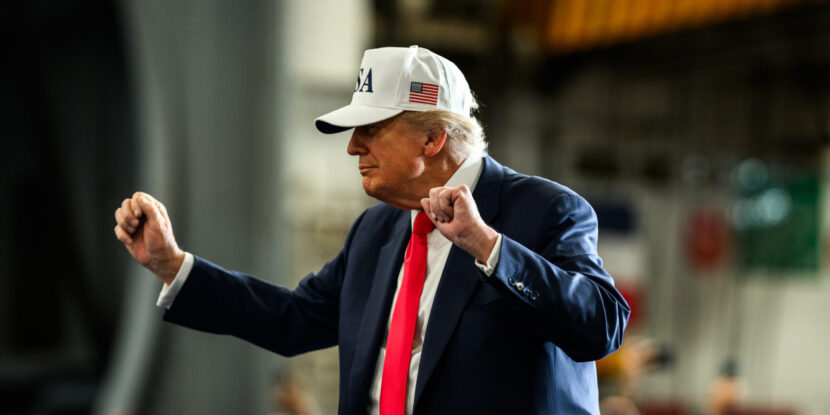
Trump Admin Celebrates Mortgage Rates Reaching Lowest Level Since 2022.

PULSE POINTS

❓WHAT HAPPENED: Mortgage rates have fallen to their lowest level since September 2022, which the White House says improves affordability for Americans.

👤WHO WAS INVOLVED: President Donald J. Trump, Freddie Mac, and the National Association of Realtors.

📍WHEN & WHERE: The data was released on February 19, 2026, reflecting trends across the United States housing market.

💬KEY QUOTE: “This lower rate environment is not only improving affordability for prospective homebuyers, it’s also strengthening the financial position of homeowners,” Freddie Mac stated.

🎯IMPACT: The Trump administration contends that the increased affordability, rise in home purchase applications, and a boost in housing construction signal growing confidence in the housing market.

IN FULL

Freddie Mac’s Primary Mortgage Market Survey (PMMS), released on Thursday, reveals that mortgage rates have dropped to their lowest levels since September 2022. The Trump White House is highlighting the falling rates as part of its affordability push, with Freddie Mac stating, “This lower rate environment is not only improving affordability for prospective homebuyers, it’s also strengthening the financial position of homeowners.”

According to the Freddie Mac data, the average 30-year fixed mortgage dropped to a multi-year low. This has driven down monthly housing payments to their most affordable levels in over two years. Meanwhile, the National Association of Realtors’ Housing Affordability Index has hit its highest level since March 2022. This marks seven straight months of improving affordability.

In addition to index data, hard data support the case for improving housing affordability. Apartment rents have declined for six straight months, reaching a four-year low. Meanwhile, 62 percent of homebuyers were able to purchase at a discount compared to the original listing price in 2025. Consequently, the number of Americans filing refinancing applications has jumped 132 percent, and home purchase applications are up nearly 10 percent compared to last year. Even on the construction front, the White House contends that the economic environment is improving, citing housing starts at a five-month high.

The White House points to President Donald J. Trump’s decision to order Fannie Mae and Freddie Mac to purchase $200 billion in mortgage-backed securities as one of the primary drivers of the decline in borrowing costs. Additionally, the administration is highlighting President Trump’s move to restrict large institutional investors from purchasing single-family homes.

Join Pulse+ to comment below, and receive exclusive e-mail analyses.

show less
show more

Mamdani’s ‘Rental Ripoff’ Hearings Ban NYC Public Housing Tenants from Criticizing City.

PULSE POINTS

❓WHAT HAPPENED: New York City Mayor Zohran Mamdani’s “rental ripoff” hearings exclude public housing tenants from testifying, despite the New York City Housing Authority (NYCHA) being labeled the “worst” landlord in the city.

👤WHO WAS INVOLVED: NYC Mayor Zohran Mamdani, NYCHA tenants, private landlords, and Humberto Lopes of Gotham Housing Alliance.

📍WHEN & WHERE: The first hearing is scheduled for February 26 in New York City.

đź’¬KEY QUOTE: “The city’s own tenants—those living in public housing—are demanding a real plan to improve their living conditions… If these hearings were truly about holding bad landlords accountable, the over 500,000 residents in NYCHA would be able to meaningfully participate.” — Humberto Lopes, CEO of Gotham Housing Alliance

🎯IMPACT: Critics claim the hearings are a distraction from the city’s own housing failures, leaving public housing residents without a voice.

IN FULL

Conspicuously absent from New York City Mayor Zohran Mamdani’s upcoming “rental ripoff” hearings will be public housing tenants, but not because the city suddenly has a sterling track record in managing government properties. The New York City Housing Authority (NYCHA), often described as the “worst” landlord in the city, will not allow its 500,000 tenants to participate in the discussions as a condition of their rental agreements.

Mamdani’s hearings, which are accused of being a vehicle for demonizing private property owners under the pretense of real concerns like “rental junk fees,” are set to kick off on February 26. However, city officials will only hear from tenants living in privately owned buildings, while city-managed properties will be exempt from scrutiny—despite there being an estimated 500,000 public housing tenants.

“The city’s own tenants—those living in public housing—are demanding a real plan to improve their living conditions… If these hearings were truly about holding bad landlords accountable, the over 500,000 residents in NYCHA would be able to meaningfully participate,” Humberto Lopes, CEO of Gotham Housing Alliance, said of the hearings. He added, “This is clearly the city trying to distract from its own failures while putting on a show, instead of having a real conversation with property owners, renters, NYCHA residents, and everyone else about how to improve housing for all.”

In response to questions about NYCHA’s exclusion, Mamdani’s office stated that while the hearings focus on private-market renters, NYCHA staff will be present to address in-apartment repair requests and other complaints. The administration also promised to release a housing plan in the coming months to improve conditions for all New Yorkers, including those in public housing.

Mamdani defended his approach, claiming that, “So much of the reason that NYCHA residents are living through a system that requires around $80 billion of capital improvements… is a lack of commitment from the federal government.”

Join Pulse+ to comment below, and receive exclusive e-mail analyses.
show less
show more

Trump Admin Unveils Plan to Cut Healthcare Costs Even More.

PULSE POINTS

❓WHAT HAPPENED: The Centers for Medicare & Medicaid Services (CMS) proposed new regulations for 2027 aimed at cutting health care costs, expanding consumer options, and cracking down on fraud.

👤WHO WAS INVOLVED: CMS, insurers, agents, brokers, and U.S. taxpayers.

📍WHEN & WHERE: Proposed regulations for 2027, with public comments open until March 11, 2026.

đź’¬KEY QUOTE: “We are cracking down on improper and misleading practices while giving states and health plans more room to innovate and compete.” – Dr. Mehmet Oz, CMS Administrator

🎯IMPACT: Potentially lower health care costs, expanded plan options, and stricter fraud prevention measures.

IN FULL

The Centers for Medicare & Medicaid Services (CMS) has proposed regulations for 2027 to further reduce health care costs while giving consumers more choices. The plan also focuses on safeguarding taxpayer dollars by strengthening efforts to combat fraud, reduce improper enrollments, tighten verification procedures, and ensure that subsidies are provided only to those who qualify.

One major element of the proposal would give insurers greater flexibility in designing health plans. CMS is considering allowing catastrophic plans to extend for as long as 10 years, removing standardized plan requirements to encourage innovation, and broadening hardship exemptions so more individuals can qualify for catastrophic coverage.

CMS also proposes allowing some plans that rely on non-network providers to count as Qualified Health Plans (QHPs), provided enrollees still have adequate access to providers. At the same time, the agency would impose tougher standards on agents and brokers to address misleading marketing and unauthorized changes to consumer coverage.

Additional provisions would strengthen income and eligibility verification for subsidies, align subsidy eligibility with federal immigration law by excluding certain lawfully present immigrants, and reinstate state oversight of provider networks and access to Essential Community Providers (ECPs).

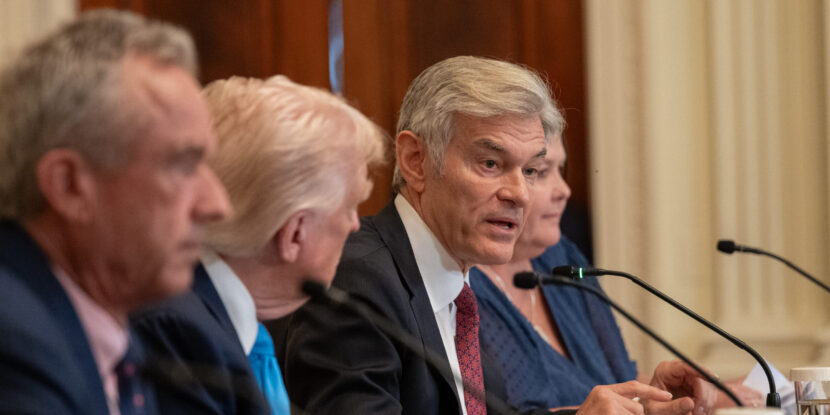
CMS Administrator Dr. Mehmet Oz highlighted the balance the agency is aiming to strike, saying, “We are cracking down on improper and misleading practices while giving states and health plans more room to innovate and compete.” CMS will accept public comments on the proposed rules through March 11, 2026, before finalizing regulations for implementation in 2027.

Join Pulse+ to comment below, and receive exclusive e-mail analyses.
show less
show more

Trump’s Affordability Push Drops Rents to Four-Year Low.

PULSE POINTS

❓WHAT HAPPENED: National median rent has fallen to its lowest level since 2022, with rents posting their sixth straight monthly decline in January, down 6.2 percent from their peak under the Biden government.

👤WHO WAS INVOLVED: President Donald J. Trump, renters across the U.S., and real estate market analysts.

📍WHEN & WHERE: January 2026, across major U.S. cities including Los Angeles, Denver, Phoenix, and more.

💬KEY QUOTE: “2026 is shaping up to be one of the more renter-friendly periods we’ve seen in a decade,” said luxury real estate broker Michelle Griffith.

🎯IMPACT: Renters across the country are experiencing relief as housing costs decline, while President Trump continues to focus on long-term affordability and homeownership solutions.

IN FULL

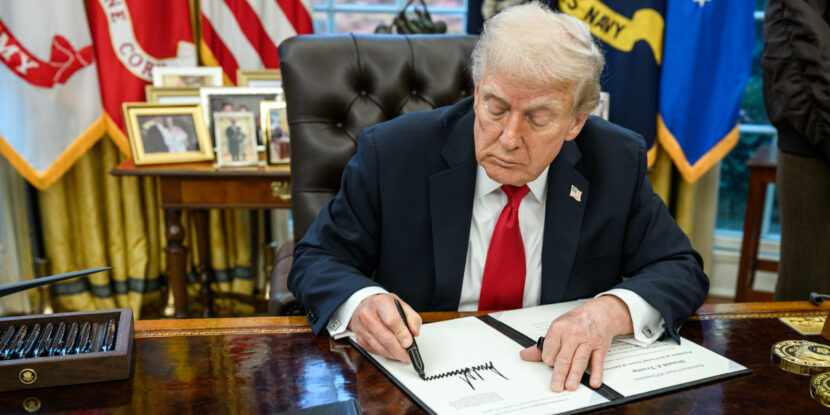
President Donald J. Trump is delivering measurable relief to Americans facing high housing costs, with new data showing the national median rent has fallen to its lowest level since 2022. Rents declined for the sixth consecutive month in January, marking the steepest year-over-year drop in more than two years, down 6.2 percent from their peak under the Biden government.

“2026 is shaping up to be one of the more renter-friendly periods we’ve seen in a decade,” said luxury real estate broker Michelle Griffith, pointing to broad-based declines across the country. Major metro areas, including Los Angeles, Denver, Phoenix, and Pittsburgh, are reporting notable reductions in rental prices. In Los Angeles, rents have fallen to a four-year low, while Denver renters are seeing the most affordable prices in at least nine years, according to market data.

These gains for renters come amid a broader affordability push under President Trump, as Americans benefit from multi-year-low gas prices, easing mortgage rates, tax refunds, and rising wages. The White House credits stronger immigration enforcement as one factor easing pressure on housing demand, boosting wages for American workers, and improving overall affordability, as reduced competition for housing has helped stabilize prices while strengthening labor markets.

At the same time, President Trump has taken direct aim at large corporate investors, making clear that “homes are for people, not corporations.” His administration has advanced reforms designed to curb Wall Street’s dominance in the housing market and ensure families, not institutional buyers, are renting and owning homes.

Beyond housing, the administration’s affordability agenda has extended to other household costs, including aggressive action to lower prescription drug prices, further reducing financial strain for working families and seniors.

President Trump has made clear that restoring the American Dream of homeownership, not merely lower rents, remains a central goal of his administration. “Homes are built for people, not for corporations, and America will not become a nation of renters,” he said last month.

Join Pulse+ to comment below, and receive exclusive e-mail analyses.
show less
show more

Trump Takes On Big Business in Affordability Push: ‘Homes Are For People, Not Corporations.’

PULSE POINTS

❓WHAT HAPPENED: President Donald J. Trump announced new measures aimed at addressing housing affordability for Americans, including restrictions on the purchase of homes by large investment firms and hedge funds.

👤WHO WAS INVOLVED: President Trump, large institutional investors, single-family home buyers, Fannie Mae and Freddie Mac, and attendees of the World Economic Forum (WEF) summit in Davos, Switzerland.

📍WHEN & WHERE: The announcement was made on January 21, 2026, at the WEF meeting in Davos, Switzerland.

đź’¬KEY QUOTE: “Homes are built for people, not for corporations, and America will not become a nation of renters.” — President Trump

🎯IMPACT: While the Executive Order does not ban outright large institutional investors’ ability to acquire single-family homes, President Trump’s directive places strict limits on conventional mortgage guarantees sought by investment firms when purchasing single-family residences.

IN FULL

President Donald J. Trump, speaking at the World Economic Forum (WEF) summit in Davos, Switzerland, on Wednesday, announced new measures aimed at addressing housing affordability for Americans, including restrictions on the purchase of homes by large investment firms and hedge funds. Late Tuesday, President Trump signed an Executive Order that restricts federal agencies from facilitating the financing or insuring of single-family homes by “large institutional investors.”

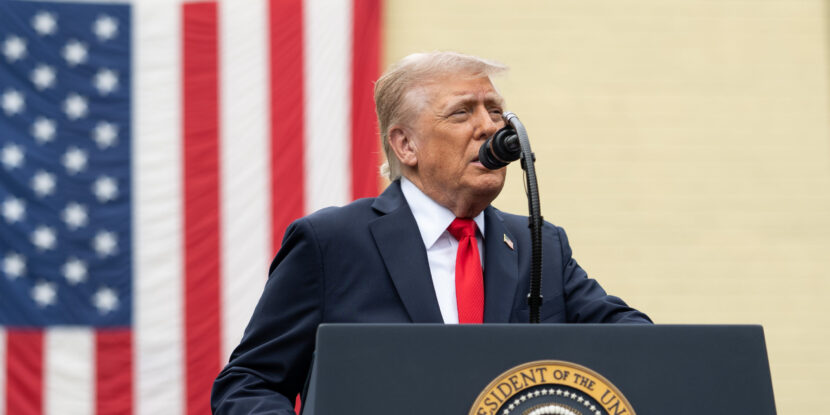
“Homes are built for people, not for corporations, and America will not become a nation of renters,” President Trump told WEF attendees. “That’s why I have signed an executive order banning large institutional investors from buying single-family homes. It’s just not fair to the public. They’re not able to buy a house.”

While the housing policy Executive Order does not ban large institutional investors from acquiring single-family homes outright, the directive places strict limits on conventional mortgage guarantees sought by investment firms when purchasing single-family residences. Notably, the measure does not impact cash buyers or investment firms that use financing not backed by Fannie Mae and Freddie Mac.

The National Pulse reported in June of 2024 that under the former Biden government, mortgage costs began to rise once again—mostly due to inflation—and caused a spike in foreclosures. This resulted in a flood of residential property sales that drew significant interest from alternative asset management firms, such as Blackstone, which purchased these properties to generate a steady stream of rental revenue for their investors.

Join Pulse+ to comment below, and receive exclusive e-mail analyses.

show less
show more

Mass Deportations Have Made Homes More Affordable, Boosted Wages, and Cut Crime.

PULSE POINTS

âť“WHAT HAPPENED: President Trump’s administration achieved significant reductions in crime, improved housing affordability, and boosted wages for American workers through strict immigration enforcement and mass deportations.

👤WHO WAS INVOLVED: President Donald J. Trump, American workers, law enforcement, and local jurisdictions impacted by immigration policies.

📍WHEN & WHERE: Throughout 2025, with notable impacts in cities such as Washington, D.C., Chicago, Memphis, and New Orleans.

đź’¬KEY QUOTE: “Under President Trump, the America First promise is a reality. While Democrats fight to sabotage these gains and drag us back to the chaos of open borders, skyrocketing costs, and rampant crime, President Trump remains unwavering in his commitment to delivering the security, prosperity, and safety the American people deserve.” – White House statement

🎯IMPACT: Reduced crime rates, increased wages for blue-collar workers, improved housing affordability, and improved safety in America’s cities.

IN FULL

President Donald J. Trump’s focus on border security and immigration enforcement has produced tangible benefits for Americans in his first year back in office. Large-scale deportations are contributing to falling home prices in 14 of the top 20 metropolitan areas that have significant populations of illegal immigrants by reducing pressure on housing, showing year-over-year declines in December. Notably, three areas that experienced slight price increases were all sanctuary cities.

Blue-collar wages have also increased at the fastest pace in decades, with truck drivers and construction workers, whose sectors have been heavily infiltrated by sometimes dangerously unqualified illegal immigrants, among those seeing substantial pay raises. Real wages for American workers are projected to have risen by 4.2 percent overall during President Trump’s first full year back in office.

Between January and December 2025, employment increased by two million native-born Americans, while 662,000 foreign-born workers experienced job losses, indicating that the administration’s policies are rebalancing the economy away from cheap foreign labor.

The near-halt to illegal immigration and increase in deportations, particularly in America’s interior, has also been accompanied by the country’s largest-ever single-year decline in murders last year, along with reductions in rapes, robberies, aggravated assaults, shooting deaths, traffic fatalities, and overdose fatalities—with the last of these likely to have been further influenced by the administration’s aggressive military action against drug traffickers in Latin America.

In Washington, D.C., murders fell by 60 percent, carjackings decreased by 68 percent, and overall crime dropped by nearly a third, according to the White House. Chicago, subject to the administration’s Operation Midway Blitz against illegal immigrants, posted its lowest number of murders since 1965, while Memphis had fewer than 200 murders for the first time since 2019, and New Orleans achieved its lowest homicide rate in nearly 50 years.

Join Pulse+ to comment below, and receive exclusive e-mail analyses.

show less
show more

Trump Moves to Ban Corporations From Buying Up Single-Family Homes.

PULSE POINTS

❓WHAT HAPPENED: President Donald J. Trump announced steps to ban large institutional investors from purchasing additional single-family homes.

👤WHO WAS INVOLVED: President Trump, large institutional investors, and Congress.

📍WHEN & WHERE: Announcement made Wednesday, January 7, 2026; further discussion planned in two weeks at Davos, Switzerland.

💬KEY QUOTE: “For a very long time, buying and owning a home was considered the pinnacle of the American Dream. But now, because of the Record High Inflation caused by Joe Biden and the Democrats in Congress, that American Dream is increasingly out of reach for far too many people.” – Donald Trump

🎯IMPACT: Trump seeks to address housing affordability issues and is urging Congress to codify the ban into law.

IN FULL

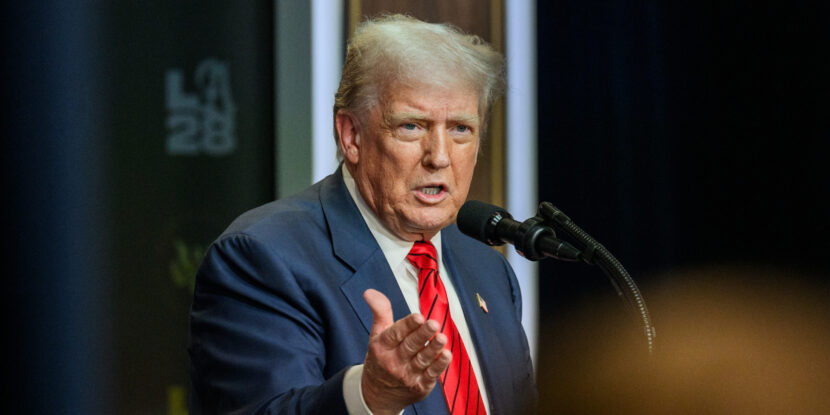
President Donald J. Trump announced on Wednesday that his administration is taking immediate action to bar large institutional investors from purchasing single-family homes. The President contends that the practice, utilized by alternative asset management firms like Blackstone, has contributed to housing affordability issues facing many Americans.

“For a very long time, buying and owning a home was considered the pinnacle of the American Dream. It was the reward for working hard, and doing the right thing, but now, because of the Record High Inflation caused by Joe Biden and the Democrats in Congress, that American Dream is increasingly out of reach for far too many people, especially younger Americans,” President Trump wrote in a post shared to Truth Social on Wednesday.

The America First leader continued, “It is for that reason, and much more, that I am immediately taking steps to ban large institutional investors from buying more single-family homes, and I will be calling on Congress to codify it. People live in homes, not corporations.”

“I will discuss this topic, including further Housing and Affordability proposals, and more, at my speech in Davos in two weeks,” he added.

The National Pulse reported in June of 2024 that under the former Biden government, mortgage costs began to once again creep up—mostly due to inflation—and caused a spike in foreclosures. This resulted in a flood of residential property sales that drew significant interest from alternative asset management firms, such as Blackstone, which purchased these properties to generate a steady stream of rental revenue for their investors.

Join Pulse+ to comment below, and receive exclusive e-mail analyses.
show less
show more

Gas Prices Hitting New Low for New Year’s Eve.

PULSE POINTS

❓WHAT HAPPENED: Gas prices fell sharply throughout December, reaching a national average of $2.75 per gallon by December 29, the lowest level since 2021, according to GasBuddy.

👤WHO WAS INVOLVED: GasBuddy, U.S. crude oil producers, OPEC+ members, and the Energy Information Administration (EIA).

📍WHEN & WHERE: December 2025, across the United States, with regional variations in gasoline and diesel prices.

💬KEY QUOTE: “Oil prices have remained relatively low even amid the U.S. blockade on Venezuela’s oil exports,” said Patrick De Haan, GasBuddy’s head of petroleum analysis.

🎯IMPACT: U.S. gasoline prices have declined in most states, with some stations dropping below $2 per gallon.

IN FULL

Gas prices have continued to fall across the United States this month. By December 29, the nationwide average reached $2.75 per gallon, per GasBuddy data—the lowest point seen since 2021. Diesel fuel costs also decreased, reaching a national average of $3.52 per gallon, which was more than $0.05 lower than the week before.

This drop stems from higher U.S. oil output and greater production from OPEC+ countries, even with sanctions affecting exporters such as Russia and Venezuela. According to the Energy Information Administration (EIA), American crude oil output hit close to 17 million barrels per day around mid-December, representing a 12 percent rise since October.

Patrick De Haan, GasBuddy’s head of petroleum analysis, pointed out that gas prices declined in almost all states, and certain stations in about a dozen states sold fuel for under $2 per gallon. “Oil prices have remained relatively low even amid the U.S. blockade on Venezuela’s oil exports,” De Haan said. He noted that the downward trend might persist into January or February before reaching its lowest point.

Although drivers are currently experiencing lower costs, crude oil prices edged up slightly on December 29. U.S. crude increased by 2.1 percent to nearly $58 per barrel, while Brent crude rose 1.88 percent to $61.78 per barrel. This movement might foreshadow upcoming rises in pump prices.

The GasBuddy analysis drew from more than 12 million individual price submissions across 150,000 stations nationwide and revealed notable regional differences. Republican-run Oklahoma had the nation’s cheapest average for gasoline at $2.17 per gallon, whereas Democrat-run Hawaii and California topped the list with $4.36 and $4.20 per gallon, respectively. Diesel averages displayed comparable regional patterns.

Join Pulse+ to comment below, and receive exclusive e-mail analyses.

show less
show more

Trump HUD Sec Confirms 50-Year Mortgages Remain on the Table.

PULSE POINTS

❓WHAT HAPPENED: Department of Housing and Urban Development (HUD) Secretary Scott Turner says that President Donald J. Trump’s 50-year mortgage plan remains under consideration.

👤WHO WAS INVOLVED: HUD Secretary Scott Turner, President Donald Trump, mortgage lenders, and home buyers.

📍WHEN & WHERE: Sunday, during a television interview.

💬KEY QUOTE: “The 50-year mortgage and other ideas that have been circulated through the public are being discussed, are on the table.” – Scott Turner

🎯IMPACT: The proposal aims to ease hurdles to new home buyers and increase affordability.

IN FULL

The Trump administration is continuing to analyze and consider a proposal that would clear the way for 50-year mortgages to become available to home buyers, according to Department of Housing and Urban Development (HUD) Secretary Scott Turner. His comments came during a television interview on affordability on Sunday, though Turner was noncommittal on whether the 50-year mortgage would receive final approval.

“The 50-year mortgage and other ideas that have been circulated through the public are being discussed, are on the table,” he said, adding: “But at the end of the day, the President and the other leaders in the administration will discuss what’s the best possible path, secure path, to help the American people to afford a home.”

“It’s very early. I think more research needs to be done on a 50-year mortgage and the other ideas that have been put forth. Because—one thing from a HUD standpoint, from my standpoint, we want to make sure that the housing market is secure. And also for any FHA, Fannie Mae taxpayer-backed mortgages are stable and secure for the American people,” Turner stated.

The proposal, which President Donald J. Trump first floated in early November, has received some pushback. While the Trump White House has argued the goal is to make monthly payments more affordable for Americans, critics say that the extended loan term could lead to financial drawbacks. The National Pulse reported in November that Mark Zandi, chief economist at Moody’s Analytics, warned that borrowers would struggle to build equity and face a greater risk of default due to limited financial cushioning.

While the United States has not seen the use of 50-year mortgages in any meaningful sense in the past, many countries around the world allow the offering of 50-year and even 100-year mortgages. The United Kingdom permitted lenders to offer 50-year mortgages in August 2022. Both Japan and Switzerland still allow the offering of 100-year mortgages. In fact, the United States is relatively alone in its use of the 30-year mortgage, whereas most countries use the 50-year mortgage instead.

Federal Housing Finance Agency (FHFA) Director Bill Pulte contends that the 50-year mortgage could be a “game changer” for Americans struggling to enter the housing market. A recent survey suggests that prospective homebuyers—especially younger generations—are open to a 50-year mortgage.

Join Pulse+ to comment below, and receive exclusive e-mail analyses.

show less
show more

AI-Powered Algorithmic Pricing Contributes to Higher Grocery Costs, Research Finds.

PULSE POINTS

❓WHAT HAPPENED: Instacart has been accused of contributing to inflated food prices by conducting AI-enabled pricing experiments that vary the cost of groceries for different customers by up to 23 percent.

👤WHO WAS INVOLVED: Instacart, Consumer Reports, Groundwork Collaborative, and several major U.S. grocery retailers.

📍WHEN & WHERE: The investigation took place over several months in 2025, involving grocery retailers across the U.S.

🎯IMPACT: Consumers face varying grocery costs, with potential annual cost swings of about $1,200 for a typical family of four.

IN FULL

A recent investigation by Consumer Reports and Groundwork Collaborative has revealed that Instacart is engaging in artificial intelligence (AI)-enabled pricing experiments, leading to different grocery prices for various customers. These discrepancies can reach up to 23 percent for the same items, with AI-powered algorithmic pricing possibly contributing to higher food prices across the nation.

The investigation involved a comprehensive analysis of Instacart’s pricing strategies, which are applied across major U.S. grocery retailers, including Albertsons, Costco, Kroger, Safeway, Sprouts Farmers Market, and Target. Instacart’s pricing experiments were confirmed by the company, though it claims the practice only affects a small portion of its retail partners.

Despite claims from Instacart that these pricing differences are small and negligible, the investigation suggests a broader impact on consumers, especially in light of the fastest increase in food prices since the late 1970s. The company has marketed its pricing experiments as “smart rounding,” aiming to optimize sales through algorithmic pricing.

Instacart’s algorithmic pricing efforts mirror those being implemented by larger retailers, such as Amazon and Walmart. However, experts warn that such practices could lead to “surveillance pricing,” where personal data influences individualized pricing strategies. This raises concerns over consumer privacy and fairness in pricing essential goods.

The investigation highlights the potential for significant cost variations for consumers, with some families potentially facing an annual cost swing of about $1,200. While economic data provided by producers largely shows that grocery prices have been falling since the start of 2025, consumers may still face higher prices due to retailer policies and practices.

Instacart markets its technology as being able to increase grocery store sales anywhere between one and three percent, while boosting profit margins from each consumer purchase by two to five percent.

Concerningly, algorithmic pricing largely goes unseen by consumers, who are unaware that the costs they face are manipulated based on AI analysis. While charging differing prices for the same item is not necessarily illegal, the use of algorithmic pricing does raise consumer protection and ethical questions.

Join Pulse+ to comment below, and receive exclusive e-mail analyses.

show less
show more