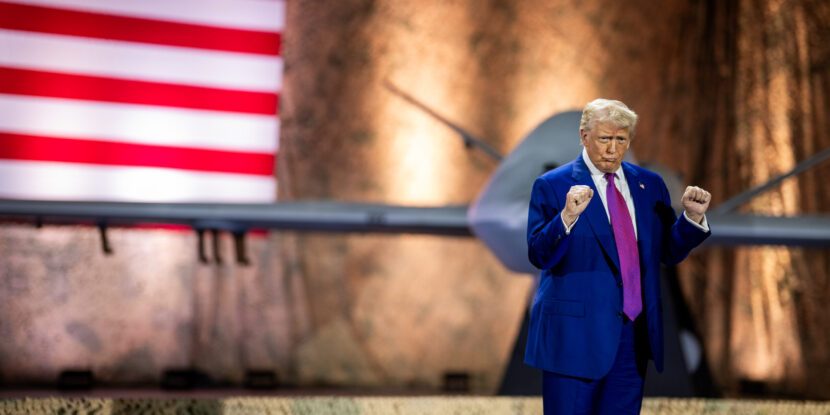
❓WHAT HAPPENED: President Donald J. Trump confirmed, while speaking at the World Economic Forum (WEF) summit in Davos, Switzerland, that the United States will soon begin military strikes against Central and South American drug cartels on land.
👤WHO WAS INVOLVED: President Donald Trump, the U.S. military, and Central and South American drug cartels.
📍WHEN & WHERE: Wednesday, January 21, 2026, at the World Economic Forum in Davos, Switzerland.
💬KEY QUOTE: “Now we’re going to start on land, and we’ll knock it all out.” — President Trump
🎯IMPACT: The Trump White House has hinted at possible land strikes against cartels for several months. However, President Trump’s remarks at Davos are the latest and most direct confirmation that the U.S. military will soon take direct action against cartel operations on land.
IN FULL
President Donald J. Trump confirmed, while speaking at the World Economic Forum (WEF) summit in Davos, Switzerland, that the United States will soon begin military strikes on land against Central and South American drug cartel operations. The America First leader, noting the dramatic plunge in overdose deaths during the first year of his second term in office, credited ongoing U.S. naval operations in the Caribbean with stemming the flow of illegal narcotics and fentanyl into the country, but suggested these strikes will no longer be contained to just boats smuggling the drugs.
“Now we’re going to start on land, and we’ll knock it all out,” President Trump said. He also noted the collapse of drug boat usage in the Caribbean as a result of U.S. naval operations in the region: “They’re not piloting too many lately, do you notice?”
“We’ve cut down with the hitting of the boats that are loaded up with drugs—including submarines… they’re actually called mini-subs, very fast—they’re meant for drugs. We’ve knocked out two of them,” Trump said, stating that the U.S. has reduced the smuggling of drugs across water routes by 97.2 percent.
“And I actually say, who the hell are the three percent? Because I would not want to be piled in any one of those boats,” he added.
Drug smuggling through the Caribbean and Pacific has seen a precipitous decline since President Trump deployed U.S. naval forces to the region last year. These operations escalated to the U.S. capture of now-former Venezuelan dictator Nicolás Maduro, who faces narco-terrorism charges in New York City.
The Trump White House has hinted at possible land strikes against the cartels for several months. However, President Trump’s remarks at Davos are the latest and most direct confirmation that the U.S. military will soon take direct action against cartel operations on land.
Join Pulse+ to comment below, and receive exclusive e-mail analyses.
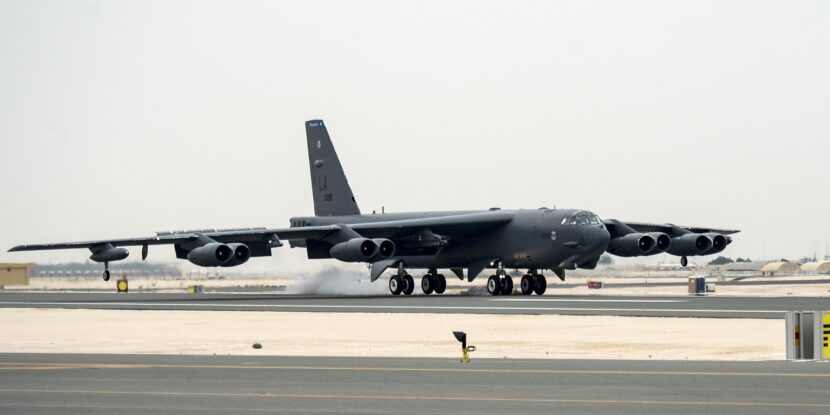
❓WHAT HAPPENED: The United States and the United Kingdom have begun an evacuation of military personnel from the Al Udeid Air Base in Qatar ahead of possible U.S. military strikes against the Islamic Republic of Iran.
👤WHO WAS INVOLVED: Iranian officials, U.S. President Donald Trump, protester Erfan Soltani, and American and British military personnel.
📍WHEN & WHERE: January 14, 2026, in Qatar and Iran.
💬KEY QUOTE: “Help is on its way,” President Donald Trump assured Iranian protesters, promising “very strong action.”
🎯IMPACT: The situation has escalated tensions in the region, with Iran warning of retaliation against U.S. military sites and international diplomatic efforts stalling.
IN FULL
The United States and the United Kingdom have begun an evacuation of military personnel from the Al Udeid Air Base in Qatar ahead of possible U.S. military strikes against the Islamic Republic of Iran and its leader, Grand Ayatollah Ali Khamenei, over reports that the regime has killed over 2,500 of its citizens in a brutal crackdown against anti-government protests. Additional reports suggest that the Iranian regime has arrested an estimated 20,000 demonstrators, with 26-year-old protestor Erfan Soltani reportedly set to be the first to be executed in connection with the unrest.
Regarding the Qatar airbase evacuation, a British Ministry of Defence spokesman stated, “The UK always puts precautionary measures in place to ensure the security and safety of our personnel, including, where necessary, withdrawing personnel.” Meanwhile, the Iranian regime claims that “calm has prevailed,” stating that its forces have quelled the unrest that spread to numerous cities over the last two weeks.
Despite its public insistence that forces loyal to Supreme Leader Khamenei have reasserted control inside Iran, the regime appears to continue to fear a possible U.S. attack. On Wednesday, an Iranian state television broadcast aired footage of the 2024 assassination attempt against U.S. President Donald J. Trump in Butler, Pennsylvania, with the message, “This time, the bullet won’t miss.”
The National Pulse reported on Tuesday that President Trump, during a speech before the Detroit Economic Club, delivered a powerful message to the people of Iran, encouraging them to continue their mass demonstrations against the Islamic Republic and Khamenei. “Help is on its way,” Trump stated, suggesting imminent U.S. military action.
Join Pulse+ to comment below, and receive exclusive e-mail analyses.
❓WHAT HAPPENED: President Donald J. Trump suggested the U.S. military could begin land strikes on drug cartels in Mexico.
👤WHO WAS INVOLVED: President Trump, Mexican President Claudia Sheinbaum, and Fox News host Sean Hannity.
📍WHEN & WHERE: Comments aired on January 8, 2026, during an interview with Sean Hannity.
💬KEY QUOTE: “We’ve knocked out 97 percent of the drugs coming in by water. And we are going to start now hitting land, with regard to the cartels.” – Donald Trump
🎯IMPACT: The remarks signal a potential escalation in U.S. military operations targeting drug cartels in Mexico.
IN FULL
During an interview with Fox News host Sean Hannity late Thursday, President Donald J. Trump stated that the military could begin land strikes on drug cartels in Mexico. “We’ve knocked out 97 percent of the drugs coming in by water. And we are going to start now hitting land, with regard to the cartels,” Trump shared during the segment.
“The cartels are running Mexico, it’s very sad to watch and see what’s happened to that country,” President Trump remarked, expressing concern that the cartel influence over Mexican government institutions poses a potential threat to the United States. The National Pulse reported last December that Mexico’s Sinaloa Cartel is using teenagers to carry out targeted assassinations in the United States.
Meanwhile, in October, the Department of Homeland Security (DHS) revealed it had received credible intelligence that Mexican drug cartels were offering bounties to and communicating with left-wing, criminal U.S. domestic extremists to target and attack U.S. Immigration and Customs Enforcement (ICE) and U.S. Customs and Border Protection (CBP) officers in Chicago, Illinois.
The comments come shortly after U.S. forces conducted a high-profile strike in Venezuela, capturing the nation’s Marxist dictator, Nicolás Maduro, and his wife, Celia Flores. Additionally, the Trump administration has issued warnings of potential military actions in other countries involved in narcotics trafficking, including Cuba and Colombia, over the past week.
Mexican President Claudia Sheinbaum has not yet issued a public response to Trump’s remarks.
Join Pulse+ to comment below, and receive exclusive e-mail analyses.
❓WHAT HAPPENED: The U.S. military struck three drug trafficking boats in the Eastern Pacific, resulting in the death of eight narco-terrorists.
👤WHO WAS INVOLVED: The U.S. military’s Southern Command (SOUTHCOM) and cartels designated as Foreign Terrorist Organizations (FTOs) by the Trump administration.
📍WHEN & WHERE: The strikes occurred on a Monday in the Eastern Pacific.
💬KEY QUOTE: “Intelligence confirmed that the vessels were transiting along known narco-trafficking routes in the Eastern Pacific and were engaged in narco-trafficking. A total of eight male narco-terrorists were killed during these actions—three in the first vessel, two in the second and three in the third.” — U.S. Southern Command
🎯IMPACT: The strikes are part of a broader campaign against drug cartels operating in the Caribbean and Eastern Pacific.
IN FULL
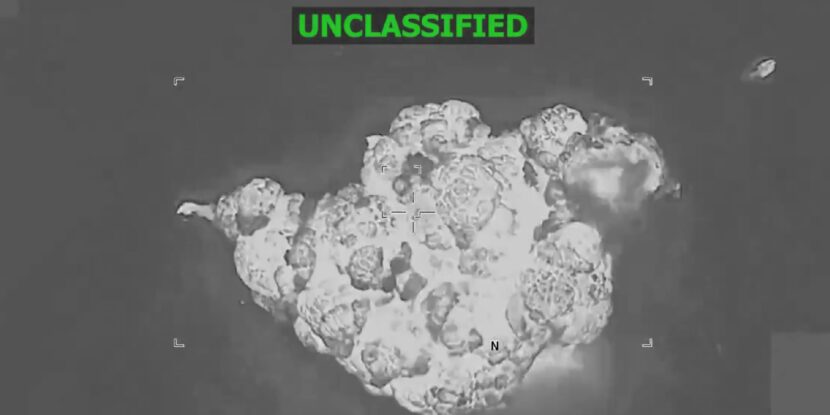
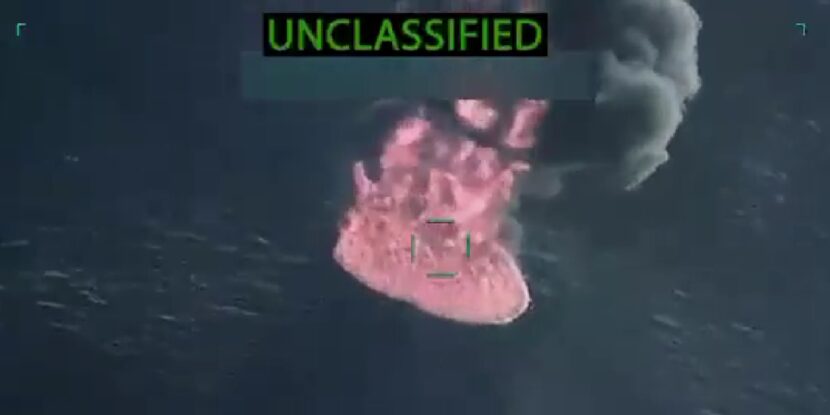
U.S Southern Command (SOUTHCOM) has announced another series of strikes in the Eastern Pacific on three vessels identified as being used by drug traffickers. The military action resulted in the destruction of all three vessels and the deaths of eight “male narco-terrorists.”
“Intelligence confirmed that the vessels were transiting along known narco-trafficking routes in the Eastern Pacific and were engaged in narco-trafficking. A total of eight male narco-terrorists were killed during these actions—three in the first vessel, two in the second and three in the third,” SOUTHCOM wrote in a post on X (formerly Twitter) following the strikes.
Authorized by Secretary of War Pete Hegseth, the strikes are part of a broader operation by the Trump administration aimed at disrupting known drug trafficking routes in the Caribbean and along the Pacific coast of Central and South America. The latest operation brings the number of narco-traffickers killed in the ongoing strikes to an estimated total of 90.
Venezuelan cartels—including Cartel de los Soles, believed to be headed by the country’s dictator Nicolás Maduro—have been the primary targets of the U.S. military operation. The campaign, comprising primarily of U.S. Navy and Air Force assets, was launched in early September and is part of what President Donald J. Trump has designated as a “non-international armed conflict” against drug cartels. The America First leader has designated a number of Central and South American cartels as Foreign Terrorist Organizations (FTOs).
A previous strike on September 2 faced criticism after reports surfaced that survivors of an initial attack were killed in a follow-up operation on Sec. Hegseth’s instructions. However, Admiral Frank Bradley—the head of the Special Operations Command—told lawmakers on Capitol Hill earlier this month that he was the authorizing official for both the initial strike and secondary strike, and that Sec. Hegseth never gave an order to “kill everybody,” as alleged in the media. Additionally, the admiral stated that it appeared survivors were attempting to contact other nearby cartel boats in an effort to salvage the drug shipment. At this juncture, the survivors were deemed to be “still in the fight” and valid targets.
On Dec. 15, at the direction of @SecWar Pete Hegseth, Joint Task Force Southern Spear conducted lethal kinetic strikes on three vessels operated by Designated Terrorist Organizations in international waters. Intelligence confirmed that the vessels were transiting along known… pic.twitter.com/IQfCVvUpau
❓WHAT HAPPENED: A military strike on September 2 targeted a drug-running vessel in the Caribbean Sea, resulting in the deaths of 11 people.
👤WHO WAS INVOLVED: U.S. Secretary of War Pete Hegseth, Admiral Frank Bradley, and U.S. Special Operations Command.
📍WHEN & WHERE: September 2, 2025, in the Caribbean Sea.
💬KEY QUOTE: “Pete said he did not order the death of those two men. And I believe him.” – Donald Trump
🎯IMPACT: Investigations by lawmakers on Capitol Hill are underway to determine whether the strike violated laws of war.
IN FULL
Democrat lawmaker allegations that Secretary of War Pete Hegseth authorized a so-called “double tap strike” against a Venezuelan cartel drug boat on September 2 appear to have no basis in fact. New evidence suggests that while Hegseth did authorize the drug boat strike, his orders did not specify any actions against potential survivors—despite claims made by Democrats on Capitol Hill based on reporting by The Washington Post.
The new evidence shows that Admiral Frank Bradley, the head of U.S. Special Operations Command, approved both the initial strike and follow-up actions. It appears the secondary strikes were targeting large pieces of wreckage and were not intended to eliminate survivors.
Allegations that the Secretary of War had given the order to “kill everybody” following the initial strike were first reported by The Washington Post last Friday. President Donald J. Trump, speaking aboard Air Force One on Sunday, dismissed the report, stating, “He said he did not say that, and I believe him 100 percent. I wouldn’t have wanted that, not a second strike.” Now, five U.S. officials have confirmed to The New York Times that Hegseth did not order such a strike.
On Monday, White House press secretary Karoline Leavitt stated, “President Trump and Secretary Hegseth have made it clear that presidentially designated narcoterrorist groups are subject to lethal targeting in accordance with the laws of war. With respect to the strikes in question on September 2, Secretary Hegseth authorized Admiral Bradley to conduct these kinetic strikes.” She added that Bradley acted within his authority and the law to ensure the vessel was destroyed.
Hegseth has backed Bradley, writing on social media, “Let’s make one thing crystal clear: Admiral Mitch Bradley is an American hero, a true professional, and has my 100 percent support. I stand by him and the combat decisions he has made—on the September 2 mission and all others since.”
Join Pulse+ to comment below, and receive exclusive e-mail analyses.
❓WHAT HAPPENED: President Donald J. Trump will meet with his top national security officials to discuss “next steps” on Venezuela in a closed-door Oval Office session.
👤WHO WAS INVOLVED: Key attendees include Secretary of War Pete Hegseth, Secretary of State Marco Rubio, Joint Chiefs Chair General Dan Caine, Chief of Staff Susie Wiles, and Deputy Chief of Staff Stephen Miller.
📍WHEN & WHERE: The meeting is scheduled for Monday at 5:00 PM (ET) in the Oval Office.
🎯IMPACT: The administration has intensified its stance in the region, including recent strikes on drug-trafficking vessels and warnings to avoid Venezuelan airspace.
IN FULL
Key national security and U.S. military officials will gather at the White House this evening for a 5:00 PM meeting in the Oval Office with President Donald J. Trump to discuss ongoing anti-cartel operations in the Caribbean and potential “next steps” regarding Venezuela and its Marxist narco-dictator Nicolás Maduro. The closed-door meeting is expected to include Secretary of War Pete Hegseth, Secretary of State Marco Rubio, Chairman of the Joint Chiefs of Staff General Dan Caine, White House Chief of Staff Susie Wiles, and Deputy Chief of Staff Stephen Miller, along with key aides.
The meeting comes as government sources have begun telling media that American forces will likely soon begin striking cartel targets on Venezuela’s outlying islands and the mainland. Around 30 percent of the U.S. Navy is currently deployed in the Caribbean with the USS Gerald R. Ford aircraft carrier strike group positioned near the Lesser Antilles island chain—well within striking distance of Venezuela.
Over the Thanksgiving holiday weekend, President Trump announced the closure of Venezuelan airspace, stating that “airlines, pilots, and criminal networks” should avoid the region. The move suggests an imminent escalation in U.S. naval and air operations, following a similar pattern of actions prior to the 1989 invasion of Panama to oust then-dictator Manuel Noriega and the 1983 intervention in Grenada.
Meanwhile, Democrat lawmakers on Capitol Hill—aiming to hamper the Trump administration’s efforts against the cartels—initiated a congressional inquiry over the weekend into allegations that Secretary Hegseth authorized a so-called “double tap strike” against a Venezuelan cartel drug boat on September 2. The inquiry is based on a report by The Washington Post alleging that Hegseth issued a verbal order to “kill everybody” aboard the drug boat. The Secretary of War maintains that the strike was “lawful under both U.S. and international law.”
President Trump, speaking aboard Air Force One on Sunday, dismissed the report, stating, “He said he did not say that, and I believe him 100 percent. I wouldn’t have wanted that, not a second strike.”
Join Pulse+ to comment below, and receive exclusive e-mail analyses.
❓WHAT HAPPENED: The United States has deployed the USS Iwo Jima and USS Gravely near Venezuela, intensifying its naval presence in the Caribbean, with potential strikes against the Maduro regime expected to begin in a matter of days.
👤WHO WAS INVOLVED: The U.S. military, including the Pentagon, President Donald J. Trump, Venezuelan President Nicolás Maduro, and U.S. Senator Rick Scott (R-FL).
📍WHEN & WHERE: The deployment follows recent U.S. airstrikes and was observed near Grenada, with vessels now stationed 124 miles from Venezuela’s La Orchila Island.
💬KEY QUOTE: “If I was Maduro, I’d head to Russia or China right now.” — Senator Rick Scott
🎯IMPACT: The deployment signals Washington’s readiness for potential strikes or broader operations, escalating tensions with Venezuela.
IN FULL
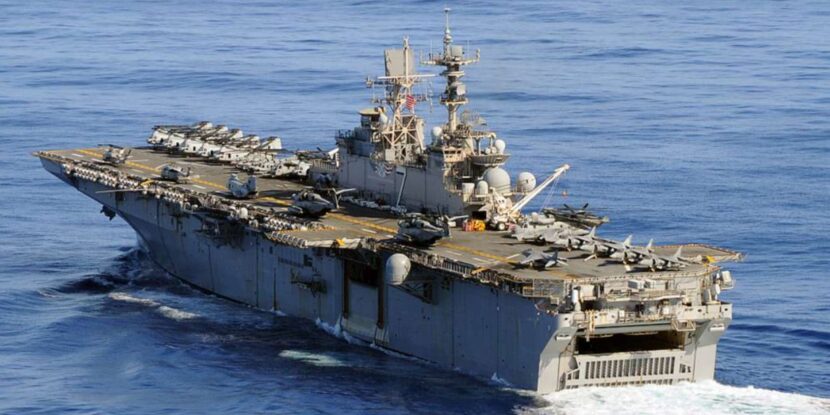
The United States continues building up naval assets near Venezuela. Recent satellite images show the USS Iwo Jima—a Wasp-class amphibious assault ship—and the USS Gravely—an Arleigh Burke-class (Flight IIA) Aegis guided missile destroyer—moving into strike range of the South American narco state. The move comes as the USS Gerald Ford Carrier Strike Group is expected to soon enter the Caribbean, significantly amplifying U.S. military capabilities in the region.
The U.S. has escalated strikes on cartel-operated drug boats, with observers now anticipating a new phase against the narco organizations and the Venezuelan dictator Nicolás Maduro. According to new reports, the U.S. military will soon begin strikes against Venezuelan military installations, which serve as operational bases for the Maduro-tied Soles drug cartel. It is believed that strikes could start in a matter of days—likely signaling the arrival of the USS Gerald Ford aircraft carrier, the largest warship ever built.
Images by the ESA’s Sentinel-2 satellites show the USS Iwo Jima and her Arleigh Burke-class destroyer escort heading westward after being spotted off the coast of Grenada over the past few days. The warships are now approximately 124 miles from Venezuela’s La Orchila Island—home to one of the country’s key airbases and radar facilities. Their approach places them within immediate operational range for amphibious or precision strike missions, intensifying pressure on Caracas as regional tensions climb.
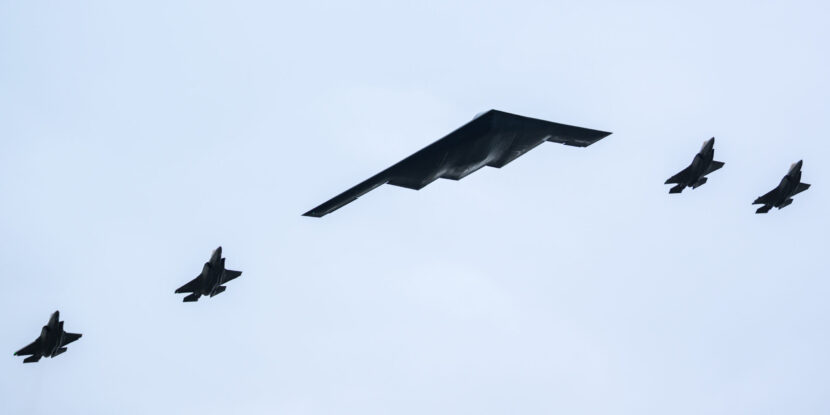
Potential airstrikes against the Venezuelan mainland will likely come in several waves, with F-35s launched from both Puerto Rico and the USS Ford‘s flight deck. Additionally, unknown assets out of Curaçao—an island about 40 miles off the coast of Venezuela—will also likely be involved. Several U.S. military flights have been used to deploy an unknown contingent to the island in recent weeks.
At the heart of this deployment, the USS Iwo Jima carries more than 1,600 Marines from the 22nd Marine Expeditionary Unit (SOC). Embarked with the amphibious transport docks USS San Antonio and USS Fort Lauderdale, the group brings advanced aircraft including AV-8B Harriers, AH-1Z Vipers, and MV-22 Ospreys. These assets enable amphibious assaults, precision raids, and rapid response operations across the Caribbean theater.
The U.S. military has now deployed more than 10,000 personnel across the Caribbean, with additional assets such as Carrier Air Wing 8 aboard the USS Gerald R. Ford and six Arleigh Burke-class destroyers, including the Gravely, armed with Tomahawk missiles. U.S. Senator Rick Scott (R-FL) said earlier this week, “If I was Maduro, I’d head to Russia or China right now.”
Join Pulse+ to comment below, and receive exclusive e-mail analyses.
❓WHAT HAPPENED: The U.S. has conducted three strikes on alleged drug-trafficking boats, killing at least 14 people and leaving one survivor.
👤WHO WAS INVOLVED: U.S. military forces, with War Secretary Pete Hegseth providing details.
📍WHEN & WHERE: The strikes occurred on Monday in the Pacific Ocean.
💬KEY QUOTE: “The U.S. military struck four vessels in known narco-trafficking routes,” said War Secretary Hegseth.
🎯IMPACT: The strikes bring the total death toll in the U.S. campaign against drug cartels to over 50.
IN FULL
The U.S. military conducted three additional strikes on drug‑smuggling vessels on Monday, killing at least 14 people and leaving only one survivor. War Secretary Pete Hegseth said the strikes targeted four boats in the Pacific Ocean, part of a broader campaign against narcotics trafficking. The latest operations bring the total death toll in the U.S. campaign against drug cartels to over 50.
Hegseth confirmed that since early September, the administration has carried out 13 strikes on 14 vessels along known narco‑trafficking routes. The Trump administration has declared an armed conflict with the cartels, labeling them “unlawful combatants” and citing the defense of the homeland as justification for the operations.
POTUS: “I don’t think we’re going to necessarily going to ask for a declaration of war. I think we’re just gonna kill people that are bringing drugs into our country, OK? We’re going to kill them. You know? They’re going to be, like dead.” pic.twitter.com/47f0bJBonu
The campaign began with a series of targeted strikes on narco‑trafficking boats in the Caribbean and off the coast of Venezuela. On September 2, a U.S. strike killed 11 narco-terrorists aboard a Venezuelan vessel identified as members of the Tren de Aragua crime syndicate. In mid-September, another strike reportedly killed three people on a boat transporting narcotics in international waters. On October 3, Hegseth announced a strike off Venezuela that killed four. In late October, the campaign expanded into the Pacific, where two strikes killed five people near Marxist-led Colombia, opening a new front beyond the Caribbean.
The administration has so far maintained that all targets were confirmed as part of organized narcotics operations and that the use of lethal force was lawful under U.S. and international law.
Yesterday, at the direction of President Trump, the Department of War carried out three lethal kinetic strikes on four vessels operated by Designated Terrorist Organizations (DTO) trafficking narcotics in the Eastern Pacific.
❓WHAT HAPPENED: The White House issued a rebuke of Israel’s strike in Doha, Qatar, and assured Qatari leadership it would not happen again.
👤WHO WAS INVOLVED: Trump White House Press Secretary Karoline Leavitt, Israeli Prime Minister Benjamin Netanyahu, and Qatari leadership.
📍WHEN & WHERE: Tuesday, September 9, 2025, in Washington, D.C. and in Doha, Qatar.
💬KEY QUOTE: “Unilaterally bombing inside Qatar, a sovereign nation and close ally of the United States, that is working very hard, and bravely taking risks with us to broker peace does not advance Israel or America’s goals.” – Karoline Leavitt
🎯IMPACT: The incident has escalated tensions between President Donald J. Trump and Israeli Prime Minister Benjamin Netanyahu.
IN FULL
The Trump White House issued a stern warning to Israeli Prime Minister Benjamin Netanyahu following an Israeli bombing on Tuesday morning that targeted Hamas leadership in Doha, Qatar. White House Press Secretary Karoline Leavitt said President Donald J. Trump has reassured Qatar that such actions will not be repeated.
“Unilaterally bombing inside Qatar, a sovereign nation and close ally of the United States, that is working very hard, and bravely taking risks with us to broker peace, does not advance Israel or America’s goals,” Leavitt said during the White House press briefing Tuesday afternoon. She added: “The President views Qatar as a strong ally and friend of the United States, and feels very badly about the location of this attack.”
“The president views Qatar as a strong ally and friend of the United States and feels very badly about the location of this attack.”
The White House comments appear to imply that Israel acted unilaterally in its strike on the Qatari capital. Notably, the rebuke comes amid already heightened tensions between Trump and Netanyahu. Trump has increasingly pushed the Israeli leader to conclude military operations against Hamas in Gaza as the conflict has dragged on for nearly two years, with Israeli operations previously expanding into Lebanon, Syria, and Iran.
Early Tuesday morning, explosions rocked the Katara District of Doha, the capital of Qatar. According to Israeli officials, the blasts formed part of an assassination plot aimed at high-ranking Hamas members residing in the wealthy Gulf state. The Qatari Foreign Ministry has responded to the attack, calling it a “criminal assault” and “blatant violation of all international laws and norms [that] poses a serious threat to the security and safety of Qataris and residents in Qatar.”
It remains unclear whether the strike was actually successful in eliminating any of its intended targets, though some initial reports suggest Hamas leaders were able to evade the attack.
Join Pulse+ to comment below, and receive exclusive e-mail analyses.
The United States and the United Kingdom have announced the start of a joint military operation against Yemen’s Houthi rebel group. For several months, the Islamist rebel group that controls large swaths of Yemeni territory has engaged in a campaign of harassment and terror against international shipping in the Red Sea and Gulf of Aden. This campaign is allegedly at the behest of their primary state backer, the Islamic Republic of Iran.
As of Thursday, the Yemeni-based Houthis have carried out at least 27 attacks on international shipping off the shores of the nation –situated at the southern tip of the Arabian Peninsula.
An attempt last month by U.S. President Joe Biden to organize an international response fell apart after European partners became frustrated with the slow response from the U.S. military and decided to undertake escort missions for international shipping on their own.
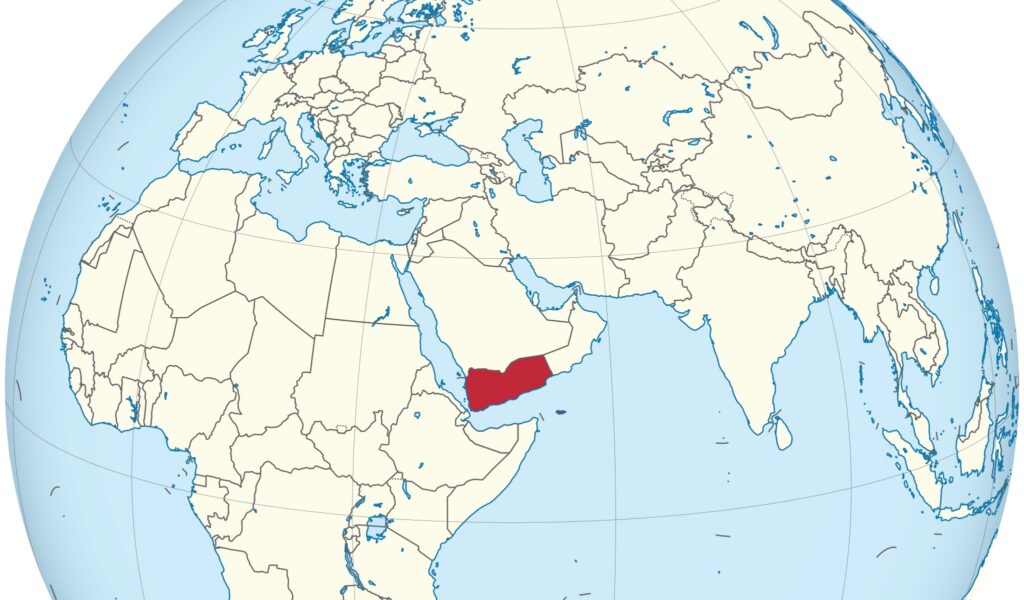
Yemen, in red.
With Houthi attacks continuing to threaten U.S. military assets in the region as well as wreaking havoc with global supply chains, the U.S. and U.K. may find themselves increasingly dragged into both the long-running Yemeni civil war and a broader regional conflict which has pitted Israel and Saudi Arabia, respectively, against Iran and its regional proxies in Gaza, Lebanon, Iraq, and Yemen.
So Who Are The Houthis?
For most of its short history, the Houthi rebel movement was a minor nuisance to the Yemeni government. That changed in 2011 when the Houthis took part in the broader Yemeni revolution – though they later rejected a governing deal proposed by Yemen’s National Dialogue Conference. In 2014, rebel groups’ numbers swelled, and they were able to seize control of the country’s capital.
An uneasy political alliance struck between the rebels and former Yemeni president Ali Abdullah Saleh aided the swift takeover of much of Yemen by the Houthi rebels. A decade before its rise to power, the rebel group had been one of the chief opposition moments against Saleh. In 2004, the Yemeni military under the Saleh government had killed the rebel group’s founder Hussein al-Houthi after they claimed he resisted arrest. The group is now primarily under the leadership of Hussein al-Houthi’s brother, Abdul-Malik al-Houthi.
Relations between the Houthis and Saleh’s political faction deteriorated, with Yemen plunged into civil war. Saudi Arabia backed a series of pro-Saudi leaders against the Iranian-backed Houthis, and in 2017, the Houthi rebels assassinated former President Saleh, after accusing him of treason. There are conflicting reports as to whether Saleh was shot by a Houthi sniper while attempting to flee his compound in a vehicle or if rebels inside the compound itself executed him.
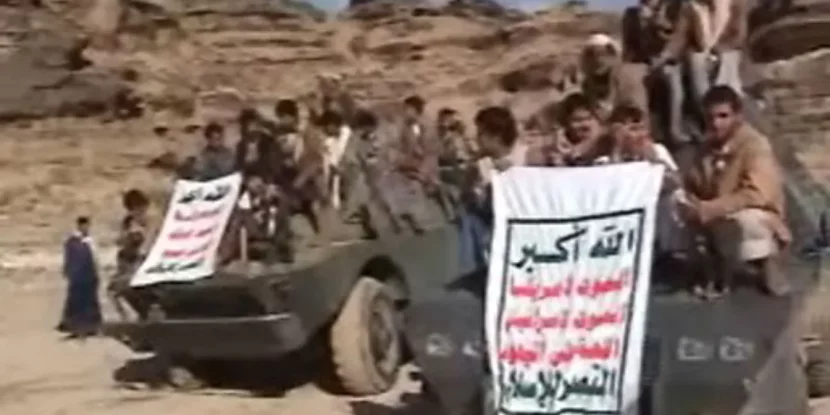
Also known as Ansar Allah, or ‘Supporters of Allah’, the movement’s official slogan (below), reads:
Allah is the Greatest Death to America Death to Israel A Curse Upon the Jews Victory to Islam
The Houthis are mainly Zaidi Shia Muslims, who believe in an activist and political interpretation of Islam.
It’s Actually A Regional Proxy War.
The Houthi rebels began in the 1990s as a Zaidi Shia Islamist revival movement – initially focused on restoring Zaidi cultural and religious practices. Their Shia Islam affiliation and opposition to Yemen’s Sunni majority naturally aligned the group with the interests of the Shia-dominated Islamic Republic of Iran. Under Iran’s influence, the Zaidi revival movement was radicalized, abandoning a more academic pursuit of cultural revival and opting instead to instill their religious and cultural ideology through conflict.
Iran’s Islamic Revolutionary Guard Corps, along with leaders of Lebanon’s Hezbollah terrorist group (also an Iranian proxy), provided training and aid to the Houthis – accelerating their transformation into a more aggressive rebel faction. In 2014, a series of street protests escalated into a full-blown battle between the Houthi rebels and the Yemeni military. After a few days, the Houthis had routed the Yemeni forces and were able to seize the country’s capital – kicking off a decade-long civil war.
Saudi Arabia, Yemen’s northern neighbor and the regional center of Sunni Muslim political power, quickly intervened in an attempt to counter Iranian influence. The influx of weapons for various factions – provided by Iran and Saudi Arabia – escalated the conflict from a civil war to a regional proxy war.
By 2015, the Saudi-recognized government under Abdrabbuh Mansur Hadi had moved the Yemeni capital from Houthi-controlled Sanaʽa to Aden. The Kingdom of Saudi Arabia itself, along with regional backers and logistical support from the U.S. under President Obama, launched a subsequent air and ground campaign aimed at ending Houthi territorial control in Yemen.
In 2018, President Donald Trump vetoed an attempt by Congress to end U.S. support for Saudi Arabia’s efforts in Yemen. After assuming office in 2021, however, President Joe Biden moved to freeze U.S. military sales to Saudi Arabia – effectively ending U.S. involvement in the conflict. A truce was established in March of 2022, freezing the conflict temporarily.
Houthis Escalate After October 7th Hamas Attacks.
On October 7th, 2023, the Muslim Brotherhood’s Hamas terror organization in Gaza – allied with the Houthis since 2021 – launched a terror attack on Israel, killing over a thousand civilians and soldiers, and taking several hundred people hostage. Israel swiftly responded with a military assault on Gaza to eliminate Hamas. Iran, which had pledged to cease arming the Houthi rebels in 2022, reversed course and began shipping arms to Yemen within days of Israel moving against Hamas – also an Iranian proxy.
Houthi insurgents initially focused their efforts against Israel – using Iranian-supplied missiles to target the Jewish state. Those missiles, however, were either intercepted by the Israeli Iron Dome defense system, U.S. military assets in the Red Sea and Gulf of Aden, or by Saudi-based land-to-air defense systems. Unable to strike Israel directly, the Houthis instead opted to attempt strikes on U.S. naval assets off the Yemeni coast, as well as international shipping moving through the same waters.
Since late October 2023, Houthis have used a combination of missiles, speed boats, helicopters, and drones to launch attacks against container ships, oil tankers, and U.S. naval vessels in both the Red Sea and the Gulf of Aden. The campaign of terror and piracy forced a high volume of international shipping to divert from the critical Suez Canal and Red Sea routes – instead having to sail around the African continent to avoid the Houthi attacks.
Escalation.
The renewed conflict in Yemen has the potential to explode into a broader regional war, especially as Israel’s military action against Hamas drags on. Many of the senior leaders of the Houthi rebels were educated in Islamic ideology by Hezbollah’s Hassan Nasrallah – giving the Lebanon-based terrorist leader a degree of personal investment in the success of the Houthis.
Iran, for its part, has promised retaliation for any strikes against the Houthi rebels. The Islamic Republic could use its proxies in Lebanon, Syria, and Iraq to target both Israeli and U.S. military assets in response to the joint U.S.-U.K. military operation in Yemen.
Saudi Arabia poses another potential point of escalation. While we do not yet know the scale and scope of the U.S.-U.K. military operation, it is believed targets in Yemen will include critical infrastructure used by the Houthis including ammunition depots, drone facilities, missile sites, air bases, and air defense installations. With the Houthi rebels military capabilities likely being crippled by the Western powers, Saudi Arabia may be unable to pass up the opportunity to end the Houthi presence in Yemen entirely. Such a move could not be ignored by Iran – and could risk a large-scale regional war.
show less
The United States and the United Kingdom have announced the start of a joint military operation against Yemen's Houthi rebel group. For several months, the Islamist rebel group that controls large swaths of Yemeni territory has engaged in a campaign of harassment and terror against international shipping in the Red Sea and Gulf of Aden. This campaign is allegedly at the behest of their primary state backer, the Islamic Republic of Iran.
show more
Share Story
FacebookTwitterWhatsappTruthTelegramGettrCopy Link
Real News Fan? Show It!
Many people are shocked to learn that because of active censorship, we currently have to spend more time making sure you can even see The National Pulse, than on producing the news itself. Which sucks. Because we do this for the truth, and for you.
But the regime doesn’t want you being informed. That’s why they want us to go away. And that will happen if more people don’t sign up to support our work. It’s basic supply and demand. So demand you get to read The National Pulse, unrestricted. Sign up, today.
We don’t sell ads, and refuse corporate or political cash. It all comes down to you, the reader. I hope you can help.