




Monday, February 23, 2026

This European Country Has Started Sending Illegals to Detention Centers Overseas.

PULSE POINTS:

What Happened: Forty migrants with no permission to remain in Italy have been transferred to Italian-run centers in Albania, marking the first time a European Union (EU) country sent rejected migrants outside the EU to a country that is neither their country of origin nor a transit destination.

👥 Who’s Involved: The Italian government, the Albanian authorities, and migration experts.

📍 Where & When: Italian media reported on April 11 that the migrants left Brindisi, Italy, towards centers in Shengjin and Gjader, Albania.

💬 Key Quote: “It is a new, courageous, unprecedented path, but one that perfectly reflects the European spirit and has all the makings of a path to be taken with other non-EU nations as well.” — Prime Minister Giorgia Meloni.

⚠️ Impact: The legality of this action under EU law is in question, with concerns from rights groups over potential violations of so-called asylum rights. However, if successful, the initiative by Italy could set a precedent for similar actions by other EU countries.

IN FULL:

Italy has initiated the transfer of 40 illegal migrants to detention centers in Albania. It is the first instance of a European Union (EU) country sending rejected migrants to a non-EU nation that is neither their point of origin nor a transit destination. This move instituted by Prime Minister Giorgia Meloni’s administration has raised legal uncertainties and attracted attention from leftist groups who claim it compromises the right to seek asylum.

The migrants embarked from the Italian port of Brindisi and are being housed in Italian-managed facilities in Shengjin and Gjader, Albania. These centers were initially intended to process the asylum requests of individuals intercepted in the Mediterranean Sea, although their purpose seems to be shifting under new decrees. The Albanian facilities came into existence through an agreement with Italy worth 800 million euros over five years, allowing a significant monthly number of migrants to be processed or repatriated.

Australia largely ended seaborne illegal immigration through Operation Sovereign Borders, which saw would-be asylum seekers transferred to safe third countries years ago, but Italy is the first European nation to implement a similar policy. Britain’s former Conservative government funded a scheme to transfer migrants to Rwanda but allowed it to be bogged down in lawfare for years, with the new Labour Party government canceling it as soon as they were elected last summer.

The measure parallels proposals from the European Commission advocating for “return hubs” across EU member states, although approval remains pending. Legal experts and “human rights” organizations are closely watching the situation, as Italy’s example may inspire similar policies in other EU nations, with the Netherlands reportedly considering transferring migrants to Uganda.

Italy is also curbing migrant inflows by strengthening its border policies. This year has seen a reduction in migrant arrivals to Italian shores, dropping to just under 11,000. Last year, Italy saw over 66,000 illegals arrive by sea. Primary arrivals in 2025 are from Bangladesh, Syria, Tunisia, and Egypt.

show less

PULSE POINTS:

show more

Meloni’s Migrant Removal Could Set a New Precedent.

Italy’s Prime Minister Giorgia Meloni is hailing her country’s asylum deal with Albania. The agreement allows migrants trying to reach the European Union (EU) country to be offshored to the Muslim-majority Balkan country to have their asylum claims processed, and the first 16 have now been transferred.

“It is a new, courageous, unprecedented path, but one that perfectly reflects the European spirit and has all the makings of a path to be taken with other non-EU nations as well,” Meloni told the Italian parliament on Tuesday, October 15.

Of the 16 migrants sent to Albania, 10 are from Bangladesh, and the remaining six are Egyptians. It is unlikely any of the men will be eligible for asylum, and according to Meloni, those whose claims are rejected will be deported. Presently, few asylum seekers in the EU are deported even if their claims are found to be bogus, and the hope is that the threat of ending up in Albania instead of a relatively prosperous EU welfare state will deter arrivals. Up to 36,000 migrants can be housed and processed annually in Albanian centers.

All 16 migrants sent to Albania were picked up in the Mediterranean Sea while trying to reach Italy. However, under the plan, only migrants picked up in international waters by the Italian government or naval vessels are eligible to be sent to Albania. Those who reach Italian territory are not.

EUROPE’S MIGRANT CRISIS.

Italy has seen hundreds of thousands of illegals arrive in recent years, many of whom disappear from reception centers to begin working illegally or move onward to another EU country or the United Kingdom.

While over 157,000 migrants entered Italy during Meloni’s first year as prime minister, the number of arrivals has declined by around 64 percent so far in 2024.

Several other European countries have recently announced their own anti-illegal immigration measures, including Germany, which has reintroduced border controls for six months after several fatal mass stabbings.

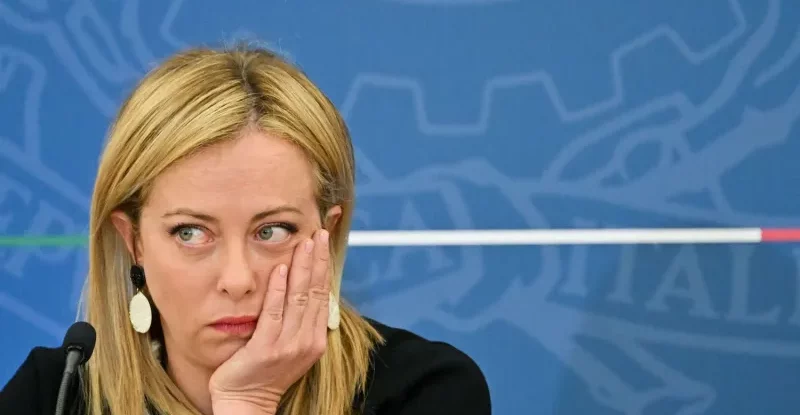
Image by European Union, via Wikimedia Commons.

show less
Italy's Prime Minister Giorgia Meloni is hailing her country's asylum deal with Albania. The agreement allows migrants trying to reach the European Union (EU) country to be offshored to the Muslim-majority Balkan country to have their asylum claims processed, and the first 16 have now been transferred. show more

Italy Begins Offshoring Illegal Aliens to Albanian Processing Centers.

Italy has opened the first of two planned migrant processing centers in Albania, beginning the first migrant outsourcing initiative in Europe. The center, located in the northern Albanian port of Shengjin, will house up to 3,000 migrants per month who are collected while sailing to Italy from Africa. A second center, planned for a former air force base in Gjader, is experiencing delays in its opening.

Only migrants who are found by Italian authorities in international waters will be eligible for the program.

Fabrizio Bucci, Italy’s ambassador to Albania, emphasized that Italian and European Union (EU) legislation would govern the centers, drawing parallels to having an Italian center located within Albania.

The bilateral agreement signed between the Italian and Albanian prime ministers will last five years, with the possibility of extension contingent on its success in reducing Italy’s migration burden and deterring migration attempts.

This year, Italy has seen approximately 31,000 migrant arrivals by sea, a reduction from the same period last year. In 2023, over 157,000 migrants arrived in Italy.

Italy’s Prime Minister Giorgia Meloni, who campaigned on stricter migration policies, has made the Albania plan a central part of her so-far failed immigration strategy. Last year Meloni even stated that Europe and Italy “need” migrants, setting off alarm bells among her populist voters.

Support for the Albania plan is evident among some EU member states; a letter from 15 EU countries, spearheaded by Denmark, endorsed the outsourcing of migration management.

Such measures have drawn comparisons to the Britain’s previous proposal to transfer asylum seekers to Rwanda. This was immediately scrapped by the new Labour government last month, costing taxpayers millions of pounds. However, Australia has operated offshore migrant centers for years, slashing illegal sea voyages to their territory to almost zero.

show less
Italy has opened the first of two planned migrant processing centers in Albania, beginning the first migrant outsourcing initiative in Europe. The center, located in the northern Albanian port of Shengjin, will house up to 3,000 migrants per month who are collected while sailing to Italy from Africa. A second center, planned for a former air force base in Gjader, is experiencing delays in its opening. show more

Anti-Socialist Albanians Storm Parliament with Flares, Barricades, and Fires.

The Albanian parliament has been facing significant disruptions as opposition parties protest what they describe as the authoritarian rule of the governing Socialist Party. Disturbances have been ongoing since October, instigated primarily by the center-right Democrats led by former Prime Minister and President Sali Berisha, who has been accused of corruption. Despite such interruptions, which include the use of flares, small fires, and seizure of microphones, the governing Socialists successfully passed the annual budget and other draft laws last Thursday.

The protests are rooted in the opposition’s claims that the Socialists, holding 74 out of 140 seats in Parliament, have blocked the formation of committees needed to investigate government corruption. The opposition is particularly critical of the Public Private Partnership projects initiated by Prime Minister Edi Rama’s Cabinet, alleging misuse of public money for personal profit. In the context of pending EU membership negotiations, these disruptions could potentially delay vital law reforms and the alignment of Albanian laws with those of the EU.

Despite their sustained efforts, the center-right Democrats appear to be in a weakened and divided state after ten years in opposition. Berisha, the party’s main leader, remains in legal battle following corruption allegations and has been barred entry into both the United States and the United Kingdom. The governing Socialists, on the other hand, continue to function as usual, noting the approval of the largest ever budget. With no immediate resolution in sight, both sides are reportedly firm in their stance.

show less
The Albanian parliament has been facing significant disruptions as opposition parties protest what they describe as the authoritarian rule of the governing Socialist Party. Disturbances have been ongoing since October, instigated primarily by the center-right Democrats led by former Prime Minister and President Sali Berisha, who has been accused of corruption. Despite such interruptions, which include the use of flares, small fires, and seizure of microphones, the governing Socialists successfully passed the annual budget and other draft laws last Thursday. show more