Monday, February 23, 2026

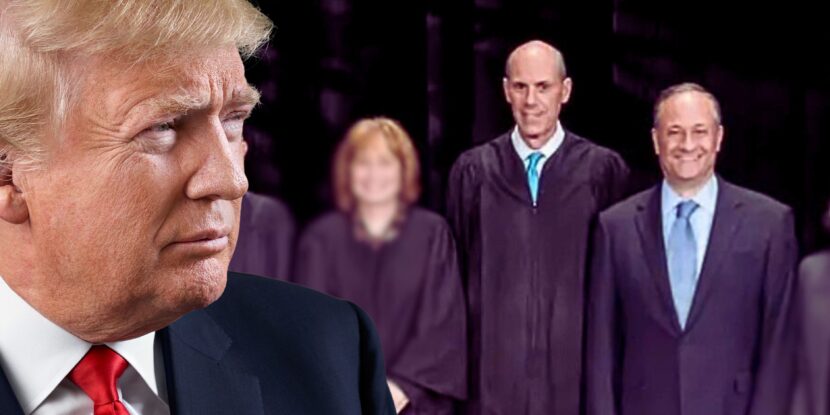
Judges Block Trump Effort to Deport Violent Gang Members.

PULSE POINTS

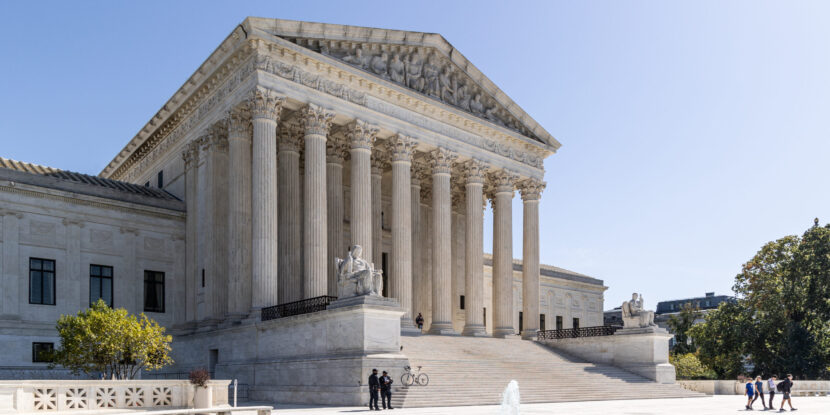
WHAT HAPPENED: A federal appeals court ruled that President Donald J. Trump cannot use the Alien Enemies Act of 1798 to deport alleged Venezuelan gang members.

👤WHO WAS INVOLVED: President Trump, the Fifth Circuit Court of Appeals, and members of the Tren de Aragua gang.

📍WHEN & WHERE: The ruling was issued on Tuesday, September 3, 2025, in the United States.

💬KEY QUOTE: “A country’s encouraging its residents and citizens to enter this country illegally is not the modern-day equivalent of sending an armed, organized force to occupy, to disrupt, or to otherwise harm the United States,” the court wrote in its ruling.

🎯IMPACT: The decision blocks the Trump administration from using the Alien Enemies Act to deport illegal immigrants, though other legal avenues for deportation remain available.

IN FULL

A federal appeals court ruled on Tuesday that President Donald J. Trump cannot use the Alien Enemies Act of 1798 to deport Venezuelan illegal immigrant members of the Tren de Aragua (TdA) gang. The administration had invoked the 18th-century wartime law in March to deport 137 alleged gang members to El Salvador’s Terrorism Confinement Center (CECOT).

The law allows presidents to deport people from enemy countries during an “invasion or predatory incursion.” However, the Fifth Circuit Court of Appeals determined that the activities of the TdA gang do not constitute an “invasion” or “predatory incursion.” The court stated, “There is no finding that this mass immigration was an armed, organized force or forces.”

Since retaking office in January, the Trump administration has deported over 6,000 Venezuelans, including 238 sent to CECOT earlier this year. Family members and illegal immigrant advocates claim that many of those deported have no criminal record or gang ties—though evidence from the Department of Homeland Security (DHS) suggests otherwise.

The case originated with illegal immigrants detained in Texas who sued to block their deportation under the Alien Enemies Act. After the lower court dismissed the case, the Supreme Court intervened, ruling that the Fifth Circuit was wrong to dismiss the matter and that illegal immigrants had not been given adequate notice of their deportations.

Join Pulse+ to comment below, and receive exclusive e-mail analyses.

show less
show more

Already Deported Illegals Can Challenge Their Removal, Rules Anti-Trump Judge.

PULSE POINTS:

What Happened: Far-left U.S. District Court Judge James Boasberg, a new but frequent foe of President Donald J. Trump, has ruled that illegal immigrants—alleged to be members of Tren de Aragua—who were deported to El Salvador’s CECOT prison must be granted habeas relief by the U.S. government to challenge their removals.

👥 Who’s Involved: Judge James Boasberg, illegal immigrant members of Tren de Aragua, President Donald J. Trump, the U.S government, the government of El Salvador, and El Salvador’s CECOT prison.

📍 Where & When: The ruling was made late Wednesday, June 5, 2025.

💬 Key Quote: “Fortunately for the American people, Judge Boasberg does not have the last word,” said White House spokeswoman Abigail Jackson in a statement on Thursday responding to the ruling.

⚠️ Impact: Boasberg’s ruling could lay the groundwork for activist judges to extend deportation appeals rights to other individuals who have already been removed from the United States. According to the ruling, the Trump White House has one week to formulate a plan for allowing several hundred illegal immigrants held at CECOT to seek habeas relief.

IN FULL:

In a ruling late Wednesday evening, U.S. District Court Judge James Boasberg once again intervened in President Donald J. Trump’s efforts to remove criminal illegal immigrants from the United States. The far-left judge found in favor of a group believed to be several hundred illegal immigrant members of the violent Venezuelan gang, Tren de Aragua, who were deported to El Salvador’s CECOT prison in March and are now demanding habeas relief to challenge their removal.

The ruling applies only to illegal immigrants deported to El Salvador and held at the country’s CECOT facility who were removed under President Trump’s invocation of the Alien Enemies Act targeting Tren de Aragua members. “Defendants plainly deprived these individuals of their right to seek habeas relief before their summary removal from the United States—a right that need not itself be vindicated through a habeas petition,” Judge Boasberg wrote. He continued: “Perhaps the President lawfully invoked the Alien Enemies Act. Perhaps, moreover, Defendants are correct that Plaintiffs are gang members. But—and this is the critical point—there is simply no way to know for sure, as the CECOT Plaintiffs never had any opportunity to challenge the Government’s say-so.”

In May, the U.S. Supreme Court upheld a lower court ruling that blocks the Trump administration from deporting illegal immigrants under the Alien Enemies Act pending further proceedings by an appeals court. Boasberg explicitly cites the Supreme Court order in his ruling, noting that the high court agreed “that those subject to removal under the Act must be allowed to challenge their removability in federal court before being deported.”

The Trump administration will have one week to formulate a way for several hundred illegal immigrants in CECOT, and under the jurisdiction of the Salvadoran government, to seek habeas relief appealing their deportation per the ruling. Notably, Kilmar Abrego Garcia—an illegal immigrant and member of MS-13—who has drawn significant attention from Democrats and the media for his deportation to CECOT—is unaffected by the ruling.

show less

PULSE POINTS:

show more

Court Blocks Trump’s Use of Alien Enemies Act Against Venezuelan Migrants in Texas.

PULSE POINTS:

What Happened: A federal judge ruled that the Trump administration cannot use the Alien Enemies Act (AEA) to detain or deport a group of Venezuelan illegal immigrants from a Texas facility.

👥 Who’s Involved: U.S. District Court Judge Fernando Rodriguez, the Trump administration, Venezuelan illegal immigrants alleged to be part of the Tren de Aragua (TdA) gang.

📍 Where & When: Southern Texas, with the ruling issued on Thursday, May 1.

💬 Key Quote: Judge Rodriguez claims the president’s invocation of the AEA through proclamation “exceeds the scope of the statute and is contrary to the plain, ordinary meaning of the statute’s terms.”

⚠️ Impact: The administration is barred from using the AEA and Trump’s proclamation to detain or remove the migrants, but removal proceedings can still proceed under the Immigration and Nationality Act.

IN FULL:

A federal judge has ruled that President Donald J. Trump‘s March 15 proclamation invoking the Alien Enemies Act (AEA) to expedite the deportation of illegal immigrants residing in the United States exceeds the statutory authority laid out in the law. U.S. District Court Judge Fernando Rodriguez—appointed to the bench in 2018 during Trump’s first term in office—issued the decision on Thursday, determining that the America First leader cannot use the AEA as a legal justification for holding or deporting illegal immigrants either residing or detained in the jurisdiction of the Southern District of Texas.

“The Proclamation makes no reference to and in no manner suggests that a threat exists of an organized, armed group of individuals entering the United States at the direction of Venezuela to conquer the country or assume control over a portion of the nation,” Rodriguez wrote in his ruling. He continued: “Thus, the Proclamation’s language cannot be read as describing conduct that falls within the meaning of ‘invasion’ for purposes of the AEA.”

“Neither the Court nor the parties question that the Executive Branch can direct the detention and removal of aliens who engage in criminal activity in the United States… The question that this lawsuit presents is whether the president can utilize a specific statute, the AEA, to detain and remove Venezuelan aliens who are members of TdA,” the judge continued, concluding: “As to that question, the historical record renders clear that the president’s invocation of the AEA through the proclamation exceeds the scope of the statute and is contrary to the plain, ordinary meaning of the statute’s terms.”

Notably, Tren de Aragua has been officially designated as a foreign terrorist organization, and the FBI reportedly has evidence that the Venezuelan government is aiding its infiltration of the U.S.

The lawsuit, initially filed by the American Civil Liberties Union (ACLU), and the subsequent ruling come as a blow to the Trump White House’s push to swiftly deport dangerous, criminal illegal immigrants. Should the administration appeal Judge Rodriguez’s decision, the conservative-dominated 5th U.S. Circuit Court of Appeals, based in New Orleans, would hear the case. However, the 5th Circuit has shown a penchant in the past to rule against actions it sees as constitutional overreach by the Executive Branch, especially on the issue of immigration. Previously, the appellate court ruled against measures enacted by former Presidents Joe Biden and Barack Obama aimed at allowing illegal immigrants to remain in the country.

Notably, Judge Rodriguez took over the case from James Boasberg, who serves as the chief judge for the United States District Court for the District of Columbia. The change in venue and judge occurred after the U.S. Supreme Court ruled that legal challenges to President Trump’s deportations can only be filed in the court district where the deported person resides or is detained. In addition, the Supreme Court determined that lower court rulings on the matter only apply to the judge’s respective judicial district.

While still presiding over the case earlier this year, Judge Boasberg issued a temporary halt to the deportation of illegal Venezuelan immigrants under the AEA in a bizarre order that demanded the Trump administration recall two planes that were over international waters carrying deportees to El Salvador.

show less

PULSE POINTS:

show more
Migrant Crime

Trump Explains Why You Can’t Hold Trials For the Millions Biden Let In.

PULSE POINTS:

What Happened: President Donald J. Trump expressed concerns over the feasibility of conducting trials for millions of migrants who entered the U.S. illegally.

👥 Who’s Involved: Donald J. Trump, President of the United States; Joe Biden, former President; U.S. federal courts; migrants; suspected gang members.

📍 Where & When: Remarks made in the Oval Office; reported on April 22.

💬 Key Quote: “We’re getting them out. I hope we get cooperation from the courts, because we have thousands of people that are ready to go out, and you can’t have a trial for all of these people,” Trump stated to reporters.

⚠️ Impact: Trump’s plans for mass deportation face challenges from federal courts, potentially affecting immigration enforcement and policy execution.

IN FULL:

President Donald J. Trump spoke about the challenges related to holding legal proceedings for potentially millions of migrants who have entered the United States illegally on Tuesday. He emphasized the improbability of providing court trials for every individual due to the sheer volume of cases. Trump stressed the need for expedited deportations to ensure national safety, suggesting that obstructive legal processes could lead to a perilous situation for the country.

“We’re getting them out. I hope we get cooperation from the courts, because we have thousands of people that are ready to go out, and you can’t have a trial for all of these people,” he said, pointing out that the current legal system isn’t designed to accommodate trials at such a large scale.

“A judge can’t say, ‘You know, you have to have a trial.’ The trial is going to take two years,” Trump warned. “No, we’re going to have a very dangerous country if we’re not allowed to do what we’re entitled to do. And I won an election based on the fact that we get them out.”

In a post on his Truth Social platform, he highlighted the double standards involved in allowing Biden to let in millions of migrants with no meaningful legal process, while requiring him to go through the courts every time he has to remove one.

“How can Biden let Millions of Criminals into our Country, totally unchecked and unvetted, with no Legal authority to do so, yet I, in order to make up for this assault to our Nation, am expected to go through a lengthy Legal process, separately, for each and every Criminal Alien,” he demanded. “As usual, TWO DIFFERENT STANDARDS, only leading to the Complete and Total Destruction of the U.S.A.”

Court challenges against the Trump administration, particularly concerning immigration policy, have been a recurring feature of its opening months. Judges like the Barack Obama-appointed U.S. District Court Judge James Boasberg have hindered efforts to utilize the Alien Enemies Act to remove migrants swiftly, making it harder to deport illegals linked to organized crime groups like MS-13.

President Trump promised a policy of mass deportations of illegal immigrants, particularly criminal aliens, on the 2024 campaign trail. Past polling suggests that a majority of Americans support the policy.

Jack Montgomery contributed to this report.

show less

PULSE POINTS:

show more

Trump Criticizes Democrat Senator’s Visit to El Salvador as Attention-Seeking.

PULSE POINTS:

What Happened: President Donald J. Trump criticized Senator Chris Van Hollen for his visit to El Salvador, where the senator met with Kilmar Abrego Garcia, an illegal immigrant allegedly deported without due process.

👥 Who’s Involved: President Trump, Senator Chris Van Hollen, Kilmar Abrego Garcia, and DHS Secretary Kristi Noem.

📍 Where & When: El Salvador, Truth Social, Friday morning.

💬 Key Quote: “Senator Chris Van Hollen of Maryland looked like a fool yesterday standing in El Salvador begging for attention from the Fake News Media, or anyone. GRANDSTANDER!!!” – President Trump.

⚠️ Impact: The Democrat senator is under fire for showing an inordinate amount of care for an illegal alien gang member, while having remained largely silent on the victims of migrant crime, such as Laken Riley and Rachel Morin.

IN FULL:

President Donald J. Trump has publicly criticized Maryland Senator Chris Van Hollen following the Democrat’s visit to El Salvador. Van Hollen was there to take up the case of Kilmar Abrego Garcia—an illegal immigrant, accused MS-13 gang member, and domestic abuser—deported to his native country under the Alien Enemies Act. Trump expressed his disapproval through a post on Truth Social on Friday morning, dismissing Van Hollen’s actions as attention-seeking.

“Senator Chris Van Hollen of Maryland looked like a fool yesterday standing in El Salvador begging for attention from the Fake News Media, or anyone. GRANDSTANDER!!!” the America First leader wrote. Initially, Van Hollen was not able to meet with Garcia or even speak to him over the phone, but an in-person meeting was eventually arranged.

Photos of the meeting between Van Hollen and Abrego Garcia show them sharing a drink, speculated by some to be a margarita, sparking varied reactions. Salvadoran President Nayib Bukele remarked, “Kilmar Abrego Garcia, miraculously risen from the ‘death camps’ & ‘torture’, now sipping margaritas with Sen. Van Hollen in the tropical paradise of El Salvador!”

He later added, “Now that he’s been confirmed healthy, he gets the honor of staying in El Salvador’s custody.”

The relaxed atmosphere in the photos of Van Hollen’s meeting contrasts sharply with the stern images of the CECOT mega-prison, where some gangsters deported to El Salvador are held. Van Hollen said he had passed on a “message of love” from Garcia to his wife, who previously filed a protective order against him, complaining she was “afraid to be close to him” after receiving several beatings.

Photographs of Garcia’s meeting with Van Hollen show him sporting many tattoos, with social media users arguing that ink visible on his knuckles indicates he is a member of MS-13, as police informants attested in the U.S.

show less

PULSE POINTS:

show more

Trump Administration Requests Emergency Relief to Counter Boasberg’s Contempt Threat.

PULSE POINTS:

What Happened: The Trump administration requested a federal appeals court to review a lower court order regarding March 15 deportation flights, following potential contempt findings.

👥 Who’s Involved: U.S. District Judge James Boasberg, Trump administration officials, and the D.C. Circuit Court of Appeals.

📍 Where & When: The appeal was made on Wednesday, court actions relate to deportation flights halted on March 15.

💬 Key Quote: U.S. District Judge James Boasberg has stated, “The Court ultimately determines that the Government’s actions on that day demonstrate a willful disregard for its Order.”

⚠️ Impact: The administration has been directed to submit declarations by April 23, or face potential prosecution. The issue is part of broader disputes about immigration in U.S. federal courts.

IN FULL:

On Wednesday, the Trump administration sought an appellate court’s review of a recent decision by U.S. District Judge James Boasberg, who threatened to hold administration officials in contempt over the handling of deportation flights that occurred on March 15.

Earlier in the day, Judge Boasberg indicated there was probable cause to believe that administration officials had not adhered to a court directive requiring the return of deportation flights carrying illegal aliens to El Salvador. In his ruling, Boasberg warned of possible criminal contempt charges if the administration did not provide additional declarations by April 23.

The Trump administration filed its appeal with the D.C. Circuit Court of Appeals shortly following Boasberg’s pronouncement. The administration’s legal team did not present new evidence in the brief appeal, as the case’s details had been thoroughly examined by both the district and appellate courts. Previously, the appellate court maintained Boasberg’s temporary restraining order with a 2-1 decision. Meanwhile, the Supreme Court ruled 5-4 that deportation flights under the Alien Enemies Act, blocked by Boasberg, could proceed, contingent on the provision of due process and opportunities for individuals to seek habeas relief.

Judge Boasberg expressed the court’s view that the government’s actions on the day he ordered flights turned around amounted to “willful disregard” for his emergency order. The Trump administration contends that Boasberg’s order unlawfully hindered the Executive’s ability to remove individuals considered threats.

Attempts to bring criminal contempt proceedings against administration officials could hit a roadblock if President Trump uses his pardon powers to dismiss them, setting up a constitutional impasse between the executive and the judiciary.

show less

PULSE POINTS:

show more

Noem Confirms El Salvador Prison Ready to Accept More U.S. Deportees.

PULSE POINTS:

What Happened: The Trump administration says it will continue to collaborate with El Salvador President Nayib Bukele to deport and house dangerous illegal immigrants in his country’s CECOT super prison. Homeland Security Secretary Kristi Noem stated on Tuesday that thousands more illegal immigrants may soon be sent to the facility.

👥 Who’s Involved: Department of Homeland Security Secretary Kristi Noem, El Salvador President Nayib Bukele, Supreme Court justices, and the Trump administration.

📍 Where & When: Phoenix, Arizona, on a Tuesday morning, following a federal immigration raid.

💬 Key Quote: “You’ll see us continuing to partner with El Salvador. CECOT has the capacity for 40,000 individuals, and [El Salvador President Nayib Bukele] has said they’ll take as many as we want to send,” said Kristi Noem.

⚠️ Impact: The Supreme Court earlier this week ended a lower court’s pause on deportations to El Salvador, potentially leading to increased use of the Central American country’s prisons for criminal migrants.

IN FULL:

In the wake of a federal immigration enforcement operation on Tuesday, the Department of Homeland Security (DHS) is eyeing the relocation of substantial numbers of illegal immigrant criminal gang members to El Salvador’s CECOT prison. Homeland Security Secretary Kristi Noem suggested, following the raid, that the CECOT facility can hold thousands more dangerous illegal immigrants and that the Trump administration is looking to ramp up expulsions under the Alien Enemies Act.

“You’ll see us continuing to partner with El Salvador. CECOT has the capacity for 40,000 individuals, and [El Salvador President Nayib Bukele] has said they’ll take as many as we want to send,” Noem said, adding: “There’s 14,000 there now.”

In addition, the DHS Secretary revealed that Bukele intends to build a second prison facility next to CECOT, which could be used to hold even more members of violent, illegal immigrant gangs like Tren de Aragua and MS-13.

President Donald J. Trump’s administration has used the 1798 Alien Enemies Act for expedited expulsions of illegal immigrants found to be members of Tren de Aragua, MS-13, and other violent criminal groups. Last month, a far-left U.S. District Court Judge temporarily halted the removals, prompting the Trump White House to file an emergency appeal with the Supreme Court. On Monday, the high court lifted the lower court’s restraining order, allowing Alien Enemies Act expulsions to resume.

Addressing the Supreme Court’s ruling and continued Democrat lawfare efforts against the Trump administration’s push to deport violent and dangerous illegal immigrants, Noem said: “We’re going to continue using that act in order to return people from these terrorist organizations to face consequences and be removed from our country.”

Meanwhile, the DHS Secretary also warned illegal immigrants that the Trump administration, later this week, will begin enforcing provisions of the Alien Registration Act of 1940. Under this law, foreign nationals who reside in the United States for more than 30 days must register with the federal government. Those failing to register will face severe financial penalties.

show less

PULSE POINTS:

show more

ACLU Launches Fresh Lawfare Attack on Alien Enemies Act After Trump SCOTUS Win.

PULSE POINTS:

What Happened: The American Civil Liberties Union (ACLU) has filed a lawsuit against the Trump administration to stop deportations under the 1798 Alien Enemies Act (AEA).

👥 Who’s Involved: The ACLU, the Trump administration, two Venezuelan migrants, and the Supreme Court.

📍 Where & When: The lawsuit was filed on Tuesday in New York after a related Supreme Court decision on Monday.

💬 Key Quote: “The AEA has only ever been a power invoked in time of war… It cannot be used here against nationals of a country—Venezuela—with whom the United States is not at war,” the ACLU claims.

⚠️ Impact: The lawsuit challenges the use of presidential powers to deport designated “alien enemies,” potentially affecting over 130 illegals already removed from the U.S.

IN FULL:

The American Civil Liberties Union (ACLU) initiated a new lawsuit against the Trump administration on Tuesday, seeking to halt the deportation of two Venezuelan migrants under the 1798 Alien Enemies Act. Filed with the U.S. District Court for the Southern District of New York, the litigation follows a U.S. Supreme Court ruling on Monday that lifted a restraining order issued by Judge James Boasberg that prevented President Donald J. Trump from using the act to remove members of Tren de Aragua from the country. In addition, the Supreme Court determined that future challenges to deportation under the act must be filed with the lower court in the jurisdiction in which the migrant was detained.

In the filing, which asks U.S. District Court Judge Alvin Hellerstein to block the deportation of two Venezuelan illegal immigrants, the ACLU argues that the Alien Enemies Act has historically only been deployed during wartime and not against foreign nationals from countries with which the United States is at peace. “The AEA has only ever been a power invoked in time of war, and plainly only applies to warlike actions: it cannot be used here against nationals of a country—Venezuela—with whom the United States is not at war, which is not invading the United States, and which has not launched a predatory incursion into the United States,” the filing contends.

Additionally, the ACLU accuses the Trump administration of violating the Supreme Court’s Monday ruling, which requires federal officials to provide those detained under the Alien Enemies Act with notice before they are deported. “Respondents seek to move Petitioners in secret, without due process, to a prison in El Salvador known for dire conditions, torture, and other forms of physical abuse—possibly for life,” the filing states, adding: “This has already borne out for over 130 individuals on March 15 who have lost all contact with their attorneys, family, and the world.”

The Trump White House has utilized the Alien Enemies Act to expedite the expulsion of illegal immigrants shown to be affiliated with violent criminal organizations and gangs like Venezuela’s Tren de Aragua and El Salvador’s MS-13. Those detained and deported under the law are sent to El Salvador’s Terrorism Confinement Center (CECOT).

Previously, Judge Hellerstein—presiding over the case—twice rejected President Trump’s attempts last year to move Manhattan District Attorney Alvin Bragg’s so-called hush money prosecution against him to federal court.

Image by Billy Wilson.

show less

PULSE POINTS:

show more

Appeals Court Rejects Trump Request to Stay Far-Left Judge’s Ruling Blocking Alien Enemies Act Deportations.

The United States Court of Appeals for the District of Columbia Circuit has rejected a motion from President Donald J. Trump‘s Department of Justice (DOJ) to stay District Court Judge James Boasberg‘s restraining order blocking the deportation of Tren de Aragua gang members under the Alien Enemies Act. In a two-to-one decision, the appellate court found that “the United States [must] be at war or under invasion or predatory incursion” for the Alien Enemies Act to be used. The ruling suggests that if Judge Boasberg rules against the Trump administration, an appeal of that ruling could face difficulty at the appellate level as well.

“[T]he AEA vests in the President near-blanket authority to detain and deport any noncitizen whose affiliation traces to the belligerent state,” Circut Court Judge Karen Henderson—an appointee of the late President George H.W. Bush—conceded in the majority opinion. However, she added: “A central limit to this power is the Act’s conditional clause—that the United States be at war or under invasion or predatory incursion.”

On March 15, District Court Judge James Boasberg, appointed to the bench by former President Barack Obama, attempted to order several planes carrying illegal immigrant members of Tren de Aragua—a violent Venezuelan criminal gang—to an El Salvador detention facility to turn around and return to the United States. However, as the planes were already over international waters, the order held no bearing. Subsequently, Judge Boasberg issued a temporary restraining order to prevent any further flights from taking place.

The Trump administration initially appealed the restraining order before Judge Boasberg; however, the far-left jurist denied the appeal. Consequently, the DOJ brought the appeal to the D.C. Circuit, where earlier this week, a three-judge appellate panel heard arguments on the matter and rejected the stay request late this afternoon.

Image via Wikimedia Commons.

show less
The United States Court of Appeals for the District of Columbia Circuit has rejected a motion from President Donald J. Trump's Department of Justice (DOJ) to stay District Court Judge James Boasberg's restraining order blocking the deportation of Tren de Aragua gang members under the Alien Enemies Act. In a two-to-one decision, the appellate court found that "the United States [must] be at war or under invasion or predatory incursion" for the Alien Enemies Act to be used. The ruling suggests that if Judge Boasberg rules against the Trump administration, an appeal of that ruling could face difficulty at the appellate level as well. show more

Obama-Era Judge Demands Better Treatment for Tren de Aragua Gang Members.

On Monday, a federal judge made a bizarre attempt to rebuke the Trump administration’s approach to deporting alleged gang members under a rarely used 18th-century statute, suggesting that these individuals were afforded fewer rights than Nazis detained by the U.S. during World War II. The law in question, the Alien Enemies Act of 1798, was invoked by President Donald J. Trump to forcibly remove illegal immigrants purported to be part of a Venezuelan gang known as Tren de Aragua by labeling them as enemy aliens.

“There were plane loads of people. There were no procedures in place to notify people,” Washington D.C. Circuit Court Judge Patricia Millett—appointed to the bench by former President Barack Obama—said before making the absurd claim: “Nazis got better treatment under the Alien Enemies Act.”

Judge Millett is part of a three-judge panel with the U.S. Court of Appeals for the D.C. Circuit currently hearing an appeal from the Trump administration seeking to overturn a District Court judge’s temporary restraining order preventing the deportation of alleged Tren de Aragua members to El Salvador. The National Pulse previously reported that around 200 suspected gang members were deported under the Alien Enemies Act before District Court Judge James Boasberg blocked further removals.

The Justice Department (DOJ) defended its actions, with Deputy Assistant Attorney General Drew Ensign disputing the comparison to Nazi treatment. “Well, Your Honor, we certainly dispute the Nazi analogy,” Ensign said, objecting to Judge Millett’s claim. Eventually, the judge and DOJ attorney agreed that the arguments had entered “unprecedented territory.”

A ruling from the D.C. Circuit panel on the Trump administration’s appeal of the lower court restraining order is expected later this week.

show less
On Monday, a federal judge made a bizarre attempt to rebuke the Trump administration's approach to deporting alleged gang members under a rarely used 18th-century statute, suggesting that these individuals were afforded fewer rights than Nazis detained by the U.S. during World War II. The law in question, the Alien Enemies Act of 1798, was invoked by President Donald J. Trump to forcibly remove illegal immigrants purported to be part of a Venezuelan gang known as Tren de Aragua by labeling them as enemy aliens. show more