



Monday, February 23, 2026

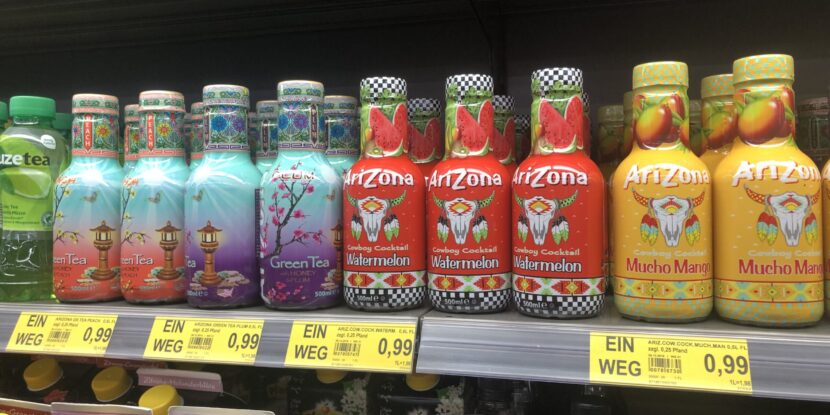
Don’t Worry! Arizona Iced Tea Is Remaining at Its Iconic Price.

PULSE POINTS

WHAT HAPPENED: Arizona Beverages’ chairman Don Vultaggio reaffirmed his commitment to maintaining the 99-cent price tag for the company’s iconic 22-ounce iced teas, despite rising production costs and tariffs.

👤WHO WAS INVOLVED: Don Vultaggio, chairman and co-founder of Arizona Beverages, alongside his two sons, Wesley and Spencer, who help run the family-owned business.

📍WHEN & WHERE: Arizona Beverages was founded in 1992 in Brooklyn, with Vultaggio’s remarks aired on TODAY on August 21, 2025.

💬KEY QUOTE: “I can kind of tighten my belt, because the people I service and the customers of mine, they’re tightening their belt every day.” – Don Vultaggio

🎯IMPACT: Arizona Beverages continues to prioritize affordability for consumers, even as production costs rise due to tariffs and material expenses.

IN FULL

Arizona Beverages’ chairman and co-founder, Don Vultaggio, has reiterated his intention to maintain the 99-cent price for the company’s 22-ounce iced tea cans, a price point that has remained unchanged since the company’s founding in 1992. In a recent television interview, Vultaggio stated, “Right now, no. We have no plan to do it,” when asked if he would raise prices as a result of import tariffs. “We’re trying to hold the line.”

Founded in Brooklyn, Arizona Beverages has grown from a warehouse operation into a multi-billion dollar brand under Vultaggio’s leadership, with his two sons, Wesley and Spencer, assisting in the business. The company’s commitment to affordability has been tested by rising aluminum costs, which have increased 40 percent due to tariffs. Arizona uses over 100 million pounds of aluminum annually, with 20 percent sourced from Canada. Despite most of the aluminum being recycled domestically, imported aluminum remains subject to tariffs, causing price fluctuations in the overall market for the metal.

The White House’s decision to double tariffs on aluminum imports from 25 percent to 50 percent, according to Vultaggio, has added $40 million in costs for Arizona Beverages. Vultaggio explained that he offsets these expenses by increasing sales volume and offering plastic-bottled alternatives. Starting next month, Arizona’s 20-ounce plastic “tall boys” will be priced at $1 instead of $1.25. “Offering value is always a good idea, and when you can do it, you should,” Vultaggio remarked.

Despite these challenges, Vultaggio remains steadfast in his commitment to consumers, stating, “I can kind of tighten my belt, because the people I service and the customers of mine, they’re tightening their belt every day.” He added that maintaining the 99-cent price is important to him, as he believes in providing affordable options for hardworking Americans. “I think I’d rather grow business than raise prices. I’d rather have more consumers buy my product. Nothing solves problems like volume,” he said.

Arizona’s largest manufacturing facility, located in New Jersey and known as “Arizonaland,” continues to produce the company’s signature products. Vultaggio concluded, “Since I can afford to do it, why not continue to do it?” Forbes estimates his net worth at $6.2 billion.

Image by Like_the_Grand_Canyon.

Join Pulse+ to comment below, and receive exclusive e-mail analyses.
show less
show more

EU Hits America with $21 Billion in Retaliatory Levies Hours Before Trump Tariff Pause.

PULSE POINTS:

What Happened: On Wednesday, before President Donald J. Trump announced he would be reducing tariffs on countries that have not “retaliated in any way, shape, or form against the United States,” the European Union (EU) approved an estimated $21 billion in retaliatory tariffs against a number of American exports.

👥 Who’s Involved: The European Union, the European Commission, and U.S. President Donald J. Trump.

📍 Where & When: Brussels, Belgium on Wednesday, April 9.

💬 Key Quote: “The EU considers U.S. tariffs unjustified and damaging, causing economic harm to both sides, as well as the global economy. The EU has stated its clear preference to find negotiated outcomes with the U.S., which would be balanced and mutually beneficial,” the European Commission said in a statement.

⚠️ Impact: The EU retaliatory trade measures were to be imposed in three phases from April 15, impacting a number of American goods, including soybeans, motorcycles, orange juice, meat, tobacco, steel, and aluminum. Their fate is unclear now that President Trump has announced he will drop reciprocal tariffs—but not tariffs specific to certain tariffs, such as steel—to 10 percent for everyone but China for 90 days while trade negotiations are conducted.

IN FULL:

The European Union (EU) has cleared the way to impose an estimated $21 billion in retaliatory tariffs on American goods in response to steel and aluminum tariffs enacted by U.S. President Donald J. Trump last month. The European Commission—the EU’s unelected, quasi-executive body—announced the decision on Wednesday, noting that 26 of its 27 member states approved the trade measures. Viktor Orbán’s Hungary was the only EU country to oppose the tariff package.

“The EU considers U.S. tariffs unjustified and damaging, causing economic harm to both sides, as well as the global economy. The EU has stated its clear preference to find negotiated outcomes with the U.S., which would be balanced and mutually beneficial,” The European Commission said in a statement.

The EU tariffs on U.S. goods are to be enacted in three phases, the first of which will take effect next week. Additional tariff measures will be imposed in May, and the final phase will be imposed in December. As of the time of publication, this timeline does not appear to have been changed as a result of President Trump’s pause.

The EU’s retaliatory measure consisted mainly of a 25 percent trade duty on American goods such as soybeans, motorcycles, orange juice, meat, tobacco, steel, and aluminum. However, the list of products hit with the trade levy could grow, if the EU moves forward with retaliatory measures next week in response to President Trump’s 25 percent tariff on European automobiles and the now paused 20 percent reciprocal tariff on all EU goods. It is unclear, now that Trump has paused the reciprocal tariffs, whether the Europeans will move forward with additional retaliatory measures.

Following the EU’s approval of the retaliatory measures, President Trump announced he would reduce U.S. reciprocal tariffs on countries that have not imposed any new import duties on America to a universal 10 percent tariff for 90 days, while they negotiate bilateral trade agreements with the White House. China was the one named exception by Trump, and will instead face a 125 percent tariff for imposing retaliatory levies on the U.S.

Notably, sector-specific U.S. tariffs on products, including steel, aluminum, and automobiles, appear unaffected by this pause.

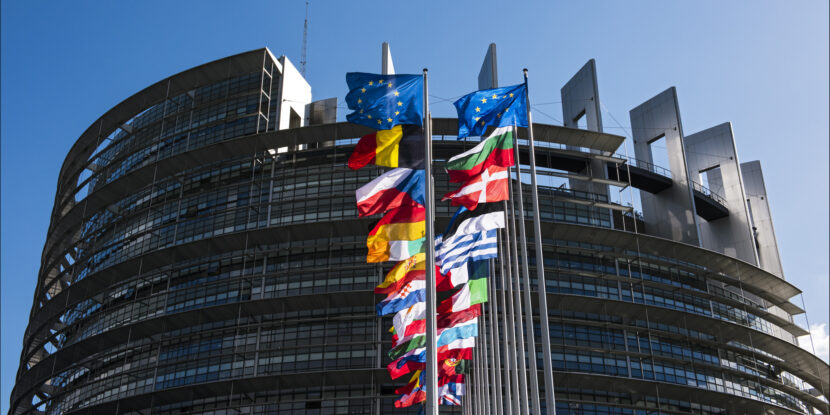
Image: European Union 2017 – European Parliament.

show less

PULSE POINTS:

show more

Australian PM Says He WON’T Retaliate Against Trump’s Trade Tariffs.

Australia has announced it will not escalate with retaliatory measures on April 2 when reciprocal trade tariffs imposed by U.S. President Donald J. Trump take effect. While he declared the steel and aluminum tariffs unjustified, Australian Prime Minister Anthony Albanese announced on Wednesday that his country would not impose any tariffs of its own in response.

“It has been foreshadowed that no country, regardless of its relationship with the United States, has been granted an exemption,” Albanese said, complaining: “Such a decision by the Trump administration is entirely unjustified.”

Albanese continued: “Tariffs and escalating trade tensions are a form of economic self-harm and a recipe for slower growth and higher inflation. They are paid by the consumers. This is why Australia will not be imposing reciprocal tariffs on the United States.”

While the Australian Prime Minister insists that tariffs will slow economic growth and increase inflation, neither of these statements is necessarily true. Canada, for instance, has long enjoyed robust economic growth despite having high barriers to foreign imports. In addition, The National Pulse has previously reported that there is little evidence that trade tariffs contribute to inflation.

The Australian government contends they should receive a similar exemption to the tariffs that they were granted in 2018. Then, Australian Prime Minister Scott Morrison argued one of his country’s top steel companies, BlueScope, was also a major employer of U.S. workers, managing to secure an exemption from the 2018 tariffs.

Notably, Australia currently benefits from increased U.S. military spending on a critical submarine and naval base project that is part of the AUKUS treaty enacted during President Trump’s first administration.

show less
Australia has announced it will not escalate with retaliatory measures on April 2 when reciprocal trade tariffs imposed by U.S. President Donald J. Trump take effect. While he declared the steel and aluminum tariffs unjustified, Australian Prime Minister Anthony Albanese announced on Wednesday that his country would not impose any tariffs of its own in response. show more

Trump Reinstates Steel and Aluminum Tariffs, Closing Loopholes that Benefited China.

Late Monday night, President Donald J. Trump announced he has reinstated 25 percent tariffs on steel and aluminum imported from a handful of countries previously exempt from the tariffs. According to the President, the move is necessary to close loopholes used by the People’s Republic of China to continue dumping their cheap steel on American markets.

“The countries of Argentina, Australia, Brazil, Canada, Japan, Mexico, South Korea, the European Union, Ukraine, and the United Kingdom had received exemptions, which prevented the tariffs from being effective,” the Trump White House explains, adding: “By granting exemptions to certain countries, the United States inadvertently created loopholes that were exploited by China and others with excess steel and aluminum capacity, undermining the purpose of these exemptions.”

According to President Trump, the 25 percent steel and aluminum tariffs are derived from his authority under Section 232 of the Trade Expansion Act of 1962, which allows the White House to unilaterally adjust certain tariff rates in the name of national security. This authority was used by Trump in 2018 to institute a 25 percent tariff on steel and a 10 percent tariff on aluminum. The White House has indicated that the tariffs will remain in place until America’s domestic steel and aluminum industries “achieve[e] sustainable capacity utilization of at least 80 [percent].”

During Trump’s first term in office, domestic capacity utilization for steel reached 81 percent but fell under the Biden government to just 75.3 percent in 2023. Meanwhile, aluminum jumped from 40 percent to 61 percent under Trump, again falling to 55 percent in 2023.

Image by Gage Skidmore.

show less
Late Monday night, President Donald J. Trump announced he has reinstated 25 percent tariffs on steel and aluminum imported from a handful of countries previously exempt from the tariffs. According to the President, the move is necessary to close loopholes used by the People's Republic of China to continue dumping their cheap steel on American markets. show more