




Monday, February 23, 2026

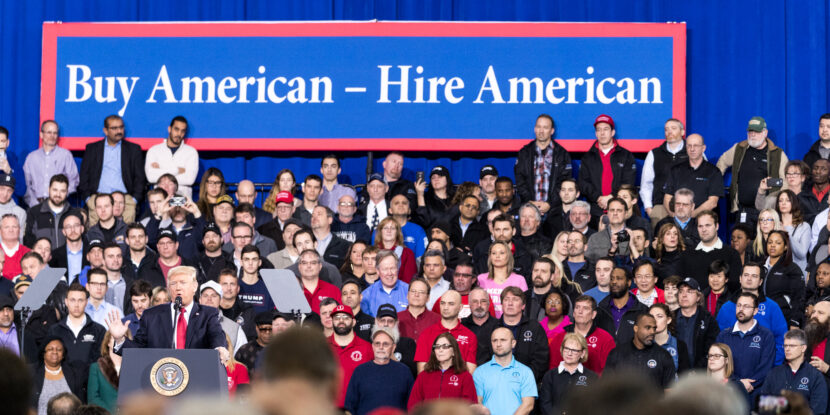
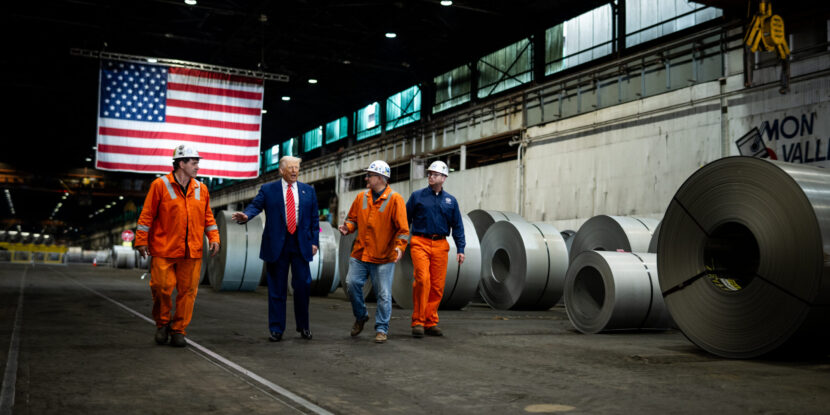
Wall Street Celebrates as SCOTUS Overturns Tariff Protections for American Workers.

PULSE POINTS

WHAT HAPPENED: Wall Street celebrated on Friday after the U.S. Supreme Court struck down a number of tariffs imposed by President Donald J. Trump under the International Emergency Economic Powers Act (IEEPA).

👤WHO WAS INVOLVED: The U.S. Supreme Court, President Trump, and markets such as the Dow Jones, S&P 500, and Nasdaq.

📍WHEN & WHERE: The Supreme Court ruling was announced on February 20, 2026, with global markets largely closing in the green late Friday afternoon.

🎯IMPACT: Major indexes like the Dow Jones and S&P 500 surged as companies began suing for tariff refunds.

IN FULL

Wall Street and globalist corporations celebrated on Friday after the U.S. Supreme Court ruled that President Donald J. Trump’s tariffs imposed under the International Emergency Economic Powers Act (IEEPA) were unlawful. Major market indexes like the Dow Jones Industrial Average, S&P 500, and Nasdaq Composite surged throughout the day, with all three closing with significant gains. However, despite corporate investors cheering the high court’s ruling, President Trump announced Friday afternoon he intends to use alternative federal statutes to reimpose the trade levies—including the restoration of a ten percent global tariff under Section 122 of the 1974 Trade Act.

At market close, the Dow Jones rose 0.4 percent, gaining 196 points. Meanwhile, the S&P 500 rose 0.6 percent, and the Nasdaq Composite rose 0.7 percent. While investors welcomed the Supreme Court’s reversal of some tariff measures, the Trump administration was quick to emphasize that the ruling is a significant blow to American workers.

Importantly, while the tariffs authorized under the IEEPA were struck down, other trade levies imposed through Section 301 of the 1974 Trade Act and Section 232 of the Trade Expansion Act of 1962 are in effect. The National Pulse reported earlier on Friday that President Trump, while addressing the ruling at the White House, warned that while some foreign countries are celebrating the court’s ruling, “They won’t be dancing for long.”

“It is my opinion that the court has been swayed by foreign interests,” the America First leader declared, while noting that the majority did concede that the President has the power to embargo and cut off foreign trade entirely under IEEPA. President Trump went on to cite several other federal laws, as outlined by Justice Brett Kavanaugh, that allow him to impose tariffs.

Join Pulse+ to comment below, and receive exclusive e-mail analyses.
show less
show more

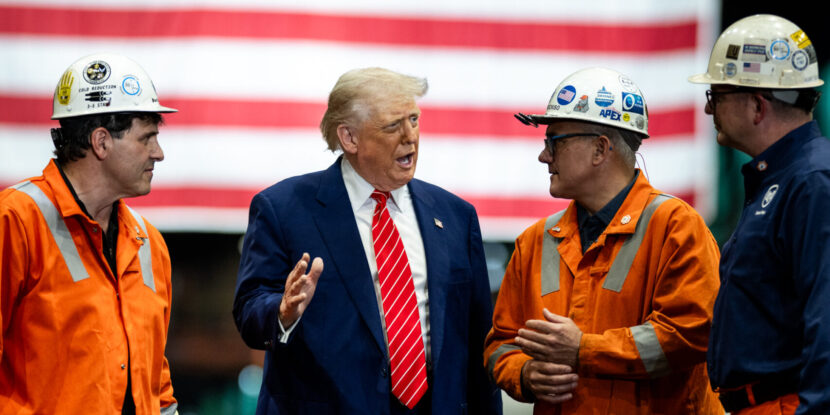
American Workers’ Wages Climb as Inflation Stabilizes.

PULSE POINTS

WHAT HAPPENED: Fresh economic data suggests inflation is under control, with workers seeing real wage gains under President Donald J. Trump.

👤WHO WAS INVOLVED: President Trump, White House Press Secretary Karoline Leavitt, and Bloomberg’s Chris Anstey.

📍WHEN & WHERE: Data released today, covering the U.S. economy under President Trump’s administration.

💬KEY QUOTE: “Yet another report confirms that President Trump has defeated the inflation crisis inherited from the Biden Administration, while so-called ‘experts’ continue to be proven wrong month after month.” — White House Press Secretary Karoline Leavitt

🎯IMPACT: Rising wages, declining vehicle prices, and economic growth signal recovery for American workers and industries.

IN FULL

Fresh economic data released this week indicate that inflation is continuing to ease and American workers are experiencing real wage growth, according to new government figures and market analysts. Core inflation came in below economists’ expectations, signaling slower price increases. Bloomberg described the report as “a convincing sign that inflation is on a downward path.”

The latest Consumer Price Index (CPI) showed inflation running at an annualized rate of 2.7 percent, underscoring a continued cooling trend. Since President Donald J. Trump regained office in January 2025, administration officials say headline inflation has averaged about 2.4 percent, down from roughly three percent under Joe Biden. Core inflation has also declined to around 2.4 percent, compared with a prior pace of 3.3 percent.

“Yet another report confirms that President Trump has defeated the inflation crisis inherited from the Biden Administration, while so-called ‘experts’ continue to be proven wrong month after month. President Trump’s powerful tariffs, massive tax cuts for working families, and sweeping deregulatory agenda have positioned our economy for a boom in 2026,” White House Press Secretary Karoline Keavitt said.

At the same time, wages have been rising faster than prices. Real private sector weekly earnings are projected to grow by about four percent during President Trump’s first full year in office, translating into an estimated $1,100 increase in real income for private-sector workers. Gains have been especially notable among blue-collar workers in industries such as mining, logging, construction, and manufacturing, where annual earnings have risen substantially.

Vehicle prices, which surged earlier in the decade, have continued to fall. Automakers reported their strongest sales year since 2019, suggesting consumers are benefiting from improved affordability.

Recent research has also challenged assumptions that tariffs necessarily drive inflation higher. A Federal Reserve Bank of San Francisco study examining economic data from the United States, the United Kingdom, and France over a 150-year period found that higher tariffs were often associated with lower inflation rates, contradicting warnings from some critics of the administration’s trade policies.

Join Pulse+ to comment below, and receive exclusive e-mail analyses.
show less
show more

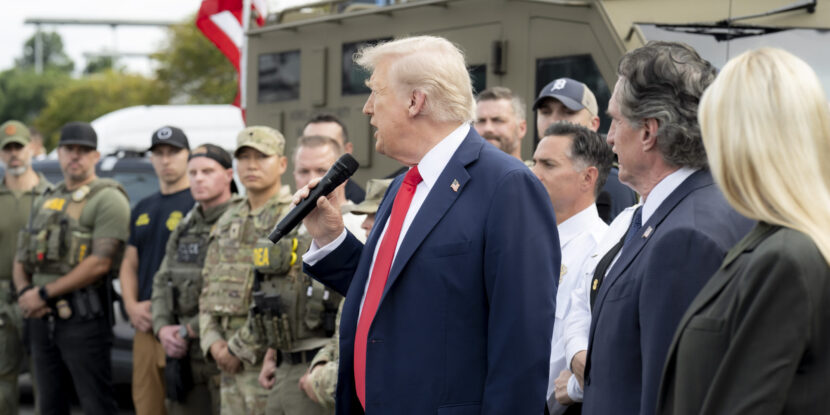
Trump Admin Launches Over 100 Probes into H-1B Visa Abuses to Protect American Workers.

PULSE POINTS

WHAT HAPPENED: The Department of Labor (DOL) announced 175 ongoing investigations into potential abuses of the H-1B visa program as part of its initiative to safeguard American jobs and ensure compliance with visa regulations.

👤WHO WAS INVOLVED: The Department of Labor, Secretary Lori Chavez-DeRemer, President Donald J. Trump, and various employers utilizing the H-1B visa program.

📍WHEN & WHERE: Investigations launched in September 2025 under the DOL’s Project Firewall initiative.

💬KEY QUOTE: “The Labor Department is using every resource currently at our disposal to put a stop to H-1B visa abuse, and for the first time, I am personally certifying investigations into suspected violations to better protect American jobs.” – Lori Chavez-DeRemer

🎯IMPACT: The investigations aim to address wage suppression, fraudulent practices, and ensure American workers are prioritized for high-skilled jobs.

IN FULL

The Department of Labor (DOL) has launched at least 175 investigations into potential abuses of the H-1B visa program, as part of its Project Firewall initiative, which began in September 2025. The program aims to ensure that American workers are prioritized for job opportunities and that employers comply with visa regulations. This effort marks an unprecedented move, with Labor Secretary Lori Chavez-DeRemer personally certifying the investigations.

“The Labor Department is using every resource currently at our disposal to put a stop to H-1B visa abuse, and for the first time, I am personally certifying investigations into suspected violations to better protect American jobs,” Chavez-DeRemer said in a statement. The investigations have already uncovered cases where foreign workers were paid significantly less than advertised, driving down wages for both visa holders and American workers. Additionally, some employers failed to notify U.S. Citizenship and Immigration Services (USCIS) when an H-1B visa holder was terminated, or delayed this notification.

The DOL’s announcement coincided with President Donald J. Trump’s proclamation imposing a $100,000 one-time fee on H-1B visa petitions. The White House stated that the fee aims to prevent companies from exploiting the system by hiring cheap foreign labor and instead promote American businesses that genuinely need high-skilled workers. Commerce Secretary Howard Lutnick commented, “The whole idea is no more will these Big Tech companies or other big companies train foreign workers. They have to pay the government $100,000, then they have to pay the employee, so it’s just not [economical].”

Investigations have revealed additional issues, such as fraudulent Labor Condition Applications (LCA), where employers failed to notify American workers about job openings or misrepresented job descriptions and wages. Some employers even listed non-existent work sites or paid employees less than what was detailed in the LCA. In some cases, H-1B visa holders were “benched,” meaning they were not paid while between projects.

Join Pulse+ to comment below, and receive exclusive e-mail analyses.
show less
show more

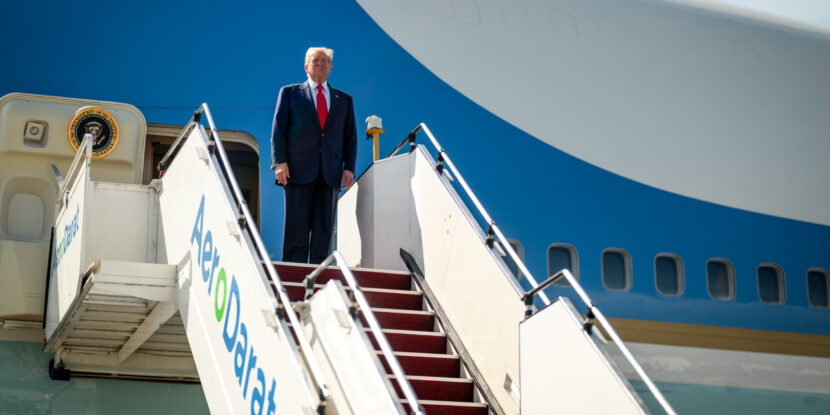
Trump Secures Multi-Billion Dollar Deals in South Korea Visit.

PULSE POINTS

WHAT HAPPENED: President Donald J. Trump concluded his Asia tour by securing billions in investments and export deals, focusing on American jobs, energy dominance, technology leadership, and maritime partnerships.

👤WHO WAS INVOLVED: President Trump, South Korean leaders, and major corporations, including Boeing, GE Aerospace, L3Harris Technologies, Amazon, and HD Hyundai.

📍WHEN & WHERE: During President Trump’s State Visit to the Republic of Korea on October 28 and 29, 2025.

🎯IMPACT: The agreements are expected to support hundreds of thousands of American jobs, bolster energy and technology leadership, and modernize U.S. infrastructure and shipbuilding industries.

IN FULL

President Donald J. Trump has wrapped up his Asia tour with a State Visit to the Republic of Korea (ROK), securing several billion-dollar deals aimed at supporting American jobs and promoting U.S. leadership in technology and maritime partnerships. A critical summit with Chinese leader Xi Jinping—taking place later today—will cap off the trip before Trump returns to Washington, D.C.

Among the deals secured by the America First leader is a commitment from Korean Air to purchase 103 new Boeing aircraft worth $36.2 billion, supporting up to 135,000 American jobs. Additionally, Korean Air will acquire GE Aerospace engines in a separate $13.7 billion deal.

The ROK Air Force selected L3Harris Technologies for a $2.3 billion Airborne Warning and Control aircraft project, which will support over 6,000 U.S. jobs. ReElement Technologies and POSCO International will launch a U.S.-based rare earth refining and magnet production complex.

In the energy sector, the Korea Gas Corporation signed agreements to purchase 3.3 million tons per year of U.S. liquefied natural gas (LNG) through long-term contracts. Centrus Energy Corp, KHNP, and POSCO International will expand uranium enrichment in Ohio, creating 3,000 jobs. LS Group pledged $3 billion for U.S. power-grid infrastructure, including a $681 million manufacturing facility in Virginia.

The United States and the ROK also signed a Technology Prosperity Deal to enhance bilateral cooperation in artificial intelligence (AI), 6G, biotech, and quantum innovation. During President Trump’s tenure, Amazon announced a $5 billion investment in the ROK’s cloud infrastructure, complementing its $40 billion investments across Asia-Pacific economies. NASA’s Artemis II mission will deploy a Korean satellite to measure space radiation, furthering U.S.-ROK collaboration in space exploration.

In maritime partnerships, HD Hyundai and Cerberus Capital Management will invest $5 billion to modernize U.S. shipyards. Samsung Heavy Industries and Vigor Marine Group will collaborate on naval vessel maintenance and automation, while Hanwha Ocean plans to strengthen Pennsylvania’s Philly Shipyard with a $5 billion infrastructure investment.

Join Pulse+ to comment below, and receive exclusive e-mail analyses.
show less
show more

Trump’s H-1B Application Fee Is Forcing Visa Abusers to Hire Americans.

PULSE POINTS

WHAT HAPPENED: Two of the largest alleged H-1B visa mills, Cognizant and Tata Consultancy Services, appear to be backing away from their practice of employing unusually high numbers of foreign workers after President Donald J. Trump imposed a $100,000 fee on new H-1B visa applications.

👤WHO WAS INVOLVED: President Trump, Cognizant, Tata Consultancy Services, foreign workers, and American workers.

📍WHEN & WHERE: The shift in hiring practices comes after President Trump issued an Executive Order in September, instituting the new application fee.

💬KEY QUOTE: “On H-1B, we have significantly localized our workforce in the U.S. We believe our business model will be able to adapt quickly to any changes in immigration policy.”  — Sudeep Kunnumal, Tata’s chief human resources officer

🎯IMPACT: The change in hiring behavior by Cognizant and Tata suggests the Trump administration’s H-1B application fee is having its desired effect, pushing companies in the U.S. away from being overly reliant on foreign labor and towards hiring Americans.

IN FULL

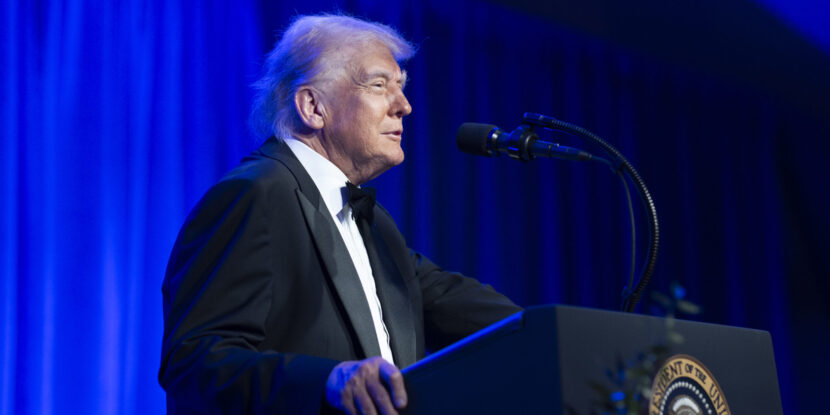
Several top U.S. employers are halting sponsorships for H-1B visas for non-technical positions after President Donald J. Trump issued an Executive Order in September imposing a $100,000 fee on all new visa applications. Notably, two major alleged H-1B visa mills, Cognizant and Tata Consultancy Services, are among the firms moving away from an over-reliance on cheap foreign labor.

“On H-1B, we have significantly localized our workforce in the U.S.,” said Tata’s chief human resources officer, Sudeep Kunnumal, on a recent earnings call. He added: “We believe our business model will be able to adapt quickly to any changes in immigration policy.”

The Trump administration’s new application fee likely had a direct impact on the company’s decision to move away from reliance on cheaper foreign labor, as data shows the multinational IT firm is one of the largest sponsors of H-1B visas.

Meanwhile, Cognizant—another IT consultancy firm founded in India along with Tata—has begun stating on new job postings that it will “only consider applicants for this position who are legally authorized to work in the United States without the need of employer sponsorship.”

The Trump White House has defended the unusually high fee compared to past administrations as necessary to encourage companies to focus on training and expanding the American labor force and its skill base.

Last week, The National Pulse reported that the U.S. Chamber of Commerce, a major globalist lobbying entity representing 300,000 corporate interests, had filed a federal lawsuit calling in the $100,000 fee. “Many members of the U.S. Chamber are bracing for the need to scale back or entirely walk away from the H-1B program, to the detriment of their investors, customers, and their own existing employees,” the Chamber complained in its filing.

Join Pulse+ to comment below, and receive exclusive e-mail analyses.
show less
show more

Amazon Plans to Automate 600,000 Jobs, Leaked Documents Reveal.

PULSE POINTS

WHAT HAPPENED: Amazon is reportedly planning to automate much of its operations, potentially avoiding the need to hire over 600,000 U.S. workers by 2033.

👤WHO WAS INVOLVED: Amazon, its robotics team, and American workers.

📍WHEN & WHERE: The automation plans aim for significant implementation by 2027, with full goals set for 2033, across Amazon’s U.S. operations.

🎯IMPACT: If successful, Amazon could save billions of dollars but may face backlash over job losses and its role as a major U.S. employer.

IN FULL

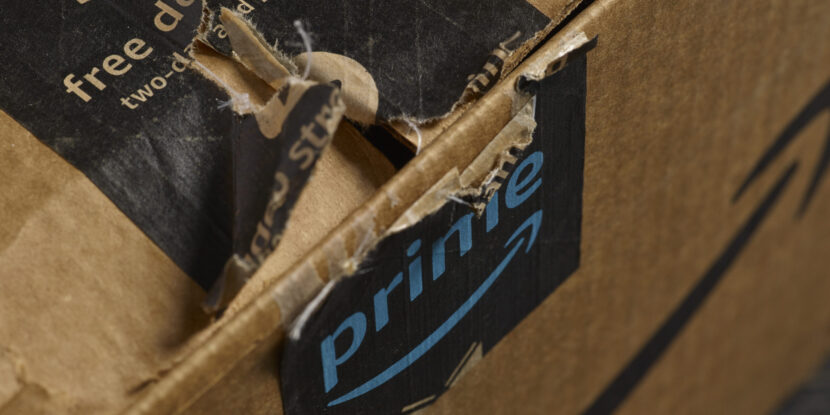
Amazon is reportedly looking to automate a significant portion of its operations, which could allow the company to avoid hiring over 600,000 U.S. workers by 2033. The leaked internal documents reveal that Amazon aims to automate 75 percent of its operations, potentially saving $12.6 billion between 2025 and 2027.

The company’s robotics team is reportedly working to replace 160,000 U.S. roles by 2027, saving approximately 30 cents on every item warehoused and delivered. The documents also indicate that Amazon expects to double its product sales over the same period.

In anticipation of backlash, Amazon has reportedly explored ways to soften its public image, including participation in community projects and avoiding the use of terms like “automation” or “AI.” Instead, the company has considered using phrases such as “advanced technology” and “cobot” to describe its robots working alongside humans.

Amazon responded publicly to the leak, claiming the documents were incomplete and do not fully represent its hiring strategy. The company also denied instructing executives to avoid certain terminology when discussing robotics.

Notably, the documents detailing the automation plan appear to be based on projections that Amazon will continue to see significant growth in its consumer base. However, The National Pulse reported in April that UPS announced plans to reduce its workforce by 20,000 jobs this year as part of a cost-reduction strategy related to decreased deliveries from Amazon.

Join Pulse+ to comment below, and receive exclusive e-mail analyses.
show less
show more

Manufacturing Investment Is Surging Under Trump.

PULSE POINTS

WHAT HAPPENED: Major corporations have announced billions in new investments to onshore production and create thousands of American jobs under President Donald J. Trump’s tariff and regulatory policies.

👤WHO WAS INVOLVED: Companies like Stellantis, Whirlpool, and GE Aerospace, among others, alongside the Trump Administration.

📍WHEN & WHERE: Announcements were made over the past week, with investments targeting facilities across Illinois, Ohio, Michigan, and Indiana.

🎯IMPACT: Thousands of jobs created, advanced workforce training programs initiated, and a strengthened U.S. manufacturing sector.

IN FULL

The American manufacturing sector continues to see a surge in investment under President Donald J. Trump’s tariff and deregulation policies. According to the White House, over the past week, a new round of major corporations has pledged significant investments aimed at onshoring their production, resulting in new jobs for American workers.

Stellantis, the parent company of U.S. automotive brands Chrysler and Jeep, announced it will invest $13 billion in domestic American production, the single most significant investment in its history. The company says it is seeking to increase U.S.-based production by 50 percent by 2030. Additionally, Stellantis announced it will re-open its Belvidere, Illinois, plant and add production at its Toledo, Ohio; Warren, Michigan; Detroit, Michigan; and Kokomo, Michigan plants. According to the company, the production increases will bring 5,000 new jobs and the production of five new vehicles to the U.S.

Meanwhile, Whirlpool Corporation says it plans a $300 million investment in its U.S. laundry manufacturing facilities in Ohio as part of an effort to “grow its American manufacturing footprint.” The company says this expansion will create upwards of 600 new jobs.

Additionally, the GE Aerospace Foundation—funded by General Electric (GE) Aerospace—is rolling out a $30 million workforce skills training program that will help prepare a new generation of high-skilled American workers. This program aims to ensure the country’s workforce has the skills necessary for advanced manufacturing within the aerospace industry.

Other major U.S. expansions include companies like Pfizer, GSK, Eli Lilly, AstraZeneca, Amgen, Hitachi, and ABB.

Join Pulse+ to comment below, and receive exclusive e-mail analyses.

show less
show more

U.S. Firms Secure $170 Billion in Record 98 Deals with Global Governments Under Trump.

PULSE POINTS

WHAT HAPPENED: American businesses signed 98 contracts valued at $170 billion with foreign government buyers during the first nine months of the Trump administration, according to the Department of Commerce.

👤WHO WAS INVOLVED: The Department of Commerce’s International Trade Administration (ITA), Commerce Secretary Howard Lutnick, and President Donald J. Trump.

📍WHEN & WHERE: The contracts were signed during the first nine months of 2025, with details shared in a September 30 statement.

💬KEY QUOTE: “The record-breaking U.S. business wins under President Trump’s leadership reflect an unwavering commitment to rebuilding U.S. industry for the American worker,” said Commerce Secretary Lutnick.

🎯IMPACT: The contracts are expected to support 589,000 American jobs and ensure $144 billion worth of made-in-the-USA exports.

IN FULL

President Donald J. Trump’s tariff policies are revitalizing U.S. exports, with American businesses signing 98 contracts valued at $170 billion with foreign government buyers during the first nine months of the Trump administration, according to the Department of Commerce’s International Trade Administration (ITA). This figure far surpasses the $12 billion in contracts signed during the same period in 2021, the agency stated earlier this week.

Notably, the contracts with foreign government buyers are forecasted to support 589,000 American jobs and create $144 billion worth of made-in-the-USA exports. “The record-breaking U.S. business wins under President Trump’s leadership reflect an unwavering commitment to rebuilding U.S. industry for the American worker,” said Commerce Secretary Howard Lutnick. “With record business deals abroad, America is strong again, and together with the American worker, President Trump is transforming the U.S. economy, rebalancing our global trade, and restoring America’s place in the world.”

The aerospace and defense sector accounted for $153 billion in contracts with foreign government entities, bolstering the American industrial base. Additionally, $5 billion in deals were signed to strengthen energy security, particularly in the oil, gas, and nuclear sectors. The information technology sector saw over $800 million in contracts, while the safety and security equipment sector recorded over $600 million in deals aimed at countering untrusted tech and covert tactics by foreign adversaries.

Commerce Undersecretary William Kimmitt emphasized the administration’s efforts, stating, “In the first nine months of the Trump Administration, ITA advocacy has worked tirelessly to win contracts to support hundreds of thousands of American jobs. We will continue to be an unrelenting advocate around the world in support of American workers.”

Despite these successes, concerns about the broader U.S. economy remain. The Conference Board reported a 0.5 percent decline in its leading economic index in August, signaling a potential economic slowdown. However, GDP growth rebounded in the second quarter of 2025, increasing by 3.8 percent, a marked improvement from the 0.6 percent contraction in the first quarter.

Join Pulse+ to comment below, and receive exclusive e-mail analyses.

show less
show more

Trump Tells Foreign Firms to Employ and Upskill Americans After Hyundai Raid.

PULSE POINTS

WHAT HAPPENED: President Donald J. Trump told companies operating in the U.S. to only use foreign labor to train American workers following the largest single-site immigration enforcement operation in Homeland Security history, which saw hundreds of South Korean illegal workers arrested at a Hyundai plant in Georgia.

👤WHO WAS INVOLVED: U.S. Immigration and Customs Enforcement (ICE), Hyundai, South Korean nationals, and President Trump.

📍WHEN & WHERE: The operation took place last Thursday at a Hyundai battery plant under construction near Savannah, Georgia. President Trump’s comments came late Sunday in a post on Truth Social.

💬KEY QUOTE: “What we ask in return is that you hire and train American Workers.” – Donald Trump

🎯IMPACT: President Trump floated a possible policy change where some high-skilled foreign labor would only be authorized in order to train American workers in the battery and computer manufacturing sectors.

IN FULL

President Donald J. Trump says foreign companies operating in the United States should only use foreign workers to train their American employees. The comments were made in a late Sunday night post on Truth Social, following last Thursday’s largest single-site enforcement operation in Department of Homeland Security (DHS) history, which detained hundreds of South Korean illegal immigrant workers at a Hyundai battery plant under construction near Savannah, Georgia.

“Following the Immigration Enforcement Operation on the Hyundai Battery Plant in Georgia, I am hereby calling on all Foreign Companies investing in the United States to please respect our Nation’s Immigration Laws,” Trump wrote, continuing: “Your Investments are welcome, and we encourage you to LEGALLY bring your very smart people, with great technical talent, to build World Class products, and we will make it quickly and legally possible for you to do so. What we ask in return is that you hire and train American Workers.”

“Together, we will all work hard to make our Nation not only productive, but closer in unity than ever before,” the America First leader added.

The operation resulted in the detention of 475 workers, most of whom were South Korean nationals. U.S. Immigration and Customs Enforcement (ICE) officials stated that some had entered the country illegally, while others had overstayed visas or violated visa waiver conditions that prohibited employment. None of the detained workers were charged with crimes, according to Steven Schrank, the lead Homeland Security Investigations (HSI) agent in Georgia.

South Korea’s government expressed concern over the detentions, with Foreign Minister Cho Hyun planning to travel to the U.S. to discuss the matter. On Sunday, South Korea announced that more than 300 detained workers would be released and repatriated via charter plane. Kang Hoon-sik, chief of staff for President Lee Jae Myung, confirmed that negotiations with U.S. officials had been finalized.

The incident has raised tensions between Washington and Seoul, coming just months after South Korea committed $350 billion in U.S. investments as part of a broader economic agreement. Trump, speaking to reporters at Joint Base Andrews on Sunday, suggested that the U.S. and South Korea could collaborate to allow their nationals to train American workers for roles in battery and computer manufacturing.

Join Pulse+ to comment below, and receive exclusive e-mail analyses.w

show less
show more

Here’s How Trump’s America First Economy Is Boosting Wages for the Average Worker:

PULSE POINTS

WHAT HAPPENED: President Donald J. Trump highlighted that his America First economic policies have resulted in a $500 wage increase for the average American worker this year, and the fastest blue-collar wage growth in 60 years.

👤WHO WAS INVOLVED: President Trump, Interior Secretary Doug Burgum, Energy Secretary Chris Wright, Agriculture Secretary Brooke Rollins, and Treasury officials.

📍WHEN & WHERE: Across the United States since Trump’s inauguration in January.

💬KEY QUOTE: “The wages for blue-collar workers are now rising at the fastest rate in 60 years, which is so important to all of us around this table. The average American worker has already seen a $500 wage increase this year.” — President Trump

🎯IMPACT: Workers’ incomes are outpacing inflation, increasing purchasing power and signaling continued economic growth.

IN FULL

President Donald J. Trump has announced to the Cabinet that blue-collar wages are rising at the fastest rate in six decades, with the average American worker seeing a $500 wage increase this year. Trump emphasized the importance of this growth, noting its positive impact on American families and the broader economy.

“The wages for blue-collar workers are now rising at the fastest rate in 60 years, which is so important to all of us around this table. The average American worker has already seen a $500 wage increase this year,” Trump stated. He also highlighted that wages are outpacing inflation, providing workers with increased purchasing power.

Trump credited the stabilization of inflation to American energy production, thanking Interior Secretary Doug Burgum and Energy Secretary Chris Wright for their efforts. “There’s no inflation because there’s been decreases, tremendous decreases, thanks to Doug and Chris, some of the people, the great job they’ve done with energy. Thank you very much,” Trump said. He also pointed to declining grocery prices, praising Agriculture Secretary Brooke Rollins for her contributions.

Joe Lavorgna, senior adviser to Treasury Secretary Scott Bessent, echoed Trump’s optimism. He noted that the current 1.4 percent annualized wage growth for blue-collar workers is the second-fastest start for any administration in six decades, surpassed only by Trump’s first term. Lavorgna added that the recently passed One Big Beautiful Bill, which includes incentives for factory and plant construction, will further boost blue-collar wages and job opportunities.

“Those are carpenters, electricians, plumbers, laborers,” Lavorgna explained, adding: “It also includes things like nursing assistants, people that work in retail and wholesale trade, basically the backbone of the economy. Those workers are going to benefit from the increased capital that companies are incentivized now to make those commitments, in addition to the building of factories.”

Join Pulse+ to comment below, and receive exclusive e-mail analyses.

show less
show more