



Monday, February 23, 2026

Manufacturing Surges Under Trump’s ‘Made in America’ Drive.

PULSE POINTS

WHAT HAPPENED: Multiple major companies announced billions of dollars in investments to expand U.S.-based manufacturing and create thousands of American jobs.

👤WHO WAS INVOLVED: AbbVie, Apple, Century Aluminum, Ford, GE Appliances, and President Donald J. Trump’s administration.

📍WHEN & WHERE: Announcements made over the past week, boosting U.S. manufacturing plants across multiple states.

💬KEY QUOTE: “Historic trade victories and pro-American policies are bringing factories, jobs, and prosperity back to our country like never before.” – Donald Trump

🎯IMPACT: Significant job creation, increased manufacturing capacity, and billions in investments aimed at revitalizing American industry.

IN FULL

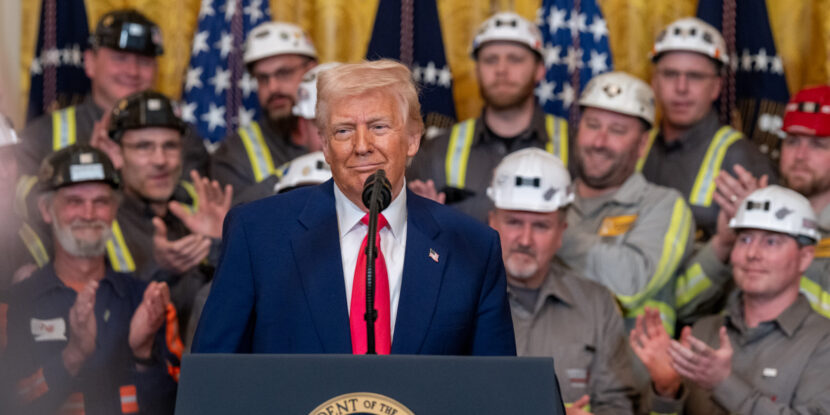
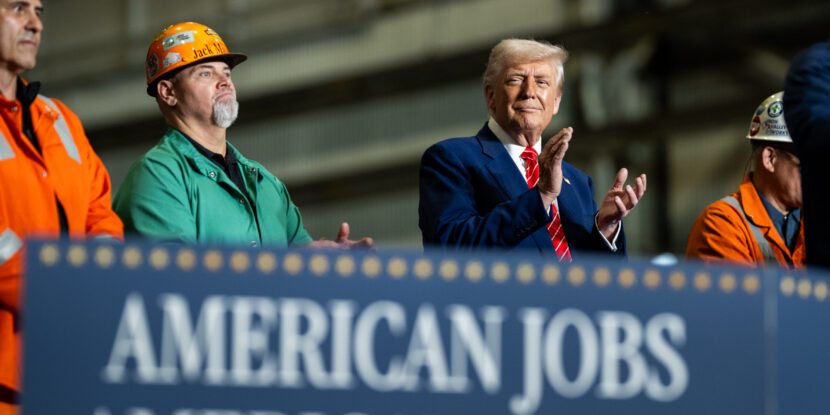
The American manufacturing economy is seeing a surge of investment driven by President Donald J. Trump’s tariff and deregulation policies. Over the past several weeks, numerous major companies—including AbbVie, Apple, Century Aluminum, Ford, and GE Appliances—have announced they will either shift production from overseas back to the United States or will expand existing domestic manufacturing facilities.

“Under President Donald J. Trump’s bold leadership and unwavering commitment to putting America First, our nation is witnessing an unprecedented surge in manufacturing investments and job creation,” the Trump White House said in a statement on Wednesday. “Historic trade victories and pro-American policies are bringing factories, jobs, and prosperity back to our country like never before—delivering big wins for hardworking Americans.”

AbbVie announced a $195 million investment to expand its American-based drug production capacity. Apple revealed plans to increase its U.S. investment to $600 billion over the next four years, bringing additional components of its supply chain and advanced manufacturing back home. This move will directly create 20,000 new American jobs and many thousands more across its suppliers.

Century Aluminum announced it will invest $50 million to revive its South Carolina manufacturing plant for the first time in a decade, returning its production to 2015 peak levels. Ford disclosed a $5 billion investment across its Kentucky and Michigan plants to develop a new midsize truck and advanced batteries.

Meanwhile, GE Appliances announced a $3 billion investment in its U.S.-based manufacturing, onshoring 1,000 jobs and expanding its plants across five states.

Join Pulse+ to comment below, and receive exclusive e-mail analyses.
show less
show more

American Steelmakers Are Flourishing. Here’s Why…

PULSE POINTS

WHAT HAPPENED: The U.S. steel industry is experiencing a resurgence under President Donald J. Trump, following years of decline under the Biden government.

👤WHO WAS INVOLVED: Cleveland-Cliffs, Steel Dynamics, Nucor, and U.S. Steel, alongside President Donald J. Trump.

📍WHEN & WHERE: Q2 2025, across key U.S. steel-producing states including Ohio, Indiana, North Carolina, and Pennsylvania.

💬KEY QUOTE: “We have started to see the positive impact that tariffs have on domestic manufacturing, protecting domestic jobs and national security.” – Lourenco Goncalves, CEO of Cleveland-Cliffs.

🎯IMPACT: Increased steel production, higher earnings for steel companies, and stronger national security through protective tariffs.

IN FULL

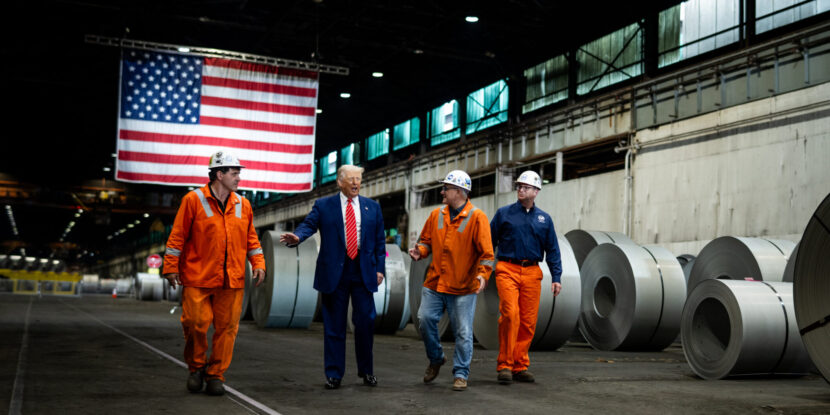
The American steel industry is seeing a revival under President Donald J. Trump, who has imposed tariffs on foreign nations that attempt to tilt international trade in their favor. Despite being hammered by unfair foreign competition enabled by the former Biden government—resulting in job losses and threats to U.S. national security—a number of major players in the U.S. steel industry have seen significant economic improvements in the second quarter of 2025.

Ohio’s Cleveland-Cliffs steel manufacturer says it hit a record number of shipments in Q2. “Cliffs is a major supplier of steel to the automotive manufacturers, and the Trump Administration continues to show strong support to both the domestic steel and the domestic automotive sectors,” CEO Lourenco Goncalves stated, adding: “We have started to see the positive impact that tariffs have on domestic manufacturing, protecting domestic jobs and national security. We expect this trend to continue, promoting the resurgence of the American automotive industry supported by a thriving domestic steel industry.”

In addition, Indiana-based Steel Dynamics reported a 39 percent increase in operating income and a 19 percent increase in adjusted Earnings Before Interest, Taxes, Depreciation, and Amortization (EBITDA) in Q2 2025. EBITDA is a financial metric that focuses on the core earnings generated by a company’s business activities, excluding factors related to financing (interest), government obligations (taxes), and non-cash accounting adjustments (depreciation and amortization) to determine said company’s operational performance and profitability. Meanwhile, North Carolina-based Nucor announced that it expects Q2 earnings to be four times higher than the preceding quarter.

The National Pulse reported on Tuesday that General Motors (GM) CEO Mary Barra, in a letter to shareholders, said the company is in the process of moving billions of dollars of production back into the U.S., as well as retrofitting some of its American manufacturing facilities to produce more internal combustion engine autos instead of electric vehicles. Barra emphasized that the auto giant will likely undertake additional measures beyond an already planned $4 billion U.S. production investment to “greatly reduce our tariff exposure.”

Join Pulse+ to comment below, and receive exclusive e-mail analyses.
show less
show more

The Trump Admin Wants to Change H-1B Visa Immigration.

PULSE POINTS

WHAT HAPPENED: The Trump administration is considering changes to the H-1B visa system, including a potential “weighted selection process” for applicants. While the Department of Homeland Security (DHS) filed notice of a possible change with the Office of Information and Regulatory Affairs on Thursday, the filing provided no further details.

👤WHO WAS INVOLVED: DHS, U.S. Citizenship and Immigration Services (USCIS), and President Donald J. Trump.

📍WHEN & WHERE: The filing was made on Thursday with the Office of Information and Regulatory Affairs.

🎯IMPACT: Changes could prioritize highly skilled workers, though details remain unclear, and the rule is unlikely to affect next year’s visa holders.

IN FULL

The Trump administration is exploring changes to the H-1B visa system, which is heavily used by the tech industry to employ foreign labor, usually at far lower wages than their American counterparts. On Thursday, the Department of Homeland Security (DHS) filed a notice with the Office of Information and Regulatory Affairs, proposing a “weighted selection process” for applicants under the capped portion of the program. The filing, however, provides no further details as to how the new system would function.

The H-1B visa has faced increased scrutiny, with some supporters of President Donald J. Trump pushing for stricter immigration rules. Meanwhile, figures like former Department of Government Efficiency (DOGE) frontman Elon Musk and others in the tech industry have defended the program. Critics argue that the current lottery system disproportionately benefits larger companies such as Amazon, Meta, and Microsoft, and leaves American workers at a disadvantage, having to compete with cheap foreign labor.

While the statutory cap for H-1B visas is set at 85,000 per year, the proposed changes could alter this limit. Any potential increase in the cap—which is already circumvented through a number of regulatory exceptions—would likely be met with intense backlash from the America First movement. The DHS filing, however, provided little detail about how the weighted selection process would work. Currently, visas are allocated randomly through a lottery system, which does not prioritize applicants based on qualifications or salary.

The National Pulse reported in May that the replacement of native-born American workers with cheap foreign labor remains unabated despite strong public opinion against the policy. While the total approvals for 2026 are lower than the peak years under the former Biden government, data shows 120,141 H-1B visas have been accepted for the next year. This is about equivalent to the total number of H-1Bs approved for 2021, cleared during the final year of President Trump’s first term in office.

While no specific deadline was included in the filing, the rule is unlikely to impact next year’s visa holders, as the program has already reached its capacity for the current cycle.

Join Pulse+ to comment below, and receive exclusive e-mail analyses.
show less
show more

California Republicans Are Lobbying Trump to Give Illegal Immigrants Amnesty.

PULSE POINTS

WHAT HAPPENED: Republican lawmakers in California sent a letter to President Donald J. Trump urging changes to immigration enforcement policies and advocating for a legal pathway for so-called “non-criminal undocumented immigrants [sic].”

👤WHO WAS INVOLVED: The letter was signed by state Sen. Minority Leader Brian Jones, Sen. Suzette Valladares, and four other Republican lawmakers.

📍WHEN & WHERE: The letter was sent to the Trump White House in late June, and revealed publicly over the July 4 weekend.

💬KEY QUOTE: “America needs a system that reflects both compassion and lawfulness—one that upholds sovereignty while recognizing the reality on the ground,” the lawmakers claim.

🎯IMPACT: The letter highlights continued resistance to strong borders and mass deportations among some in the Republican Party, particularly those with close ties to industries enjoying cheap foreign labor.

IN FULL

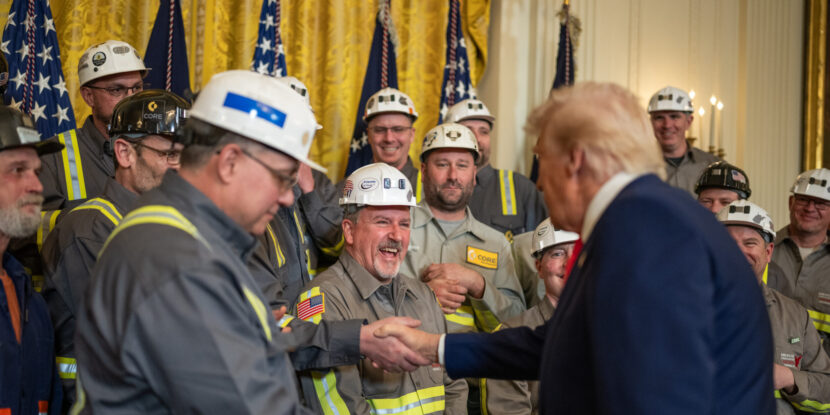
A group of six Republican state lawmakers in California is demanding that President Donald J. Trump direct U.S. Immigration and Customs Enforcement (ICE) to end its “sweeping raids” against illegal immigrants and instead open “a path to legal status” for what they claim are “non-criminal undocumented immigrants [sic].” Notably, while unlawful entry into the United States only currently carries a civil penalty, under the U.S. Code, the act is still considered a criminal offense, meaning there are no actual “non-criminal undocumented immigrants.”

“We have heard from employers in our districts that recent ICE raids are not only targeting undocumented workers, but also creating widespread fear among other employees, including those with legal immigration status,” the group of six California Republicans claimed, adding: “We urge you to direct ICE and DHS to focus their enforcement operations on criminal immigrants, and when possible to avoid the kinds of sweeping raids that instill fear and disrupt the workplace.”

The letter’s signatories include California Senate Minority Leader Brian Jones (R), Sen. Suzette Valladares (R), Sen. Rosilicie Ochoa Bogh (R), Assembly Member Heath Flora (R), Assembly Member Diane Dixon (R), and Assembly Member Laurie Davies (R). Sen. Jones had previously introduced legislation that directed California state prisons and county jails to provide release dates for illegal immigrants convicted of serious felonies and other violent crimes to federal immigration authorities. However, the legislation failed to advance out of committee.

“America needs a system that reflects both compassion and lawfulness—one that upholds sovereignty while recognizing the reality on the ground,” the letter insists. The state lawmakers call on Trump and Congress to enact a pathway to legal status for so-called “non-criminal” illegal immigrants who supposedly have strong community ties. They also urge reforms to the H-2A and H-2B visa programs to authorize more legal guest workers across industries, alleging labor shortages in sectors such as construction, hospitality, and food processing—apparently preferring this to improving conditions to attract American workers.

According to the American Farm Bureau, the federal government previously authorized 384,900 H-2A temporary agriculture visas, while the H-2B visa program is capped at 66,000 annually. Notably, California’s latest jobs report found 1.1 million unemployed residents, with 659,000 job openings as of March 2025.

Join Pulse+ to comment below, and receive exclusive e-mail analyses.
show less
show more

ICYMI: Trump DOJ Scores Historic Win for Workers in Antitrust Case.

PULSE POINTS

WHAT HAPPENED: President Donald J. Trump’s Justice Department secured a landmark criminal antitrust conviction against a home healthcare staffing executive for orchestrating a wage-fixing scheme aimed at suppressing the wages of home healthcare nurses in the Las Vegas area.

👤WHO WAS INVOLVED: The Department of Justice (DOJ) Antitrust Division, Assistant Attorney General Abigail A. Slater, federal prosecutors, defendant Eduardo “Eddie” Lopez, Las Vegas area home healthcare companies, and home healthcare nurses.

📍WHEN & WHERE: The criminal conviction was issued in April 2025.

💬KEY QUOTE: “Wage-fixing agreements are nakedly unlawful attempts at unjustly profiting off American workers.” — Assistant Attorney General Abigail A. Slater.

🎯IMPACT: The jury verdict marks the first successful criminal conviction against individuals accused of wage-fixing and labor market collusion.

IN FULL
The United States Department of Justice (DOJ) secured a historic antitrust jury verdict against a home healthcare executive over a wage-fixing scheme in violation of the Sherman Antitrust Act. In April this year, federal prosecutors secured the criminal conviction of Eduardo “Eddie” Lopez—a home healthcare staffing executive who served with three separate home healthcare agencies—for conspiring with a number of healthcare staffing agencies to suppress the wages of home health nurses in the Las Vegas area and defrauding buyers of his staffing services by concealing the ongoing federal antitrust investigation against him.
Notably, the case marks a significant legal landmark for the DOJ, affirming its legal authority to pursue criminal charges against individuals accused of wage-fixing and labor market collusion. Prior attempts at criminal prosecution on similar charges had failed to secure a conviction.
At trial, DOJ prosecutors revealed that Lopez had orchestrated, between 2016 and 2019, a wage-fixing conspiracy aimed at artificially suppressing the wages of home health nurses in the Las Vegas area. The scheme saw Lopez and several other home healthcare executives enter into a covert agreement to set the hourly wages for nurses, insulating their companies from labor market forces. Federal prosecutors successfully argued that the wage-fixing scheme was akin to price-fixing in labor markets and that each incidence of wage suppression should be treated as per se violations of Section 1 of the Sherman Antitrust Act.
Lopez’s communications with the executives of other area home healthcare agencies proved pivotal. In one message shown to jurors, Lopez wrote to an executive at an ostensibly competing agency, “We all have a mutual agreement that with the pay increase, all 3 companies will stay within the same hourly rate.” The April verdict saw Lopez convicted on five criminal counts, including one antitrust charge and four wire fraud charges.
Assistant Attorney General Abigail A. Slater, who leads the DOJ’s Antitrust Division, praised the conviction: “Wage-fixing agreements are nakedly unlawful attempts at unjustly profiting off American workers.” She added that the “verdict highlights what should be a clear message with antitrust crimes: the agreement is the crime. The Antitrust Division will zealously prosecute those who seek to unjustly profit off their employees. The nurses here deserved better and, under President Trump’s leadership, they will be protected.”
Join Pulse+ to comment below, and receive exclusive e-mail analyses.

show less
show more

DATA: Service Workers Back No Tax on Tips Plan in Trump’s ‘Big Beautiful Bill.’

PULSE POINTS

WHAT HAPPENED: Hourly workers in service, hospitality, and retail industries overwhelmingly support President Donald J. Trump’s No Tax on Tips plan, according to a new survey.

👤WHO WAS INVOLVED: President Donald J. Trump, hourly workers, and the authors of the survey report.

📍WHEN & WHERE: Survey results published recently, with workers across the United States voicing their support.

💬KEY QUOTE: “I don’t know what the holdup is. I don’t know what the politics are, but if we can cut the BS now … it can help out a lot of people.” – Nevada food service worker.

🎯IMPACT: The plan aims to provide financial stability and relief for hourly workers, while being part of a broader economic agenda under Trump’s leadership.

IN FULL

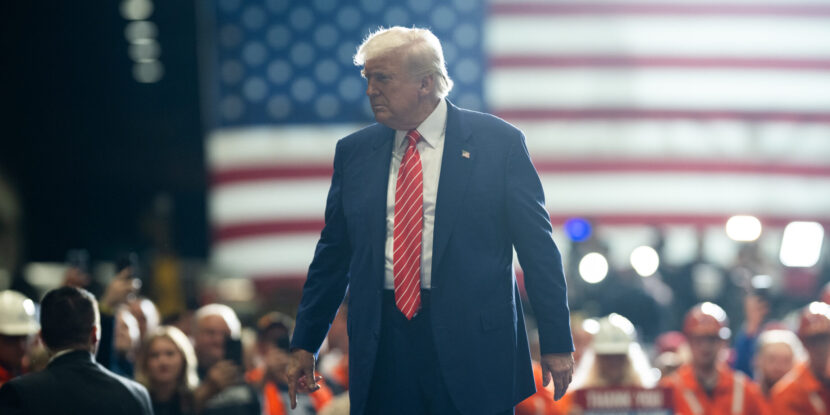
Hourly workers in the service, hospitality, and retail industries overwhelmingly back President Donald J. Trump’s No Tax On Tips plan in the “One Big Beautiful Bill,” according to a new survey, saying tax-free tips would bring them needed financial stability and relief. According to the data, 83 percent of hourly workers want to see No Tax on Tips become law, with just four percent saying otherwise.

“These results suggest that any measure increasing the amount of immediately available income—such as untaxed tips—would provide meaningful, stabilizing support for a large segment of the hourly workforce,” the report, published by the earned wage payroll company Instant, states. As one Nevada food service worker put it: “I don’t know what the holdup is. I don’t know what the politics are, but if we can cut the BS now … it can help out a lot of people.”

Currently, the “One Big Beautiful Bill”—in the form of budget reconciliation legislation—is undergoing changes in the U.S. Senate after being adopted by the House of Representatives last month. While senators are making substantive changes to the bill’s Medicaid provisions, tax provisions like No Tax on Tips, No Tax on Overtime, and No Tax on Social Security are not expected to be altered from the House version.

The National Pulse has previously reported that President Trump has overseen the largest increase in blue-collar wage growth in 60 years. Blue-collar workers have experienced a 1.7 percent real wage increase in the first five months of Trump’s second term. The wage growth sharply contrasts with the negative growth experienced under former President Joe Biden.

Join Pulse+ to comment below, and receive exclusive e-mail analyses.
show less
show more

Working Class Hero: Blue-Collar Wages Surging Under Trump.

PULSE POINTS

WHAT HAPPENED: Blue-collar workers have experienced a 1.7 percent real wage increase in the first five months of President Donald J. Trump’s second term, the largest increase for any presidential administration in nearly 60 years.

👤WHO WAS INVOLVED: President Trump, blue-collar workers, and Treasury Secretary Scott Bessent.

📍WHEN & WHERE: The wage growth occurred across the United States from December 2024 to May 2025.

💬KEY QUOTE: “We’ve seen real wages for hourly workers, non-supervisory workers, rise almost 2 percent in the first five months. … No president has done that before.” – Scott Bessent.

🎯IMPACT: Blue-collar workers are seeing significant wage growth, reversing decades of stagnation and decline under previous administrations.

IN FULL

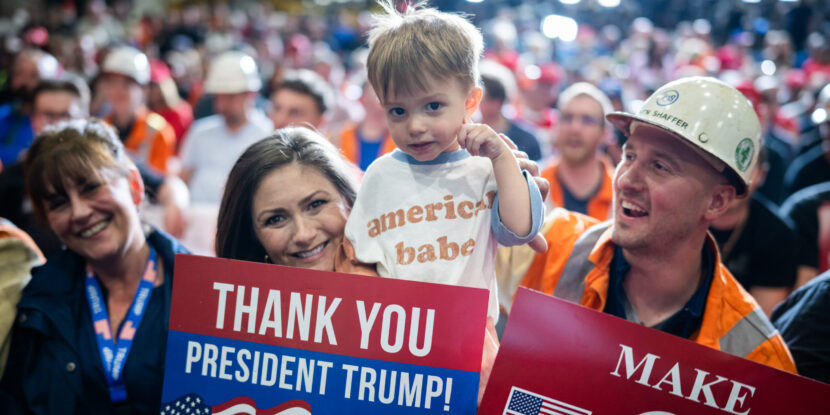
Blue-collar workers saw real wage growth of 1.7 percent in the first five months of President Donald J. Trump’s second term, marking the largest increase for any administration in nearly 60 years. The wage growth sharply contrasts with the negative growth experienced under former President Joe Biden, according to the latest U.S. Department of the Treasury data.

Since Richard Nixon in 1969, Trump is the only president to record positive growth for blue-collar workers in the first five months of his term. During his first term, Trump also achieved a 1.3 percent increase. The current wage growth recovery follows a 1.7 percent decline during Biden’s initial months in office, when inflation outpaced earnings.

Treasury Secretary Scott Bessent highlighted the achievement, stating, “We’ve seen real wages for hourly workers, non-supervisory workers, rise almost two percent in the first five months. … No President has done that before.” He attributed the improvement to falling inflation, which has increased take-home pay, as well as Trump’s focus on manufacturing and efforts to remove illegal immigrants from the workforce. “Biden opened the border, and it was flooded,” Bessent said, adding: “And for working Americans, that’s a disaster because it’s pressure on their wages.”

Trump’s tariff policy has also been designed to make American workers more competitive relative to cheap labor overseas, causing several major companies to reshore production to the U.S.

The Bureau of Labor Statistics defines blue-collar workers as non-supervisory and production workers. Year-to-date wage growth for this group from December 2024 to May 2025 is more than double the 0.8 percent growth seen during Nixon’s administration. Comparatively, Barack Obama’s first term saw a 0.3 percent decline, Bill Clinton and George W. Bush each recorded a 0.6 percent decline, and Ronald Reagan saw a 0.9 percent decline. George H.W. Bush oversaw a 3.0 percent decline, while Jimmy Carter’s administration recorded zero growth.

Trump’s administration is also pushing for the passage of the “Big Beautiful Bill,” which it argues will further boost blue-collar wage growth. The bill includes measures such as eliminating federal income taxes not only on tips, but on overtime pay for over 80 million hourly workers, while providing tax incentives for manufacturers to build factories in the United States.

These initiatives are expected to create up to six million jobs in construction and manufacturing, reversing decades of offshoring.

Join Pulse+ to comment below, and receive exclusive e-mail analyses.
show less
show more

Americans First: U.S. Citizens Benefit as Over a Million Migrants Exit Labor Market.

PULSE POINTS:

What Happened: Over one million foreign-born workers exited the U.S. labor force between March and May, according to the St. Louis Federal Reserve.

👥 Who’s Involved: Foreign-born workers, native-born workers, and the Trump administration.

📍 Where & When: United States, March to May of this year.

💬 Key Quote: “For the first time in 15 months, the job gains for native-born Americans… exceeded job gains for migrant and foreign-born workers,” President Donald J. Trump said.

⚠️ Impact: The data suggests a significant shift in the workforce, with foreign-born workers leaving at a higher rate than native-born workers, aligning with Trump administration policies.

IN FULL:

The U.S. labor force saw a significant decrease in foreign-born workers between March and May, according to recent data from the St. Louis Federal Reserve. The foreign-born labor force dropped from 33.719 million in March to 32.706 million in May, marking a decline of 1.013 million workers.

By contrast, the overall civilian labor force experienced a far smaller reduction, decreasing by 0.437 million during the same period, from 170.653 million to 170.216 million. The disparity in these figures suggests that foreign-born workers are leaving the workforce at a disproportionately higher rate compared to native-born individuals.

This trend aligns with the Trump administration’s focus on prioritizing jobs for native-born Americans. In March, the administration highlighted job growth data showing that native-born workers gained 284,000 jobs in February, while foreign-born workers saw a loss of 87,000 jobs.

“For the first time in 15 months, the job gains for native-born Americans… exceeded job gains for migrant and foreign-born workers,” President Donald J. Trump stated earlier this year. He emphasized that this data counters Biden-era trends where foreign workers were seen to be taking a significant share of available jobs.

Under former President Joe Biden, foreign-born workers comprised a large portion of private sector job growth, with their labor force participation quickly recovering to pre-COVID levels. Meanwhile, native-born American workers saw their labor force participation continue to lag behind.

Notably, the importation of cheap foreign labor has been repeatedly shown to depress wages for the entirety of the U.S. labor force and reduce productivity.

show less

PULSE POINTS:

show more

Kamala Lost Because She Prioritized Billionaire Backers Over Working Class: Bernie.

PULSE POINTS:

What Happened: Senator Bernie Sanders (I-VT) blamed former Vice President Kamala Harris’s 2024 election loss to President Donald J. Trump on her failure to address working-class issues, accusing her of prioritizing billionaire allies over everyday Americans.

👥 Who’s Involved: Bernie Sanders, Kamala Harris, Donald J. Trump, Liz Cheney, and Mark Cuban.

📍 Where & When: BBC interview with Sanders aired on May 30, 2025.

💬 Key Quote: “It was the fault of Kamala Harris and her consultants… They did not run a campaign designed to speak to the American working class,” Sanders said.

⚠️ Impact: Sanders’s critique validates Trump’s working-class appeal, exposing Democrat elitism and reinforcing his America First victory as a mandate for change.

IN FULL:

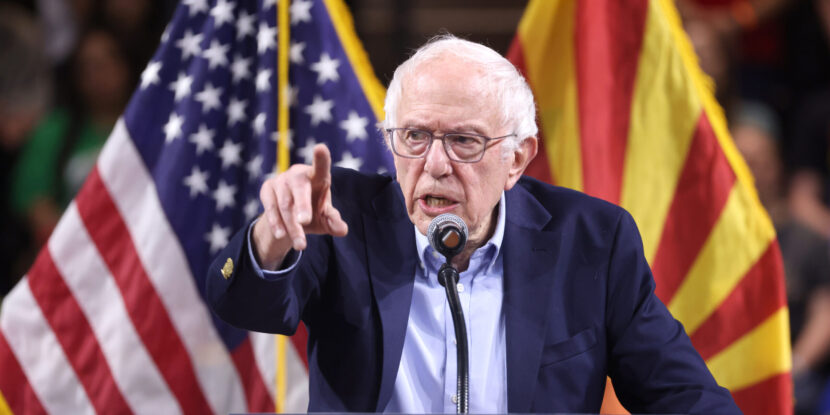
Senator Bernie Sanders (I-VT) blames former Vice President Kamala Harris’s 2024 election loss to President Donald J. Trump on her campaign’s failure to connect with working-class Americans. In an interview with the BBC aired on May 30, 2025, the 83-year-old former Democratic presidential candidate rejected the narrative that former President Joe Biden was responsible, arguing, “A lot of the people are saying it was Joe Biden’s fault that Kamala Harris lost the election … not true. It was the fault of Kamala Harris and her consultants.”

Sanders, who has been traveling the U.S. with far-left Representative Alexandria Ocasio-Cortez on a “Fighting Oligarchy” rally tour, believes that Harris’s campaign ignored the economic struggles of everyday Americans. “They did not run a campaign designed to speak to the American working class,” he said, adding that he “absolutely” believed Harris could have won if she had focused on their needs.

Sanders criticized her for aligning with elites, noting he “ran all over the country trying to elect Kamala Harris” and begging here team to “talk to the needs of the working class, talk about raising the minimum wage to a living wage, talk about real health care reform, talk about building the kinds of massive amounts of housing that we need, putting checks on landlords. But they used their billionaire friends.”

Harris’s coziness with figures like neoconservative Republican-in-name-only Liz Cheney and billionaire Mark Cuban sent the wrong message, Sanders argued. “What is that message out to working-class people?” he asked, highlighting her campaign’s reliance on “consultants and billionaires.”

Sanders framed the Democrats’ loss as a failure to answer a fundamental question: “Which side are you on?” He pointed to America’s growing income and wealth inequality as the core issue, noting, “The average person out there who is working very long hours… can’t afford healthcare, can’t afford to send their kids to college, childcare is a disaster in the United States. That person looks to Washington, D.C. and says, ‘Hey, what are you doing for me?’”

The National Pulse reported on polling in 2024 showing that President Trump enjoyed his highest levels of support among Americans working the longest hours, even when Biden was still in the race. In office, he has worked to shield American workers from unfair competition with countries such as China through tariffs—moves the Democrats and their allies have consistently undermined.

Image by Gage Skidmore.

show less

PULSE POINTS:

show more

Here’s How the FCC Just Advanced Trump’s America First Agenda in New Verizon Deal.

PULSE POINTS:

What Happened: The Federal Communications Commission (FCC) will allow Verizon’s purchase of Frontier, a regional telecom company, to move forward, with the former agreeing to enact a series of reforms in alignment with President Donald J. Trump’s pro-worker, America First agenda.

👥 Who’s Involved: Verizon, Frontier, the FCC, FCC Chairman Brendan Carr, tower climbers, and telecom workers.

📍 Where & When: Washington, D.C., on Friday, May 16, 2025.

💬 Key Quote: “The agreement between NATE, Verizon, and the FCC is massive news. As a 36-year tower contractor and employer of over 200 tower technicians, this brings fairness back to our relationship. We can’t thank Chairman Carr enough for looking out for Main Street while still being fair to Wall Street. We hope T-Mobile and AT&T will follow Verizon’s lead,” said Craig Snyder, a tower climber and one of the negotiators for his industry in the Verizon acquisition deal, in comments to The National Pulse.

⚠️ Impact: Verizon’s acquisition approval comes with a commitment to ending its diversity, equity, and inclusion (DEI) policies and programs and agreeing to a new set of pro-worker conditions with the tower climber and telecom worker industries.

IN FULL:

The Federal Communications Commission (FCC) is allowing telecom giant Verizon to acquire Frontier, a regional communications company, with the aim of expanding its fiber Internet service. Notably, Verizon’s acquisition was contingent on a series of policy and labor practice changes, in alignment with President Donald J. Trump’s pro-worker America First agenda, imposed by the FCC through its regulatory authority.

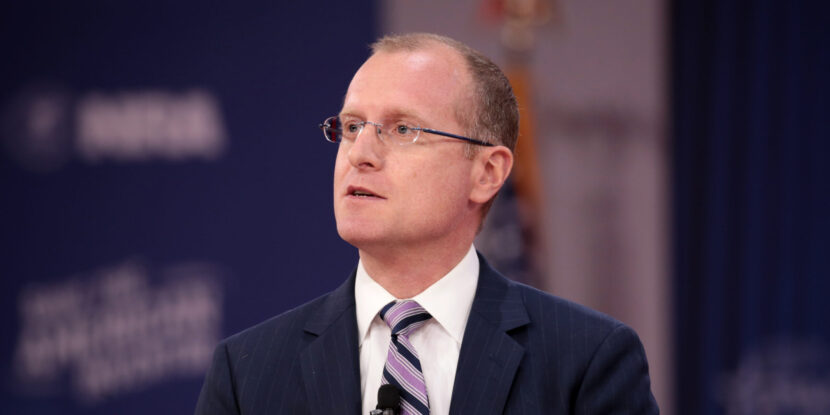
“By approving this deal, the FCC ensures that Americans will benefit from a series of good and common-sense wins. The transaction will unleash billions of dollars in new infrastructure builds in communities across the country—including rural America,” FCC Chairman Brendan Carr said in a statement announcing the acquisition approval. “This investment will accelerate the transition away from old, copper line networks to modern, high-speed ones. And it delivers for America’s tower and telecom crews who do the hard, often gritty work needed to build high-speed networks.”

One of the biggest concessions being made by Verizon is the company’s decision to end its diversity, equity, and inclusion (DEI) policies and programs. In a letter to Chairman Carr on May 15, the telecom company acknowledged that it “recognizes some DEI policies and practices could be associated with discrimination.” Verizon goes on to announce that it “is changing its HR structure and will no longer have a team or any individual roles focused on DEI.” The move comes after Chairman Carr informed a number of telecom and Internet technology companies that the FCC would halt license approvals and authorizations for those that maintain discriminatory DEI programs.

The FCC also highlights that the deal represents a win for American workers. Verizon, as part of the approval, is committing to rework its agreements with NATE, the Communications Infrastructure Contractors Association, and remove the costly burdens its policies have placed on tower climbers. These new provisions include taking into account considerations in pricing when it comes to site conditions, the adoption of regional pricing for tower climbers and telecom workers’ labor, 30-day payment terms with fair indemnity clauses, and limits on Verizon’s use of 1099 outside contractors, which have been used to undercut worker wages.

Craig Snyder, a tower climber and negotiator for his industry in the Verizon acquisition deal, told The National Pulse: “The agreement between NATE, Verizon, and the FCC is massive news. As a 36-year tower contractor and employer of over 200 tower technicians, this brings fairness back to our relationship. We can’t thank Chairman Carr enough for looking out for Main Street while still being fair to Wall Street. We hope T-Mobile and AT&T will follow Verizon’s lead.”

Image by Gage Skidmore.

show less

PULSE POINTS:

show more