





Monday, February 23, 2026

Chief Justice Roberts Blocks Far-Left Judge’s Order Forcing Trump to Disburse Foreign Aid.

PULSE POINTS

âť“WHAT HAPPENED: U.S. Supreme Court Chief Justice John Roberts on Tuesday granted the federal government a stay, halting District Court Judge Amir Ali’s orders in two cases that would have forced President Donald J. Trump to disburse foreign aid monies slated to be cut through the rescission process.

👤WHO WAS INVOLVED: Chief Justice John Roberts, U.S. District Court Judge Amir Ali, and President Donald J. Trump.

📍WHEN & WHERE: The stay was issued on Tuesday, September 9, 2025.

đź’¬KEY QUOTE: Chief Justice Roberts wrote, regarding Judge Ali’s order, that it “…is hereby partially stayed for funds that are subject to the President’s August 28, 2025 recission proposal currently pending before Congress pending further order of the undersigned or of the Court.”

🎯IMPACT: The stay effectively halts Judge Ali’s order, which would have forced the Trump White House to disburse $11.5 billion in foreign funds before they expire at the end of September.

IN FULL

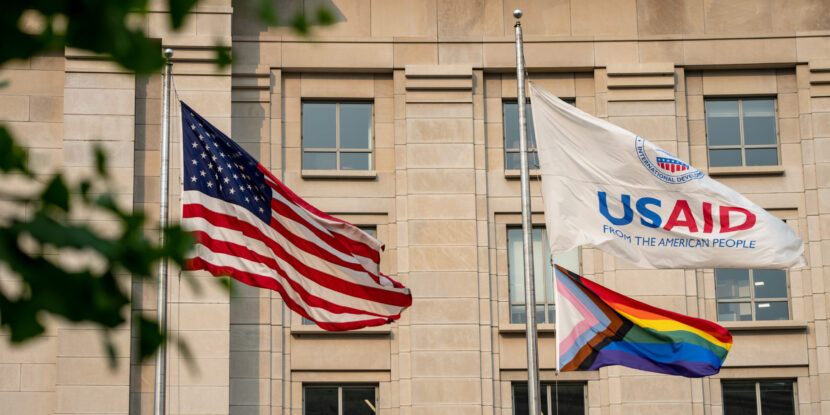
U.S. Supreme Court Chief Justice John Roberts on Tuesday granted the federal government a stay, halting District Court Judge Amir Ali’s orders in two cases that would have forced President Donald J. Trump to disburse foreign aid monies slated to be cut through the rescission process. Judge Ali, a foreign-born Canadian-American jurist with radical political associations, has attempted to aggressively intervene against the Trump administration’s efforts to cut payments to international non-governmental organizations (NGOs), foreign governments, and the now-defunct United States Agency for International Development (USAID).

The latest—and now stayed—order from Judge Ali would have forced the Trump White House to disburse $11.5 billion in foreign funds before they expire at the end of September. Notably, the Trump administration has maintained that the President is legally allowed to hold the funds until their expiration, whether Congress acts on the proposed cuts or not, in a process called a pocket rescission.

“IT IS ORDERED that the September 3, 2025 order of the United States District Court for the District of Columbia, case Nos. 1:25-cv-400 and 1:25-cv-402, is hereby partially stayed for funds that are subject to the President’s August 28, 2025 recission proposal currently pending before Congress pending further order of the undersigned or of the Court,” the Chief Justice’s order states, adding: “It is further ordered that a response to the application be filed on or before Friday, September 12th, 2025, by 4 p.m. (EDT).”

Last week, Judge Ali ruled that President Trump’s use of the pocket rescission was likely illegal. “To be clear, no one disputes that Defendants have significant discretion in how to spend the funds at issue, and the Court is not directing Defendants to make payments to any particular recipients,” the far-left judge wrote, adding: “But Defendants do not have any discretion as to whether to spend the funds.” Ali, a Biden appointee, insisted that only Congress—and not the executive branch—has the authority to rescind appropriated funds.

Join Pulse+ to comment below, and receive exclusive e-mail analyses.
show less
show more

Biden Judge Orders Trump to Disburse Withheld Foreign Aid.

PULSE POINTS

âť“WHAT HAPPENED: A federal judge ordered the Trump administration to release $11.5 billion in foreign aid, ruling the administration’s decision to withhold the funds was likely illegal.

👤WHO WAS INVOLVED: U.S. District Court Judge Amir Ali, the Trump administration, and Congress.

📍WHEN & WHERE: The ruling was issued late Wednesday in Washington, D.C., with funds set to expire at the end of the month.

💬KEY QUOTE: “Defendants do not have any discretion as to whether to spend the funds.” – Judge Amir Ali

🎯IMPACT: The ruling could set a precedent on executive authority over congressionally approved funds, with the administration filing an appeal.

IN FULL

U.S. District Court Judge Amir Ali ruled Wednesday that the Trump administration’s withholding of $11.5 billion in congressionally approved foreign aid was likely illegal, issuing a preliminary injunction to release the funds before they expire at the end of the month.

“To be clear, no one disputes that Defendants have significant discretion in how to spend the funds at issue, and the Court is not directing Defendants to make payments to any particular recipients,” Judge Ali wrote. “But Defendants do not have any discretion as to whether to spend the funds.” Ali, a Biden appointee, insisted that Congress—not the executive branch—has the authority to rescind appropriated funds.

The ruling challenges the administration’s use of a “pocket rescission,” a tactic where a president submits a late request to Congress to not spend approved funds, effectively bypassing the legislative branch. President Donald J. Trump had previously informed House Speaker Mike Johnson (R-LA) that he would not spend $4.9 billion of the aid, citing it as wasteful and misaligned with his foreign policy goals.

The administration filed an appeal following the ruling, and Ali acknowledged that his decision is unlikely to be the final word on the matter. “This case raises questions of immense legal and practical importance, including whether there is any avenue to test the executive branch’s decision not to spend congressionally appropriated funds,” Ali wrote.

The case also marks the first use of pocket rescission in nearly 50 years, a move that could set a significant precedent on the limits of executive authority. Ali stated that Congress would need to approve any rescission proposal for the funds to remain unspent, as outlined by existing law.

Join Pulse+ to comment below, and receive exclusive e-mail analyses.
show less
show more

Meet Amir Ali: The Far-Left, Anti-Cop, BLM Supporting Biden Judge Forcing Trump to Fund USAID Grants.

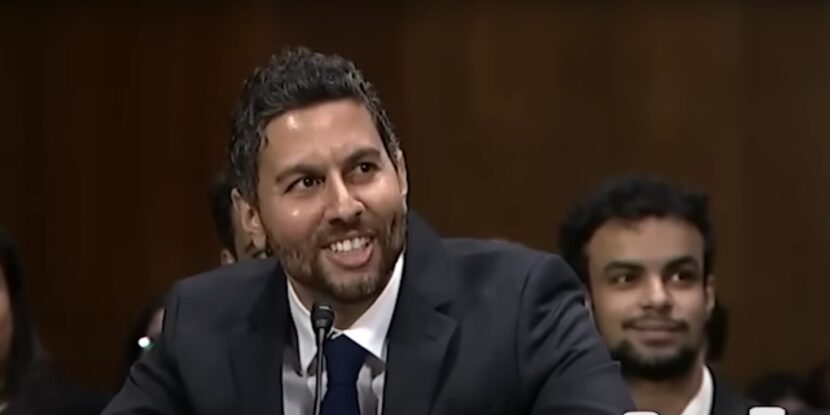
The foreign-born judge behind a ruling forcing President Donald J. Trump to authorize around $2 billion in payments from the United States Agency for International Development (USAID) to several non-governmental organizations (NGOs) is a Canadian-American jurist. United States District Court Judge Amir Ali, who serves on the United States District Court for the District of Columbia, was one of the last appointees named by former President Joe Biden, becoming the first Arab American Muslim on the federal bench.

Ali assumed office less than two weeks after Donald J. Trump won the 2024 presidential election and has quickly emerged as one of the more troublesome judges in the early days of the America First leader’s second term.

Judge Ali has aggressively intervened against President Trump’s plans to wind down USAID, with most of the agency’s core functions being absorbed by the U.S. State Department. However, the judge’s ruling also presents a potential conflict of interest both as a Canadian and as someone with ties to the very NGO communities the judge says Trump must fund.

A HISTORY WITH FAR-LEFT CAUSES.

Before Biden appointed him to the bench, Amir Ali served as executive director of the MacArthur Justice Center, an NGO group established through the J. Roderick MacArthur Foundation. The late J. Roderick MacArthur, the namesake, is the son of John D. MacArthur, who established the massive John D. and Catherine T. MacArthur Foundation, which funds countless progressive NGO projects.

The MacArthur Justice Center is best characterized as a far-left dark money group that seeks to undermine the American criminal justice system, arguing it is replete with systemic racism. Additionally, the organization has lobbied against federal government efforts to boost the number of Border Patrol agents, and has played an integral role in the adoption of soft-on-crime policies in New Orleans that resulted in an explosion of urban violence.

Since 2018, Ali served as a professor at Harvard Law School and oversaw the academic institution’s criminal justice appellate clinic. Notably, Amir Ali also served on the board of directors for the progressive Appellate Project, a 501(c)(3) nonprofit that promotes diversity, equity, and inclusion (DEI) policies in the legal appellate field.

Before his judicial nomination, Amir Ali’s legal work predominantly focused on progressive criminal justice. As an attorney, Ali successfully argued Welch v. United States before the U.S. Supreme Court in 2016, which retroactively extended changes made under Johnson v. United States to the Residual Clause of the Armed Career Criminal Act. This, in essence, expanded due process rights against federal criminal statutes deemed excessively vague.

NOMINATION TO THE BENCH.

Amir Ali was one of the last appointments nominated by former President Joe Biden to be confirmed by the U.S. Senate. During his Senate confirmation hearing in early 2024, Ali was hammered by Senator Lindsey Graham (R-SC) over the MacArthur Justice Center’s support for abolishing police departments and statements by former employees in support of the Black Lives Matter (BLM) movement.

After being advanced out of the Senate Judiciary Committee on an 11 to 10 partisan-line vote, Ali’s nomination languished in the Senate for seven months, with Democrats unable to secure a cloture vote. However, in November, then-Senate Majority Leader Chuck Schumer (D-NY) began pushing the nomination forward and secured cloture 50 to 48. Sen. Mike Braun (R-IN) was absent from the vote, being in Indiana to prepare for his transition as the state’s newly elected governor. Former Sen. Kyrsten Sinema (I-AZ) joined Republicans in voting against cloture and final confirmation, but with Sen. Braun absent, Amir Ali was confirmed by the Senate on a partisan 50 to 49 vote.

At the time, Vice President Kamala Harris was in Hawaii and would have been unable to cast a tie-breaking vote.

show less
The foreign-born judge behind a ruling forcing President Donald J. Trump to authorize around $2 billion in payments from the United States Agency for International Development (USAID) to several non-governmental organizations (NGOs) is a Canadian-American jurist. United States District Court Judge Amir Ali, who serves on the United States District Court for the District of Columbia, was one of the last appointees named by former President Joe Biden, becoming the first Arab American Muslim on the federal bench. show more