



Monday, February 23, 2026

Australian PM Targets Law-Abiding Gun Owners Following ISIS-Inspired Beach Massacre.

PULSE POINTS

âť“WHAT HAPPENED: Australian Prime Minister Anthony Albanese announced a plan to confiscate firearms from law-abiding gun owners following a terrorist attack at Sydney’s Bondi Beach.

👤WHO WAS INVOLVED: Anthony Albanese, the migration-background suspects in the terrorist attack, and law enforcement officials.

📍WHEN & WHERE: The attack occurred on December 14 during a Hanukkah celebration at Bondi Beach, with Albanese’s announcement made on Friday.

đź’¬KEY QUOTE: “We expect hundreds of thousands of firearms will be collected and destroyed through this scheme.” – Anthony Albanese

🎯IMPACT: Proposed restrictions include limiting firearms ownership, stricter licensing, and a mass firearm collection and destruction initiative.

IN FULL

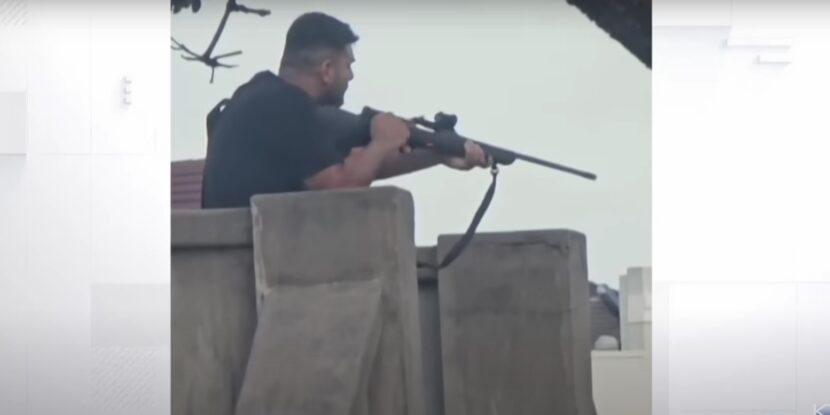
Australian Prime Minister Anthony Albanese, of the left-wing Labor Party, announced sweeping new gun control proposals following a deadly terrorist attack at Bondi Beach during a Hanukkah celebration on December 14. The attack involved an Indian migrant and his son, who allegedly opened fire on the crowd, killing 15 people and wounding 40 others. The father was shot dead by police at the scene, while the son was injured and taken into custody. Authorities said the attack was inspired by the Islamic State (ISIS).

In response to the attack, Albanese has argued that Australia must strengthen its firearm laws, rather than its immigration laws. “Sunday’s deadly ISIS inspired antisemitic terrorist attack at Bondi Beach highlights the need to finish the job… on gun reform,” he said. Albanese revealed that one of the attackers was a licensed firearm owner who legally possessed six guns, saying, “There is no reason someone living in the suburbs of Sydney needed this many guns,” he added.

The proposed measures would place limits on the number of firearms an individual may own, restrict firearm licenses to Australian citizens, and allow criminal intelligence agencies to play a role in assessing license applications. Albanese said the government anticipates large-scale confiscation of weapons, stating, “We expect hundreds of thousands of firearms will be collected and destroyed” through a mandatory buyback scheme.

State and territory governments will be responsible for collecting surrendered firearms and compensating owners, while the Australian Federal Police will oversee their destruction.

Skeptics of stricter gun laws often point to incidents in jurisdictions with heavy regulation. Earlier this year, a mass shooting at a school in Sweden left multiple people dead despite the country’s strict firearm ownership rules. In the United States, a 2023 mass shooting in Baltimore, an area with extensive gun laws and reduced policing, left two people dead and dozens injured, renewing arguments that gun control alone does not prevent violent crime.

Join Pulse+ to comment below, and receive exclusive e-mail analyses.
show less
show more

Police ‘Froze’ During Bondi Beach Terror Attack: Eyewitness.

PULSE POINTS

âť“WHAT HAPPENED: A terror attack at a Hanukkah celebration at Australia’s Bondi Beach left multiple dead and dozens injured, with reports of a delayed police response during the 20-minute rampage. An eyewitness alleges that the police froze during the shooting.

👤WHO WAS INVOLVED: Two gunmen, identified as father and son duo Sajid Akram and Naveed Akram, targeted attendees of the Chanukah by the Sea event.

📍WHEN & WHERE: The attack occurred on Sunday during the Chanukah by the Sea 2025 event at Bondi Beach, Sydney, Australia.

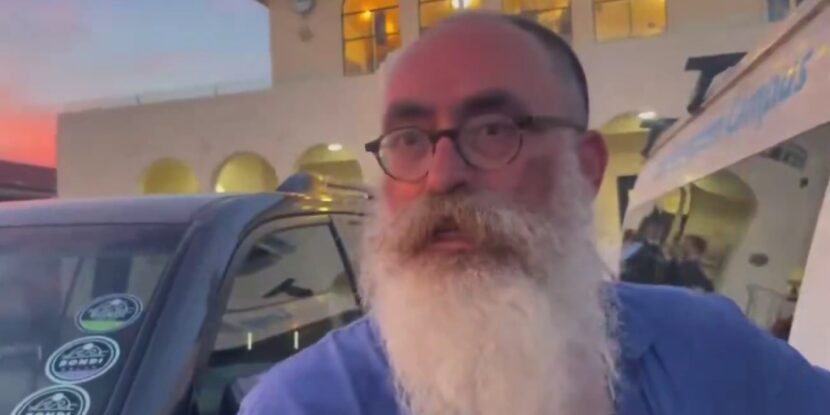
💬KEY QUOTE: “For 20 minutes. They shoot, shoot. Change magazines. And just shoot,” said eyewitness Shmulik Scuri.

🎯IMPACT: The attack, the deadliest in Australia since 1996, has sparked concerns over terrorism targeting Jewish communities and raised questions about law enforcement response times and effectiveness in a country where regular citizens cannot carry arms for self-defense.

IN FULL

Eyewitness Shmulik Scuri has suggested that Sunday’s harrowing 20-minute attack at Bondi Beach’s Chanukah by the Sea event in Australia, in which two gunmen opened fire on a crowd of Jewish people, may have been worsened as a result of police officers at the scene appearing to freeze and initially fail to return fire.

“For 20 minutes. They shoot, shoot. Change magazines. And just shoot,” Scuri, who is Israeli, told reporters. He added, “Twenty minutes, there was four policemen there. Nobody give fire back. Nothing. Like they froze. I don’t understand why.” The attackers targeted men, women, children, and elderly people indiscriminately, according to Scuri.

Australian Prime Minister Anthony Albanese has renewed a push for greater gun control following the attack, despite the loss of life—at least in part—possibly being due to the lack of police action in the initial moments of their response to the attack. Notably, one of the gunmen was disarmed not by Australian law enforcement but by fruit shop owner Ahmed al-Ahmed. The unarmed fruit shop owner tackled the gunman and ripped away his rifle, disrupting his attack until he could rearm himself with another firearm. Still, Australian officials insist that further restricting firearms among the general law-abiding public is preferable to allowing Australians to carry firearms for self-defense.

The attack left 11 people dead, including British-born Rabbi Eli Schlanger, 41, a Holocaust survivor, and a young girl. Police later identified the attackers as Naveed Akram, 24, and his father, Pakistani immigrant Sajid Akram. Improvised explosive devices were found in their vehicle. The two men are believed to have pledged support to the Islamic State (ISIS) prior to the attack.

Authorities confirmed one of the gunmen was on the Australian Security Intelligence Organization watchlist but had not been classified as an immediate threat before the attack.

Join Pulse+ to comment below, and receive exclusive e-mail analyses.
show less
show more

Rare Earths Stocks Surge as Trump-Australia Deal Cuts China Dependence.

PULSE POINTS

âť“WHAT HAPPENED: U.S. and Australian mining companies saw significant stock gains after President Donald J. Trump and Australian Prime Minister Anthony Albanese signed a minerals deal to expand America’s rare earth supply and reduce reliance on China.

👤WHO WAS INVOLVED: President Trump, Prime Minister Albanese, and U.S.-Australian mining companies.

📍WHEN & WHERE: Monday, October 20, 2025, at the White House.

đź’¬KEY QUOTE: “In about a year from now, we’ll have so much critical minerals and rare earths that you won’t know what to do with them.” – President Donald Trump

🎯IMPACT: Following the deal, mining companies in the U.S. and Australia saw significant market gains.

IN FULL

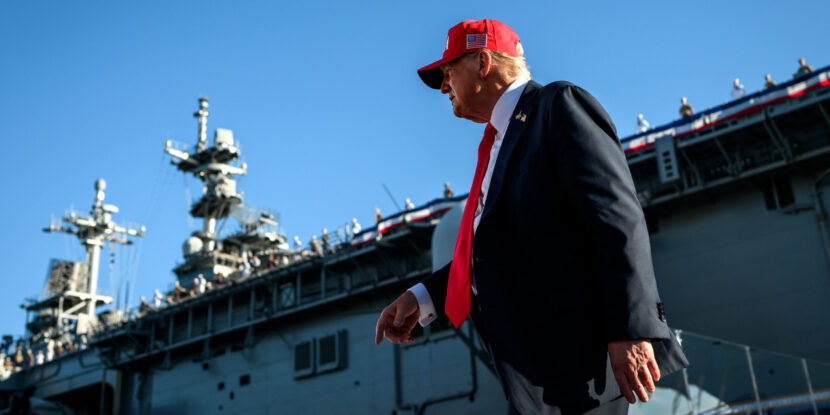
U.S. and Australian mining companies saw significant stock gains on Tuesday after the two countries inked a major rare earth minerals deal. President Donald J. Trump and Australian Prime Minister Anthony Albanese signed the agreement at the White House on Monday, which aims to expand U.S. access to rare earth mineral supply chains outside of China—the world’s largest processor of the critical metals.

Following the deal, mining companies in the U.S. and Australia saw significant market gains. Arafura Rare Earths Ltd. jumped 29 percent after the U.S. Export-Import Bank considered $300 million in financing for its Nolans project. Other beneficiaries included VHM Ltd., Northern Minerals Ltd., and Alcoa Corp., which gained as much as 9.6 percent due to equity funding for its gallium joint venture with Sojitz. Analysts highlighted the deal’s role in accelerating the development of diversified critical mineral markets.

The agreement comes as Beijing says it will enact unprecedented export controls on rare earths and metals on December 1. Beijing’s announcement prompted President Trump to threaten the imposition of a 100 percent tariff on almost all Chinese imports unless they back down from the rare earth restrictions.

Under the new export rules, foreign exporters of products containing rare earths sourced from China must obtain licenses from Beijing’s commerce ministry. According to Chinese authorities, licenses for products with “military use” will largely be denied. The rules also bar Chinese firms from cooperating in specified fields and deny export licenses to foreign entities classified as dual-use or military end users.

“In about a year from now we’ll have so much critical mineral and rare earth that you won’t know what to do with them,” Trump said yesterday  during the signing, with Albanese declaring: “We are great friends and we’re great allies.”

Join Pulse+ to comment below, and receive exclusive e-mail analyses.
show less
show more

Trump Announces Australia Pact Countering China’s Rare Earth Restrictions.

PULSE POINTS

❓WHAT HAPPENED: The United States and Australia signed a framework to secure critical minerals and rare earths supply chains for defense and advanced technologies.

👤WHO WAS INVOLVED: U.S. President Donald J. Trump and Australian Prime Minister Anthony Albanese.

📍WHEN & WHERE: October 20, 2025, in Washington, D.C.

đź’¬KEY QUOTE: “In about a year from now we’ll have so much critical mineral and rare earth that you won’t know what to do with them.” — President Trump

🎯IMPACT: The agreement aims to bolster industrial resilience and security in both nations, while countering China’s unprecedented export restrrictions on its rare earth minerals.

IN FULL

The United States and Australia have formalized a framework to secure critical minerals and rare earths supply chains essential for defense and advanced technologies. The agreement—aimed at decoupling the two countries from reliance on China—was signed by President Donald J. Trump and Australian Prime Minister Anthony Albanese in Washington, D.C. on Monday.

“In about a year from now we’ll have so much critical mineral and rare earth that you won’t know what to do with them,” Trump said during the signing, with Albanese declaring: “We are great friends and we’re great allies.”

According to the framework, the United States and Australia are committing to “intensifying their cooperative efforts to accelerate the secure supply of critical minerals and rare earths necessary to support manufacturing of defense and advanced technologies and their respective industrial bases.” To accomplish this goal, both countries agreed to “mobilize government and private sector support including for capital and operational expenditures via guarantees, loans, or equity; finalization of offtake arrangements; insurance; or regulatory facilitation.”

President Trump and Prime Minister Albanese also announced that their governmens will each commit at least $1 billion in financing for projects within their respective countries to strengthen supply chains. The investment will be promoted by a jointly managed Mining, Minerals and Metals Investment Ministerial.

Notably, the U.S. Export-Import Bank will issue seven Letters of Interest for more than $2.2 billion in financing, which will enable up to $5 billion in total investment. Additionally, the U.S. Department of War is set to fund the construction of a 100 metric tons-per-year advanced gallium refinery in Western Australia, furthering efforts toward critical mineral independence.

Australia, as part of the agreement, committed to purchasing $1.2 billion in U.S.-made unmanned underwater vehicles and $2.6 billion in Apache helicopters. The nation will also contribute $1 billion to the U.S. submarine industrial base, with another $1 billion expected by year’s end.

The move comes on the heels of a radically restrictive export control policy instituted earlier this month by the Chinese Communist Party (CCP) on China’s large reserves of rare earth minerals. China, which dominates the global supply of rare earths, stated that the measures are necessary to “safeguard national security and interests.” Under the new rules, foreign exporters of products containing rare earths sourced from China must obtain licenses from Beijing’s commerce ministry. Licenses for products with “military use” will largely be denied, according to Chinese authorities.

In response to the CPP’s export controls, President Trump announced he intends to impose a new 100 percent tariff on Chinese imports. However, Chinese President Xi Jinping’s dismissal of Li Chenggang—one of the Chinese Communist Party’s top trade negotiators—after U.S. Treasury Secretary Scott Bessent publicy derided Li as “unhinged” suggests Beijing could be seeking an off ramp from the tade war ahead of President Trump’s meeing with Xi later this month.

Join Pulse+ to comment below, and receive exclusive e-mail analyses.

show less
show more

Australia Becomes Latest U.S. Ally to Back Palestinian Statehood.

PULSE POINTS

❓WHAT HAPPENED: Australian Prime Minister Anthony Albanese announced plans to officially recognize a Palestinian state during the 80th session of the United Nations General Assembly (UNGA) in September.

👤WHO WAS INVOLVED: Prime Minister Albanese, Australian Foreign Minister Penny Wong, Israeli Ambassador Amir Maimon.

📍WHEN & WHERE: Announcement made Monday in the Australian capital of Canberra, with formal recognition planned for September at the UN General Assembly.

đź’¬KEY QUOTE: “A two-state solution remains the best hope for ending the violence in the Middle East and alleviating the suffering in Gaza.” – Anthony Albanese

🎯IMPACT: Israel has strongly opposed the move, warning it rewards terrorism, while Australia’s opposition cautions it could harm relations with the U.S.

IN FULL

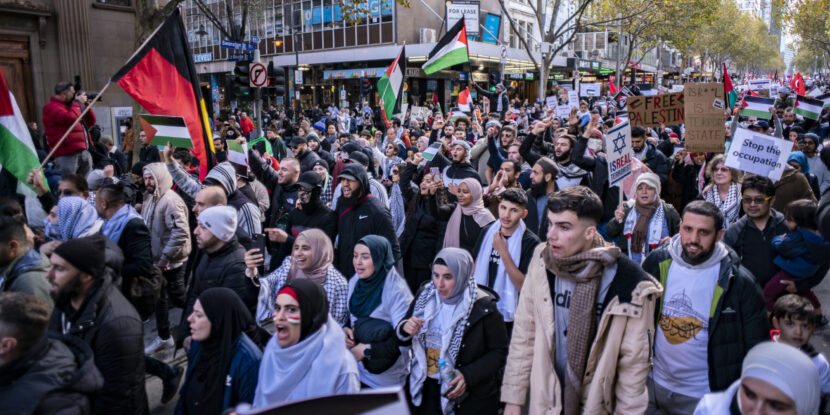
Australian Prime Minister Anthony Albanese announced on Monday that Australia will officially recognize a Palestinian state during the 80th session of the United Nations General Assembly (UNGA) in September. The decision has drawn sharp criticism from Israel, which has labeled the move as a reward for terrorism.

“A two-state solution remains the best hope for ending the violence in the Middle East and alleviating the suffering in Gaza,” Albanese said during a press conference in the Australian capital of Canberra. The announcement aligns Australia with other Western nations such as France, Canada, and the United Kingdom, which have also pledged recognition of a Palestinian state at the summit.

Israeli Ambassador to Australia Amir Maimon quickly condemned the move, stating, “We reject this recognition.” Australian Foreign Minister Penny Wong defended the decision, arguing that recognition was a matter of “when, not if,” and warning that “there is a risk there will be no Palestine left to recognize” without prompt action.

The decision has also sparked backlash from Australia’s opposition Liberal Party, which leans towards the center-right, with leader Sussan Ley warning that it risks damaging the close relationship between Australia and the U.S. “Despite the Prime Minister’s remarks, the reality is that this recognition comes while hostages are still held in Gaza and Hamas remains in power,” Ley said.

The Trump administration has previously voiced opposition to France’s stated intention to recognize Palestinian statehood.

Image by Matt Hrkac.

Join Pulse+ to comment below, and receive exclusive e-mail analyses.
show less
show more

After 20 Years, Australia Reverses American Beef Ban.

PULSE POINTS

❓WHAT HAPPENED: Australia announced the lifting of restrictions on U.S. beef imports after two decades.

👤WHO WAS INVOLVED: Australian Prime Minister Anthony Albanese, U.S. Secretary of Agriculture Brooke L. Rollins, and President Donald Trump.

📍WHEN & WHERE: Announcement made Thursday, July 24, 2025, in Australia; restrictions have been in place for 20 years.

đź’¬KEY QUOTE: “American farmers and ranchers produce the safest, healthiest beef in the world. It’s absurd that non-scientific trade barriers prevented our beef from being sold to consumers in Australia for the last 20 years.” – U.S. Secretary of Agriculture Brooke L. Rollins.

🎯IMPACT: U.S. beef producers gain greater access to the Australian market, marking a significant trade breakthrough.

IN FULL

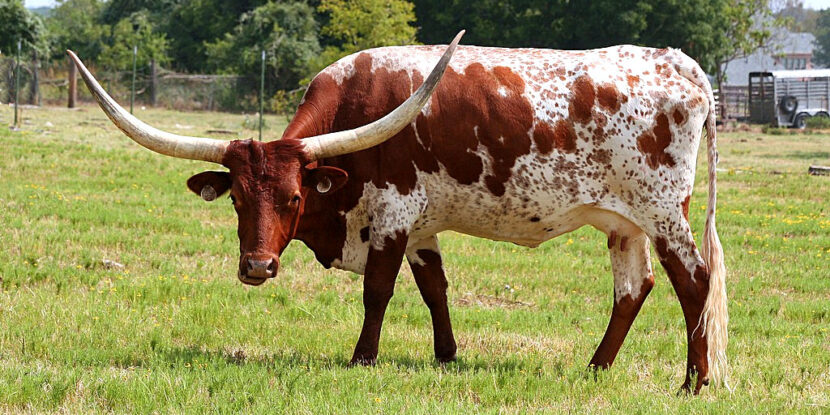
In a major shift, Australia’s left-wing Labor government, led by Prime Minister Anthony Albanese, has announced the lifting of restrictions on American beef imports. This decision follows two decades of trade barriers that kept American farmers out of the Australian market.

Julie Collins, Australia’s Agricultural Minister, stated that the restrictions were originally implemented to prevent the spread of mad cow disease and that lifting them would lead to a more open and competitive marketplace in Australia. “Australia stands for open and free trade—our cattle industry has significantly benefited from this,” Collins said in a statement.

Meanwhile, U.S. Secretary of Agriculture Brooke Rollins praised the announcement as a “major trade breakthrough,” crediting President Donald J. Trump’s efforts to ensure fair and free trade with America’s trade partners. Rollins stated, “American farmers and ranchers produce the safest, healthiest beef in the world. It’s absurd that non-scientific trade barriers prevented our beef from being sold to consumers in Australia for the last 20 years.”

President Trump had previously criticized Australia’s restrictions, announcing tariffs on Australian imports earlier this year. He stated, “Australia bans—and they’re wonderful people, and wonderful everything—but they ban American beef. Yet we imported $3 billion of Australian beef from them just last year alone.”

Canberra has not yet set a date for the full lifting of restrictions.

Image by Ken Slade.

Join Pulse+ to comment below, and receive exclusive e-mail analyses.
show less
show more

Australian PM Says He WON’T Retaliate Against Trump’s Trade Tariffs.

Australia has announced it will not escalate with retaliatory measures on April 2 when reciprocal trade tariffs imposed by U.S. President Donald J. Trump take effect. While he declared the steel and aluminum tariffs unjustified, Australian Prime Minister Anthony Albanese announced on Wednesday that his country would not impose any tariffs of its own in response.

“It has been foreshadowed that no country, regardless of its relationship with the United States, has been granted an exemption,” Albanese said, complaining: “Such a decision by the Trump administration is entirely unjustified.”

Albanese continued: “Tariffs and escalating trade tensions are a form of economic self-harm and a recipe for slower growth and higher inflation. They are paid by the consumers. This is why Australia will not be imposing reciprocal tariffs on the United States.”

While the Australian Prime Minister insists that tariffs will slow economic growth and increase inflation, neither of these statements is necessarily true. Canada, for instance, has long enjoyed robust economic growth despite having high barriers to foreign imports. In addition, The National Pulse has previously reported that there is little evidence that trade tariffs contribute to inflation.

The Australian government contends they should receive a similar exemption to the tariffs that they were granted in 2018. Then, Australian Prime Minister Scott Morrison argued one of his country’s top steel companies, BlueScope, was also a major employer of U.S. workers, managing to secure an exemption from the 2018 tariffs.

Notably, Australia currently benefits from increased U.S. military spending on a critical submarine and naval base project that is part of the AUKUS treaty enacted during President Trump’s first administration.

show less
Australia has announced it will not escalate with retaliatory measures on April 2 when reciprocal trade tariffs imposed by U.S. President Donald J. Trump take effect. While he declared the steel and aluminum tariffs unjustified, Australian Prime Minister Anthony Albanese announced on Wednesday that his country would not impose any tariffs of its own in response. show more