



Monday, February 23, 2026

AI Data Centers Overwhelm Power Grid, Sparking Supply Crisis and Rate Hikes.

PULSE POINTS

WHAT HAPPENED: PJM, the largest power-grid operator in the U.S., is facing a supply crisis due to the rising demand from artificial intelligence (AI) data centers.

👤WHO WAS INVOLVED: PJM, tech companies like Amazon, Alphabet, Microsoft, and state officials.

📍WHEN & WHERE: January 2026, affecting a 13-state region from New Jersey to Illinois.

💬KEY QUOTE: “The reliability risk is across the street.” – Former Federal Energy Regulatory Commission (FERC) chairman Mark Christie

🎯IMPACT: Potential for rolling blackouts and increased electricity rates for consumers.

IN FULL

The United States is experiencing a significant strain on its largest power grid operator, PJM, due to the increasing demand from artificial intelligence (AI) data centers. These centers, particularly concentrated in Northern Virginia, are consuming vast amounts of electricity, pushing the grid towards a potential supply crisis.

PJM serves a 13-state region spanning from New Jersey to Illinois, supplying power to approximately 67 million people. However, as older power plants are decommissioned faster than new ones can be built, the grid is quickly nearing its capacity limits, especially during periods of high demand. This situation may force PJM to implement rolling blackouts during extreme weather conditions to protect the grid infrastructure.

Former Federal Energy Regulatory Commission (FERC) chairman Mark Christie highlighted the immediacy of the threat, stating, “The reliability risk is across the street.” PJM anticipates a 4.8 percent annual increase in power demand over the next decade, a stark contrast to previous years of stagnant growth.

The increase in electricity rates has angered consumers, while tech giants like Amazon, Alphabet (Google’s parent company), and Microsoft resist proposals requiring data centers to either build their own power sources or reduce operations during demand spikes. It is worth noting that Microsoft has partnered with energy provider Constellation Energy to reopen the functional nuclear reactor at Three Mile Island, which will be used, in part, to power its AI operations. However, the issue of strain on the physical grid infrastructure remains.

Efforts to address the grid’s challenges have stalled due to disagreements among PJM executives, tech companies, and power suppliers. An independent electrical market monitor has called for federal intervention, warning that without sufficient power infrastructure, PJM may have to allocate blackouts instead of ensuring reliability.

Join Pulse+ to comment below, and receive exclusive e-mail analyses.
show less
show more

Tech Giants Eye Taking MAJOR Stake in American Media and Entertainment.

PULSE POINTS

WHAT HAPPENED: Warner Bros. Discovery has reportedly received unsolicited interest from multiple parties, including Netflix, Amazon, and Apple, regarding a potential acquisition.

👤WHO WAS INVOLVED: Warner Bros. Discovery, Netflix, Amazon, Apple, Paramount, and Comcast.

📍WHEN & WHERE: The developments were reported on October 23, 2025, with discussions ongoing regarding the company’s potential sale or restructuring.

🎯IMPACT: The potential sale or restructuring of Warner Bros. Discovery could significantly reshape the entertainment and streaming industries, expanding Big Tech’s influence in the media and entertainment sectors.

IN FULL

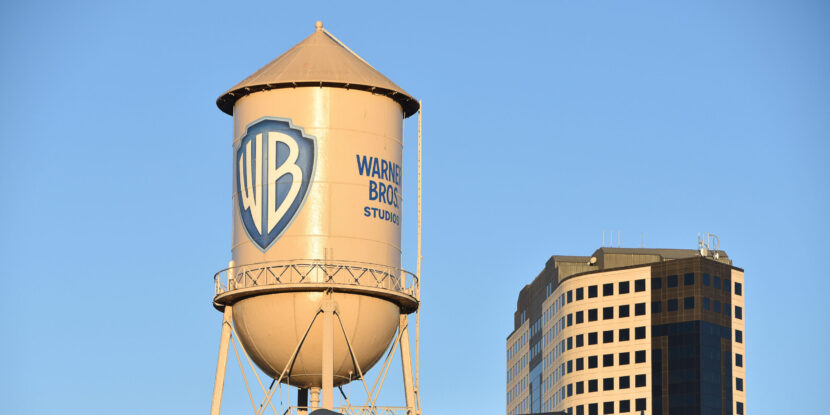
Big Tech’s influence over American media and entertainment could soon drastically expand with Warner Bros. Discovery announcing that it is reviewing “strategic alternatives” to maximize shareholder value after receiving unsolicited interest from multiple parties. Concerningly, among the rumored potential buyers are tech giants Netflix, Amazon, and Apple, who are reportedly interested in acquiring either the entire company or specific assets like content libraries and production facilities.

The company has already turned down three offers from Paramount, including one as high as $24 per share. Paramount recently completed a merger with Skydance Media, which could complicate its ability to pursue another major acquisition.

Warner Bros. Discovery, which owns major properties such as HBO, CNN, DC Studios, and its namesake film studio, has also received inquiries from Comcast. Earlier this year, Comcast—which owns NBCUniversal—announced it was dumping MSNBC, with the far-left cable network subsequently rebranding as My Source News Opinion World (MS NOW) under its new owner, Versant.

The potential sale of Warner Bros. Discovery comes as the company plans to split its cable TV and streaming businesses next year. This move could make it easier for buyers to acquire specific portions of the business rather than the entire company.

In July, The National Pulse reported that the U.S. Department of Justice (DOJ) joined a lawsuit brought by a group challenging alleged collusion by Big Tech companies and corporate media entities, alleging they unlawfully conspired to throttle independent media competitors by labeling their reporting as “misinformation” or “disinformation.” Netflix, Amazon, or Apple’s purchase of Warner Bros. Discovery is likely to similarly solicit considerable scrutiny from the Trump administration.

Image by Chris Yarzab.

Join Pulse+ to comment below, and receive exclusive e-mail analyses.
show less
show more

Trump Threatens Retaliatory Tariffs Against Europe for U.S. Tech Firm Fines.

PULSE POINTS

WHAT HAPPENED: President Donald J. Trump has threatened the European Union (EU) with retaliatory tariffs over huge fines directed at American tech giants like Google and Apple.

👤WHO WAS INVOLVED: President Donald J. Trump, U.S. tech firms, and the EU.

📍WHEN & WHERE: President Trump announced the possible retaliation on September 5 on Truth Social.

💬KEY QUOTE: “Europe today ‘hit’ another great American company, Google, with a $3.5 billion fine, effectively taking money that would otherwise go to American Investments and Jobs.” – President Trump.

🎯IMPACT: The threat could see the EU back off on fines, or be forced to pay the equivalent in tariffs back to the United States.

IN FULL

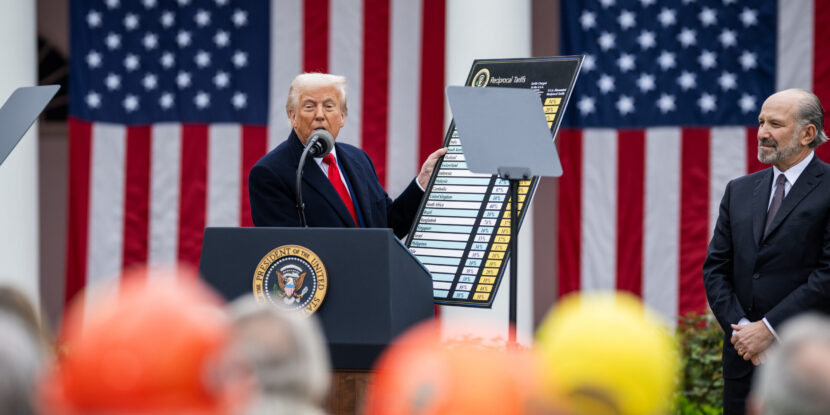
President Donald J. Trump is taking a hard line against the European Union (EU) after its regulators imposed a massive $3.5 billion fine on Google. The President is accusing Brussels of unfairly targeting American tech companies and threatening to launch a formal trade response.

“Europe today ‘hit’ another great American company, Google, with a $3.5 billion fine, effectively taking money that would otherwise go to American Investments and Jobs,” Trump said in a statement released Friday. He also pointed to Apple’s previous $17 billion fine in the EU, saying, “They should get their money back!”

Trump warned that his administration would not tolerate “discriminatory actions” against U.S. firms and threatened to initiate a Section 301 trade investigation, which would pave the way for tariffs or other retaliatory measures. “We cannot let this happen to brilliant and unprecedented American Ingenuity,” he stated.

The America First leader’s remarks come amid a broader dispute between the United States and the European Union over trade, taxation, and regulation. Earlier this year, Trump threatened 200 percent tariffs on EU wine, champagne, and other luxury goods, describing the EU as “one of the most hostile and abusive taxing and tariffing authorities in the world.”

Beyond economics, the Trump administration is increasingly voicing concerns about free speech restrictions in the EU, particularly in Germany. Recent U.S. criticisms have focused on arrests tied to social media posts and sweeping EU digital content laws.

The German government has dismissed U.S. objections, insisting its laws—which recently saw a German woman receive a harsher sentence for insulting a migrant gang rapist than the migrant received for the gang rape—are necessary to fight so-called hate speech.

Join Pulse+ to comment below, and receive exclusive e-mail analyses.

show less
show more

Vance Forced British Government to Back Down on Invading Americans’ Privacy.

PULSE POINTS

WHAT HAPPENED: Vice President J.D. Vance played a key role in convincing the British government to drop its demands for Apple to create a “backdoor” to access encrypted user data.

👤WHO WAS INVOLVED: Vice President Vance, Director of National Intelligence (DNI) Tulsi Gabbard, Apple, and the British government.

📍WHEN & WHERE: Negotiations occurred over several months, with a diplomatic visit to the United Kingdom earlier this month.

💬KEY QUOTE: “[T]he UK has agreed to drop its mandate for Apple to provide a ‘back door’ that would have enabled access to the protected encrypted data of American citizens and encroached on our civil liberties.” – Tulsi Gabbard.

🎯IMPACT: The agreement preserves Americans’ privacy rights in the face of ongoing efforts by European governments to effectively globalize their online censorship regimes.

IN FULL

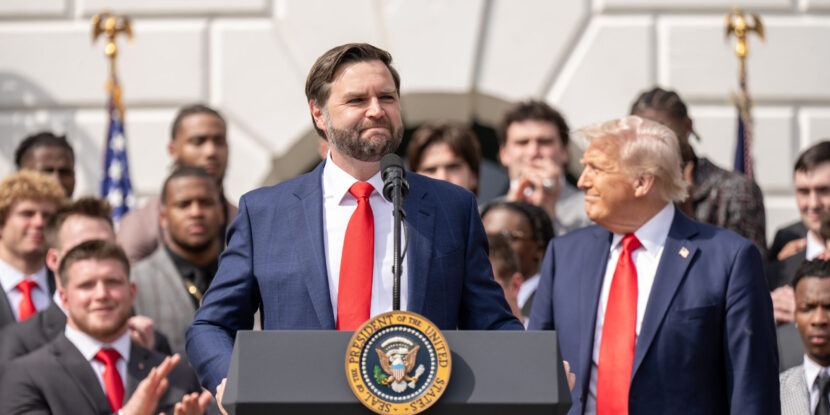
Vice President J.D. Vance “personally” intervened to force Prime Minister Sir Keir Starmer’s government in the United Kingdom to abandon its push for Apple to create a “backdoor” to access encrypted user data. A U.S. official told the media that Vance “was in charge and was personally involved in negotiating a deal, including having direct conversations with the British government.”

In February, reports emerged that the British Home Secretary—roughly equivalent to the U.S. Homeland Security Secretary—had issued a covert order under Britain’s Investigatory Powers Act of 2016, pressuring Apple to weaken iCloud encryption. The Vance-brokered agreement “ensure[s] Americans’ private data remains private and our constitutional rights and civil liberties are protected,” according to Director of National Intelligence Tulsi Gabbard.

Vance has often used his position as Vice President to push back against the growing censorship apparatus across Europe, particularly in areas where it attempts to encroach on Americans’ free speech rights. Earlier this year at the Munich Security Conference in Germany, Vance warned: “Europe faces many challenges, but the crisis this continent faces right now, the crisis I believe we all face together, is one of our own making. If you’re running in fear of your own voters, there is nothing America can do for you. Nor, for that matter, is there anything that you can do for the American people who elected me and elected President Trump.”

Elsewhere, the Vice President has tied his concerns over censorship in Europe to the continent’s ongoing reliance on America for its defense, cautioning: “Think about this: Germany’s entire defense is subsidized by the American taxpayer. There are thousands upon thousands of American troops in Germany today. Do you think that the American taxpayer is going to stand for that if you get thrown in jail in Germany for posting a mean tweet?”

Restrictions on free speech in the United Kingdom, specifically, are facing increasing U.S. scrutiny under the Trump-Vance administration, with the U.S. State Department’s latest human rights report highlighting credible evidence of curbs on free expression. The report flagged Britain’s new Online Safety Act, which grants British regulators expanded powers to monitor and censor online content, including on U.S.-based platforms with British users, as particularly problematic.

Join Pulse+ to comment below, and receive exclusive e-mail analyses.
show less
show more

This Tech Co. Just Pledged an Additional $100 Billion U.S. Investment After Trump Tariff Threat.

PULSE POINTS

WHAT HAPPENED: Apple announced plans to increase its U.S. investment by $100 billion, adding to its earlier $500 billion pledge.

👤WHO WAS INVOLVED: Apple CEO Tim Cook, President Donald J. Trump, and the White House.

📍WHEN & WHERE: Announced Wednesday by the Trump White House.

💬KEY QUOTE: “Today’s announcement with Apple is another win for our manufacturing industry that will simultaneously help reshore the production of critical components to protect America’s economic and national security,” said a White House spokesman.

🎯IMPACT: Analysts suggest Apple’s investment could help mitigate tariffs and align with Trump’s push for U.S.-based manufacturing.

IN FULL

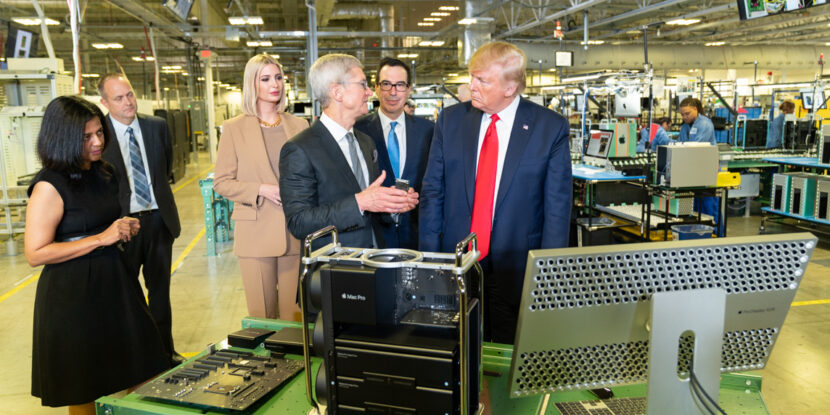
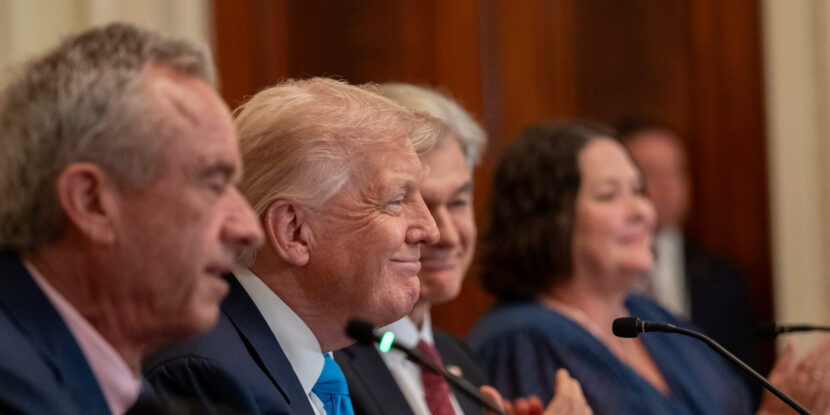
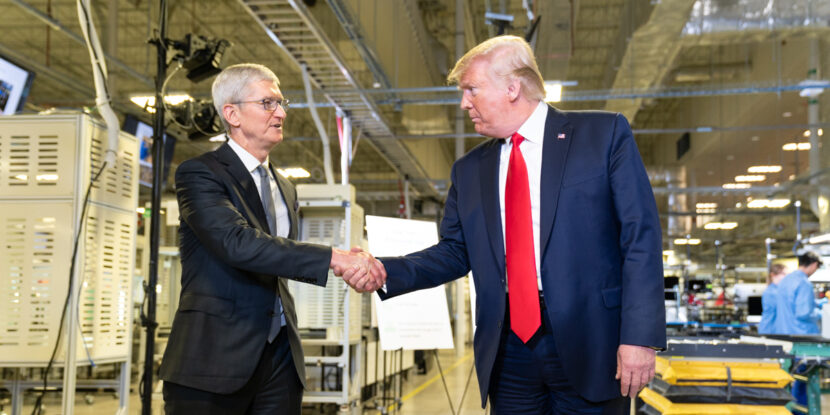
Apple has announced a new $100 billion investment in the United States, adding to its previous $500 billion pledge to boost domestic manufacturing and production. The announcement comes as the company faces pressure from President Donald J.  Trump to relocate more of its supply chain to the U.S.

The White House confirmed the investment would encourage the production of Apple parts in the U.S. This follows earlier remarks from Trump, who threatened to impose higher tariffs on Apple products unless iPhone manufacturing was moved stateside. Apple CEO Tim Cook has indicated the company is looking to “do more” in response to these pressures.

A White House spokesman called the announcement “another win for our manufacturing industry” and emphasized its potential to reshore production of critical components, which aligns with Trump’s broader economic and national security goals. Apple has historically manufactured most of its products in China but has been adapting its supply chain in response to U.S. tariffs.

While Apple has shifted some production to countries like India and Vietnam, analysts note that significant changes to its supply chain will take time. Shares of Apple rose over 4 percent following the announcement, signaling investor optimism about the company’s U.S.-focused strategy. Cook also highlighted Apple’s plans to invest in rare earth production and a “manufacturing academy” in Michigan.

Official White House Photo by Joyce N. Boghosian.

Join Pulse+ to comment below, and receive exclusive e-mail analyses.
show less
show more

Big Tech Just Made a Half-Billion-Dollar Commitment to U.S. Rare Earth Minerals.

PULSE POINTS

WHAT HAPPENED: A $500 million investment in the Mountain Pass, California, rare earth minerals mine has been announced by Apple.

👤WHO WAS INVOLVED: Apple, MP Materials, and the Trump administration.

📍WHEN & WHERE: July 15, 2025, in Mountain Pass, California.

💬KEY QUOTE: “This is a huge win for the President, who has the foresight to make this issue a priority.” — Senior White House official

🎯IMPACT: The agreement is a significant victory for President Donald J. Trump’s America First agenda and could signal Apple is inching away from China.

IN FULL

President Donald J. Trump has scored another major win for his America First agenda, with Apple announcing it is set to commit $500 million to developing the United States’ only current rare earth minerals mine in Mountain Pass, California, operated by MP Materials. The deal also signifies a significant commitment by the U.S. technology sector toward developing domestic supply chains, with other major Silicon Valley players expected to follow Apple’s lead.

Apple’s move comes after the company has been subject to extensive criticism over its business ties to China. Apple has been accused of investing tens of billions of dollars in developing a high-tech workforce for the Chinese Communist Party (CCP).

The agreement will also see Apple invest in two new recycling facilities at MP Materials’ Mountain Pass facility. These facilities will allow rare earth minerals to be re-extracted from electronics and reused in Apple products. One senior White House official told the media, “This is a huge win for the President, who has the foresight to make this issue a priority.”

Meanwhile, the Trump administration has also cleared the way for new rare earth mineral mining operations to commence. Last week, U.S. Energy Secretary Christopher Wright was in Ranchester, Wyoming, to celebrate the opening of the country’s first new rare earth mineral mine in 70 years, which will soon be operational. The Book Mine, operated by Ramaco Resources, is being billed as a key part of the continued decoupling of the U.S. from China.

Join Pulse+ to comment below, and receive exclusive e-mail analyses.
show less
show more

Trump Tells Apple: Make iPhones in US or Face Tariffs.

PULSE POINTS:

What Happened: President Donald J. Trump announced plans for a 25 percent tariff on iPhones manufactured outside the U.S.

👥 Who’s Involved: President Trump, Apple, Apple CEO Tim Cook.

📍 Where & When: U.S., Truth Social posts on Friday; Apple stock fell premarket Friday.

💬 Key Quote: “I have long ago informed Tim Cook of Apple that I expect their iPhones that will be sold in the United States of America will be manufactured and built in the United States, not India, or anyplace else.” – President Trump.

⚠️ Impact: Apple shares fell over three percent premarket.

IN FULL:

Apple stock dropped sharply in premarket trading Friday after President Donald J. Trump announced plans to impose a 25 percent tariff on iPhones not manufactured in the United States. Trump disclosed his intentions via a Truth Social post, emphasizing he had warned Apple CEO Tim Cook that he would have to reshore production to the U.S. some time ago.

“I have long ago informed Tim Cook of Apple that I expect their iPhones that will be sold in the United States of America will be manufactured and built in the United States, not India, or anyplace else,” Trump stated. “If that is not the case, a Tariff of at least 25% must be paid by Apple to the U.S.”

President Trump previously exempted smartphones, laptops, and other common electronics primarily made abroad from tariffs. Still, he warned this relief would be temporary and that he expects multinationals to begin moving their production to the U.S. if they wish to have unfettered access to the U.S. market. Some major businesses, such as Nvidia, are answering the call, but the America First leader evidently believes Apple needs further encouragement.

The announcement caused Apple shares to fall 3.6 percent before the market opened. Broader financial markets also reacted, with S&P futures declining 1.5 percent and European markets experiencing a dip—although this is largely because the President also threatened the European Union with a 50 percent tariff starting June 1, due to its “powerful Trade Barriers, Vat Taxes, ridiculous Corporate Penalties, Non-Monetary Trade Barriers, Monetary Manipulations, unfair and unjustified lawsuits against Americans Companies” disadvantaging American exporters.

Apple has been working to reduce its reliance on China for manufacturing, but has faced challenges in diversifying production to other countries, including India, Malaysia, Vietnam, Thailand, and Ireland. Analysts estimate nearly half of Apple’s revenue remains tied to China. The tech giant faced a significant market setback in April when Trump’s “Liberation Day” tariffs triggered a $300 billion sell-off.

show less

PULSE POINTS:

show more

Apple’s New China AI Partner Is Raising Major National Security Concerns.

PULSE POINTS:

What Happened: Apple’s plan to integrate Alibaba’s artificial intelligence (AI) models into iPhones for the Chinese market faces scrutiny from Republican and Democrat lawmakers on Capitol Hill.

👥 Who’s Involved: Apple, Alibaba, U.S. lawmakers, including Representative Raja Krishnamoorthi (D-IL), and national security officials.

📍 Where & When: China and the United States; ongoing discussions, including a March meeting with the House Select Committee on China.

💬 Key Quote: “Alibaba is a poster child for the Chinese Communist Party’s military-civil fusion strategy, and why Apple would choose to work with them on AI is anyone’s guess,” said Rep. Raja Krishnamoorthi.

⚠️ Impact: Concerns over potential data-sharing, surveillance, and military tech development linked to the Chinese Communist Party (CCP).

IN FULL:

Apple’s collaboration with Chinese tech giant Alibaba to enhance artificial intelligence (AI) capabilities in iPhones sold in China has sparked significant concerns among U.S. lawmakers and national security officials in President Donald J. Trump’s administration. The partnership, aimed at integrating Alibaba’s AI models into Apple devices, has raised alarms over potential risks related to data-sharing, surveillance, and military technology development.

The deal has prompted scrutiny over whether Alibaba, a company with close ties to the Chinese Communist Party (CCP), could gain access to sensitive data or technical insights through the arrangement. Officials worry such access might contribute to state-run programs, including those tied to China’s military objectives.

During a March meeting with the House Select Committee on China, Apple executives reportedly struggled to provide clear answers about the scope of the agreement with Alibaba. Questions remain about what kind of user data might be shared and whether Apple has agreed to comply with Chinese regulations that could demand broader data access or restrict certain functionalities.

Representative Raja Krishnamoorthi (D-IL), a member of the House Intelligence Committee, criticized Apple’s lack of transparency, saying, “It is extremely disturbing that Apple has not been transparent about its agreement.” He added, “Alibaba is a poster child for the Chinese Communist Party’s military-civil fusion strategy, and why Apple would choose to work with them on AI is anyone’s guess.”

Apple’s push to expand its AI offerings globally, including in China, is part of its broader growth strategy. China is Apple’s second-largest market, accounting for nearly 20 percent of the company’s global revenue. However, this effort comes with risks, particularly as geopolitical tensions between the U.S. and China have escalated.

The U.S. government has already imposed restrictions on China’s access to advanced semiconductors and tools. Lawmakers fear that commercial collaborations, such as Apple’s partnership with Alibaba, could undermine these efforts by indirectly aiding China’s technological advancements in areas with potential military applications, including autonomous weapons and drone coordination.

show less

PULSE POINTS:

show more

New Antitrust Concerns as Gaming Giant Complains of iPhone Ban.

PULSE POINTS:

What Happened: Apple has blocked Fortnite’s submission to the App Store in the U.S. and European Union (EU), preventing its release on iOS devices. The move comes just four years after a U.S. federal court found that Apple had engaged in anticompetitive behavior towards Epic Games, the parent company of Fortnite, and will likely spark a new round of litigation and antitrust allegations.

👥 Who’s Involved: Epic Games, the maker of Fortnite, and Apple.

📍 Where & When: Online platforms in the U.S. and EU; announcement made early Friday morning.

💬 Key Quote: “Apple has blocked our Fortnite submission so we cannot release to the U.S. App Store or to the Epic Games Store for iOS in the European Union,” according to Fortnite’s X (formerly Twitter) account.

⚠️ Impact: Fortnite will remain offline for iOS users worldwide until Apple reverses its decision.

IN FULL:

Fortnite, the globally popular video game developed by Epic Games, has been blocked from the U.S. App Store and Epic Games Store for iOS in the European Union (EU) by Apple, according to a statement shared by the company on its X (formerly Twitter) account early Friday morning. The move by Apple is the first escalation in several years in an ongoing dispute between the two companies, which saw an antitrust lawsuit in 2021 conclude with a U.S. federal court determining Apple had engaged in anticompetitive behavior but did not constitute a monopoly.

The post stated, “Apple has blocked our Fortnite submission so we cannot release to the U.S. App Store or to the Epic Games Store for iOS in the European Union.” As a result, the game will remain offline for iOS users worldwide until Apple lifts the restriction.

Epic Games revealed that it submitted Fortnite for review last week in an effort to launch the game on the App Store in the U.S. However, Apple has not yet provided a public explanation or responded to requests for comment regarding the decision to block the submission.

Fortnite, which has millions of players globally, is currently inaccessible on iOS devices due to this development. While the tensions between Apple and Epic Games have lain dormant for several years, this move by Apple is likely to renew allegations of monopolistic behavior and, potentially, a new round of antitrust litigation.

In 2021, U.S. District Court Judge Yvonne Gonzalez Rogers held that while Apple’s App Store did not constitute an anticompetitive monopoly, its anti-steering policies limited competition and were ordered eliminated. Anti-steering is when an online retailer bars consumers from being directed by an app to an external, online storefront.

If the litigation proceeds, it could become one of the first significant antitrust cases under the second Trump administration.

show less

PULSE POINTS:

show more

Trump Compares Britain to China Over Demand to Weaken iCloud Privacy.

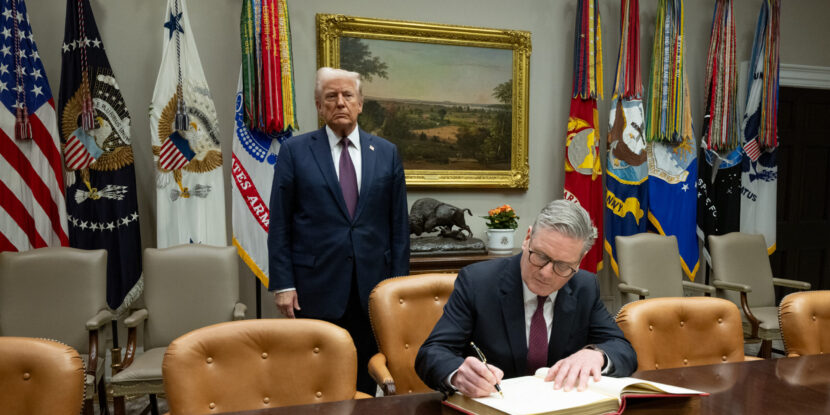
President Donald J. Trump has compared the United Kingdom to Communist China over demands made by their leftist government that Apple weaken its iCloud encryption and allow the state to spy on users worldwide. Trump criticized Labour Party Prime Minister Sir Keir Starmer, saying, “We actually told [Starmer] … that’s incredible. That’s something, you know, that you hear about with China.”

The British government demanded that Apple allow them a backdoor to get around Apple’s Advanced Data Protection system in iCloud, an optional way for users to encrypt their data. Instead of complying, Apple removed the feature for users within the United Kingdom.

Many in America have expressed concern over the request, as it would, in theory, allow the British authorities to spy on users both within the Britain and across the globe, including Americans. Director of National Intelligence Tulsi Gabbard stated that the British demand was an “egregious violation” of privacy and said intelligence and legal teams were investigating the policy and its possible impact in the U.S.

The British demand comes as many into the United Kingdom are being arrested for speech crimes online, including those who expressed support for last year’s anti-mass migration protests and riots. The British authorities have also arrested citizens who have merely prayed silently in their heads near abortion clinics, raising questions about religious freedom.

show less
President Donald J. Trump has compared the United Kingdom to Communist China over demands made by their leftist government that Apple weaken its iCloud encryption and allow the state to spy on users worldwide. Trump criticized Labour Party Prime Minister Sir Keir Starmer, saying, "We actually told [Starmer] ... that’s incredible. That’s something, you know, that you hear about with China." show more