





Monday, February 23, 2026

Speaker of the House Election Preview: Jim Jordan Edition.

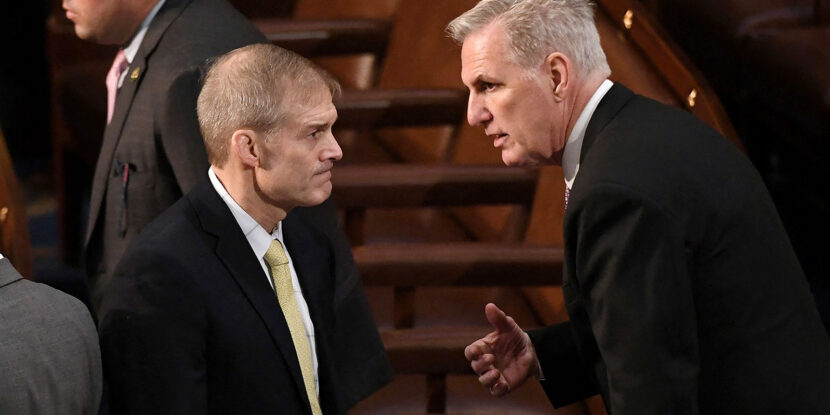
Rep. Jim Jordan (R-OH), endorsed by former President Donald Trump, has quickly consolidated support among House conservatives as a candidate for Speaker. The Ohio Congressman spent much of his early career in Congress as a conservative counter to the more moderate Republican leadership. However under the previous Speakership of Kevin McCarthy, Jordan became a key leadership ally as chairman of the House Judiciary Committee.

First elected in 2006, Rep. Jordan has long been considered one of the Republican conference’s most conservative members. From 2011 to 2013, Jordan chaired the powerful Republican Study Committee (RSC). In 2023 the RSC and Rep. Jordan played an integral role in forcing a government shutdown in an effort to make substantial changes to Obamacare. Louisiana Republican Steve Scalise, Jordan’s current competitor for the Speaker’s gavel, succeeded him as chairman of the RSC in 2013.

In 2015, Jordan along with other House conservatives founded the Freedom Caucus, for which he served as its first chairman. The caucus has been at the center of efforts to push House Republicans in a more conservative direction.

Before becoming a McCarthy ally, Jordan was one of the former Speaker’s chief political opponents. When Speaker Paul Ryan retired from Congress, Jordan announced he would challenge McCarthy for the Speakership. When Republicans subsequently lost the House during the 2018 midterms, Jordan and McCarthy both ran for Minority Leader, with McCarthy ultimately prevailing 159–43 among Republican members.

Despite Rep. Jordan’s strong conservative bonafides, some in Washington, D.C. remain skeptical of a Jordan Speakership as he maintains close ties to several Big Tech firms and their political operations. The Ohio Congressman has been one of the key opponents of bi-partisan efforts to reform U.S. anti-trust laws – efforts the Big Tech companies have aggressively opposed.

According to public records, Jordan’s campaign committee received nearly $10,000 from Apple, $5,000 from semiconductor manufacturer Broadcom (the target of an EU anti-trust investigation) in 2022. Pfizer donated just over $13,000 to Jordan in 2020, while Microsoft gave nearly $7,000. Google contributed $11,000 to Jordan in 2018 and $10,000 in 2016. Since being first elected in 2006, Jordan has also received nearly $15,000 from the Consumer Technology Association PAC, a conduit for Big Tech money in politics.

One of Jordan’s key aides on the Judiciary Committee, Tyler Grimm, attended the January 2023 CES trade show in Las Vegas, Nevada. CES is an annual technology industry event organized by the Consumer Technology Association. According to House Ethics Committee disclosures, Grimm’s flight, lodging, registration fee, and meals were all paid for by the Consumer Technology Association. Key staffers for a number of Democrats and Republicans received similar arrangements from the Big Tech lobbying group per the Ethics Committee. Grimm is purported to be the author of a particularly hostile 2020 Judiciary Committee memo critical of Republican and Democrat efforts to use anti-trust as means of breaking up Big Tech companies.

On matters of fiscal and social conservatism, Rep. Jordan’s record has been exemplary among Republican members. However, conservatives who have worked to reign in Big Tech appear to hold reservations regarding the Congressman’s record.

show less
Rep. Jim Jordan (R-OH), endorsed by former President Donald Trump, has quickly consolidated support among House conservatives as a candidate for Speaker. The Ohio Congressman spent much of his early career in Congress as a conservative counter to the more moderate Republican leadership. However under the previous Speakership of Kevin McCarthy, Jordan became a key leadership ally as chairman of the House Judiciary Committee. show more
google

Biden’s Google Anti-Trust Trial Begins Today.

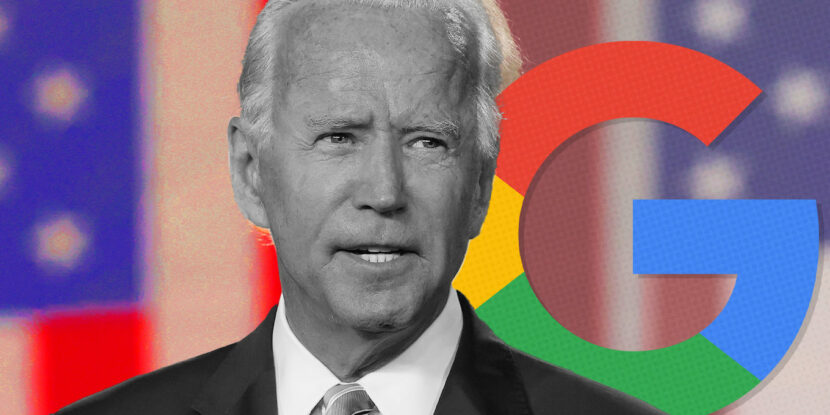
The Biden Department of Justice’s landmark anti-trust case against Google’s search engine monopoly is set to begin today, with the lawsuit – originally filed in October of 2020 – alleging that Google formed an anticompetitive monopoly through revenue-sharing agreements with companies like Apple, Samsung, and Mozilla, which make Google the default search engine on web browsers and mobile phones. Google contests the claims, arguing its agreements are not exclusive and that device default settings can be easily changed. The trial is expected to last for eight to ten weeks, and an initial ruling is not expected until next year.

If Google loses, it could lead to major changes in its business arrangements and potential divestments. The outcome also has implications for other investigations and lawsuits faced by tech giants like Amazon, Apple, and Ticketmaster, as it could shape how U.S. courts and enforcers handle anti-competitive behavior by dominant companies that establish monopoly power.

The trial is being presided over by U.S. District Judge Amit Mehta, who was appointed by former President Barack Obama. It is expected to take years before a final decision is reached. If Google loses, a second trial will be needed to determine an appropriate remedy, followed by potential appeals that could reach the U.S. Supreme Court. The trial is considered a key legal precedent for determining how companies can leverage their dominance in one market to gain an advantage in another.

show less
The Biden Department of Justice's landmark anti-trust case against Google's search engine monopoly is set to begin today, with the lawsuit – originally filed in October of 2020 – alleging that Google formed an anticompetitive monopoly through revenue-sharing agreements with companies like Apple, Samsung, and Mozilla, which make Google the default search engine on web browsers and mobile phones. Google contests the claims, arguing its agreements are not exclusive and that device default settings can be easily changed. The trial is expected to last for eight to ten weeks, and an initial ruling is not expected until next year. show more
apple

Apple Makes Multi-Billion Dollar, US-Chips Deal With Firm Trump Lured Over in 2017.

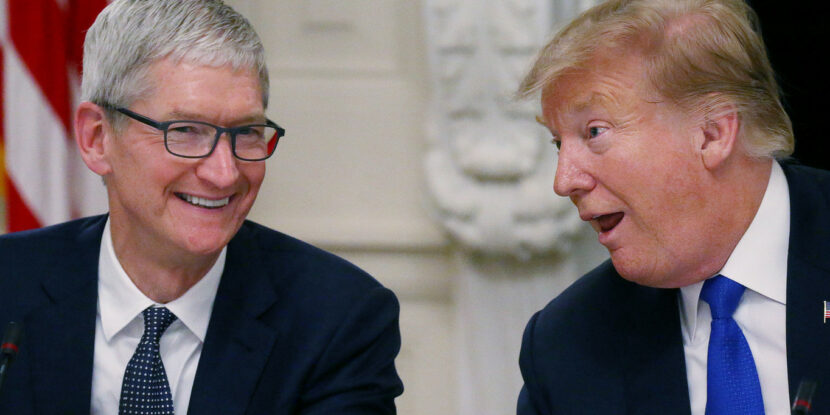
Apple and Broadcom have announced a multibillion-dollar agreement over 5G and wireless components to be made in Fort Collins, Colorado. The deal comes after former President Donald Trump negotiated the re-domiciling of Broadcom from Singapore to the United States in 2017, as well as convincing Apple themselves to invest in the years during, and since, his presidency.

“All of Apple’s products depend on technology engineered and built here in the United States, and we’ll continue to deepen our investments in the US. economy because we have an unshakable belief in America’s future,” Apple CEO Tim Cook said in a press release Tuesday.

In 2017, Broadcom’s CEO Hock Tan told lavished praise on Trump, telling reporters: “America is again the best place to lead a business with a global footprint. Thanks to you Mr. President, business conditions have steadily improved.” The company announced its intention to re-domicile in the United States shortly after.

Trump pledged in 2016 that he would “get Apple to build a big plant in the United States, or many big plants in the United States.” Cook soon announced $350 billion for new facilities creating 20,000 jobs, which later increased to $430 billion due to the economic growth of the Trump years.

show less
Apple and Broadcom have announced a multibillion-dollar agreement over 5G and wireless components to be made in Fort Collins, Colorado. The deal comes after former President Donald Trump negotiated the re-domiciling of Broadcom from Singapore to the United States in 2017, as well as convincing Apple themselves to invest in the years during, and since, his presidency. show more