Monday, February 23, 2026

Senate Finally Set to Advance Trump-Backed Funding Package, Too Late to Avert Temporary Shutdown.

PULSE POINTS

WHAT HAPPENED: Senate Republicans and Democrats reached an agreement to advance the government appropriations package, despite resistance from both sides of the aisle.

👤WHO WAS INVOLVED: Senate Majority Leader John Thune (R-SD), Senate Minority Leader Chuck Schumer (D-NY), Senator Lindsey Graham (R-SC), President Donald J. Trump, and members of Congress.

📍WHEN & WHERE: The deal was struck on Friday, with a final Senate vote expected late Friday evening, as the government funding deadline looms at midnight.

🎯IMPACT: The agreement virtually ensures passage in the Senate but does not prevent a partial government shutdown over the weekend since it will take several days for the House to return to Washington, D.C.

IN FULL

The Senate cleared a key procedural hurdle late Friday afternoon, advancing a government appropriations package despite resistance from both sides of the partisan aisle. Senate Majority Leader John Thune (R-SD) has scheduled a final vote on the appropriations deal, initially struck late Thursday, for Friday evening after Senator Lindsey Graham (R-SC) dropped his hold on the combined government funding bills.

Called a minibus, the legislative package includes appropriations for five federal government departments but excludes funding for the Department of Homeland Security (DHS), a key demand of Senate Democrats seeking to defund U.S. Immigration and Customs Enforcement (ICE). Instead, the chamber will vote on a two-week continuing resolution (CR) for DHS, setting up another funding fight in February.

President Donald J. Trump engaged in direct negotiations with Senate Minority Leader Chuck Schumer (D-NY) and Senate Republicans to reach the deal, which will avoid a prolonged government shutdown. Still, even with the Senate likely adopting the minibus and CR for DHS later Friday evening, the federal government will experience a brief funding lapse over the weekend as it will take several days for members of the House of Representatives to return to Washington, D.C. and approve the package.

The National Pulse reported earlier on Friday that an attempt to pass the funding deal fell apart late Thursday evening after Sen. Graham objected to procedural motions that would have expedited its passage. Graham expressed his dissatisfaction with the deal, stating, “This is a bad deal,” as he entered Thune’s office late Thursday evening. However, by Friday afternoon, the South Carolina Republican had dropped his opposition.

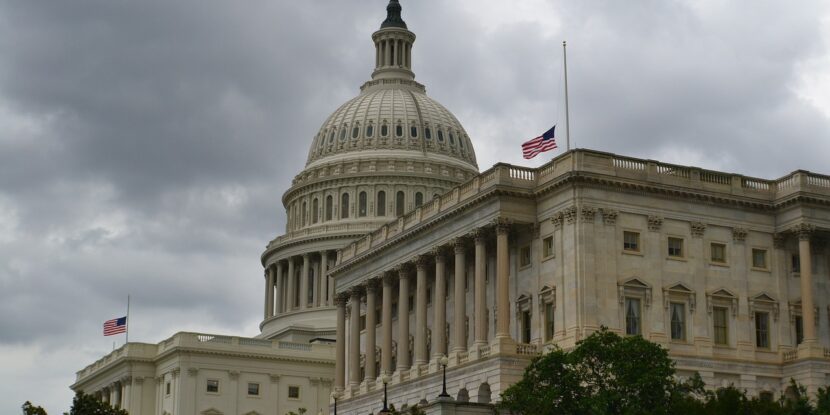
Image by Ron Cogswell.

Join Pulse+ to comment below, and receive exclusive e-mail analyses.
show less
show more

Dem Leaders Move to Block Funding for ICE, DHS.

PULSE POINTS

WHAT HAPPENED: House Minority Leader Hakeem Jeffries (D-NY) and Whip Katherine Clark (D-MA) announced a decision to vote against the Department of Homeland Security (DHS) appropriations bill.

👤WHO WAS INVOLVED: Hakeem Jeffries, Katherine Clark, Rep. Enrique “Henry” Cuellar (D-TX), and Rep. Rosa DeLauro (D-CT).

📍WHEN & WHERE: The decision was made on Wednesday, January 21, 2026, in a closed-door meeting of House Democrats.

💬KEY QUOTE: “I signed off. Let’s go. Let’s move. And people will decide what they want to.” – Rep. Rosa DeLauro.

🎯IMPACT: The bill is expected to pass despite some Democratic opposition, with a group of moderate lawmakers expected to support it.

IN FULL

House Minority Leader Hakeem Jeffries (D-NY) and Whip Katherine Clark (D-MA) informed Democrats in a private meeting that they intend to vote against a bill funding the Department of Homeland Security (DHS). The move is largely seen as an attempt by Democrat leaders to placate a large bloc of their more progressive caucus members who are demanding the agency be defunded over ongoing U.S. Immigration and Customs Enforcement (ICE) operations targeting illegal immigrants across the country.

Despite their stated opposition, the Democratic leaders are not expected to actively whip against the bill. While a bulk of Democrats are anticipated to oppose the appropriations measure, it is expected that a small group of moderate Democrats will still support it. More radical progressive House Democrats have demanded the party oppose the DHS funding bill, ramping up their calls for resistance after anti-ICE activist Renee Nicole Good was fatally shot while attempting to run over an ICE agent in Minneapolis.

Rep. Enrique “Henry” Cuellar (D-TX), a key minority member on the Homeland Security Appropriations subcommittee, has called for his colleagues to support the bill, highlighting several Democrat victories within it. These include $20 million allocated for body cameras for ICE personnel, although the overall ICE budget remains unchanged.

Rep. Rosa DeLauro (D-CT), who helped negotiate the broader spending package, emphasized the urgency of passing the bill to prevent a government shutdown. While acknowledging the bill’s limitations in securing the progressive Democrat demands for substantial ICE reforms, she noted its benefits for other agencies like TSA and FEMA.

DeLauro explained the need to move forward despite the bill’s imperfections, saying, “I signed off. Let’s go. Let’s move. And people will decide what they want to.”

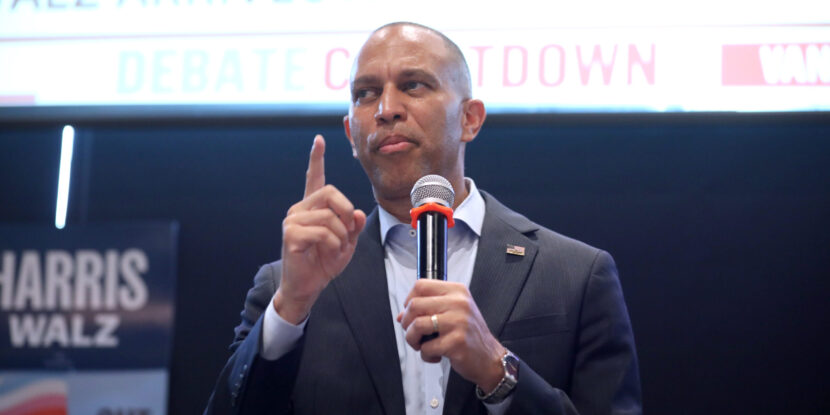
Image by Gage Skidmore.

Join Pulse+ to comment below, and receive exclusive e-mail analyses.

show less
show more

New Congressional Minibus Contains Millions in Anti-Trump Deep State Funding.

PULSE POINTS

WHAT HAPPENED: The United States Congress has released its Financial Services and General Government and National Security and State “minibus”—with mirror drafts authored by the House and Senate Appropriations Committees.

👤WHO WAS INVOLVED: The U.S. Congress, the National Endowment for Democracy (NED), the Helsinki Commission, and Belize.

📍WHEN & WHERE: The minibus legislation was released on Sunday, January 11, 2026, with funding provisions being exposed over subsequent days.

🎯IMPACT: The legislation includes significant funding for globalist deep state entities like the National Endowment for Democracy and the Helsinki Commission, along with several million dollars for infrastructure projects in Belize.

IN FULL

The United States Congress has released its Financial Services and General Government and National Security and State “minibus”—with mirror drafts authored by the House and Senate Appropriations Committees. Concerningly, the legislation includes significant funding for globalist deep state entities like the National Endowment for Democracy (NED) and the Helsinki Commission, along with several million dollars for infrastructure projects in Belize.

A congressional minibus is essentially smaller omnibus legislation that includes funding for several government departments and agencies, and is often prone to being filled with unpopular spending that would otherwise not pass as a standalone bill. In this case, the latest minibus contains $315 million for the NED, a quasi-autonomous non-governmental organization (NGO) with a long history of targeting conservative journalists and media outlets.

In February last year, anti-Trump neoconservatives were up in arms over the Department of Government Efficiency (DOGE) moving to freeze funds for NED. The National Pulse reported at the time that many conservative leaders in the United States and around the world contended that NED squanders funds on undermining right-leaning governments in allied nations, such as Hungary, while boosting leftist media and politicians.

The minibus bill also provides reauthorization for the Helsinki Commission—an independent government agency created in 1975 and tasked with monitoring compliance with the Helsinki Accords. However, the agency has morphed over the years into an entity that promotes color revolutions and unauthorized election interference operations in foreign nations. Additionally, the Helsinki Commission has become a key roost for a number of anti-Trump Russia hoax conspiracy theorists, including former John Brennan aide Andrea Kendall-Taylor, Sir William Browder KCMG, and the leftist Organized Crime and Corruption Reporting Project’s (OCCRP) Drew Sullivan.

Notably, Browder is a staunch proponent of seizing Russian assets outside of normal government procedures—which could trigger significant backlash—and has routinely accused figures like Donald Trump Jr. and Vice President J.D. Vance of parroting Kremlin talk points. Further, the Helsinki Commission maintains ties to Ukrainian propagandist Illia Ponomarenko and former U.S. Congressman Adam Kinzinger, who has become one of the top Russia conspiracy theorists on social media.

Aside from the direct funding and authorization of NGOs that aim to undermine President Donald J. Trump‘s agenda, the minibus also contains, inexplicably, $5.7 million in funds—ostensibly through the now-defunct USAID—for infrastructure projects in Belize. This funding was likely inserted as an earmark request by lawmakers after USAID itself was dissolved, with its key functions being absorbed by the U.S. Department of State.

Image by Gage Skidmore.

Join Pulse+ to comment below, and receive exclusive e-mail analyses.

show less
show more

BREAKING: The Democrat Government Shutdown is Finally Over.

PULSE POINTS

WHAT HAPPENED: The Democrat-caused government shutdown has ended after the House of Representatives passed a temporary funding bill.

👤WHO WAS INVOLVED: House Republicans, House Democrats, Senate Republicans, Senate Democrats, President Donald J. Trump, federal government agencies, and air traffic controllers.

📍WHEN & WHERE: The shutdown ended late Wednesday, November 12, 2025.

🎯IMPACT: The funding deal keeps the government open through January 30, 2026; covers the annual appropriations of the Department of Agriculture (USDA), the Food and Drug Administration (FDA), the Department of Veterans Affairs (VA), military construction, and the legislative branch; includes measures reversing federal layoffs implemented during the shutdown and guarantees Senate Democrats a vote on extending enhanced Obamacare subsidies.

IN FULL

A bill providing temporary funding for the federal government is headed to President Donald J. Trump‘s desk after being adopted by the House of Representatives along a party-line vote. The legislation, pushed by House Speaker Mike Johnson (R-LA), passed the Senate late Monday and will provide government funding through January 30. Additionally, the measure includes annual appropriations covering the Department of Agriculture (USDA), the Food and Drug Administration (FDA), the Department of Veterans Affairs, military construction, and the legislative branch.

The deal also includes measures reversing federal layoffs implemented during the shutdown and guarantees Senate Democrats a vote on extending enhanced Obamacare subsidies. However, the House has not definitively stated that it will take up the Obamacare subsidies, frustrating far-left lawmakers such as Senator Bernie Sanders (I-VT) and Representative Alexandria Ocasio-Cortez (D-NY), both of whom pushed their colleagues to vote against the funding measure.

Importantly, the adoption of the bill ends the 43-day government shutdown that began on October 1 when Senate Democrats began a filibuster against a House-passed funding bill, effectively defeating the measure. The Senate held 15 failed votes on the funding package before finally adopting the new compromise on the 16th vote.

While the initial weeks of the Democratic shutdown saw little disruption for most Americans, as the funding lapse dragged on—eventually becoming the longest in history—a number of federal operations encountered significant issues. Most noticeable was travel chaos as air traffic controllers went without pay. Last Friday, over 1,000 flights were cancelled and nearly 10,000 were delayed as many of the nation’s largest airports saw dangerous shortages of air traffic controllers.

Image by Victoria Pickering.

Join Pulse+ to comment below, and receive exclusive e-mail analyses.

show less
show more

White House Memo Challenges Back Pay for Furloughed Workers.

PULSE POINTS

WHAT HAPPENED: A draft White House memo argues that federal workers furloughed during the current shutdown are not automatically entitled to back pay, citing a reinterpretation of the Government Employee Fair Treatment Act of 2019.

👤WHO WAS INVOLVED: The White House, federal workers, Senate Democrats, labor attorney Nekeisha Campbell, and Sam Berger from the Center for Policy and Budget Priorities.

📍WHEN & WHERE: Amid the ongoing federal government shutdown, as described in a memo reported by Axios.

💬KEY QUOTE: “Does this law cover all these furloughed employees automatically? The conventional wisdom is: Yes, it does. Our view is: No, it doesn’t.” – Senior White House official

🎯IMPACT: Up to 750,000 federal workers could be affected by this reinterpretation, with critics asserting the move is legally baseless and designed to pressure Senate Democrats.

IN FULL

A draft memo circulated by the Trump White House contends that federal workers furloughed during the current shutdown may not be automatically entitled to back pay. The administration claims that the Government Employee Fair Treatment Act of 2019 (GEFTA), amended in January 2019—which seemingly guarantees backpay even without a congressional appropriation—has been “misconstrued” or is “deficient.”

The draft memo challenges the conventional understanding of GEFTA, which has long been interpreted as guaranteeing back pay after shutdowns. According to a senior White House official, “Does this law cover all these furloughed employees automatically? The conventional wisdom is: Yes, it does. Our view is: No, it doesn’t.”

The argument hinges on amended language specifying that workers are compensated “subject to the enactment of appropriations Acts ending the lapse.” The administration interprets this as requiring explicit Congressional approval for back pay.

However, some have denounced this interpretation. Labor attorney Nekeisha Campbell stated, “There is no legal authority to support that interpretation of the statute.” Similarly, Sam Berger of the left-wing Center for Policy and Budget Priorities (CPBP) described the amendment as a recognition of the appropriations process, not a restriction on back pay.

With up to 750,000 federal workers affected, one senior official denied that the interpretation was simply a tactic to pressure Senate Democrats. Nearly a week ago, Democrat lawmakers in the Senate, along with Senator Rand Paul (R-KY), voted down a clean continuing resolution passed by the House of Representatives, kicking off the government shutdown.

Subsequently, Senate Democrats, along with Sen. Paul, have voted down four other attempts to reopen the government.

Image by Ted Eytan.

Join Pulse+ to comment below, and receive exclusive e-mail analyses.

show less
show more

Analysis Finds Only 27% of DOGE ‘Cuts’ Can Be Reviewed, Verified.

PULSE POINTS:

What Happened: New analysis suggests only a concerningly small number of Department of Government Efficiency (DOGE) cuts can actually be reviewed and verified.

👥 Who’s Involved: Elon Musk, DOGE, the Trump administration, critics of DOGE, and Open the Books auditors.

📍 Where & When: The analysis was published by Open the Books on Tuesday, May 27, 2025.

💬 Key Quote: “DOGE is an advisory group; we are doing the best we can as an advisory group. We do not make the laws, nor do we control the judiciary, nor do we control the Executive Branch.” – Elon Musk.

⚠️ Impact: Transparency concerns persist regarding the verification of claimed savings by DOGE, with taxpayers struggling to confirm many of the savings figures.

IN FULL:

New analysis suggests that many of the claimed cuts to nondiscretionary spending enacted by the Department of Government Efficiency (DOGE) cannot be easily reviewed or verified. The external audit of DOGE data is raising concerns about a lack of transparency behind the advisory agency’s methodology and claims, as it appears to be largely winding down its mission ahead of Elon Musk’s possible departure as a special government employee.

The Trump administration has credited DOGE with saving taxpayers $160 billion by targeting wasteful spending through canceled grants, contracts, and other measures. However, critics, including some on the right, dispute the validity of those savings. Open the Books, an independent watchdog, analyzed DOGE’s claims and found that only 42 percent of contracts and 27 percent of grants could be easily verified through public records.

According to Open the Books, the discrepancies largely stem from a lack of real-time transparency in government spending systems, such as USASpending.gov and the Federal Procurement Data System (FPDS). For instance, DOGE claimed savings of $32,366 on a State Department grant to a Chilean university, but public records show no corresponding outlay to confirm the figure. Similarly, a Department of Defense grant to the University of Wisconsin showed conflicting values between DOGE’s data and FPDS records.

Other problems faced by those trying to review and understand the DOGE data include federal contracts listed as Indefinite Delivery Vehicles (IDV). According to Open the Books, “This type of contract allows the government to sign a contract for a certain value, but pay for goods or services over time and negotiate those costs separately per instance.”

The watchdog group gives an example of a contract “…between the Department of Energy and Kumono Government Services, LLC [which] is for security and safety trainings at the DOE’s National Training Center in Albuquerque. Both DOGE and the FPDS roughly agree on the contract value. DOGE has it at $179,000,000 even, which FPDS says the total contract value is $179,637,339.14.”

“DOGE says they saved taxpayers $15,652,636.00 on this contract. But the FPDS shows a smaller current contract value of $31,303,271.64. It also reflects a total order value, presumably money already spent, of $117,901,211. Regardless of how one parses those numbers, it’s impossible to verify the $15.6M of savings,” Open the Books explains.

Another area of contention is that many of the recommended DOGE cuts are to non-discretionary spending, which will need to be codified either through rescissions enacted by Congress or through appropriations cuts enacted by lawmakers later this year. While fiscal conservative activists have tried to claim that Congress can enact DOGE cuts in the current reconciliation bill, these claims are actually untrue. Senate rules stipulate that budget reconciliation legislation can only address discretionary spending, of which the bill makes $1.6 trillion in cuts over the 10-year budget window.

Despite the transparency concerns raised by Open the Books, Elon Musk, who has served as the informal chief of the DOGE initiative, still claims that the group has largely accomplished its goals. During an interview at the Qatar Economic Forum, Musk stated: “We do not make the laws, nor do we control the judiciary, nor do we control the Executive Branch. We are simply advisors. In that context, we are doing very well.”

“We cannot take action beyond that because we are not some sort of imperial dictator of the government,” Musk said.

To better open the DOGE cutting process to public scrutiny, Open the Books is advocating that the public be allowed access to a modified version of the Treasury Payment System, which would allow those interested to track spending in real time. This mechanism could also help voters to better influence their elected officials as to what cuts they would want to see prioritized.

Image by Gage Skidmore.

show less

PULSE POINTS:

show more

Democratic Rep Says Musk & Ramaswamy’s ‘DOGE’ Is Unconstitutional. That’s Debatable.

Representative Zoe Lofgren (D-CA)—a powerful Democrat on the House Judiciary Committee—is arguing President-elect Donald J. Trump’s Department of Government Efficiency (DOGE) is “unconstitutional and illegal.” The congresswoman, currently in her 15th term in Congress, contends that the agency, set to be overseen by Elon Musk and Vivek Ramaswamy, encroaches on the powers of Congress to appropriate funds for federal agencies.

The California Democrat’s remarks came during an appearance on CNN Newsroom with host Jim Acosta, who pressed Lofgren for her “thoughts on Elon Musk and Ramaswamy deciding or trying to decide what stays and what goes in the federal government.”

“Well, it’s illegal. You know, they haven’t asked to meet with me, but the impoundment of funds that have been appropriated by the Congress is unconstitutional and illegal,” the 76-year-old Lofgren responded. She continued: “There is no such Department of Government Efficiency. It’s made up. So good luck to ’em.”

Lofgren added that if President-elect Trump wants to make changes to the federal budget, “…he should send it to us, but the Constitution does not permit the president to simply avoid what the Congress has done—that power of the purse is with the legislative branch, not the president.”

NOT ACTUALLY UNCONSTITUTIONAL? 

While the Judiciary Committee Democrat insists that it is unconstitutional for the president to exercise the power of impoundment—an act that claws back funds appropriated by Congress to fund federal agencies—the reality of the matter is less clear. U.S. Presidents, from Thomas Jefferson to Richard Nixon, wielded impoundment authority until Congress stripped the power with the Congressional Budget and Impoundment Control Act of 1974.

However, impoundment remains an unsettled constitutional question. A related Supreme Court case, Train v. City of New York—decided on facts that pre-date the 1974 Act—found that the president cannot order unreasonable impoundments outside the scope of congressional intent. Significantly, though, the high court declined to rule on the constitutionality of presidential impoundment power.

show less
Representative Zoe Lofgren (D-CA)—a powerful Democrat on the House Judiciary Committee—is arguing President-elect Donald J. Trump's Department of Government Efficiency (DOGE) is "unconstitutional and illegal." The congresswoman, currently in her 15th term in Congress, contends that the agency, set to be overseen by Elon Musk and Vivek Ramaswamy, encroaches on the powers of Congress to appropriate funds for federal agencies. show more
big tech

Congress’s ‘Minibus’ Contains Dem Earmarks for Transgender Youth Services, $1.8M For Late-Term Abortion Clinics.

Several controversial Democratic earmarks have been included in the second half of this year’s congressional budget request, drawing sharp criticism from conservative groups. Included in the 1,000-page budget document, released in the early morning hours on Thursday, are earmarks aimed toward LGBTQ+healthcare’ facilities and late-term abortion clinics. Another Democrat earmark funds a multi-million-dollar research project on “gun confiscation.”

The non-profit group Americans Advancing Freedom has criticized the Congressional appropriations package, stating: “Congress can’t pass this legislation in its current form until these egregious earmarks are weeded out.” Conservative critics are also alarmed by what they perceive as a disregard for transparency, with the budget text released in the middle of the night and a rush by Congressional leadership to adopt the legislation.

Some of the Democrat earmarks include a $400,000 appropriation for Wisconsin’s Briarpatch Youth Services, a facility running the “Teens Like Us LGBTQIA2s+” program, and the “Gender Affirming Clothing Program.” The youth center offers pride-prom events as well, permitting LGBTQ youth to participate without parental consent.

Senators Cory Booker (D-NJ) and Bob Menendez (D-NJ) have also requested $400,000 for the Garden State Equality Education Fund. This major LGBTQ+ advocacy group provides certain undergarments for transgender individuals. Additional earmarks involve a $1.8 million request for a Rhode Island hospital performing elective late-term abortions and a $12.5 million appropriation for a National Institutes of Health study focused on firearm control, which opponents deem as ‘research’ into gun confiscation.

The House of Representatives is expected to vote on the appropriations package late on Saturday, with the Senate likely to take up the legislation quickly after that.

show less
Several controversial Democratic earmarks have been included in the second half of this year’s congressional budget request, drawing sharp criticism from conservative groups. Included in the 1,000-page budget document, released in the early morning hours on Thursday, are earmarks aimed toward LGBTQ+healthcare’ facilities and late-term abortion clinics. Another Democrat earmark funds a multi-million-dollar research project on “gun confiscation.” show more
big tech

House Conservatives Brand Schumer-Johnson Budget Bills ‘Pathetic.’

Senate Majority Leader Chuck Schumer (D-NY) and House Speaker Mike Johnson (R-LA) announced details of the first six major budget bills on Sunday to prevent a partial government shutdown, which House conservatives are calling “pathetic.” Federal funding for several government agencies is set to lapse on March 8.

The 1,050-page appropriations package combines six bills drafted by the House and Senate — including funding for the military, veterans affairs, agriculture, commerce, energy and water, transportation, and housing. Initial funding was due to expire on March 1, but leaders agreed on Wednesday to extend these deadlines by a week.

The funding agreement falls well short of what many conservative lawmakers on Capitol Hill expected. The legislation does not prohibit the Department of Justice (DOJ) from using taxpayer funds to prosecute a presidential candidate — a top priority for many Congressional Republicans. Additionally, it allows for continued funding of China’s Wuhan Institute of Virology and other labs controlled by governments hostile to the United States. The appropriations package doesn’t prohibit taxpayer funding of mail-order chemical abortion drugs, nor does it defund President Joe Biden’s DEI executive orders or federal funding for the promotion of Critical Race Theory.

“It’s pathetic,” a senior House Republican aide told The National Pulse, adding: “Weak, low energy, apologetic failure.”

“The truth is that the FBI cut is largely a result of killing one big earmark for Alabama now that Senator Shelby is gone; plus, there is nothing meaningful on border security at all,” the aide said.

House Speaker Mike Johnson, however, declared the appropriations package a victory for conservatives, noting House Republicans were able to secure a handful of the policy priorities in the negotiations.

“House Republicans secured key conservative policy victories, rejected left-wing proposals, and imposed sharp cuts to agencies and programs critical to President Biden’s agenda,” Johnson said in a statement on X (formerly Twitter).

He continued: “This legislation forbids the Department of Justice from targeting parents exercising their right to free speech before school boards, while it blocks the Biden Administration from stripping Second Amendment rights from veterans.”

The appropriations package contains modest cuts to FBI and ATF funding — seven percent and six percent, respectively. It also includes a 10 percent cut to funding for the Environment Protection Agency. Additionally, the funding agreement nearly zeroed out the FBI’s construction budget. The package also addresses — to a degree — partisan lawfare by Biden’s DOJ. It bars the DOJ from investigating parents who exercise their free speech rights at local school board meetings and bars the investigation of churches for their religious beliefs.

Democrat leaders on Capitol Hill praised the package, cheering its continued full funding for programs including special food assistance for women, infants, and children, rent assistance, and infrastructure employee pay. House leaders have indicated they expect to take the legislation to the floor for a vote this coming weekend, just ahead of the March 8 funding deadline.

show less
Senate Majority Leader Chuck Schumer (D-NY) and House Speaker Mike Johnson (R-LA) announced details of the first six major budget bills on Sunday to prevent a partial government shutdown, which House conservatives are calling “pathetic.” Federal funding for several government agencies is set to lapse on March 8. show more

Capitol Crib Notes: What Exactly Is A ‘Laddered’ Continuing Resolution?

House Speaker Mike Johnson (R-LA) has unveiled the Republican plan to keep the government funded while Congress continues its efforts to pass the 12 appropriations bills that comprise federal budget for next year. The plan, which some have dubbed a “laddered” continuing resolution (CR), is a bit unusual.

Instead of a uniform extension of government funding for all federal agencies, the legislation will provide staggered funding for departments and agencies. Some parts of the government – including veterans programs, transportation, housing, agriculture and energy – will be funded through January 19th, 2024. Agencies and departments dealing with national security and defense, such as the State Department and Department of Homeland Security, will receive funding through February 2nd, 2024. The purpose of extended funding for some parts of the government longer than others is to preserve a sense of urgency and maintain pressure on the Senate to take up the House passed appropriations bills.

In the past when the House adopted clean CRs that extended government funding until Christmas, the Senate has delayed taking up individual appropriations bills and instead took up – at the last minute – a massive omnibus bill cobbled together by Senate appropriators. The deadline created by the CR allowed the Senate to leverage the funding crisis and jam the House, forcing the lower legislative body to adopt the massive funding bill without knowing what exactly was in it. The laddered CR, in theory, should prevent the Senate from being able to jam the House with an omnibus and instead force the upper legislative body to continue negotiations with the House over the individual appropriations bills.

If Johnson can leverage the laddered CR and actually force the Senate to pass federal funding through the normal legislative process – via single subject appropriations legislation – it would be a monumental victory for conservatives. The last time Congress passed all 12 appropriations bills under any semblance of regular order was over 25 years ago. Even then, the 1997 budget required 6 of the 12 appropriations bills to be considered together as a ‘minibus’.

“This two-step continuing resolution is a necessary bill to place House Republicans in the best position to fight for conservative victories,” Johnson said in a statement. “The bill will stop the absurd holiday-season omnibus tradition of massive, loaded up spending bills introduced right before the Christmas recess.”

Johnson added:  “Separating out the CR from the supplemental funding debates places our conference in the best position to fight for fiscal responsibility, oversight over Ukraine aid, and meaningful policy changes at our Southern border.”

Not all House Republicans are on board with the laddered CR. “It’s a 100% clean. And I 100% oppose,” Rep. Chip Roy (R-TX) posted on X, formerly Twitter. In another post Roy said, “My opposition to the clean CR just announced by the Speaker to the @HouseGOP cannot be overstated. Funding Pelosi level spending & policies for 75 days — for future ‘promises.'”

White House press secretary Kaine Jean-Pierre also panned the laddered CR, calling it “a recipe for more Republican chaos and more shutdowns — full stop.”

Despite grumbling from some in the Senate, the White House, House Democrats, and Rep. Chip Roy, House Republicans overall appear open to Johnson’s laddered CR. The full House of Representatives could take up the funding measure as soon as Tuesday. Meanwhile, late Monday, Johnson’s government received the backing of Senate minority leader Mitch McConnell (R-KY) – signaling that moderate Republicans in the Senate may dropping their support for Democrat efforts to rush an omnibus spending package.

Funding for the federal government runs out on Friday.

show less
House Speaker Mike Johnson (R-LA) has unveiled the Republican plan to keep the government funded while Congress continues its efforts to pass the 12 appropriations bills that comprise federal budget for next year. The plan, which some have dubbed a "laddered" continuing resolution (CR), is a bit unusual. show more