






Monday, February 23, 2026
big tech

Senate Leaders Aim To Jam House Republicans With $1 Trillion Bill After Thanksgiving Recess.

With few legislative days left before the end of the year, Democrat and Republican leaders in the U.S. Senate are considering combining their nine remaining appropriations bills into a single, easier-to-pass $1 trillion omnibus. The move could end up jamming the Republican controlled House, right in the middle of the holiday season, with the very sort of massive spending bill they have tried to avoid. Last week, the Senate combined three of their appropriations bills into a ‘minibus’, and sent the budget measure to the House by a 82-15 vote.

Sen. Susan Collins (R-ME) – vice-chair of the Senate Appropriations committee – said while she prefers sticking with the Senate’s original plan to pass four minibus appropriations bills, time constraints may leave no choice but passing an omnibus.

“That has been discussed,” Collins said regarding the possible Senate omnibus. “I think it would be better to keep proceeding with minibuses but we could have gone on to one last week and we didn’t.”

Both Republican and Democrat leaders in the Senate have been careful to downplay idea of single, massive spending bill as an omnibus. Sen. Mike Rounds (R-SD) likened the possible legislation to the minibus the Senate just passed: “Instead of a minibus, it’s a maxi-bus. I’m in favor of it. I think it’s the right thing to do.” Collins said that if Senate leadership does combine the nine spending bills “… at least they’re bills that have gone through committee [and] will be subject to amendment.”

In the House, Republican Speaker Mike Johnson (R-LA) has floated the idea of of moving a ‘laddered’ continuing resolution (CR). The stop gap measure would extend government funding under the four less controversial spending bills until December, while the remaining eight spending bills would be extended into early next year. The ‘ladder’ CR concept, originating with the House Freedom Caucus, is intended to protect House Republicans from getting stuck with a Senate omnibus by forcing the two legislative bodies to negotiate on all twelve appropriations bills.

The government is currently set to shutdown on November 17th. It is likely the House will take up a short-term stop-gap funding bill next week regardless of what the Senate decides to do.

show less
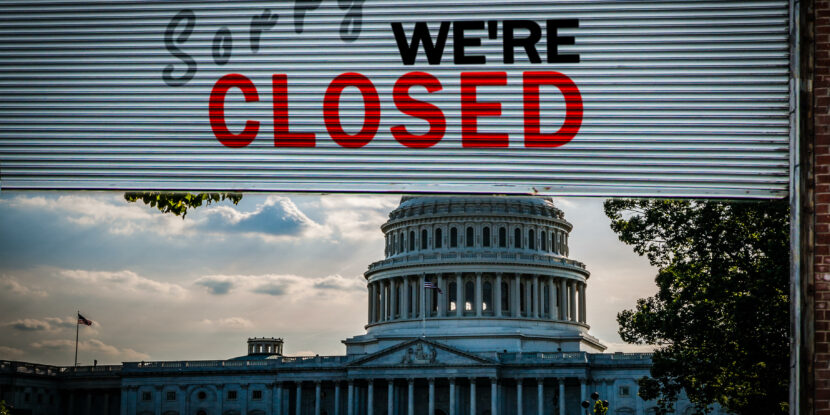
With few legislative days left before the end of the year, Democrat and Republican leaders in the U.S. Senate are considering combining their nine remaining appropriations bills into a single, easier-to-pass $1 trillion omnibus. The move could end up jamming the Republican controlled House, right in the middle of the holiday season, with the very sort of massive spending bill they have tried to avoid. Last week, the Senate combined three of their appropriations bills into a 'minibus', and sent the budget measure to the House by a 82-15 vote. show more
is a government shutdown happening

Capitol Crib Notes: Is a Government Shutdown Happening? Maybe. But Probably Not For Long.

Late last night, House Republicans were able to advance three of 12 appropriations bills that would fund the government for the next fiscal year – making it four total spending bills that have now been advanced to the Senate. The sudden advancement of the appropriations bills adds a new wrinkle to the fight over the federal budget on Capitol Hill with just over 24 hours left before a potential government shutdown.

The bills passed included funding for State Department and Foreign Operations, Defense, and Homeland Security and would fund roughly 70 percent of the government. The appropriations bill funding the Veterans Administration and Veteran Healthcare was passed prior to last night. The Agriculture appropriations bill failed to secure a majority of votes and will be further amended before it is reconsidered.

In the Senate, Democrats and establishment Republicans led by Mitch McConnell are preparing to vote through a Continuing Resolution (CR) that would fund the government at current spending levels – including $6.4 billion for Ukraine. The Senate will vote on final passage of the CR tomorrow morning, even though the legislation has been declared dead-on-arrival in the House because of the bloated Ukraine spending. Sen. J.D. Vance (R-Ohio) is whipping Republicans to strip out the Ukraine funding, with Sens. Mike Lee (R-UT) and Dr. Roger Marshall (R-KS) joining him. Sen. Ron Johnson (R-WI) is rumored to be pushing his own clean CR proposal that does not include Ukraine funding.

In all likelihood the government will, for a time, shutdown.

Senate Democrats led by Chuck Schumer are unlikely to take up the House passed appropriations bills. The death of Sen. Diane Feinstein (D-CA), along with Sens Tina Smith (D-MN) and Debbie Stabenow (D-MI) – both sidelined with COVID – leaves Republicans effectively in control of the upper-legislative body with 49 members to the Democrats 47. Despite this temporary advantage Sen. Mitch McConnell (R-KY) has not indicated that he will seek to advance the House budget bills either.

As House Republicans continue to work on the remaining appropriations legislation, Speaker Kevin McCarthy (R-CA) attempted to advance a 30-day Continuing Resolution that would temporarily fund the government at pre-COVID levels, including the border security bill. The new House leadership-backed CR passed a critical procedural hurdle but was ultimately defeated this afternoon by a block of conservative members including Reps. Gaetz, Buck, Boebert, Crane, Gosar, Mills, Rosendale, and Ogles. The pre-COVID spending levels was one of the key demands made by a faction of members in the House Freedom Caucus that had opposed a separate CR last week.

Meanwhile, President Joe Biden continues to refuse to meet with House Republicans, even as they work to move the remaining appropriations bills.

show less
Late last night, House Republicans were able to advance three of 12 appropriations bills that would fund the government for the next fiscal year – making it four total spending bills that have now been advanced to the Senate. The sudden advancement of the appropriations bills adds a new wrinkle to the fight over the federal budget on Capitol Hill with just over 24 hours left before a potential government shutdown. show more
big tech

DATA: Most Don’t Mind a Shutdown, Want Border Security in Any Deal.

New polling shows that a plurality of Americans are supportive of at least a ‘partial government shutdown’ until Congressional Republicans and Democrats can either agree to cut spending or at least keep it at its currently level.

The Rasmussen Reports poll of 1,020 Likely Voters found that only 40 percent of respondents opposed a government shutdown, while 48 percent were supportive. In addition, 63 percent of voters believe that any new spending bill should include provisions to increase border security.

Negotiations among Republican members of the House of Representatives have come to a standstill after a temporary spending measure negotiated by Reps. Byron Donalds (R-FL) and Dusty Johnson (R-SD) – and backed by Freedom Caucus stalwart Chip Roy (R-TX) – fell apart with several other conservative factions still opposing.

Members of the Freedom Caucus who opposed the temporary spending bill, like Rep. Ralph Norman (R-SC), remain committed to returning spending to pre-COVID-19 levels. Another faction, lead by Rep. Matt Gaetz (R-FL), argue that Congress must engage in a regular budget process and take up each appropriations bill separately instead of passing temporary spending bills that eventually lead to an “omnibus” – a massive, single budget bill that would fund the government into the next year.

Last Thursday, Speaker Kevin McCarthy adjourned the House after he was unable to bring the Defense appropriations bill to the floor for a vote – some Republicans objected to the bill containing additional funding for Ukraine. Congress returns to session today with just five days left to try and move the twelve budget appropriations bills before government funding runs out at 11:59pm on September 30th.

show less
New polling shows that a plurality of Americans are supportive of at least a 'partial government shutdown' until Congressional Republicans and Democrats can either agree to cut spending or at least keep it at its currently level. show more
gop budget

GOP Budget Changes Could Push Trump Prosecutions to Post-2024.

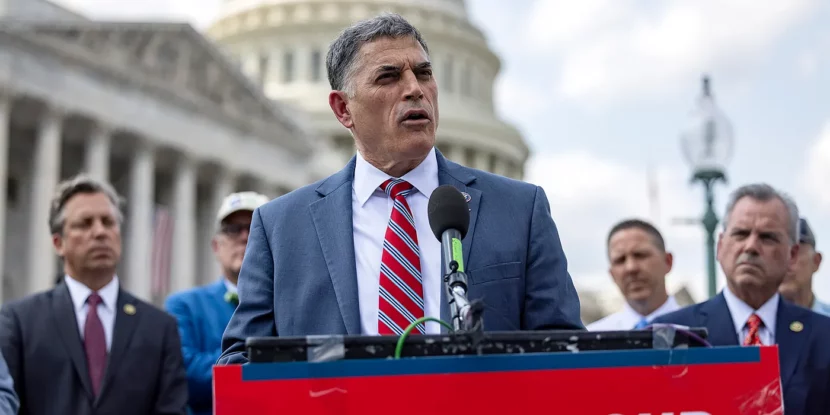
Two budget amendments introduced by Rep. Andrew Clyde (R-Ga.) aim to push the two federal and two state prosecutions of former President Donald Trump until after the 2024 presidential election. Clyde says he plans to amend the Commerce, Justice, Science, and Related Agencies 2024 appropriations bill with language that would “…prohibit the use of federal funding for the prosecution of any major presidential candidate prior to the upcoming presidential election on November 5th, 2024.”

The Georgia Congressman called the four pending prosecutions of Trump “sham indictments”, adding they are “… intended to smear and take down President Trump, as well as hinder his ability to campaign effectively.” Clyde stated that, “One amendment would prevent taxpayer dollars from funding federal prosecutions, while a second would prohibit funding for state prosecutions.”

The upcoming Fall appropriations process will include 12 ‘must pass’ budget bills necessary for funding the functions of the U.S. federal government. Some members of the House Republican Conference view the budget appropriations process as an opportunity to secure the passage of legislative agenda items that would otherwise not pass as stand alone legislation.

Last week the House Freedom Caucus announced their list of demands for House Speaker Kevin McCarthy to include in a government funding stop-gap measure when Congress resumes its legislative session after Labor Day. The legislative items include further reductions in federal spending levels, a House Republican border security bill that would fund border wall construction and place additional limits on asylum seekers, and a vague ask to address the weaponization of the DOJ.

The stop-gap funding bill, in the form of a Continuing Resolution, will be needed to fund the government as Congress is unlikely to pass the twelve appropriations bills to fund the government before the start of the new fiscal year on October 1st.

show less
Two budget amendments introduced by Rep. Andrew Clyde (R-Ga.) aim to push the two federal and two state prosecutions of former President Donald Trump until after the 2024 presidential election. Clyde says he plans to amend the Commerce, Justice, Science, and Related Agencies 2024 appropriations bill with language that would "...prohibit the use of federal funding for the prosecution of any major presidential candidate prior to the upcoming presidential election on November 5th, 2024." show more