Monday, February 23, 2026

Canada, France Open Greenland Consulates in Challenge to Trump.

PULSE POINTS

❓WHAT HAPPENED: Canada and France have opened consulates in Greenland, marking a significant diplomatic move against U.S. interest in acquiring the Danish territory.

👤WHO WAS INVOLVED: Canadian and French officials, the Trump administration, and the governments of Greenland and Denmark.

📍WHEN & WHERE: The consulates were opened this week in Nuuk, Greenland’s capital, following friction between the U.S. and Europe over the island from 2025 into 2026.

đź’¬KEY QUOTE: “Canada stands firmly in support of the people of Greenland who will determine their own future.” – Canadian Governor General Mary Simon.

🎯IMPACT: The consulates highlight attempts by European NATO members to push back against President Donald J. Trump’s efforts to acquire Greenland.

IN FULL

Canada and France have formally opened new consulates in Greenland, a move widely seen as a signal of support for Danish sovereignty in the Arctic territory at a time of tension with the Trump administration over its future. President Donald J. Trump has repeatedly expressed interest in acquiring Greenland from Denmark to boost national and regional security.

Until now, only the United States and Iceland have maintained permanent diplomatic outposts in Greenland. Officials from both Canada and France traveled to Nuuk for the openings, with Canada’s Governor General Mary Simon saying, “Canada stands firmly in support of the people of Greenland who will determine their own future.”

Notably, a majority of Greenlanders wish to separate from Denmark—few in the Inuit-majority territory are ethnic Danes—but a larger majority do not wish to do so if it means losing the Danish subsidies which currently cover around half the Greenlandic budget. Despite official resistance to joining the United States, it remains likely that the U.S. could make the Greenladers a substantially better offer than Denmark.

The Canadian consulate had originally been scheduled to open in late 2025, but was delayed due to severe weather. Its belated opening comes amid strained relations between Washington and Canadian Prime Minister Mark Carney, who, along with French President Emmanuel Macron, was critical of Trump over Greenland and other geopolitical issues at the recent World Economic Forum (WEF) summit in Davos, Switzerland.

Trump, in turn, has warned Canada of the possibility of 100 percent tariffs if it moves forward with a trade agreement with China.

Notably, Vice President J.D. Vance has said that quiet negotiations regarding Greenland—involving European governments and the United States over security and possibly access to critical minerals — have been far less hostile, with concessions to the U.S. position being made in private.

Image by NordForsk/Terje Heiestad.

Join Pulse+ to comment below, and receive exclusive e-mail analyses.
show less
show more

Denmark Panics as Trump Appoints Greenland Envoy.

PULSE POINTS

❓WHAT HAPPENED: The U.S. announced the appointment of a special envoy to Greenland, prompting the Kingdom of Denmark to demand respect for its sovereignty.

👤WHO WAS INVOLVED: President Donald J. Trump, envoy Jeff Landry, Danish Prime Minister Mette Frederiksen, Greenlandic Prime Minister Jens-Frederik Nielsen, and Danish Foreign Minister Lars Løkke Rasmussen.

📍WHEN & WHERE: December 2025, across the U.S., Denmark, and Greenland.

đź’¬KEY QUOTE: “Greenland belongs to the Greenlanders and the U.S. shall not take over Greenland.” – Mette Frederiksen and Jens-Frederik Nielsen

🎯IMPACT: The announcement has reignited tensions between the U.S. and the Danish government over the Trump administration’s interest in taking over Greenland.

IN FULL

President Donald J. Trump’s decision to appoint Louisiana Governor Jeff Landry (R) as a special envoy to Greenland has intensified diplomatic tensions between the United States, and the Kingdom of Denmark. In a joint statement, Danish Prime Minister Mette Frederiksen and Greenlandic Prime Minister Jens-Frederik Nielsen—whose party favors gradual independence from Denmark—stated, “Greenland belongs to the Greenlanders and the U.S. shall not take over Greenland.”

Notably, however, polls suggest a majority of Greelanders support independence from Denmark, but a larger majority do not support breaking away if it means losing the financial support the island receives from Denmark, which accounts for a large share of its economy. Despite Nielsen’s rhetoric against the Trump administration’s interest in acquiring Greenland for the U.S., it is very possible that Greenlanders could be persuaded to vote for some form of protectorate status, provided the U.S. can make them a better offer than Copenhagen.

Greenland, which is majority indigenous rather than ethnic Danish, controls most domestic affairs, while Denmark manages defense and foreign policy. The two, along with the Faroe Islands, comprise the Kingdom of Denmark, also known as the Danish Realm. Home to roughly 57,000 people, the island holds significant strategic value due to its Arctic location, mineral and freshwater resources, and proximity to continental North America, making it an increasing focus of global geopolitical competition.

Danish Foreign Minister Lars Løkke Rasmussen said he plans to summon the U.S. ambassador to address the present situation, emphasizing that Denmark expects its territorial integrity to be respected.

Reports suggest increased U.S. intelligence and political activity tied to Greenland. Washington has also shifted the island’s military oversight to a U.S. command focused on homeland defense, signaling its importance in American security planning. At the same time, Greenlandic officials have explored broader international partnerships, including closer cooperation with China, which has likely increased the Trump administration’s sense of urgency in securing the island.

The European Union (EU) is supporting Denmark as one of its member states—although Greenland left the bloc in the 1980s following a referendum—stressing the inviolability of its borders.

Image by NordForsk/Terje Heiestad.

Join Pulse+ to comment below,

show less
show more

Trump Turns to Expert Finns to Build Fleet of Icebreakers, Dominate Arctic from Greenland.

PULSE POINTS:

❓What Happened: President Donald J. Trump’s plan to acquire Greenland and dominate Arctic commerce hinges on building a new U.S. icebreaker fleet. Finland’s unmatched expertise in designing and constructing these ships is poised to play a pivotal role in achieving this ambition.

👥 Who’s Involved: President Trump, Finnish President Alexander Stubb, Aker Arctic CEO Mika Hovilainen, and Helsinki Shipyard’s new Canadian owner, Davie Shipbuilding.

📍 Where & When: Finland and the U.S., with Trump’s icebreaker push gaining traction in May 2025.

💬 Key Quote: “What does Finland have to offer the United States? Number one is icebreakers,” Finnish President Alexander Stubb said.

⚠️ Impact: Finland’s icebreaker prowess could fast-track Trump’s Arctic strategy, strengthening U.S. presence in a contested region.

IN FULL:

President Donald J. Trump’s bold vision to secure Greenland and unlock the Arctic’s commercial and strategic potential is taking shape, with Finland’s world-leading icebreaker industry ready to answer the call. Having built or designed 80 percent of the world’s icebreakers, the European Union (EU) country offers unmatched expertise to help the U.S. construct a new fleet.

“Ice is our playground,” said Mika Hovilainen, CEO of Aker Arctic, a Finnish firm designing ships for Canada, Sweden, and now eyeing American contracts. “We want to be involved in every Western icebreaker,” Hovilainen added, noting his role in designing 10 ships, including one that operates sideways.

Trump, after meeting Finnish President Alexander Stubb, posted on Truth Social about boosting U.S.-Finnish ties, “and that includes the purchase and development of a large number of badly needed Icebreakers for the U.S.” Stubb echoed the sentiment, stating, “What does Finland have to offer the United States? Number one is icebreakers. We build them faster than anyone in the world and at about half the price.”

Finland’s edge stems from necessity—its Baltic Sea trade relies on ice-free routes—and a century of building over 120 icebreakers. Unlike the U.S., where expertise fades between rare projects, Finland’s shipyards and suppliers maintain continuous innovation.

With only a handful of aging vessels, the U.S. has lagged in icebreaker development. The Joe Biden-era ICE Pact with Canada and Finland, reaffirmed in March 2025, aims to share expertise, but Trump’s Greenland push demands more urgency. Icebreakers, built to smash ice over 10 feet thick, require specialized hulls, broad bows, and robust systems to withstand extreme cold.

Trump’s Arctic strategy, tied to Greenland’s vast natural resources and strategic location, positions the U.S. to counter Russia and China in a contested region.

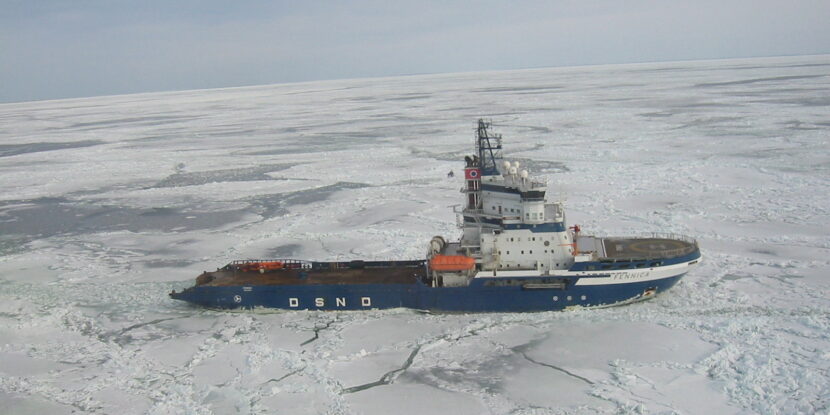
Image by Marcusroos.

show less

PULSE POINTS:

show more

Trump Reiterates Seriousness About Greenland Purchase, Canada as Potential 51st State.

PULSE POINTS:

❓What Happened: President Donald J. Trump reiterated his interest in acquiring Greenland and Canada becoming the 51st state in an interview with TIME magazine, insisting these ideas are serious and not something he has floated in jest.

👥 Who’s Involved: President Trump, Eric Cortellessa (TIME magazine interviewer), and Canadian Prime Minister Mark Carney.

📍 Where & When: United States, Canada, and Greenland, with the comments being made in an interview with TIME magazine published on Friday.

đź’¬ Key Quote: Trump stated, “Actually, no, I’m not,” when asked if he was trolling about the suggestion that Canada should become part of the United States.

⚠️ Impact: Potential geopolitical tensions concerning U.S. territorial ambitions, and implications for international security related to Arctic regions.

IN FULL:

In an interview published Friday, President Donald J. Trump emphasized his continued interest in acquiring Greenland and integrating Canada as a state in the U.S. Trump addressed these ambitions during a conversation with Eric Cortellessa of TIME magazine, emphasizing that his intentions are genuine rather than mere political jest. When Cortellessa pressed President Trump about whether his numerous comments about extending American influence over Canada and Greenland were just joking, the America First leader responded, “Actually, no, I’m not.”

“I think Greenland would be very well off… I think it’s important for us for national security and even international security,” Trump said. “I think Canada… you said that, ‘Well, that one, I might be trolling.’ But I’m really not trolling.”

“Canada is an interesting case. We lose $200 to $250 billion a year supporting Canada,” Trump noted, stating that he had spoken in the past with then-Canadian Prime Minister Justin Trudeau about the cost placed on American taxpayers for the U.S. military’s defense umbrella to extend over Canada. The President argued: “We’re taking care of their military. We’re taking care of every aspect of their lives, and we don’t need them to make cars for us. In fact, we don’t want them to make cars for us. We want to make our own cars. We don’t need their lumber. We don’t need their energy. We don’t need anything from Canada.”

He added: “And I say the only way this thing really works is for Canada to become a state.”

Canadian Prime Minister Mark Carney has dismissed the notion of statehood for Canada, though he acknowledges that Trump often mentions it. Meanwhile, regarding Greenland, Trump’s motivation revolves around security concerns both in the North Atlantic and the Arctic Ocean. He noted the strategic significance of Greenland amid the presence of Russian and Chinese vessels in nearby waters. Trump conveyed his belief in the importance of controlling these critical Arctic waterways to ensure both national and international security.

Despite Denmark’s jurisdiction over Greenland and the island’s pursuit of increased autonomy, Trump remains optimistic about the prospects of an eventual acquisition, underscoring its value for U.S. security interests.

show less

PULSE POINTS:

show more

US, China Compete for Greenland’s Strategic Resources.

PULSE POINTS:

âť“What Happened: President Donald J. Trump’s administration is interested in acquiring Greenland, motivated by concerns over national security and the region’s mineral resources.

👥 Who’s Involved: The key figures include U.S. Vice President J.D. Vance, President Donald J. Trump, the People’s Republic of China, Russia, and the Greenlandic and Danish authorities.

📍 Where & When: The discussions around acquiring Greenland are ongoing, with recent comments made by Vice President J.D. Vance at the Pituffik Space Base in Greenland on March 28, 2025.

đź’¬ Key Quote: Vice President J.D. Vance stated, “We need to ensure that America is leading in the Arctic because we know that if America doesn’t, other nations will fill the gap where we fall behind.”

⚠️ Impact: The push for control over Greenland aims to enhance access to critical minerals, secure strategic Arctic shipping routes, and add to the U.S. Naval presence in the North Atlantic and Arctic Oceans.

IN FULL:

President Donald J. Trump is intensifying efforts to assume control over the island of Greenland as part of an effort to secure the United States’s access to critical rare earth minerals and reinforce its strategic military position in the Arctic. During a visit to Greenland’s Pituffik Space Base last week, Vice President J.D. Vance reiterated the significance of American leadership in the Arctic, cautioning against the growing interests of China and Russia in Arctic shipping lanes and mineral reserves.

“We know that Russia and China and other nations are taking an extraordinary interest in Arctic passageways and Arctic naval routes and indeed in the minerals of the Arctic territories,” Vance said during a March 28 diplomatic visit to the island. He added: “We need to ensure that America is leading in the Arctic because we know that if America doesn’t, other nations will fill the gap where we fall behind.”

Greenland’s mineral wealth includes several rare earth elements considered essential for batteries and technology. The Trump administration sees these elements as crucial for diminishing reliance on Chinese imports. A 2023 report highlights that Greenland holds 25 of the 34 minerals classified as “critical raw materials” by the European Commission.

Ownership and control issues are complex, though, with local and Danish authorities resisting any potential U.S. control. Greenland, notably, is currently an autonomous territory of the Kingdom of Denmark, with the island heavily reliant on aid from its European sovereign.

However, a number of Greenland’s mining operations have recently seen American-based companies take controlling interests in order to prevent Chinese investment in and influence over the island. Despite the influx of American financial backing, Greenland’s lack of infrastructure, harsh Arctic climate, and environmental concerns continue to pose hurdles to capitalizing on its mineral wealth.

Image by NordForsk/Terje Heiestad.

show less

PULSE POINTS:

show more

Greenland’s Mineral Riches Will Elude EU Without U.S. Influence.

President Donald J. Trump’s push for the United States to purchase Greenland will likely have the added benefit of forcing the Arctic island’s socialist government to relax its resistance to American and European mineral exploration. Beneath the island’s icy surface lies an array of valuable rare earth minerals considered essential for artificial intelligence (AI), next-generation technology, and renewable energy projects.

Trump’s recent overtures regarding an American purchase of Greenland have sparked renewed discussions about mineral exploitation rights, especially the entrance of U.S.-based mining and extraction firms. Meanwhile, the American leader continues to assert his interest in Denmark transferring control of the island to the United States—an action Trump has floated since his first term in office.

Despite being a dominion of Denmark, Greenland maintains authority over its mineral resources. Since 2009, when the island obtained self-rule, its government has managed everything beneath its surface, once actively issuing permits to foster a mining industry and diversify its economy, which currently leans on fishing, tourism, and construction. At the time, a Memorandum of Understanding, signed with the first Trump administration, opened Greenland to U.S. investment opportunities.

However, mining activity has recently been scarce—with only one U.S. firm currently operating on the Arctic island. This is partly due to Greenland’s current socialist government being hostile to mining operations, with Premier MĂşte B. Egede halting many projects, notably uranium mining. Additionally, the harsh Arctic environment is challenging for even the most well-funded minting outfits, and the operation of a new mine involves extensive infrastructure development, which can take up to 16 years, adding significant risk for investors.

Despite the obstacles, the United States is best positioned to provide the investment capital to access Greenland’s extensive mineral wealth. Additionally, a large American presence would benefit Europe, allowing their mining firms to piggyback on the work of U.S. companies.

Image by NordForsk/Terje Heiestad.

show less
President Donald J. Trump's push for the United States to purchase Greenland will likely have the added benefit of forcing the Arctic island's socialist government to relax its resistance to American and European mineral exploration. Beneath the island's icy surface lies an array of valuable rare earth minerals considered essential for artificial intelligence (AI), next-generation technology, and renewable energy projects. show more