
Monday, February 23, 2026

War Sec Hegseth Hails Court Victory Upholding Transgender Military Ban.

PULSE POINTS

âť“WHAT HAPPENED: A federal appeals court has allowed the Pentagon’s restrictions on military service by transgenders to remain in effect while litigation continues.

👤WHO WAS INVOLVED: War Secretary Pete Hegseth, the Department of War, plaintiffs challenging the policy, and the U.S. Court of Appeals for the D.C. Circuit.

📍WHEN & WHERE: The ruling was issued Tuesday by the D.C. Circuit Court of Appeals, as litigation continues in the Talbott v. United States case.

💬KEY QUOTE: “American Greatness. Military Lethality. Common Sense. And THE LAW.” – Pete Hegseth.

🎯IMPACT: The ruling allows the Pentagon to enforce the transgender ban immediately, affecting thousands of service members and setting the stage for further legal battles.

IN FULL

The U.S. Court of Appeals for the D.C. Circuit has granted the Pentagon’s request for its restrictions on transgender military service to remain in effect while a lawsuit continues. Judges Gregory Katsas and Neomi Rao authored the majority opinion, concluding that the Department of War is likely to succeed on the merits and that the lower court failed to provide appropriate deference to military judgment. War Secretary Pete Hegseth praised the ruling on X, writing, “American Greatness. Military Lethality. Common Sense. And THE LAW.”

He called the decision a “major legal victory” and argued that maintaining strict medical and readiness standards is essential for the armed forces. Hegseth has frequently criticized policies he views as driven by ideology, saying, “No more pronouns. No more climate change obsession. No more dudes in dresses – we’re done with that s**t.”

The decision ensures that the Pentagon will continue enforcing its restrictions while the case, Talbott v. United States, moves forward. The policy aligns with Executive Order 14183, issued in January 2025, which directs the military to bar individuals who identify with a gender different from their biological sex from serving. Following that order, the Pentagon suspended new enlistments for people diagnosed with gender dysphoria and limited access to mutilating “gender-affirming” medical care within the ranks.

Pentagon data from late 2024 indicated that roughly 4,240 active-duty, reserve, and National Guard personnel had been diagnosed with gender dysphoria. About 1,000 have already begun voluntary separation, and officials plan to review medical files to identify others for involuntary discharge once the voluntary window closes. The department has cited studies, including the AMSARA analysis and a 2022 review, reporting higher nondeployability rates and elevated risks of depression, PTSD, and suicidal ideation among transgender service members compared with normal troops.

District Court Judge Ana Reyes previously blocked the restrictions, stating they appeared motivated by disapproval of transgender identity rather than operational necessity. Judge Cornelia Pillard, dissenting in the appeals court decision, similarly claimed that the policy was not supported by evidence and could abruptly end longstanding military careers.

The plaintiffs in Talbott v. United States are evaluating their next steps as the case proceeds in the D.C. Circuit, with the possibility of ultimately going to the Supreme Court.

Join Pulse+ to comment below, and receive exclusive e-mail analyses.
show less
show more

This European NATO Member Just Started Drafting Women.

PULSE POINTS

❓WHAT HAPPENED: Mandatory military conscription has been introduced for women as well as men in Denmark, with all over-18s required to enroll in a national service lottery.

👤WHO WAS INVOLVED: The Danish Armed Forces, Defense Minister Troels Lund Poulsen, and Chief of Defense General Michael Wiggers Hyldgaard.

📍WHEN & WHERE: Effective immediately for young women turning 18, across Denmark.

💬KEY QUOTE: “[G]et used to the fact that every citizen capable of bearing arms, and not just men, is obligated to contribute to the defense of the fatherland. – Danish Armed Forces.

🎯IMPACT: The policy expands the recruitment base for Denmark, a NATO and European Union (EU) member, at a time when the West is increasingly close to open conflict with Russia.

IN FULL

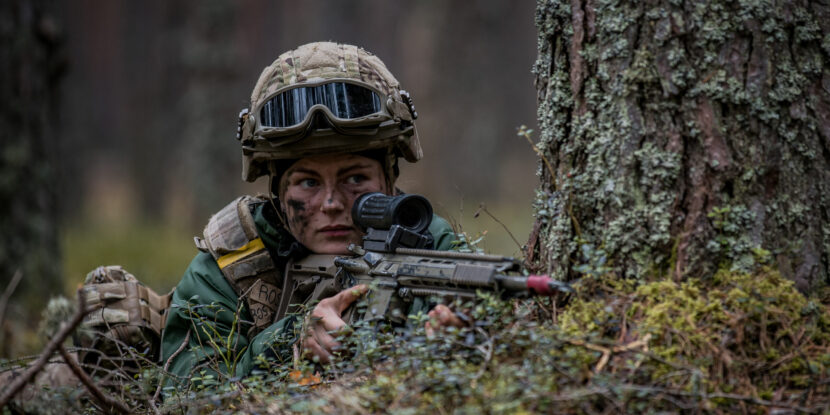
Men and women in Denmark are now subject to equal conscription requirements, as the government expands its mandatory military service program in response to what it describes as a deteriorating security situation in Europe.

Young women turning 18 on or after this week will receive “invitations” to attend a military base on Denmark’s national ‘defense day’ for assessment. If deemed fit, they will be entered into a lottery, and those selected will be legally obligated to serve. Previously, conscription applied only to men.

The Danish Armed Forces described the inclusion of women as a “historic change” and warned Danes to “get used to the fact that every citizen capable of bearing arms, and not just men, is obligated to contribute to the defense of the fatherland.” Additionally, chronic health conditions such as diabetes and asthma no longer automatically disqualify individuals, with assessments now tailored to specific roles within the military.

The length of mandatory service will now be more than twice as long, increasing to 11 months. This will include five months of training followed by six months in active service. Defense Minister Troels Lund Poulsen emphasized the seriousness of the European security situation, stating, “A broader basis for recruiting that includes all genders is needed.”

Denmark joins other European nations in revisiting conscription policies. Sweden reinstated the draft in 2017 and included women, citing Russian aggression as a key factor. Norway became the first NATO member to conscript women in 2013, while Germany is reconsidering its decision to end conscription in 2011. The United Kingdom has also faced recruitment challenges, with former Defense Minister Ben Wallace expressing admiration for Sweden’s model.

European states are also now looking to spend more money on their militaries, with many responding to pressure from U.S. President Donald J. Trump to pull their weight more by pledging to increase spending to required NATO minimums or higher. Germany, in particular, has promised billions of dollars towards rearmament amid the ongoing tensions with Russia.

Image via NATO.

Join Pulse+ to comment below, and receive exclusive e-mail analyses.
show less
show more

Trump’s Troop Deployments Have Transformed Border Security: Patrol Chief.

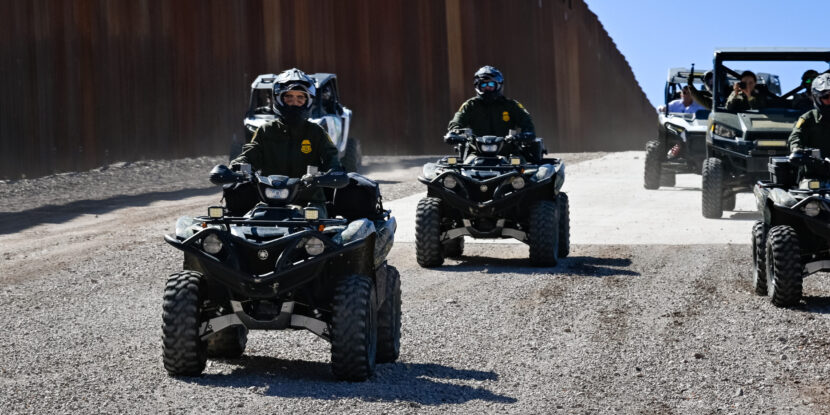
The chief of San Diego’s Border Patrol has acknowledged that President Donald J. Trump’s move to send the military to support border control efforts has been a “force multiplier” and is already showing results. Jeffrey Stalnaker, acting Chief Patrol Agent for the San Diego Sector, noted that military personnel presence had enhanced the work of border agents.

The operation sees Army, Marines, and Navy service members supporting U.S. Customs and Border Protection (CBP) agents. Recent CBP data indicates that border apprehensions in February reached levels not seen since 2000, with 30,000 encounters recorded. This contrasts sharply with the over 130,000 encounters reported in the same month in 2023 and 2024.

Last month, Border Patrol Chief Mike Banks reported that illegal crossings had dropped as much as 94 percent under the current Trump administration.

Stalnaker attributes these developments to the military presence, which allows for swift agent deployment to law enforcement events. Specifically, Task Force Sapper, comprising nearly 500 Marines, has focused on fortifying existing barriers with additional protection, including strategically placing razor wire.

The Marines, supported by companies of Army engineers and military police from Ft. Campbell, Kentucky, are engaged in surveillance and detection along stretches of the border. While not directly intervening in crossings, these troops serve as a vital observational network, freeing CBP agents to prioritize response and apprehension efforts.

show less
The chief of San Diego's Border Patrol has acknowledged that President Donald J. Trump's move to send the military to support border control efforts has been a "force multiplier" and is already showing results. Jeffrey Stalnaker, acting Chief Patrol Agent for the San Diego Sector, noted that military personnel presence had enhanced the work of border agents. show more

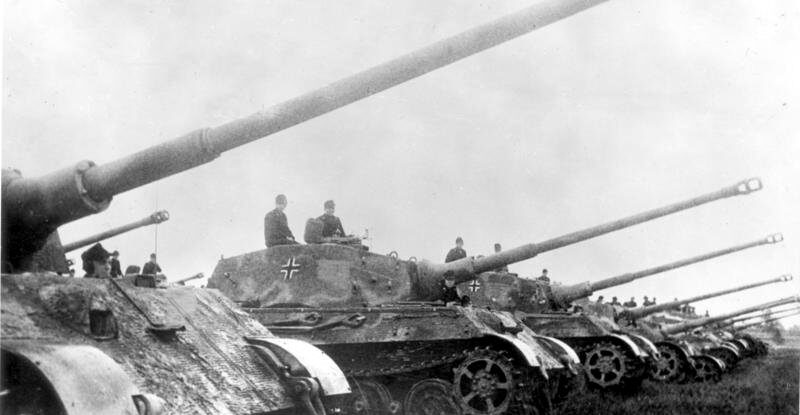
German Army Prepares Companies for Potential War.

The German armed forces, the Bundeswehr, are preparing businesses for a new war. Companies are being trained as part of a new secret document called “Operational Plan Germany.” In response to growing security concerns, the Bundeswehr has launched a nationwide initiative to train businesses in crisis preparedness, particularly in the event of military escalation, such as a conflict with Russia.

The government’s “Operational Plan Germany,” a classified 1,000-page document, outlines strategic steps for defending critical infrastructure and maintaining national security. A key component of the plan involves strengthening economic resilience.

As part of this effort, the Hamburg Chamber of Commerce recently hosted a seminar for local businesses. Lieutenant Colonel Jörn Plischke, who led the session, urged companies to take proactive measures. He recommended training at least five additional truck drivers for every 100 employees, given that 70 percent of trucks on Germany’s roads are operated by Central and Eastern Europeans—drivers who may be unavailable in the event of war.

Businesses were also advised to develop contingency plans and prepare for employee shifts in wartime conditions. Self-sufficiency was another key focus, with Plischke suggesting that companies consider backup power sources like diesel generators or wind turbines.

The training comes as Joe Biden announces he is granting permission to Ukraine to conduct strikes on Russian territory using U.S.-supplied long-range missile systems.

Previously, Russia’s President Vladimir Putin has warned that Russia would see such actions as NATO participation in the war, as many of the missile systems involved require NATO assistance to operate. Putin stated that such an attack on Russian territory would be a significant escalation and likely put NATO close to a state of war with Russia.

Image by Hamann.

show less
The German armed forces, the Bundeswehr, are preparing businesses for a new war. Companies are being trained as part of a new secret document called "Operational Plan Germany." In response to growing security concerns, the Bundeswehr has launched a nationwide initiative to train businesses in crisis preparedness, particularly in the event of military escalation, such as a conflict with Russia. show more

REPORT: British Army Would Run Out of Munitions 10 Days Into a Full War.

In a recent parliamentary session, former armed forces minister John Spellar said the British army would deplete its munitions in only ten days during a full-fledged war.

“The minister rightly speaks about the ability to sustain fighting, he knows that an exercise conducted with the Americans showed that the British Army would run out of munitions within ten days,” said Spellar.

Although current armed forces minister James Heappey insisted that Britain’s “armed forces remain fearsome,” he admitted that the “armed forces do need reinvestment in their ability to sustain themselves at a war-fighting level.” Heappey continued: “[W]e’re now in a pre-war era and so it’s the responsibility of this Government and those who follow to reinvest in that necessary war-fighting capability.”

Spellar’s and Heappey’s comments come as the UK — along with numerous other nations, including the U.S. — has been supplying significant amounts of munitions to Ukraine to sustain its war with Russia. The British Army’s lack of preparedness for a full-scale war could become a serious problem for the country, as Russian President Vladimir Putin has warned that continued NATO interference in Ukraine could spark a war.

show less
In a recent parliamentary session, former armed forces minister John Spellar said the British army would deplete its munitions in only ten days during a full-fledged war. show more