




Monday, February 23, 2026

Advanced Microsoft AI Voice Cloning Deemed Too Dangerous for Public Use.

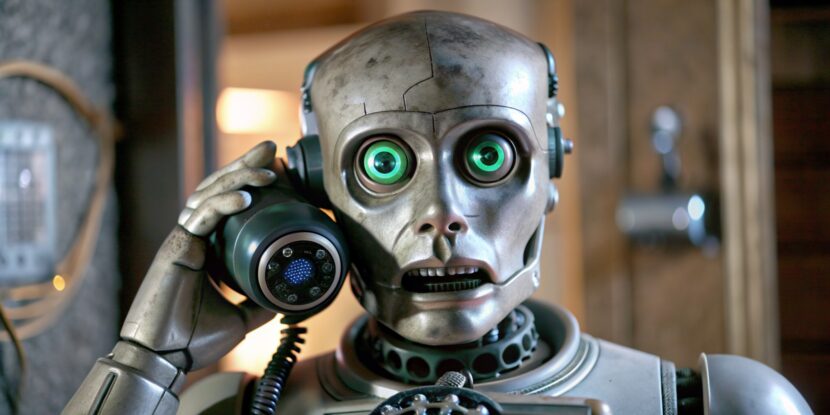
Microsoft has developed an advanced artificial intelligence (AI) text-to-speech program that achieves human-like believability. VALL-E 2 is the first program of its kind to achieve “human parity,” meaning its speech cannot be distinguished from that of a human. However, the technology remains strictly a research project and is unavailable to the public.

“It may carry potential risks in the misuse of the model, such as spoofing voice identification or impersonating a specific speaker,” researchers say. There are therefore “no plans to incorporate VALL-E 2 into a product or expand access to the public.”

The program can replicate voices with remarkable fidelity after processing as little as three seconds of audio, surpassing previous systems in speech robustness, naturalness, and similarity to the original speaker.

There are concerns about voice spoofing, with the technology used for impersonation or identity fraud, particularly in phone scams.

Misuse of AI remains a concern in the upcoming presidential election, with AI being used for fake robocalls using Joe Biden’s voice earlier this year in New Hampshire.

Some Biden supporters are suggesting AI should be used by the Biden campaign to mask the 81-year-old’s obvious cognitive decline, frailty, and confusion from the public.

show less
Microsoft has developed an advanced artificial intelligence (AI) text-to-speech program that achieves human-like believability. VALL-E 2 is the first program of its kind to achieve "human parity," meaning its speech cannot be distinguished from that of a human. However, the technology remains strictly a research project and is unavailable to the public. show more

Artificial Superintelligence Expected by 2027.

A leading expert in artificial intelligence (AI) has predicted that human-level or superhuman AI, also known as artificial general intelligence (AGI), could be achieved as early as 2027 rather than the previously predicted timeline of 2029 or 2030.

Ben Goertzel made the statement at this year’s Beneficial AGI Summit, cautioning that even as we approach AGI, there are still many unknowns about the technology’s capabilities and timeline. Goertzel founded SingularityNET and is known for his work on Sophia, the humanoid robot.

Goertzel also shared his view that once human-level AGI is reached, it could develop rapidly into an artificial superintelligence (ASI), an AI system with all the combined knowledge of human civilization. This scenario, often referred to as the ‘singularity,’ was previously considered a distant possibility. However, the recent advances in language model technology by OpenAI suggest that it may be closer than initially thought.

Goertzel acknowledged that his predictions are laden with uncertainties, as even powerful AI systems would not have a “human mind” in the conventional sense. Also, his theory assumes that AI technology would evolve in a linear and predictable manner, which does not factor in our world’s social, ethical, and ecological complexities.

American computer scientist and futurist Raymond Kurzweil recently predicted the ‘singularity’ wouldn’t occur until 2045. However, the continued advancement of AI remains a controversial topic. A recent study revealed that AI Language Learning Models (LLMs) tended to escalate conflicts to nuclear war when presented with wargaming scenarios.

show less
A leading expert in artificial intelligence (AI) has predicted that human-level or superhuman AI, also known as artificial general intelligence (AGI), could be achieved as early as 2027 rather than the previously predicted timeline of 2029 or 2030. show more