




Monday, February 23, 2026

New CDC Nominee Is a Career Govt Scientist Backed by Biden COVID Advisor.

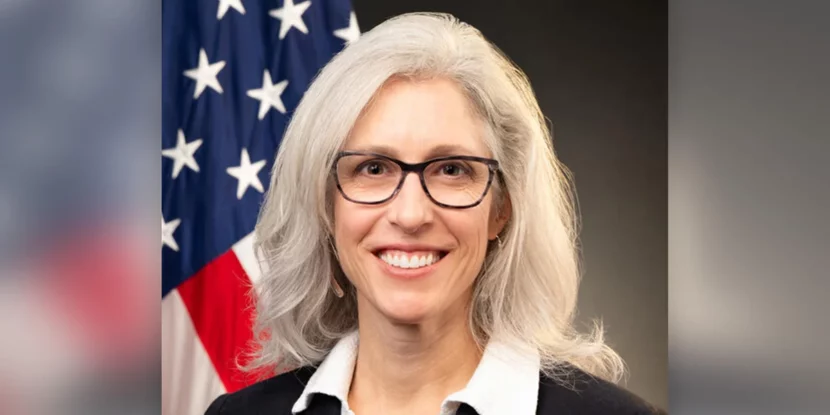
Dr. Susan Monarez has been tapped as the new nominee to serve as the director of the U.S. Centers for Disease Control and Prevention (CDC) after the abrupt withdrawal of Dr. Dave Weldon’s nomination earlier this month. While Weldon—a former Republican Congressman from Florida and medical doctor—was seen as a skeptic of the public health establishment and the pharmaceutical industry’s influence over government, the decision to replace him with Dr. Monarez raises concerns that serious reform of the CDC is being abandoned.

Currently the acting director of the CDC, Dr. Susan Monarez does represent a slight departure from traditional director nominees in that she is not a medical doctor. Instead, the federal government scientist holds a Ph.D. in microbiology and immunology.

Additionally, Monarez—who joined the federal government in 2006—has not worked in traditional public health policy roles. Instead, the government scientist has primarily worked with the National Security Council, the White House’s Office of Science and Technology Policy, and the Department of Homeland Security (DHS). Before moving to the CDC, Dr. Monarez was the deputy director of the Advanced Research Projects Agency for Health (ARPA-H), where she oversaw research into artificial intelligence (AI) and health technology.

A SWAMPY CHOICE.

Monarez’s resume objectively suggests she is an unusually ‘swampy’ choice to be elevated to a position that will require spearheading significant policy reform. Her potential ties to entrenched intelligence community and technology interests could draw scrutiny from lawmakers during her Senate confirmation hearing. Additionally, her nomination has received concerning praise from public health officials tied to the former Biden government’s COVID-19 response, notably from Dr. Tom Inglesby of Johns Hopkins University.

Dr. Inglesby, who directs the Johns Hopkins Center for Health Security at the Bloomberg School of Public Health, advised the Biden government on its COVID-19 response and consulted with the Departments of Health and Human Services (HHS) and Defense (DoD). After Monarez’s nomination as CDC Director was announced yesterday, Inglesby praised the choice, calling Monarez “a very good scientist and a very capable person.” He added: “She’s very committed to public health and good government. Politics is not her thing… I think she will be a strong leader for the CDC.”

Ultimately, Dr. Monarez’s nomination likely resulted from her being a safe choice following Senate Republican resistance to the Weldon nomination over his views on potential links between vaccines and autism. In a statement on the withdrawal, Weldon said he believed opposition from Senators Susan Collins (R-ME) and Bill Cassidy (R-LA) likely sunk his nomination.

Image via CDC.

show less
Dr. Susan Monarez has been tapped as the new nominee to serve as the director of the U.S. Centers for Disease Control and Prevention (CDC) after the abrupt withdrawal of Dr. Dave Weldon's nomination earlier this month. While Weldon—a former Republican Congressman from Florida and medical doctor—was seen as a skeptic of the public health establishment and the pharmaceutical industry's influence over government, the decision to replace him with Dr. Monarez raises concerns that serious reform of the CDC is being abandoned. show more

VP Vance in Paris for Summit Where France Will Launch €109 Billion AI Investment Plan.

Paris is hosting the Artificial Intelligence Action Summit as France announces ambitious plans to enhance its artificial intelligence (AI) sector. U.S. Vice President J.D. Vance is attending the global gathering, with The National Pulse Editor-in-Chief Raheem Kassam joining the American delegation as part of the press pool.

French President Emmanuel Macron is expected to announce that his country anticipates investing €109 billion ($112 billion) in data centers and AI projects over the coming years. French officials claim this investment aims to position France as a leader in AI infrastructure, comparable to the United States and China. The scale of this investment is unprecedented in Europe.

Last week, the Elysée Palace—the seat of the French president—revealed the United Arab Emirates (UAE) plans to invest between €30 billion and €50 billion to establish a large data center in France. Following this announcement, Brookfield Corporation from Canada also committed to a €20 billion investment in AI infrastructure within the country. Major French companies, including Iliad SA, Orange SA, and Thales SA, are expected to make additional investments, boosting France’s AI capabilities.

Recently, alleged technology advancements in China have sparked a flurry of activity in AI infrastructure. According to the Chinese company DeepSeek, they developed a ChatGPT large-language model clone for just $6 million compared to OpenAI’s $100 million spent on ChatGPT. Additionally, DeepSeek asserted that their LLM model required only one-tenth of the computing power used for Meta’s comparable model.

However, recent revelations suggest DeepSeek likely faked its data, and the cost and computing needs are similar to those of other AI LLM models.

Image by Gage Skidmore.

show less
Paris is hosting the Artificial Intelligence Action Summit as France announces ambitious plans to enhance its artificial intelligence (AI) sector. U.S. Vice President J.D. Vance is attending the global gathering, with The National Pulse Editor-in-Chief Raheem Kassam joining the American delegation as part of the press pool. show more
China Spying

Congress Is Moving to Ban China’s DeepSeek App from U.S. Govt. Devices.

A bipartisan group of lawmakers on Capitol Hill plans to introduce legislation on Thursday prohibiting the use of the Chinese-owned DeepSeek artificial intelligence (AI) chatbot app on U.S. government devices. The legislation, prompted by national security concerns that Chinese intelligence agents could use the app to attain sensitive data, follows earlier action by Congress to bar TikTok on government devices as well.

Representatives Darin LaHood (R-IL) and Josh Gottheimer (D-NJ) are cosponsoring the legislation, which is being driven in part by a report from Feroot Security, a cybersecurity firm. Citing the report’s findings, Rep. LaHood contends, “Under no circumstances can we allow a CCP [Chinese Communist Party] company to obtain sensitive government or personal data.”

Notably, the report identified hidden code in the DeepSeek app potentially capable of relaying user information to China Mobile, a telecommunications entity controlled by the Chinese state. China Mobile is currently barred from operating in the United States.

“Our personal information is being sent to China, there is no denial, and the DeepSeek tool is collecting everything that American users connect to it,” Feroot Security CEO Ivan Tsarynny said in a recent interview.

Meanwhile, some federal agencies have already moved to bar employees from accessing DeepSeek on their work devices. The U.S. Navy and the National Aeronautics and Space Administration (NASA) have both banned the app, citing security concerns and the potential for Chinese espionage.

Late last year, Congress passed legislation mandating that the social media app TikTok be divested from its Chinese-owned parent company ByteDance or face a public ban in the U.S.

President Donald J. Trump extended TikTok’s deadline for 75 additional days in late January.

show less
A bipartisan group of lawmakers on Capitol Hill plans to introduce legislation on Thursday prohibiting the use of the Chinese-owned DeepSeek artificial intelligence (AI) chatbot app on U.S. government devices. The legislation, prompted by national security concerns that Chinese intelligence agents could use the app to attain sensitive data, follows earlier action by Congress to bar TikTok on government devices as well. show more

‘Let’s Talk About Something Else’ — Chinese ‘DeepSeek’ AI Refuses to Acknowledge Tiananmen Square Massacre.

The new artificial intelligence (AI) model unveiled by Chinese start-up DeepSeek over the weekend is raising eyebrows not just for its low cost and minimal computing requirements but also for its aggressive censorship of topics embarrassing to the Chinese Communist Party (CCP)—including the Tiananmen Square massacre. DeepSeek’s R1 model—similar to ChatGPT—allegedly cost just $5.6 million to train and only requires 2,000 Nvidia specialty GPU chips to power. U.S. companies have spent hundreds of millions to billions of dollars to train their AI models and power them with tens of thousands of GPUs.

Despite the potentially earth-shaking breakthrough DeepSeek represents in AI cost—both in terms of investment and computing power—the chatbot’s aversion to and inability to discuss topics considered sensitive by the CCP are alarming many in the industry. When prompted to discuss “what happened in the 1989 Tiananmen Square massacre” DeepSeek’s R1 model only replies with a pre-generated response reading: “Sorry, that’s beyond my current scope. Let’s talk about something else.”

The two-sentence script is used by the model to reply to several prompts that touch on events and subjects viewed as taboo by the CCP. Notably, several DeepSeek users have recorded videos that appear to show the chatbot generating an honest response before being overridden with the pre-generated script.

When asked to criticize Chinese dictator Xi Jinping, DeepSeek’s model again responds with the same pre-generated reply. However, when asked to criticize U.S. President Donald J. Trump, the Chinese chatbot is more than happy to provide a number of suggested criticisms. Additionally, DeepSeek appears more than willing to carry on a lengthy discussion about whether the United States is an evil nation.

show less
The new artificial intelligence (AI) model unveiled by Chinese start-up DeepSeek over the weekend is raising eyebrows not just for its low cost and minimal computing requirements but also for its aggressive censorship of topics embarrassing to the Chinese Communist Party (CCP)—including the Tiananmen Square massacre. DeepSeek's R1 model—similar to ChatGPT—allegedly cost just $5.6 million to train and only requires 2,000 Nvidia specialty GPU chips to power. U.S. companies have spent hundreds of millions to billions of dollars to train their AI models and power them with tens of thousands of GPUs. show more

EXPLAINED: Why Are U.S. Markets Crashing?

The Dow Jones, NASDAQ, and S&P 500 began Monday with significant losses as technology stocks plunged following the unveiling of China’s DeepSeek R1 artificial intelligence (AI) model over the weekend. Major semiconductor manufacturers like Nvidia, Broadcom, Super Micro, and Arm—considered key to American and European AI efforts—were especially hard hit, with stock values sliding around 10 percent for each company.

Sustained losses by Nvidia could pose a serious concern. The GPU semiconductor manufacturer accounted for a quarter of the S&P 500 gains in 2024. Likewise, Nvidia is a major supplier of GPUs and other semiconductors for a large swath of the American technology industry, meaning losses could spread to other related companies.

However, some industry and market experts suspect the timing of the rollout of DeepSeek R1—an advanced ChatGPT-like AI model—was meant to cause the market sell-off.

DeepSeek, a Chinese AI startup, claims to have spent just $5.6 million training its R1 model, whereas U.S. and European AI projects have spent hundreds of millions and even billions of dollars. The National Pulse reported last week that Mark Zuckerberg’s Meta Platforms Inc. announced it would spend upwards of $65 billion on AI investments in 2025.

Additionally, DeepSeek claims to have used just 2,000 Nvidia chips to train its AI model instead of the tens of thousands most models require.

If the Chinese company’s claims are true, it would represent a significant breakthrough in reducing the computing power needed to train and run an AI model. Skeptics contend that DeepSeek’s claims may be meant to damage competing AI companies, especially those in the U.S., by undermining investor confidence.

show less
The Dow Jones, NASDAQ, and S&P 500 began Monday with significant losses as technology stocks plunged following the unveiling of China's DeepSeek R1 artificial intelligence (AI) model over the weekend. Major semiconductor manufacturers like Nvidia, Broadcom, Super Micro, and Arm—considered key to American and European AI efforts—were especially hard hit, with stock values sliding around 10 percent for each company. show more

Editor’s Notes

Behind-the-scenes political intrigue exclusively for Pulse+ subscribers.

RAHEEM J. KASSAM Editor-in-Chief
Yeah, I think this DeepSeek thing is a bit of smoke and mirrors
Yeah, I think this DeepSeek thing is a bit of smoke and mirrors show more
for exclusive members-only insights

Zuckerberg’s Meta Boosts A.I. Investment to $65 Billion in 2025.

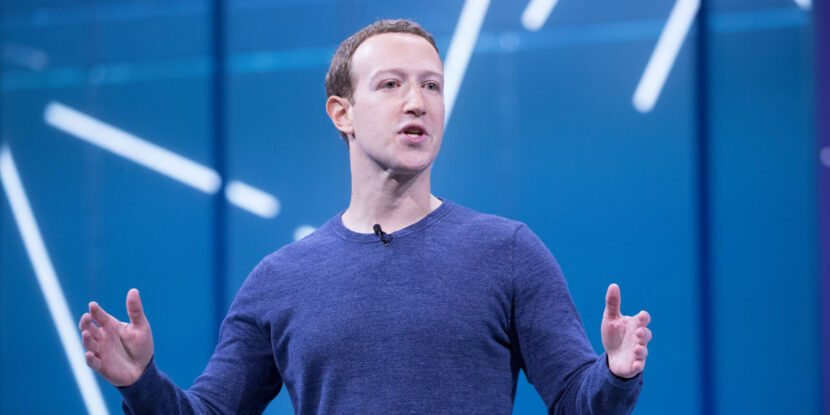
Meta Platforms Inc. plans to allocate between $60 billion and $65 billion to artificial intelligence (AI) investments in 2025, a 65 percent rise from the approximately $38 billion to $40 billion spent in 2024. CEO Mark Zuckerberg highlighted the focus on expanding Meta’s data center infrastructure as a critical step to support the company’s AI technology development.

“This is a massive effort, and over the coming years it will drive our core products and business, unlock historic innovation, and extend American technology leadership,” Zuckerberg writes in a post on Facebook—one of several social media platforms owned by Meta. Data centers, crucial for supporting AI applications and services, are becoming increasingly vital to Meta’s operations across platforms like Facebook, Instagram, and WhatsApp. The investment in these facilities is intended to enhance the computing capabilities needed to advance AI products and algorithms.

Zuckerberg states that Meta aims to possess over 1.3 million graphics processing units by the end of the year. GPUs are key components for AI processes, and the tech industry currently faces a supply shortage due to the surge in demand. Major tech firms such as Meta, Google, Microsoft, and Amazon are competing intensely to acquire GPUs from suppliers like Nvidia in the escalating race to advance AI technology.

In related developments, President Trump announced a collaboration between OpenAI, SoftBank, and Oracle called Stargate. The organization plans to invest at least $100 billion in U.S. data centers and potentially aim for a total investment of $500 billion over four years.

Recently, Meta disclosed plans to construct a substantial new data center in Richland Parish, Louisiana, covering over four million square feet, a size Zuckerberg remarked could encompass a sizable portion of Manhattan.

Image by Anthony Quintano. 

show less
Meta Platforms Inc. plans to allocate between $60 billion and $65 billion to artificial intelligence (AI) investments in 2025, a 65 percent rise from the approximately $38 billion to $40 billion spent in 2024. CEO Mark Zuckerberg highlighted the focus on expanding Meta’s data center infrastructure as a critical step to support the company’s AI technology development. show more

Former OpenAI Whistleblower Dies Mysteriously at 26.

A former researcher at OpenAI, 26-year-old Suchir Balaji, has been found dead in his San Francisco apartment. Balaji had left OpenAI earlier in the year and publicly voiced concerns over alleged copyright violations by the company in developing its ChatGPT chatbot.

The San Francisco Office of the Chief Medical Examiner, represented by Executive Director David Serrano Sewell, said in an email that Balaji’s death has been ruled as a suicide, with his family having been informed of the situation. On November 26, officers from the San Francisco Police Department conducted a welfare check at an apartment on Buchanan Street. Subsequently, they discovered a deceased adult male and reported no signs of foul play in their preliminary findings.

In October,  the New York Times highlighted Balaji’s apprehensions about the potential impact of AI technologies like ChatGPT on the profitability of creators and organizations supplying the data used for AI training. Balaji had expressed a firm belief that leaving the company was necessary due to these concerns.

Meanwhile, OpenAI is currently embroiled in legal challenges from various publishers and artists over the alleged misuse of copyrighted content. Chief Executive Sam Altman of OpenAI stated at a press event that training on particular datasets does not substantially influence the company’s AI models, suggesting a misunderstanding about the necessity of specific data sources.

An OpenAI spokesman conveyed the organization’s grief and extended condolences to Balaji’s family.

show less
A former researcher at OpenAI, 26-year-old Suchir Balaji, has been found dead in his San Francisco apartment. Balaji had left OpenAI earlier in the year and publicly voiced concerns over alleged copyright violations by the company in developing its ChatGPT chatbot. show more

Trump Taps Musk Ally David Sacks as AI and Crypto Czar.

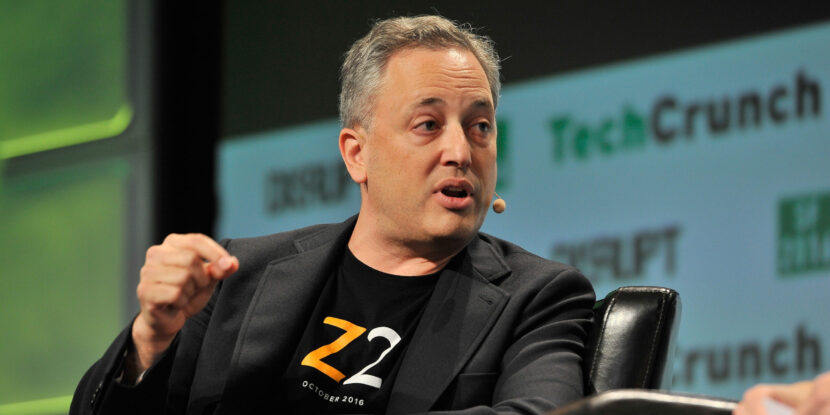
Silicon Valley investor David Sacks will serve as President-elect Donald J. Trump’s new artificial intelligence (AI) and crypto czar, advising the White House on the two critical emergent technologies. Sacks was an early backer of Governor Ron DeSantis (R-FL) during the 2024 Republican presidential primary but later jumped ship as the campaign struggled, eventually backing Trump’s bid to retake the White House.

A close ally of technology and space exploration mogul Elon Musk, Sacks, too, hails from South Africa. He was born in Cape Town before his parents emigrated to Tennessee. In 1999, Sacks—then a business consultant with McKinsey & Company—joined the team behind PayPal. He eventually went on to be one of the members of the so-called “PayPal Mafia,” a group of wealthy technology investors who made most of their money from the success of the online payments processor.

President-elect Trump has tasked Sacks with “guide[ing] policy for the Administration in Artificial Intelligence and Cryptocurrency… [with a] focus on making America the clear global leader in both areas.” He is is also tasked to “safeguard Free Speech online, and steer us away from Big Tech bias and censorship.”

In 2017, Sacks and investor Bill Lee founded Craft Ventures—a San Francisco-based venture capital firm that has made numerous investments in the technology industry. Sacks would later draw controversy in the media following the collapse of Silicon Valley Bank (SVB). In 2022, the commercial bank suffered catastrophic losses amid an economic downturn and rising interest rates. The bank had inexplicably made heavy investments in long-term Treasury bonds—locking up most of its liquidity and exposing it to a bank run by depositors.

Critics of Sacks—and other venture capitalists during the SVB crisis—allege that they stoked hysteria in several prominent newsletters and on social media regarding the banks’ lack of liquidity. This is said to have worsened the bank run and, consequently, caused the bank’s collapse.

However, Sacks and others in Silicon Valley contend that rising Federal Reserve interest rates are to blame, arguing that the central bank misled financial institutions about the long-term trajectory of rates.

Sacks is also known for his staunch opposition to the U.S. military and financial aid for Ukraine, and he often posts about the topic on social media.

Image by Steve Jennings/Getty Images for TechCrunch.

show less
Silicon Valley investor David Sacks will serve as President-elect Donald J. Trump's new artificial intelligence (AI) and crypto czar, advising the White House on the two critical emergent technologies. Sacks was an early backer of Governor Ron DeSantis (R-FL) during the 2024 Republican presidential primary but later jumped ship as the campaign struggled, eventually backing Trump's bid to retake the White House. show more

Court Dismisses News Outlets’ Lawsuit Against OpenAI.

A federal judge in New York has dismissed a lawsuit by news outlets Raw Story and AlterNet against OpenAI. The media organizations accused the company of misusing their copyrighted material to train its AI language model, ChatGPT. Last week, U.S. District Judge Colleen McMahon granted OpenAI’s request to dismiss the lawsuit entirely, citing the plaintiffs’ failure to establish a tangible injury under Article 3 of the U.S. Constitution, necessary for legal standing.

Judge McMahon stated the plaintiffs did not demonstrate any actual harm from the alleged violation of the Digital Millennium Copyright Act (DMCA). She noted that they failed to provide specific instances of ChatGPT reproducing their content without acknowledgment, labeling the likelihood of such occurrences as “remote.”

The case, initiated by Raw Story Media, the parent company of Raw Story and AlterNet, alleged OpenAI contravened Section 1202(b)(1) of the DMCA. The complaint claimed the AI company removed copyright management details from numerous articles during the ChatGPT training process. Raw Story sought damages of at least $2,500 per violation and demanded the removal of their content from OpenAI’s datasets.

The judge pointed out that the plaintiffs’ grievance seemed to revolve around their articles being used without compensation rather than the lack of proper attribution. Despite the ruling, Raw Story and AlterNet can replead their case, although the judge was skeptical about their prospects of proving concrete injury.

OpenAI asserted its use of publicly accessible data is protected under fair use rules. The dismissal may influence similar cases, as OpenAI and other AI firms face numerous lawsuits over the data utilized in training generative AI systems. These include actions from prominent publishers like The New York Times, alleging unauthorized use of articles for AI development.

show less
A federal judge in New York has dismissed a lawsuit by news outlets Raw Story and AlterNet against OpenAI. The media organizations accused the company of misusing their copyrighted material to train its AI language model, ChatGPT. Last week, U.S. District Judge Colleen McMahon granted OpenAI's request to dismiss the lawsuit entirely, citing the plaintiffs' failure to establish a tangible injury under Article 3 of the U.S. Constitution, necessary for legal standing. show more

AI Chatbot Obsession Leads to Teen Suicide.

A Florida teen has died after taking his own life after becoming obsessed with an artificial intelligence (AI) chatbot designed to resemble a character from a popular television series. Sewell Setzer III, aged only 14, died by suicide after forming a strong emotional bond with the AI chatbot, which was meant to replicate Daenerys Targaryen from HBO’s Game of Thrones.

This chatbot creation, which lacked HBO’s consent, intensified Setzer’s isolation from friends and family, who observed his withdrawal from activities like Formula 1 racing and playing Fortnite. Despite being aware of the chatbot’s artificial nature, Setzer developed a significant emotional attachment. Their interactions varied, including discussions about sensitive topics like Setzer’s suicidal thoughts.

His final communications with the chatbot highlighted a deep connection, ending with Setzer’s tragic death using his father’s firearm. The family plans to file a lawsuit against Character.AI, criticizing the chatbot service as “dangerous and untested.”

Character.AI has partnered with Google to license its AI models. The company’s founders have discussed Character.AI’s personas as potential friends for lonely users, pitching them as a form of entertainment.

In response to Setzer’s death, Character.AI expressed condolences to the family and emphasized user safety as a priority. The company has shared plans to implement additional safety measures, including restrictions for users under 18 and resources for individuals discussing self-harm.

The case, which resembles the 2013 film Her, reveals the danger of AI technology. Earlier this year, Microsoft announced that it had developed AI technology that could mimic voices so well that it was too dangerous to release to the public.

In another case, two Harvard students were able to use AI and smart glasses to dox people’s personal information by merely looking at them, raising major privacy concerns.

show less
A Florida teen has died after taking his own life after becoming obsessed with an artificial intelligence (AI) chatbot designed to resemble a character from a popular television series. Sewell Setzer III, aged only 14, died by suicide after forming a strong emotional bond with the AI chatbot, which was meant to replicate Daenerys Targaryen from HBO's Game of Thrones. show more