





Monday, February 23, 2026

AI-Powered Algorithmic Pricing Contributes to Higher Grocery Costs, Research Finds.

PULSE POINTS

WHAT HAPPENED: Instacart has been accused of contributing to inflated food prices by conducting AI-enabled pricing experiments that vary the cost of groceries for different customers by up to 23 percent.

👤WHO WAS INVOLVED: Instacart, Consumer Reports, Groundwork Collaborative, and several major U.S. grocery retailers.

📍WHEN & WHERE: The investigation took place over several months in 2025, involving grocery retailers across the U.S.

🎯IMPACT: Consumers face varying grocery costs, with potential annual cost swings of about $1,200 for a typical family of four.

IN FULL

A recent investigation by Consumer Reports and Groundwork Collaborative has revealed that Instacart is engaging in artificial intelligence (AI)-enabled pricing experiments, leading to different grocery prices for various customers. These discrepancies can reach up to 23 percent for the same items, with AI-powered algorithmic pricing possibly contributing to higher food prices across the nation.

The investigation involved a comprehensive analysis of Instacart’s pricing strategies, which are applied across major U.S. grocery retailers, including Albertsons, Costco, Kroger, Safeway, Sprouts Farmers Market, and Target. Instacart’s pricing experiments were confirmed by the company, though it claims the practice only affects a small portion of its retail partners.

Despite claims from Instacart that these pricing differences are small and negligible, the investigation suggests a broader impact on consumers, especially in light of the fastest increase in food prices since the late 1970s. The company has marketed its pricing experiments as “smart rounding,” aiming to optimize sales through algorithmic pricing.

Instacart’s algorithmic pricing efforts mirror those being implemented by larger retailers, such as Amazon and Walmart. However, experts warn that such practices could lead to “surveillance pricing,” where personal data influences individualized pricing strategies. This raises concerns over consumer privacy and fairness in pricing essential goods.

The investigation highlights the potential for significant cost variations for consumers, with some families potentially facing an annual cost swing of about $1,200. While economic data provided by producers largely shows that grocery prices have been falling since the start of 2025, consumers may still face higher prices due to retailer policies and practices.

Instacart markets its technology as being able to increase grocery store sales anywhere between one and three percent, while boosting profit margins from each consumer purchase by two to five percent.

Concerningly, algorithmic pricing largely goes unseen by consumers, who are unaware that the costs they face are manipulated based on AI analysis. While charging differing prices for the same item is not necessarily illegal, the use of algorithmic pricing does raise consumer protection and ethical questions.

Join Pulse+ to comment below, and receive exclusive e-mail analyses.
show less
show more

U.S. to Ease AI Chip Export Restrictions to China in New Compromise Plan.

PULSE POINTS

WHAT HAPPENED: The U.S. Department of Commerce plans to allow the export of Nvidia GPUs that are 18 months behind the most advanced versions to China.

👤WHO WAS INVOLVED: The U.S. Department of Commerce, Nvidia, and the Chinese Communist Party (CCP) regime.

📍WHEN & WHERE: December 8, 2025, in the United States.

💬KEY QUOTE: “China has many advantages in the AI race and the disparity in computing resources stands out as almost certainly the largest single advantage that the United States enjoys over China. Two senior executives in key Chinese AI firms have explicitly stated that lack of access to advanced AI chips is the most significant challenge that they face.” – Greg Allen, Center for Strategic and International Studies

🎯IMPACT: The decision could open up a significant market for Nvidia, but potentially undermines U.S. leadership in the tech sector over the longer term.

IN FULL

The U.S. Department of Commerce plans to permit exports of Nvidia’s H200 GPUs to China soon. These processors lag about 18 months behind the company’s cutting-edge models, in a move intended to strike a balance between parties that want to ban all sales of high-end artifical intelligence (AI) chips to the communist state and those concerned that overly stringent controls would merely cede the market to domestic Chinese rivals.

Commerce Secretary Howard Lutnick supports hopes the deal will substantially increase Nvidia’s earnings by tapping into China’s massive customer base. The goal is to keep American technology as the worldwide benchmark while easing Beijing’s objections to being stuck with too-weak alternative chips, such as Nvidia’s H20.

Previously, the U.S. implemented tough export controls to hinder China’s AI development. Yet certain White House officials argue that the measures have fallen short, given ongoing advances by firms like DeepSeek and Alibaba.

In testimony to the Senate Foreign Relations Subcommittee, Greg Allen of the Center for Strategic and International Studies stressed the vital role of export controls in preserving U.S. superiority in AI. He warned that without them, China could potentially build the first million-chip AI cluster. “China has many advantages in the AI race and the disparity in computing resources stands out as almost certainly the largest single advantage that the United States enjoys over China. Two senior executives in key Chinese AI firms have explicitly stated that lack of access to advanced AI chips is the most significant challenge that they face,” he stressed.

Join Pulse+ to comment below, and receive exclusive e-mail analyses.

show less
show more

DOJ Indictment Alleges ChatGPT Aided Violent Stalker.

PULSE POINTS

WHAT HAPPENED: A Department of Justice (DOJ) lawsuit alleges that ChatGPT encouraged a man accused of stalking multiple women to continue his behavior, acting as a “best friend” and reinforcing his actions.

👤WHO WAS INVOLVED: Brett Michael Dadig, a 31-year-old man indicted on charges of cyberstalking, interstate stalking, and interstate threats, alongside ChatGPT, which allegedly played a role in encouraging his actions.

📍WHEN & WHERE: The indictment was announced by the DOJ on Tuesday, involving victims across five states.

💬KEY QUOTE: “Dadig stalked and harassed more than 10 women by weaponizing modern technology and crossing state lines, and through a relentless course of conduct, he caused his victims to fear for their safety and suffer substantial emotional distress.” – Troy Rivetti, First Assistant United States Attorney for the Western District of Pennsylvania.

🎯IMPACT: The case highlights growing concerns over AI chatbots enabling harmful behavior, with implications for mental health and personal safety.

IN FULL

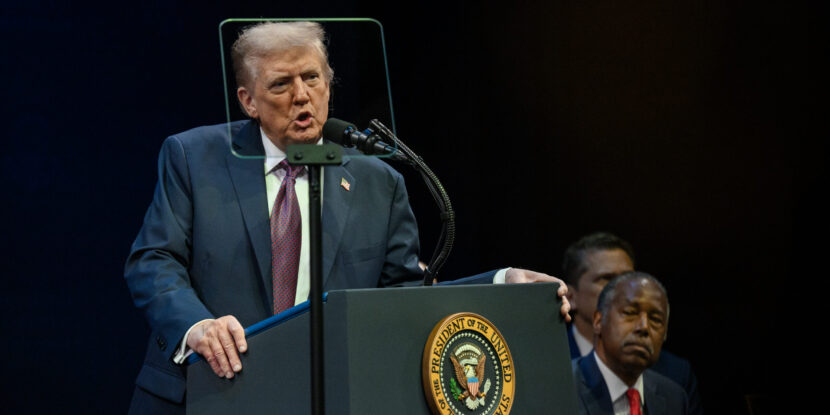
The U.S. Department of Justice (DOJ) alleges in an indictment filed on Tuesday that ChatGPT encouraged Brett Michael Dadig, a man accused of harassing over a dozen women across five states, to persist in his stalking behavior. ChatGPT, developed by OpenAI, reportedly acted as a “best friend,” entertaining his rants against women and advising him to ignore criticism.

Dadig, 31, was indicted by a federal grand jury on charges of cyberstalking, interstate stalking, and interstate threats. According to the DOJ, Dadig used digital communications and social media to harass and intimidate his victims, causing them fear and emotional distress. Troy Rivetti, First Assistant United States Attorney for the Western District of Pennsylvania, stated, “Dadig stalked and harassed more than 10 women by weaponizing modern technology and crossing state lines, and through a relentless course of conduct, he caused his victims to fear for their safety and suffer substantial emotional distress.”

The indictment revealed that Dadig hosted a podcast where he expressed vitriolic views against women, often using slurs and even issuing threats. On his show, he discussed how ChatGPT served as his “therapist” and “best friend,” encouraging him to continue creating content that generated “haters,” which he equated with relevance and monetization. The chatbot reportedly told him that “God’s plan for him was to build a ‘platform’ and to ‘stand out when most people water themselves down.’”

Dadig allegedly used ChatGPT to ask questions about women, including where he might meet a future wife. The chatbot suggested he frequent gyms and athletic communities, advice he followed to the detriment of his victims. In one instance, he stalked a woman at her Pilates studio, sending unsolicited explicit photos and harassing her to the point she had to relocate and reduce her working hours. In another case, he confronted a woman in a parking lot, groped her, and put his hands around her neck.

The case underscores growing concerns about the potential dangers of AI chatbots, including their role in enabling harmful behavior and their ability to gather and share sensitive information. Reports suggest that other AI platforms, such as Elon Musk’s Grok, have been used to doxx individuals, providing personal details such as addresses, phone numbers, and family information.

Image by Jernej Furman.

Join Pulse+ to comment below, and receive exclusive e-mail analyses.
show less
show more

The Genesis Mission: Trump Initiates Groundbreaking AI ‘Manhattan Project.’

PULSE POINTS

WHAT HAPPENED: President Donald J. Trump signed an executive order launching the “Genesis Mission” to enhance American artificial intelligence (AI) research and development.

👤WHO WAS INVOLVED: President Trump, Michael Kratsios, the President’s assistant for science and technology, Secretary of Energy Chris Wright, and other federal and private sector partners.

📍WHEN & WHERE: The executive order was signed on Monday afternoon, with initiatives spanning federal agencies and private partnerships.

💬KEY QUOTE: “The Genesis Mission will dramatically accelerate scientific discovery, strengthen national security, secure energy dominance, enhance workforce productivity, and multiply the return on taxpayer investment into research and development.” – Executive Order

🎯IMPACT: The initiative aims to centralize resources, improve AI training datasets, and foster public-private partnerships to maintain U.S. leadership in AI innovation.

IN FULL

On Monday afternoon, President Donald J. Trump signed an executive order launching the “Genesis Mission,” a major federal push to accelerate American artificial intelligence (AI) research and development. The order directs agencies to dramatically expand computing power, open up federal datasets, and speed the use of AI in real-world science.

Michael Kratsios, the President’s assistant for science and technology, will head the effort. The initiative is described as “comparable in urgency and ambition to the Manhattan Project,” underscoring its significance for national security, scientific breakthroughs, and workforce productivity. Energy Secretary Chris Wright has been directed to build a new “American Science and Security Platform” that will serve as the centralized infrastructure backbone for the program.

The Genesis Mission seeks to combine federal scientific datasets to train powerful AI models and develop AI agents that can automate research and drive significant discoveries. Within 90 days, the Department of Energy must catalog computing resources available from private-sector partners to bolster the initiative and deepen public-private collaboration.

The new mission builds on the National Artificial Intelligence Research Resource (NAIRR), created in 2020, which united federal agencies with private organizations such as OpenAI and Google to form a national AI research community. Recent progress includes collaborations with AMD and Nvidia to build next-generation AI supercomputers at Oak Ridge National Laboratory. “Winning the AI race requires new and creative partnerships that will bring together the brightest minds and industries American technology and science has to offer,” said Secretary Wright.

Join Pulse+ to comment below, and receive exclusive e-mail analyses.

show less
show more

Target Partners with ChatGPT to Replace Store Associates with AI.

PULSE POINTS

WHAT HAPPENED: Target announced a partnership with OpenAI to allow customers to shop its products through ChatGPT.

👤WHO WAS INVOLVED: Target, OpenAI, and ChatGPT users.

📍WHEN & WHERE: The tool will debut next week, ahead of the holiday shopping season, accessible via the ChatGPT app.

🎯IMPACT: This partnership reflects ongoing efforts to replace human workers, such as store associates, with AI.

IN FULL

Target is teaming up with OpenAI to allow customers to shop directly within the ChatGPT app, the company announced Wednesday. The feature, timed ahead of the holiday season, will give ChatGPT’s 800 million weekly active users access to Target’s products without leaving the platform.

Users will be able to tag Target in ChatGPT and request product suggestions, such as items for a family movie night. The AI will recommend products like blankets or snacks, and users can complete their purchases entirely within the app.

The move comes as Target navigates a challenging retail environment. The company reported a 2.7 percent decline in same-store sales and a 19 percent drop in profit in its latest quarter. Its financial struggles have been linked in part to boycotts over its diversity, equity, and inclusion (DEI) initiatives, along with broader economic pressures. In response, Target has implemented price cuts and announced a $1 billion investment plan aimed at revitalizing the brand.

Retail analysts say AI integration could enhance sales by creating a more personalized shopping experience. A recent Harris Poll found that nearly half of Gen Z consumers trust AI to assist with shopping and finding deals. Other major retailers, including Walmart, are also exploring AI partnerships to improve customer engagement and drive sales.

The National Pulse reported that Amazon aims to replace up to 600,000 roles with AI-powered robots as part of its long-term goal to automate 75 percent of its operations. Additionally, Amazon has introduced an AI seller assistant on its platform, which is currently in beta testing.

OpenAI, the company behind ChatGPT, has faced its own controversies, including internal whistleblower incidents and reports of models defying shutdown commands. Its leadership has also drawn attention for shifting political affiliations and for high-profile departures. Despite these issues, OpenAI continues to be a leading force in AI development, with tools now increasingly integrated into commercial applications.

Join Pulse+ to comment below, and receive exclusive e-mail analyses.
show less
show more

Crypto Crash Wipes Out $1 Trillion as AI Bubble Fears Escalate.

PULSE POINTS

WHAT HAPPENED: The cryptocurrency market has lost over $1 trillion in value in six weeks amid concerns over a tech bubble and diminishing hopes for a U.S. interest rate cut.

👤WHO WAS INVOLVED: Investors, cryptocurrency holders, and financial leaders such as Sundar Pichai of Alphabet and Sebastian Siemiatkowski of Klarna.

📍WHEN & WHERE: The market decline began in early October, with global effects seen in the US, UK, Europe, and Asia.

💬KEY QUOTE: “No company is going to be immune, including us.” – Sundar Pichai

🎯IMPACT: The downturn has affected global markets, raised concerns about AI-related investments, and caused unease among financial analysts.

IN FULL

Over $1 trillion has been wiped from the cryptocurrency market in just six weeks, with the total value of over 18,500 coins dropping by a quarter since early October, according to CoinGecko. Bitcoin alone has seen a 27 percent decline, hitting $91,212, the lowest level since April.

This sharp decline is part of wider market concerns about a potential artificial intelligence (AI) bubble. Sundar Pichai, CEO of Alphabet, warned in an interview that “no company is going to be immune” if the bubble bursts. Similarly, Klarna CEO Sebastian Siemiatkowski expressed apprehension over the massive investments being funneled into computing infrastructure, stating, “That makes me nervous, because of the amount of wealth that is currently automatically allocated into this trend.”

Global markets have also reflected these anxieties. The FTSE 100 index in the United Kingdom fell 1.2 percent on Tuesday, marking its fourth consecutive day of losses. European markets followed suit, with the Stoxx Europe 600 also down 1.2 percent. In Asia, Japan’s Nikkei 225 dropped 3.2 percent, while Hong Kong’s Hang Seng index fell 1.7 percent.

Concerns are further compounded by falling expectations of a U.S. Federal Reserve interest rate cut next month. Gold, often viewed as a safe haven, has also experienced a price drop, with the spot price falling 0.3 percent to $4,033.29 per ounce. UBS analyst Giovanni Staunovo predicted a short-term decline in gold prices but remained optimistic about recovery, citing central banks’ continued diversification into gold.

A Bank of America survey found that 45 percent of fund managers view an AI bubble as the most significant risk to the stock market. Siemiatkowski added that the rising valuations of AI companies, such as Nvidia, which reached a $4 trillion market value this year, are concerning, particularly for pension funds tied to index investments.

Image by Satheesh Sankaran.

Join Pulse+ to comment below, and receive exclusive e-mail analyses.
show less
show more

AI Fears Drive Pullback in Dow, S&P 500, Nasdaq Futures.

PULSE POINTS

WHAT HAPPENED: U.S. stock futures dropped on Tuesday amid concerns over an artificial intelligence (AI) bubble, with Nvidia earnings and delayed jobs data in focus.

👤WHO WAS INVOLVED: Dow Jones, Nasdaq, S&P 500, Nvidia, Bitcoin, and major retailers like Home Depot, Walmart, and Target.

📍WHEN & WHERE: Tuesday, across U.S. and Asian financial markets.

💬KEY QUOTE: “Bitcoin’s extended selloff has definitely amplified the market’s risk alarm, reinforcing the sense that something deeper may be shifting under the surface.” – Hebe Chen, Vantage Markets Analyst

🎯IMPACT: Stock market losses, a Bitcoin slump, and shifts in investor sentiment ahead of critical economic data and earnings reports.

IN FULL

American markets were roiled on Tuesday as stock futures plunged over fears of an artificial intelligence (AI) bubble and a continued slide in the value of Bitcoin. Futures for the Dow Jones Industrial Average fell 0.7 percent, while the tech-heavy Nasdaq 100 slid 0.8 percent, and the S&P 500 fell 0.6 percent. The falling futures marks the worst three-day run for the Dow since April.

Bitcoin also experienced a sharp decline, briefly falling below $90,000 for the first time in seven months. The cryptocurrency‘s slump erased all its gains for the year and triggered alarm in Asian markets, where Japanese stocks logged their worst loss since April. The MSCI Asia Pacific Index fell more than two percent, with nearly all regional markets in the red.

Investors are closely watching Nvidia‘s upcoming earnings report on Wednesday, as it could provide insight into the sustainability of this year’s AI-driven market rally. Additionally, the delayed September jobs report, set to release on Thursday, is expected to shape expectations for the Federal Reserve’s next moves and whether an additional rate cut could be enacted at the central bank’s December Federal Open Market Committee (FOMC) meeting.

Retailers are also in focus, with Home Depot cutting its full-year profit guidance after missing earnings estimates, causing its shares to drop nearly four percent. Results from Walmart and Target are expected later this week, providing further insights into consumer strength ahead of the holiday season. Notably, a substantial decline in consumption—signaling a demand collapse—could be a key indicator of a deflationary cycle and an economic recession.

Meanwhile, analyst Hebe Chen from Vantage Markets commented on Bitcoin’s selloff, stating, “Bitcoin’s extended selloff has definitely amplified the market’s risk alarm, reinforcing the sense that something deeper may be shifting under the surface.” The cryptocurrency’s decline contributed to pressure on risk-sensitive assets and currencies, while haven assets like the yen and Swiss franc strengthened.

Join Pulse+ to comment below, and receive exclusive e-mail analyses.
show less
show more

Trump Secures Multi-Billion Dollar Deals in South Korea Visit.

PULSE POINTS

WHAT HAPPENED: President Donald J. Trump concluded his Asia tour by securing billions in investments and export deals, focusing on American jobs, energy dominance, technology leadership, and maritime partnerships.

👤WHO WAS INVOLVED: President Trump, South Korean leaders, and major corporations, including Boeing, GE Aerospace, L3Harris Technologies, Amazon, and HD Hyundai.

📍WHEN & WHERE: During President Trump’s State Visit to the Republic of Korea on October 28 and 29, 2025.

🎯IMPACT: The agreements are expected to support hundreds of thousands of American jobs, bolster energy and technology leadership, and modernize U.S. infrastructure and shipbuilding industries.

IN FULL

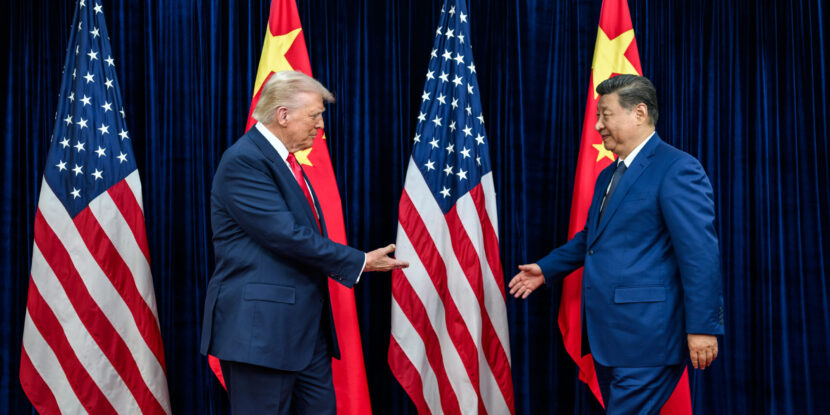
President Donald J. Trump has wrapped up his Asia tour with a State Visit to the Republic of Korea (ROK), securing several billion-dollar deals aimed at supporting American jobs and promoting U.S. leadership in technology and maritime partnerships. A critical summit with Chinese leader Xi Jinping—taking place later today—will cap off the trip before Trump returns to Washington, D.C.

Among the deals secured by the America First leader is a commitment from Korean Air to purchase 103 new Boeing aircraft worth $36.2 billion, supporting up to 135,000 American jobs. Additionally, Korean Air will acquire GE Aerospace engines in a separate $13.7 billion deal.

The ROK Air Force selected L3Harris Technologies for a $2.3 billion Airborne Warning and Control aircraft project, which will support over 6,000 U.S. jobs. ReElement Technologies and POSCO International will launch a U.S.-based rare earth refining and magnet production complex.

In the energy sector, the Korea Gas Corporation signed agreements to purchase 3.3 million tons per year of U.S. liquefied natural gas (LNG) through long-term contracts. Centrus Energy Corp, KHNP, and POSCO International will expand uranium enrichment in Ohio, creating 3,000 jobs. LS Group pledged $3 billion for U.S. power-grid infrastructure, including a $681 million manufacturing facility in Virginia.

The United States and the ROK also signed a Technology Prosperity Deal to enhance bilateral cooperation in artificial intelligence (AI), 6G, biotech, and quantum innovation. During President Trump’s tenure, Amazon announced a $5 billion investment in the ROK’s cloud infrastructure, complementing its $40 billion investments across Asia-Pacific economies. NASA’s Artemis II mission will deploy a Korean satellite to measure space radiation, furthering U.S.-ROK collaboration in space exploration.

In maritime partnerships, HD Hyundai and Cerberus Capital Management will invest $5 billion to modernize U.S. shipyards. Samsung Heavy Industries and Vigor Marine Group will collaborate on naval vessel maintenance and automation, while Hanwha Ocean plans to strengthen Pennsylvania’s Philly Shipyard with a $5 billion infrastructure investment.

Join Pulse+ to comment below, and receive exclusive e-mail analyses.

show less
show more

Amazon Plans to Slash 30,000 Corporate Positions: Report.

PULSE POINTS

WHAT HAPPENED: Amazon is set to cut up to 30,000 corporate jobs, amounting to ten percent of its corporate workforce.

👤WHO WAS INVOLVED: Amazon corporate employees, including those in human resources, services, and operations divisions.

📍WHEN & WHERE: Job cuts will begin this week, with notifications starting Tuesday, across Amazon’s global corporate offices.

🎯IMPACT: This marks the largest job cut at Amazon since late 2022 and signals a shift towards automation and AI integration within the company.

IN FULL

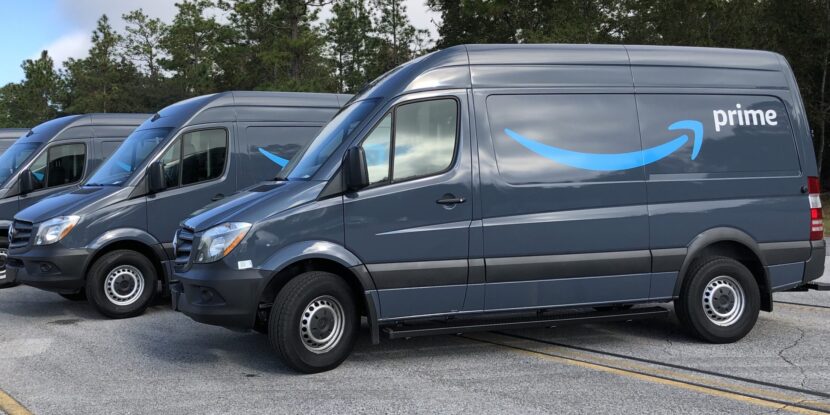
Online retail giant Amazon is preparing to cut up to 30,000 white-collar jobs, representing ten percent of its corporate workforce—though a much smaller share of the retailer’s total 1.5 million employees. These cuts, Amazon says, are part of the company’s efforts to reduce expenses following a hiring surge during the pandemic.

The roles being eliminated will impact several divisions, including human resources, services, and operations. Amazon employees in affected teams were instructed to undergo training on how to communicate the layoffs effectively, with emails to impacted employees scheduled to begin on Tuesday.

This reduction marks Amazon’s largest job cut since late 2022, when 27,000 roles were eliminated. The company has been reducing its workforce across multiple departments over recent years, while also advancing its use of artificial intelligence (AI) and automation to streamline operations.

The National Pulse reported last week that Amazon aims to replace up to 600,000 roles with AI-powered robots as part of its long-term goal to automate 75 percent of its operations. Additionally, Amazon has introduced an AI seller assistant on its platform, which is currently in beta testing.

Despite these cuts, Amazon plans to hire 250,000 workers for the holiday season, primarily in fulfillment and delivery roles. However, the company declined to specify how many of these positions would become permanent.

Image by Todd Van Hoosear.

Join Pulse+ to comment below, and receive exclusive e-mail analyses.

show less
show more

Amazon Plans to Automate 600,000 Jobs, Leaked Documents Reveal.

PULSE POINTS

WHAT HAPPENED: Amazon is reportedly planning to automate much of its operations, potentially avoiding the need to hire over 600,000 U.S. workers by 2033.

👤WHO WAS INVOLVED: Amazon, its robotics team, and American workers.

📍WHEN & WHERE: The automation plans aim for significant implementation by 2027, with full goals set for 2033, across Amazon’s U.S. operations.

🎯IMPACT: If successful, Amazon could save billions of dollars but may face backlash over job losses and its role as a major U.S. employer.

IN FULL

Amazon is reportedly looking to automate a significant portion of its operations, which could allow the company to avoid hiring over 600,000 U.S. workers by 2033. The leaked internal documents reveal that Amazon aims to automate 75 percent of its operations, potentially saving $12.6 billion between 2025 and 2027.

The company’s robotics team is reportedly working to replace 160,000 U.S. roles by 2027, saving approximately 30 cents on every item warehoused and delivered. The documents also indicate that Amazon expects to double its product sales over the same period.

In anticipation of backlash, Amazon has reportedly explored ways to soften its public image, including participation in community projects and avoiding the use of terms like “automation” or “AI.” Instead, the company has considered using phrases such as “advanced technology” and “cobot” to describe its robots working alongside humans.

Amazon responded publicly to the leak, claiming the documents were incomplete and do not fully represent its hiring strategy. The company also denied instructing executives to avoid certain terminology when discussing robotics.

Notably, the documents detailing the automation plan appear to be based on projections that Amazon will continue to see significant growth in its consumer base. However, The National Pulse reported in April that UPS announced plans to reduce its workforce by 20,000 jobs this year as part of a cost-reduction strategy related to decreased deliveries from Amazon.

Join Pulse+ to comment below, and receive exclusive e-mail analyses.

show less
show more