




Monday, February 23, 2026

Japan Reels From 7.5 Magnitude Quake, Airport and Nuclear Fuel Plant Damaged, 34 Injured.

PULSE POINTS

WHAT HAPPENED: A 7.5 magnitude earthquake struck Japan, causing injuries, minor damage, and a tsunami along its Pacific coast.

👤WHO WAS INVOLVED: Japanese authorities, Prime Minister Sanae Takaichi, the Fire and Disaster Management Agency, and the Japan Meteorological Agency.

📍WHEN & WHERE: The quake occurred late Monday night near Aomori, Japan, with tsunami waves affecting nearby coastal regions.

💬KEY QUOTE: “We are putting people’s lives first and doing everything we can.” – Prime Minister Sanae Takaichi

🎯IMPACT: Injuries were reported, power was disrupted, and transportation services were temporarily suspended. Authorities are monitoring for aftershocks.

IN FULL

Japan is gauging regional damage in the aftermath of a powerful 7.5 magnitude earthquake that struck late Monday night. The quake caused injuries, minor damage, and a tsunami along the Pacific coast. Authorities are warning residents about potential aftershocks as emergency teams continue to evaluate the situation.

The quake, recorded at 7.5 magnitude by Japanese authorities and 7.6 by the U.S. Geological Survey, occurred at 11:15 PM in the Pacific Ocean. Its epicenter was located 80 kilometers off the coast of Aomori, with a depth of 44 kilometers. Tsunami waves up to 70 centimeters were recorded at Kuji port in Iwate prefecture, while other coastal areas saw waves of up to 50 centimeters.

According to Japanese public broadcaster NHK, most injuries were caused by falling objects in homes and businesses. The country’s Fire and Disaster Management Agency reported that at least 34 people were injured, with one person in serious condition. Prime Minister Sanae Takaichi announced the formation of an emergency task force, stating, “We are putting people’s lives first and doing everything we can.”

Approximately 800 homes lost power, and Shinkansen bullet trains were suspended in parts of the region. Power was mostly restored by Tuesday morning, according to Tohoku Electric Power Co. About 480 residents sought shelter at Hachinohe Air Base, and 18 defense helicopters were deployed for damage assessment. Some 200 passengers were stranded overnight at New Chitose Airport in Hokkaido due to structural damage in a terminal building.

The Nuclear Regulation Authority reported a 450-liter water spill at the Rokkasho fuel reprocessing plant, but confirmed that no safety concerns were raised. The Japan Meteorological Agency issued a warning of possible aftershocks and urged residents to remain prepared, citing a slight increase in the risk of a magnitude 8-level earthquake. Smaller aftershocks, including a magnitude 6.6 and 5.1, were recorded in the hours following the initial quake.

Join Pulse+ to comment below, and receive exclusive e-mail analyses.
show less
show more

Trump Secures Multi-Billion Dollar Deals in South Korea Visit.

PULSE POINTS

WHAT HAPPENED: President Donald J. Trump concluded his Asia tour by securing billions in investments and export deals, focusing on American jobs, energy dominance, technology leadership, and maritime partnerships.

👤WHO WAS INVOLVED: President Trump, South Korean leaders, and major corporations, including Boeing, GE Aerospace, L3Harris Technologies, Amazon, and HD Hyundai.

📍WHEN & WHERE: During President Trump’s State Visit to the Republic of Korea on October 28 and 29, 2025.

🎯IMPACT: The agreements are expected to support hundreds of thousands of American jobs, bolster energy and technology leadership, and modernize U.S. infrastructure and shipbuilding industries.

IN FULL

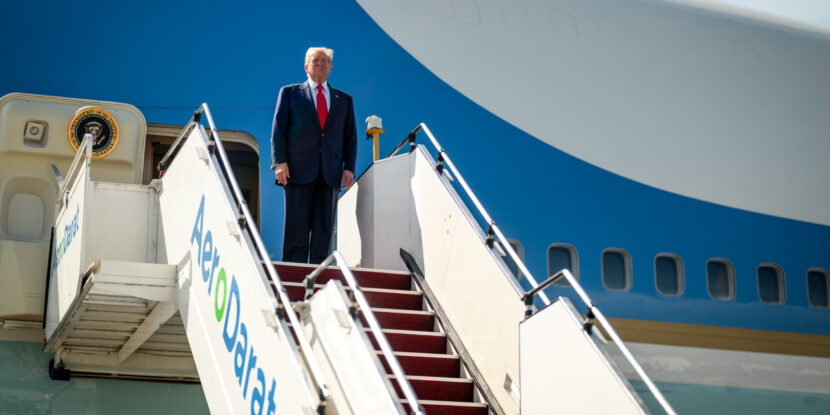
President Donald J. Trump has wrapped up his Asia tour with a State Visit to the Republic of Korea (ROK), securing several billion-dollar deals aimed at supporting American jobs and promoting U.S. leadership in technology and maritime partnerships. A critical summit with Chinese leader Xi Jinping—taking place later today—will cap off the trip before Trump returns to Washington, D.C.

Among the deals secured by the America First leader is a commitment from Korean Air to purchase 103 new Boeing aircraft worth $36.2 billion, supporting up to 135,000 American jobs. Additionally, Korean Air will acquire GE Aerospace engines in a separate $13.7 billion deal.

The ROK Air Force selected L3Harris Technologies for a $2.3 billion Airborne Warning and Control aircraft project, which will support over 6,000 U.S. jobs. ReElement Technologies and POSCO International will launch a U.S.-based rare earth refining and magnet production complex.

In the energy sector, the Korea Gas Corporation signed agreements to purchase 3.3 million tons per year of U.S. liquefied natural gas (LNG) through long-term contracts. Centrus Energy Corp, KHNP, and POSCO International will expand uranium enrichment in Ohio, creating 3,000 jobs. LS Group pledged $3 billion for U.S. power-grid infrastructure, including a $681 million manufacturing facility in Virginia.

The United States and the ROK also signed a Technology Prosperity Deal to enhance bilateral cooperation in artificial intelligence (AI), 6G, biotech, and quantum innovation. During President Trump’s tenure, Amazon announced a $5 billion investment in the ROK’s cloud infrastructure, complementing its $40 billion investments across Asia-Pacific economies. NASA’s Artemis II mission will deploy a Korean satellite to measure space radiation, furthering U.S.-ROK collaboration in space exploration.

In maritime partnerships, HD Hyundai and Cerberus Capital Management will invest $5 billion to modernize U.S. shipyards. Samsung Heavy Industries and Vigor Marine Group will collaborate on naval vessel maintenance and automation, while Hanwha Ocean plans to strengthen Pennsylvania’s Philly Shipyard with a $5 billion infrastructure investment.

Join Pulse+ to comment below, and receive exclusive e-mail analyses.
show less
show more

Trump Secures Billions in Japanese Investments for U.S. Economy.

PULSE POINTS

WHAT HAPPENED: President Donald J. Trump announced significant agreements with Japan, including a $550 billion investment commitment, a critical minerals deal, and expanded U.S.-Japan energy and defense cooperation.

👤WHO WAS INVOLVED: President Trump, Japanese Prime Minister Sanae Takaichi, and various U.S. and Japanese companies.

📍WHEN & WHERE: Announced during President Trump’s visit to Tokyo, Japan, on Tuesday, October 28, 2025.

💬KEY QUOTE: “Today’s announcements reflect the strong and enduring relationship between the United States and Japan, while advancing the economic and national security interests of the American people.” — Trump White House

🎯IMPACT: The agreements strengthen U.S. manufacturing, energy exports, and defense capabilities while enhancing supply chain resilience and economic security.

IN FULL

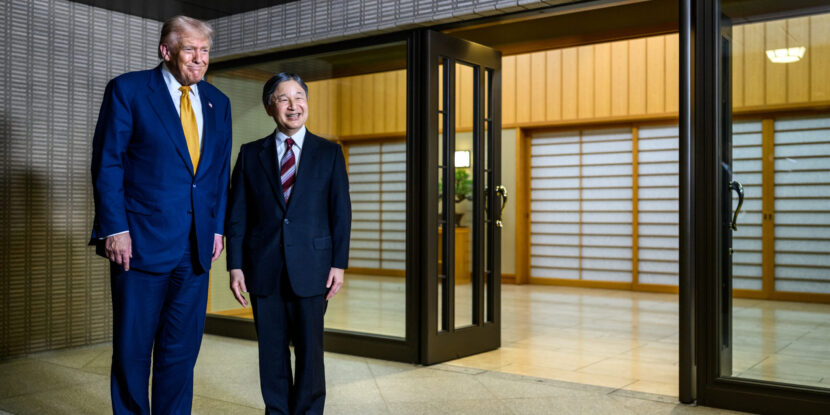
During his visit to Tokyo, Japan, on the second leg of his Asia tour, President Donald J. Trump met with Emperor Naruhito and newly installed Prime Minister Sanae Takaichi and announced a series of groundbreaking agreements aimed at revitalizing the U.S. industrial base and securing critical supply chains. These agreements include a $550 billion Japanese investment commitment to the United States, a landmark critical minerals agreement, and expanded energy and defense partnerships.

The U.S.-Japan Framework Agreement, signed by President Trump and Japanese Prime Minister Takaichi, outlines a range of investments. These include up to $332 billion for critical energy infrastructure, $30 billion for artificial intelligence (AI) infrastructure, and $15 billion for electronics and supply chain development. Additionally, Japan committed to purchasing U.S. energy, with companies like Tokyo Gas and JERA signing letters of intent for LNG offtake and making substantial investments in U.S. energy projects.

The agreements also address critical mineral and chemical exports, with Japan committing $3 billion for a fertilizer facility and $2 billion for a copper smelting plant in the U.S. Furthermore, Japan will expand opportunities for U.S. exports, including facilitating the sale of U.S.-made vehicles and implementing fair competition measures for mobile software.

Defense and security cooperation were also highlighted. The U.S. and Japan agreed to accelerate missile deliveries for Japan’s F-35 fighter jets and enhance intelligence-sharing to combat illegal drug trafficking, especially fentanyl. Both nations also signed a Memorandum of Cooperation to expand shipbuilding capacity and strengthen supply chain resilience.

Join Pulse+ to comment below, and receive exclusive e-mail analyses.
show less
show more

Trump Secures Major Trade and Rare Earth Deals in Asia.

PULSE POINTS

WHAT HAPPENED: President Donald J. Trump began his Asia tour with a visit to Malaysia, brokering peace accords, trade agreements, and critical minerals deals.

👤WHO WAS INVOLVED: President Trump, leaders of Cambodia, Thailand, Malaysia, and Vietnam.

📍WHEN & WHERE: Kuala Lumpur, Malaysia, during President Trump’s Asia tour on Monday.

🎯IMPACT: Historic peace agreements, expanded market access for U.S. goods, and strengthened critical mineral supply chains.

IN FULL

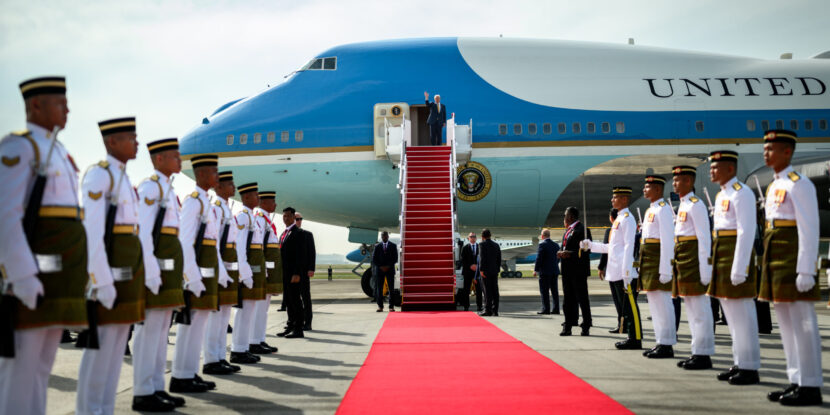
President Donald J. Trump concluded the first leg of his Asia tour in Malaysia after a series of high-level talks, which resulted in a series of rare earth mineral deals, trade deals, and reciprocal trade frameworks. On Thursday, President Trump will meet with Chinese leader Xi Jinping at the Asia-Pacific Economic Cooperation summit in South Korea, where the two are expected to finalize a framework developed by negotiators over the weekend.

Over the weekend, President Trump brokered the Kuala Lumpur Peace Accords, an agreement between Cambodia and Thailand to end their ongoing military conflict. Since May 28, 2025, sporadic armed clashes have broken out between Cambodian and Thai soldiers along several contested border regions, erupting into full-scale conflict on July 24. Despite both countries agreeing to an unconditional ceasefire just four days later, sporadic military engagements have persisted.

The America First leader also finalized and signed trade agreements with Malaysia and Cambodia, with both nations agreeing to drastic reductions in their tariffs on U.S. exports, as well as addressing non-tariff barriers. In addition, President Trump and his trade policy team established reciprocal trade frameworks with Thailand and Vietnam. These agreements will allow for preferential market access for U.S. industrial and agricultural exports in both countries.

Finally, Trump successfully secured a strategic rare earth mineral deal, further diversifying the U.S. technology supply chain and decoupling from reliance on China. The deal, struck with Thailand, seeks to expand the development of and investment in rare earth processing instead of just the export of the raw materials themselves.

Join Pulse+ to comment below, and receive exclusive e-mail analyses.
show less
show more

Trump Hails Japan’s Election of First Female Prime Minister.

PULSE POINTS

WHAT HAPPENED: President Donald J. Trump congratulated Japan on electing its first female prime minister after the right-leaning Liberal Democratic Party selected Sanae Takaichi to lead them.

👤WHO WAS INVOLVED: President Donald J. Trump, Sanae Takaichi, and the Liberal Democratic Party of Japan.

📍WHEN & WHERE: October 6, in Japan and via Truth Social.

💬KEY QUOTE: “Japan has just elected its first female Prime Minister, a highly respected person of great wisdom and strength. This is tremendous news for the incredible people of Japan. Congratulations to all!” – Donald Trump

🎯IMPACT: Sanae Takaichi is expected to assume the role of Prime Minister following formal confirmation, with significant ties to the late former Prime Minister Shinzo Abe.

IN FULL

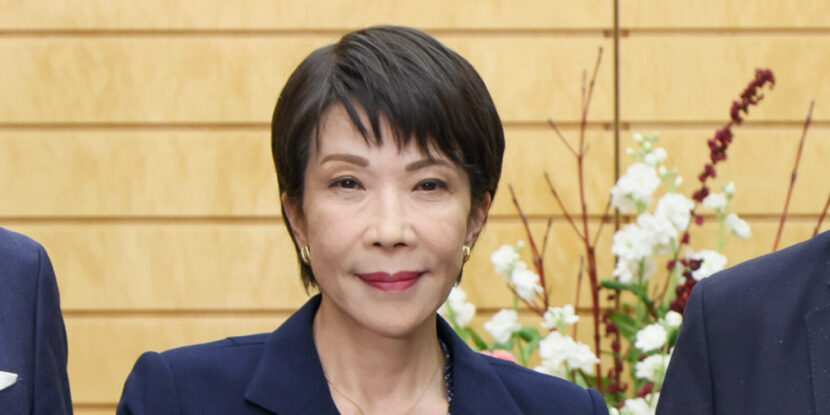
President Donald J. Trump on Monday issued a congratulatory message to Japan after the ruling Liberal Democratic Party (LDP) selected Sanae Takaichi as its leader in an internal vote, writing: “Japan has just elected its first female Prime Minister, a highly respected person of great wisdom and strength. This is tremendous news for the incredible people of Japan. Congratulations to all!”

Though Takaichi has not yet formally assumed the premiership, she is expected to do so after the right-leaning LDP’s internal election. The party holds only a plurality in the Japanese legislature’s lower house, so she will need parliamentary confirmation to become Prime Minister. Sitting Prime Minister Shigeru Ishiba, has pledged to resign this week, clearing the path for her accession. Takaichi is viewed as a close ally of the late Prime Minister Shinzo Abe, known for his warm ties with President Trump.

Takaichi, 64, is one of the most conservative figures in the LDP and has held significant ministerial posts in internal affairs, gender equality, and economic security. She has long advocated for strengthening Japan’s defense capabilities and revising its pacifist constitution, while promoting a more assertive foreign policy. Domestically, she opposes recognition of same‑sex marriage and resists allowing married couples to adopt separate surnames.

Her rise comes at a time of deep structural challenges in Japan. The country is enduring a demographic crisis: in 2024, births dropped to a historic low of around 686,000, marking the first time the annual total fell below 700,000 since record‑keeping began. The total fertility rate declined to 1.15, far blow the 2.1 threshold needed for population stability, and deaths exceeded births by a wide margin. The country’s population shrinkage also accelerated, with nearly 900,000 net losses in 2024 alone.

Japan has been under pressure to embrace mass migration, but still maintains some of the strictest asylum and immigration policies among advanced nations. In 2023, it approved just 303 out of 13,823 asylum applications, a rate of about 2.2 percent.

Image via Wikimedia Commons.

Join Pulse+ to comment below, and receive exclusive e-mail analyses.
show less
show more

Chinese Vessels Pushed Out of Contested Waters.

PULSE POINTS

WHAT HAPPENED: Taiwan expelled three Chinese Coast Guard vessels from waters near the contested Pratas Island in the South China Sea.

👤WHO WAS INVOLVED: Taiwan Coast Guard Administration and Chinese Coast Guard vessels.

📍WHEN & WHERE: Near Pratas Island, South China Sea; incidents occurred on September 30 and October 3, 2023.

💬KEY QUOTE: “The Coast Guard Administration will continue to dispatch vessels to patrol and defend the Dongsha area, firmly safeguarding our national sovereignty.” – Taiwan Coast Guard Administration

🎯IMPACT: Tensions between Taiwan and China remain high as maritime forces continue to clash over disputed waters.

IN FULL

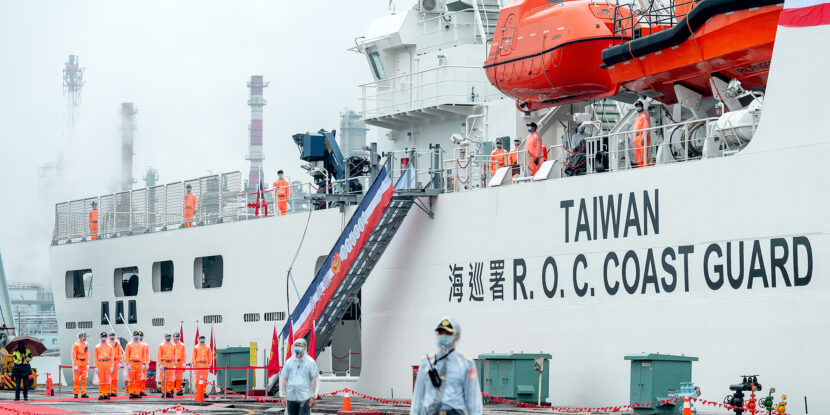
Taiwan says it repelled three Chinese Coast Guard ships from waters near the disputed Pratas Island in the South China Sea. The incidents took place on September 30 and October 3, 2023, amid ongoing territorial disputes fueling tensions between the two sides.

Pratas Island, known as Dongsha Island to both Taipei and Beijing, is managed by Taiwan as a marine national park and hosts a small marine garrison. Though Taiwan operates as a self-governing state, China claims the island as its own and has threatened to take control, possibly by force.

Taiwan’s Coast Guard Administration reports that on September 30, two Chinese Coast Guard vessels entered restricted waters near Pratas Island at 8:22 AM. The Taiwanese cutter Tainan issued warnings, and the ships left by around 6 PM. On October 3, another Chinese vessel entered the restricted zone, prompting the cutter Taipei to intervene and escort it out. The ship departed around 12:02 AM.

Since January, Taiwan’s Coast Guard has expelled 159 Chinese fishing boats and seized twelve smaller vessels near Dongsha. The Coast Guard stated: “Recently, Chinese coast guard ships have repeatedly intruded into the waters around our Dongsha Islands. The Coast Guard Administration will continue to dispatch vessels to patrol and defend the Dongsha area, firmly safeguarding our national sovereignty.”

China has not commented on these incidents. The maritime clashes underscore the broader Taiwan-China conflict, particularly as Beijing deploys forces into contested waters to assert its territorial claims.

Image by Makoto Lin / Office of the President.

Join Pulse+ to comment below, and receive exclusive e-mail analyses.
show less
show more

China Building Up Nuclear Arsenal to Match America, Dominate Asia by 2030s.

PULSE POINTS

WHAT HAPPENED: A report by the Hudson Institute highlights China’s nuclear ambitions, revealing its strategy to challenge U.S. influence in Asia and sow doubts among American allies.

👤WHO WAS INVOLVED: The Hudson Institute, China, U.S. allies including Japan, the Philippines, and South Korea, and the United States.

📍WHEN & WHERE: Findings are based on projections through the mid-2030s.

💬KEY QUOTE: “The purpose of amplifying uncertainty is to manipulate notions of risk to China’s advantage,” the report states.

🎯IMPACT: The report warns of China’s nuclear buildup and urges the U.S. to strengthen deterrence while exposing Beijing’s coercive tactics.

IN FULL

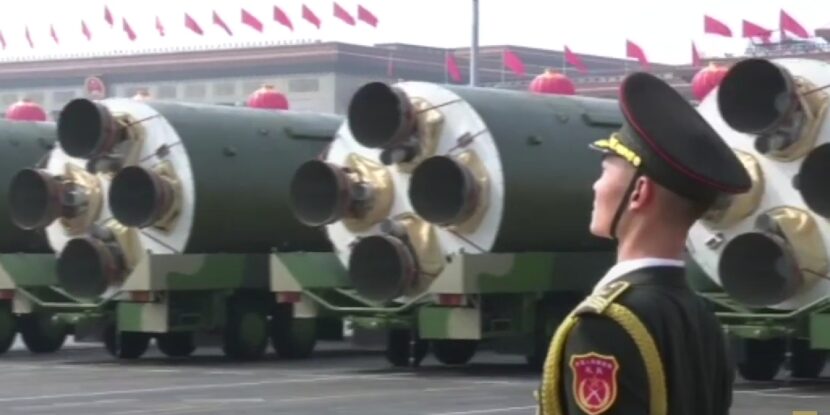
According to a new report from the Hudson Institute, China is expanding its nuclear arsenal not just for traditional deterrence but also to assert greater influence in Asia and challenge the United States’ regional leadership. The think tank warns that by the mid-2030s, Beijing is on track to achieve nuclear parity with the U.S., developing a modern, survivable, and flexible nuclear force that includes “over 1,000 warheads, a fully developed nuclear triad, and tactical nuclear capabilities.”

While the report doesn’t suggest China is preparing to fight a nuclear war, it highlights a more nuanced strategy: using nuclear coercion to undermine U.S. alliances and credibility. The goal, it says, is to “manipulate and degrade trust in America’s nuclear umbrella,” particularly in East and Southeast Asia. By creating uncertainty over whether Washington would actually defend allies such as Japan, South Korea, or the Philippines in a crisis, Beijing hopes to increase doubts and push those nations toward “strategic passivity.”

“The purpose of amplifying uncertainty is to manipulate notions of risk to China’s advantage,” the report states. “This is primarily about exacerbating hesitancy among U.S. allies by exploiting persistent fears of abandonment and doubts regarding America’s commitment.”

China’s nuclear buildup is only part of a broader military and political strategy that combines rapid force modernization with psychological and information warfare. Advanced weapons development is central to this effort, including systems like hypersonic boost-glide delivery vehicles and fractional orbital bombardment platforms.

Beijing’s growing range of delivery methods now includes fixed silos, submarines, road-mobile launchers, and aircraft.

Join Pulse+ to comment below, and receive exclusive e-mail analyses.

show less
show more

America’s Top Ally in Southeast Asia Is on the Brink of All-Out War With Its China-Backed Neighbor.

PULSE POINTS

WHAT HAPPENED: A border dispute between Thailand and Cambodia escalated into intense fighting, prompting warnings of full-scale war from Thailand’s acting Prime Minister.

👤WHO WAS INVOLVED: Thailand’s acting Prime Minister Phumtham Wechayachai, Cambodian forces, and the Thai military.

📍WHEN & WHERE: The clashes occurred in July 2025, along the Thailand-Cambodia border.

💬KEY QUOTE: “We have tried to compromise as we are neighbors, but we have now instructed the Thai military to act immediately,” said Wechayachai.

🎯IMPACT: Over 130,000 people displaced, numerous casualties, and international calls for a ceasefire.

IN FULL

Thailand’s acting Prime Minister Phumtham Wechayachai has issued a stark warning regarding the potential for recent cross-border clashes with Cambodia to escalate into a full-scale war. The conflict, which has already forced the displacement of more than 130,000 individuals, is seeing a second day of deadly exchanges between the two nations.

Notably, Thailand, according to the State Department, is the United States’ “only treaty partner in mainland Southeast Asia, a treaty ally since 1954, and a major non-NATO ally since 2003.”

Conversely, China maintains close economic and political ties with Cambodia—where three to five percent of the population is estimated to be Chinese. China also backed Cambodia in its conflict with Vietnam between 1978 and 1989, and footage from the current conflict shows Cambodian combatants armed with recently produced Chinese military weapons.

A long-standing border dispute between the two countries erupted into violent clashes involving jets, artillery, tanks, and ground troops. Martial law has been declared in Thai border regions. In response to the crisis, the United Nations (UN) Security Council is scheduled to convene for an emergency meeting.

Casualties have been reported on both sides, with Thailand’s health ministry confirming at least 15 fatalities and 46 injuries. Cambodia reported the death of a 70-year-old civilian and five others wounded due to artillery strikes.

Prime Minister Wechayachai said, “We have tried to compromise as we are neighbors, but we have now instructed the Thai military to act immediately in case of urgency,” adding: “If the situation escalates, it could develop into war, though for now, it remains limited to clashes.”

International leaders have called for a ceasefire and dialogue. However, fighting is ongoing in multiple areas, with both countries blaming each other for initiating the conflict. The United States, France, the European Union (EU), and China have all expressed concern and urged for a resolution through dialogue.

Join Pulse+ to comment below, and receive exclusive e-mail analyses.
show less
show more

Japan’s PM Ishiba Admits Election Defeat, But Vows to Remain in Power.

PULSE POINTS

WHAT HAPPENED: Japan’s ruling Liberal Democratic Party failed to secure enough seats to retain control of the upper house in the latest election.

👤WHO WAS INVOLVED: Prime Minister Shigeru Ishiba, the Liberal Democratic Party, and opposition parties including the Constitutional Democratic Party and the Democratic Party for the People.

📍WHEN & WHERE: The election took place on Sunday in Japan, with results being finalized on Monday morning.

💬KEY QUOTE: “That’s right. It’s a difficult situation, and we have to take it very humbly and seriously.” – Shigeru Ishiba

🎯IMPACT: The loss puts pressure on the prime minister to address internal party challenges and navigate key policy issues, including U.S. tariff talks.

IN FULL

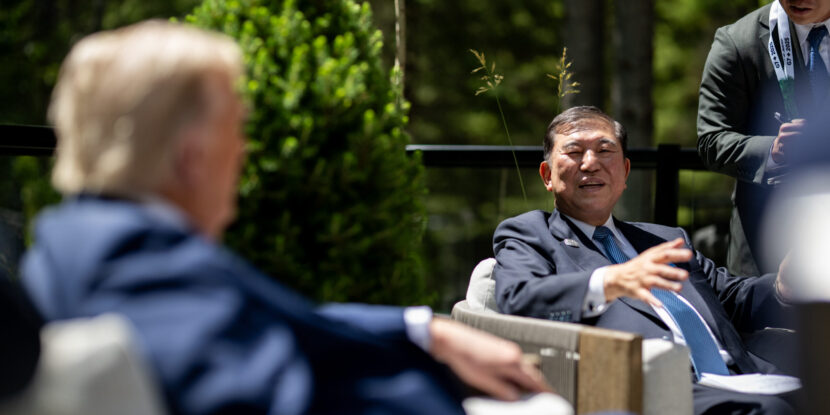
Japanese Prime Minister Shigeru Ishiba’s center-right Liberal Democratic Party fell short of the 50 seats it required to maintain control of Japan’s 248-seat upper chamber, securing 47 seats in Sunday’s election. At a news conference, Ishiba affirmed his commitment to stay in office, emphasizing his focus on critical issues like tariff negotiations with the U.S. and rising consumer prices.

Ishiba told Japanese media that he “solemnly” accepted the “harsh result,” acknowledging, “It’s a difficult situation, and we have to take it very humbly and seriously.” Notably, the last three Japanese prime ministers who lost an upper house majority resigned within two months.

While the election result does not directly threaten Ishiba’s minority government, it intensifies pressure on him after his party’s earlier loss of the lower house in October. The center-left Constitutional Democratic Party, the main opposition, gained 37 seats, while the center-right Democratic Party for the People won 22. The right-leaning Sanseito Party made significant gains, securing 14 seats compared to just one in the prior election. Voter turnout hit 58 percent—a six-point increase from the previous upper house election—with a record number of early votes cast over the three-day weekend.

The erosion of the Liberal Democratic Party’s power is significant, with the party having dominated Japan since 1955.

Join Pulse+ to comment below, and receive exclusive e-mail analyses.
show less
show more

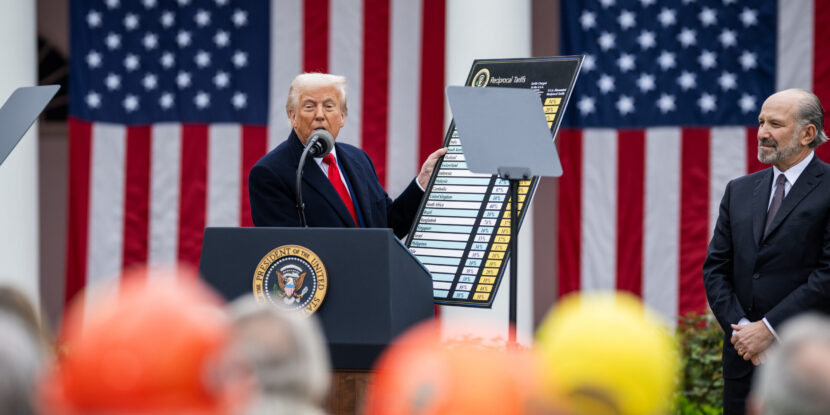
Asian Imports to US Plunge as Trump Tariffs Begin to Work.

PULSE POINTS:

What Happened: The number of canceled sailings from Asia to the U.S. has significantly increased due to tariffs deterring the importation of cheap Chinese goods to the U.S.

👥 Who’s Involved: President Donald J. Trump, China, and other Asian nations like Cambodia, Vietnam, and Sri Lanka.

📍 Where & When: The transpacific route between Asia and the U.S., from late March onwards.

💬 Key Quote:  Alan Murphy, CEO of Sea-Intelligence, said businesses were “adjusting their short-term supply chains for now and waiting for things to settle down (one way or another), before making longer-term network adjustments.”

⚠️ Impact: The tariffs are contributing to difficulties for Chinese businesses like Temu and Shein.

IN FULL:

Asian exports to the United States have dropped due to high tariffs on foreign goods, particularly from China, leading to increased “blank sailings” on the trans-Pacific shipping route. These shipping cancellations have escalated from the equivalent of 60,000 containers in late March to about 367,800 by mid-April.

This follows President Donald J. Trump‘s announcement of high tariffs on foreign goods to stop U.S. producers from being undercut by imports from nations that often restrict access to U.S. exporters while advantaging their own producers through low pay and conditions, state subsidies, currency manipulation, and other dubious tactics.

The political climate related to these tariffs has been labeled “extremely volatile,” causing businesses to exercise caution. Alan Murphy, CEO of Sea-Intelligence, said businesses were “adjusting their short-term supply chains for now and waiting for things to settle down (one way or another), before making longer-term network adjustments.”

E-commerce companies such as China’s Shein and Temu have started adapting through price changes, reflecting the new realities of tariffs in their operational costs.

Although tariffs remain a point of contention, tensions between the U.S. and China have slightly eased. Adjustments such as the reduction in Chinese retaliatory tariffs on U.S. semiconductors suggest a possible future trade agreement.

show less

PULSE POINTS:

show more