




Monday, February 23, 2026

Terror Attack in India Leaves at Least 20 Dead Amid Vance Visit.

PULSE POINTS:

What Happened: Suspected militants fired on a group of tourists in Indian-controlled Kashmir, resulting in multiple fatalities and injuries.

👥 Who’s Involved: At least 20 tourists killed, several more injured. Security officials believe multiple gunmen were involved.

📍 Where & When: The incident occurred on Tuesday in Pahalgam, a popular tourist location in South Kashmir.

💬 Key Quote: “Usha and I extend our condolences to the victims of the devastating terrorist attack in Pahalgam, India.” — Vice President J.D. Vance.

⚠️ Impact: Tourist activity, which had been recovering, is likely to be affected. Security operations are underway to apprehend the militants involved.

IN FULL:

On Tuesday, a lethal attack was carried out by suspected militants targeting tourists in the Pahalgam region of Indian-controlled Kashmir. Between 20 and 24 people were killed, with several others sustaining injuries, according to various reports, although an official death toll had not been released as of the time of publication. Pahalgam, known for its scenic meadows and glaciers, attracts substantial tourist numbers yearly.

Two senior police officials, who wished to remain unnamed, confirmed to the Associated Press that at least 20 deceased have been located and that around three dozen individuals were injured, many critically. The assailants reportedly targeted a gathering of tourists at close proximity, sparking chaos. A joint military, paramilitary, and police search effort is underway to locate those responsible.

U.S. Vice President J.D. Vance, whose in-laws are Indian, is currently in India, laying the groundwork for a trade deal between the United States and the Hindu-majority nation.

“Usha and I extend our condolences to the victims of the devastating terrorist attack in Pahalgam, India,” he said of the attack in a statement on social media. “Over the past few days, we have been overcome with the beauty of this country and its people. Our thoughts and prayers are with them as they mourn this horrific attack.”

“The United States stands strong with India against Terrorism,” said President Donald J. Trump in his own statement. “We pray for the souls of those lost, and for the recovery of the injured. Prime Minister Modi, and the incredible people of India, have our full support and deepest sympathies. Our hearts are with you all!”

Kashmir is divided between India and Pakistan, with Indian Kashmir regularly subjected to terror attacks by Islamist separatists. Nine Hindu pilgrims were killed and over 30 injured when a bus crashed into a gorge in a suspected militant attack in 2024, and at least 44 people were killed when a suicide bomber from a Pakistan-based Islamist group crashed into a bus carrying Indian paramilitary police in 2019, among many other incidents.

Image via Wikimedia Commons.

show less

PULSE POINTS:

show more

Japan’s Birth Rate Crisis Hits Historic 125-Year All-Time Low.

Japan’s birth rate crisis has reached a 125-year low as fewer and fewer Japanese are starting families. Japan experienced a decrease in birth rates for the ninth consecutive year, according to a Health Ministry report issued on February 27.

This figure represents the lowest birth rate since records began. In the past year, fewer than 720,000 newborns were recorded in the East Asian nation, which has a population of 124 million. It marks a five percent drop in births since 2023. Meanwhile, mortality rates have outpaced births at a ratio of 2:1, highlighting Japan’s demographic challenges.

Officials highlight a two percent increase in marriages, which offers a slight respite from a preceding decline of nearly 6 percent from 2022 to 2023. Prime Minister Shigeru Ishiba remarked on the potential positive outcome of the increase in marriages, suggesting a possible link to eventual birth rate improvements.

Japan’s declining population trend has extended over 15 years, presenting significant challenges to the economy as the nation’s elderly population, constituting about 30 percent, continues to grow. Health officials have urged that efforts to counteract these trends may have until the end of the decade to be effective.

The birth rate decline trend has also occurred across the West, with the United States seeing birth rate declines in 2023 that were even lower than at the height of the COVID-19 pandemic in 2020.

Image by Danny Choo.

show less
Japan's birth rate crisis has reached a 125-year low as fewer and fewer Japanese are starting families. Japan experienced a decrease in birth rates for the ninth consecutive year, according to a Health Ministry report issued on February 27. show more

BREAKING: South Korean President Imposes Martial Law.

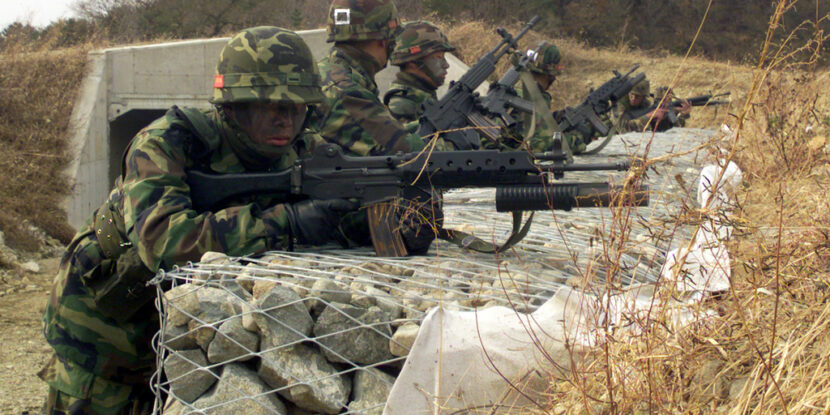
On Tuesday, South Korean President Yoon Suk Yeol announced the emergency implementation of martial law. “I declare martial law in order to eradicate the shameless pro-North Korea anti-state forces that are plundering the freedom and happiness of our people and to protect the free constitutional order,” Yoon said of the decision.

The opposition Democratic Party (DPK), in coalition with several smaller parties, controls 192 of 300 seats in the South Korean legislature following elections in April, which has hindered President Yoon‘s program. The DPK is led by Lee Jae-myung, who survived being stabbed in the neck during a press scrum in an apparent assassination attempt in January.

Yoon’s move to declare martial law could have significant implications for the U.S., as South Korea is a key regional ally that hosts multiple U.S. bases. This includes Camp Humphreys, the U.S.’s largest overseas base, with a population of over 40,000.

Lee, who was in the midst of launching impeachment proceedings against members of Yoon’s government prior to the declaration of martial law, has denounced the move as unconstitutional. Yoon’s People Power Party is also said to be opposed to the declaration, setting the stage for a major clash between the executive and legislative branches in the East Asian nation.

Currently, it is unclear where the South Korean military stands on the matter, though their support for either Yoon or Lee will likely be decisive in settling the crisis. Former South Korean President, Park Chung-hee, ruled as essentially a dictator from 1962 until his assassination 1979.

This story is developing…

show less
On Tuesday, South Korean President Yoon Suk Yeol announced the emergency implementation of martial law. "I declare martial law in order to eradicate the shameless pro-North Korea anti-state forces that are plundering the freedom and happiness of our people and to protect the free constitutional order," Yoon said of the decision. show more

Ousted Bangladeshi Prime Minister Reportedly Flees to London.

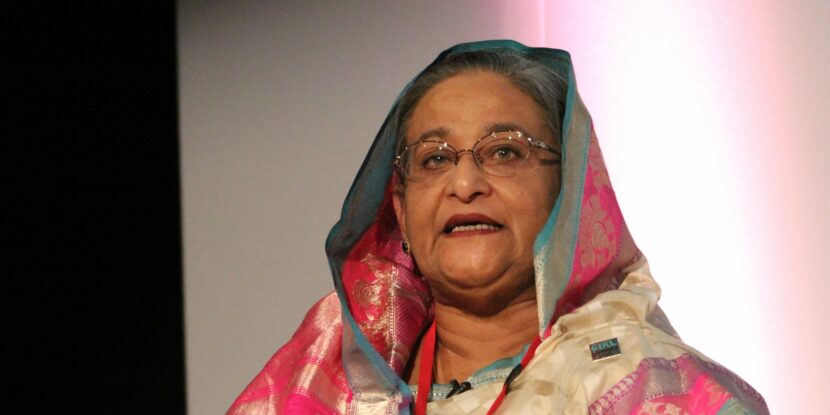
Prime Minister Sheikh Hasina of Bangladesh has resigned after 15 years in power after weeks of violent protests and clashes with security forces. On Monday, demonstrators marched to the capital, Dhaka, defying a military curfew. They stormed Hasina’s official residence and celebrated her ouster in the streets, with some seen looting the residence’s furnishings and electronics.

In a televised address, Army Chief General Waker-Us-Zaman confirmed that Hasina, 76, had departed the country. An interim government will be established. Reports indicated that Hasina, accompanied by her sister, had flown to the eastern Indian state of West Bengal in a military helicopter. There are also reports of her heading to London, England.

Hasina is accused of presiding over arbitrary arrests, torture, extortion, and intimidation. She would not be the first questionable foreign leader to be welcomed by Britain. The country already hosts at least five Rwandan genocide suspects and a Hamas leader who lives in London in a house provided by taxpayers, among others.

In London’s Whitechapel, home to a large Bangladeshi community, the news of her ouster spurred widespread celebration. Community members, who often seem more invested in Bangladesh than Britain, chanted and waved flags.

DEATH AND DISORDER. 

The violence ahead of Hasina’s ouster resulted in nearly 300 deaths and numerous injuries as protesters clashed with security forces. Last Sunday alone, almost 100 people died in the clashes.

Authorities initially shut down the Internet and imposed a curfew on Sunday night, covering Dhaka and other major districts.

The unrest has been attributed to allegations of autocratic governance by Hasina. Many of her political opponents, including the opposition Bangladesh Nationalist Party (BNP) and the banned Jamaat-e-Islami (Society of Islam) party, were detained or marginalized in the lead-up to her re-election in 2023, an election marred by accusations of being neither free nor fair.

Hasina’s opposition is not without its own controversies, with Jamaat-e-Islami being an Islamic fundamentalist party banned for its role in the genocide of Hindus in East Pakistan, as Bangladesh then was, in 1971.

Image via Wikimedia Commons.

show less
Prime Minister Sheikh Hasina of Bangladesh has resigned after 15 years in power after weeks of violent protests and clashes with security forces. On Monday, demonstrators marched to the capital, Dhaka, defying a military curfew. They stormed Hasina's official residence and celebrated her ouster in the streets, with some seen looting the residence's furnishings and electronics. show more

Massive Japanese Market Crash as Failing Biden-Harris Economy Spreads ‘Contagion’ Worldwide.

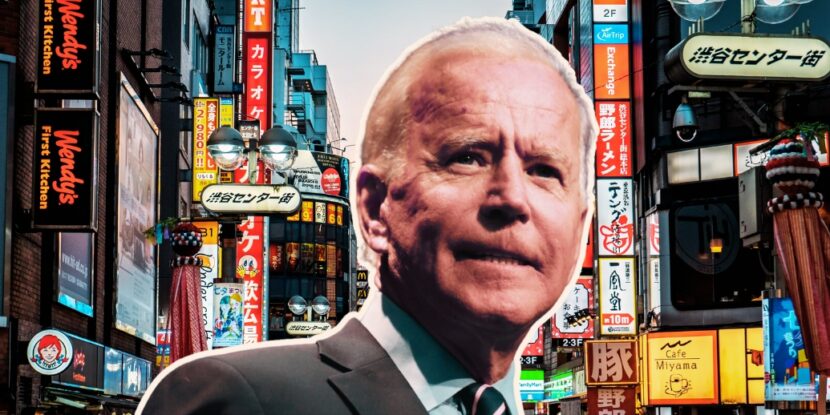
Japanese stocks recorded their most enormous daily loss in history on Monday, driven by fears of a U.S. economic slowdown under the Joe Biden-Kamala Harris government. The Nikkei 225 index plummeted by an unprecedented 4,451 points, closing over 12 percent down. This drop pushed the index into bear market territory with a 25 percent decline since early July. Analysts are likening the crash to the infamous “Black Monday” of October 1987, when the Nikkei fell by 3,836 points and global markets tumbled.

Concerns over a sharp slowdown in the U.S. economy have fueled expectations that the Federal Reserve will cut interest rates. The latest U.S. jobs report showed job creation significantly below expectations, and unemployment significantly above expectations. Moreover, the jobs data suggests foreign workers are replacing American workers.

“The aggressive bear onslaught and fears of a hard landing in the U.S. are creating a contagion effect, leading to a severe meltdown in Tokyo’s markets,” warns Stephen Innes, managing partner at SPI Asset Management.

Trading in Japan and South Korea was intermittently halted as circuit breakers were triggered to prevent panic selling. This market volatility extended to other regions, including the U.S. where stock futures dipped sharply. Nasdaq futures dropped by 4 percent, while Dow and S&P 500 futures dropped by 1.5 percent and 2.3 percent.

The Stoxx Europe 600 index fell by 2.5 percent in morning trade in Europe, reaching lows not seen since February. Taiwan‘s Taiex, South Korea’s Kospi, Australia’s S&P/ASX 200, Hong Kong’s Hang Seng Index, and China’s Shanghai Composite also recorded big losses.

Oil prices also hit their lowest levels since January, and cryptocurrencies like Bitcoin fell by over 12 percent. Poor U.S. tech earnings—and China’s weak manufacturing data—are exacerbating the wider situation.

Investors are on edge, with many bracing for continued market instability in the days ahead.

show less
Japanese stocks recorded their most enormous daily loss in history on Monday, driven by fears of a U.S. economic slowdown under the Joe Biden-Kamala Harris government. The Nikkei 225 index plummeted by an unprecedented 4,451 points, closing over 12 percent down. This drop pushed the index into bear market territory with a 25 percent decline since early July. Analysts are likening the crash to the infamous "Black Monday" of October 1987, when the Nikkei fell by 3,836 points and global markets tumbled. show more

REPORT: Biden Foreign Policy Flubs Have Emboldened a Nuclear North Korea.

President Joe Biden’s weakness in tackling global conflicts in Eastern Europe and the Middle East has emboldened North Korea and Kim Jong-Un. The communist dictator appears to have moved away from using nuclear weapons as bargaining chips for international aid and instead intends to use them for both deterrence – and worryingly – potential regional aggression.

In 2021, North Korea’s dictator Kim Jong-Un stepped up long-range ballistic missile tests — along with rolling out a range of new weapons meant for use in a regional war with South Korea and Japan. Russia’s invasion of Ukraine has become a testing ground for some of North Korea’s newest weapons developments. The East-Asian communist state has sent 6,700 containers of munitions to Russia for use in Ukraine.

After former President Donald Trump engaged Kim Jong-Un, the communist state suspended long-range ballistic missile tests starting in 2018. Those tests resumed less than a year into Bidne’s presidency.  In 2022, North Korea tested its largest long-range ballistic missile yet. “This miraculous victory is a priceless victory,” Kim Jong-Un said at the time. Unlike previous tests five years earlier, neither China nor Russia condemned North Korea’s missile launch.

In January, the North Korean dictator announced he was abandoning peace discussions and possible reunification with South Korea. Now, the North Korean military is signaling it intends to take a more aggressive and combative stance in both East Asia and against U.S. interests in the region.

“What worries me the most is they’ve continued to increase the size and sophistication of their nuclear arsenal and delivery means,” said Siegfried S. Hecker, a former weapons inspector who has visited North Korean nuclear facilities, in an interview with The Wall Street Journal. Estimates now place the North Korean nuclear arsenal as high as 50 to 60 warheads.

show less
President Joe Biden's weakness in tackling global conflicts in Eastern Europe and the Middle East has emboldened North Korea and Kim Jong-Un. The communist dictator appears to have moved away from using nuclear weapons as bargaining chips for international aid and instead intends to use them for both deterrence – and worryingly – potential regional aggression. show more

Biden: I Don’t Want To Contain China.

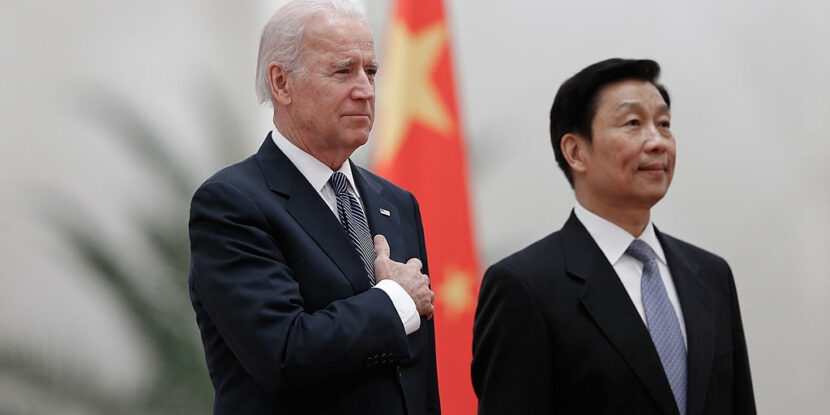
Joe Biden has expressed his desire for China’s well-being during his visit to Asia, emphasising that his goal is not to contain China but to establish a better relationship with the country.

The comments come against the backdrop of many allegations of bribery and corruption involving Biden, his son Hunter, and a vast swathe of Congressional Democrats and Republicans and their links to the Chinese Communist Party.

The President visited India for the G20 summit before arriving in Vietnam to attempt to entrench the relationship between the two nations.

Biden also said the purpose of building partnerships in the Indo-Pacific region is not to isolate or harm China, stating that such thinking is rooted in Cold War mentality. Biden said he wants to see China succeed economically.

show less
Joe Biden has expressed his desire for China’s well-being during his visit to Asia, emphasising that his goal is not to contain China but to establish a better relationship with the country. show more

LEAKED DOCS: U.S. Backed Pakistan Coup Over PM’s Ukraine Neutrality.

The former Prime Minister of Pakistan Imran Khan was forced out of office at the behest of the U.S. Department of State over his refusal to take sides in the Russia-Ukraine conflict, alleges a leaked diplomatic cable.

Asad Majeed Khan, Pakistan’s Ambassador to the United States, was encouraged by State Department officials – including Assistant Secretary Donald Lu – to tell Pakistan’s politically powerful military that if Prime Minister Khan were removed from power, the Central Asian nation could expect warmer relations with the United States. If Prime Minister Khan were not removed, Pakistan’s generals were told that the nation would face economic and political isolation.

The foreign policy shakedown is not dissimilar to the tactic deployed by President Biden himself, when discussing the removal of a top Ukrainian prosecutor.

According to a leaked cable, Assistant Secretary Lu told the Pakistani Ambassador: “I think if the no-confidence vote against the Prime Minister succeeds, all will be forgiven in Washington because the Russia visit is being looked at as a decision by the Prime Minister… Otherwise, I think it will be tough going ahead.”

The meeting between Assistant Secretary Lu and the Pakistani Ambassador occurred on March 7, 2022. One month later, Pakistan’s parliament held a no confidence vote against Prime Minister Khan and he was removed from office. On August 5, 2022, Khan was sentenced to 3 years in prison on charges of corruption.

The U.S. Department of State’s move against the Pakistani leader came after Lu indicated in March 2, 2022 testimony that Pakistan may be moving towards Russia’s side in the conflict with Ukraine. Prime Minister Khan – meanwhile – had reiterated his firm stance against taking any side in the conflict raging in Eastern Europe, declaring at a rally of his supporters just days before the March 7th State Department meeting: “What do you think of us? That we are your slaves and that we will do whatever you ask of us? We are friends of Russia, and we are also friends of the United States. We are friends of China and Europe. We are not part of any alliance.”

Pakistan is a nuclear power whose internal tensions between civilian and military government make its political stability of particular concern to neighboring nuclear power India as well as the United States.

show less
The former Prime Minister of Pakistan Imran Khan was forced out of office at the behest of the U.S. Department of State over his refusal to take sides in the Russia-Ukraine conflict, alleges a leaked diplomatic cable. show more