



Monday, February 23, 2026

Jury Orders Tesla to Pay $329 Million After Fatal Autopilot Crash.

PULSE POINTS

WHAT HAPPENED: A federal jury in Miami, Florida, ordered Tesla to pay $329 million in damages to victims of a crash involving its Autopilot technology.

👤WHO WAS INVOLVED: Tesla and the victims of the crash.

📍WHEN & WHERE: The verdict was delivered on Friday in Miami after a four-year-long legal battle.

🎯IMPACT: The decision could lead to further costly lawsuits against Tesla and challenges to its safety reputation.

IN FULL

A jury in Miami, Florida, has ordered Tesla to pay $329 million to victims of a deadly crash involving the company’s Autopilot driver assist technology. The federal jury determined that Tesla’s technology bore significant responsibility for the crash.

Many similar lawsuits against Tesla have been dismissed or settled out of court to avoid public scrutiny. This decision could set a precedent for future legal challenges to Tesla’s Autopilot and other driver-assist technologies.

The crash involved a young couple who were struck while stargazing, and the jury’s decision underscores the potential risks associated with the use of semi-autonomous driving systems. Tesla has often marketed its vehicles as being safe and capable of autonomous driving, but this verdict raises questions about the reliability of such claims.

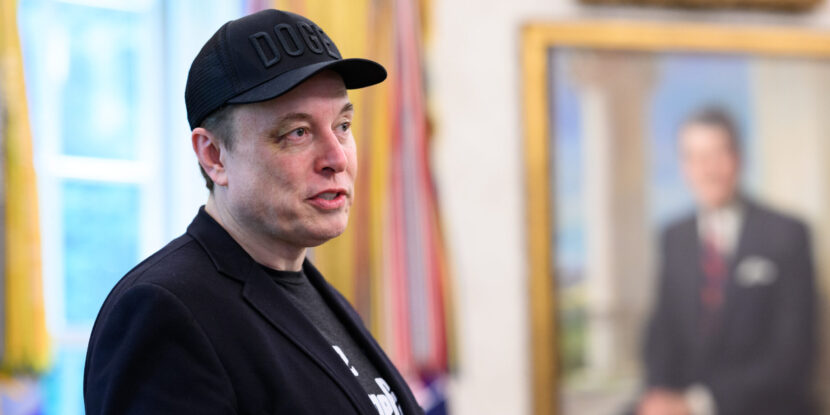
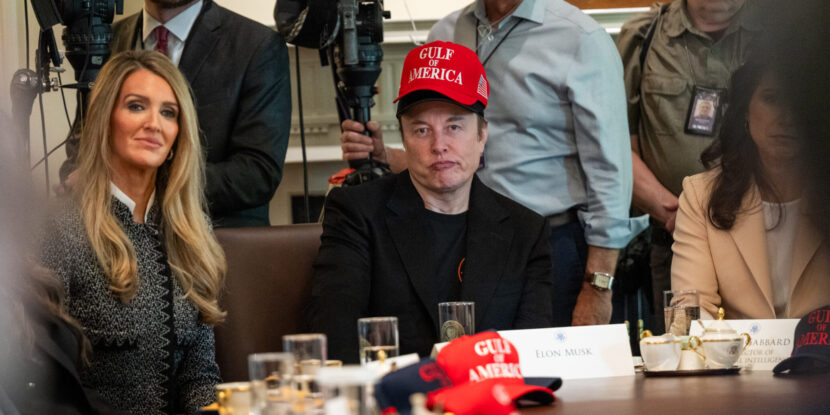
Elon Musk, Tesla’s CEO, has been actively promoting the idea of driverless taxis and expanding the company’s autonomous driving capabilities in several cities. However, this legal setback could complicate those plans and impact consumer confidence in the technology.

Join Pulse+ to comment below, and receive exclusive e-mail analyses.
show less
show more

Huh? – Tesla Launches ‘Robotaxis’ with Human Drivers.

PULSE POINTS

WHAT HAPPENED: Tesla is planning to expand its robotaxi service to San Francisco, California, despite ongoing technical issues and regulatory hurdles, with “human safety operators” in the driver’s seats.

👤WHO WAS INVOLVED: Tesla, led by CEO Elon Musk, and its head of artificial intelligence (AI) software, Ashok Elluswamy, along with California regulatory agencies.

📍WHEN & WHERE: The rollout is planned for this week in San Francisco, following an earlier, limited launch in Austin, Texas.

💬KEY QUOTE: “We will launch the service with a person in the driver’s seat just to expedite while we wait for regulatory approval.” – Ashok Elluswamy

🎯IMPACT: Tesla faces significant challenges as it seeks regulatory approval and attempts to address technical issues in its push for autonomous ride-hailing services.

IN FULL

Tesla is preparing to expand its robotaxi service to San Francisco, following its limited and problematic launch in Austin, Texas. According to an internal memo, the rollout could begin as soon as this week, with plans to cover a large portion of the Bay Area.

However, Tesla will deploy a so-called human safety operator in the driver’s seat, indicating the company is not yet confident in its autonomous technology or is unable to secure full regulatory approval. Tesla’s head of artificial intelligence (AI) software, Ashok Elluswamy, acknowledged the limited rollout during an earnings report earlier this week, stating: “We will launch the service with a person in the driver’s seat just to expedite while we wait for regulatory approval.”

The company faces mounting pressure as it attempts to recover from declining revenues and global sales. Elon Musk has expressed ambitions to sell “millions” of humanoid robots and establish a widespread robotaxi service, but technical issues and regulatory barriers remain significant obstacles.

In Austin, Tesla’s robotaxis have encountered issues such as running stop signs, swerving into incorrect lanes, and dropping passengers in unsafe locations. Despite these problems, Tesla is pushing forward with its plans, though it has yet to apply for a commercial robotaxi permit in California.

While the California Public Utilities Commission has granted Tesla a permit to transport employees, broader approval for a commercial service is still pending. Tesla is also seeking to expand its robotaxi operations in Florida and Arizona, where regulations are less stringent.

Join Pulse+ to comment below, and receive exclusive e-mail analyses.
show less
show more

Toxic Threat After Pro-Migrant Rioters Burn Google’s Self-Driving Electric Taxis.

PULSE POINTS:

What Happened: Violent pro-illegal immigrant riots in Los Angeles, California, targeted Waymo autonomous electric vehicles, setting several on fire over the weekend.

👥 Who’s Involved: Rioters, Waymo (a Google subsidiary), Los Angeles Police Department (LAPD), Los Angeles Fire Department (LAFD), and California Highway Patrol.

📍 Where & When: Downtown Los Angeles, Sunday afternoon, particularly near Los Angeles Street between Arcadia and Alameda streets.

💬 Key Quote: “Burning lithium-ion batteries release toxic gases, including hydrogen fluoride, posing risks to responders and those nearby,” the Los Angeles Police Department said in a statement warning the public to stay away from the burning vehicles.

⚠️ Impact: At least five Waymo vehicles were targeted, highlighting the dangers presented by electric vehicles’ batteries when compromised.

IN FULL:

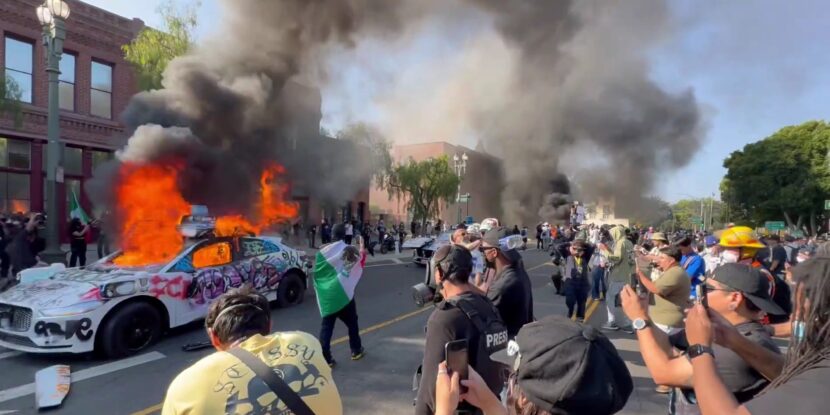
Pro-illegal immigrant rioters in downtown Los Angeles turned their attention to Waymo autonomous vehicles on Sunday, vandalizing and setting several of the driverless taxis ablaze. The incidents occurred as violent demonstrations against U.S. Immigration and Customs Enforcement (ICE) escalated in the Civic Center area, with some far-left agitators spilling onto the 101 Freeway, forcing its closure for several hours.

Law enforcement officers from the California Highway Patrol worked to disperse the crowd, detaining multiple rioters. Meanwhile, a group of protesters specifically targeted Waymo vehicles parked on Los Angeles Street near Arcadia and Alameda streets. Witnesses reported seeing rioters slashing tires, smashing windows, and spray-painting anti-ICE messages on the cars.

The situation escalated further when three of the five vehicles were set on fire, sending thick black smoke into the air. Protesters reportedly used skateboards to break windows and makeshift flamethrowers to ignite the interiors of the vehicles. Lime electric scooters were also thrown into the flames, adding to the destruction.

The Los Angeles Police Department warned the public to avoid the area, stating: “Burning lithium-ion batteries release toxic gases, including hydrogen fluoride, posing risks to responders and those nearby.”

Waymo, a Google subsidiary, has been operating its self-driving taxi service in Los Angeles since November, following launches in San Francisco and Phoenix. The company confirmed it was in contact with law enforcement and expressed concern for public safety.

This is not the first time Waymo vehicles have been targeted. Previous incidents in San Francisco involved passengers reporting harassment and obstruction. Most of these have involved predators attempting to follow or force entry into an autonomous vehicle carrying a female passenger.

In at least one incident, a female passenger, being followed by a group of men in another car and unable to stop or divert her Waymo ride, called 911, only to be told by police they could not respond to a moving vehicle. Waymo claims such incidents are rare.

show less

PULSE POINTS:

show more

Feds Scrutinize Self-Driving ‘Ubers’ After Spate of Accidents.

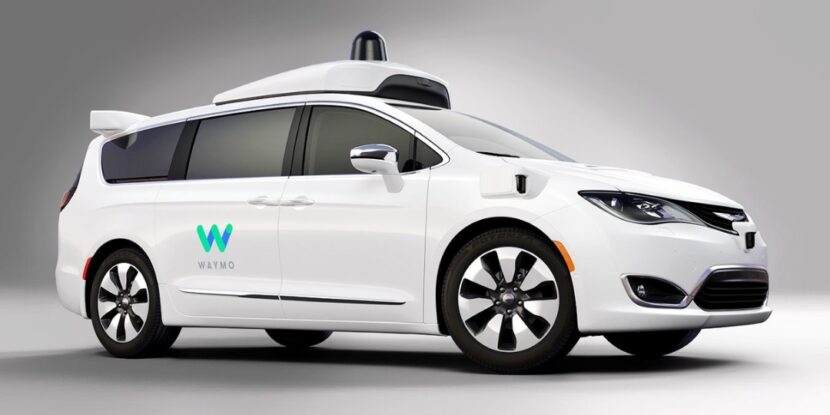
Alphabet Inc. subsidiary Waymo is facing a federal investigation over safety issues in its self-driving robotaxis. These autonomous vehicles utilize advanced technologies to navigate without human drivers. However, the safety of these vehicles has come under question following more than 20 accidents, including incidents involving bicyclists and pedestrians.

Waymo operates self-driving taxis in San Francisco, Los Angeles, and Phoenix, with planned expansions into Austin, Texas. However, the National Highway Traffic Safety Administration (NHTSA) has initiated an investigation to evaluate the compliance of Waymo’s systems with traffic regulations and overall safety performance.

This investigation could have broader implications for the self-driving car industry. It might address wider safety and reliability concerns, which remain prevalent among the general public. In fact, a significant portion of the U.S. population — approximately 75 percent — supports Congressional intervention to halt the proliferation of self-driving vehicles.

Self-driving cars operate through a combination of sensors, perception systems, decision-making algorithms, and controls. They utilize cameras, lidar, radar, and ultrasonic sensors to gather environmental data, which is processed to identify objects, determine the vehicle’s location, and plan routes. Decision-making algorithms then navigate the vehicle safely by planning paths, predicting the behavior of other road users, and assessing risks. The car’s movements are controlled through actuators that manage steering, acceleration, and braking.

The current investigation into Waymo may influence public perceptions and regulatory approaches towards self-driving technology. It underscores the concerns regarding the readiness of these vehicles for widespread use. While self-driving cars aim to reduce human error, their technology is not foolproof and can lead to accidents. Elon Musk’s Tesla is currently also facing a federal investigation for misleading the public about its vehicles’ “autopilot” feature.

show less
Alphabet Inc. subsidiary Waymo is facing a federal investigation over safety issues in its self-driving robotaxis. These autonomous vehicles utilize advanced technologies to navigate without human drivers. However, the safety of these vehicles has come under question following more than 20 accidents, including incidents involving bicyclists and pedestrians. show more

Biden DOJ Goes After Elon Musk’s Tesla.

Tesla, the electric vehicle manufacturer owned by billionaire tech-mogul Elon Musk, faces dual U.S. Department of Justice (DOJ) and U.S. Securities and Exchange Commission (SEC) probes into whether the company misled investors regarding its driver-assist technologies. The Biden DOJ and SEC are also investigating the company for potential wire fraud.

In 2018, Tesla was the target of an SEC investigation for securities fraud stemming from a social media post by Musk stating “funding secured.” The post, the SEC alleged, was intended to pump Tesla stock by insinuating Musk intended to take the electric vehicle company private despite having no actual intention of doing so. Musk agreed to step down as Tesla’s chairman as part of a settlement with the government regulator. Additionally, he and Tesla were ordered to pay $20 million in fines to cover the losses incurred by investors.

Critics of Musk and Tesla contend the electric vehicle line’s “Autopilot” feature is misleading to consumers. They point out that literature and manuals given to vehicle owners state drivers should always keep both hands on the wheel — even when “Autopilot” is engaged. In addition, they contend that videos featuring Musk engaging the driving feature while keeping his hands off the wheel are intended to add to the deception.

Federal investigators appear to have quietly begun their probe of Tesla and Musk in 2022. Early that year, Musk started to float the idea of buying Twitter while criticizing the social company’s heavy-handed censorship policies. While some of Musk’s claims regarding his electric vehicle technology may be overly optimistic, “corporate optimism” is not generally considered fraudulent in U.S. courts.

Despite Biden’s DOJ issuing subpoenas for a wide range of documents from Tesla, it remains to be seen if any actual charges will be brought.

show less
Tesla, the electric vehicle manufacturer owned by billionaire tech-mogul Elon Musk, faces dual U.S. Department of Justice (DOJ) and U.S. Securities and Exchange Commission (SEC) probes into whether the company misled investors regarding its driver-assist technologies. The Biden DOJ and SEC are also investigating the company for potential wire fraud. show more

Autonomous Trucks on U.S. Highways in 3 Years.

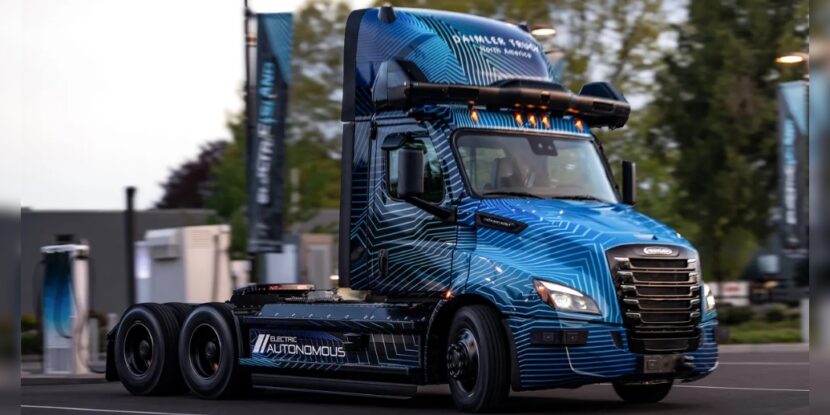
Daimler Truck, a subsidiary of Mercedes-Benz’s parent company, says it has developed a fully automated long-haul truck that will be ready to hit the road by 2027. The eCascadia is an all-electric, automated version of Daimler’s popular Freightliner Cascadia truck models. A self-driving vehicle, the truck is outfitted with long-range sensors and a powerful computing system they say can quickly process data to make snap navigation decisions.

Joanna Butler, who leads Daimler’s global autonomous technology group, says the company’s ultimate goal is to deploy the trucks across the Southwest United States in a middle-mile freight hauling role. This means the autonomous trucks will engage in hub-to-hub middle-mile freight hauls, primarily using federal interstate highways. Butler emphasized the company’s commitment to safety, stating, “Our mantra is really it’s a marathon and not a sprint.”

Daimler touts its autonomous freight trucks as “an autonomous vehicle that doesn’t sleep, doesn’t need to stop, and basically can drive continuously in the Level 4 hub-to-hub mode—that is our targeted use case.” However, other companies in the self-driving truck industry have been forced to fold following a decline in public support and pushback from regulators.

In October of last year, a pedestrian was hit, pinned underneath, and dragged by a robotaxi manufactured by Cruise, the self-driving unit under General Motors. Following the pedestrian collision — and collapse in investor confidence — Cruise was forced to lay off nearly a quarter of its employees.

Around 1.5 million Americans are employed directly by the trucking and long-haul freight industries, and upwards of 8 million are employed through connected industries. Some economists fear the abrupt replacement of human drivers with autonomous computer drivers would have severe economic consequences that trump even public safety concerns.

show less
Daimler Truck, a subsidiary of Mercedes-Benz's parent company, says it has developed a fully automated long-haul truck that will be ready to hit the road by 2027. The eCascadia is an all-electric, automated version of Daimler's popular Freightliner Cascadia truck models. A self-driving vehicle, the truck is outfitted with long-range sensors and a powerful computing system they say can quickly process data to make snap navigation decisions. show more