




Monday, February 23, 2026

Parents Demand Inquiry After 9 Babies Die at Hospitals.

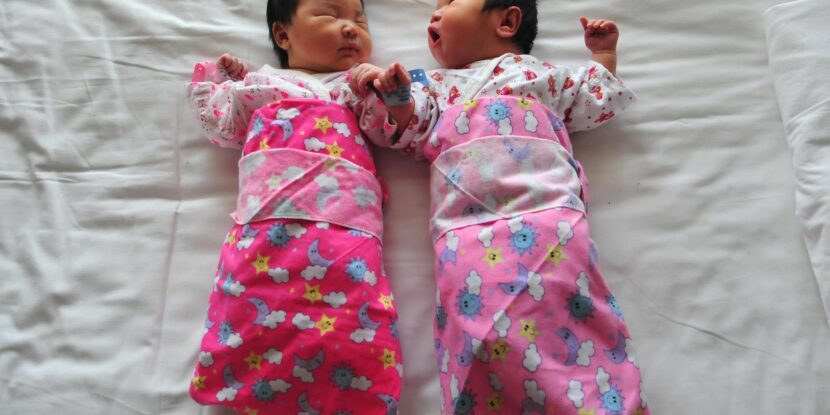
The families of nine babies who died under the care of University Hospitals Sussex NHS Foundation Trust have called for an inquiry into failings in NHS (National Health Service) maternity services. Between 2021 and 2023, nine babies died, and four mothers reportedly almost lost their lives while under the trust’s care.

In a letter to Members of Parliament, the families demanded a public inquiry into ongoing “errors in maternity care,” which they claim could lead to more fatalities. The letter implicates two hospitals: the Royal Sussex County Hospital in Brighton and Worthing Hospital.

“All our babies were otherwise healthy and would have grown up if not for the failings in care and the dismissal of our concerns,” the families wrote. “Our children lost an entire life; they never got a chance to grow up, to learn to walk and speak, to make friends, to witness the awe and beauty of our planet.”

In March, a coroner ruled that neglect by staff at Worthing Hospital contributed to the death of 14-day-old baby Orlando Davis in September 2021. Orlando succumbed to a fatal brain injury two weeks after birth due to the hospital failing to recognize a rare condition affecting his mother, Robyn Davis.

Alongside the families’ call for an inquiry, the trust is under a separate police investigation into 105 alleged cases of medical negligence—84 related to neurology and 21 to gastroenterology.

Britain’s socialized NHS has been plagued by several scandals recently, including an “accidental amputation” epidemic and revelations that tens of thousands of patients were treated with HIV-infected blood.

show less
The families of nine babies who died under the care of University Hospitals Sussex NHS Foundation Trust have called for an inquiry into failings in NHS (National Health Service) maternity services. Between 2021 and 2023, nine babies died, and four mothers reportedly almost lost their lives while under the trust’s care. show more

Is YOUR State Keeping an Unconstitutional Infant DNA Database?

A controversial database containing DNA samples taken from newborn babies in New Jersey is coming under increasing legal scrutiny after it was discovered state law enforcement agencies maintained back-door access to the information. For decades, the state has collected and stored these DNA samples without explicitly informing parents — amassing a sizable database of genetic material.

Two New Jersey mothers have launched a federal class-action lawsuit protesting the collection and access of personal infant data without adequate consent, reflecting growing public concerns about invasive uses of baby blood samples for undisclosed purposes. The Fourth Amendment guarantees protection against unabated searches and seizures.

The practice of harvesting infant DNA samples — standard nationwide for early detection of conditions such as cystic fibrosis —  usually involves discarding the samples post-testing. However, New Jersey retains them for 23 years, with the potential for DNA data to be preserved even longer on third-party servers.

The state allows the circulation of these genetic markers with any party for any reason, including law enforcement agencies. This practice has led to real-world instances where these samples have been handed over to police departments without warrants, even resulting in criminal charges for individuals. While parents do retain the option to opt out of the screenings on religious grounds, hospitals often downplay this choice, and some have even threatened parents who decline the DNA testing with reporting them to Child Protective Services.

show less
A controversial database containing DNA samples taken from newborn babies in New Jersey is coming under increasing legal scrutiny after it was discovered state law enforcement agencies maintained back-door access to the information. For decades, the state has collected and stored these DNA samples without explicitly informing parents — amassing a sizable database of genetic material. show more

ON THIS DAY in 1973: SCOTUS’s Roe v. Wade Decision.

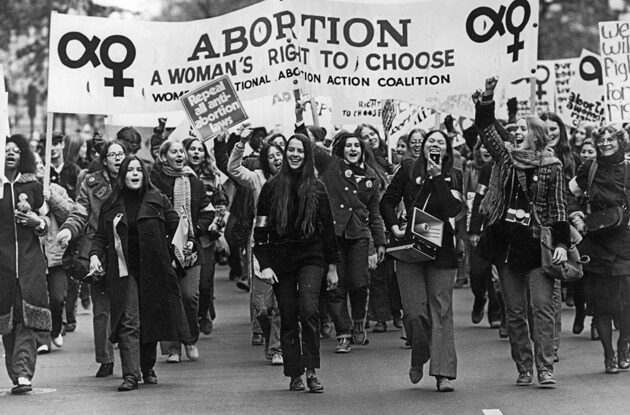
On this day in 1973, the U.S. Supreme Court handed down a landmark ruling in Roe v. Wade, establishing that restrictive state regulation of abortion was unconstitutional. The case was launched by Norma McCorvey – known in court documents as “Jane Roe” – a Texas waitress who became pregnant in 1969 and sought an abortion, an act largely prohibited in the state. When she could not afford to travel to another jurisdiction for a safer procedure, McCorvey took legal action against Dallas County District Attorney Henry Wade, arguing that the current abortion laws violated her constitutional rights. The U.S. District Court for the Northern District of Texas agreed that the legislation infringed on her privacy rights.

The case eventually reached the Supreme Court in 1970, resulting in a landmark 7-2 ruling in McCorvey’s favor three years later. The Court agreed that state laws prohibiting abortion were in violation of the 14th Amendment, which promises that no state “shall make or enforce any law which shall abridge the privileges or immunities of citizens in the United States.” In the majority opinion, Justice Harry A. Blackmun wrote that the Texas statutes criminalizing abortions in most instances violated a woman’s constitutional right to privacy.

Ironically, McCorvey herself did not secure an abortion. By the time the decision was rendered in 1973, she had given birth and given her baby up for adoption. In the 1980s, McCorvey revealed her identity as “Jane Roe” and later underwent religious conversions becoming an evangelical Christian, then a Roman Catholic, and joining the anti-abortion movement. Despite the Supreme Court’s decision being overturned on June 24, 2022 – granting states the power to regulate abortion – the legacy of Roe v. Wade continues to be a flashpoint.

show less
On this day in 1973, the U.S. Supreme Court handed down a landmark ruling in Roe v. Wade, establishing that restrictive state regulation of abortion was unconstitutional. The case was launched by Norma McCorvey – known in court documents as "Jane Roe" – a Texas waitress who became pregnant in 1969 and sought an abortion, an act largely prohibited in the state. When she could not afford to travel to another jurisdiction for a safer procedure, McCorvey took legal action against Dallas County District Attorney Henry Wade, arguing that the current abortion laws violated her constitutional rights. The U.S. District Court for the Northern District of Texas agreed that the legislation infringed on her privacy rights. show more

Biden Campaign Plans Rallies, Op-Eds, TV Ads to Demand Mass Murder of American Babies.

The Joe Biden campaign plans to put abortion “at the forefront of its reelection campaign,” vowing to “restore” Roe v. Wade and the “reproductive freedom” to kill unborn children with few or no restrictions.

Pro-abortion television and digital ads are planned for around January 22nd, the anniversary the Roe‘s ruling in 1973. Rallies featuring the President, the Vice President, and their spouses are also planned.

“Trump directly paved the way for Republican extremists across the country to enact draconian bans that are hurting women and threatening doctors,” said Biden-Harris campaign manager Julie Chavez Rodriguez, acknowledging Trump should be credited for the pro-life advances since Roe v. Wade was overturned. Within six months of Roe being overturned, an estimated 32,000 babies’ lives had been saved by Trump and the Supreme Court Justices’ actions.

Trump has long argued that Democrats, rather than Republicans, are the extremists on abortion, condemning state lawmakers for having “cheered with delight upon the passage of legislation that would allow a baby to be ripped from the mother’s womb moments before birth” during one of his State of the Union speeches.

Washington D.C., Colorado, New Jersey, New Mexico, Oregon, and Vermont, all run by Democrats, allow abortion up to birth, along with Republican-run Alaska.

show less
The Joe Biden campaign plans to put abortion "at the forefront of its reelection campaign," vowing to "restore" Roe v. Wade and the "reproductive freedom" to kill unborn children with few or no restrictions. show more

BE THANKFUL: 1 in 4 Babies That Would’ve Been Aborted Have Been Born in a Post-Roe World.

Over 1-in-4 women who considered an abortion have instead chosen instead to take their pregnancy to term in states where protections for the unborn were enacted following the Supreme Court’s Dobbs decision overturning Roe v. Wade. The data, found in a study by the left-wing Institute of Labor Economics, only covers the first six-months of 2023 but signals to pro-life activists their efforts to save unborn lives is making progress – despite set-backs at the ballot box in the 2022 and 2023 elections.

While pro-life Americans might see the new data as a positive development, Middlebury College professor Caitlin Myers – who co-authored the Institute of Labor Economics study – does not.

“When you make it harder, women can’t always get out of states to obtain abortion,” the abortion advocate Prof. Myers said in an interview. “Most people are getting out of ban states, one way or another, and more people in protected states are getting abortions. And at the same time, this shows something those data cannot show: There’s a significant minority of people in ban states that do get trapped.”

Pushing back, pro-life groups argue the increase in births is good for families, communities, and the United States overall.

“The insinuation of a lot of coverage of such data points is that it’s a bad thing for there to be more children welcomed in states with better laws than in states that fast-track abortion,” said Students for Life president Kristan Hawkins in an interview with the New York Times. Hawkins added, “It’s a triumph that pro-life policies result in lives saved.”

show less
Over 1-in-4 women who considered an abortion have instead chosen instead to take their pregnancy to term in states where protections for the unborn were enacted following the Supreme Court's Dobbs decision overturning Roe v. Wade. The data, found in a study by the left-wing Institute of Labor Economics, only covers the first six-months of 2023 but signals to pro-life activists their efforts to save unborn lives is making progress – despite set-backs at the ballot box in the 2022 and 2023 elections. show more
china

China Pushes IVF to Combat ‘Baby Bust’.

The Chinese Communist Party (CCP) is pushing its citizens to start using in vitro fertilization (IVF) in an effort to boost the number of births and reverse the ramifications of its decades-long one-child policy.

Chinese state agencies and private companies have been donating millions to develop the national assisted reproductive technology (ART) sector, ensuring IVF and other reproductive treatments are more widely available. Beijing’s local council even announced last month that it is funding reproductive treatment costs, which tend to range from £2,500 to £4,000, from July ongoing. The CCP is also considering whether to allow single women access to IVF and child support.

China, as a result, has built 540 fertility clinics and 27 sperm banks, providing over one million “cycles of assisted reproduction” per year, compared to the United States’ 370,000. The United Kingdom is lower still with just 70,000. Yet, China aims to build up to 600 clinics by the end of the decade and encourage a mass baby boom.

Head of the CCP’s Population Monitoring and Family Development department, Yang Wenzhuang, argues that the Chinese are firmly grasp[ing] the important window period of population development.”

“Local governments should be encouraged to actively explore and make bold innovations in reducing the cost of childbirth, childcare and education” to promote the long-term balanced development of the population,” he adds.

China experienced its first population drop in six decades last year, with the number of newborns expected to fall further in 2023. The current number of births per 1,000 people in China is just 6.77, whereas the death rate is 7.37 per 1,000. The current birth rate in the United States is 12.023 per 1,000 people.

show less
The Chinese Communist Party (CCP) is pushing its citizens to start using in vitro fertilization (IVF) in an effort to boost the number of births and reverse the ramifications of its decades-long one-child policy. show more